Japanese calligraphy turns a brushstroke into a small lesson in focus: how you hold the brush, how much pressure you use, and where a mark sits on the page all matter. This 50-minute class in Ninenzaka takes you from basic technique to a finished piece, with room to choose a character or phrase to write.
I like two things in particular: the patient, hands-on teaching makes the art approachable, and the location puts the class within easy reach of Kiyomizu Temple and the old streets of Higashiyama. Some instructors named by participants include Niko and Mana, though your teacher may differ.
The main trade-off is time. Fifty minutes is enough for an introduction and a souvenir, but not for a thorough study of brush types, ink, paper, or advanced technique. Come ready to try, not to master calligraphy in one sitting.
- What to know before you book
- A brush, ink, and a first lesson in calligraphy
- Choosing a character and making a final piece
- What the 50-minute schedule feels like
- Finding Kangetsu Kyoto in Ninenzaka
- The teaching style and who will enjoy it
- Is .69 a fair price?
- Who should make room for this class
- FAQ
- How long is the calligraphy class?
- What is the minimum age to participate?
- Where does the class take place?
- How do I find the venue?
- Are calligraphy tools included?
- Is an English-speaking guide included?
- Do I need calligraphy experience?
- Can I take my calligraphy work home?
- Is transport to the class included?
- Is a kimono included in the price?
- The Best Of Kyoto!
- More Workshops & Classes in Kyoto
- More Tours in Kyoto
- More Tour Reviews in Kyoto
- Not for you? Here's more nearby things to do in Kyoto we have reviewed
What to know before you book
 1 / 8
 2 / 8
 3 / 8
 4 / 8
 5 / 8
 6 / 8
 7 / 8
 8 / 8
- You’ll use brush, ink, and paper: All necessary calligraphy tools are included, so you can focus on learning rather than packing supplies.
- You make a piece to take home: You practice first, then create a final work using your name, a character, or a phrase.
- The class is beginner-friendly: Expect guidance with brush handling, stroke order, pressure, and balance.
- It’s a handy Higashiyama stop: Kangetsu Kyoto is at 349-19 Masuyacho, down a private road to the left of the Starbucks on Ninenzaka.
- The session is short by design: At 50 minutes, it fits neatly between sightseeing stops, but gives limited time for advanced instruction.
- Participants must be at least 11: Plan around the age rule, even if younger children in your party are keen to join.
👉 See our pick of the 25 Best Workshops And Classes In Kyoto
A brush, ink, and a first lesson in calligraphy
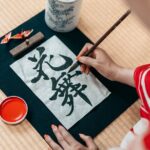
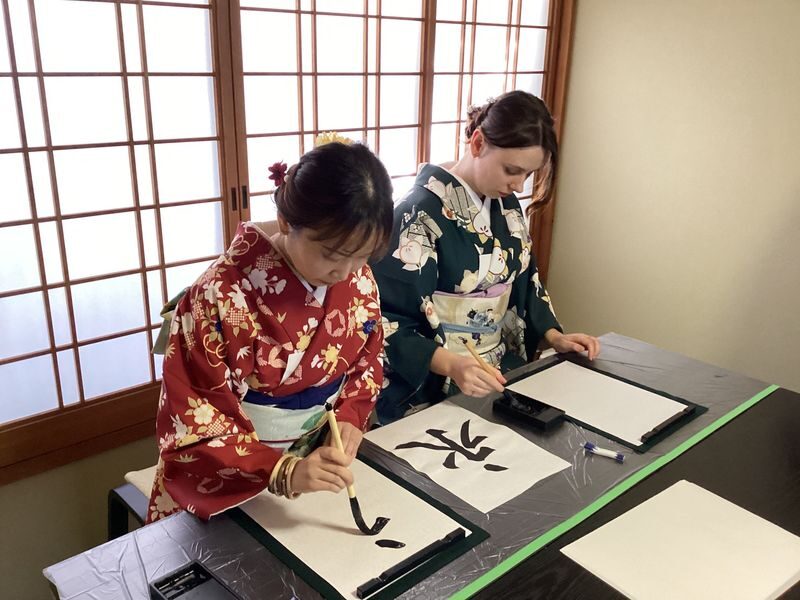
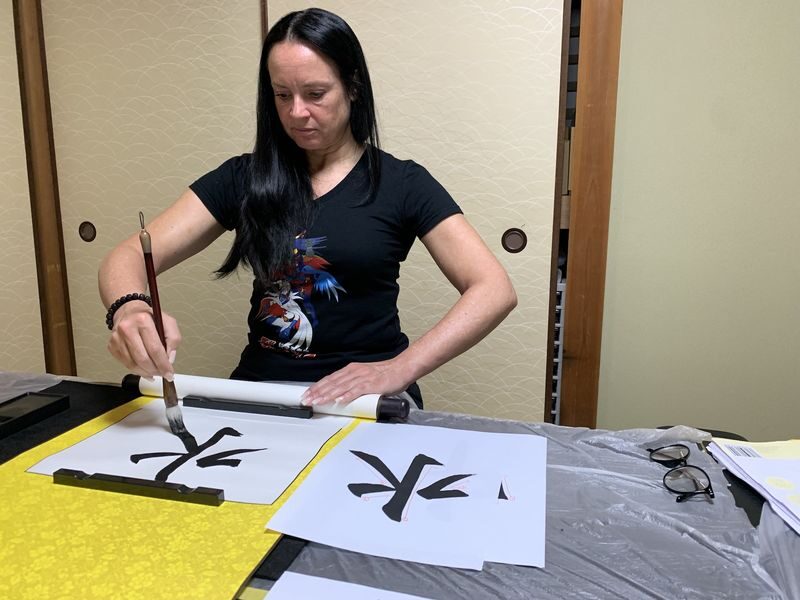
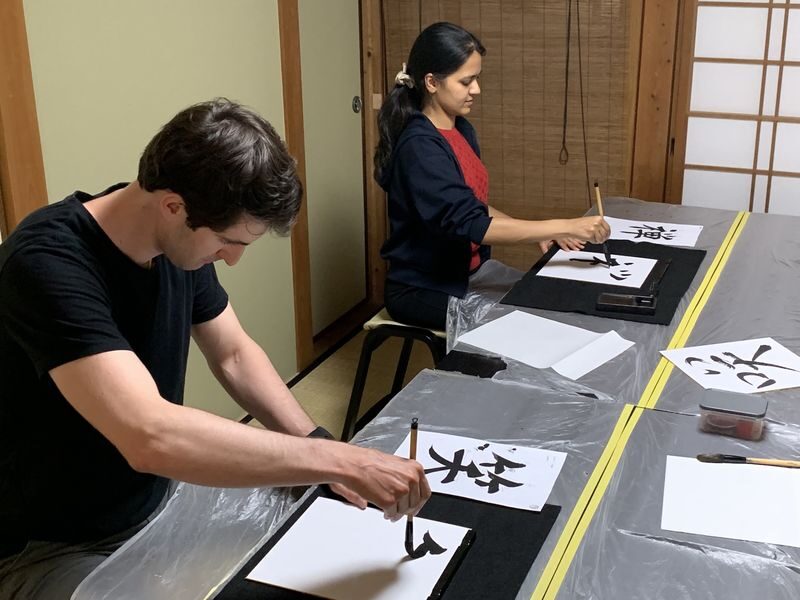
This class gives you a practical introduction to Japanese calligraphy, not just a demonstration to watch. You learn how to hold the brush and control pressure, then try basic marks such as lines, dots, and sweeps. Those simple strokes are the building blocks for the characters you’ll write later.
The opening explanation covers calligraphy’s history and cultural place in Japan. You’ll also hear about its links to tradition and learn some context for the writing you’re about to practice. One participant described a lesson that included the three Japanese writing systems. The exact amount of background may depend on the instructor and the class, but the activity is designed to pair cultural context with practice.
The calm pace is part of the appeal. Preparing the materials gives you a moment to settle before the brush touches paper. Calligraphy asks for attention: a rushed hand can leave a thick, uneven stroke, while a controlled one gives the line more shape. Even a short class can make you notice how much intention sits inside a single mark.
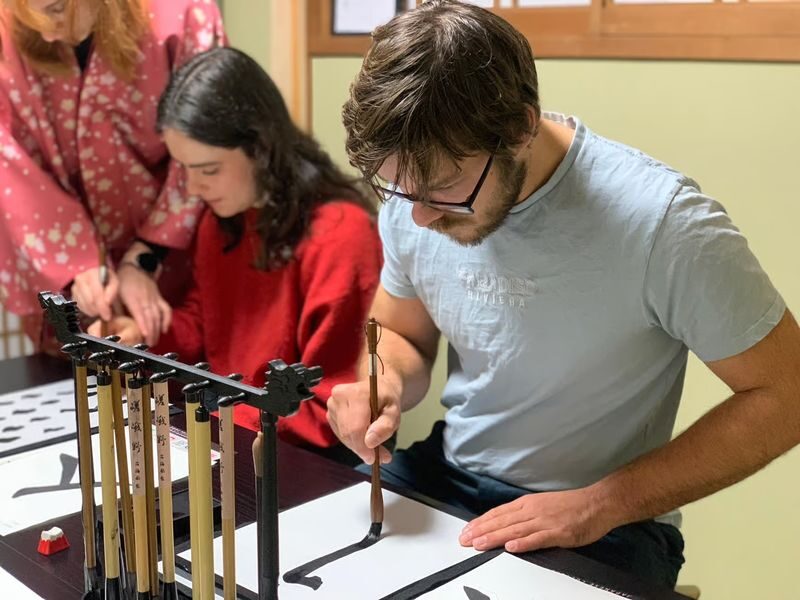
This is a hands-on activity, and you should expect to make mistakes while learning. That is useful. Practicing a line or a dot before attempting a full character helps you get a feel for the brush and the ink. Instructors guide participants through the movements, and some have offered hands-on help with the brush during the first attempts.
You can also read our reviews of more tours and experiences in Kyoto
Choosing a character and making a final piece
After the basic exercises, you move on to simple kanji, with attention to stroke order and balance. You may choose a word or concept from a selection of examples, then practice the strokes that make up your chosen character before creating the finished version. That choice adds a personal touch without requiring you to arrive with a Japanese phrase prepared.
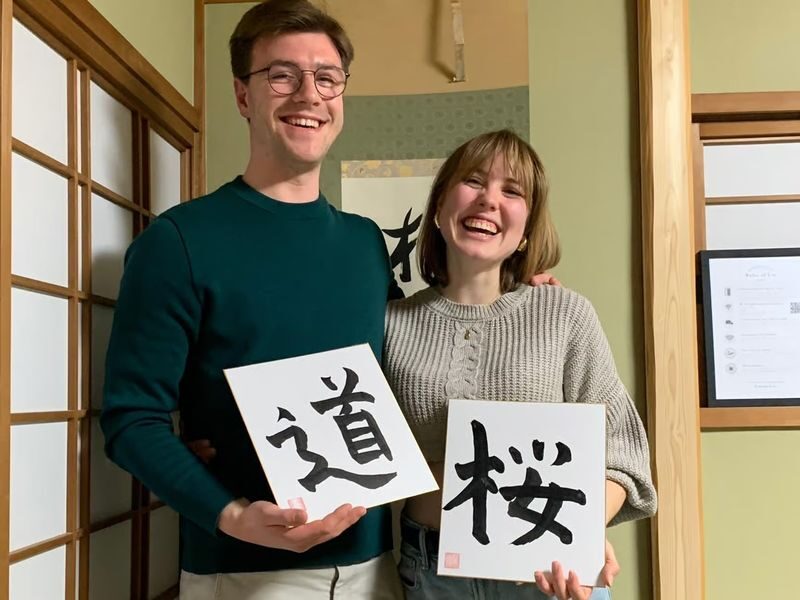
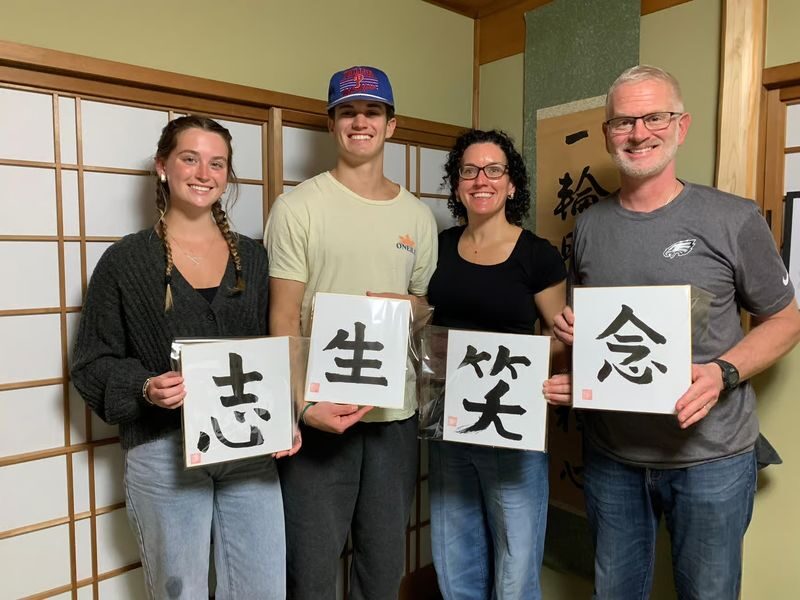
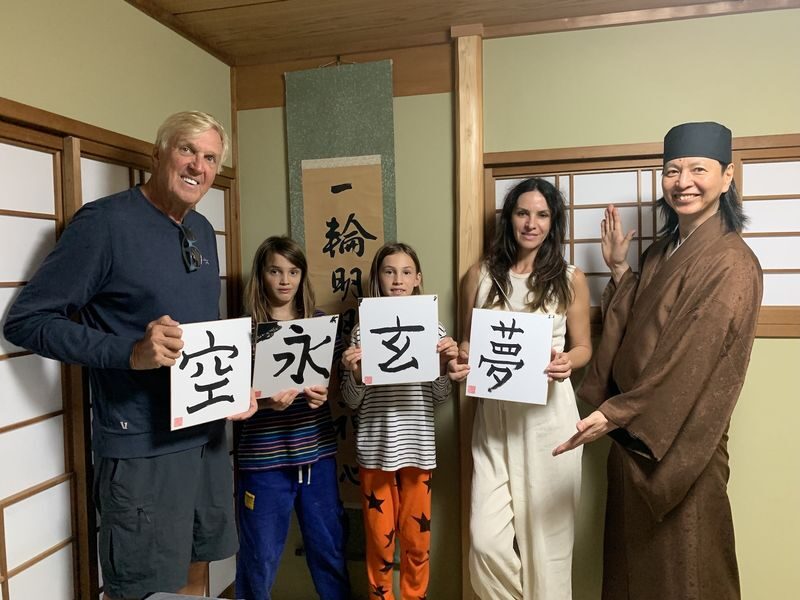
The final piece is the main keepsake. You can write your name or a phrase, and seasonal projects such as New Year’s cards may be part of the class. Participants have also described taking their work home, sometimes presented on a board or fan. The precise format can vary, so think of the finished calligraphy itself as the surest souvenir.
I like this format because you leave with more than a quick photo of the activity. You have a piece you made, and a better sense of why the brush was held in a particular way. It won’t be the work of a trained calligrapher, of course. That is not the point. The pleasure is in seeing what you can produce after a little careful instruction.
A few people find the final stage brisk. One participant wanted more time to practice and clearer guidance on centering a character and balancing it on the page. If you care most about formal technique, you may wish the lesson lasted longer. If your aim is to try the art, learn a little, and make something personal, the short format makes good sense.
What the 50-minute schedule feels like
The class is listed as 50 minutes, with the venue as both departure and return point. In practice, that means you do not spend the session traveling between sights. You arrive at Kangetsu Kyoto, take the lesson, and finish at the same address.
The sequence is straightforward: an introduction to calligraphy and its history, a lesson in handling the brush, preparation of the materials, practice with basic strokes, simple kanji, and then your final piece. The order builds from the physical basics to a complete character or phrase. You are not expected to know Japanese calligraphy beforehand.
This duration suits a busy Kyoto itinerary. You can fit the class around sightseeing in Ninenzaka, the Kiyomizu Temple area, or Gion. The catch is that the surroundings can tempt you to keep wandering, and the walk to the venue may take longer than you expect. One participant advised planning the approach carefully after walking a long way in hot weather. Check your route before setting out, especially on a warm day.
The listed departure choices include times from 9:15 in the morning through 4:45 in the afternoon. Available return times depend on the departure you select, and the exact time is confirmed after booking. The stated opening hours are 9:30, 11:00, and 3:00, so confirm the time attached to your booking rather than assuming every listed choice is available on your date.
Finding Kangetsu Kyoto in Ninenzaka
The class takes place at Tea Ceremony & Cultural Experience Kangetsu Kyoto, 349-19 Masuyacho, Higashiyama Ward, Kyoto. The directions point you to a private road just to the left of the Starbucks on Ninenzaka. Keep that detail handy: the studio is down the lane, not necessarily obvious from the main street.
Ninenzaka is a useful base for this activity because the class sits near major Higashiyama sights, including Kiyomizu Temple, and within reach of Gion. That makes it easy to build a day around traditional streets and cultural activities. No transport is included, and there is no pickup or drop-off service, so you’ll need to make your own way to the meeting point.
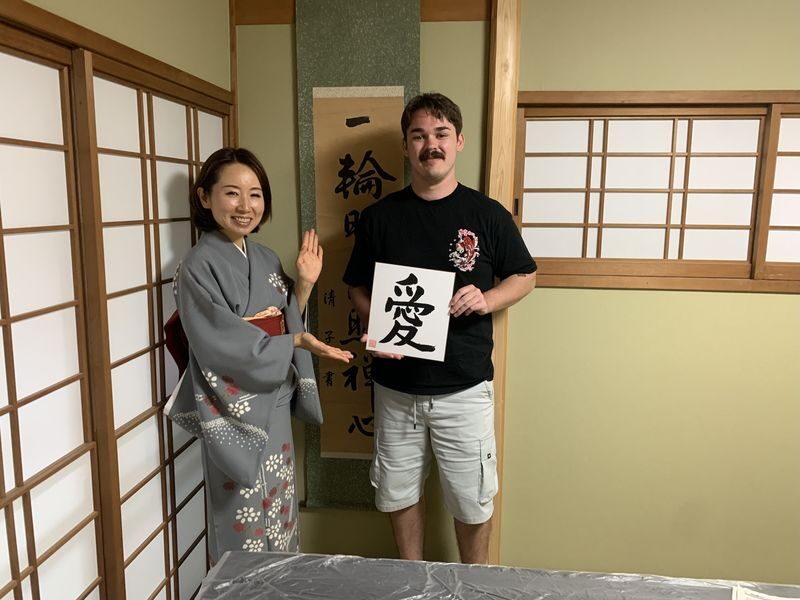
The venue has been described as a traditional Japanese house, which adds atmosphere to a lesson about a traditional art. The setting is a bonus, but the brushwork remains the center of the experience. Arrive with enough time to find the private road and get settled instead of spending the first minutes checking your map.
The teaching style and who will enjoy it
The strongest feature is the teaching. Instructors are described as kind, patient, and attentive, with explanations and individual help as people practice. Some sessions have had two instructors, and participants have named Niko and Mana. The staff can help you work through each movement, which matters when you are learning to control a brush that behaves differently from an ordinary pen.
The activity is aimed at beginners, and the teaching appears to suit a range of experience levels. You don’t need prior calligraphy skills. It can also work well for families with older children: the minimum age is 11, and the lesson gives everyone a clear task to focus on. The age limit is firm in the provided details, so don’t count on bringing a younger child into the class.
An English-speaking guide is included. For reservations made on the same day or the day before, the class may be conducted in English if the requested arrangement cannot be accommodated. If language is important to your plans, book ahead rather than leaving the decision to the last minute.
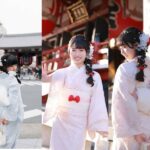
You may also be able to rent a two-piece kimono for an additional fee. Socks are not included; bring your own, or check whether they are available to buy. Neither is necessary to learn calligraphy, but it may suit you if you want traditional attire for the experience. Meals, drinks, transport, and personal expenses are not included.




Is $48.69 a fair price?
At a starting price of $48.69, you are paying for a guided, hands-on cultural activity rather than admission to a sight. The price includes the class, an English-speaking guide, and the brush, ink, and paper you need. You also get to make a calligraphy piece and take your work home.
That is a reasonable return if you value a small-group lesson and a personal souvenir. The instructors’ individual help is especially important here: calligraphy is less satisfying if you only watch someone else demonstrate it. A short period of guided practice can help you understand the basics and produce a more considered final piece than you might manage alone.
The value is less clear if you want a long technical course. Fifty minutes leaves little room to study different brushes, papers, and inks or to refine a character through many rounds of practice. One participant felt there was not enough time to practice before moving to the final work. Set your expectations accordingly: this is a taste of the art, not a full apprenticeship.
Cancellation is eligible for a full refund if made at least 24 hours before the activity date in local time. The voucher is valid only for the date and time specified, and you can present it on your phone. Those details are worth checking before you finalize a tight Kyoto schedule.
Who should make room for this class
I’d consider this class if you want a calm, creative break from walking around Kyoto and prefer doing something with your hands over another sightseeing stop. It is particularly suited to first-timers, couples, and families with children aged 11 or older. You can arrive without knowing kanji and still work toward a piece of your own.
It also fits well if you are already visiting Ninenzaka or Kiyomizu Temple. The location means the class can become one part of a day in Higashiyama rather than a separate trip across town. Just allow enough time to reach the lane and keep the heat and distance in mind if you are walking.
You may want a longer course if your goal is serious technique, detailed study of materials, or extensive practice. For a friendly introduction with cultural context, attentive instruction, and a keepsake, this class offers a useful and memorable change of pace.
Japanese Calligraphy Class in Ninenzaka (Kyoto)
“Instructors: both instructors take the time to explain how to do it and for every movement, they help us the first time by guiding us with the brus…”
FAQ
How long is the calligraphy class?
The class lasts 50 minutes.
What is the minimum age to participate?
Participants must be at least 11 years old.
Where does the class take place?
It takes place at Tea Ceremony & Cultural Experience Kangetsu Kyoto, 349-19 Masuyacho, Higashiyama Ward, Kyoto.
How do I find the venue?
The class is down a private road to the left of the Starbucks on Ninenzaka.
Are calligraphy tools included?
Yes. Brush, ink, paper, and the other necessary calligraphy tools are included.
Is an English-speaking guide included?
Yes, an English-speaking guide is included. For reservations made on the same day or the day before, the class may be conducted in English.
Do I need calligraphy experience?
No prior experience is required. The class is designed for beginners and covers brush handling, basic strokes, and simple kanji.
Can I take my calligraphy work home?
Yes. You can take home the piece you create during the class.
Is transport to the class included?
No. Transport and pickup or drop-off services are not included.
Is a kimono included in the price?
No. A two-piece kimono may be available to rent for an additional fee. Socks are also not included, so bring your own or check whether they are available to buy.