In Tahrir Square, the Egyptian Museum puts thousands of years of ancient Egypt within reach: more than 120,000 artifacts, from colossal statues to delicate jewelry and royal mummies. This ticket lets you bypass the ticket counter, then explore at your own pace.
I like two things here: you can set your own route through a collection that spans about 5,000 years, and the mobile ticket saves a stop at the ticket desk. The trade-off is that the museum can feel crowded and unevenly organized, and some displays have limited English explanations.
- Key points
- First steps at Tahrir Square
- A collection spanning 5,000 years
- Statues, jewelry, papyrus, and mummies
- How to make a self-guided visit work
- The ticket’s real value
- Who will get the most from this museum?
- Should you book?
- FAQ
- What does the ticket include?
- How do I use the mobile ticket?
- What are the museum’s opening hours?
- Is a guided tour included?
- Can I take photos inside?
- Are food and drinks allowed inside?
- Do children need a ticket?
- Can I cancel or change my ticket date?
- The Best Of Cairo!
- More Tickets in Cairo
- More Tours in Cairo
- More Tour Reviews in Cairo
- Not for you? Here's more nearby things to do in Cairo we have reviewed
Key points
 1 / 6
 2 / 6
 3 / 6
 4 / 6
 5 / 6
 6 / 6
- A vast collection in central Cairo: The museum holds more than 120,000 objects, with artifacts spanning roughly 5,000 years.
- Skip the ticket counter, not security: Show your phone voucher at the main entrance, then proceed to the security checkpoint.
- No guide is included: You explore independently, so a little preparation can help make sense of displays with sparse or missing English descriptions.
- Expect variety: Look for statues, jewelry, papyrus, royal artifacts, mummies, and items associated with Tutankhamun.
- Plan around the clock: The museum is listed as open daily from 9 a.m. to 5 p.m., with last ticket entry around 4 p.m. Hours can change on public holidays.
- Treat the ticket as date-specific: It is valid only for the selected date and cannot be canceled or refunded.

👉 See our pick of the 17 Best Snorkeling Experiences In Cairo
First steps at Tahrir Square
The museum sits on El-Tahrir Square, in central Cairo. That location makes it a natural stop for a day spent exploring the city, and the address is easy to match to the main entrance: El-Tahrir Square, Ismailia, Qasr El Nil, Cairo Governorate.
When you arrive, show your mobile voucher at the entrance. The skip-the-line benefit means you bypass the ticket counter; it does not mean you bypass security. Keep your phone ready, and expect to follow the staff’s instructions before entering the galleries.
The ticket is for general admission. There is no guide included, and any special exhibitions or guided tours may require a separate ticket. That distinction matters: you’re buying easier entry and the freedom to explore, not a narrated tour or a structured route through the collection.
You can also read our reviews of more tours and experiences in Cairo


A collection spanning 5,000 years
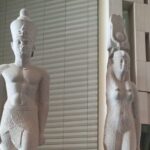
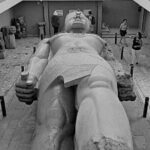
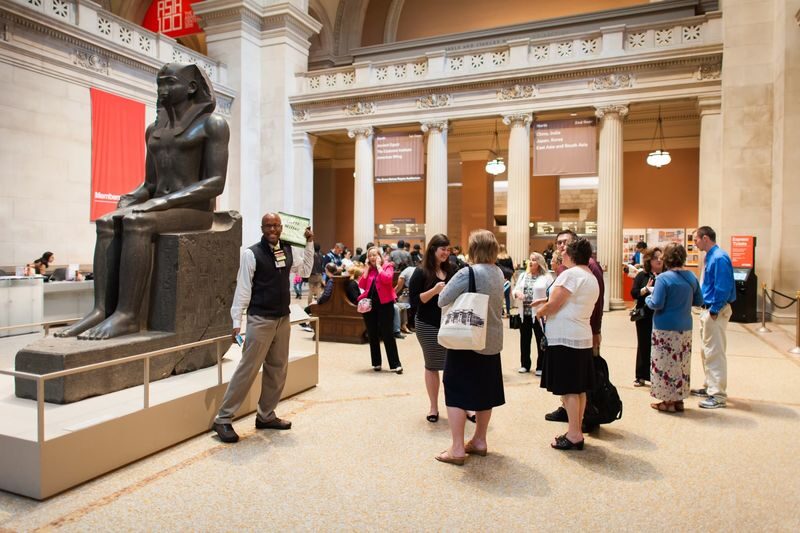
Inside, you face a remarkable range of objects from ancient Egyptian life, art, and belief. The collection is described as holding more than 120,000 treasures, including colossal statues, intricate jewelry, papyrus scrolls, royal artifacts, and mummies. Even a short visit can give you a sense of the sheer breadth of the subject.
I’d approach the museum as a place to choose a few themes rather than try to absorb every object. You might focus first on royal power and funerary customs, then look for pieces that show the smaller details of daily life. A finely worked piece of jewelry or a papyrus fragment can reward close attention just as much as a monumental statue.
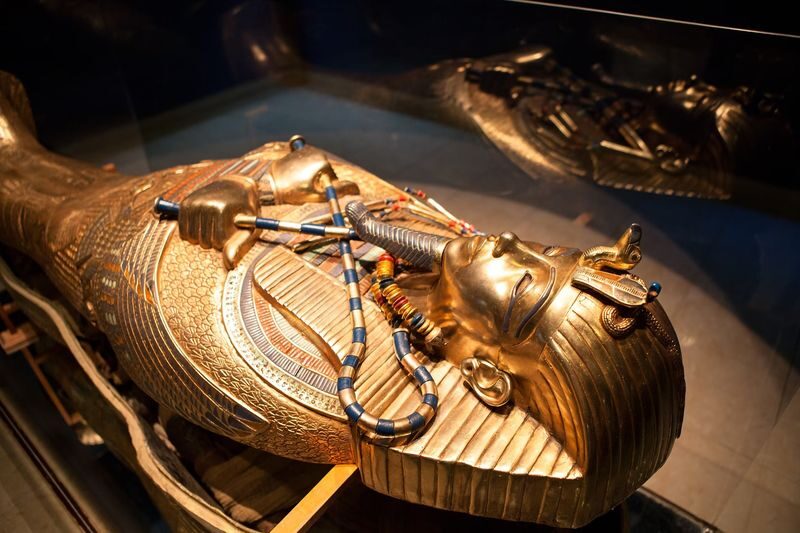
Displays associated with Tutankhamun are among the headline attractions. The museum’s collection includes famous treasures connected with the young king, though the Grand Egyptian Museum is another Cairo-area option for anyone planning a separate museum visit. Some significant statues and other artifacts remain at the Egyptian Museum, so don’t assume that every important object has moved elsewhere.
The scale is exciting, but it can also be tiring. There is a lot to look at, and not every object comes with enough explanation to make its importance clear. Some descriptions may lack English translations, so you may find yourself looking at an artifact first and working out its context later.
Statues, jewelry, papyrus, and mummies
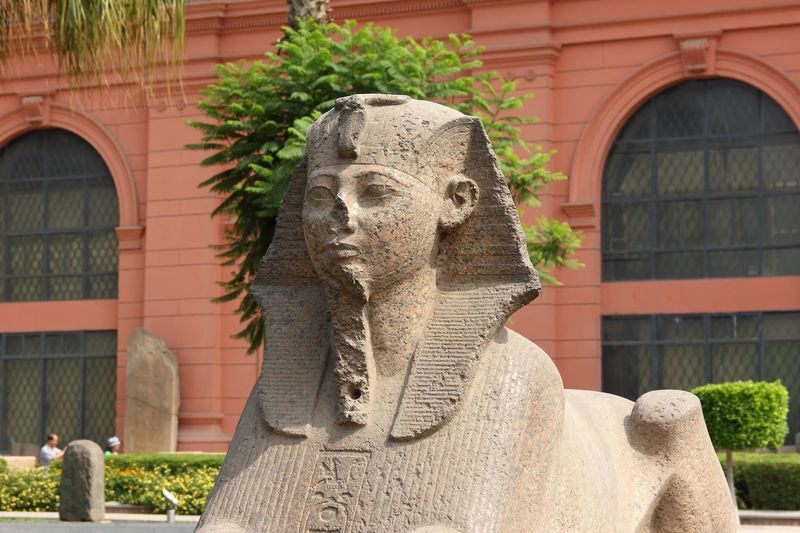
The range is part of the pleasure. Large statues give you a direct sense of how Egyptian rulers and gods were represented, while jewelry and smaller objects bring the craft down to human scale. Papyrus scrolls offer a glimpse of written culture, and mummies make the ancient beliefs around death and preservation especially tangible.
The royal mummies are a major draw, but check the rules before taking photos. Mobile-phone photography is allowed in most areas, with flash prohibited. Some sections, including the Royal Mummy Hall, may restrict photography, so follow signs and staff directions rather than assuming the same rules apply throughout.
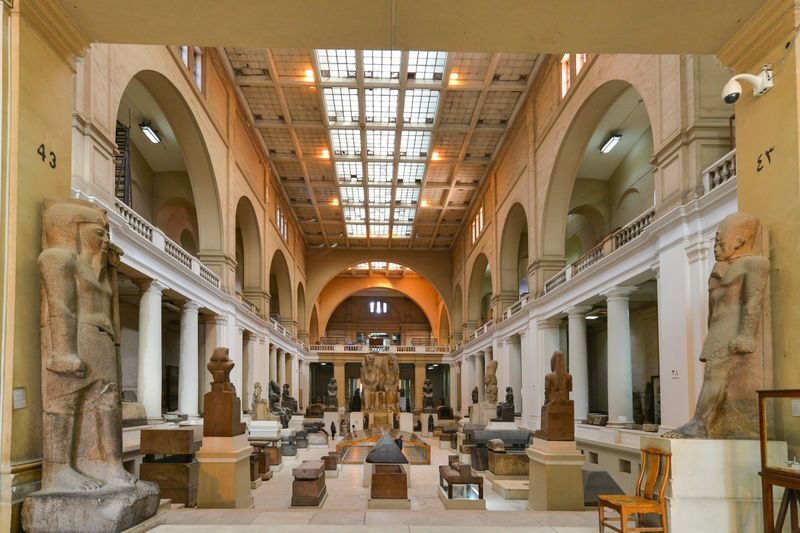
You’ll also want to manage expectations about how the objects are presented. Some displays can feel haphazard, more like a storehouse than a carefully guided story. A few objects may appear exposed or poorly protected, and some have been marked or damaged. That can be frustrating, especially if you expect a polished, modern exhibition with a clear narrative at every turn.
I see this as a trade-off. The museum’s strength is the breadth and presence of the objects themselves; its weakness can be the uneven interpretation around them. If you arrive expecting a guided lesson in ancient history, the lack of consistent context may disappoint. If you are happy to look closely, make your own connections, and accept a less polished presentation, the collection can still be compelling.
How to make a self-guided visit work
With no guide included, you are free to spend time where your interest takes you. That freedom is valuable in a museum this large, but it also means you’ll need to supply some of the structure yourself. Before entering, pick a few subjects you care about, such as royal life, funerary customs, sculpture, or everyday objects.
I would not try to read every label or see everything. Give yourself time to pause at objects that catch your eye, and use the larger pieces as landmarks as you move through the galleries. If you find a section with useful English explanations, take advantage of it; if a label is hard to follow, don’t let it stall the whole visit.
The museum is open daily from 9 a.m. to 5 p.m., with last ticket entry around 4 p.m. The hours may vary on public holidays, so check the opening time for your chosen date before setting out. Arriving earlier gives you more time to explore without having to watch the clock near closing.
This is not a guided tour with a fixed duration or route. You decide how long to stay, and the collection’s size makes that flexibility useful. For a first look, choose a manageable set of highlights and leave room for surprises; for a more serious visit, plan to spend longer and accept that you still may not see everything.
The ticket’s real value
The price starts at $16.55. That is the cost of convenience as much as admission: you can book for the same day, receive instant confirmation, and bypass the ticket counter with your phone voucher. It may cost more than buying a ticket on site, so the value depends on how much you care about avoiding that extra stop.
Remember, skip-the-line entry is not a promise of instant passage through every checkpoint. You still go through security, and the ticket does not include a guide, tips, personal expenses, or admission to special exhibitions. If you want someone to explain the objects in detail, you’ll need to arrange a guided tour separately.
There are a few practical rules worth keeping in mind. Large bags and luggage must be left at the security deposit area before you enter the galleries. Food and drinks are not allowed inside, though small water bottles are generally permitted. Mobile photography is allowed in most areas without flash, but restrictions apply in some sections.
Children aged 0 to 5 enter free, while children aged 6 and older pay the adult rate. The activity is listed as wheelchair-accessible. The voucher is valid only on the date selected when booking, and the purchase cannot be canceled or refunded, so choose your date carefully.
You can also read our reviews of more museum experiences in Cairo


Who will get the most from this museum?
This is a good fit if you want an independent visit and are keen to see a broad range of ancient Egyptian artifacts in one place. History lovers, curious first-time visitors, and anyone who enjoys studying objects without being hurried along can all find reasons to stay. The skip-the-line ticket is especially useful if you value a smoother arrival and are comfortable paying for that convenience.
It may be less satisfying if you need detailed explanations in English at every stop, or if you prefer exhibits arranged around a clear, modern storyline. The museum’s presentation can feel inconsistent, and the ticket does not solve that. A guide could help add context, but guided tours are not part of this admission.
The reported experience is not all one-sided: the collection itself can be impressive, while the presentation may test your patience. I’d go for the artifacts, not for polished exhibition design. Keep your expectations realistic, bring a few questions of your own, and the museum is more likely to reward your time.
Should you book?
Book this ticket if you want to see the Egyptian Museum’s large collection and value skipping the ticket counter. It’s a practical choice for a self-guided visit, with same-day booking and a mobile voucher. The key benefit is convenience, not a richer interpretation of the exhibits.
Think twice if you expect a guided, carefully narrated museum experience or need consistently detailed English labels. In that case, consider arranging a guide separately. For everyone else, this is a worthwhile way to spend time with Egypt’s ancient objects, provided you’re ready to do some of the connecting and interpreting yourself.
Egyptian Museum Ticket in Cairo
“At the beginning I thought the museum will be closed due to the indication in the voucher. Finally checked by the staff from Klook and confirmed it…”
FAQ
What does the ticket include?
It includes general admission to the Egyptian Museum in Cairo and skip-the-line access at the ticket counter. Guided tours and special exhibitions are not included.
How do I use the mobile ticket?
Show your mobile voucher at the main entrance in Tahrir Square. You can bypass the ticket counter, then proceed to the security checkpoint.
What are the museum’s opening hours?
The museum is listed as open daily from 9 a.m. to 5 p.m., with last ticket entry around 4 p.m. Hours may vary on public holidays.
Is a guided tour included?
No. The ticket is for general admission only. Guided tours may require a separate ticket.
Can I take photos inside?
Mobile-phone photography is allowed in most areas, but flash is prohibited. Some sections, including the Royal Mummy Hall, may restrict photography.
Are food and drinks allowed inside?
Food and drinks are not allowed in the museum galleries. Small water bottles are generally permitted.
Do children need a ticket?
Children aged 0 to 5 enter free. Children aged 6 and older are charged the same rate as adults.
Can I cancel or change my ticket date?
No. The voucher is valid only on the selected date, and cancellations or refunds are not available.