Balinese cooking makes more sense when you get your hands into the spice paste. At Ketut’s class in Laplapan, you prepare several local dishes with guidance from Ketut and his team, then sit down to eat the results. The morning session adds a market visit before you start cooking.
I like two things in particular: the chance to learn a set of recipes you can try at home, and the welcoming, humorous teaching style that keeps the class light. Hotel transfers from the Ubud area also make the outing simpler to plan.
One consideration: the class covers several dishes in a short time, so it can feel brisk, and the market stop may feel more like a guided browse than a direct ingredient hunt. Choose the morning session if the market matters to you, and go in expecting a lively group lesson rather than a slow, one-dish-at-a-time course.
- At a glance
- Choose the morning if you want the market
- Cooking eight dishes in a single session
- Ketut’s teaching style sets the tone
- Vegetarian cooking is a real option
- Morning lunch or afternoon dinner
- Transfers make the trip easier, with a few caveats
- Is the price good value?
- A few useful details before booking
- Should you book Ketut’s cooking class?
- FAQ
- How many dishes do you make?
- Is the market tour included in both sessions?
- What time does the morning class start?
- What time does the afternoon class start?
- Are vegetarian dishes available?
- Can the class accommodate allergies or other dietary needs?
- Are hotel transfers included?
- What is the minimum age?
- Is the cooking class wheelchair-accessible?
- What is included in the price?
- The Best Of Ubud!
- More Cooking Classes in Ubud
- More Tours in Ubud
- More Tour Reviews in Ubud
- Not for you? Here's more nearby things to do in Ubud we have reviewed
At a glance
- Eight Balinese dishes: Prepare a range of recipes, with a standard menu that may include chicken soup, spice paste, satay, fried noodles, and banana dessert.
- A morning market visit: Learn about local ingredients and produce before class. The afternoon session does not include the market tour.
- A meal you help make: The class ends with lunch or dinner, depending on the session.
- Vegetarian options: A separate sample menu includes vegetable curry, tofu and tempeh satay, and grilled mushrooms in banana leaf.
- Transfers are included in the Ubud area: Pickups are shared, and extra charges apply outside the stated area.

👉 See our pick of the 25 Best Guided Tours In Ubud
Choose the morning if you want the market
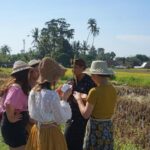
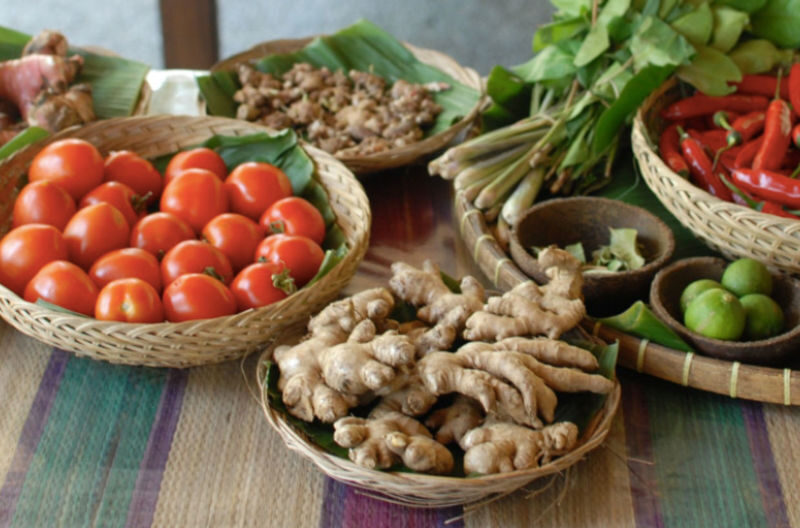
The morning program starts with pickup, followed by a visit to a traditional market at about 8:30. You’ll see local produce and ingredients, hear explanations about what goes into Balinese cooking, and have a chance to look at spices and fruit.
This is useful context before you cook: ingredients such as turmeric and spice blends can be unfamiliar, and seeing them in a market gives the recipes a local setting. The market can also be a chance to buy spices to take home. Bring spending money only if you want to shop; purchases are not part of the class fee.
Keep your expectations measured. The market stop is interesting for browsing and learning, but it may not feel like a behind-the-scenes visit to a place where the class sources every ingredient. Some visitors have found the shopping element prominent, and the shop can feel aimed at tour groups. You are not required to buy anything.
The market visit is for the morning session. The schedule places the cooking class at about 9:30, with lunch around 12:30. In heavy rain or when plans need adjusting, the order of the market and cooking can change, so treat the stated timetable as a guide rather than a promise that every stop will happen in exactly the same order.
You can also read our reviews of more cooking classes in Ubud


Cooking eight dishes in a single session
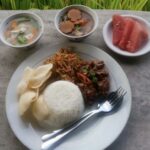
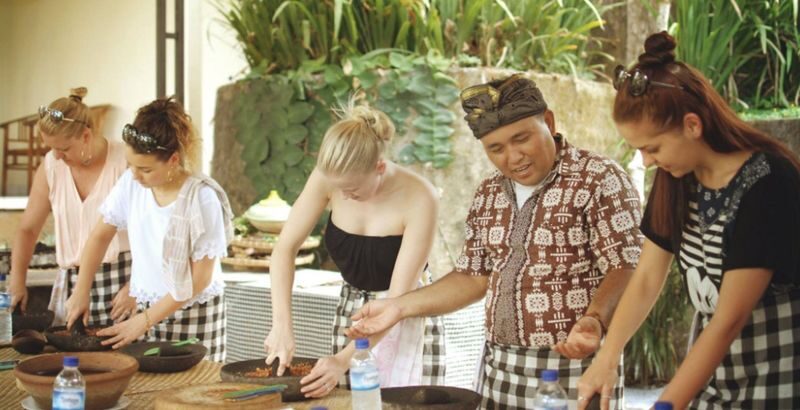
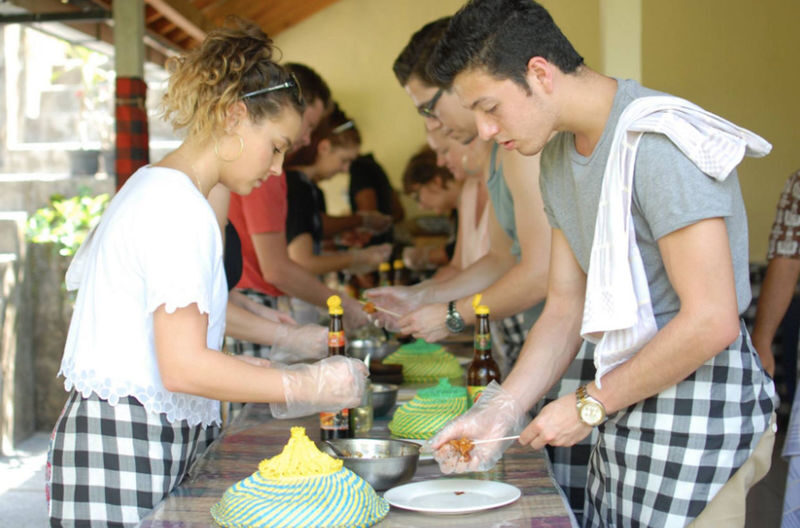
At the cooking area, Ketut and the team lead you through a menu of Balinese and Indonesian dishes. The sample standard menu includes chicken soup, peanut sauce, Balinese spice paste, Balinese fried chicken, chicken satay, fish grilled in banana leaf, fried noodles, and banana cooked in palm-sugar gravy. The exact dishes can vary with seasonal ingredients.
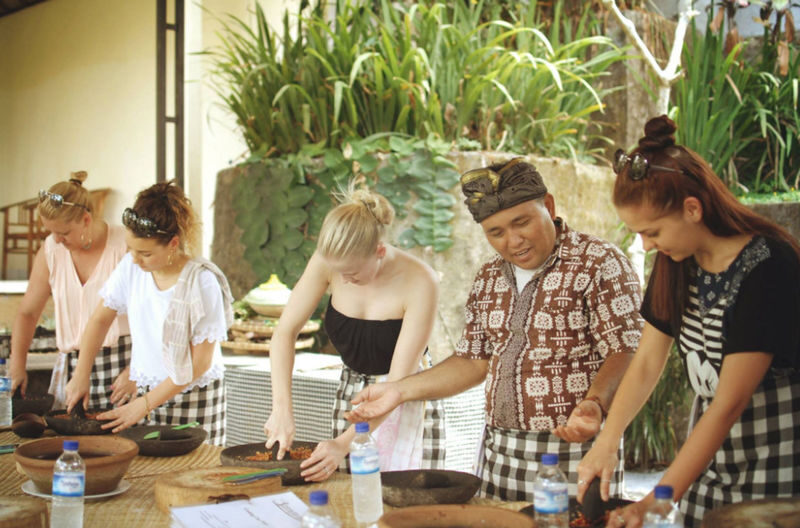
The class is built around several recipes rather than one elaborate dish. You may prepare ingredients, make sauces and spice pastes, and help with tasks such as stir-frying. Instructions are demonstrated and explained as you go, which makes the class accessible even if you are new to cooking.
The practical value is that you see how a few key preparations feed into different dishes. A spice paste or peanut sauce is more than a single recipe step: it gives you a useful starting point for recreating Balinese flavors at home. You receive recipes to take with you, according to participants who have completed the class.
This is not necessarily a long, highly technical course. With eight dishes to get through, the team keeps the session moving. Some participants have found the hands-on work satisfying, while one account describes a much shorter and more rushed class. If you want to spend a long time mastering each technique, this format may feel too quick; if you want an energetic introduction and a substantial meal, the pace makes sense.
The staff may help with preparation and cleanup so the work area stays orderly. That can make the experience comfortable, especially for families and first-time cooks, but it also means you may not personally handle every part of every dish. Ask questions as you go if you want more detail about a technique or ingredient.
Ketut’s teaching style sets the tone
Ketut is described as a funny, engaging host, and that matters in a class where the group is preparing many dishes together. His easygoing style helps make the session feel social rather than like a formal demonstration. The team also assists with instructions and practical tasks.
Other instructors have led classes too, including Made and Marty. The precise teacher may vary, but the format remains a guided group lesson with demonstrations and help as you cook. Clear explanations are especially useful when the ingredients or cooking methods are new to you.
The class is also well suited to families. Children aged six and older can participate, and families with school-age children have found the steps manageable. Younger cooks can take part in simple tasks, with adults keeping an eye on knife use. The overall mood is relaxed, but it is still a working kitchen with hot pans and sharp tools.
Vegetarian cooking is a real option
You do not have to eat meat to take part. The sample vegetarian menu includes cucumber and tomato soup with red beans in turmeric broth, peanut sauce, Balinese spice paste, vegetable curry, tempeh and tofu satay, grilled mushrooms in banana leaf, fried noodles, and banana dessert.
That is a proper alternative menu, not simply a meat dish removed from the plate. The class can also accommodate other stated dietary needs, including allergies and gluten intolerance. Share your requirements when booking so the team has a chance to plan for them.
If you have a serious allergy or a complicated dietary restriction, be specific about what you need. The information provided says special requirements can be accommodated, but it does not spell out how each ingredient is handled or whether cross-contact can be prevented. Confirm details directly before you book if that distinction is important.
Morning lunch or afternoon dinner
The morning option begins with pickup based on your hotel location, then the market visit and cooking class. Lunch is scheduled for about 12:30. This is the better choice if you want both the market and the meal, and it leaves the afternoon free for other plans.
The afternoon class starts at about 15:00, with dinner scheduled around 19:00. It skips the market, so you get more direct time for cooking and eating. Choose it if you prefer a later start or have already explored local markets.
In practice, the actual finish can be earlier than the stated meal time. One afternoon participant, for example, said the class and dinner ended around 17:00. Keep that in mind if you are arranging other plans, but do not count on a precise finish time.
You can also read our reviews of more tours and experiences in Ubud



Transfers make the trip easier, with a few caveats
Round-trip transfers are included for the Ubud area, and hotel pickup is shared with other participants. Published pickup times are listed as 08:00 or 14:30 for Ubud, 06:30 or 13:00 for Nusa Dua and Kuta, and 07:00 or 13:30 for Sanur. Pickup can run early or late, so be ready in your hotel lobby ten minutes before the selected time.
Pickup outside Ubud may carry a surcharge. The provider’s instructions also say to enter your hotel name and address at checkout. If your pickup arrangements are unclear, confirm them in advance rather than assuming that every hotel or session has identical service. One afternoon participant reported being directed to a meeting point instead of receiving hotel pickup, so it is sensible to double-check.
Bali traffic can disrupt a tight schedule. One family arrived late because of traffic and was still welcomed into a faster-paced session. That is kind, but it is not a reason to cut your pickup time close. If you miss the pickup, the instructions say to go directly to the meeting point.
Is the price good value?
The stated starting prices differ slightly: the package price is listed from US$20.39, while another summary gives US$22.39. Treat that as a starting range, not a guaranteed final total, and check the price for your date and group before paying.
For that price, the experience includes instruction, cooking ingredients and equipment, eight dishes, and a meal. The Ubud-area transfers add practical value, especially if you would otherwise need to arrange transport to Laplapan. The morning market visit is an added part of the morning session, not an extra feature of the afternoon option.
The best value comes if you want both an activity and a meal, and you are curious enough to use the recipes later. If your priority is a slow, advanced cooking course, or a market visit focused entirely on everyday local shopping, this may not be the best match. It is better understood as a friendly, efficient introduction to Balinese food.
A few useful details before booking
The class is held at Ketut’s Bali Cooking Class on Jalan Raya Laplapan Banjar, Laplapan, Ubud. Participants must be at least six years old, and the activity is not wheelchair-accessible.
Bring a mobile voucher for entry. The voucher is valid only on the date and time booked. Changes are generally allowed until 24 hours before the activity, though some booking types are excluded. A full refund is available for cancellations made at least 24 hours before the activity date, in local time.
Should you book Ketut’s cooking class?
Book it if you want a cheerful, hands-on introduction to Balinese dishes, value having a meal included, or are traveling with children who enjoy helping in the kitchen. The morning session is the clear pick if you also want to see a local market and learn about ingredients before cooking.
Think twice if you want every dish prepared slowly from start to finish, or if you expect the market visit to be a purely local shopping experience. For most curious eaters, though, this is a practical way to spend half a day, learn a few useful techniques, and leave with recipes as well as a very full stomach.
Cooking Class by Ketut’s Bali
“Experience: The cooking instructor's explanation was as entertaining as a comedian's.”
FAQ
How many dishes do you make?
The class includes eight Balinese signature dishes. The menu can change depending on the season and ingredient availability.
Is the market tour included in both sessions?
No. The traditional market tour is included with the morning session. The afternoon session starts with the cooking class.
What time does the morning class start?
The market visit is scheduled for 08:30, followed by the cooking class at about 09:30. Lunch is scheduled around 12:30.
What time does the afternoon class start?
The afternoon cooking class is scheduled to start at 15:00, with dinner around 19:00.
Are vegetarian dishes available?
Yes. A sample vegetarian menu includes vegetable curry, tofu and tempeh satay, grilled mushrooms in banana leaf, fried noodles, and banana dessert.
Can the class accommodate allergies or other dietary needs?
The activity can accommodate dietary requirements, including allergies, gluten intolerance, and vegetarian diets. Provide your requirements when booking.
Are hotel transfers included?
Round-trip shared transfers are included from the Ubud area. Pickups outside Ubud may incur a surcharge.
What is the minimum age?
Participants must be at least six years old.
Is the cooking class wheelchair-accessible?
No. The activity is not wheelchair-accessible.
What is included in the price?
The class includes eight dishes, ingredients, cooking equipment, and an English-speaking instructor. The morning session also includes the market tour, and Ubud-area round-trip transfers are included.