Lisbon’s central districts tell a clear story of a city remade. This 90-minute German-language walk links Rossio, Baixa and Chiado, using their squares, streets and landmarks to explain the earthquake of 1755, the rebuilding led by the Marquês de Pombal and the people who shaped Lisbon.
I like two things in particular: the focus on history tied to places you can see, and the promise of personal stories and practical local tips, not just dates and grand buildings. The main consideration is that it is a short, continuous walk, and it is not suitable for wheelchair users or people with mobility impairments.
- Rossio brings royal history into the city’s everyday center, a useful place to start understanding Lisbon’s public life.
- Baixa shows the scale of post-earthquake reconstruction, with orderly streets and Praça do Comércio at its grand end.
- Chiado adds a literary and artistic thread, including its association with poet Fernando Pessoa.
- Guide Robert leads the tour in German, with visitors especially valuing his clear explanations, friendly manner and readiness to answer questions.
- At 1.5 hours and $22 per person, it is a compact orientation walk, not a full-day history course.
- Expect a street-level tour rather than a quiet lecture hall: city noise can make it harder to hear, and no headphones are specified.
- A short walk through Lisbon’s long story
- Rossio: a square with royal echoes
- Baixa: reading the city after the 1755 earthquake
- Chiado: poets, cafés and Lisbon’s cultural side
- Robert’s style: clear German, questions and local tips
- Is good value for 90 minutes?
- Practical points before you book
- Should you book this Lisbon walk?
- FAQ
- What language is the tour in?
- How long does the walk last?
- Which parts of Lisbon does the tour visit?
- What is included in the price?
- Are hotel pickup, transport, food or drinks included?
- Is the tour suitable for wheelchair users?
- Can I cancel, or reserve without paying right away?
- The Best Of Lisbon!
- More Walking Tours in Lisbon
- More Tours in Lisbon
- More Tour Reviews in Lisbon
- Not for you? Here's more nearby things to do in Lisbon we have reviewed
A short walk through Lisbon’s long story
The route is designed to make Lisbon’s history legible. You move from Rossio, a central square with royal associations, through Baixa, whose symmetrical plan reflects the city’s reconstruction after the 1755 earthquake, and onward to Chiado, known for its artistic and literary connections.
That sequence gives you more than three names to remember. It links the city’s public center, its planned rebuilding and its cultural life in a single walk. For a first visit, that can be a practical way to get your bearings and understand why Lisbon looks as it does.
The tour’s scope is broad, but the time is limited. In 90 minutes, you can expect a brisk introduction rather than an exhaustive account of every monument or neighborhood. The guide’s stories and explanations help connect the main sights, while the short format leaves you time to return to places that catch your interest.
You can check availability for your dates here:
👉 See our pick of the 19 Best Shopping Tours In Lisbon
Rossio: a square with royal echoes
Rossio is Lisbon’s lively central square and a natural starting point for a tour of the city’s core. Its royal history gives the guide a way to introduce Portugal’s past through a place that still functions as part of daily city life.
That mix is useful. A square is not just a backdrop for a history lesson: it helps you see how public spaces connect people, power and the city’s routines. Robert’s approach, as described by the tour, includes stories about kings, revolutionaries and ordinary people. Those human details can make a familiar-looking square feel less like a stop on a checklist.
The tour does not promise a long, stand-alone history of Rossio, so expect the square to serve as one chapter in a larger account. If you want to linger, study architectural details or take a break, you may prefer to come back on your own after the walk.
You can also read our reviews of more walking tours in Lisbon


Baixa: reading the city after the 1755 earthquake
Baixa is the clearest place on this route to understand the scale of Lisbon’s rebuilding. The 1755 earthquake devastated the city, and the area’s symmetrical streets reflect reconstruction under the Marquês de Pombal. Here, the history is written into the urban plan.
I find that context especially valuable because it gives you a reason to look beyond individual façades. A regular street pattern can seem like a simple design choice until you learn that it belongs to a deliberate effort to rebuild after catastrophe. The tour connects that physical order to the Enlightenment and to the decisions made by Pombal’s government.
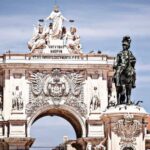
The route also includes Praça do Comércio, a magnificent square that adds scale to Baixa’s story. Expect the guide to explain its place in the city’s history and reconstruction, rather than treating it only as a scenic pause. This stop can help you understand how Lisbon’s central district was intended to work as a planned whole.
There is a trade-off to keep in mind. Baixa is a busy central area, and street noise may make it harder to catch every word. One visitor specifically wished for headphones because the guide was sometimes difficult to hear above the city sounds. If you have trouble hearing in noisy places, stay close to Robert and ask him to repeat a point when needed.
Chiado: poets, cafés and Lisbon’s cultural side
Chiado changes the mood of the walk. Where Baixa’s story centers on rebuilding and urban design, Chiado is presented as an artistic neighborhood associated with poets and thinkers. Fernando Pessoa, one of Portugal’s best-known poets, is part of the area’s literary identity.
That shift gives the tour a broader view of Lisbon. A city is not only its rulers, disasters and plans; it is also the place where people write, meet and argue. The tour aims to bring that everyday and cultural history into the walk, with anecdotes about both prominent figures and ordinary residents.
You should not expect a specialist literary tour. Chiado is one section of a compact city walk, so the guide’s discussion needs to fit alongside the history of Rossio and Baixa. If Pessoa is a particular interest, use the tour as a starting point and ask Robert what else to explore afterward.
Robert’s style: clear German, questions and local tips
The tour is led by Gheorghe Robert Candea, who goes by Robert in the tour’s feedback. His strongest qualities are consistent: he is described as friendly, relaxed, engaging and able to explain Lisbon’s past in good German. Visitors also value his willingness to answer questions and adjust to their interests.
That matters on a short walking tour. A guide who can respond to questions makes the experience feel less like a fixed speech and more like a conversation. Robert is also credited with sharing details beyond standard historical facts, including anecdotes and tips for the rest of your stay. Some visitors have received recommendations in a PDF, though you should not assume that format is included every time.
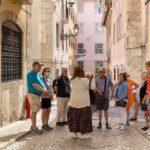
The personal feel may depend partly on the group size. Some walks have been very small, even just two or four people, which can make a tour feel close to private. That is a welcome possibility, not a promise. You may be in a larger group, and the information provided does not give a maximum group size.
Families may find the conversational style helpful. One family found that Robert could hold children’s attention, but the tour is still a history-focused walk, not a children’s activity. Consider your child’s interest in listening and walking for 90 minutes before booking.
More Great Tours NearbyIs $22 good value for 90 minutes?
At $22 per person, this is a modestly priced way to get a German-language introduction to central Lisbon. The fee covers a local guide, historical commentary and the walking tour. You are paying for interpretation and context, not transport, food or drinks.
The value is strongest if you are new to Lisbon, want to explore in German, or prefer a guide to connect the main districts into one coherent story. A good explanation of the earthquake and Pombal’s rebuilding can change how you see Baixa for the rest of your visit. The personal anecdotes and local recommendations add value beyond simply being shown the way.
It is less suited to anyone expecting an extended specialist tour or a slow, private visit to each landmark. Ninety minutes asks the guide to cover a lot, and some people will want more time at the places that interest them. Think of it as a well-focused orientation, then use the rest of your trip to follow up on what catches your attention.
The tour does not include hotel pickup or return transport, and food and drinks are not included. Plan to make your own way to the starting point and treat café stops or meals as separate plans. No starting time is specified here, so check the available times before you commit to a day.
You can also read our reviews of more historical tours in Lisbon






Practical points before you book
The guide speaks German, so this is best for people comfortable following a spoken tour in that language. The walk lasts 1.5 hours, and the route covers central areas including Rossio, Baixa, Praça do Comércio and Chiado.
It is explicitly not suitable for wheelchair users or people with mobility impairments. The tour information does not spell out the exact walking surface or route conditions, so if you have a specific mobility concern, contact the provider before booking rather than assuming the walk will work for you.
Street noise is the one practical issue worth taking seriously. Headphones are not listed as part of the experience, and it can be harder to hear a guide outdoors. Staying near Robert and speaking up if you miss something should help, but anyone who needs quiet conditions may prefer a different format.
The booking terms allow free cancellation up to 24 hours in advance for a full refund, and a reserve-now, pay-later option is available. Those terms give you some flexibility if your schedule is not settled.
Should you book this Lisbon walk?
Book this tour if you want a compact German-language introduction to Lisbon’s central districts, especially if the earthquake and reconstruction story interest you. Robert’s friendly, flexible style and the chance to ask questions are central strengths, while the route gives you a useful first framework for exploring Rossio, Baixa and Chiado.
Skip it if you need a wheelchair-accessible experience, want a long specialist tour, or would rather explore without a guide. For most German-speaking visitors looking for history, anecdotes and a practical first look at the city, $22 is a reasonable price for 90 minutes of guided context.
A walking tour through the history of Lisbon – in German
FAQ
What language is the tour in?
The live guide speaks German. The tour is intended for people who can comfortably follow spoken German.
How long does the walk last?
The tour lasts 1.5 hours. Starting times vary, so check availability for your chosen date.
Which parts of Lisbon does the tour visit?
The route covers Rossio, Baixa and Chiado, including Praça do Comércio. The tour focuses on the history, architecture and stories connected with these central districts.
What is included in the price?
The price includes a local guide, a walking tour and historical commentary.
Are hotel pickup, transport, food or drinks included?
No. Hotel pickup and return transport are not included, and food and drinks are also excluded.
Is the tour suitable for wheelchair users?
No. It is listed as unsuitable for wheelchair users and people with mobility impairments.
Can I cancel, or reserve without paying right away?
You can cancel up to 24 hours in advance for a full refund. A reserve-now, pay-later option is also available.
You can check availability for your dates here: