Charleston’s French Quarter is a place where a short walk can take you from a church founded in the 1600s to the harbor edge, past buildings that shaped the city’s religious, civic, and commercial life. This two-hour guided stroll helps you read those layers instead of just passing a handsome façade.
I like two things in particular: the route links landmarks you might miss on your own, including tucked-away alleys and old burial grounds, and its local guide gives the architecture a human voice. Geordie Buxton, also named as Georgie or Geordi in accounts of the tour, is known for lively storytelling and a ready sense of humor.
The trade-off is that this is a walking tour on cobblestones and old streets, not a sit-down history lesson. Bring comfortable shoes and water in warm weather, and allow for the fact that the route runs rain or shine unless the operator cancels for severe weather.
- Four Corners of Law: See four nationally registered buildings around one intersection, from St. Michael’s Church to City Hall.
- A church with deep roots: Visit the area around the French Huguenot Church, whose origins date to about 1681.
- A sobering stop: Learn about the Old Slave Mart’s baracoon, where enslaved people were confined in the 1850s.
- A street-level history lesson: Follow cobbled lanes and churchyards, with a guide pointing out details easy to overlook.
- Harbor views at the finish: Look toward the harbor’s forts, islands, and the Atlantic.
- A straightforward format: The walk lasts two hours, costs $33 per person, and includes a city-licensed guide.
- Start with Charleston’s old streets
- Four buildings, one powerful intersection
- Churches, churchyards, and Charleston’s early roots
- Cobblestones, alleyways, and the Pink House
- A necessary stop at the Old Slave Mart
- The route back toward the harbor
- What the guide adds to the walk
- Is a fair price?
- Practical details before you set out
- Should you book the French Quarter walk?
- FAQ
- How long is the Charleston French Quarter walk?
- How much does the tour cost?
- What is included in the price?
- What language is the tour in?
- Is the tour wheelchair accessible?
- What should I bring?
- Does the tour run in the rain?
- Can I cancel for a refund?
- Are there restrooms near the meeting point?
- What places does the route include?
- The Best Of Charleston!
- More Walking Tours in Charleston
- More Tours in Charleston
- More Tour Reviews in Charleston
- Not for you? Here's more nearby things to do in Charleston we have reviewed
Start with Charleston’s old streets
 1 / 9
 2 / 9
 3 / 9
 4 / 9
 5 / 9
 6 / 9
 7 / 9
 8 / 9
 9 / 9
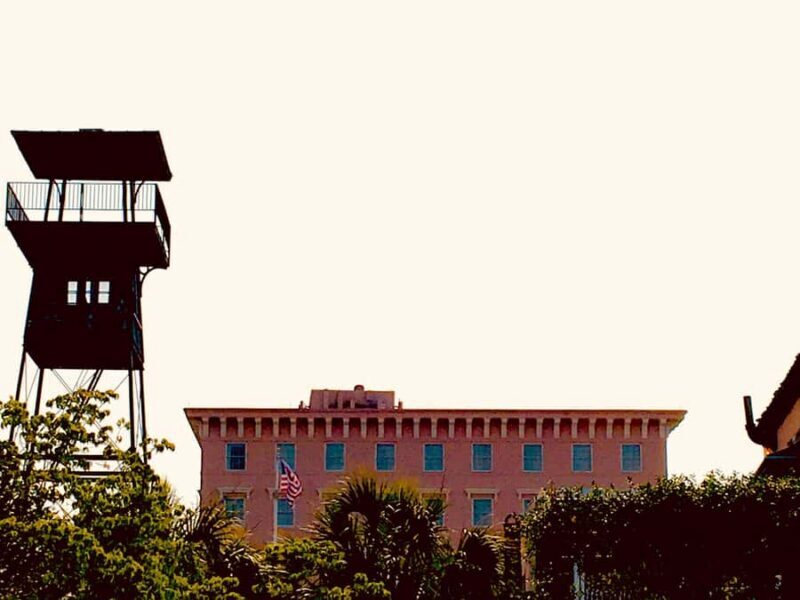
The French Quarter is compact, but its history is not. The walk follows part of the old walled city perimeter, taking you along cobbled streets and narrow alleyways that make more sense when someone explains what you are looking at. A guide can connect a church, a public building, and a modest-looking house to the city’s changing civic and commercial life.
This is a good introduction if you have just arrived in Charleston. It gives you a mental map and a set of landmarks to return to later, perhaps when you have time to step inside a church or explore a theater more slowly. If you already know the city, the value is different: a local guide may draw your eye to small architectural details or historic traces you have walked past before.
The tour is not built around long visits inside every building. Think of it as an outdoor history walk, with stops for explanation and time to take in the streetscape. That keeps the pace moving, but it also means you should not expect a full interior tour at each landmark.

👉 See our pick of the 2 Best Shopping Tours In Charleston
Four buildings, one powerful intersection
The Four Corners of Law is one of the clearest ways to understand Charleston’s civic center. At this intersection, four nationally registered buildings represent different parts of public life: St. Michael’s Church, the Charleston Federal building, the county courthouse, and City Hall.
St. Michael’s Church dates to about 1752. George Washington, General Charles Pinckney, and the Marquis de Lafayette worshiped there, a detail that gives the building a direct connection to major figures in early American history. Its age and imposing presence make it a natural anchor for the stop.
Across the intersection, the Charleston Federal building dates to about 1896. The Charleston County Courthouse, built around 1790, was designed by John Hoban, who also designed the White House in Washington, D.C. City Hall, dating to about 1800, was designed by Gabriel Manigault. The guide’s job here is more than reciting dates: these buildings help you see how religious, local, state, and federal authority sat close together in the young city.
You will likely spend time looking at the exteriors and hearing the stories attached to them. If architecture interests you, this is one of the richest stops on the route. If dates and design are not your thing, the guide’s stories can make the setting easier to follow, though the tour still asks you to pay attention to buildings and their context.
You can also read our reviews of more walking tours in Charleston


Churches, churchyards, and Charleston’s early roots
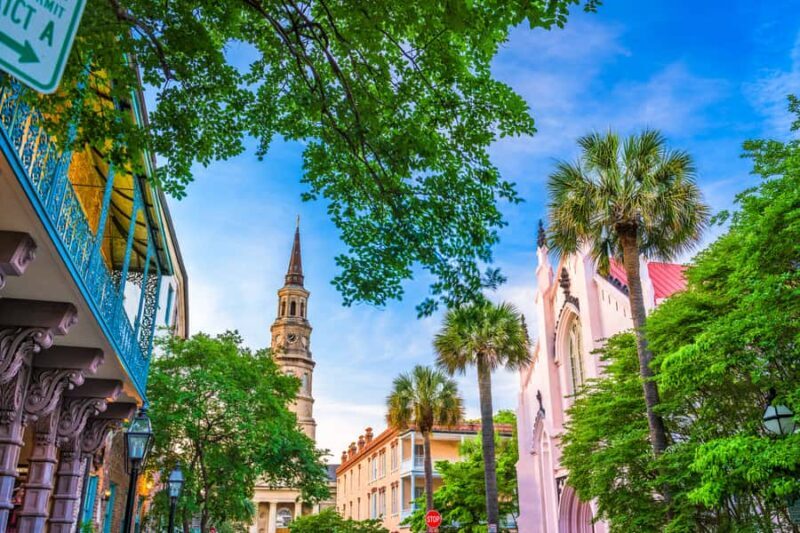
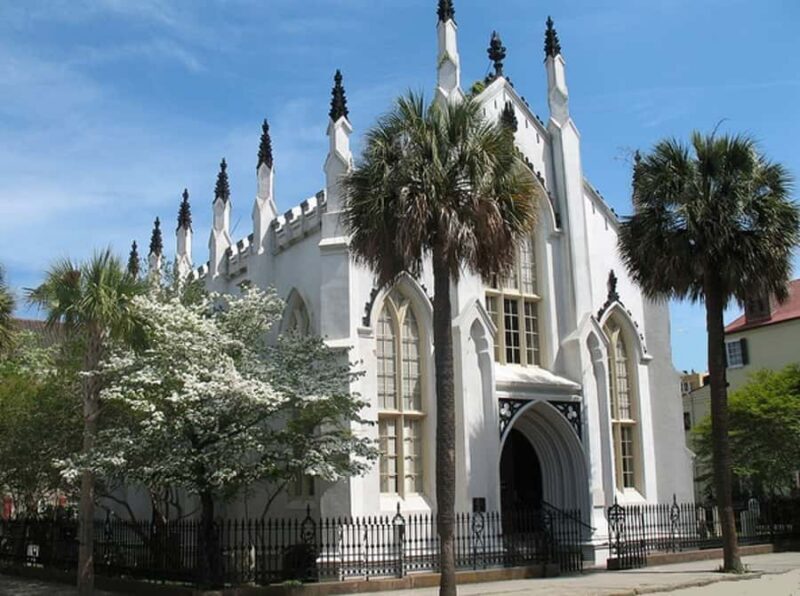
The route takes in some of the city’s earliest church history. The French Huguenot Church dates to about 1681 and is described for its Gothic Revival spires, which give it a distinctive silhouette among the older buildings. The congregation at St. Philip’s traces its history to 1680, making it another reminder of how early Charleston’s religious institutions took root.
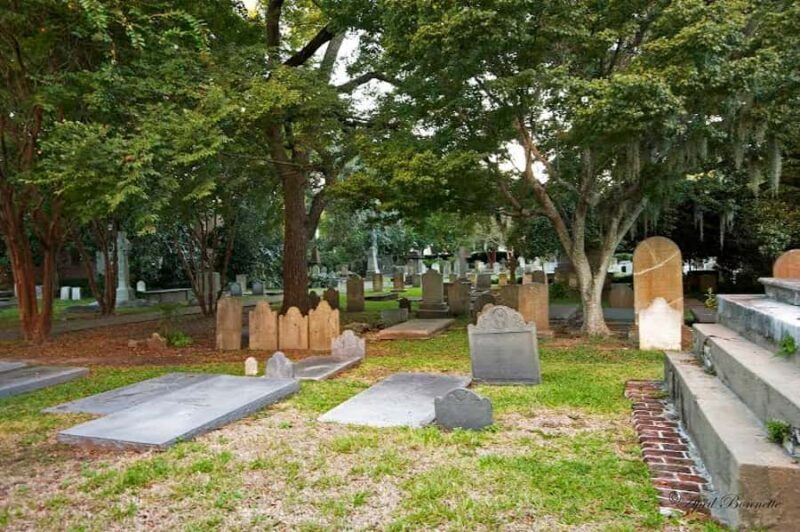
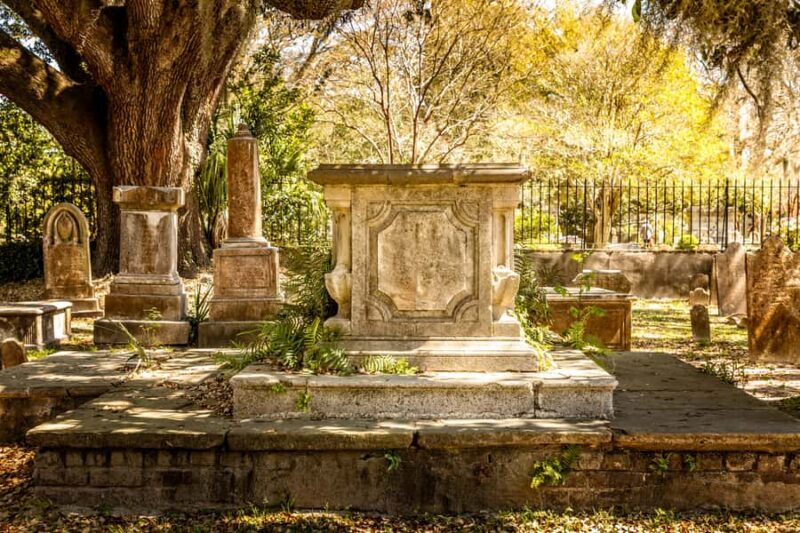
The guide also visits an old burial ground, where the final resting places of signers of the Declaration of Independence and the U.S. Constitution are part of the story. A cemetery can make history feel less abstract: names and dates sit in the same streetscape as the churches and public buildings that shaped the city around them.
The tour also points out the remains of a 17th-century drawbridge. It is a small trace of the old city’s defenses, and it helps explain why the walk follows the perimeter of a once-walled settlement. You will not see a complete fortification system, but you can get a sense of how Charleston guarded its approaches and harbor.
Cobblestones, alleyways, and the Pink House
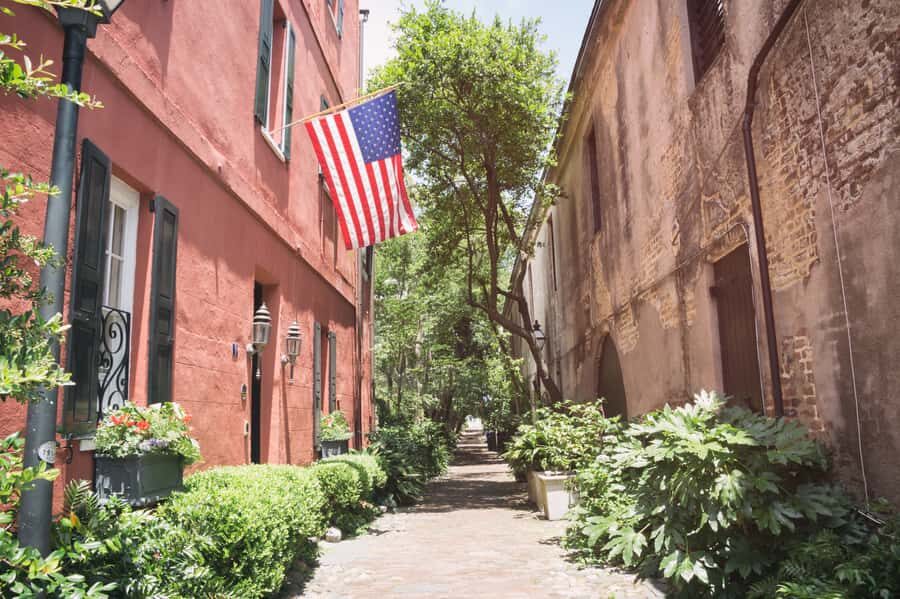
One of the pleasures of this walk is the change in scale. Big civic buildings give way to intimate lanes and older houses, where the story is told through materials, doorways, and street patterns. The Pink House, built between about 1688 and 1712, is a standout example. It was built of Bermuda stone, a detail that points to the wider connections behind Charleston’s early buildings.
The route also follows Charleston’s longest cobblestone road and passes Unity Alley. These are not polished museum corridors; they are parts of the city’s working street fabric. Keep your eyes up for buildings and details, but watch your footing too. Comfortable shoes are more than a suggestion on uneven old streets.
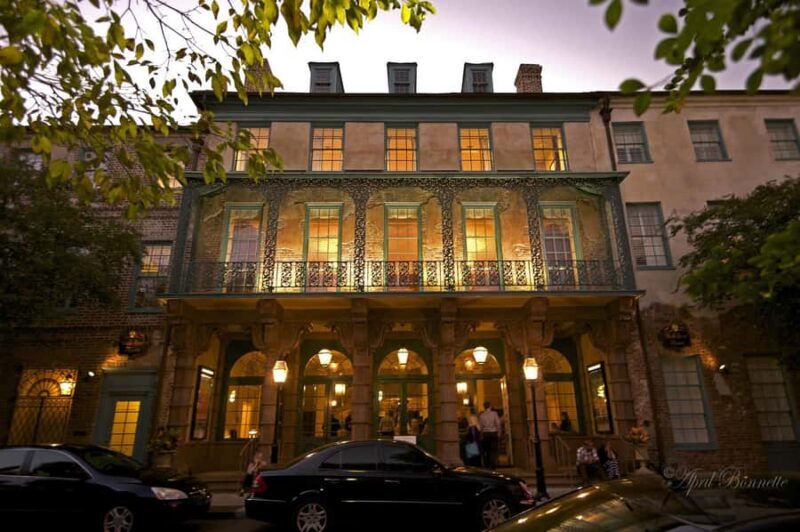
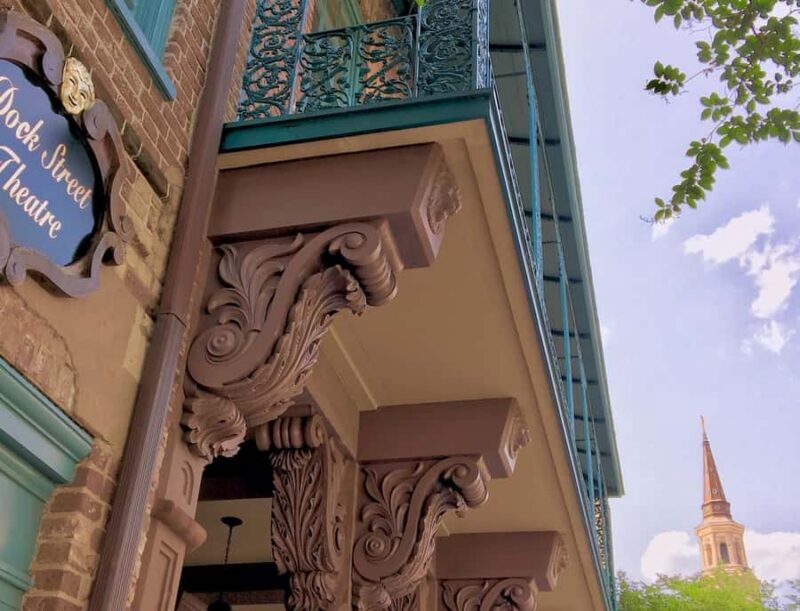
The walk includes a glimpse of Dock Street Theater, dating to about 1735. It is associated with the first theatrical performances in the United States. The tour gives you the setting and its place in local history, rather than promising a performance or a full visit inside. If the theater is open and you want to see more, ask your guide what is possible that day; access is not guaranteed by the tour details.
A necessary stop at the Old Slave Mart
The French Quarter’s handsome buildings and old streets tell only part of the story. The Old Slave Mart’s baracoon is a grave reminder that enslaved people were confined here in the 1850s. This is not simply another architectural curiosity. It marks the violence and commerce of slavery in Charleston, and deserves a clear-eyed moment within the walk.
A guided explanation can help place the site within the surrounding city rather than letting its name pass as a label. The tour also mentions a historic slave hotel. Those details make the route more complete, but they also mean the experience is not only a light stroll among picturesque façades. The history includes wealth and civic pride, but also coercion and human suffering.
If you want a tour focused exclusively on decorative architecture or social history, this walk may not go as deeply into either as a specialist experience would. Its strength is the broad view, connecting the city’s buildings and public spaces across several centuries.
More Great Tours NearbyThe route back toward the harbor
The walk ends with an expansive view toward Charleston Harbor, its castles, forts, and islands, with the Atlantic beyond. After two hours among close-set buildings and narrow lanes, the open water gives the route a satisfying change of scale. The view also helps explain the harbor’s part in Charleston’s maritime and military history.
The route includes parks and historic monuments as well as architectural stops. Depending on the pace and the group, you may also hear about the Old Exchange Building and the headquarters of General Robert E. Lee. The exact emphasis can vary with the guide and the day, so treat the walk as a guided overview rather than a promise of a fixed-length talk at every site.
The harbor is a good place to pause and connect the city’s street history to its wider setting. Forts and islands are not just scenery here; they shaped the approaches to the port and the city’s military past. Bring sunglasses and water when the weather is warm and sunny, since much of the experience takes place outdoors.
You can also read our reviews of more guided tours in Charleston



What the guide adds to the walk
A local storyteller can make a two-hour route feel less like a checklist. Geordie Buxton is named as a guide who has led this experience, and accounts of his tours describe a mix of detailed history, jokes, and practical local suggestions. Names appear in several spellings, including Geordie, Georgie, and Geordi, so do not assume that he will lead every departure.
The most useful guide style here is one that makes room for questions and explains why a building matters, not just when it was built. Past descriptions of the walk point to stories about nearly every building along the way, with humor helping keep the pace lively. The guide has also been described as accommodating and considerate around other groups in the busy historic district.
The tour can sometimes feel more personal when the group is small, but group size is not specified, so do not book on the assumption that it will be private. What you can count on is an English-speaking, City of Charleston licensed guide and a two-hour walking format.
Is $33 a fair price?
At $33 per person, the price is reasonable if you want context, route planning, and access to a local guide’s knowledge in one compact experience. You could walk past many of the same exteriors for free, but the value lies in understanding what you are seeing: why the Four Corners of Law matter, what the old churchyards contain, and how the port shaped the city.
The two-hour length is useful for a first visit or a busy itinerary. It is long enough to cover a wide range of sites, yet short enough to leave time for lunch, a museum, or another walk afterward. If you want detailed access to interiors or an in-depth account of one topic, you may prefer a more specialized tour or a longer visit on your own.
The experience includes the guided walk and the licensed guide. It does not list food, transport, or admission to interiors as included, so plan for the tour as an outdoor stroll with explanations at the sites.
Practical details before you set out
Wear comfortable shoes. The route includes cobblestones, alleys, and churchyards, so footwear that handles uneven ground will make the walk easier. In warm, sunny weather, bring water and sunglasses; there is little reason to make a two-hour walk harder than it needs to be.
The activity is listed as wheelchair accessible, but the route’s historic surfaces are worth clarifying before you book if you need specific access details. Ask the operator about the exact route and ground conditions for your date. Smoking is not allowed on the tour.
The meeting point has benches, and a public parking garage is directly opposite. Restrooms are available in the garage at 25 Prioleau Street, a useful detail if you are arriving early or want a bathroom stop before setting off. Tours run rain or shine. If the supplier cancels because of inclement weather, you can receive a refund or reschedule. You can cancel up to 24 hours in advance for a full refund; cancellations inside that window are non-refundable, though rescheduling is allowed.
Should you book the French Quarter walk?
Book it if you want a well-paced introduction to Charleston’s old center, with a local guide connecting churches, civic buildings, alleys, and harbor history. It is especially useful early in a stay, when you can use the walk to choose which places deserve a return visit. The guide’s storytelling and humor are a strong part of the appeal, but the real value is the way the route ties individual buildings to the city’s larger story.
Skip it if you would rather explore entirely at your own pace, avoid uneven walking surfaces, or spend substantial time inside historic buildings. For most visitors with two hours to spare, comfortable shoes, and an interest in Charleston beyond its pretty streets, $33 buys a practical orientation and a thoughtful look at both the city’s beauty and its harder history.
Charleston: French Quarter Guided Walk
FAQ
How long is the Charleston French Quarter walk?
The guided walking tour lasts two hours.
How much does the tour cost?
The listed price is $33 per person.
What is included in the price?
The price includes a two-hour guided walking tour and a City of Charleston licensed tour guide.
What language is the tour in?
The live tour guide speaks English.
Is the tour wheelchair accessible?
It is listed as wheelchair accessible. Since the route includes cobblestones and alleyways, ask the operator about the surfaces and route details if you need specific access information.
What should I bring?
Wear comfortable shoes. Bring water and sunglasses if the weather is warm and sunny.
Does the tour run in the rain?
Tours run rain or shine. If the supplier cancels because of inclement weather, you can receive a refund or reschedule.
Can I cancel for a refund?
You can cancel up to 24 hours in advance for a full refund. Cancellations within 24 hours are non-refundable, but you may reschedule.
Are there restrooms near the meeting point?
Yes. Restrooms are available in the public parking garage at 25 Prioleau Street, directly opposite the meeting point.
What places does the route include?
The route includes the Four Corners of Law, St. Michael’s Church, the French Huguenot Church, the Pink House, Dock Street Theater, Unity Alley, the Old Slave Mart baracoon, historic churchyards, and a view of Charleston Harbor.
You can check availability for your dates here: