Tram 28 is not a sightseeing bus on rails. It is a working public tram, rattling up Lisbon’s steep streets before this tour turns into a downhill walk through old neighborhoods, river-view lookouts, and the city center. That mix of everyday transport and landmark stops gives you a useful first look at Lisbon.
I like two things in particular: the small group, capped at six, makes it easier to hear your guide and ask questions, and the route links Alfama’s viewpoints with Baixa and Chiado instead of keeping you in one neighborhood. The Manteigaria stop adds a tasty, practical detour: you can watch the custard tarts being made, then buy one if you want to try it.
The main consideration is the walking. The tram ride is short, but most of the 2.5 to 3 hours are spent on foot, and the tour is not suitable for people with mobility impairments. Tram seats are not guaranteed, either, so be ready to stand for the ride uphill.
- What to know before you go
- A vintage tram ride that starts the story
- Graça’s view of São Jorge Castle
- Manteigaria and the pastel de nata pause
- Alfama from Portas do Sol and Santa Luzia
- From Lisbon Cathedral to Saint Anthony
- Baixa’s rebuilt streets and Rua Augusta
- Bertrand Bookstore and Chiado’s literary side
- What the price gets you
- Pace, comfort, and who will enjoy it
- Should you book this Lisbon walk?
- FAQ
- Is the Tram 28 ride private?
- How long does the tour last?
- Is a Pastéis de Nata tasting included?
- Which languages are available?
- How large is the group?
- Is the tour suitable for people with mobility impairments?
- The Best Of Lisbon!
- More Walking Tours in Lisbon
- More Tours in Lisbon
- More Tour Reviews in Lisbon
- Not for you? Here's more nearby things to do in Lisbon we have reviewed
What to know before you go
 1 / 7
 2 / 7
 3 / 7
 4 / 7
 5 / 7
 6 / 7
 7 / 7
- Tram 28 is a public ride, not a private tour vehicle. Expect about 25 to 30 minutes aboard, with no guaranteed seat.
- The route begins high and mostly heads downhill. You get hilltop views early, then walk through Alfama, Baixa, and Chiado.
- Graça and two Alfama viewpoints frame the city. Look for views of São Jorge Castle, red-roofed Alfama, and the Tagus River.
- The pastel de nata stop is a look inside the process, not a tasting included in the price. You can buy a tart and espresso at Manteigaria.
- Groups are limited to six. That makes questions and conversation easier, but the guide asks the group to stay together and not stop for shopping.
- The tour costs $38 per person and takes 2.5 to 3 hours. Meals, food, desserts, personal spending, and church interiors are not included.

👉 See our pick of the 19 Best Shopping Tours In Lisbon
A vintage tram ride that starts the story
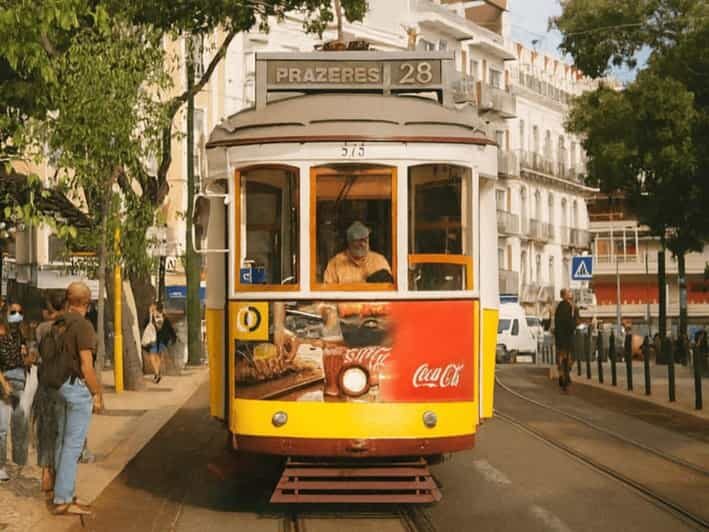
The tour opens with a ride on Elétrico 28, the famous yellow tram built to handle Lisbon’s narrow lanes and sharp gradients. This is a direct public-transit ride to the hilltop, not a hop-on, hop-off circuit, so the experience is about feeling the tram work its way through the city rather than stopping for commentary at every landmark.
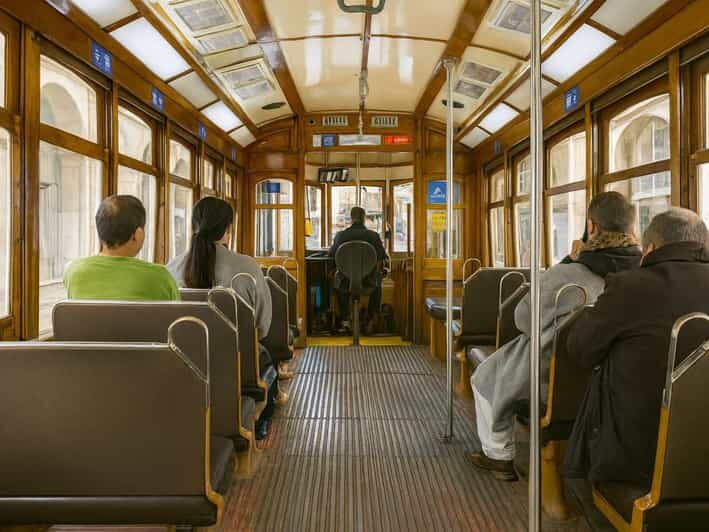
The ride lasts roughly 25 minutes, though the important practical detail is that seating is not guaranteed. Tram 28 is a public line used by locals as well as visitors, so you may stand. Keep your belongings close, especially in a busy carriage. One tour participant had a wallet stolen during the outing, a sobering reminder to be alert without letting it spoil the ride.
The tram brings you up toward Graça, where the walking portion begins. The climb happens by rail, which is a smart way to reach the high ground without spending the tour’s energy walking uphill. From there, the route is mostly downhill, though you will still be on your feet for much of the outing.
You can also read our reviews of more walking tours in Lisbon


Graça’s view of São Jorge Castle
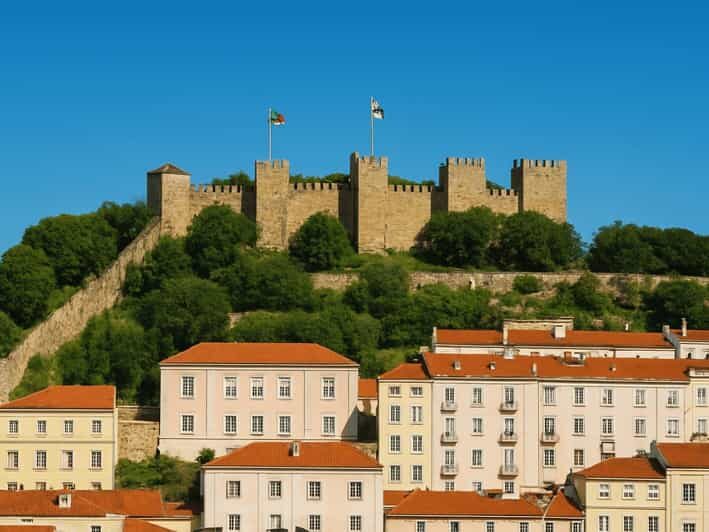
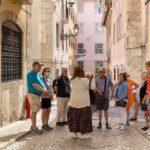
At Miradouro da Graça, the first pause gives you a broad view across Lisbon and toward São Jorge Castle. The castle’s position above the city helps explain the shape of the old districts: the streets spill down from the heights toward the river, and the fortification has watched over that scene for centuries.
This stop is brief, around ten minutes, and built around sightseeing, photos, and the guide’s introduction to the city. It is a good moment to orient yourself before the walk descends into the older quarters. If you want a long, quiet stretch for photography, this is not designed as one; the tour keeps moving and has several more viewpoints ahead.
A local guide can make this first panorama more than a postcard stop. Carlos is often associated with this tour, and the experience can include stories about Lisbon’s past, local culture, and Fado. The small group format also makes it easier to ask follow-up questions than it would be on a large coach tour.
Manteigaria and the pastel de nata pause
After walking for about ten minutes, the group stops at Manteigaria, where you can watch Pastéis de Nata being made. This is a chance to see the production rather than just pick up a pastry from a counter. The stop lasts about ten minutes, so think of it as a quick taste of Lisbon’s baking culture, not a sit-down café break.
The custard tart is not included in the $38 price. You can buy one, and perhaps an espresso, before continuing. This distinction is worth knowing: the tour includes a visit, but not food or desserts. If you want to sample one, bring a little spending money.
Pastéis de Nata are one of Portugal’s most familiar treats, but watching them emerge fresh from the oven gives the stop a practical edge. You can judge for yourself whether this is the best tart in town. Some people on the tour have preferred it to the famous pastries they tried in Belém, but taste is personal, and Lisbon is a city where pastry opinions can become a serious matter.
Alfama from Portas do Sol and Santa Luzia
The route then reaches two of Lisbon’s best-known viewpoints: Miradouro das Portas do Sol and Miradouro de Santa Luzia. Each stop is allotted about ten minutes. Together, they offer sweeping views over Alfama’s red roofs and narrow streets, with the Tagus River beyond.
These overlooks help you see why Alfama feels so distinct from the planned grid below. Its old lanes wind down the hillside in an irregular pattern, and from above you can trace the neighborhood’s descent toward the water. The view is one of the tour’s strongest moments, especially if you are still learning how Lisbon’s hills and districts fit together.
The viewpoints are popular photo stops, so you may be sharing them with other people. The guide’s role is useful here: rather than simply pointing you toward the river, they can connect the view to the area’s history and daily life. The tour does not promise a long pause at either lookout, so take your photos promptly and listen for the group’s next move.
More Great Tours NearbyFrom Lisbon Cathedral to Saint Anthony
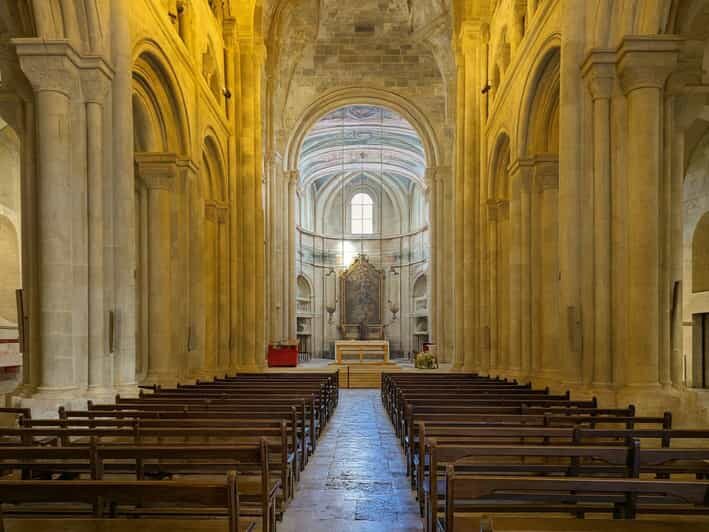
From the viewpoints, the walk continues downhill into the older part of the city. The group pauses outside the Sé de Lisboa, the city’s cathedral, for photographs and a look at its imposing façade. The stop is short, about five minutes, and the church interior is not part of the tour.
Nearby, you pass Santo António de Lisboa and the statue marking the place where Saint Anthony was born. This is a concise introduction to an important figure in Lisbon’s religious story. Again, the tour focuses on exterior views rather than entering either church, so plan a separate visit if you want time inside.
There is value in seeing these landmarks as part of a walk through their surrounding streets. You get a sense of how religious history sits within the living city, rather than treating each building as an isolated stop. The guide can add context along the way, while the short visits keep the route moving.




Baixa’s rebuilt streets and Rua Augusta
The route next crosses Baixa, Lisbon’s downtown district, which was rebuilt after the 1755 earthquake. Its orderly street grid and Pombaline architecture contrast with Alfama’s winding lanes. That contrast is one of the most useful lessons of the tour: Lisbon is not one uniform old town, but a collection of neighborhoods shaped by different moments in its history.
The group walks along Rua Augusta, the main pedestrian thoroughfare, toward the monumental Arco da Rua Augusta. The stop in Baixa lasts about 15 minutes and includes sightseeing and a brief guided look. You can take in the broad street, the arc, and the deliberate plan of this part of town.
This is a busy central district, and the tour does not set aside time for shopping. The group is asked to stay together, which helps keep a tight schedule but means you should save browsing for after the walk. The arc is a good visual endpoint for Baixa, even though the tour continues toward Chiado.
Bertrand Bookstore and Chiado’s literary side
In Chiado, the tour passes Bertrand Bookstore, founded in 1732 and recognized as the world’s oldest operating bookstore. It is a worthwhile landmark even if you are not planning to buy a book: its long life offers a window into Lisbon’s literary culture and the district’s role as an artistic center.
The final stretch ends at Largo do Chiado, beside Café A Brasileira. The café is associated with early twentieth-century artists, including poet Fernando Pessoa, and gives the finish a distinctly literary feel. Praça de Camões is only a few steps away, so you can carry on exploring from a central spot.
The ending is practical as well as atmospheric. You are not left on a distant hillside; you finish in a district with plenty of ways to continue your day. Guides may also offer suggestions for restaurants, Fado, and nearby sights, which is especially useful if this is your first day in Lisbon.
What the $38 price gets you
At $38 per person, the tour bundles a Tram 28 ticket, a guide, a small-group walk, and stops at several of Lisbon’s major viewpoints and central landmarks. You also avoid having to work out how to link the hilltop sights with the neighborhoods below on your own. For a first visit, that combination can be worth more than a longer list of stops without context.
The group cap of six is a key part of the value. It gives the guide room to answer questions and adjust the pace to the people in the group. Several participants have appreciated how Carlos explains the city, shares restaurant and Fado recommendations, and sometimes adapts the route or timing to suit the group. The language options are English, Portuguese, and Spanish, with the guide providing the tour in the languages represented in the group.
Still, the price does not cover everything you might expect from a food-themed outing. The tart, espresso, meals, and other personal expenses are extra, and there are no interior visits to churches. Treat the pastry stop as an opportunity to buy a snack, not as a prepaid tasting.
Pace, comfort, and who will enjoy it
This is a walking tour with a tram ride at the beginning, not a ride-based sightseeing tour. It lasts 2.5 to 3 hours, and after the tram you cover the route on foot, mostly downhill. Comfortable shoes and water are recommended, and you should be prepared to stay with the group rather than wander off for shops or extended photo stops.
The tour is best for someone who wants a compact introduction to Lisbon’s history, viewpoints, and central neighborhoods. It works particularly well early in a stay, when you can use the guide’s tips to plan the rest of your visit. If you already know the city, the local stories and side-street route may still appeal, but the main value is in getting your bearings across several districts.
It is not a good fit if you have a mobility impairment or need guaranteed seating on the tram. The tour does not specify a detailed step count or exact walking distance, so anyone concerned about the physical demands should consider that most of the outing is on foot and ask the operator for details before booking. For hot weather, a morning or later start may be more comfortable; one guide has adjusted a meeting time to avoid the heat.
Should you book this Lisbon walk?
I would choose this tour if you want to combine a real Tram 28 ride with a guided walk through Graça, Alfama, Baixa, and Chiado. The route gives you castle and river views, a look at the cathedral and Saint Anthony’s birthplace, a pastry-making stop, and a clear contrast between the old lanes and the rebuilt downtown grid. The small group and practical local advice are real strengths.
Skip it if you need a seated tour, want lengthy visits inside churches, or expect the food tasting to be included. Bring water, wear comfortable shoes, keep your belongings secure on the tram, and budget separately for a tart. If those terms suit you, $38 buys a well-connected introduction to Lisbon rather than a checklist of disconnected photo stops.
Lisbon: Tram 28, Alfama, and Custard Tart Walking Tour
FAQ
Is the Tram 28 ride private?
No. Tram 28 is a historic public tram line, not a private vehicle or hop-on, hop-off bus. The tour takes one direct ride uphill, and seating is not guaranteed.
How long does the tour last?
The experience takes about 2.5 to 3 hours. The tram ride lasts roughly 25 to 30 minutes, followed by a walking tour that is mostly downhill.
Is a Pastéis de Nata tasting included?
No. The tour stops at Manteigaria so you can see the tarts being made, but desserts and food are not included. You can purchase a tart or espresso separately.
Which languages are available?
The tour is offered in English, Portuguese, and Spanish. The guide provides the content in the languages represented in the group.
How large is the group?
Small groups are limited to a maximum of six people. Private tours are also available.
Is the tour suitable for people with mobility impairments?
No. The experience is not suitable for people with mobility impairments and involves walking for most of the tour. Comfortable shoes and water are recommended.
You can check availability for your dates here: