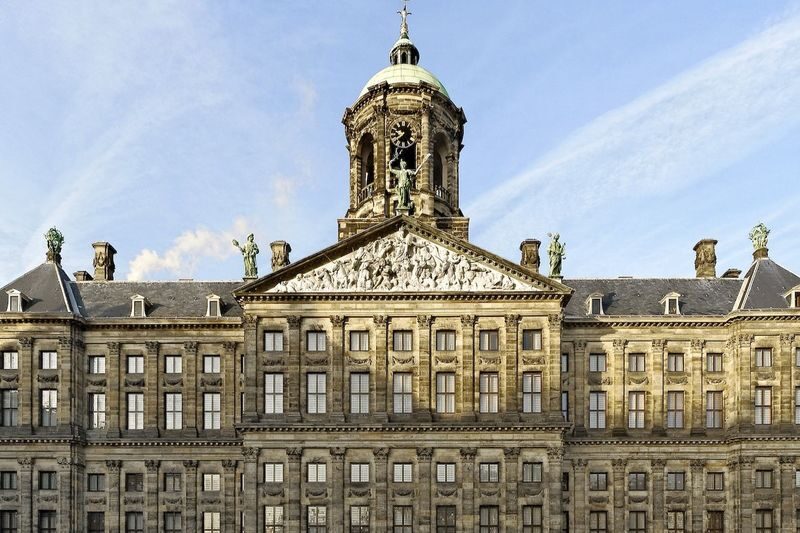
Amsterdam’s Royal Palace began as a city hall, then became a royal residence under Louis Napoleon in 1808. Today, it still hosts state visits and royal events, so you’re looking at a working palace as well as a historic building. I like that its marble halls and grand rooms make Dutch history feel tangible, not just something on a museum label.
Two things make a visit especially worthwhile: the free audio guide helps explain the art and palace rooms, and the furnishings, chandeliers and clocks offer a close look at life during Napoleon’s time in Holland. One consideration: some rooms may be closed or viewable only from the doorway, so access to every space is not guaranteed.
- A former city hall with royal duties: The 17th-century building became a palace in 1808 and still hosts official events.
- A useful audio guide: Choose from eight languages, or use the version for children aged 5 to 12.
- Art and furnishings worth slowing down for: Look for murals, chandeliers, clocks and works by Rembrandt’s pupils Ferdinand Bol and Govert Flinck.
- A flexible visit length: Plan on one to two hours, or follow a shorter highlights route of about 35 minutes.
- Easy to reach in central Amsterdam: The palace is on Dam Square, about six minutes on foot from Amsterdam Centraal.
- Good family access: Children aged 0 to 17 enter free with a paying adult, with valid ID required.
- A palace that began as Amsterdam’s town hall
- Start with the audio, not the room count
- Marble halls, murals and the details overhead
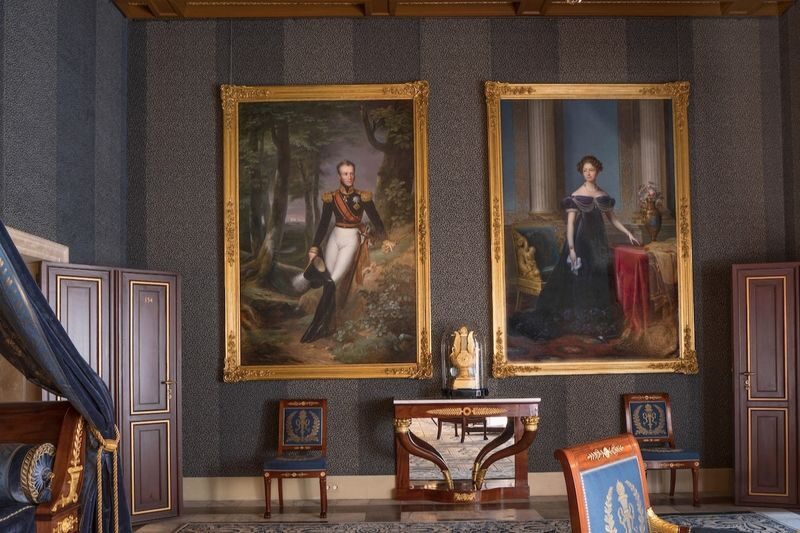
- Furnishings from Louis Napoleon’s time
- How long to spend inside
- Is a ticket from .65 good value?
- Getting there and planning your arrival
- Who will appreciate the palace most?
- Should you book the Royal Palace Amsterdam ticket?
- FAQ
- How much does admission to the Royal Palace Amsterdam cost?
- How long does a visit take?
- What are the opening hours?
- What languages are available for the audio guide?
- Do children need a ticket?
- How do I get to the palace from Amsterdam Centraal?
- Is the palace wheelchair-accessible?
- Can I use my ticket on another date?
- Can I cancel my booking?
- The Best Of Amsterdam!
- More Tours in Amsterdam
- More Tour Reviews in Amsterdam
- Not for you? Here's more nearby things to do in Amsterdam we have reviewed
A palace that began as Amsterdam’s town hall
 1 / 7
 2 / 7
 3 / 7
 4 / 7
 5 / 7
 6 / 7
 7 / 7
The Royal Palace sits on Dam Square, where it is hard to miss. Its original purpose was civic, not royal: this 17th-century building served as Amsterdam’s town hall before Louis Napoleon turned it into a palace in 1808. That shift gives the visit an unusual angle. You’re not only seeing royal rooms, you’re also stepping into a building tied to the city’s public life.
The palace is still used for state visits and royal gatherings. That adds a useful note of context as you move through its halls: these rooms are not simply preserved relics. They belong to a building that continues to serve official purposes, though what you can enter may vary.
For a first visit to Amsterdam, I like how easily the palace fits into a day in the center. It’s a substantial indoor attraction without needing a full day, and the square makes it simple to pair with a meal or other nearby plans. Just don’t treat the one-to-two-hour estimate as a strict limit. If you listen to the guide and pause to study the art, time can stretch.
👉 See our pick of the 24 Best Shopping Tours In Amsterdam
Start with the audio, not the room count
Admission includes an audio guide in Dutch, English, French, German, Italian, Mandarin, Russian and Spanish. There’s also a guide for children aged 5 to 12. The audio gives the building’s rooms and objects context, which matters here: the palace’s scale and decoration can be impressive, but a quick walk past everything won’t explain why it was built or how its role changed.
The tour begins with a short film, then the audio guide directs you through the visit by numbered stops. You can choose a highlights route of about 35 minutes or spend closer to an hour on the longer audio route. The full visit may take around 90 minutes to two hours, especially if you stop to look carefully.
I’d use the guide even if you usually prefer to wander on your own. It helps connect the building’s history as a town hall with its later royal use, and it points out details that are easy to miss when you’re focused on the size of the rooms. If you’re visiting with children, the separate child guide gives younger listeners a way into the story without asking them to follow an adult’s entire route.
You can also read our reviews of more tours and experiences in Amsterdam.



Marble halls, murals and the details overhead
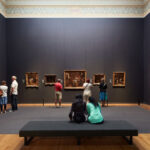
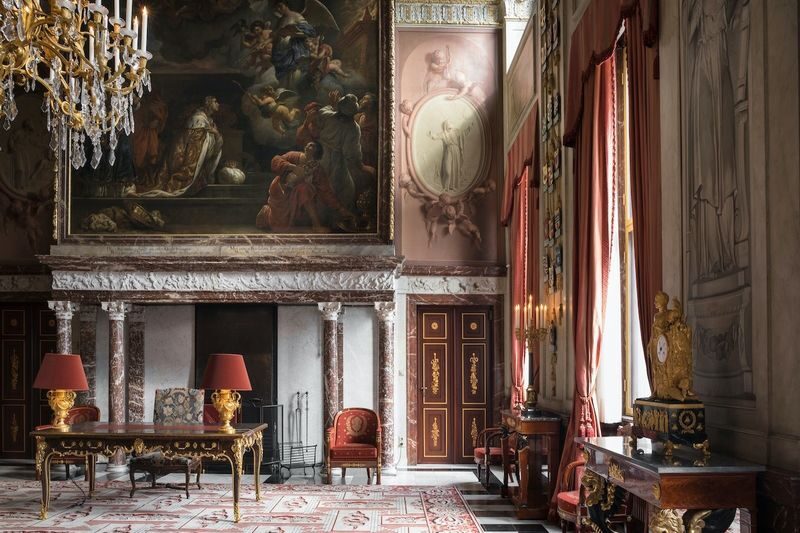
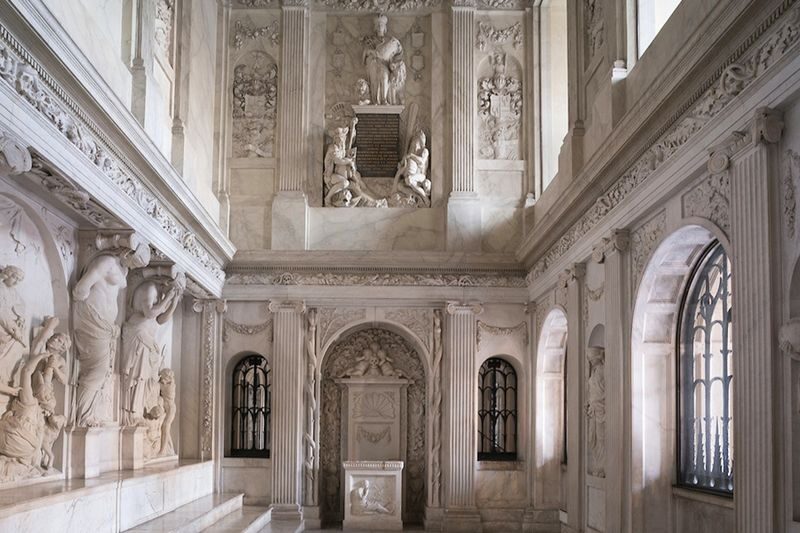
The palace is at its most striking in its large marble halls and formal chambers. Look up as well as across the rooms: chandeliers, ceiling details and murals contribute much of the visual effect. The decoration is not just background. It helps convey the wealth and civic ambition of the building’s earlier years, then its later royal role.
Art lovers should watch for works by Ferdinand Bol and Govert Flinck, both pupils of Rembrandt. The palace’s collection also includes sculptures and other artworks, so there is more to look at than furniture alone. You don’t need to recognize every artist to enjoy the rooms, but the audio guide can help you slow down and see individual pieces as more than decoration.
A practical note: some areas may be closed, under renovation or visible only from outside the room. Access can change, and a palace that hosts official events may not always offer the same experience throughout. If you arrive expecting to walk into every chamber, you may be disappointed. Treat the route as a chance to see a selection of important spaces, not a promise that every door will be open.
Furnishings from Louis Napoleon’s time
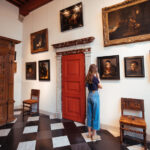
The palace’s imperial furnishings give the rooms a more personal scale. Among the objects to look for are well-preserved furniture, chandeliers and clocks associated with Louis Napoleon’s reign in Holland. They help you imagine how the palace was furnished and used, rather than leaving you with a string of grand interiors that all blur together.
You can’t touch the furnishings, so keep a respectful distance and take your time looking. The objects are part of the visit’s appeal precisely because they remain in their historic setting. For me, this is where the audio guide earns its place: a clock or chair can seem like a decorative object until you hear how it fits into the palace’s story.
Some rooms are restricted, and certain areas may be view-only. That is worth remembering if you’re particularly interested in interiors or want a close look at every piece. Still, the accessible rooms offer enough detail to make the visit rewarding, especially if you give the audio stops your attention rather than racing through them.
How long to spend inside
Set aside at least an hour, and ideally closer to two if you want to hear much of the audio and take in the art. A focused highlights visit can take about 35 minutes, while the longer audio route is roughly 60 minutes. Add time for the opening film, pauses in the rooms and any temporary exhibition that may be available.
The palace may not look enormous from outside, but the visit can take longer than expected once you start listening and studying the details. If your schedule is tight, pick the shorter audio route and keep moving. If you have breathing room, follow the longer route and let yourself pause at the murals, furniture and sculptures.
The palace is open daily from 10:00 a.m. to 5:00 p.m., with last admission 30 minutes before closing. That means you should aim to arrive well before 4:30 p.m. A late arrival leaves little room for the audio tour, and a visitor who reaches the entrance at closing time may not be admitted. This is not a place to squeeze in at the last minute.
Is a ticket from $16.65 good value?
Tickets start at $16.65, though the price can vary. For that cost, admission includes the audio guide, so you don’t need to pay separately for a basic explanation of the rooms. The value depends on what you enjoy: if historic interiors, architecture and Dutch history interest you, it’s a worthwhile use of an hour or two. If you prefer interactive displays or a large collection of objects to browse, the palace may feel more limited.
The audio guide is a key part of the value. It provides a structured way to understand the building, and the child version helps make the visit more accessible for families. The experience is self-guided rather than a live group tour, so you can move at your own pace and choose how much detail to hear.
Buying online can make entry simpler. The voucher is shown at the entrance, where it can be scanned. It may save you time compared with arranging admission in person, though it does not mean you should assume there will never be a queue. The price is not necessarily much lower than other ticket options, so convenience and the included guide are the stronger reasons to book this way.


Getting there and planning your arrival
The address is Nieuwezijds Voorburgwal 147, 1012 RJ Amsterdam, at the Royal Palace on Dam Square. From Amsterdam Centraal station, it’s about a six-minute walk. The Dam bus stop is about one minute away. Its central location makes it an easy stop to add to a day in the city, particularly if you’re already exploring the center.
Have your voucher ready to show at the entrance. The ticket is valid only on the date selected, and the activity information says to enter directly with the voucher. If you buy for the same day, check the closing time carefully before setting off.
Coats and backpacks may need to be checked, so travel light if you can. Storage is available according to practical information at the palace, but don’t arrive assuming you can keep a large bag with you throughout the rooms. The palace is stroller- and wheelchair-accessible, with an elevator, accessible toilet and wheelchairs available on-site. One carer can enter free with each disabled visitor who cannot visit independently.
Who will appreciate the palace most?
I’d recommend the palace to anyone curious about architecture, royal history or the story of Amsterdam beyond its canals. It also works well for a first day in the city: the central location is convenient, the visit is manageable, and the audio guide gives you useful background without requiring a scheduled live tour.
Families have a clear advantage here because admission is free for children aged 0 to 17 when accompanied by a paying adult. Bring valid ID for children, as it may be requested at entry. The child audio guide is aimed at ages 5 to 12, while older children can use the standard guide if they prefer.
The palace may be less satisfying if you have only a few minutes or expect access to every room. Some areas can be restricted, and the experience is largely about the historic rooms, art and furnishings. I’d choose it when you have at least an hour and are happy to look closely, rather than when you need a quick, entirely hands-on attraction.
Should you book the Royal Palace Amsterdam ticket?
Book if you want a central, manageable visit with real architectural and historical interest, and if you’ll use the audio guide to make sense of what you’re seeing. The included guide, multilingual options and free entry for children make the ticket practical, while the palace’s art and furnishings give you plenty to notice during a one-to-two-hour stop.
Think twice if your schedule only allows a late-afternoon dash or if you’ll be frustrated by rooms that are closed or view-only. For most visitors with an hour to spare, this is a worthwhile way to see a side of Amsterdam’s history that is easy to miss from the square alone.
Royal Palace Amsterdam Admission
“An ideal attraction for the first day of arrival, and right after exploring, you can grab a bite to eat.”
FAQ
How much does admission to the Royal Palace Amsterdam cost?
Tickets start at $16.65. The price may vary, so check the amount shown for your selected date before booking.
How long does a visit take?
Plan on one to two hours for the full visit. The audio guide includes a highlights route of about 35 minutes and a longer route of roughly 60 minutes.
What are the opening hours?
The palace is open Monday through Sunday from 10:00 a.m. to 5:00 p.m. Last admission is 30 minutes before closing.
What languages are available for the audio guide?
The adult audio guide is available in Dutch, English, French, German, Italian, Mandarin, Russian and Spanish. There is also an audio guide for children aged 5 to 12.
Do children need a ticket?
Children aged 0 to 17 enter free when accompanied by a paying adult. Bring valid ID for the child. A child audio guide is available for ages 5 to 12.
How do I get to the palace from Amsterdam Centraal?
The palace is about a six-minute walk from Amsterdam Centraal station. The Dam bus stop is about a one-minute walk away.
Is the palace wheelchair-accessible?
Yes. The palace is listed as wheelchair-accessible and has an elevator, an accessible toilet and wheelchairs available on-site. One carer can enter free with a disabled visitor who cannot visit independently.
Can I use my ticket on another date?
No. The voucher is valid only for the selected date, and for the selected time if a time applies.
Can I cancel my booking?
Free cancellation is available within 24 hours for bookings made more than two days in advance. Same-day and next-day bookings cannot be cancelled. If you issue the voucher in advance, the booking is non-refundable.