Dim sum is more than a plate of dumplings delivered to your table. At Maxim’s Dim Sum Academy, you get two hours with Cantonese cuisine chefs, learning the steps behind two traditional dishes. The best part is working with your hands, not just watching a chef cook.
I like that the menu can introduce you to very different dim sum, from soup dumplings and sesame balls to rice noodle rolls or egg tarts. I also like the practical extras: you receive an apron, a completion certificate and a HK$100 dinner voucher.
One caveat: this is a beginner-friendly group class, not a private lesson. Some steps may be demonstrated or prepared in advance, and the amount of hands-on time can vary by dish and class size.
- What to know before you book
- A two-hour lesson inside Maxim’s Palace
- From chef demonstration to your own dumpling
- A menu that reaches beyond dumplings
- The instructors make the lesson
- How much time you get to practise
- Is the price good value?
- Getting to MOKO and booking the right session
- Is this class right for you?
- FAQ
- How long is the Cantonese dim sum class?
- Where is the class held?
- What is included in the course fee?
- What language is the class taught in?
- What are the adult and family class fees?
- What ages can join the parent-child class?
- Which dim sum dishes will I make?
- When are classes offered?
- How early should I arrive?
- Can I change or cancel my booking?
- The Best Of Hong Kong!
- More Cooking Classes in Hong Kong
- More Tours in Hong Kong
- More Tour Reviews in Hong Kong
- Not for you? Here's more nearby things to do in Hong Kong we have reviewed
What to know before you book
 1 / 4
 2 / 4
 3 / 4
 4 / 4
- Two dishes in two hours: Learn selected items from a wider range of Cantonese dim sum, with techniques such as filling preparation, kneading, shaping and cooking.
- Menus vary: Examples from different sessions include soup dumplings, fried wontons, smiling sesame balls, coconut tarts and rice noodle rolls.
- A lesson with working chefs: Instructors named in past sessions include Master Kwan, Chef Wu and Chef Kwong. The team may vary by class.
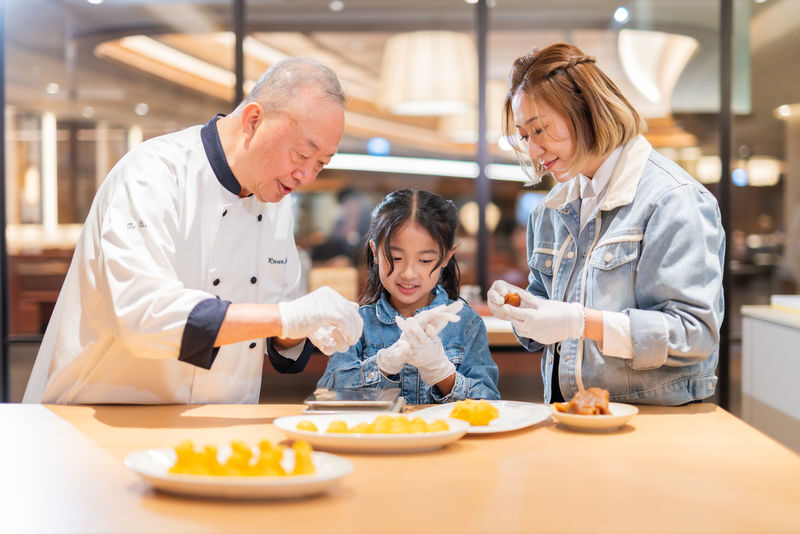
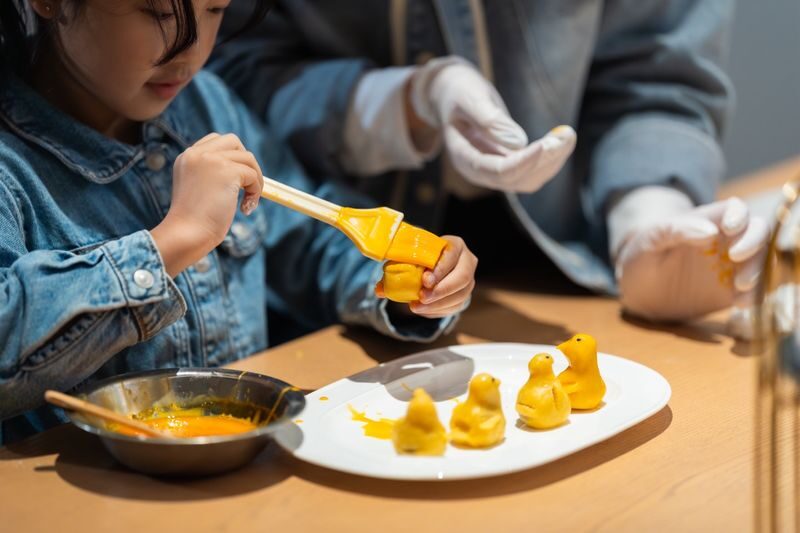
- A family option: The parent-child package is for one adult and one child aged 6 to 11. Children must be accompanied by an adult.
- Extras are part of the appeal: The class includes an apron, a certificate and a HK$100 dinner voucher for regular dine-in seating at Maxim’s Chinese Cuisine outlets.
- Plan your language and booking: Cantonese is the default. Ask about English or Putonghua when confirming your class, and reserve your date at least two days ahead.

👉 See our pick of the Best Historical Tours In Hong Kong
A two-hour lesson inside Maxim’s Palace
The class takes place in a designated area of Maxim’s Palace at MOKO, a branch of the Hong Kong restaurant group whose first restaurant opened in 1979. The academy’s purpose is to pass on some of the methods behind the restaurant’s Cantonese dim sum. That gives the class a useful connection to local dining culture: you are learning familiar restaurant foods in the setting of a Cantonese restaurant, rather than joining a general-purpose cooking demonstration.
The workshop lasts about two hours and covers two types of dim sum. The precise menu depends on the scheduled class. The academy’s course information says its wider programme covers more than 20 types, so check the class schedule before choosing a date if you have a particular dish in mind.
The lesson can include making fillings, working dough, shaping and cooking. That range matters because dim sum is often defined by small details: how a filling is seasoned, how dough is handled, or how a piece is formed before it goes into a steamer or oven. You may not master every technique in a single session, but you can leave with a clearer idea of how several of them work.
You can also read our reviews of more cooking classes in Hong Kong

From chef demonstration to your own dumpling
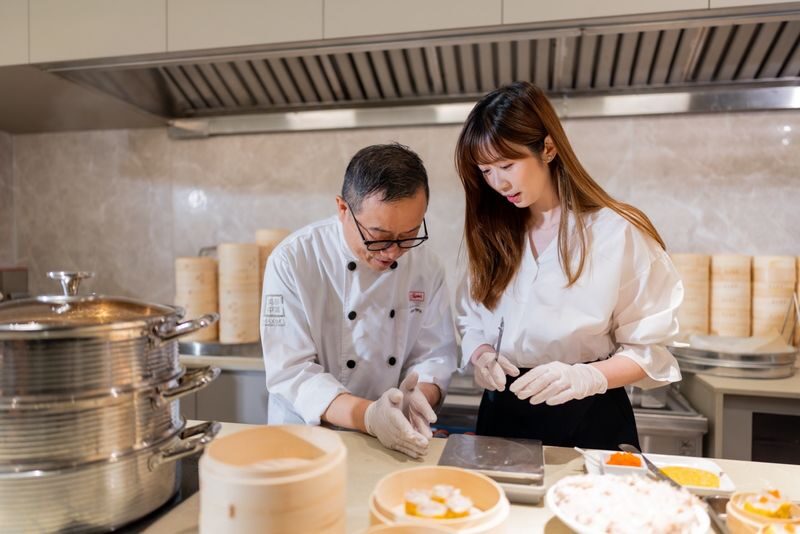
Expect the instructor to demonstrate a technique before you try it. In some sessions, ingredients have been measured or partly prepared in advance. That keeps the class moving and helps beginners focus on shaping or assembly, but it also means you may not do every step from raw ingredients yourself.
This is an important distinction when deciding what kind of cooking class you want. If you are hoping to learn an entire recipe from the first cut to the final cooking step, ask what the scheduled class includes. If you would rather have a guided introduction, with a chef showing you the process and helping you try key parts, the format may suit you well.
The hands-on share can depend on the dish and the group. For example, rice noodle rolls may offer plenty of room for participants to take part, while a more involved item may require longer demonstrations. A parent-child session has also been described as uneven in participation when a dish was demonstrated mainly by the instructor. If making every item yourself is a priority, check how the session is structured before paying.
A menu that reaches beyond dumplings
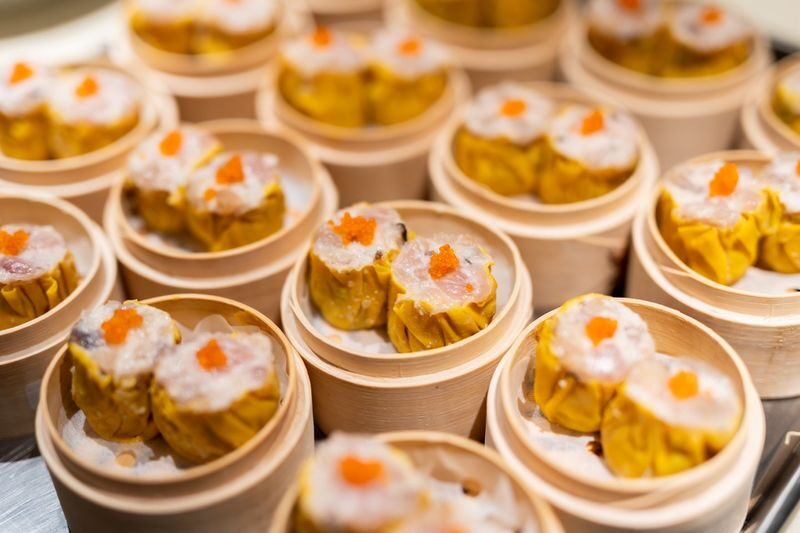
The menu examples give a sense of the variety available, though they should not be treated as a promise for any particular date. Past classes have included soup dumplings, fried wontons and smiling sesame balls, as well as rice noodle rolls, Chinese doughnuts known as sa yung, ginger milk pudding and pastries such as coconut and mini egg tarts. One session featured vegetarian shark fin dumplings.
That range can be a real strength. You might spend one class on savoury dough and dumpling shaping, then another on baked sweets or a steamed dessert. It also makes the schedule worth checking before you book: a pastry-focused session may be a better match for you than one centred on doughnuts or rice noodle rolls.
Some classes have included additional samples or snacks while participants wait for items to cook. Treat these as a possible bonus, not a guaranteed part of the menu. The clear commitment is instruction in two dim sum types; the dishes and any extra tasting can change.
The instructors make the lesson
The teaching team is central to the experience. Instructors named in past sessions include Master Kwan, Chef Wu and Chef Kwong, with assistants such as Summer helping with explanations and coordination. Names and staffing may change, but the class format allows chefs to demonstrate techniques and answer questions as participants work.
Good instruction is especially valuable for beginners. A recipe can tell you how much flour to use, but it may not show how dough should feel or how tightly to shape a dumpling. Past class notes describe patient explanations, humour and individual help, including small tips about dough, filling texture and presentation.
Language needs some advance attention. Cantonese is the stated class language, but the academy also conducts classes in Putonghua and/or English. If you need one of those languages, tell the staff when booking or confirming, rather than assuming it will be available on arrival.
How much time you get to practise
The class is designed to fit two dishes into two hours, so there is a balance between demonstration, practice and cooking. You will likely get a useful introduction rather than a slow, step-by-step course in every part of Cantonese dim sum production. Ingredients may be prepared in advance, and participants may share tasks at a table.
That shared setup can be sociable, but it has limits. A class needs at least eight students to run, and the published information does not specify a maximum class size. In a larger group, you may have less room for individual practice or need to share ingredients and equipment. Arrive ready to listen closely and ask questions when the chef comes around.
There is also a small practical point about recipes. The handouts and recipe materials have varied: some participants received a Chinese and English booklet with instructions, while others had recipe sheets with ingredient quantities but few steps, and needed to photograph them. Don’t count on leaving with a complete, tested recipe manual. If you want to reproduce the dishes at home, take notes where permitted and ask the instructor which details are most important.
You can also read our reviews of more tours and experiences in Hong Kong


Is the price good value?
The adult course fee is listed as HK$450, and the family class for one adult and one child is HK$630. Online package prices are also shown from US$57.35 for an adult and US$80.29 for a parent-child class, while the overall experience price is advertised from US$63.09. Currency conversion, platform pricing and promotions can change the amount you see, so check the final price and package details before checkout.
The value is not just the two dishes. The fee includes the class, a Maxim’s Palace apron, a completion certificate and a HK$100 dinner voucher. The voucher is for dinner dine-in at regular seating at Maxim’s Chinese Cuisine outlets, with no minimum spend stated. If you already plan to eat at a participating outlet, it can make the package more appealing. Confirm where it can be used and its validity when you receive it.
The class looks strongest as a cultural activity with a practical souvenir, rather than as a way to learn a large number of recipes at a low cost. You pay for chef instruction, an organised kitchen session and the chance to make and taste dim sum. For a couple, a parent and child, or friends looking for something more hands-on than a restaurant meal, that can be worthwhile.
Getting to MOKO and booking the right session
The venue is Maxim’s Palace MOKO, Shop 601 on the sixth floor of MOKO New Century Plaza, Bute Street, Mong Kok. The meeting point is MOKO. Plan to arrive 10 minutes before the start, with your admission pass or payment proof ready for identity verification.
Class times listed for September through December 2026 are 3:00 to 5:00 p.m. and 6:30 to 8:30 p.m., Monday to Sunday. On Saturdays, Sundays and public holidays, the daytime session is parent-child class content. Check the current schedule before selecting a time, since the academy reserves the right to change dates, times, content or instructors.
If you buy through Klook, the stated procedure requires you to confirm a class date and time before payment. For passes bought through other online platforms, contact the venue within 60 days of payment and at least two days before the class, by phone, WhatsApp, email or in person. Once a date and time are confirmed, the fee is non-refundable and the booking cannot be changed, so choose carefully.
Food allergies and dietary needs should be raised when booking. The staff may be able to make suitable adjustments to ingredients, but the course design and ingredient combinations limit what can be changed. The academy does not guarantee that every request can be accommodated.
Is this class right for you?
I’d choose this class if you want a compact introduction to Cantonese dim sum, enjoy learning by doing and are happy to share kitchen tasks. It is particularly appealing for families with children aged 6 to 11, provided the child enjoys following instructions and the parent understands that participation can vary from dish to dish.
It may not be the right fit if you want a private lesson, a guaranteed English-speaking instructor without arranging it in advance, or full control over every stage of cooking. Check the menu, language and class format first. If those match what you want, the combination of chef-led practice, an apron, a dinner voucher and two hours in a restaurant’s own dim sum academy makes this a worthwhile way to spend an afternoon or evening in Mong Kok.
Maxim’s Dim Sum Academy – Cantonese Dim Sum Cooking Class
“An absolutely unforgettable experience and one of the highlights of our entire Asian holiday! We had the incredible privilege of learning from a ma…”
FAQ
How long is the Cantonese dim sum class?
The class lasts approximately two hours and covers two types of dim sum.
Where is the class held?
It is held in a designated area at Maxim’s Palace MOKO, Shop 601, sixth floor, MOKO New Century Plaza, Bute Street, Mong Kok.
What is included in the course fee?
The class includes instruction, a Maxim’s Palace apron, a certificate of completion and a HK$100 dinner dine-in voucher.
What language is the class taught in?
Cantonese is the stated language. Putonghua or English may be available, but you should tell the staff when booking or confirming the class.
What are the adult and family class fees?
The listed course fees are HK$450 for an adult class and HK$630 for a family class for one adult and one child. Online prices may differ.
What ages can join the parent-child class?
Children aged 6 to 11 can join the family class and must be accompanied by a parent or guardian aged 18 or above. Participants aged 12 or older pay the adult fare and do not need a guardian.
Which dim sum dishes will I make?
The class teaches two dishes, but the menu varies. Examples from different sessions include soup dumplings, rice noodle rolls, sesame balls, wontons, pastries and desserts.
When are classes offered?
For September through December 2026, listed sessions run daily from 3:00 to 5:00 p.m. and 6:30 to 8:30 p.m. Weekend and public-holiday daytime sessions are parent-child class content.
How early should I arrive?
Arrive 10 minutes before class with your valid admission pass or payment proof for identity verification.
Can I change or cancel my booking?
Once the class date and time are confirmed, changes and cancellations are not accepted, and fees are non-refundable.