Making coconut oil by hand is a fine way to see how much work goes into an everyday staple. At a family home in Taro Village, you crack and grate coconuts, press out the milk, and help cook it down into oil. The process is practical, slow, and wonderfully tangible.
I like two things in particular: the hosts make room for you to take part, and the visit reaches beyond the kitchen to family life, garden produce, and Balinese traditions. The welcome often includes tea or coffee and local snacks, with the finished oil to take home. One thing to plan for: Taro is outside central Ubud, so the drive and the tour’s mixed duration information deserve a little attention before booking.
- What makes this class worth your time
- A welcome in a family courtyard
- From hard shell to fragrant oil
- Garden fruit and village craft
- How long to allow, and what the price buys
- Who will enjoy this village visit
- Should you book the coconut oil class?
- FAQ
- Where does the coconut oil class take place?
- How long does the activity last?
- What time do the classes start?
- Is transportation included?
- What is included in the class?
- Can children take part?
- Is the activity wheelchair-accessible?
- The Best Of Bali!
- More Workshops & Classes in Bali
- More Tours in Bali
- More Tour Reviews in Bali
- Not for you? Here's more nearby things to do in Bali we have reviewed
What makes this class worth your time



- You make oil from a fresh coconut: Crack it, remove the meat, grate it, press it, and help cook the mixture.
- The welcome is part of the visit: Expect Balinese tea or coffee, local cookies, drinking water, and a sarong for the activity.
- The hosts share more than a recipe: The visit can include a look at the family garden, local fruit, animals, and Balinese customs.
- You leave with a handmade souvenir: The coconut oil you help produce is yours to take home.
- It suits beginners and families: No previous experience is needed, and children are welcome when included in the passenger count.
- Getting there takes planning: The meeting point is in Taro Village, and optional pickup around Ubud costs IDR 350,000 per car.

👉 See our pick of the Best Shopping Tours In Bali
A welcome in a family courtyard
The class takes place at a traditional Balinese family home in Taro, a rural village in the Tegallalang area. This is not a polished demonstration in a purpose-built studio. You arrive at a working home, meet your hosts, and get a closer look at everyday life in a village setting.
Past classes have been led by Sang Ayu and Kadek, a couple known for sharing the process and explaining local customs. The exact host may vary, so don’t treat those names as a guarantee for your date. The useful point is that this activity is built around a family welcome rather than a formal classroom.
You’re offered Balinese coffee or tea, bottled water, and Balinese jajan, or local cookies. One snack described at the home is a crisp fried glutinous-rice cake. Take a moment to settle in and ask questions. The welcome is a good time to get oriented before you start handling tools and coconut.
The family may also lend you a Balinese sarong. It adds a local touch and can make for a nice photo, but the practical dress code is simple: casual clothes. You’re visiting a home and working with coconuts, so wear something you won’t mind getting a little messy.
You can also read our reviews of more tours and experiences in Bali


From hard shell to fragrant oil
The hands-on part begins with learning about different kinds of coconuts and their uses. One account describes green coconuts used for oil and orange ones used in offerings, with the oil-making coconuts needing to dry first. Details like this give the workshop context: coconut is not just a cooking ingredient here, but part of daily life and ritual.
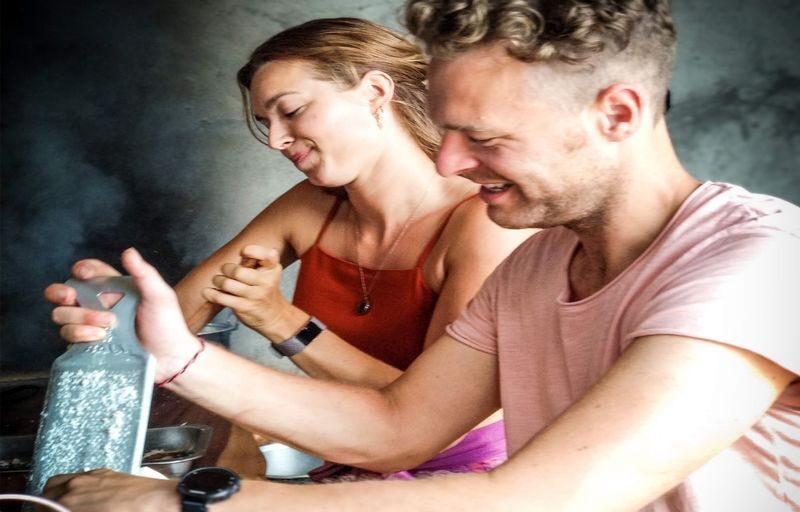
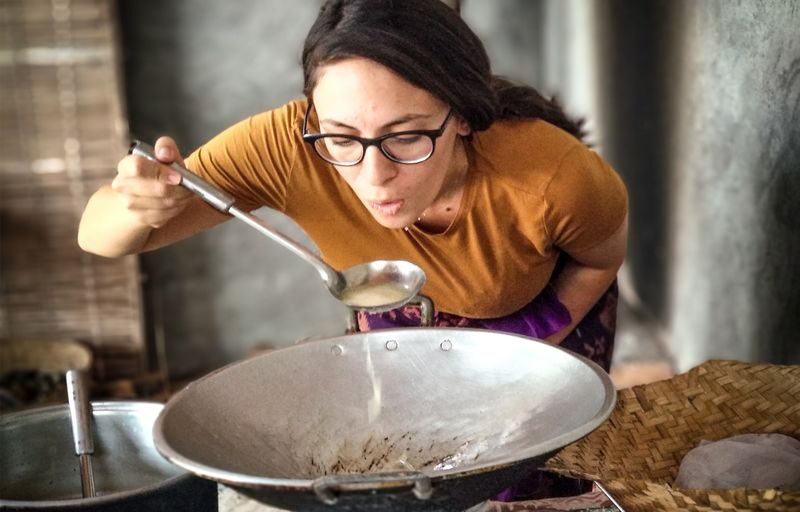
Then comes the work. You crack the shell, drain the coconut water, pry out the meat, and grate it. The coconut is mixed with water and coconut water, then pressed or strained to extract the milk. That liquid is heated, and the oil separates as it cooks. The exact steps may be explained and divided among participants, but you should expect to do some of the labor yourself.
A useful safety note: the coconut meat is removed with a sharp tool. One participant cut a hand while using it, and the host quickly treated the cut with turmeric. Follow the demonstration closely, keep your fingers clear, and ask for help rather than rushing. This is beginner-friendly, not risk-free.
The method makes a small amount of oil, and producing even that takes time and effort. That’s part of the lesson. A bottle of homemade oil feels different when you’ve cracked, grated, pressed, and cooked the coconut yourself. It also makes a more personal souvenir than another shop purchase.
The cooking stage involves waiting, but it need not be idle time. Your hosts may explain how different parts of the coconut are used, including food for the family’s animals. Leftover coconut can be fed to chickens or pigs, giving you a simple example of how little goes to waste. Some visitors have also been able to feed the animals themselves.
Garden fruit and village craft
While the coconut mixture cooks, the hosts may show you around their garden or orchard. The plants and seasonal fruit depend on what is growing at the time, but past visits have included passion fruit, snake fruit, and coconut. If the hosts offer something to taste, you’ll get a direct sense of the garden’s produce rather than a staged tasting menu.
The garden visit is one of the most appealing parts for anyone curious about how a Balinese family uses its home space. You may see fruit trees, coffee plants, and animals raised by the family. It’s a relaxed counterpoint to the focused work in the kitchen, and it gives children another way to join in.
The village portion can also introduce you to local materials and crafts. The activity description includes seeing how Balinese silver and gold are made into souvenirs, and some visits have included a look at artisans at work. Treat this as a village introduction, not a guaranteed extended workshop in metalwork. The coconut-oil process remains the main event.
Taro’s countryside setting is a draw if you want a break from Bali’s busier resort areas. It also means the outing is less convenient than an activity in central Ubud. The meeting address is Traditional Bali Coconut Oils, Delodsema Village, Elephant Park Road, Taro, Tegallalang, Gianyar. A past participant found the precise house location confusing, so use the map and contact details provided with your booking rather than relying on a vague landmark.
How long to allow, and what the price buys
The stated duration is inconsistent: the activity overview describes a three-hour visit, the included details give a 1.5-hour duration, and the coconut class is described as lasting about two hours. The pace may depend on the group and how much time you spend talking or walking around. Confirm the expected length when you book, and leave room in your day rather than scheduling a tight connection afterward.
The advertised price also appears in two forms, from US$22.89 in the summary and from US$20.79 for the class package. Prices can change, so check the final total at checkout. At either starting figure, the value rests less on the amount of oil than on the time with a local family, the hands-on instruction, refreshments, and a take-home product.
Transportation is the main extra cost to consider. Optional pickup and drop-off around Ubud is listed at IDR 350,000 per car, paid in cash to the driver. The village is outside central Ubud, and the drive has been estimated at about 40 minutes or more, depending on where you start and traffic. If you arrange your own ride, a private car or taxi is recommended.
The class is a better buy for someone interested in local life than for someone focused only on learning a quick recipe. The oil-making process takes effort, but the host interaction and garden visit make the time more worthwhile. If transportation is needed, add that cost to your comparison before deciding.
Who will enjoy this village visit
This class suits curious cooks, families, and anyone who wants a quieter cultural activity between beach days and larger excursions. You don’t need any prior experience, and children can participate. Parents should be ready to supervise closely around the coconut tools and hot cooking process.
It also works well for solo participants. The format is personal, and the hosts can guide you through each stage whether you arrive alone or with company. If you prefer a large group, a fast-paced class, or a tightly timed itinerary, this home visit may feel less structured than you want.
The activity is not stroller- or wheelchair-accessible. Casual clothing is appropriate, and you should arrive 15 minutes before your scheduled start. Morning classes begin at 09:00 and afternoon classes at 13:00, so choose your preferred time during booking.
Use your mobile voucher on the selected date and time. Changes are generally allowed until 48 hours before the activity, with stated exceptions for certain pass, presale, freebie, and voucher situations. Cancellations at least 48 hours before the activity date qualify for a full refund. Late arrivals and no-shows are not refundable, so factor in the drive.


Should you book the coconut oil class?
Book it if you want an activity with real participation and a glimpse of family life in rural Bali. The strongest reasons are the step-by-step coconut process, the warm home welcome, and the chance to see garden produce and village craft alongside the class. You’ll come away with a small bottle of oil and a better sense of the work behind it.
Think twice if you’re short on time, need accessible facilities, or don’t want to pay extra for a car from Ubud. Before you commit, confirm the duration, arrange transport, and check the final price. With those details settled, this is a rewarding change of pace from Bali’s more familiar beach and temple outings.
Coconut Oil Class With Balinese Family
“This is one of the best experiences I've ever had. In addition to the coconut oil process I learned about the tradional Balinese village and I trie…”
FAQ
Where does the coconut oil class take place?
It meets at Traditional Bali Coconut Oils in Delodsema Village, Elephant Park Road, Taro, Tegallalang, Gianyar, Bali. The meeting point is listed as Taro Village.
How long does the activity last?
The information gives several different durations: 1.5 hours, about two hours for the class, and three hours for the overall visit. Confirm the expected length when booking.
What time do the classes start?
The morning class starts at 09:00, and the afternoon class starts at 13:00. Select your preferred session at checkout.
Is transportation included?
Optional pickup and drop-off around Ubud is available for IDR 350,000 per car, paid in cash to the driver. Otherwise, a private car or taxi is recommended.
What is included in the class?
The package includes bottled drinking water, Balinese coffee or tea, Balinese cookies, a sarong, and the tools used for the class.
Can children take part?
Yes. The activity is beginner-friendly, and children can participate. Infants and children must be included in the passenger headcount.
Is the activity wheelchair-accessible?
No. The activity is not wheelchair- or stroller-accessible.