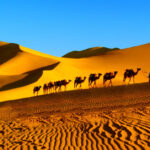
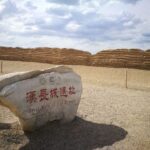
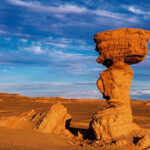
The draw here is the contrast: Buddhist caves cut into a riverbank cliff in the morning, then a vast field of wind-shaped rock in the Gobi later in the day. The route links two very different Silk Road sights without asking you to arrange separate transport.
I like the private car option for its hotel pickup and the freedom to set a comfortable pace. I also like the mix of cultural art and stark geology, with Dunhuang Ancient City adding a quick look at a modern film set styled after an old Silk Road town.
The catch is that the lowest-cost car package includes a Chinese driver, not a guide, and attraction tickets are extra. For English explanations, book the English private tour option, and do not assume the group version will provide enough time for long photo stops at Yardang.
- What to know before you book
- A day of cliffs, cave art, and Gobi rock
- Dunhuang Ancient City: atmosphere, with a modern footnote
- Western Thousand Buddha Caves: cliffside art with a long timeline
- Yardang National Geological Park: the main event for big skies
- Private car or group tour: choose for the day you want
- What the price covers, and what it does not
- Pickup, timing, and small details that matter
- Should you book this Dunhuang day trip?
- FAQ
- Is a tour guide included in the private car package?
- Are the attraction tickets included?
- Where can I be picked up?
- What time does the private tour leave and return?
- How long is the private tour service?
- What is the difference between the private and group routes?
- Does the tour have an age limit?
- What should I bring?
- Can I cancel for a refund?
- More Private Tours in Jiuquan
- More Tours in Jiuquan
- More Tour Reviews in Jiuquan
- Not for you? Here's more nearby things to do in Jiuquan we have reviewed
What to know before you book
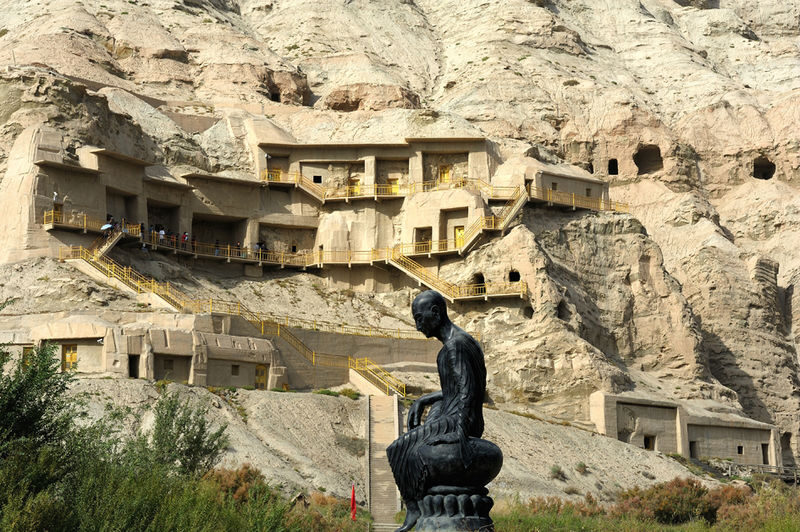
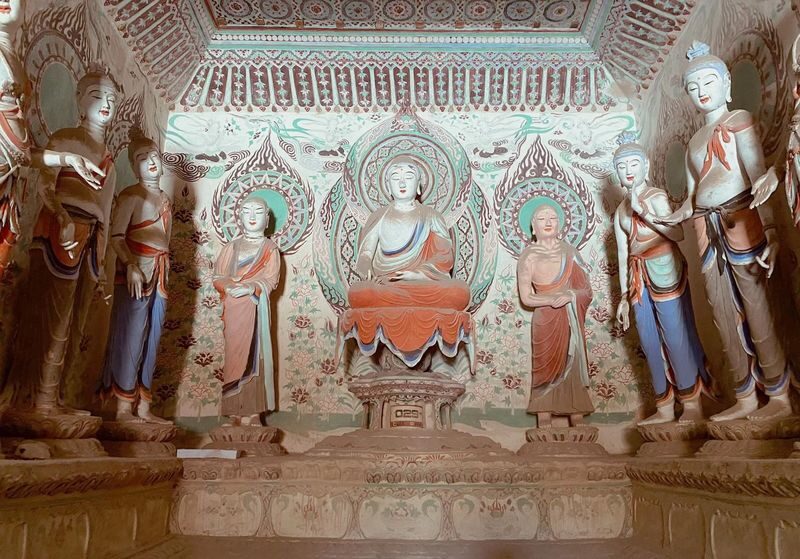
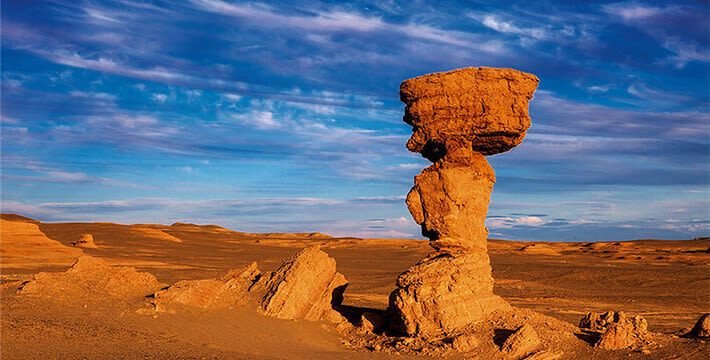
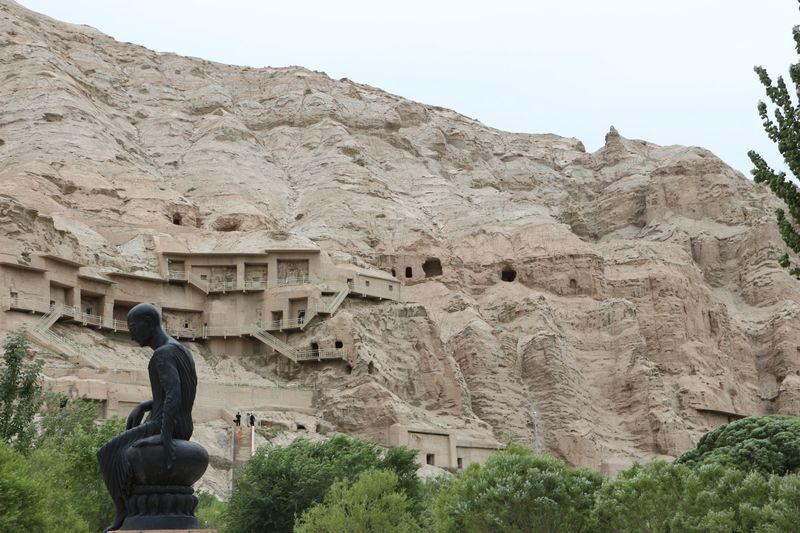
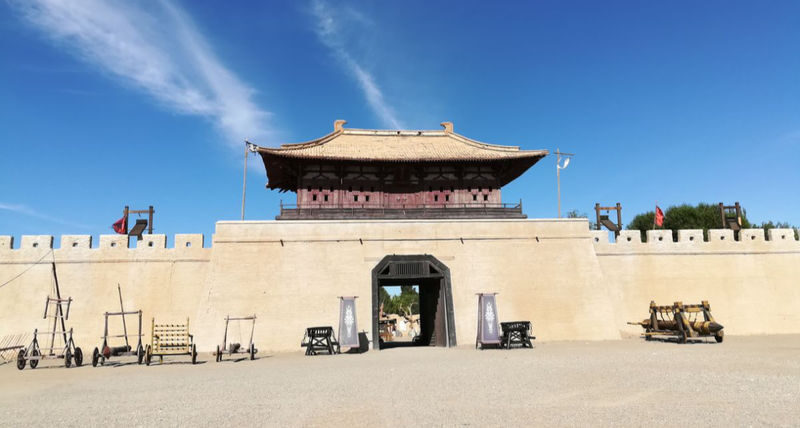
- Two very different stops: See murals and sculptures at the Western Thousand Buddha Caves, then wind-eroded ridges, towers, and castle-like forms at Yardang.
- A car is not a guided tour: The basic private option includes a professional Chinese driver. A tour guide and entrance tickets are not included.
- Dunhuang Ancient City is a film set: Its Tang and Song style streets recreate an old Silk Road town, but the site is a modern reconstruction.
- The sunset plan needs a timing check: The tour highlights golden-hour photography at Yardang, while the standard schedule lists a return around 18:00. Confirm the timing for your date.
- Private and group routes differ: The group itinerary may add Yangguan and Yumenguan, but entry tickets are optional and paid separately.
- Bring your passport: A valid passport with at least six months of validity is specified. Children and infants count toward the passenger total.
A day of cliffs, cave art, and Gobi rock
This trip makes sense if you want more than one side of Dunhuang in a day. The Western Thousand Buddha Caves offer a close look at Buddhist art and a site on a cliff bank by the Dang River; Yardang shifts the mood to open desert and wind-cut stone. One is human-made art shaped by belief and skill, the other a natural formation made over a very long span of time.
The sites are not next door to each other. The caves sit about 35 kilometers southwest of Dunhuang, while Yardang lies farther out in the Gobi. Having a driver for the day saves you from piecing together transport between stops, a real advantage in a region where the sights are spread out.
The usual private tour departs around 9:00 and returns around 18:00, with hotel pickup in Dunhuang city. That is a full day, but it is not an overnight expedition or a slow, multi-day visit. Treat the schedule as a framework: traffic and weather can shift it, and the private service is generally limited to about nine hours before overtime charges may apply.
You can also read our reviews of more private tours in Jiuquan

Dunhuang Ancient City: atmosphere, with a modern footnote
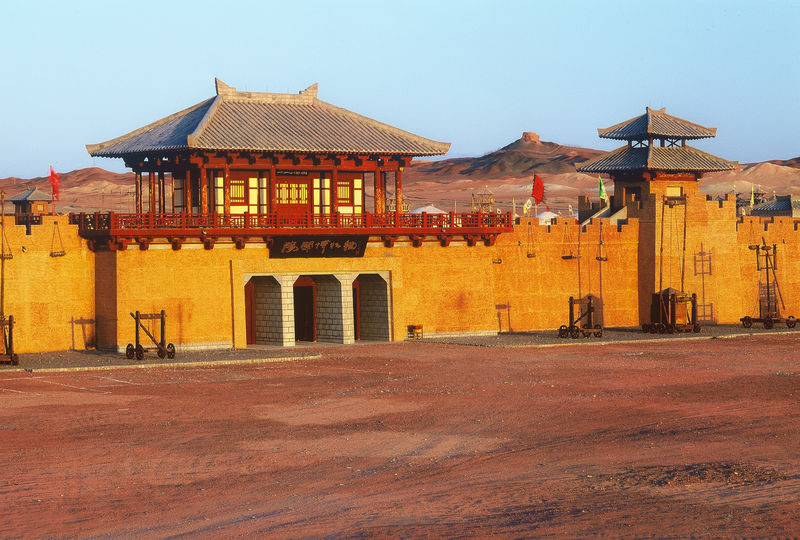
The first stop is Dunhuang Ancient City, also called Shazhou Ancient City. It is a film and television base built to resemble a Tang and Song era town, with features such as post stations, government offices, and shops. Films and television productions, including Dunhuang, have used the site.
That distinction matters. This is not an excavated Silk Road town, and the buildings should not be mistaken for original historic structures. I would treat it as a visual introduction to the kind of setting that later shaped stories of trade and travel, rather than a major archaeological stop.
You have about an hour here, self-guided. That is enough to look around and take photographs, but it is a short visit if you want to linger over every corner. If authentic ruins are your priority, keep your expectations in check. If you like seeing how film sets recreate a historical town, it can be a pleasant first stop before the older cave site.
Western Thousand Buddha Caves: cliffside art with a long timeline
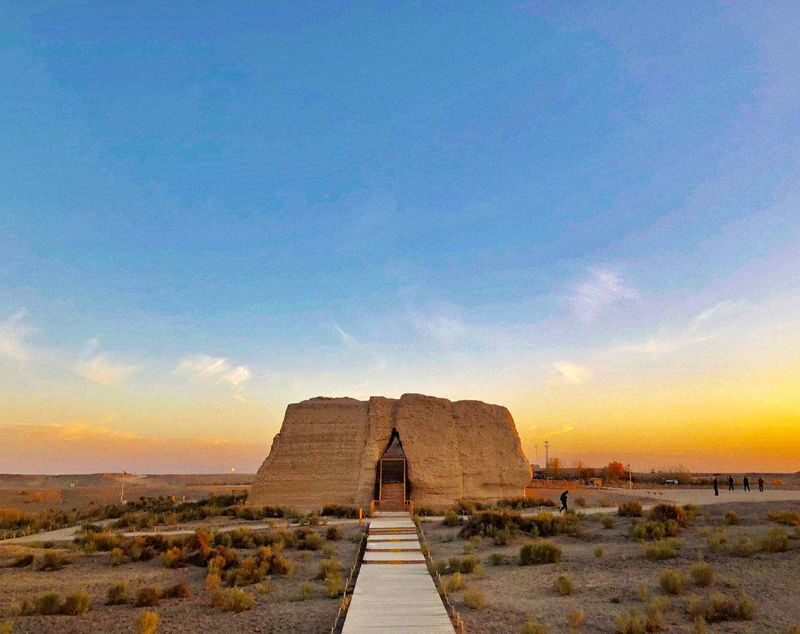
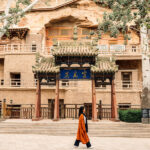
The Western Thousand Buddha Caves are the cultural heart of this route. The caves were cut into the cliff beside the Dang River, about 35 kilometers southwest of Dunhuang. They are west of the better-known Mogao Caves, which explains the name, and their history reaches back to the Northern Wei period, with further work in the Tang and Song dynasties.
There are 22 existing caves, with Buddhist murals and painted sculptures. The appeal is not simply that the site is old. It gives you another setting in which to understand Dunhuang’s Buddhist art, alongside the more famous Mogao complex. The cave art and sculptures preserve different expressions of religious life across several periods.
The scheduled stop is about 90 minutes and is listed as self-guided. That is worth noting if you want detailed interpretation. The basic car package does not include a tour guide, so you should not expect a specialist to explain the images or their artistic context. Bilingual guide service is offered with higher-priced tour options, but confirm exactly what your selected package includes before booking.
Tickets for the Western Thousand Buddha Caves are not included in the car price. The supplied package details also describe the cave ticket as including the Dunhuang Ancient City ticket, so check the current ticket arrangement and total cost before you set your budget. The price of the ride alone can look appealing, but it is only one part of the day’s expense.
Yardang National Geological Park: the main event for big skies
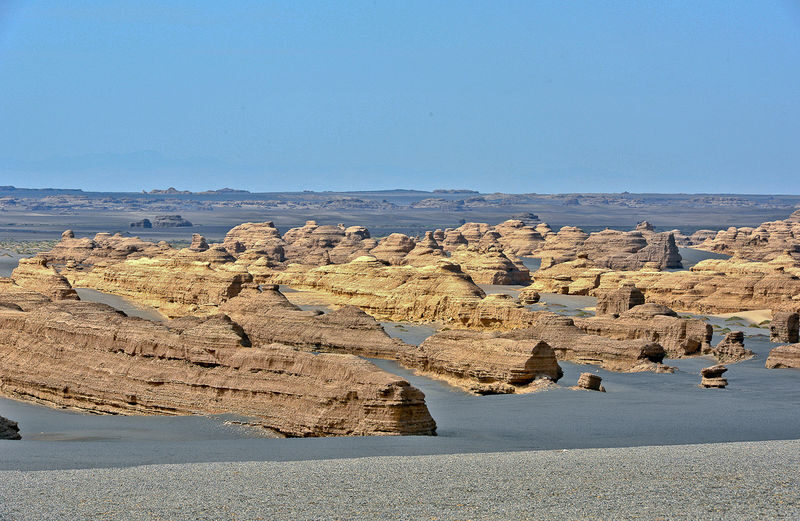
Yardang is the dramatic outdoor stop, with ridges, columns, walls, and castle-like mounds shaped by wind erosion. The area was once the bottom of the ancient Lop Nur Lake. Over millions of years, wind carved the exposed earth into formations that can look like a fleet of ships or a city of stone.
The park is also called Devil City, a name that points to its eerie shapes and the force of the wind, rather than to any built attraction. If you enjoy geology, photography, or open desert views, this is likely the stop you will remember most. If you expect a conventional sightseeing park with lots of indoor exhibits or a guided sequence of attractions, you may find the experience sparse. Its appeal is the scale and form of the terrain.
Plan for around two and a half hours at Yardang. The park entrance ticket, including the sightseeing car, is not part of the basic private car package. The sightseeing car is an important detail: confirm the ticket arrangements rather than assuming the vehicle transfer from Dunhuang covers transport inside the park.
Golden-hour light is a selling point of the tour, and the low sun can bring out the ridges and shadows in the rock. But timing is crucial. The standard day is described as ending around 18:00, while the sunset route promises an evening arrival at Yardang. Sunset changes with the date, so ask how the plan works on your travel day and how much time is actually reserved for photography. A single recent assessment also cautioned that photo time at Yardang may feel short, especially on a group trip.
Private car or group tour: choose for the day you want
The private car package is the simpler route: Dunhuang Ancient City, the Western Thousand Buddha Caves, Yardang, then back to your hotel. It is suited to people who value their own vehicle and want a more flexible departure. The standard start is around 9:00, and the operator says you can discuss a suitable time after booking. Flexibility still has limits, though. The overall service is generally about nine hours, with an overtime fee possible if the day runs long.
The group itinerary starts earlier, around 7:00, and may include Yangguan Scenic Area and Yumenguan Pass before Yardang. These extra stops are optional in the sense that entry is not mandatory, but their tickets are at your own expense. They can add historical context and variety, though adding two more sites to a long day can also mean less time at each stop.
Yangguan was an important pass on the southern Silk Road route. Its ruins and museum connect the desert scenery to the movement of merchants and people through the region. Yumenguan preserves the Xiaofangpan City ruins, along with walls and beacon towers associated with the Han-era frontier. Both sites have a stark setting, but each requires its own ticket if you choose to enter.
The group option is not simply the private itinerary with more people. The route, start time, and possible stops differ. A recent account of the Yardang group experience reported that the bus leader could not speak English and that the photography time felt brief. If English commentary matters, or you want to control how long you spend taking pictures, do not assume the group package will meet that need. Check the selected package’s language and guide details.

What the price covers, and what it does not
The advertised starting prices vary by package. The options include a private car day tour, a car rental with tickets, and private tours with Chinese, English, Japanese, or Korean service. The supplied prices start at $30.35 for the private car option, while the overall experience is also advertised from $34.89. Language-specific private tours start higher, at $98.69 for Chinese and $110.65 for English, with Japanese or Korean from $123.50.
Think of those figures as starting points, not a complete cost for every version. The private car package includes a vehicle and a professional Chinese driver, but does not include a guide, the Yardang ticket and sightseeing car, or the Western Thousand Buddha Caves ticket. Meals, drinks, tips, and personal expenses are also extra. Confirm the package total and inclusions for your date before comparing it with a guided option.
Vehicle size depends on the party: a five-seat car for one to four people, a seven-seat car for five to six, a 14-seat vehicle for seven to 13, and an 18-seat vehicle for 14 to 17. Larger bags count as two pieces. Infants and children must be included in the passenger headcount, even though the activity has no age limit.
Pickup, timing, and small details that matter
Free pickup and drop-off are available in Dunhuang city. If your accommodation is outside that area, an extra charge may apply and should be confirmed after booking. There is one specific exception to plan around: if your hotel is inside the Crescent Spring Scenic Area, make your own way to the Middle Gate bus station at Mingsha Mountain and Crescent Spring for pickup.
The operator contacts you the night before departure, around 21:00, and sends the guide or driver’s contact details through WeChat, WhatsApp, or a similar service. Online bilingual customer service is listed as available from 09:00 to 22:00. For the private tour, agree on the departure time in advance; during busy holiday periods, an earlier start is recommended.
Bring a valid passport with at least six months of validity. The voucher is valid only on the date and time specified, and cancellation is eligible for a full refund if made at least 24 hours before the activity, using local destination time.
Should you book this Dunhuang day trip?
I would consider this tour if you want to pair Buddhist cave art with the unusual forms of Yardang and prefer having a car arranged for the day. It is especially appealing for a small party that wants hotel pickup and a private schedule, and for anyone who values the chance to photograph the Gobi formations.
I would choose the English private tour if interpretation is important, and I would confirm the guide, ticket costs, sunset timing, and Yardang photo time before paying. The lowest-priced car option can be good value for transport, but it is not an all-inclusive guided experience. If you want Yangguan and Yumenguan as well, compare the group route carefully and accept that the extra stops may make an already full day feel brisk.
Dunhuang Western Thousand Buddha Caves and Yardang National Geological Park Private Day Tour
FAQ
Is a tour guide included in the private car package?
No. The private car package includes a professional Chinese driver, but a tour guide is not included. Guide service is available in higher-priced language-specific options.
Are the attraction tickets included?
No, not in the private car package. Yardang entry, including the sightseeing car, and the Western Thousand Buddha Caves ticket are listed as exclusions. Confirm the inclusions if you select another package.
Where can I be picked up?
Free pickup and drop-off are offered within Dunhuang city. Pickup outside that area may cost extra. If your hotel is inside the Crescent Spring Scenic Area, go to the Middle Gate bus station at Mingsha Mountain and Crescent Spring.
What time does the private tour leave and return?
The private tour generally departs around 9:00 and returns around 18:00. The timing can be discussed after booking, and traffic or weather may affect the schedule.
How long is the private tour service?
The overall service is generally around nine hours. An overtime fee may apply if it runs longer, with details to be confirmed in advance.
What is the difference between the private and group routes?
The private route covers Dunhuang Ancient City, the Western Thousand Buddha Caves, and Yardang. The group route may also stop at Yangguan and Yumenguan, where tickets are optional and paid separately. Group departure is around 7:00.
Does the tour have an age limit?
No age limit is specified. Infants and children must be included in the passenger headcount.
What should I bring?
Bring a valid passport with at least six months of validity. Larger bags count as two pieces for vehicle and luggage planning.
Can I cancel for a refund?
A full refund is available if you cancel at least 24 hours before the activity date, using destination local time.