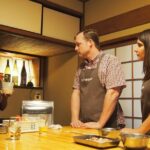
Japanese calligraphy is a lesson in slowing down: a brushstroke can be delicate, but the movement behind it should be calm and deliberate. At SAMURAI HONOR, you dress in traditional clothing, practice kanji, and work toward a personalized piece of calligraphy to take home.
I like two things in particular: the instructor helps translate your name into kanji with meanings you can understand, and you get time to practice before making your final piece. Photos and personalized keepsakes add a thoughtful finish.
One point to weigh: this is near Osaka Castle, not a calligraphy lesson inside the castle grounds. The room can also feel less quiet when other activities are running nearby, and English communication may vary.
- What makes this calligraphy lesson special
- A quiet lesson in brush, ink, and attention
- Kimono first, then the calligraphy tools
- A name in kanji, with meaning behind it
- Practice, then make your finished piece
- Photos and a keepsake to bring home
- What the value looks like at US.15
- Near Osaka Castle, but not in the castle
- A few practical checks before you book
- Should you book this Osaka calligraphy class?
- FAQ
- Is this calligraphy class inside Osaka Castle?
- Is kimono clothing included?
- Do I need calligraphy experience?
- What language support is provided?
- What age can take part?
- What is included in the price?
- The Best Of Osaka!
- More Tours in Osaka
- More Tour Reviews in Osaka
- Not for you? Here's more nearby things to do in Osaka we have reviewed
What makes this calligraphy lesson special
 1 / 10
 2 / 10
 3 / 10
 4 / 10
 5 / 10
 6 / 10
 7 / 10
 8 / 10
 9 / 10
 10 / 10
- Your name becomes part of the lesson: Staff can render a foreign name in Japanese characters and explain the meanings chosen for it.
- Practice comes before the keepsake: You work on brush technique and strokes before writing your chosen kanji and name on a final piece.
- Kimono or hakama sets the tone: Traditional clothing is included, with a changing area and lockers noted by participants.
- You leave with more than practice sheets: The experience includes a personalized bag and a wooden name tag, along with your artwork.
- Photos are included: Staff take pictures during the session and send the files to a designated email address.
- The location is convenient, but the name can mislead: The venue is a short walk from Osaka Castle Park Station and Osaka Business Park Station, but it is not inside Osaka Castle.

👉 See our pick of the 24 Best Workshops And Classes In Osaka
A quiet lesson in brush, ink, and attention
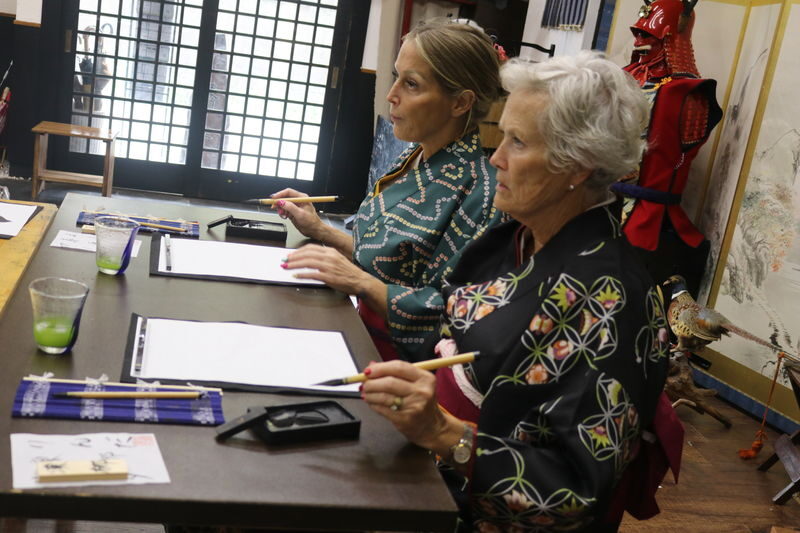
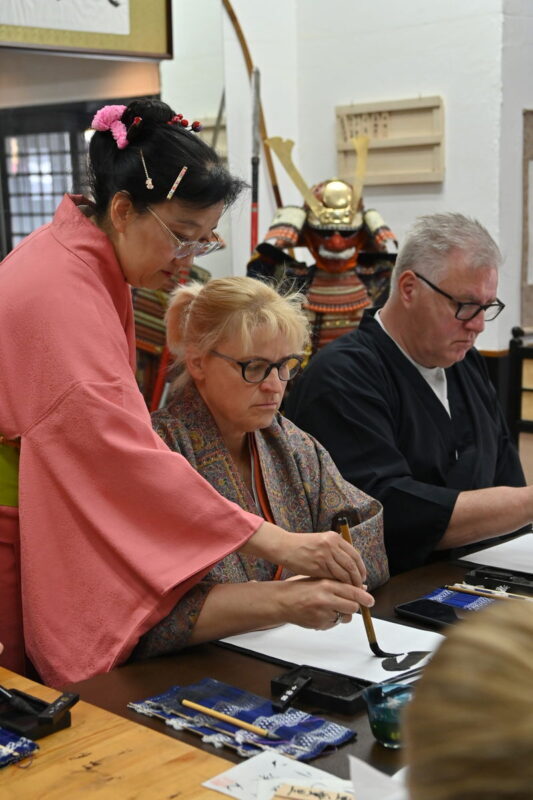
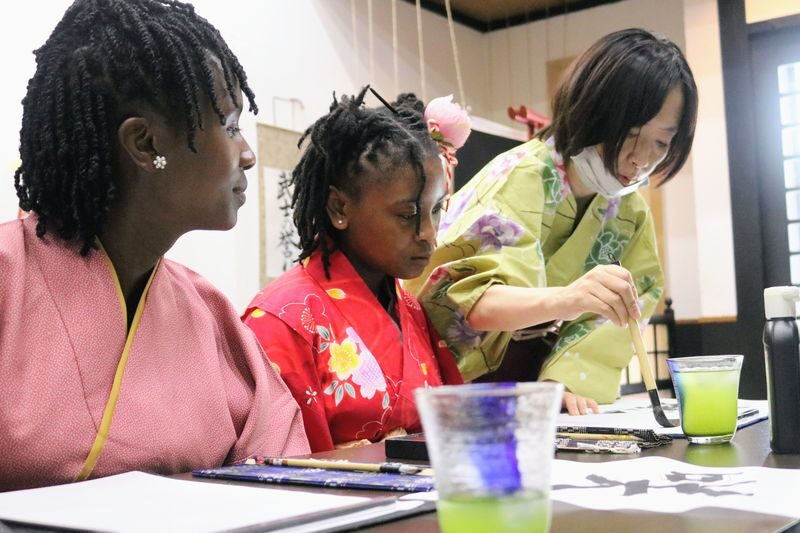
This experience is less about producing perfect calligraphy and more about learning how a brush behaves. The instructor introduces the tools and the order of strokes, then shows you how to guide the brush rather than simply pressing it onto the paper. For a beginner, that distinction matters: a few deliberate demonstrations can make practice far more useful than filling page after page by guesswork.
Japanese calligraphy prizes subtle changes in line, dots, and shading. A small shift in pressure or movement changes the look of a character, so the lesson asks you to watch closely and keep your attention on the stroke in front of you. That quiet focus is the Zen element here. It is practical, not mysterious: settle your mind, follow the technique, and give each mark room.
You do not need prior experience. The activity is designed for beginners, and the instructor breaks down the process so you can repeat it before attempting your final work. Families can take part too, with children aged six and older welcome. Children aged six to ten need a paying adult with them.
You can also read our reviews of more tours and experiences in Osaka.



Kimono first, then the calligraphy tools
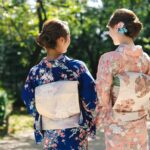
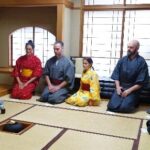
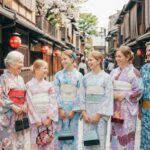
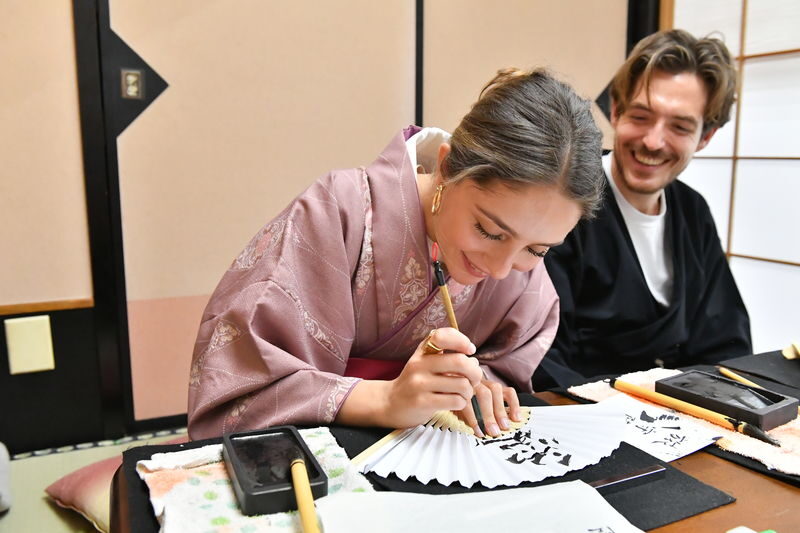
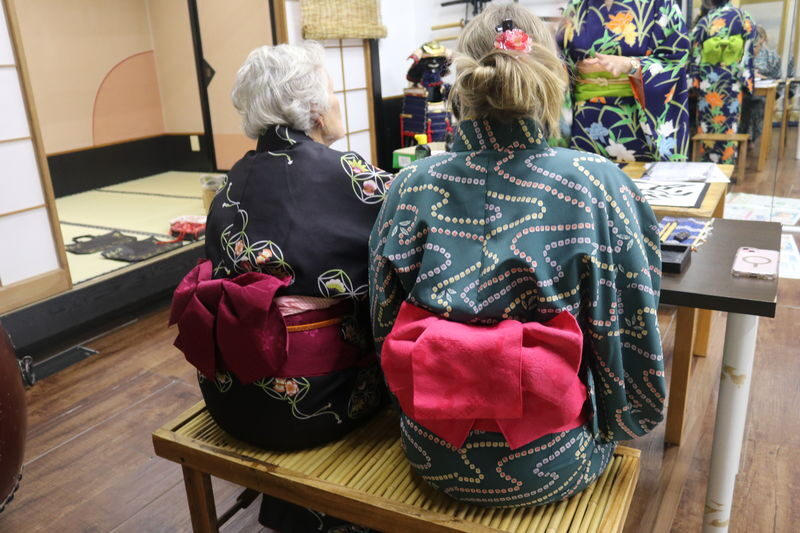
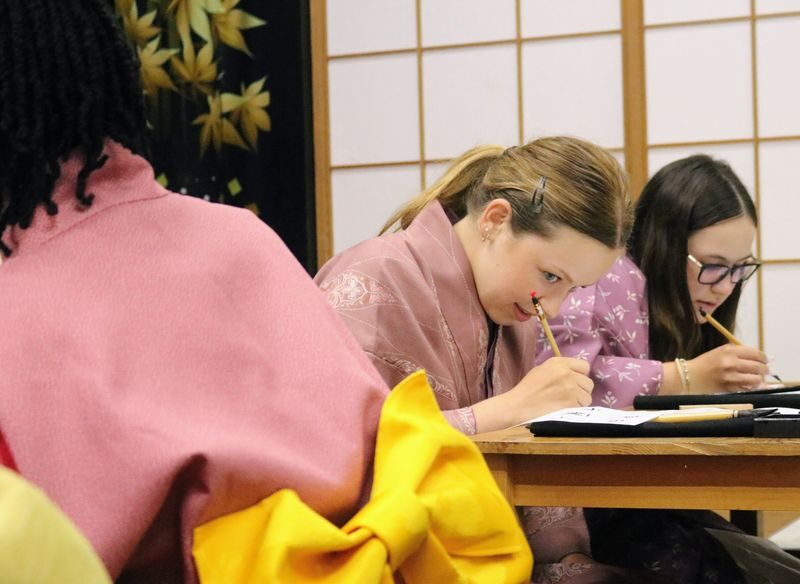
The session begins with a change into Japanese-style clothing. Kimono and hakama are included, and changing into one gives the class a more ceremonial feel than sitting down at a worktable in everyday clothes. A changing room and lockers have been noted at the venue. Bring an undershirt and underpants, and empty your pockets before changing into hakama so nothing slips out.
The kimono selection may be limited, so do not count on an extensive wardrobe to choose from. If you have a particular look in mind, keep expectations flexible. The clothing is part of the experience, but the main value is the lesson and the personalized calligraphy you make.
You can sit in the traditional seiza position, but you do not have to. Desks and chairs are available if kneeling is uncomfortable. That is a useful detail for anyone who would otherwise hesitate to book a cultural activity because of floor seating.
A name in kanji, with meaning behind it
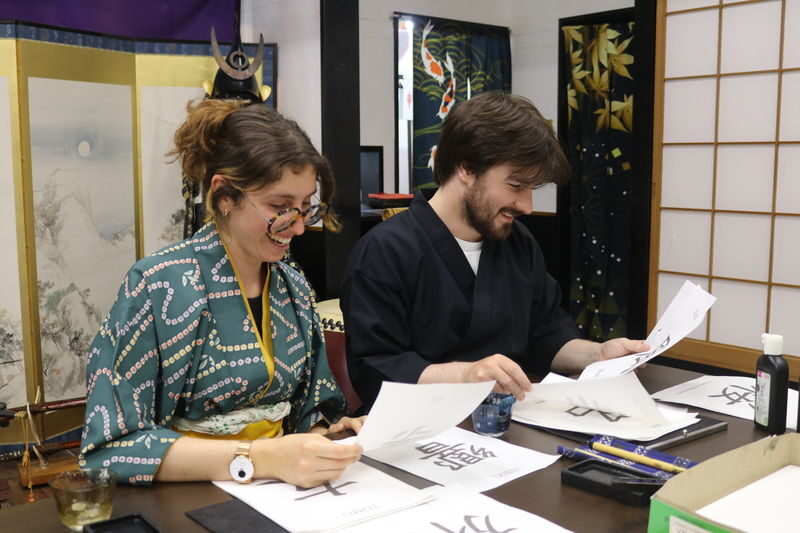
One of the most personal parts of the class is seeing your name adapted into Japanese characters. The instructor applies kanji to a foreign name and creates a Japanese-style written version. Since each kanji carries meaning, you are encouraged to learn what the characters chosen for your name signify, rather than treating them as decorative symbols.
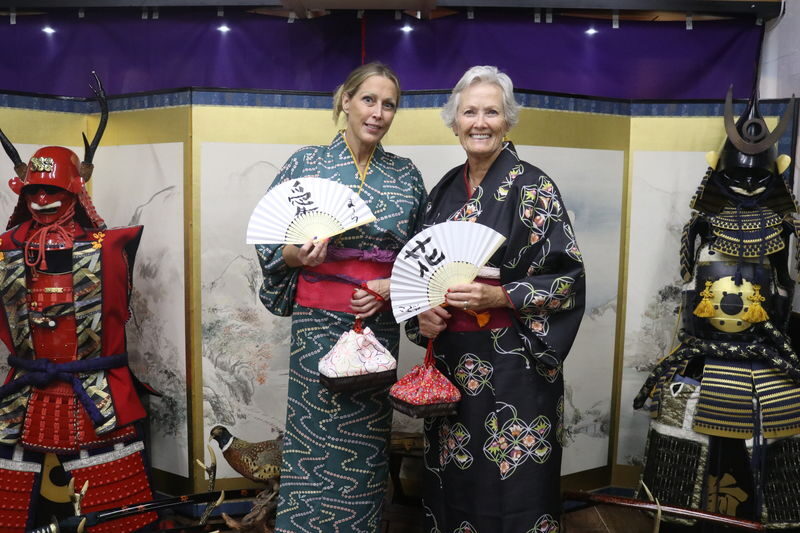
You also choose a kanji character to practice, usually from a selection. This gives you a say in the subject of your final work, and the instructor can explain the character’s meaning as you learn its strokes. Some participants have written their name on a fan; others have made a piece on cardstock suitable for framing. The final format may depend on the session, so ask before you begin if you have a preference.
The name translation is a small detail with real staying power. Instead of taking home a generic souvenir, you leave with characters that connect to your own name and a better sense of what they mean. If you are traveling with children or friends, comparing everyone’s kanji can also make the lesson more personal.
Practice, then make your finished piece
After the introduction, you practice the brush movements and strokes for your selected character. The teacher demonstrates the technique, and you get paper and time to try it yourself. You then practice your kanji name. This repetition is not filler: it helps you learn the order and movement of the strokes before you put them on the piece you want to keep.
When you feel ready, you write your selected kanji and name on the final paper or another offered item, such as a fan. The result will reflect your own hand, not a polished studio print. That is part of the appeal. The point is not to leave with professional calligraphy, but to make something that records what you learned.
The teacher also prepares a personalized bag featuring your artwork, and you receive a wooden tag with your name written in Japanese characters. Keep any practice pages you want; they can be packed with your finished work. This is a generous set of takeaways for an activity priced from US$52.15, especially with clothing, tools, instruction, photos, and tax included.
A traditional Japanese hanging scroll is available for an additional JPY 2,200, payable at the venue. If you are considering that option, confirm the details and price before the session rather than assuming it is part of the standard package.
Photos and a keepsake to bring home
Staff take photographs during the lesson and send the files to the email address you provide. That is a welcome extra, since your hands are busy and it can be awkward to document the process yourself. Photo quality can vary, and flash photography is prohibited inside the attraction, so treat the pictures as a record of the activity rather than a professional portrait session.
The souvenirs are personal without taking over the lesson. The artwork, name tag, and bag all tie back to the kanji you practiced. If you are short on luggage space, these are easy keepsakes to carry, although the final paper or fan may need a little care on the way home.





What the value looks like at US$52.15
At the starting price of US$52.15, this is a reasonably full cultural activity rather than a quick demonstration. The cost covers kimono or hakama, calligraphy tools, instruction from a certified professional instructor, English-speaking staff and guide, a welcome gift, a personalized bag, a wooden name tag, and emailed photos. Transport and hotel pickup are not included, so factor in your own trip to the venue.
The strongest value is the chance to learn a technique and leave with a personalized result. A photo stop in rented clothing might look good for a few minutes, but here you also get to practice brushwork, ask about the characters, and make something yourself. If those parts interest you, the price is easier to justify than if you only want a quick costume photo.
Class atmosphere is worth considering, too. The venue can be relatively busy from the morning until 2 p.m.; after that, the activity may be private. A smaller or private session can give you more room to focus and ask questions. If quiet is important, consider a later time and confirm the group arrangement when booking.
Near Osaka Castle, but not in the castle
The meeting point is SAMURAI HONOR at Excellence Takayama, 1F, 2-3-19 Asagino-Nishi, Joto-ku, Osaka. The location is about a one-minute walk from Osaka Business Park Station and roughly two minutes from JR Osaka Castle Park Station. Kyobashi Station is about a ten-minute walk away.
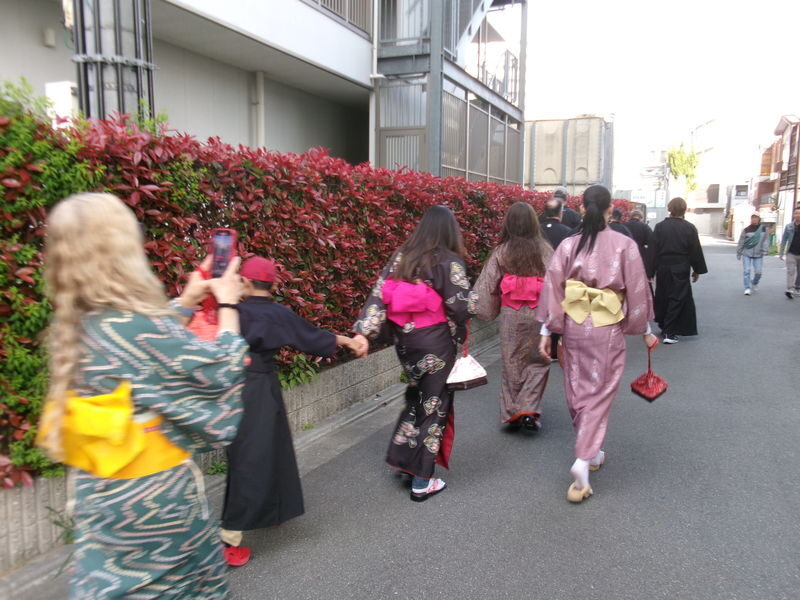
The wording near Osaka Castle can lead you to picture the lesson inside a historic building or in a scenic castle setting. It is a nearby studio experience instead. There may not be especially photogenic surroundings right outside the venue, so plan a separate visit to the castle grounds if you want outdoor photos or time at the landmark.
The venue is open daily from 10 a.m. to 9 p.m., with last admission at 8 p.m. The voucher is valid only on the date and time booked, and you present it on your phone. Storage is available, but contact the staff about any fees.
A few practical checks before you book
The experience is open to participants aged six to under 100. Children aged six to ten must be accompanied by a paying adult; children aged 11 and older pay the adult rate. Infants are not recommended, and child seats are not available.
The activity is listed with English-speaking staff and a guide, but the quality of spoken English from the instructor may vary. If detailed explanation is important to you, contact the organizer before booking to confirm how communication will work for your session. This is especially sensible if you want a careful explanation of the kanji meanings.
Wear comfortable underlayers and bring an undershirt and underpants for changing. Outside food and drink are not allowed, and pets are prohibited. Intoxicated participants may be refused service without a refund. The listed minimum is one participant; if it is not met, you can request another date or a full refund.
You can cancel for a full refund if you do so at least 24 hours before the activity date, using the destination’s local time. The venue may require a JPY 6,600 deposit for each additional participant, so confirm that detail if your party changes.
Should you book this Osaka calligraphy class?
Book it if you want a hands-on cultural activity with a personal keepsake, especially if the idea of learning your name in kanji appeals to you. The patient, step-by-step teaching, clothing, practice time, and photographs make it a good fit for first-timers and families with school-age children.
Skip it if you expect a silent, temple-like Zen setting or a lesson inside Osaka Castle. The venue is a nearby studio, and other activities may affect the quiet. For the best chance of a more focused session, aim for after 2 p.m., and check the language arrangements if clear spoken English is essential.
Learn Japanese calligraphy and Zen while wearing a kimono
“this was an absolutely incredible experience, everyone was so kind and patient! i came away so so many cute, unique souvenirs, and photos to rememb…”
FAQ
Is this calligraphy class inside Osaka Castle?
No. The class takes place at SAMURAI HONOR near Osaka Castle, at Excellence Takayama in Joto-ku. The nearest listed stations are Osaka Business Park and JR Osaka Castle Park.
Is kimono clothing included?
Yes. Kimono clothing is included, and the activity also offers Japanese-style attire such as hakama. Bring an undershirt and underpants for changing.
Do I need calligraphy experience?
No. The class is suitable for beginners, and the instructor demonstrates brush techniques and stroke order before you practice.
What language support is provided?
English-speaking staff and an English-speaking guide are included. Instructor communication may vary, so contact the organizer in advance if you need to confirm that the lesson can be explained in English.
What age can take part?
Participants must be at least six years old and under 100. Children aged six to ten must be accompanied by a paying adult, and participants aged 11 and older pay the adult rate.
What is included in the price?
The package includes kimono clothing, calligraphy tools, a bag for your work, photos sent to a designated email address, English-speaking staff and a guide, a certified instructor, a welcome gift, and tax. Transport is not included.