
The lantern swings, the brass keys jangle on the watchman’s belt, and the cobbles between the Naschmarkt and the Old Town Hall go dim as the lamps lean in. You hear the horn before you see him round the corner. By the time he stops outside the Old Stock Exchange to whistle the hour, you have stepped sideways out of 2026 and into a city that ran on bell tolls and trade fairs.
That is the Leipzig Night Watchman tour, and on most evenings of the year it is the most atmospheric ninety minutes you can spend in the city. The original is led by Night Watchman Bremme, who has been walking these alleys in costume for decades. There is also a modern projection-based version that takes a very different angle on the same history. This is how to pick between them and how to actually book.
- In a Hurry? Top Picks
- What the Bremme Tour Actually Is
- Languages: Read This Before You Click Book
- Where the Tour Starts and Ends
- Ticket Prices and What Is Included
- The Night Watchman 2.0: Same Topic, Very Different Tour
- The Three Watchman Options Side by Side
- 1. Night Watchman Bremme:
- 2. Night Watchman 2.0 Modern Evening Tour: (German only)
- 3. 1.5-Hour Historical Walking Tour: (German only, daytime)
- What the Route Actually Covers
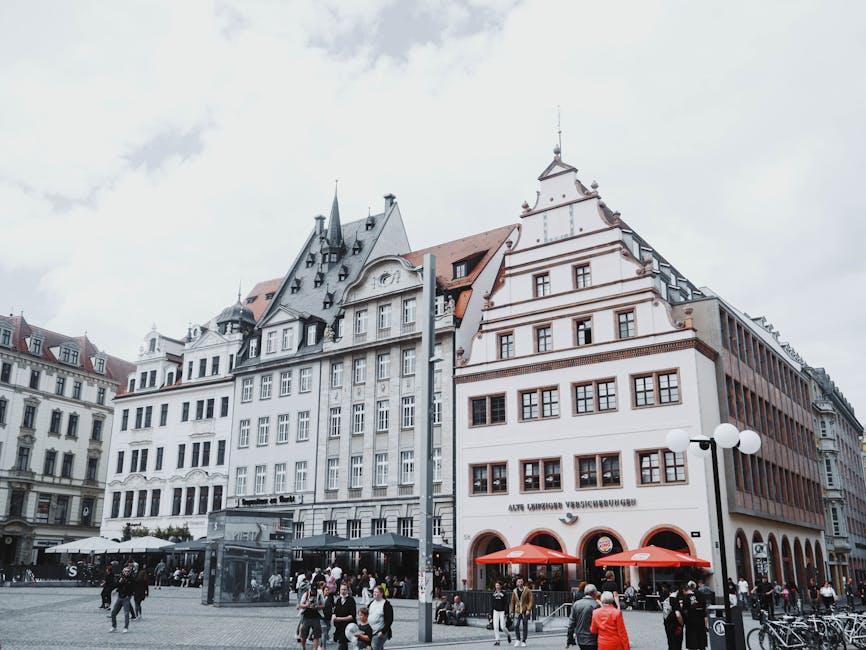
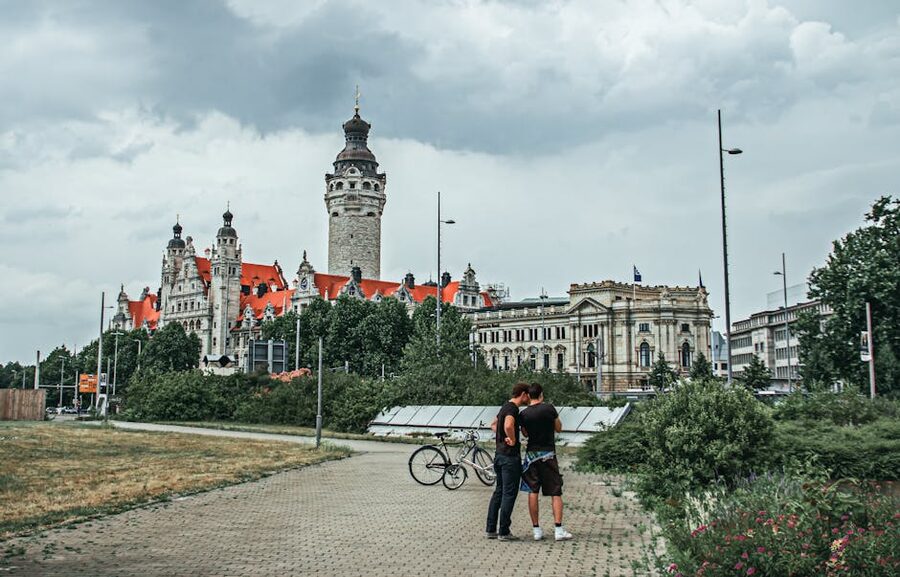
- The Marktplatz and the Old Town Hall
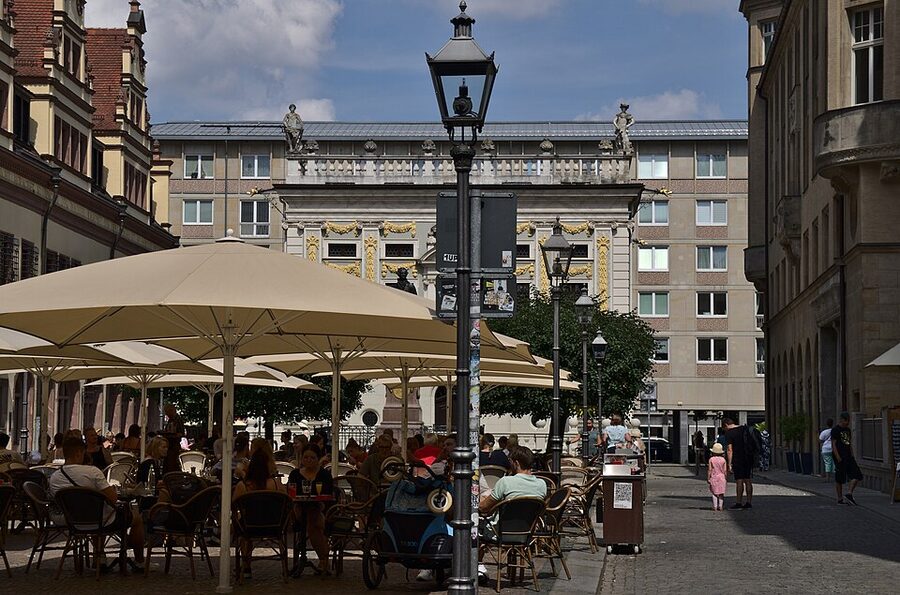
- The Naschmarkt and the Old Stock Exchange
- Auerbachs Keller and the Mädler Passage
- The Thomaskirche and the Bach Connection
- The Nikolaikirche and the Peaceful Revolution
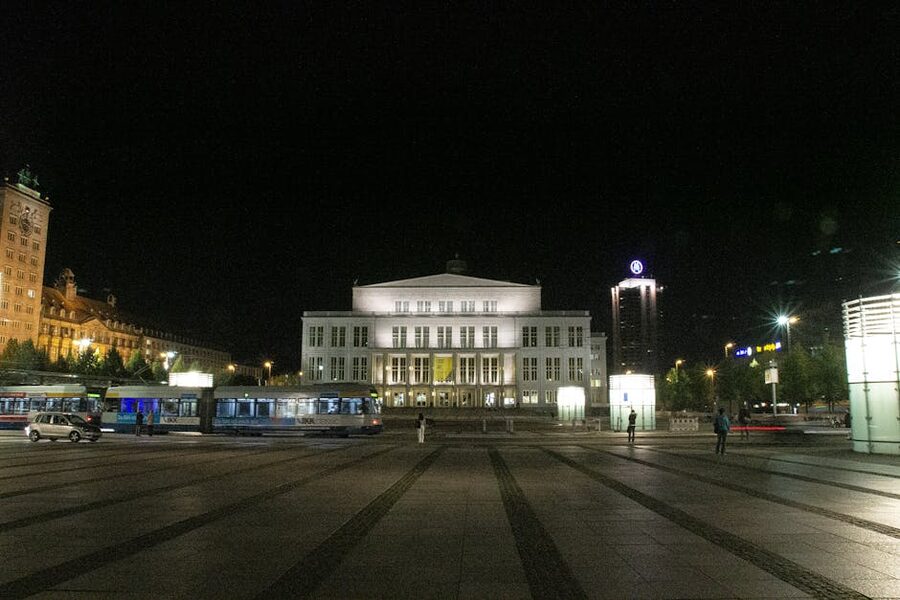
- Augustusplatz: Opera, Gewandhaus, University
- Best Time of Year to Book
- Practical Booking Notes
- How Leipzig’s Night Watchman Compares to Other German Cities
- Pairing the Tour With Other Leipzig Plans
- One Honest Caveat
- Booking Recap
- Where the Watchman Tour Sits in a Wider Germany Trip
In a Hurry? Top Picks
- Night Watchman Bremme tour, $17. The classic costumed walk in English on selected dates. Check Bremme availability
- Night Watchman 2.0 modern evening tour, $18. Projector-led, German narration, no costume. Check 2.0 availability
- 1.5-hour historical walking tour in German, $17. Daytime alternative if you miss the evening slot. Check daytime availability
What the Bremme Tour Actually Is
Bremme is a real person playing a role. He wears the long coat, the tricorn hat, the lantern and the horn, and he is in character from the moment he greets you on the Marktplatz. The script is practiced but it does not feel rehearsed. He has been doing this since the early 2000s and has the timing of a stage actor.
The tour runs ninety minutes, on foot, with one short stop near the halfway mark. You walk in a loose group, usually eight to twenty people. He stops you at perhaps eight or nine spots, tells the story of each, then sounds the horn and moves on. The horn is loud. He warns you. People still flinch.
The route covers the medieval core: the Naschmarkt and the Old Stock Exchange behind the Old Town Hall, the alley where the trade fairs were taxed, the courtyards where merchants slept above their goods, the spot where Goethe sat in Auerbachs Keller as a student, the Thomaskirche where Bach is buried, and the Nikolaikirche where the Peaceful Revolution started in 1989. Three hundred years of trade history into one and a half hours.
Languages: Read This Before You Click Book
This is the single most important thing to get right. The Bremme tour you find on GetYourGuide and Klook lists English among its languages, but only on selected dates. Most public departures are in German. Some are bilingual on request. A few are advertised as English.
Three rules to save you a refund email:
- Filter the calendar by language before you pick a date. The widget hides the German-only slots if you set English first.
- If the calendar shows no English dates in your travel window, message the operator. They run private English tours for groups of six or more, and the per-person price comes out close to the public rate if your group fills up.
- If you book the public tour and you are travelling solo, you are fine on a German-language slot. Bremme drops English asides whenever non-German speakers are clearly present, and the visuals carry most of the story.
The Night Watchman 2.0 tour is the modern alternative I will get to in a minute. It is German only, with no English version on offer. The projection-led format means non-German speakers still get a lot out of it, but you should know going in.
Where the Tour Starts and Ends
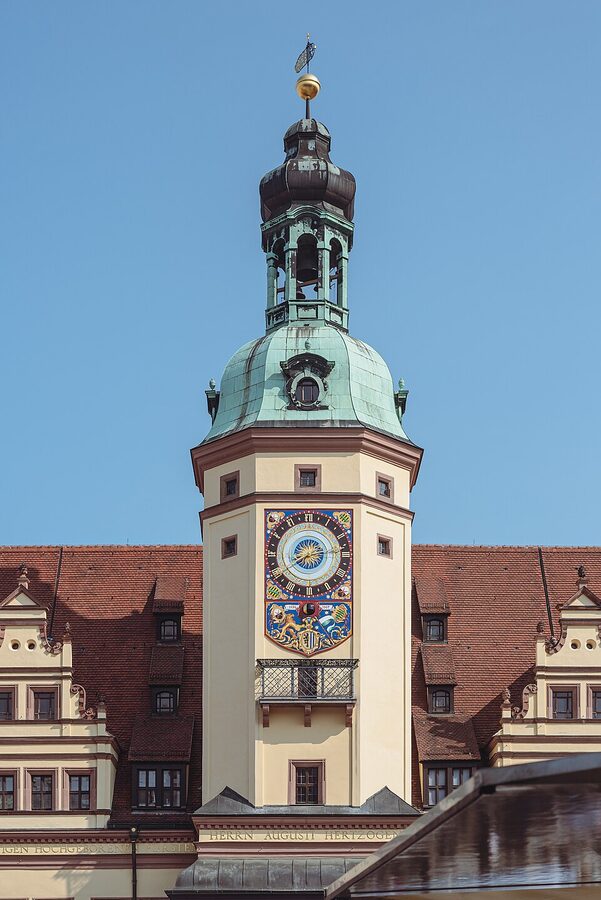
The Bremme tour meets at the Marktplatz, in front of the Old Town Hall. The exact spot is the corner closest to the fountain, where the cobbles dip slightly. He arrives about five minutes before the start, so you will know when he is there. Look for the lantern.
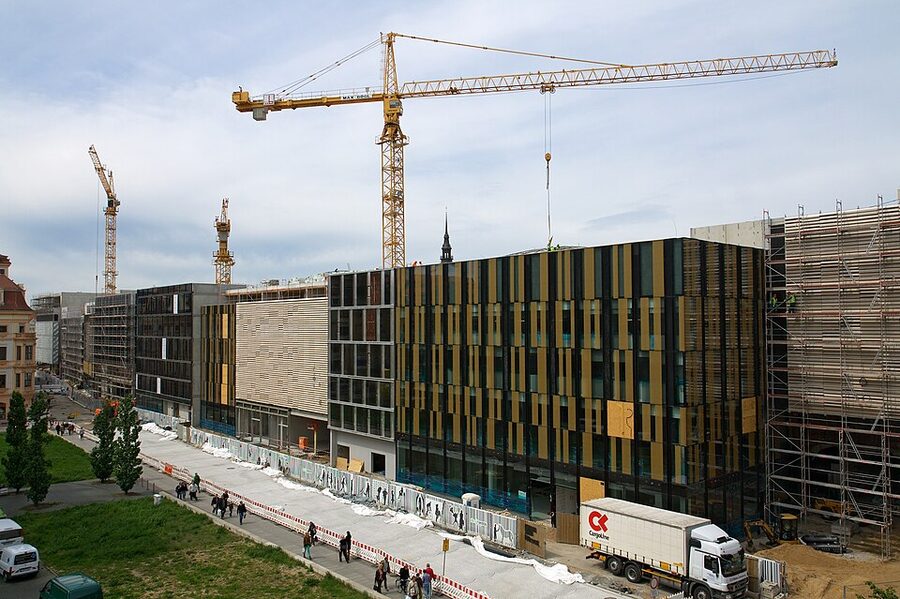
The Night Watchman 2.0 starts somewhere different: the Stadtstromer shop in the Höfe am Brühl shopping centre, on the north side of the old town. The meeting point is between the two parts of the building, not inside the mall. Coordinates are 51.34382, 12.37468 if you want to drop a pin. It is a ten-minute walk from the Marktplatz, fifteen from the main station.
Both tours end roughly where they started. The Bremme walk loops back to the Marktplatz. The 2.0 ends near the Brühl complex but most groups drift back into the centre for a drink. Auerbachs Keller is the obvious post-tour pint, but it is touristy and pricey. The little wine bars on Barfußgässchen are better.
Ticket Prices and What Is Included
Both Watchman tours are $17 to $18 per person. That covers the guide, the route and the storytelling. On the 2.0 tour it also covers the headset you borrow at the meeting point. There are no entry fees because the tours are entirely outdoors. Children under ten are usually free or half price on the Bremme tour, depending on the operator. Check the listing.
What is not included: drinks, food, indoor entry to anything. If you want to step into Auerbachs Keller for the Goethe corner, that is on you. If you want to climb the Old Town Hall tower for the panorama, that is a separate ticket and the tower closes at six anyway.
Cancellation is free up to 24 hours before on GetYourGuide. Klook has the same policy on the Bremme tour. The 2.0 tour is also reserve-now-pay-later, which is useful if you are pencilling in your evening before knowing what time you will be back from a day trip.
The Night Watchman 2.0: Same Topic, Very Different Tour
The 2.0 is not a watered-down Bremme. It is a different idea entirely. The guide carries a mobile projector and beams large-format historical photographs and city maps directly onto the buildings you are standing next to. You hear the narration through a headset, which sounds gimmicky on paper and works beautifully in practice. There is no costume. There are no horn blasts.
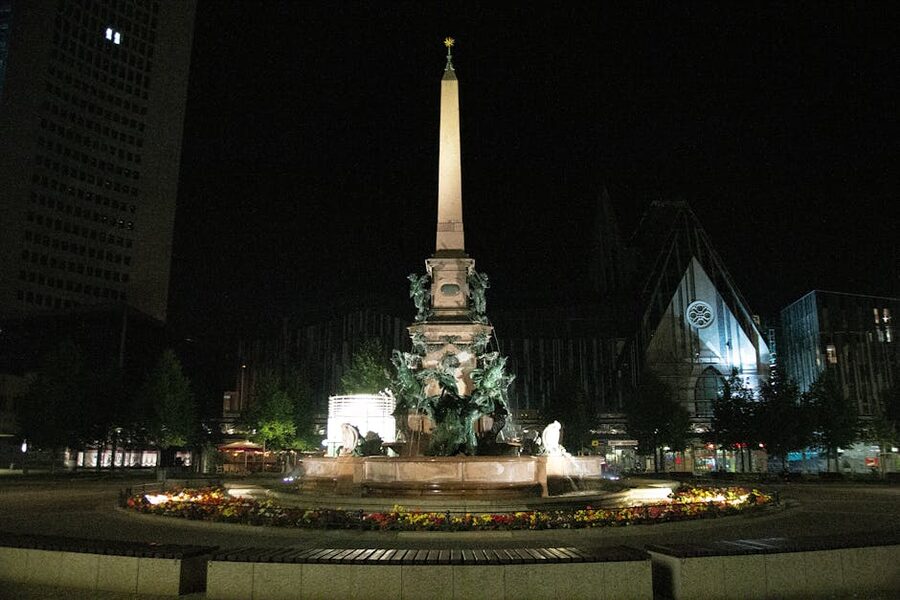
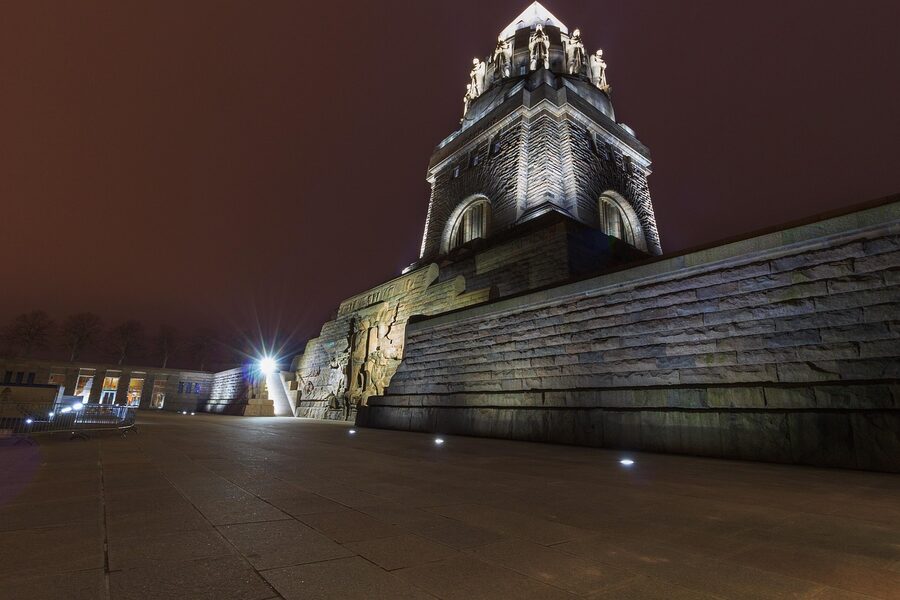
The route covers some of the same ground as Bremme: Nikolaikirche, Augustusplatz, the Opera House, Gewandhaus, the Demokratieglocke (Democracy Bell), the statue of Goethe, the Old Town Hall, Marktplatz, Kretschmanns Hof and the Höfe am Brühl. But the angle is more 19th and 20th century than medieval. Trade routes, the Peaceful Revolution, what was destroyed in 1943 and what was rebuilt.
If you only have one Leipzig evening and you speak German, the 2.0 is the more original choice. If you want the full costumed performance and the medieval atmosphere, Bremme. If your group is mixed and at least one of you is a serious history reader, the 2.0 will give you more to talk about afterwards.
The Three Watchman Options Side by Side
1. Night Watchman Bremme: $17
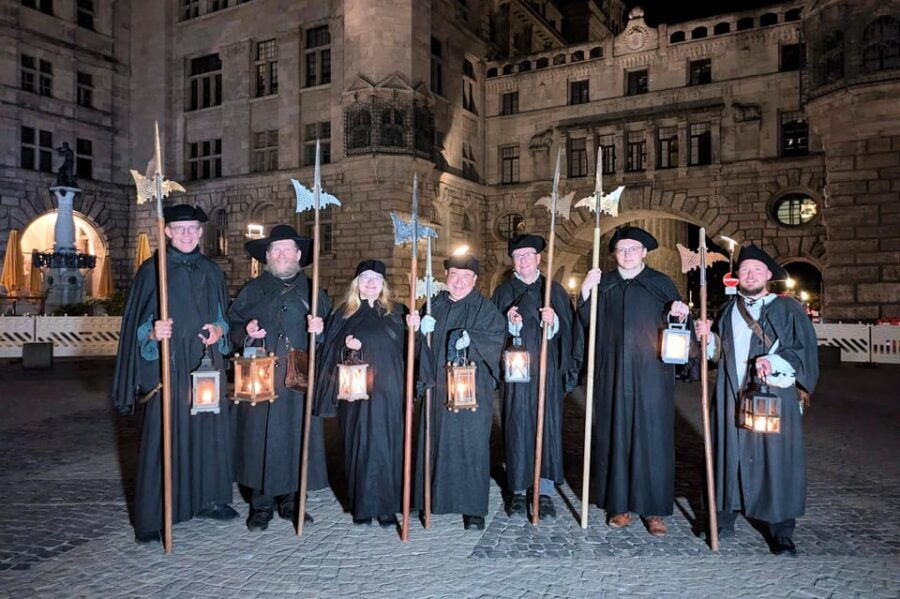
This is the headline tour and the one most readers should book. The Bremme team have run it since the early 2000s, the rating sits at 4.6 across more than 3,000 reviews, and the costumed-watchman performance is the genuine article. Our review of the Bremme tour covers what to expect on a typical evening. Pick this one if you want atmosphere over information density.
2. Night Watchman 2.0 Modern Evening Tour: $18 (German only)
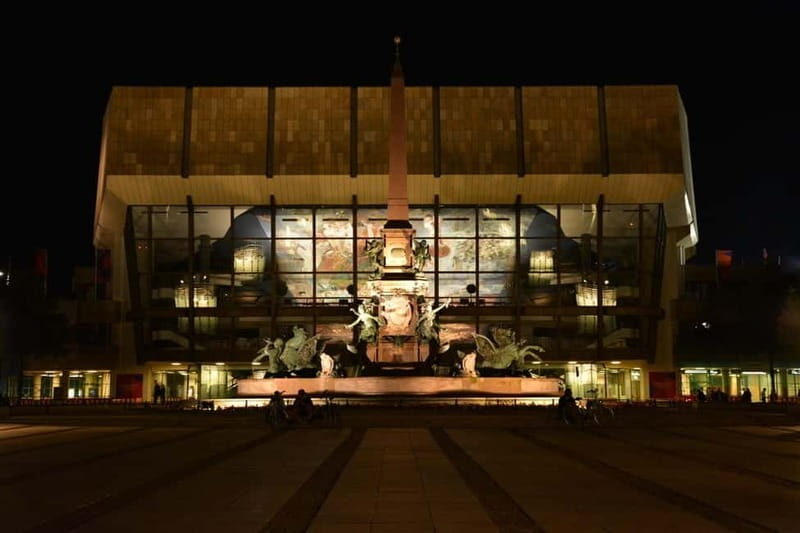
The modern alternative for German speakers. Live narration is in German only, no English option. The 4.9 rating is the highest of the three, but the review count is small (49) because the format is newer. Our 2.0 review goes into the projection format in more detail. Pick this if you read German and want a different angle on the same city.
3. 1.5-Hour Historical Walking Tour: $17 (German only, daytime)
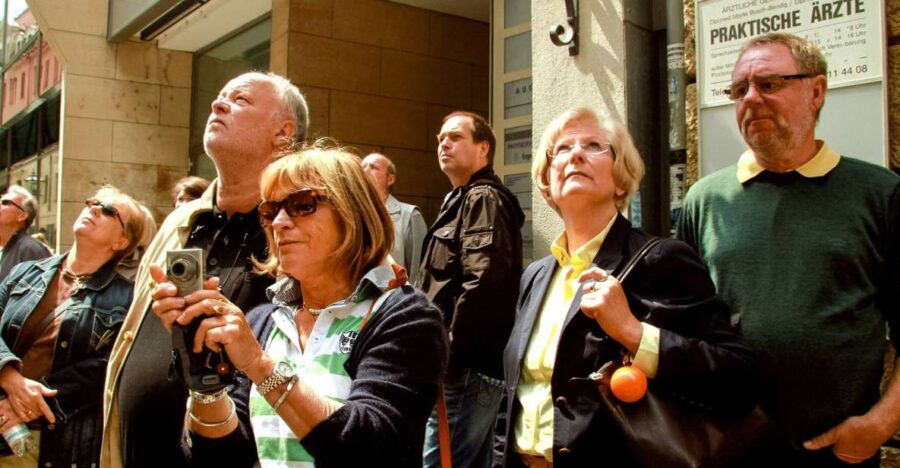
Not a Watchman tour at all, but the obvious daylight fallback if you cannot make either evening slot. German only, ninety minutes, covers Mädler Passage, the Thomaskirche, the Opera House, the Gewandhaus and the university. Our review goes into route detail. Pick this one if your evening is taken and you read German.
What the Route Actually Covers
The Bremme route is a loop of perhaps two kilometres. You will not feel it because the stops are close together and you stand still for three or four minutes at each. The 2.0 covers similar ground in a slightly larger arc. Both pass these landmarks:
The Marktplatz and the Old Town Hall
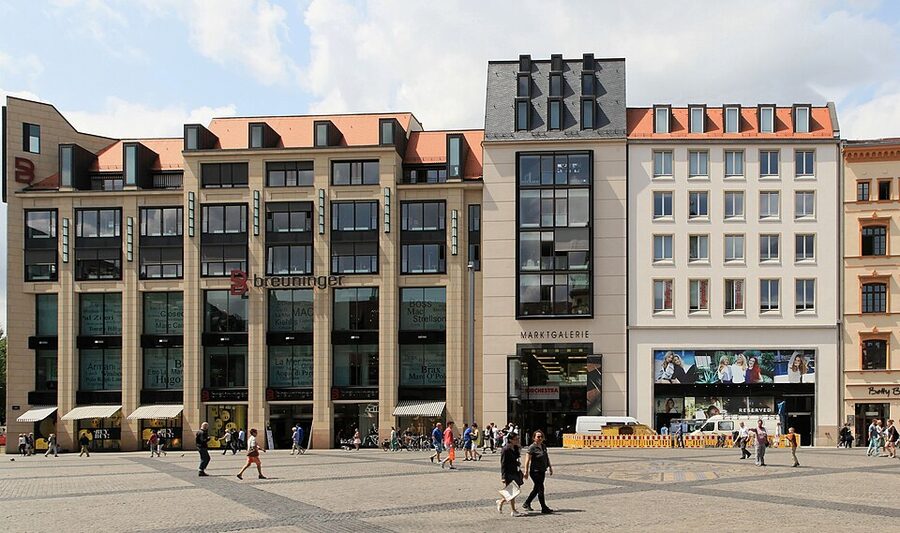
The Renaissance facade is the visual centre of the tour. Bremme tells the story of the trade-fair magistrates who ran the city, the executions that took place on this square in the 16th century, and the night fires that the watchmen were paid to spot. Look up at the tower clock as he speaks. The chimes still ring on the hour, and if you time it right one will go off mid-anecdote. He plays it as if it surprises him. It does not.
The Naschmarkt and the Old Stock Exchange
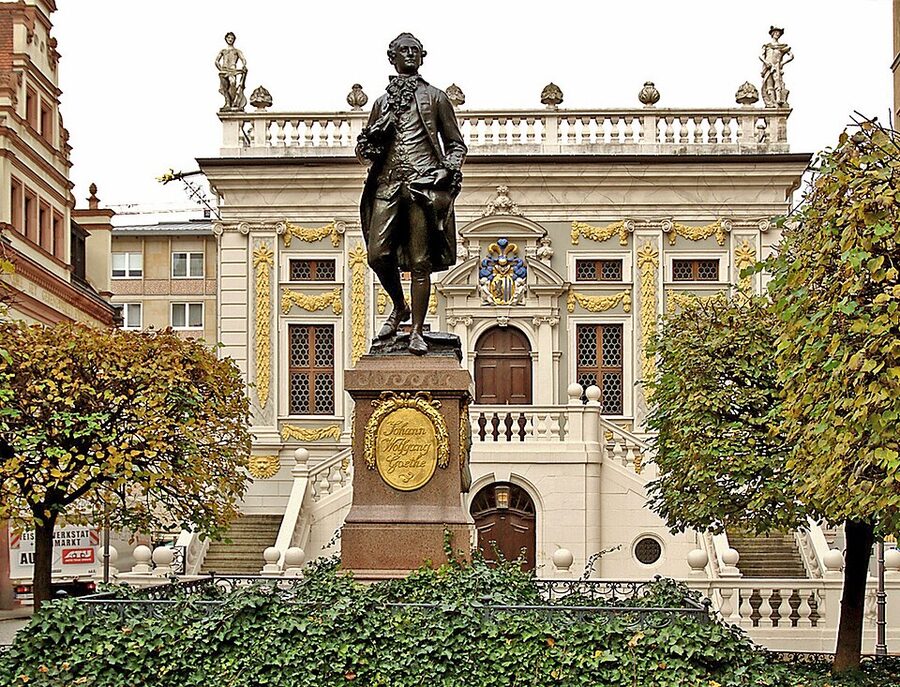
The Naschmarkt is the small square behind the Old Town Hall, named for the market that ran here for centuries. The Old Stock Exchange (Alte Börse) is the baroque jewel-box of a building on its eastern side, finished in 1687 as a meeting hall for trade-fair merchants. There is a Goethe statue out front. He studied law in Leipzig and immortalised the Auerbachs Keller round the corner in Faust. The watchman lingers here. So do the photographers.
Auerbachs Keller and the Mädler Passage
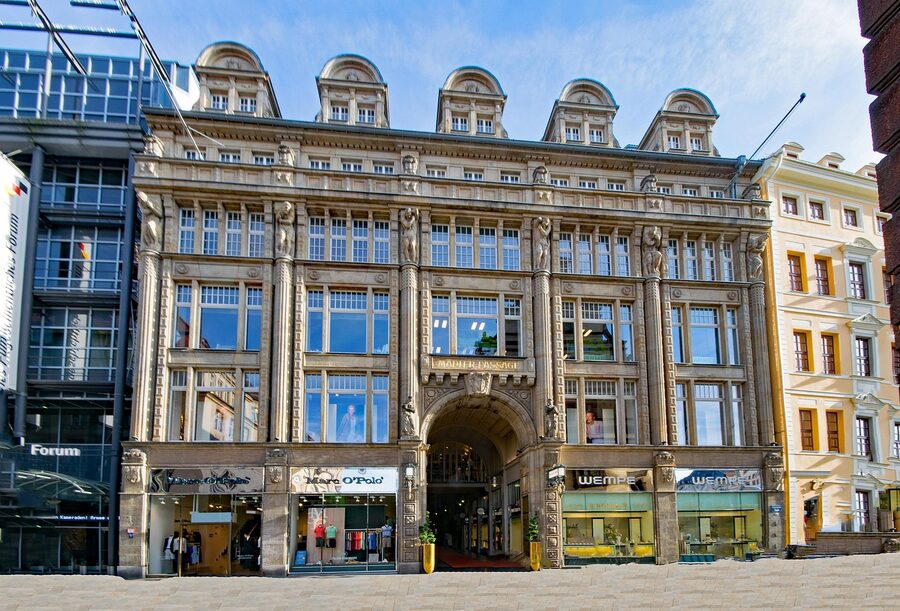
The tour does not go into Auerbachs Keller, but it does pause outside the Mephistopheles bronze at the entrance to the Mädler Passage. Goethe drank here as a student in the 1760s. The cellar he sat in is still working, still serving Saxon food, still expensive. Bremme tells the Faust story compressed to ninety seconds and it lands. If you want to actually eat there, book ahead. They turn walk-ins away on Friday and Saturday nights.
The Thomaskirche and the Bach Connection
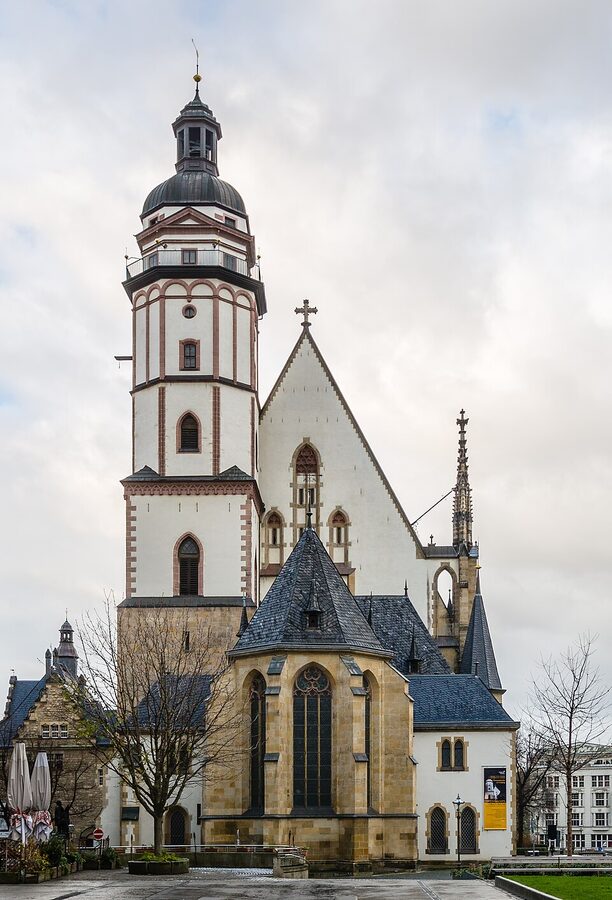
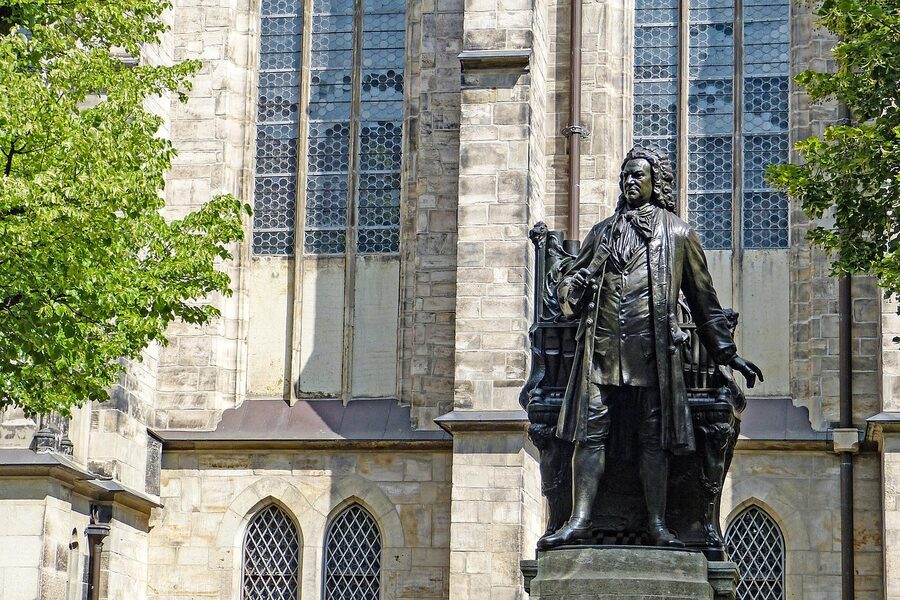
Bach was Thomaskantor here for 27 years and is buried in the chancel. The Bremme tour stops outside, points at the Bach statue across the square, and tells the story of how the cantor’s son sold the manuscripts of the St Matthew Passion to wrap fish and how Mendelssohn rescued them in 1829. It is a good story. The Thomaskirche itself opens at nine in the morning and is free to enter, so leave the Bach pilgrimage for daytime.
The Nikolaikirche and the Peaceful Revolution
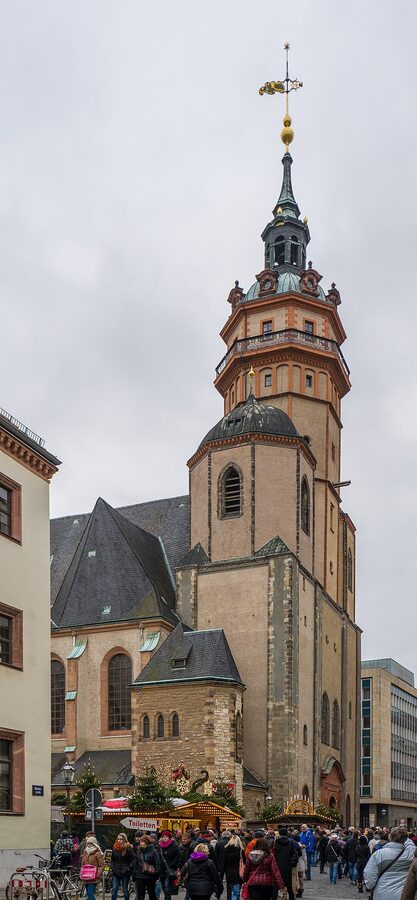
Both tours stop at the Nikolaikirche. The 2.0 stops longer. This is where the Monday peace prayers began in 1982 and where, on October 9th 1989, 70,000 people walked out of the church and round the city ring road. The Stasi were waiting. They did not move. Four weeks later the Berlin Wall fell. The Bremme tour gives this perhaps three minutes. The 2.0 gives it six or seven and projects archive footage of the marches onto a building across the square. It is the most powerful stop on either tour.
Augustusplatz: Opera, Gewandhaus, University
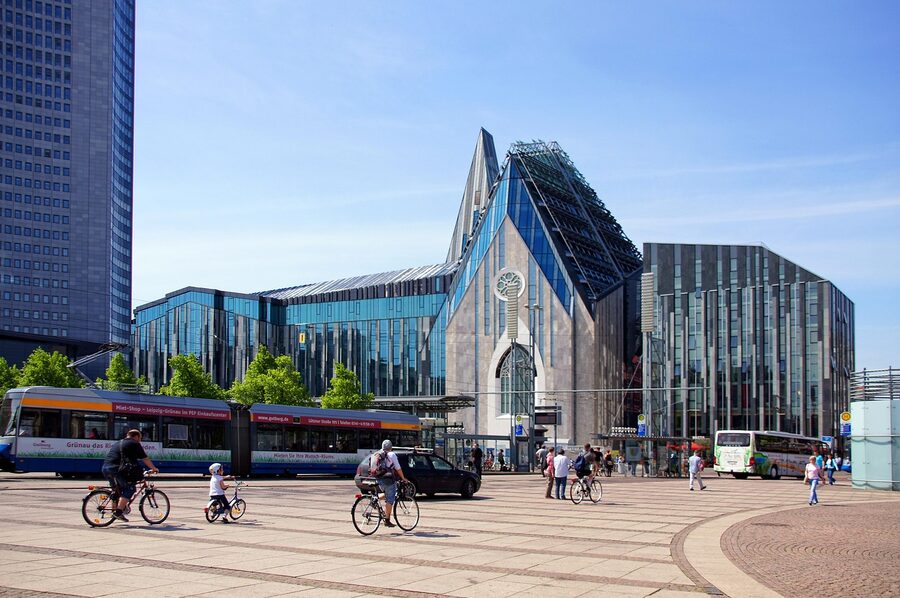
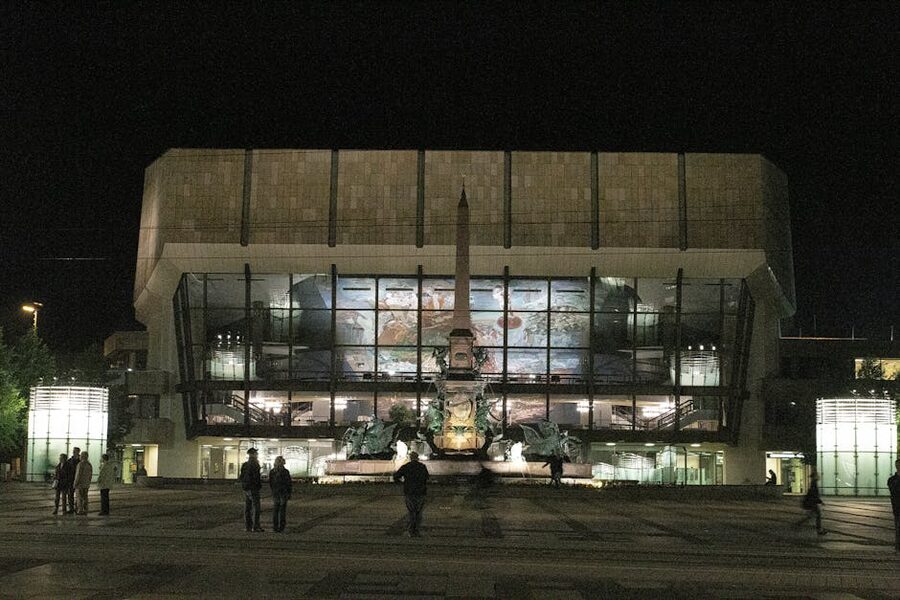
The square is the modern face of the old town: the Opera House from 1960, the Gewandhaus concert hall from 1981, the Paulinum university building from 2017. Bremme tells the story of the original Paulinerkirche, a 13th-century university church the East German government dynamited in 1968 to make way for the GDR-era university tower. There is film of the demolition. People wept. The current Paulinum is the architectural compromise that came out of decades of post-1989 argument about what to put back.
Best Time of Year to Book
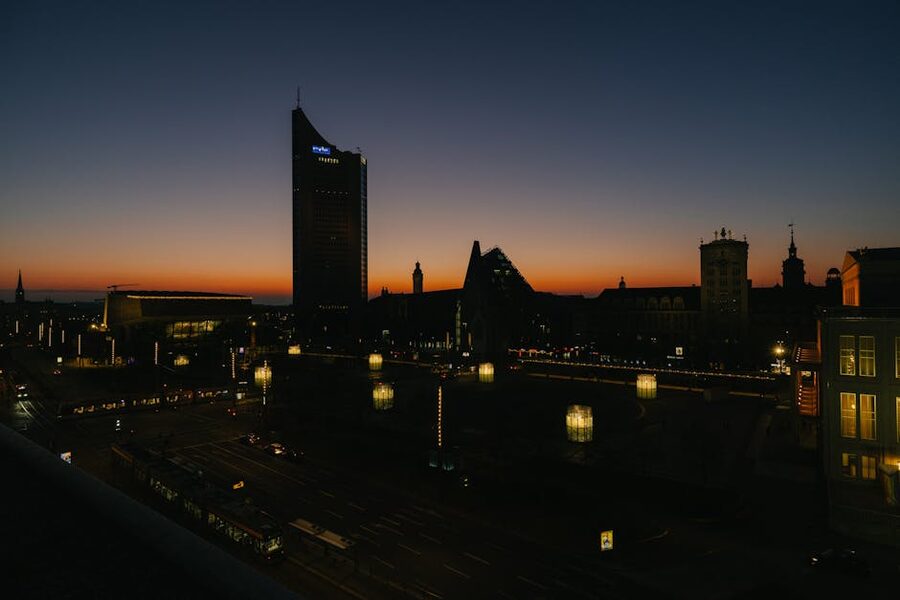
The Watchman tours run all year. They are best in late spring through early autumn, for two reasons.
First, dark falls late in summer. The Bremme tour starts at 21:00 in July, which means the first half is in twilight and the second half is properly dark. That mix is the best version of the experience. In December the tour starts at 18:00 and the whole walk is in pitch dark, which is atmospheric but cold and you miss the gradient of the streets going from blue to black.
Second, standing still on cobbles in February is brutal. The watchman keeps moving but you do not. The stops are three to five minutes each. Layers help. A flask helps more.
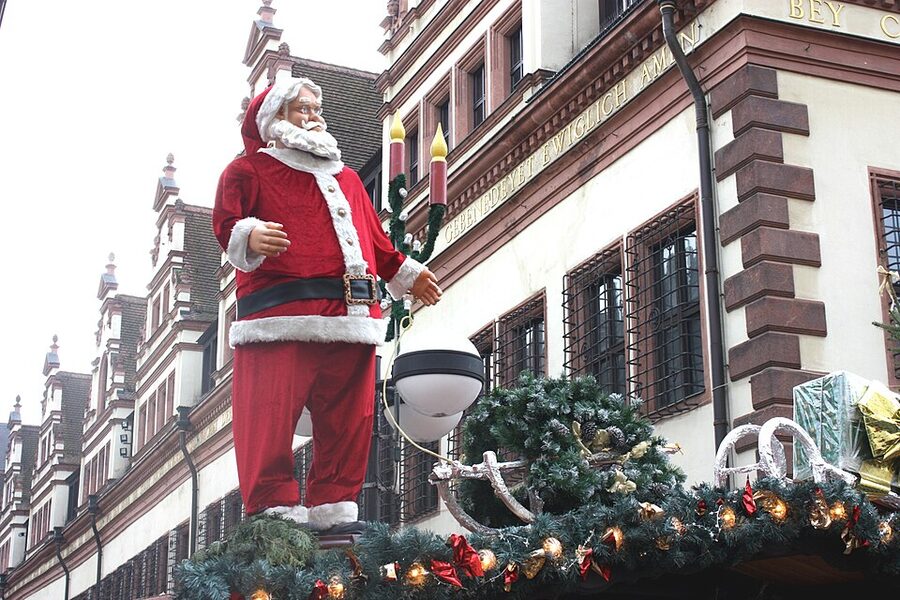
If you can only travel in winter, December is actually a strong time because the Christmas market on the Marktplatz layers a second story over the route. Bremme works the market into the script. Glühwein available within a metre at every stop.
Practical Booking Notes
Group size. The Bremme public tour caps at around 25, sometimes 30 in summer. The 2.0 tour caps at 15 because of the headset count. If you are sensitive to crowds, the 2.0 is the quieter experience.
Mobility. Both tours are walking only, no transport. The 2.0 is officially wheelchair accessible because the route stays on flat pavement. The Bremme tour crosses some short cobble sections that are uneven.
Photography. Both guides are fine with photos. The 2.0 is better for photographers because the projection moments are visually striking and you can shoot at your own pace through the headset narration. With Bremme you tend to keep your camera down, partly because the lantern light is too low for clean shots and partly because the storytelling deserves your eyes.
Combining with dinner. The Bremme tour starts late enough (20:00 to 21:00 depending on month) that you can comfortably eat first. The 2.0 sometimes runs at 19:00 or 20:00, which is awkward. If you are doing the 2.0, eat after.
Refunds. Both run rain-or-shine. They do not cancel for weather short of an actual storm. If it is wet, the Bremme tour gets shorter and quieter. The 2.0 gets harder because the projector is light-sensitive and damp evenings flatten the contrast.
How Leipzig’s Night Watchman Compares to Other German Cities
The night watchman tour is a German tradition, not a Leipzig invention. Most major old towns have one. The two that come closest in quality are Dresden and Heidelberg, and they are different enough to justify both if you are travelling in Saxony or down the Neckar.
The Dresden Night Watchman tour is run by a single performer in the Lantern-Light costume and works the rebuilt Frauenkirche district. The atmosphere is more reverent than Leipzig because everything you are looking at was destroyed in February 1945 and put back from rubble. The Heidelberg Night Watchman tour is the most theatrical of the three, partly because the old town is small enough that every stop lands and partly because the castle on the hill is lit through the entire walk.
If you have time for two, do Leipzig and Dresden. They are an hour apart on the ICE and they make a clean Saxon pairing. If you are doing a single Watchman tour on a wider Germany trip, Heidelberg is the most camera-friendly.
Pairing the Tour With Other Leipzig Plans
The Watchman tour is an evening activity. That leaves your day open. The neatest pairing is a daytime Leipzig hop-on hop-off bus or city bus tour, which puts the same buildings into daylight context, plus the Watchman walk after dark. You see Augustusplatz, the Marktplatz and the Nikolaikirche twice in two registers, and the difference is the point.
If you have a second night, the Gewandhaus runs concerts most evenings of the week and the Opera House has a sturdy programme. Both are visible from the Watchman route. The Bach Festival in June is the obvious peak event if you are timing a music trip.
Day-trippers: a Dresden Elbe cruise or a half-day at the Semperoper makes a good Saxon paired city. Potsdam and Sanssouci is harder from Leipzig, two hours by train, but doable as a single long day if you are committed.
One Honest Caveat
The Bremme tour is not for everyone. If you arrive in Leipzig wanting hard, dense, fact-by-the-minute history, the costume and the horn will feel theatrical to you. The 2.0 will suit better. If you arrive wanting atmosphere, smell of woodsmoke from the market, lantern flicker on cobbles, the Bremme version is what you came for.
The other thing worth saying: the 4.6 rating across 3,000-plus reviews is honest. The handful of three-star reviews mostly come from English speakers who booked a German-language slot by mistake. Sort the calendar by language, double-check on the booking page, and that risk goes away.
Booking Recap
If you read German, book the Night Watchman 2.0 for the more original format and the heavier history. If you want the costumed performance and the Marktplatz atmosphere, book the Bremme tour on an English-language date or join a German slot accepting that the visuals do most of the work. If your evenings are gone, the daytime historical walking tour covers the same physical ground without the theatre.
Whichever one you pick, do it on your first evening in Leipzig if you can. The city makes more sense after the watchman has named the buildings.
Where the Watchman Tour Sits in a Wider Germany Trip
If Leipzig is one stop in a longer Germany run, the Watchman walk is the kind of evening that earns its slot in any itinerary. A Berlin walking tour works as a daytime cousin if you are headed north next. A Munich old town walk sets a different reference point if you are heading south. The Saxon pairing of Leipzig and Dresden’s Frauenkirche remains the cleanest two-city combination, and adding a Leipzig hop-on hop-off bus in daytime closes the loop on Saxony’s two best old towns. For travellers building a Berlin half of the trip too, the Potsdam day trip from Berlin is the Brandenburg equivalent of a Leipzig evening — different rhythm, different period of German history, same idea of a smaller city trip that makes the bigger city next door make more sense.