
My friend Anya did the Heidelberg night watchman walk on her last evening of a long Rhine trip. She told me she expected something cheesy, a man in a costume reciting facts. What she got was a guy named Konrad who stopped her group on a dark corner near Holländer Hof and made everyone listen for the bells. That was when she realised the tour was good. It is still her single favourite memory from Germany, and she has been on dozens of guided tours.
This is the article I wished she’d had before she booked. There are four watchman tours sold for Heidelberg and they are not the same product. Pick the wrong one and you will be reading menus on the Hauptstraße while your guide rattles off dates. Pick the right one and you will get the version Anya got.
- In a Hurry?
- What a Heidelberg Night Watchman Tour Actually Is
- Why You Should Do This in Heidelberg, Not Rothenburg
- The Three Tours, Compared
- 1. Heidelberg Night Watchman Historic Adventure Tour: 5 per group up to 25
- 2. On the Trail of the Night Watchmen: 5 per group up to 25
- 3. 2-Hour Walking Tour With Night Watchman: 5 per group up to 25
- Booking, Pricing, and the “Per Group” Trap
- What Time of Year Changes the Tour
- What the Watchman Was Actually For
- Where the Tour Stops, and Why
- Practical Things That Actually Matter
- What to Pair It With
- If You Are Doing Other German Cities Too
- The One Thing the Tour Will Not Tell You
- Final Booking Notes
In a Hurry?
Three Heidelberg night watchman tours that actually deliver the atmosphere. Book direct, no reading required.
- Heidelberg: Night Watchman Historic Adventure Tour: $305 per group up to 25. The most-booked one. Konrad and his colleagues are the reason.
- Heidelberg: On the Trail of the Night Watchmen: $305 per group up to 25. Same family of guides, slightly different route. Good fallback if the first sells out.
- Heidelberg: 2-Hour Walking Tour With Night Watchman: $435 per group up to 25. Longer, leans into the werewolf and ghost storytelling.
What a Heidelberg Night Watchman Tour Actually Is
It is a guided walking tour, about 90 minutes, through the Altstadt after dark. Your guide is dressed as an 18th-century Nachtwächter. Long black cloak, tricorn hat, lantern, halberd, sometimes a horn. They walk you through the streets a watchman would have patrolled and tell stories that happened at the spots you are standing on.
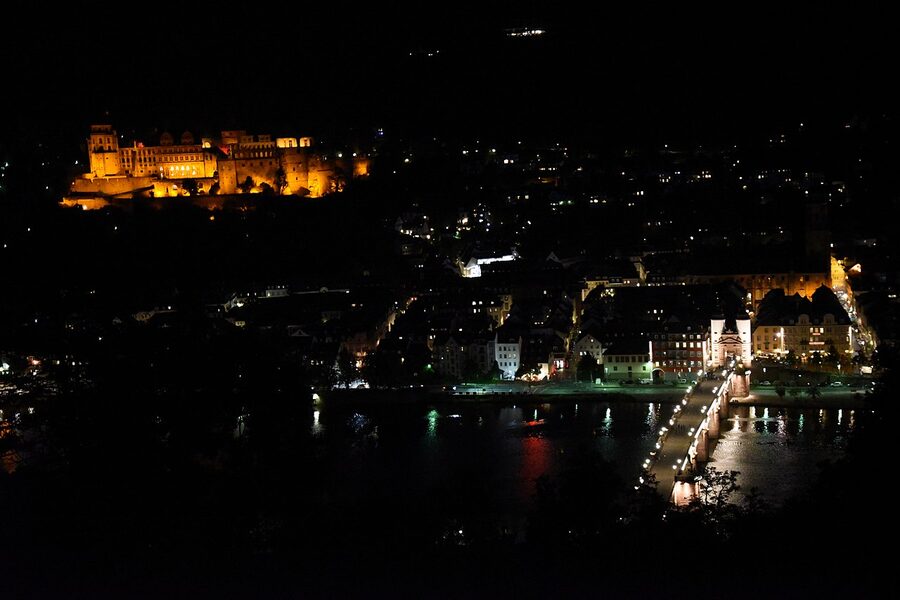
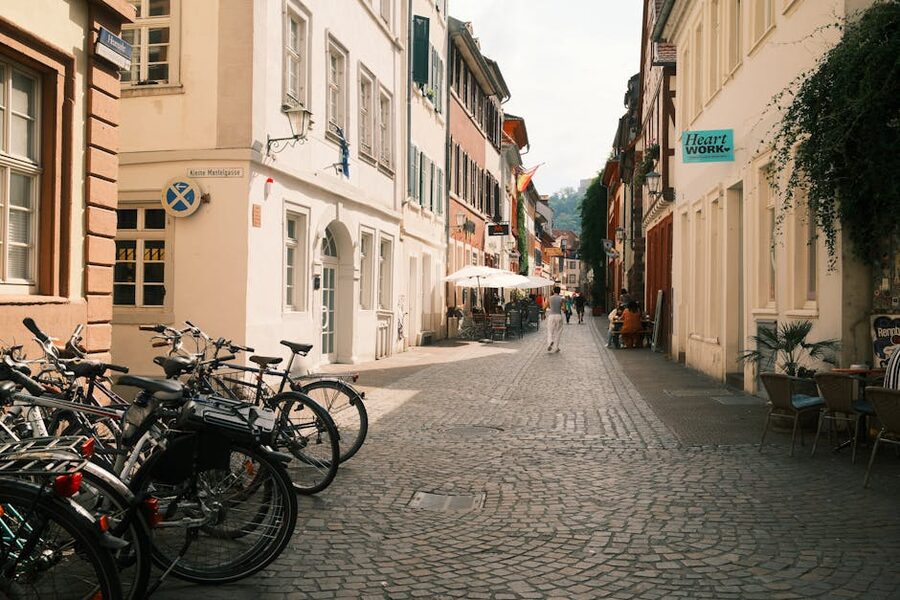
That sounds gimmicky on paper. In Heidelberg it is not. The Altstadt is small and almost untouched by the bombs that flattened most German cities in 1944 and 1945. The streets the watchman is showing you are the actual streets a real watchman walked. The buildings he points at are the buildings the stories happened in. That is the difference between this tour and the same concept done in Rothenburg or Dinkelsbühl.
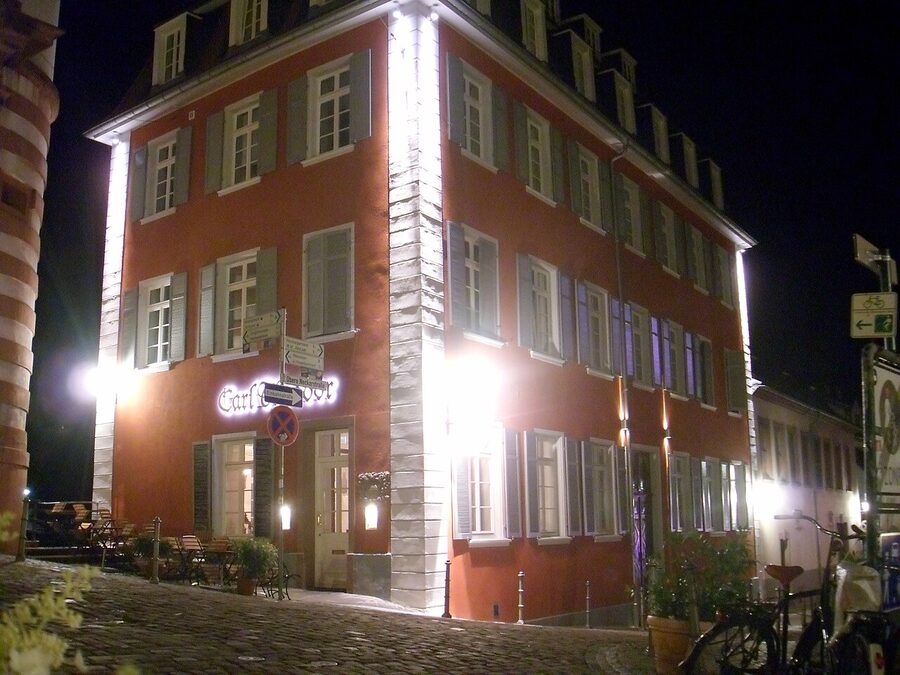
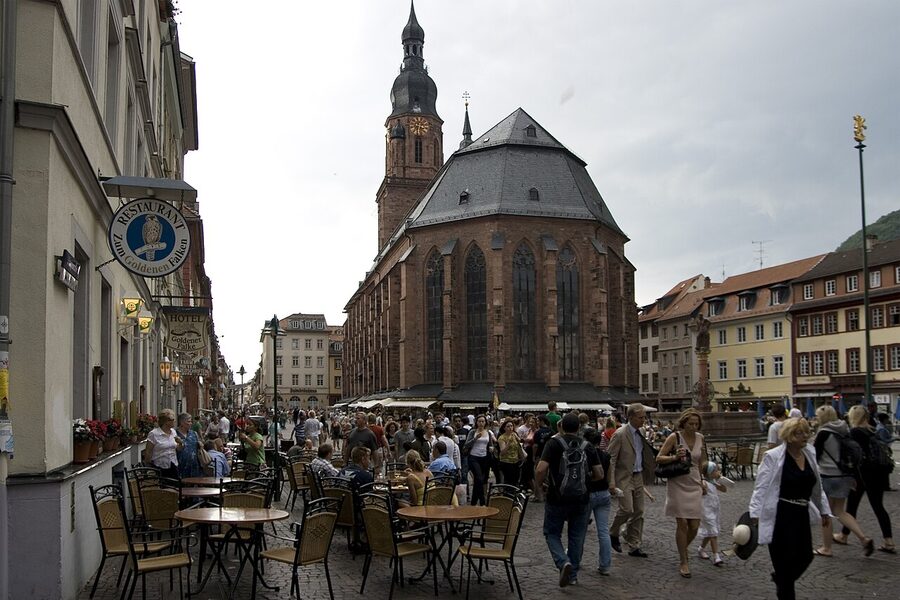
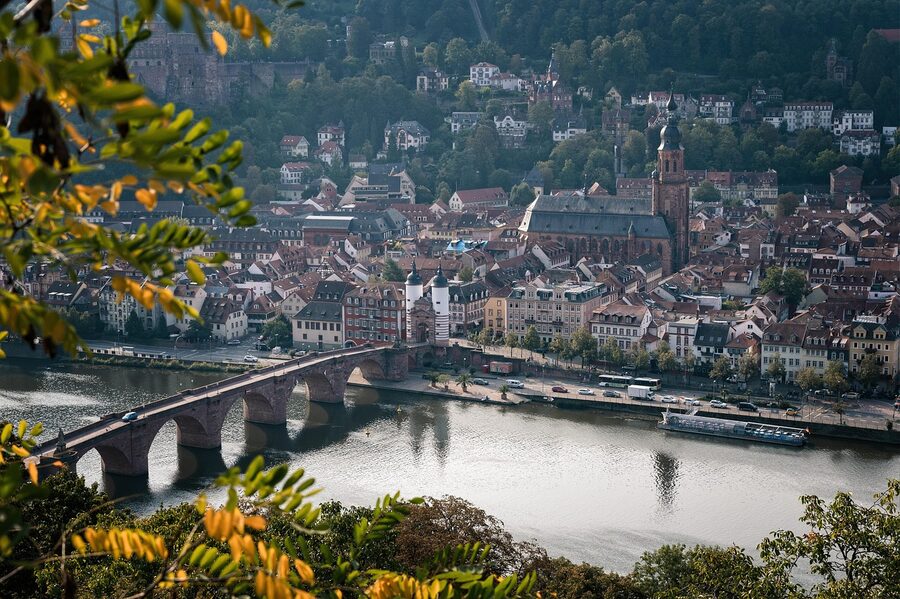
The route varies by guide and season. There is a core spine that more or less every tour follows: meet at Marktplatz, walk past the Heiliggeistkirche, cut down toward Korn Market and Holländer Hof, finish somewhere near the Alte Brücke. What changes is which stories get told along the way. There are guides who lean medieval and serious. There are guides who lean horror, with werewolves and witch trials and the city’s hangman. Pick the tour to match what you actually want to hear.
Why You Should Do This in Heidelberg, Not Rothenburg
Rothenburg’s night watchman is the famous one. He has been doing it since 1992, he speaks great English, he fills 100-person crowds nightly. He is also the version of this tour everyone has already seen on YouTube.
Heidelberg’s watchman tours are smaller. The groups are usually 15 to 25 people. The guides do not have the polished comedy routine. What they have instead is a city with serious history. Heidelberg was the seat of the Palatinate electors. The university, founded in 1386, is the third-oldest in the Holy Roman Empire. Students were a constant menace to the night watch in the 17th and 18th centuries because they were exempt from city law and would brawl, duel, and drink in ways the watch could not properly arrest.
That history is the material the Heidelberg watchmen draw from. You will hear about specific student duels, about the Thirty Years War and the destruction of the city in 1693, about a hangman who lived above what is now a chocolate shop. None of it is invented. None of it is the same as Rothenburg’s set.
If you have already done the Dresden night watchman tour, you will recognise the format but not the material. Dresden’s watchman leans hard into the firebombing and the rebuilding. Heidelberg’s leans into the medieval and early modern, because that is when the Altstadt was alive and the bombs never came for it.
The Three Tours, Compared
I am going to walk you through these in order of how often they get booked. The first is the one to start with if you are deciding cold.
1. Heidelberg Night Watchman Historic Adventure Tour: $305 per group up to 25
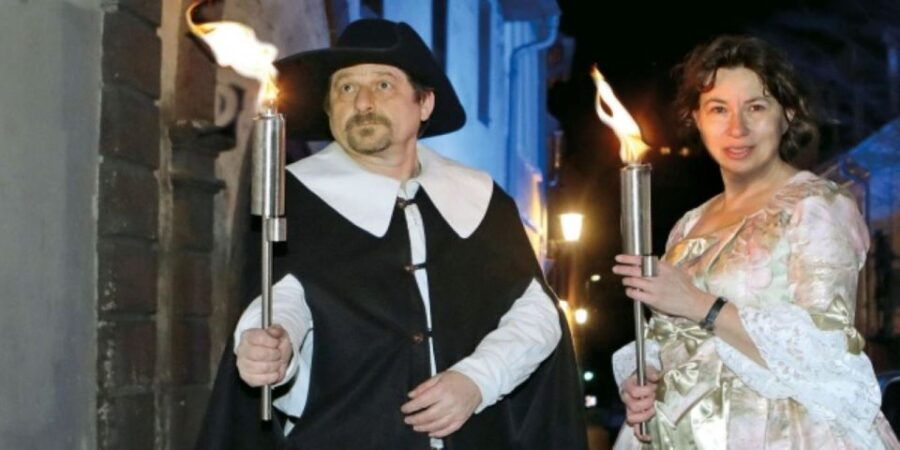
This is the one to book if you only do one. It is 1.5 hours, runs in the evening, and the route covers Marktplatz, Korn Market, Palais Prinz Carl, Holländer Hof. The Konrad reference at the top is real. He is one of two or three guides who rotate this tour and I’d push you toward an evening he is on if you can swing it. Our full review goes into the meeting point and what the route looks like in winter.
2. On the Trail of the Night Watchmen: $305 per group up to 25
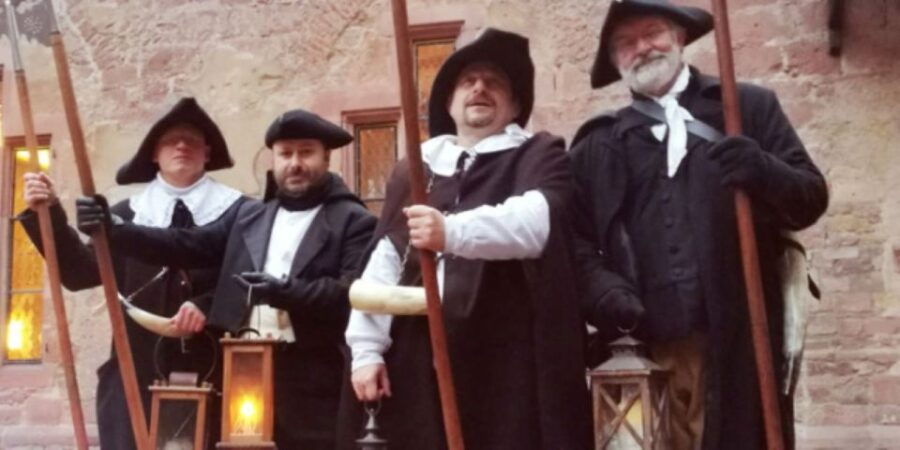
Sold by the same outfit as the headline tour. Same guides, same length, slightly altered route that leans more into the family side of the watchman trade (his daughter sometimes guides). It is a good fallback if the first tour is full. In our review we noted the storytelling ratio is slightly higher here than on the headline tour, which is either good or bad depending on what you want.
3. 2-Hour Walking Tour With Night Watchman: $435 per group up to 25
This is the longer, darker version. Two hours, costumed watchman, but the tone leans into werewolves, vampires, and the hangman. The price is higher because it is longer, not because the guide is more famous. Worth booking if you have already done a standard old-town tour and want the watchman version with bite. Our review covers the costume detail and where the tour ends.
Booking, Pricing, and the “Per Group” Trap
The price you see on GetYourGuide is “per group up to 25”, not per person. This is the thing that catches everyone out. $305 for a group of 25 is $12 per person. $305 for two people is $152 per person. If you are a couple, you have two options: book the slot anyway and absorb the cost, or wait and join a public departure.
Public departures exist but they fill from the German-language side of the booking pages. The English-only listings on GetYourGuide and Viator are mostly the private group format. If you can read German, look at heidelberg-marketing.de for the public schedule. They sell tickets at around 12 to 15 euros per adult and the tour runs in German with English handouts.
If you are a group of four to six and the cost still feels steep, the move is to find another couple at your hotel and combine. The watchman tour is not a romantic-couple tour. It is a small-group atmosphere tour and works better with eight people than two anyway.
What Time of Year Changes the Tour
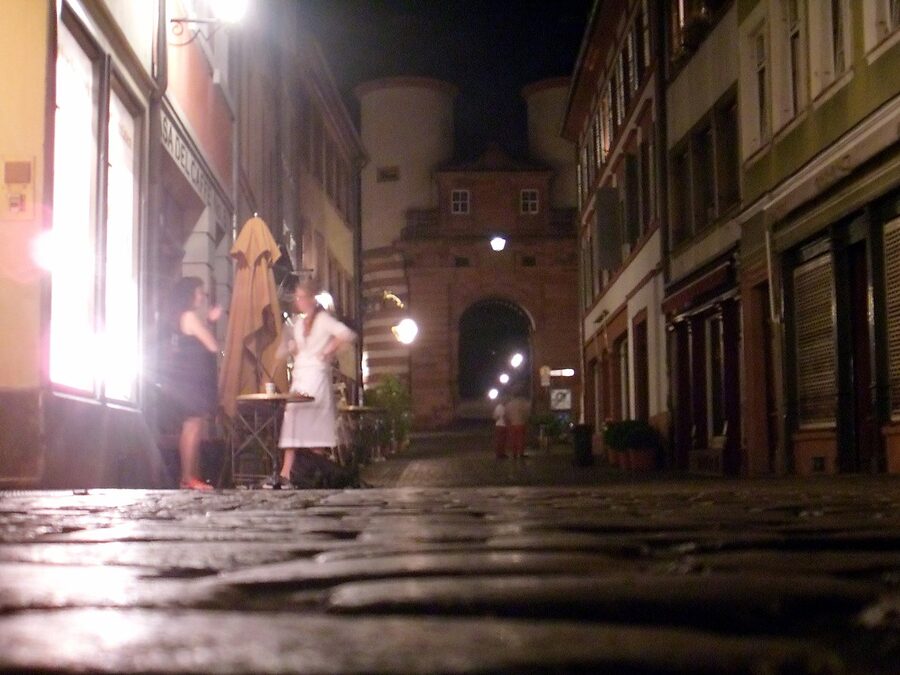
Heidelberg gets dark early in winter. November through February the watchman tour can start at 6pm and feel like 10pm. The cold helps. The Altstadt empties out at that hour and the streets feel right for the tour. Wear a real coat and shoes with grip. The cobblestones turn into a skating rink when it rains.
Summer is the other extreme. June through August it does not get dark until 9:30pm and the Altstadt is full until midnight. Tours that start at 8 or 9pm work best. The 6pm summer departures are not really night tours. They are walking tours in costume, which is fine but not what you came for.
Christmas market season is the trap. December tours sell out three weeks ahead. The Altstadt is busy in a way that fights the tour’s atmosphere, especially in the first 20 minutes around Marktplatz where the market stalls run right through your route. If you are coming in December, book at least a month out and pick a tour that starts after the market closes at 9pm.
What the Watchman Was Actually For
The watchman job in Heidelberg ran from roughly 1500 to 1900. By the 19th century it was already a romantic role rather than a useful one. Gas streetlights and modern police forces had taken the practical work away. But for the four centuries before that, the watchman did real things.
He called the hours, every hour from 10pm to 4am, often with a horn or a chant. He checked that doors were locked and reported them when they were not. He was the fire alarm. If smoke came up from a chimney that should not have one going, the watch ran for water. He was the only legal authority on the streets after curfew. People who wanted to be out after curfew bribed him.
The watchman was almost always working class. The job paid badly, the hours were brutal, and the role had no social standing despite the cloak and the halberd. The romantic image we have now of a watchman calling out poetic verses is mostly a Romantic-period invention from about 1850 onward. The real job was a night-shift policeman on minimum wage with a horn instead of a phone.
Your guide will tell you a version of this. Listen for which century they emphasise. Guides who lean medieval will tell you the chants and the verses. Guides who lean Enlightenment will tell you about the bribes and the disputes with the universities. Both are valid and both are what actually happened.
Where the Tour Stops, and Why
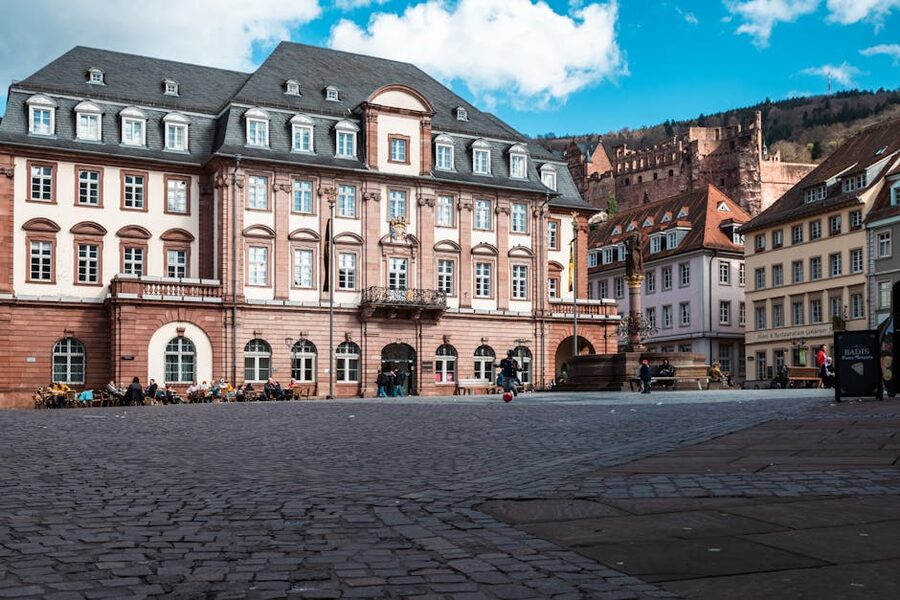
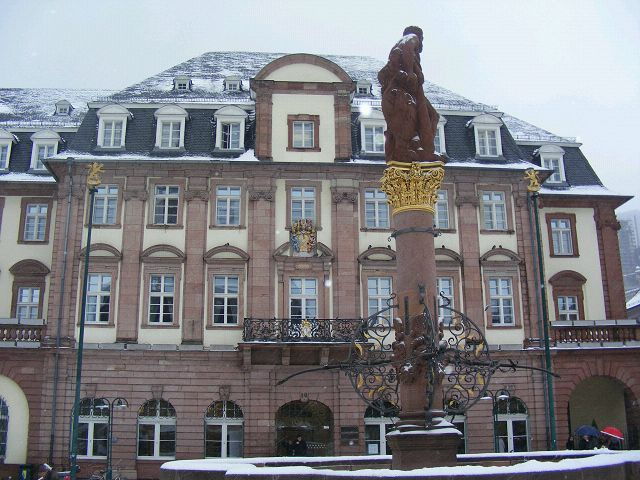
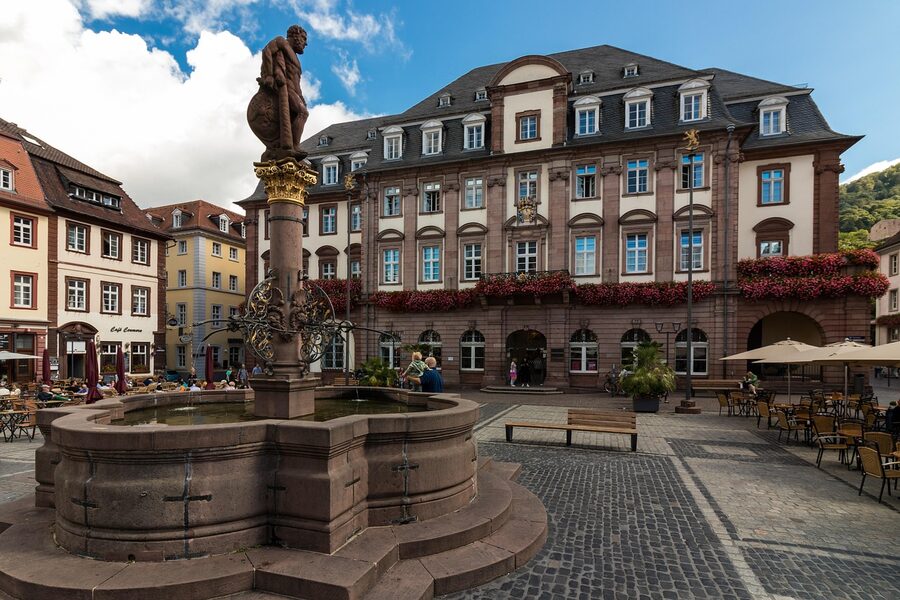
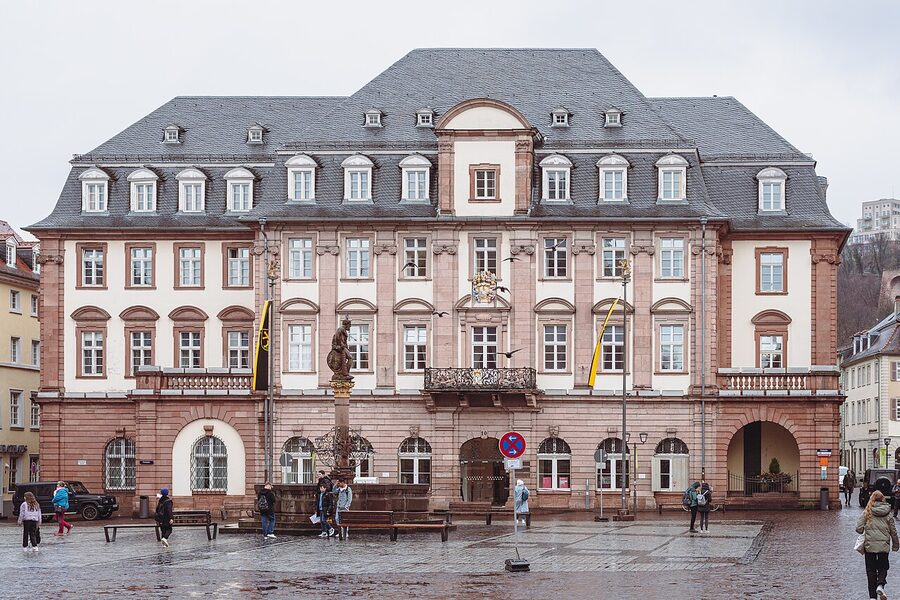
Marktplatz. Almost every tour starts here. The Hercules fountain in the centre is the meeting point and the Rathaus is on your right. Watchman stories that get told here are usually about the public executions that happened on this exact square until 1804.
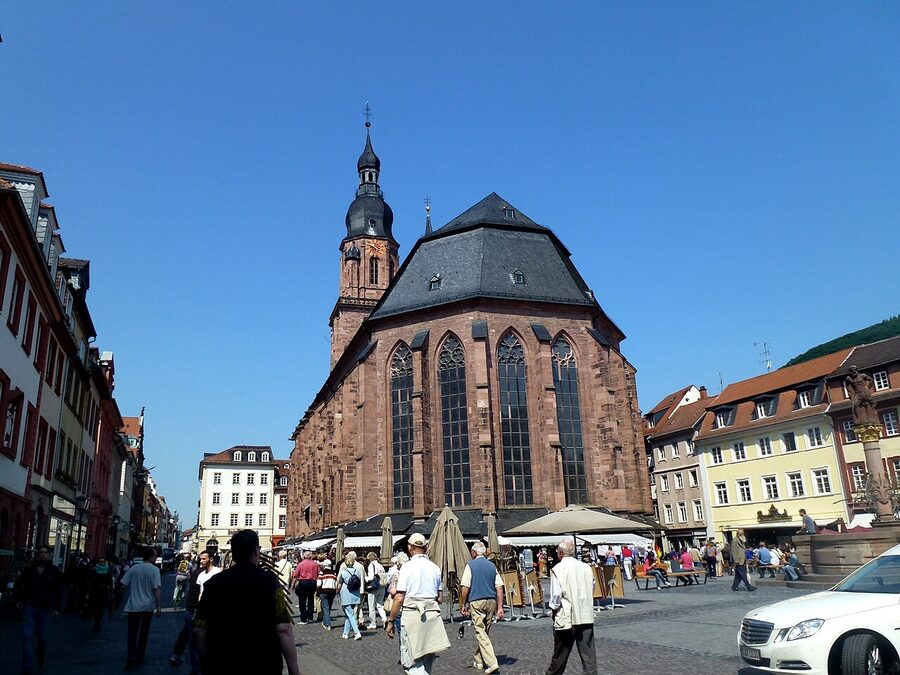
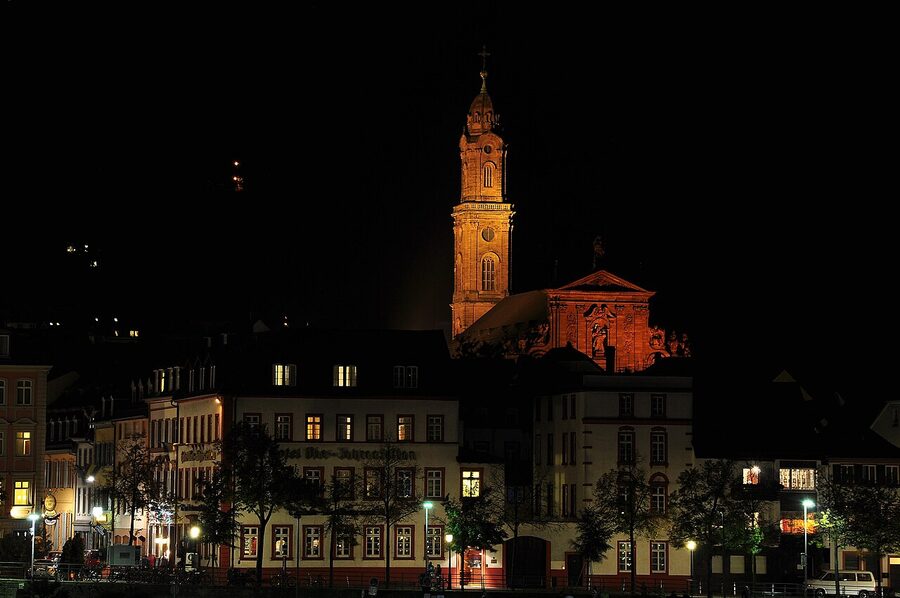
Heiliggeistkirche. The big church on the south side of Marktplatz. Built in the 14th century, used as the seat of the Palatinate library until the library was looted by Tilly in 1622 and shipped to Rome. The watchman would have stopped here every hour to check the church doors and to listen to the bell.
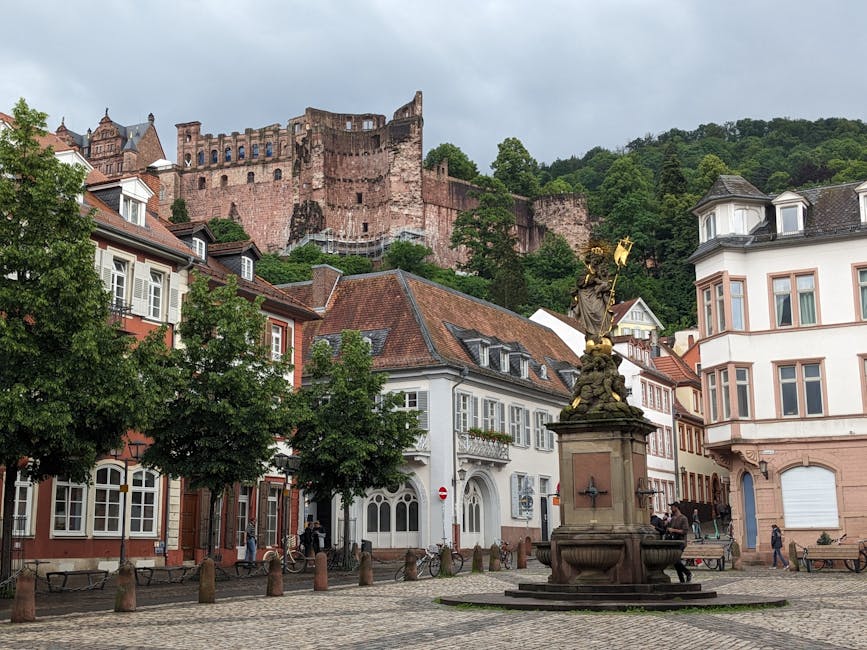
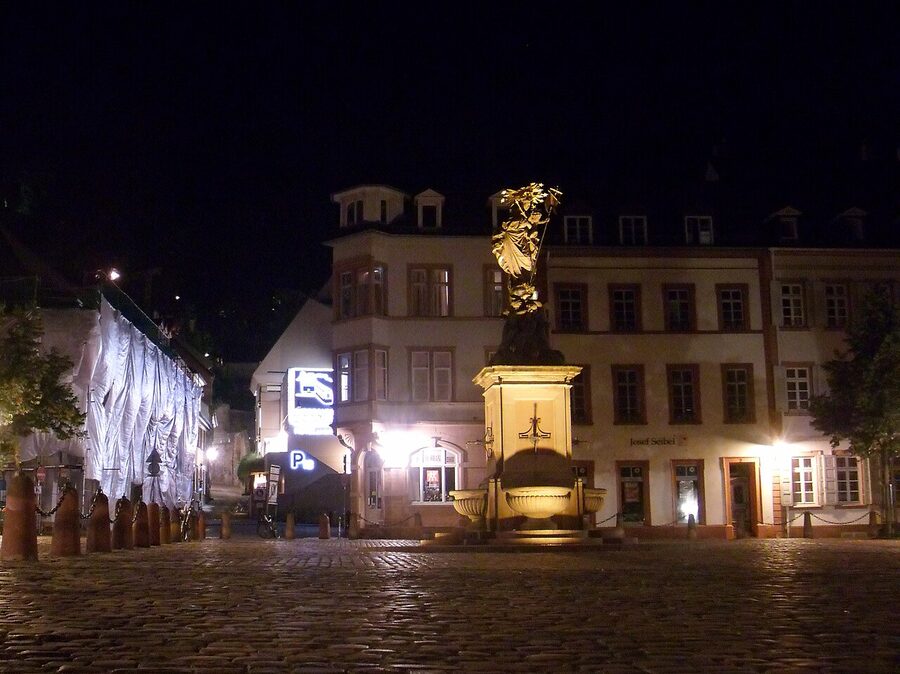
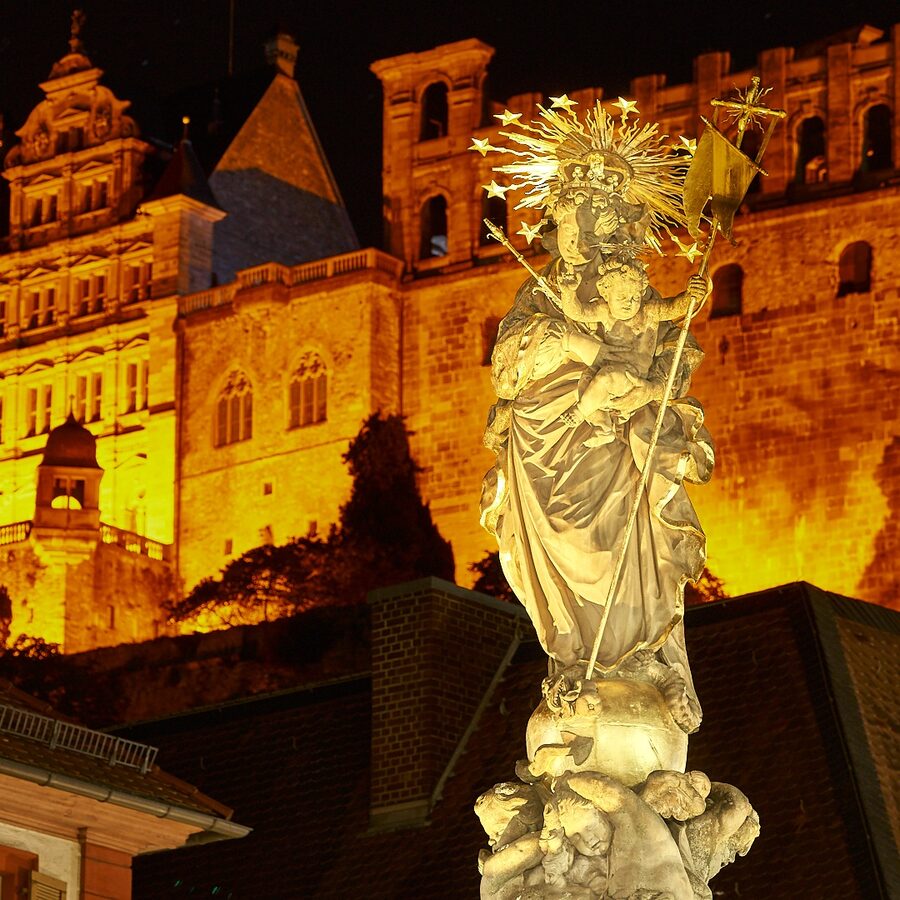
Korn Market. This is where grain was sold. It is also where the city kept the gallows for minor offences. The Madonna statue in the centre dates from 1718, which is later than the watchman stories that get told here.
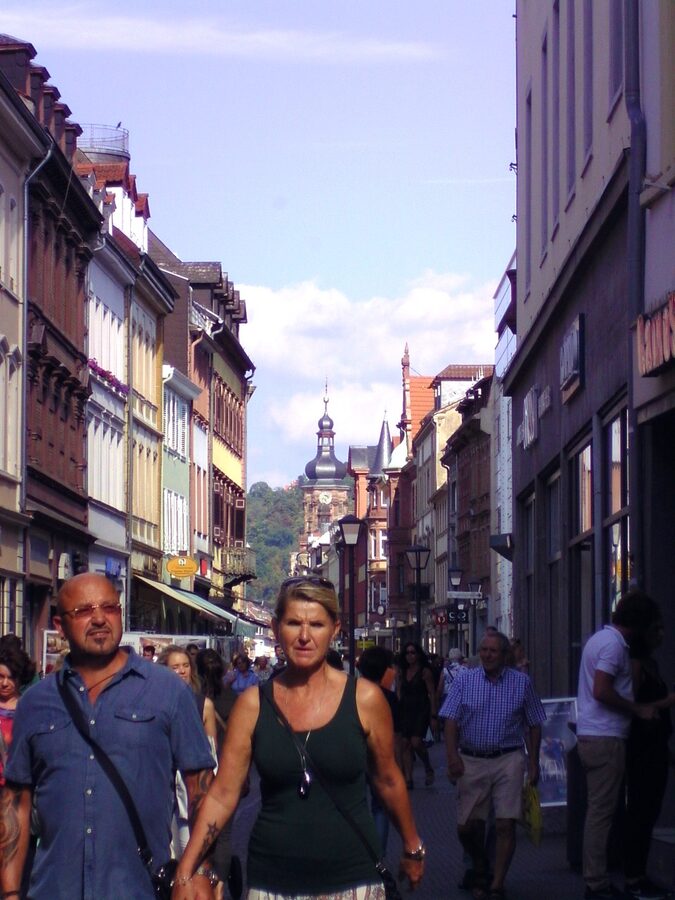
Hauptstraße. Now Europe’s longest pedestrian shopping street. In the watchman’s era it was the main thoroughfare and the spine of his round. Most tours walk it for at most 100 metres because the modern shopfronts kill the atmosphere.
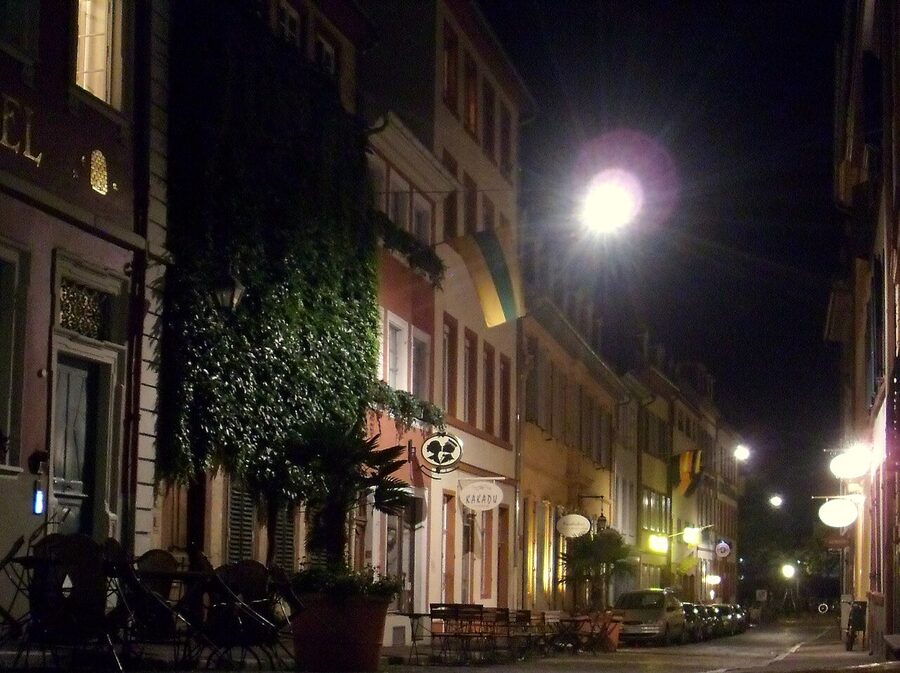
Holländer Hof. Originally a 16th-century inn, now a hotel. The stories told here are about travellers, smugglers, and the hangman who lived nearby. The atmosphere on this corner is one of the strongest on the tour.
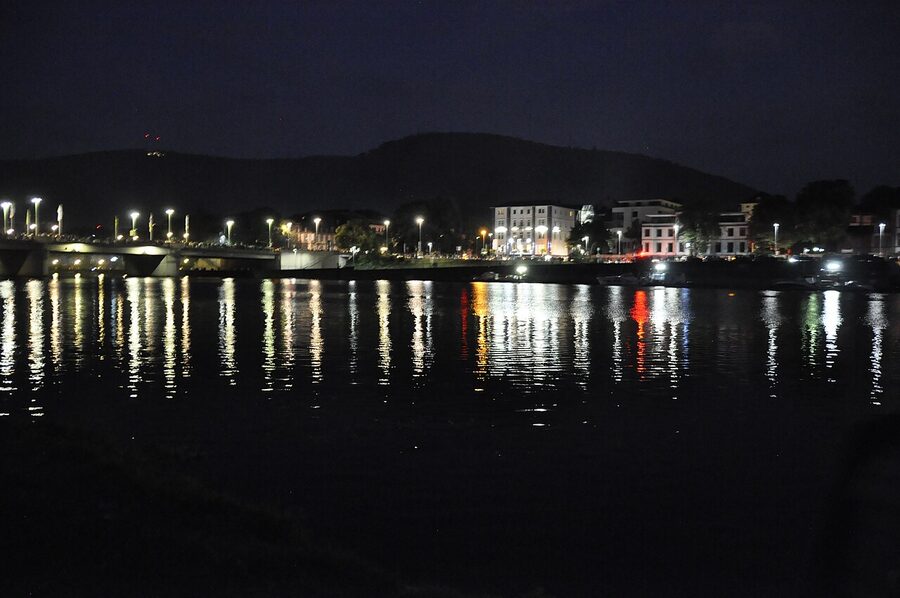
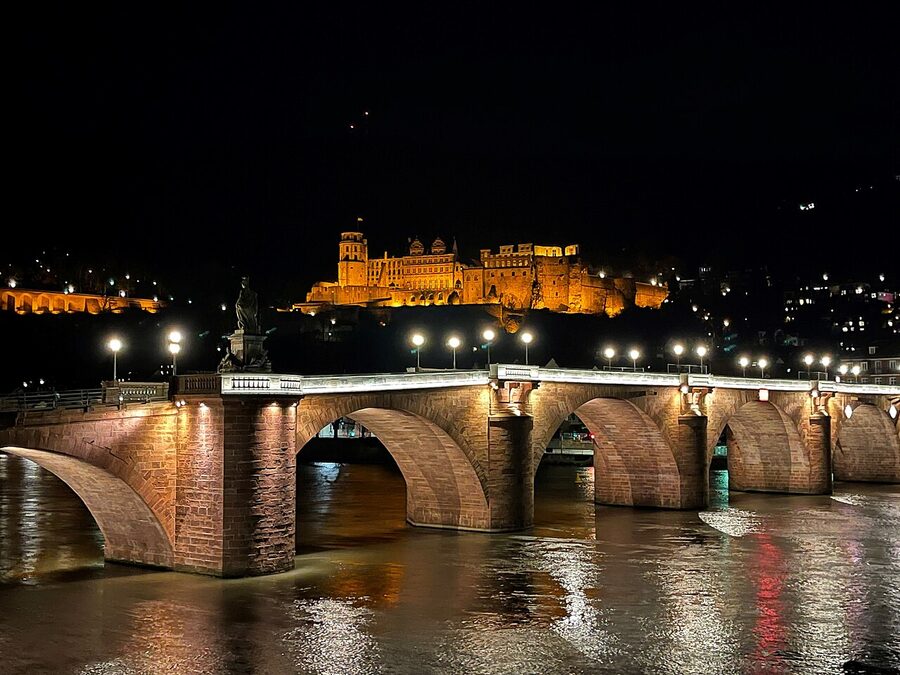
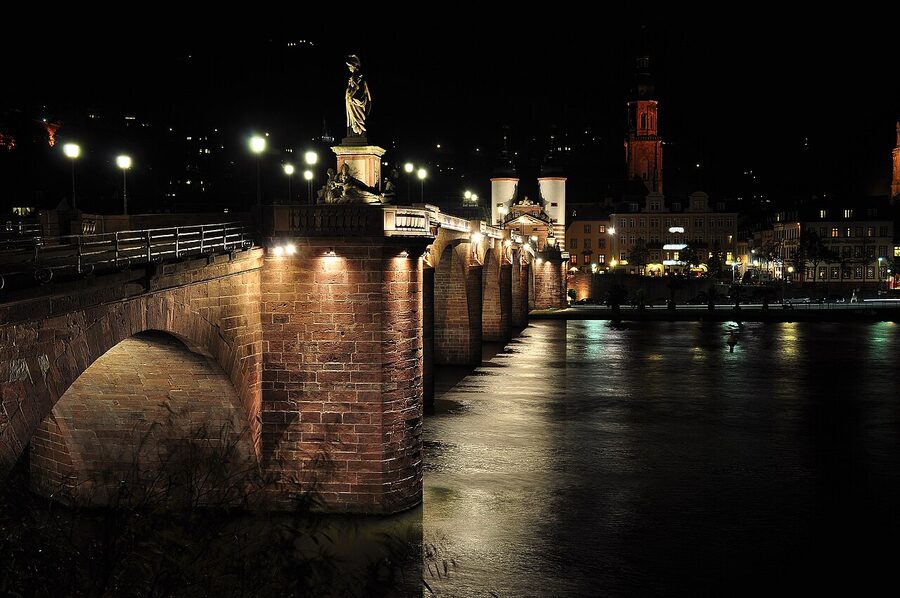
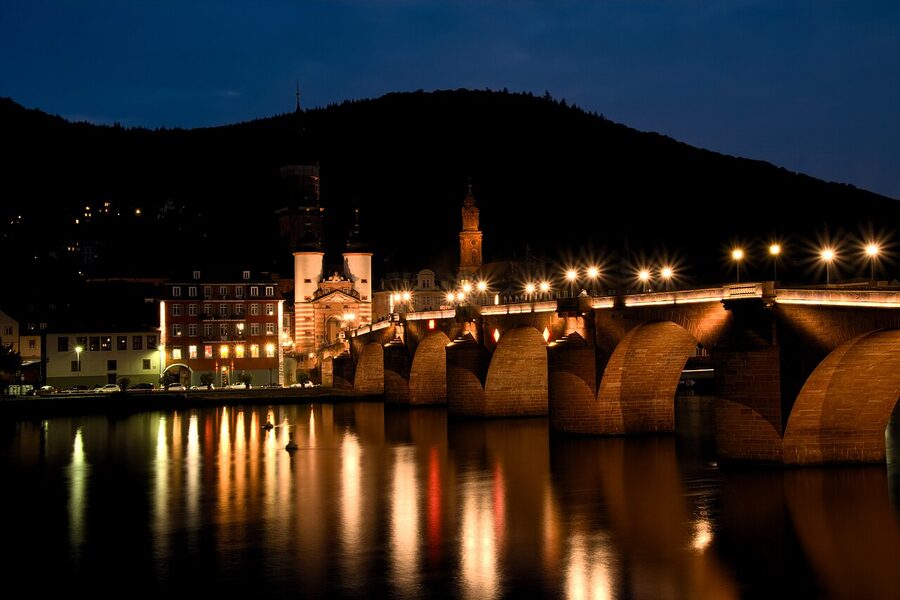
Alte Brücke. Some tours end here, some don’t. The bridge as it stands now is from 1788, replacing a wooden one that had been washed out repeatedly. The bridge gate towers were where the watch checked entry papers. The Brückenaffe (the bronze monkey) is medieval in origin and most guides will gesture at it on the way past.
Practical Things That Actually Matter
Language. Most tours sold to international tourists are in English. The German-language tours are slightly cheaper and slightly more local in feel. If you have any German at all, the German tour is more rewarding because the watchman language plays on old German words that do not translate cleanly. If you have none, the English version is fine.
Group size. The “up to 25” cap is real. I have been on a tour with 22 people on it and it was at the edge of workable. Pick a slot that you suspect will be quiet (Tuesday, Wednesday) if you want a smaller crowd.
Kids. The standard tours are family-friendly down to about age eight. The 2-hour horror version with werewolves and the hangman is not. The guides will not soft-pedal the gory stories on the longer tour and a six-year-old will have nightmares. Stick with the 1.5-hour tour for small kids.
Photography. Bring a phone with night mode. Do not bring a flash. The atmosphere depends on the lantern light and a flash will kill it for everyone behind you. Stand still for two seconds and let your phone do the long exposure.
Drinks. Tours mostly do not include drinks. Eat dinner before. The 90-minute window is too short to stop for a beer mid-tour and the 2-hour tour does not break either.
What to Pair It With
The watchman tour is an evening thing. Your day is open. The natural pairing is the castle in the afternoon, dinner in the Altstadt around 7pm, watchman tour at 9pm. That gives you a full Heidelberg day.
If you have two evenings, the second one belongs on the river. A Neckar cruise is a daytime or sunset thing rather than a night thing, so it does not compete with the watchman. Both fit naturally into a two-night Heidelberg stop, the cruise on the first afternoon and the watchman tour on the second evening.
Add a daytime old town walking tour on the first morning if you want to understand the buildings before you see them in the dark. The watchman walks the same streets but tells different stories. Doing both is not redundant. The day version is about the kings, the church, the university. The night version is about the watch, the hangman, and the people who lived between.
If you are doing Heidelberg as a day trip from Frankfurt, this tour does not work. The Frankfurt day trips end mid-afternoon, and the last reasonable train back to Frankfurt is around 10pm. Either book a hotel room in Heidelberg or accept that the watchman tour is for a different trip.
If You Are Doing Other German Cities Too
If you are also hitting Munich, the Munich watchman tour exists but it is in German and runs less often than Heidelberg’s. The Munich Old Town walking tours are the better Munich evening pick. Our guide to those covers the standard versus extended tours.
The Cologne and Dresden watchman tours run on the same template. Cologne’s version is shorter, denser, and more comedic. Dresden’s is more sombre because the city was destroyed in 1945 and the rebuilding is a real part of the story. Dresden’s tour is the closest cousin to Heidelberg’s in tone. If you are doing both cities on the same trip, expect overlap in the format and zero overlap in the material.
The northern German cities don’t really do the watchman tour. Hamburg is too modern, Berlin too vast, the format does not translate. Berlin’s evening tours lean into the wall, the third reich, and the cold war. Hamburg’s leans into St Pauli and the harbour. Different beast, same general shape.
The One Thing the Tour Will Not Tell You
The watchman tradition died in Heidelberg around 1900 and the modern tours are not a continuous lineage. They are reenactments, founded between 1990 and 2010 by guides interested in the history. This is not a secret but it does not get said on the tour because it would puncture the atmosphere. None of the guides are descended from the actual Heidelberg watch.
That does not make the tour less good. The history is real and well researched. The costumes are accurate to the 18th century. The streets are the actual streets. What you are getting is a guided experience of a real history, performed by people who care about the material. Anya’s reaction was right. So was the unsubtle Konrad recommendation. If you book the right tour, this is the best 90 minutes you will spend in Heidelberg.
Final Booking Notes
Book on GetYourGuide rather than direct. The cancellation terms are kinder (24 hours, full refund). The direct sites want 48 hours and refund only on weather cancellations.
If you are flexible, book the cheapest version (the headline 1.5-hour tour) and let it run. Save the longer 2-hour tour for a second visit. Doing both on the same trip is overkill and the material overlaps.
Bring some euros for tipping. The guides are paid through the booking but a 5 to 10 euro tip per couple at the end is normal in Heidelberg. The tour ends in a place where you can quietly hand it over without making a scene.
And book it for an evening when you have nothing planned afterward. The tour ends at 10:30 or 11pm. You will want to walk somewhere quiet and let the streets sit for a few minutes before you turn in. That is the point of doing this in the first place.