
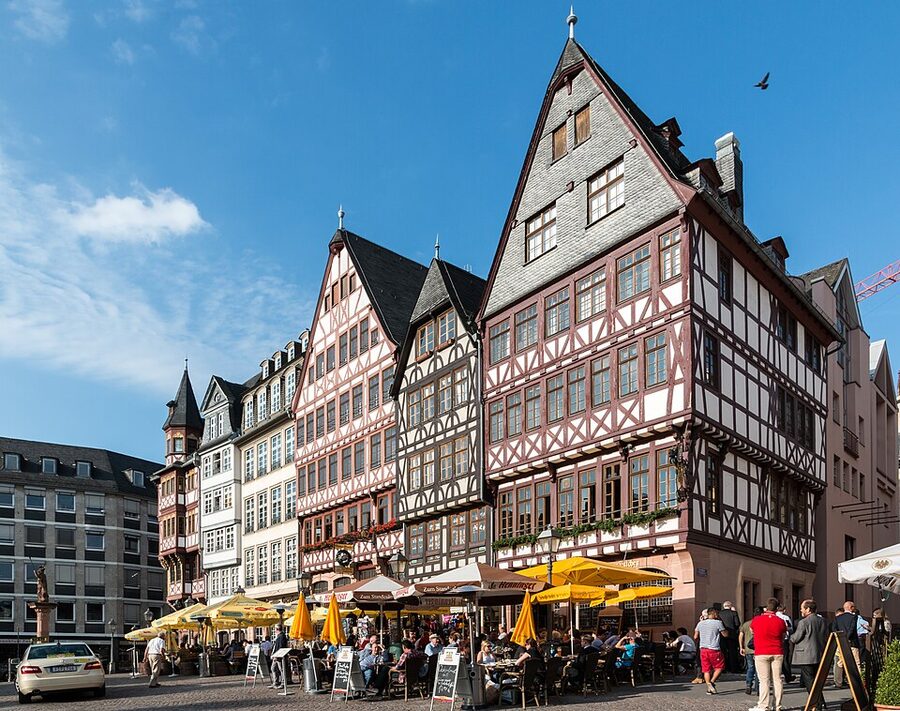
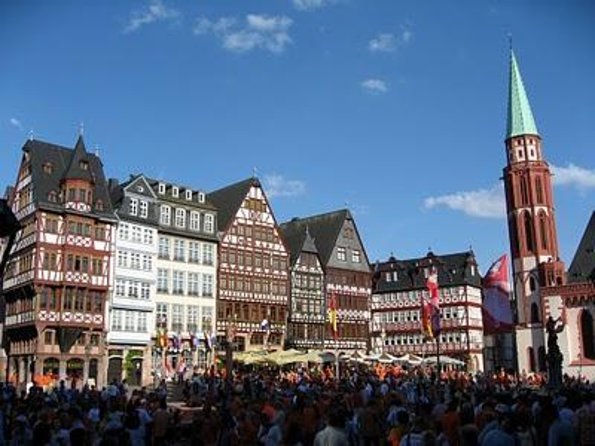
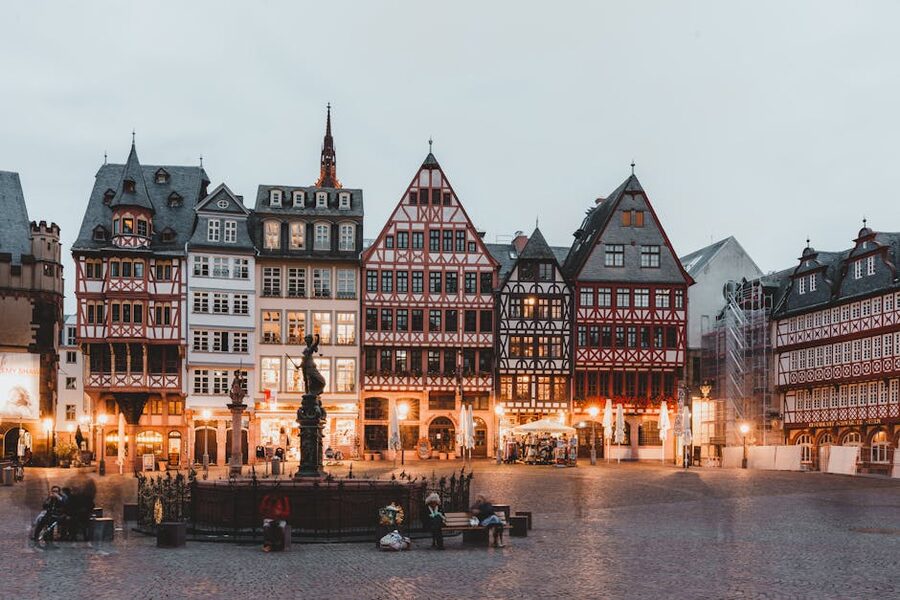
Most of the half-timbered houses you photograph on a Frankfurt walking tour are younger than your parents. The medieval Old Town was bombed flat on the night of 22 March 1944, and the iconic Ostzeile row on Römerberg was rebuilt in the 1980s. The newest “old” buildings finished in 2018. The walking tour you book is, in part, a guided tour of a remarkable architectural resurrection.
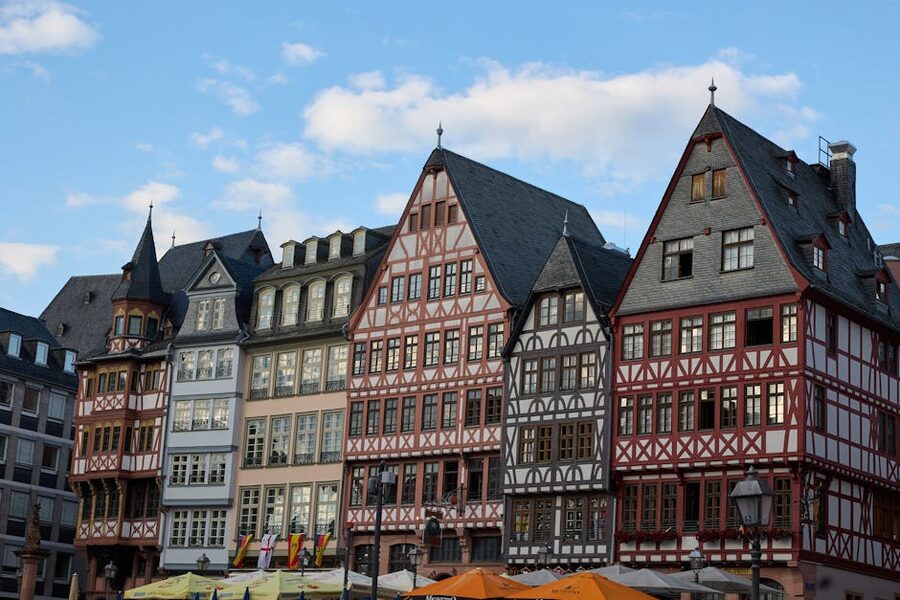
That reconstruction story is the through-line of every good Frankfurt walking tour. Skyscraper Frankfurt sits on top of medieval Frankfurt, and the seam where they meet is exactly what a guide can show you in two hours.
- In a Hurry?
- Why Book a Walking Tour at All?
- What a Standard Frankfurt Walking Tour Covers
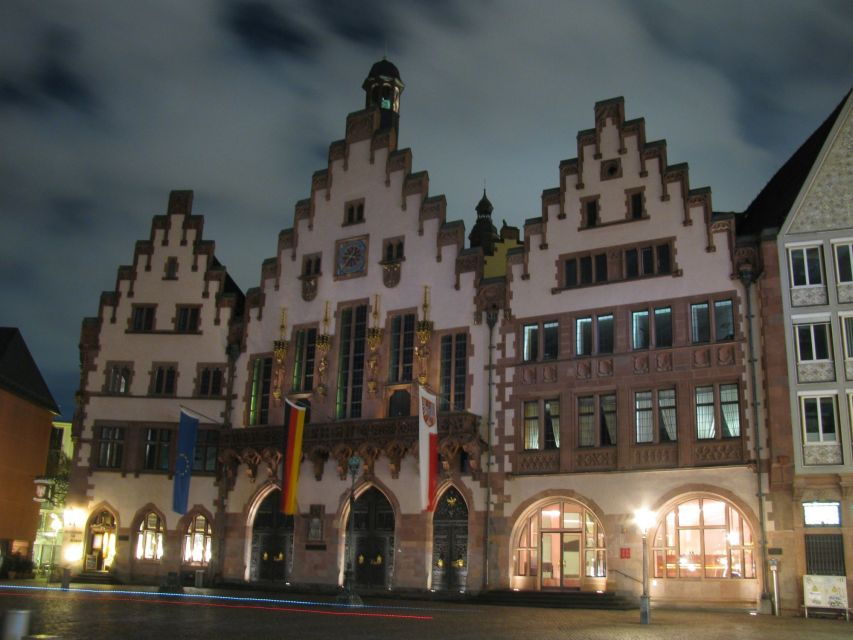
- Römerberg and the Town Hall
- Frankfurt Cathedral (Kaiserdom)
- The New Old Town (Dom-Römer Quarter)
- Paulskirche
- Eschenheimer Turm
- Goethe House
- Alte Oper
- Skyline and the Financial District
- The Three Walking Tours I’d Actually Book
- 1. New Old Town and City Highlights Guided Walk:
- 2. Frankfurt on Foot Daily Walking Tour:
- 3. Scary Sightseeing Tour with the Hangman:
- Booking the Right Walking Tour
- The Two Halves of Frankfurt
- Apfelwein, the Drink That Defines the South Bank
- Pairing the Walking Tour With a River Cruise
- Hauptbahnhof and Getting to Your Tour
- Frankfurt Card or Walking Tour?
- The Best Time of Year for a Frankfurt Walking Tour
- The Kleinmarkthalle Detour
- Walking Tours Versus Self-Guided Walks
- Combining Frankfurt With a Day Trip
- Practical Notes
- If You’re Doing Other German Cities
- The Bottom Line
In a Hurry?
- Best overall: New Old Town and City Highlights Guided Walk: $21, 90 minutes, the most-booked walk in the city.
- Most depth: Frankfurt on Foot Daily Walking Tour: $36, up to 3 hours, perfect rating, pace lets the guide actually explain things.
- Most fun after dark: Scary Sightseeing Tour with the Hangman: $16, 75 minutes, a costumed actor walks you through Frankfurt’s grim execution history.
Why Book a Walking Tour at All?
Frankfurt is not a city that explains itself. The Old Town was rebuilt in two distinct phases, the financial district landed on top of medieval streets, and the Main River cuts the city in half between two utterly different vibes. Walking it without a guide leaves you with a phone full of half-timbered photos and no idea what you actually saw.
I’d argue Frankfurt is one of the German cities where a guided walk pays off most. Munich, you can fake. Berlin, you can read your way through. Frankfurt’s story is dense and not obvious from the buildings, most of which are not what they pretend to be. A 90-minute walk with a local fixes that fast.
The other thing a guide does well: they pace you. There are roughly 30 walkable sights in central Frankfurt and you can technically see them all in three hours if you don’t stop. A good guided walk skips the filler and parks you in the four or five spots that actually deserve a long look.
What a Standard Frankfurt Walking Tour Covers
The classic city-highlights walk is a loop. Most start at Hauptwache or Römerberg, and most cover roughly the same ten sights. Once you know the loop, you can match any tour listing to it and judge whether the price is fair for what’s included.
Römerberg and the Town Hall
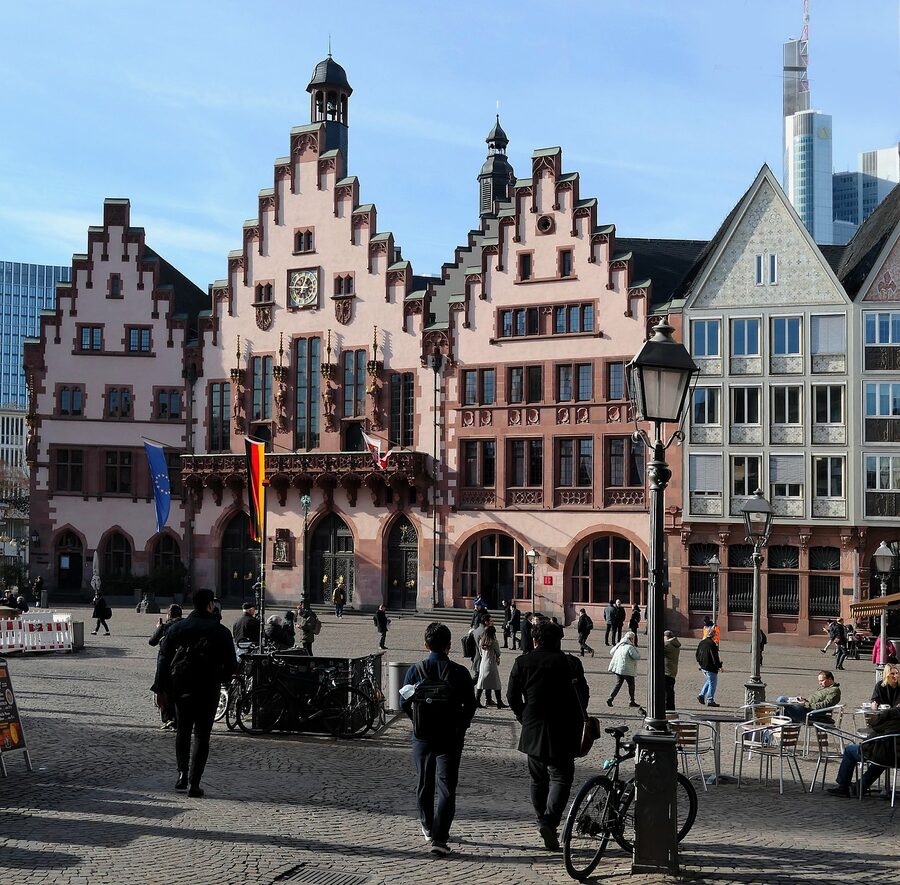
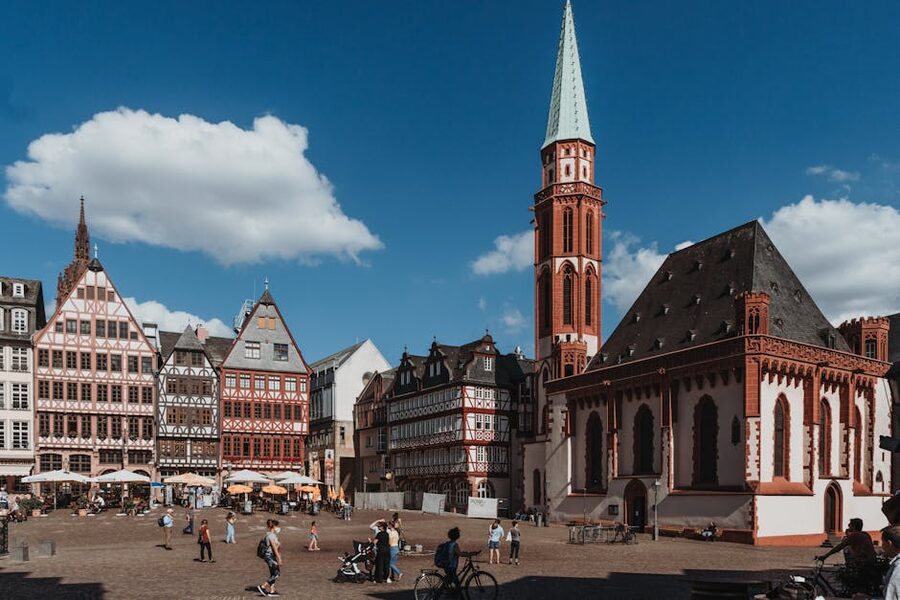
The square in front of the Römer (Frankfurt’s medieval town hall) is the photo you’ve already seen. Three step-gabled buildings, a fountain, the Ostzeile row of half-timbered houses across the way. This is the heart of any walking tour and you’ll spend 15-20 minutes here.
Frankfurt Cathedral (Kaiserdom)
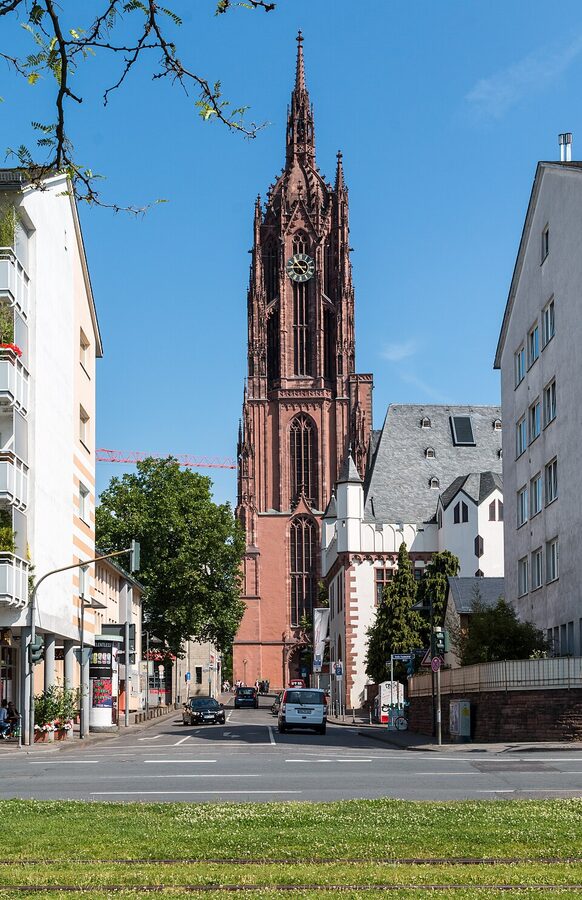
Two minutes’ walk from Römerberg. Frankfurt’s cathedral is where Holy Roman Emperors were crowned for nearly 300 years, which is a bigger deal than its modest exterior suggests. Most walking tours pause outside, a few go in.
The New Old Town (Dom-Römer Quarter)
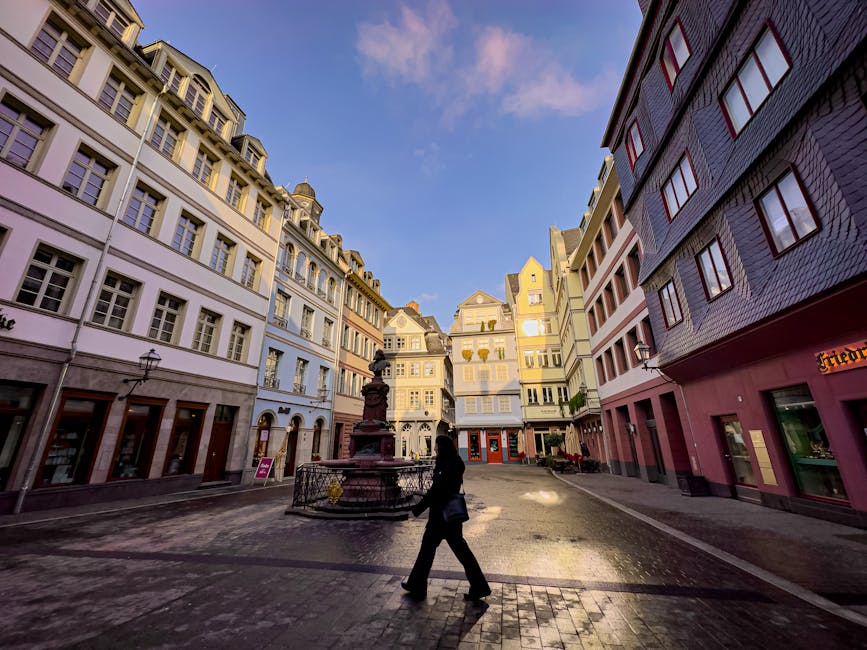
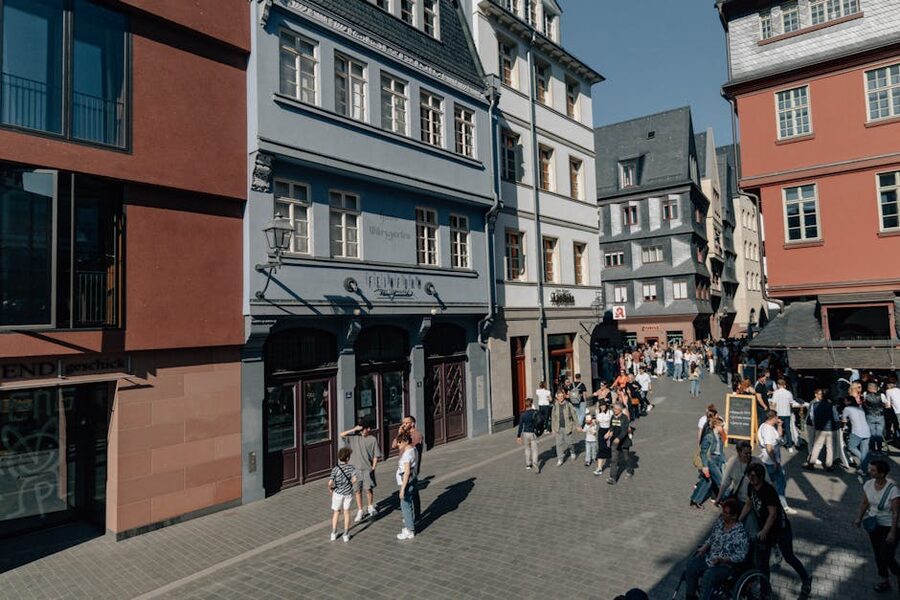
This is the bit most people miss the significance of. Between the Cathedral and Römerberg sits a quarter of 35 brand-new “old” buildings, finished in 2018. Fifteen are exact reconstructions of houses lost in 1944. Twenty are modern designs that had to fit the historical scale. It’s the most ambitious heritage rebuild in postwar Germany and almost no one outside Frankfurt knows it exists.
Paulskirche
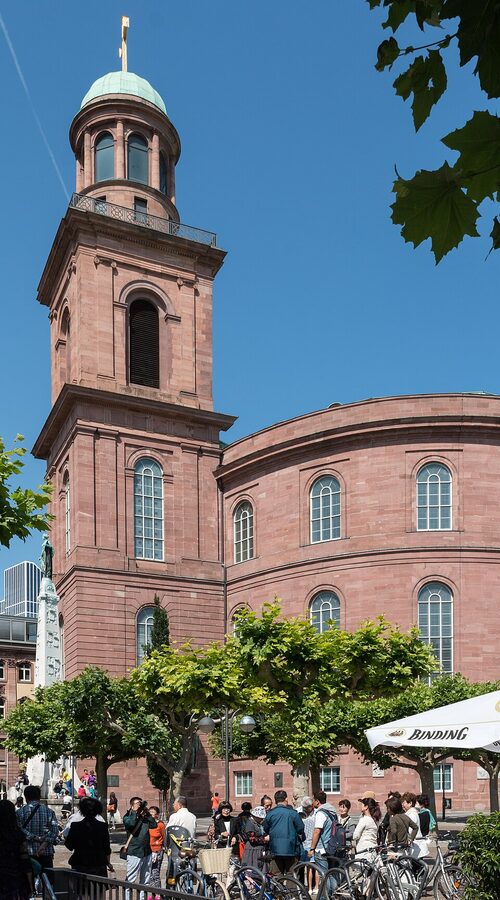
St. Paul’s Church was the meeting place of Germany’s first elected national assembly in 1848. It’s where modern German democracy was attempted, and where it failed. The interior is plain, almost stark. That’s deliberate; the postwar rebuild kept it austere as a memorial.
Eschenheimer Turm
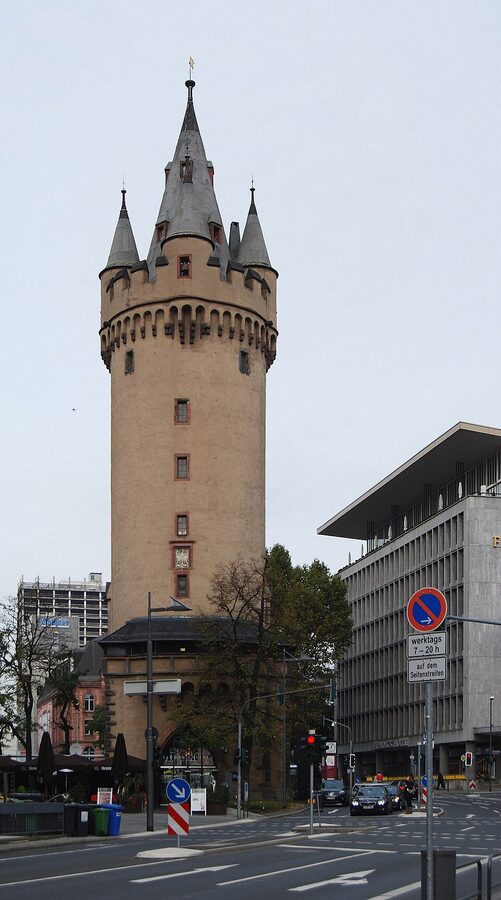
One of the only buildings in central Frankfurt that’s actually old. The Eschenheim Tower dates to the early 1400s, stands 154 feet tall, and was part of the medieval city walls. There used to be 60 of these towers ringing the city. Today three remain. This is the photogenic one.
Goethe House
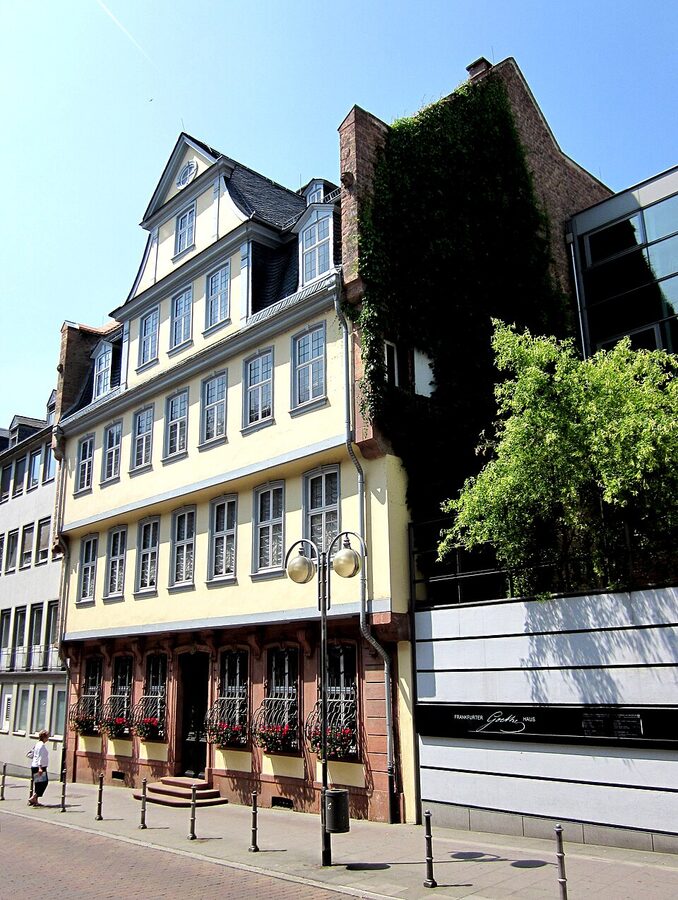
Frankfurt’s most famous son, Johann Wolfgang von Goethe, was born here in 1749. The house is a museum now, with original-looking 18th-century interiors. Walking tours don’t typically go inside, but they do stop outside. If you want the museum, factor in a separate hour. Frankfurt Card holders get a discount.
Alte Oper
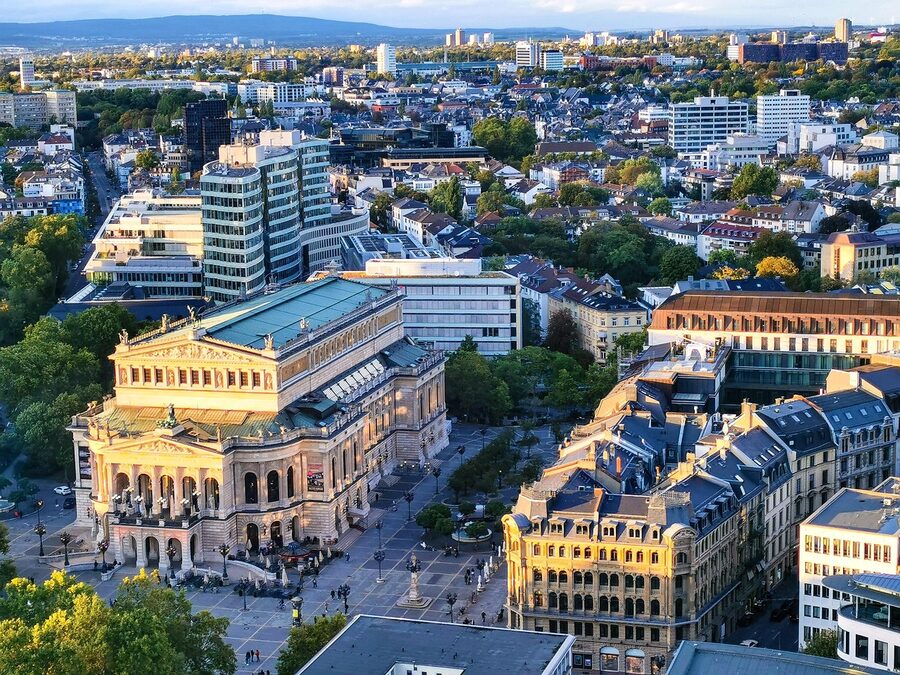
The “Old Opera” is neither old nor an opera house. The original 1880 building was destroyed in WWII. The replacement, finished in 1981, is a concert hall. The plaza in front is one of the city’s favourite meeting spots and your tour will almost certainly stop here for five minutes.
Skyline and the Financial District
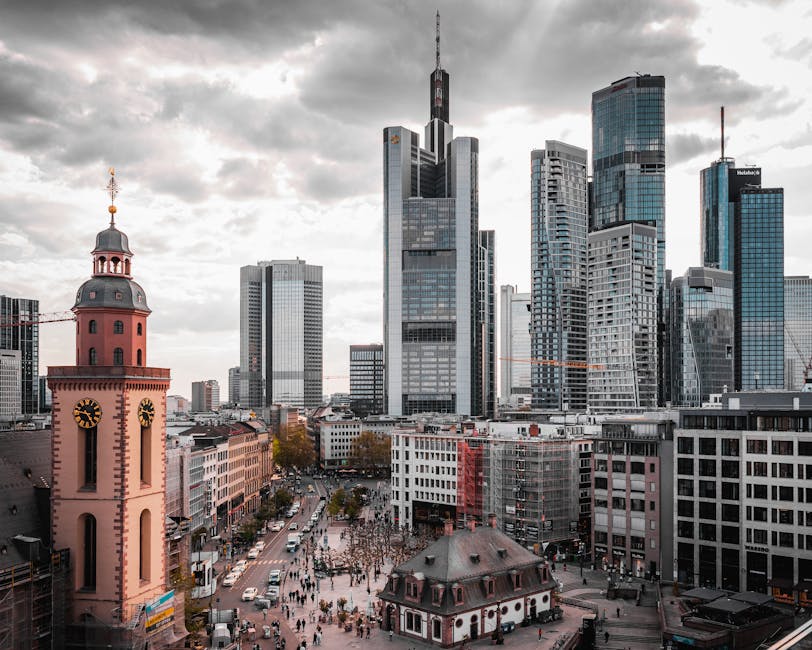
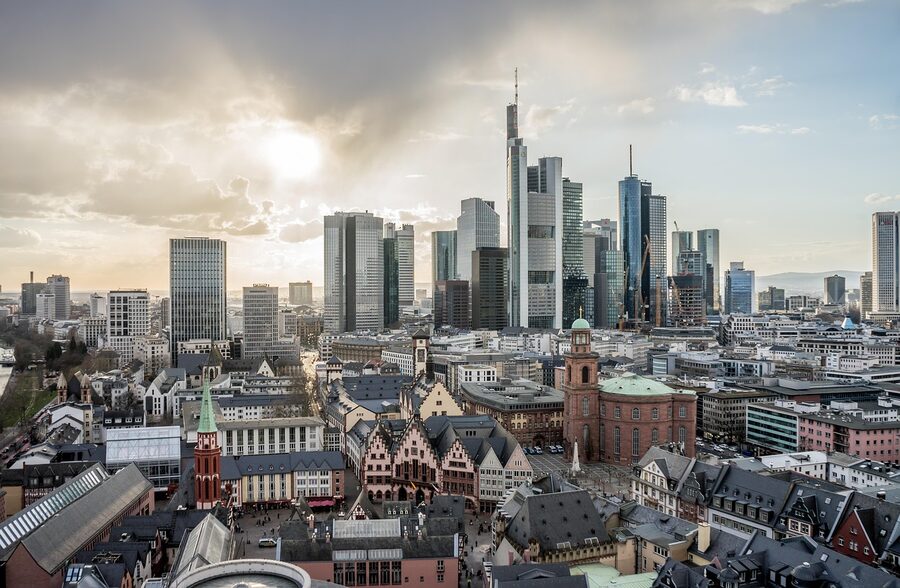
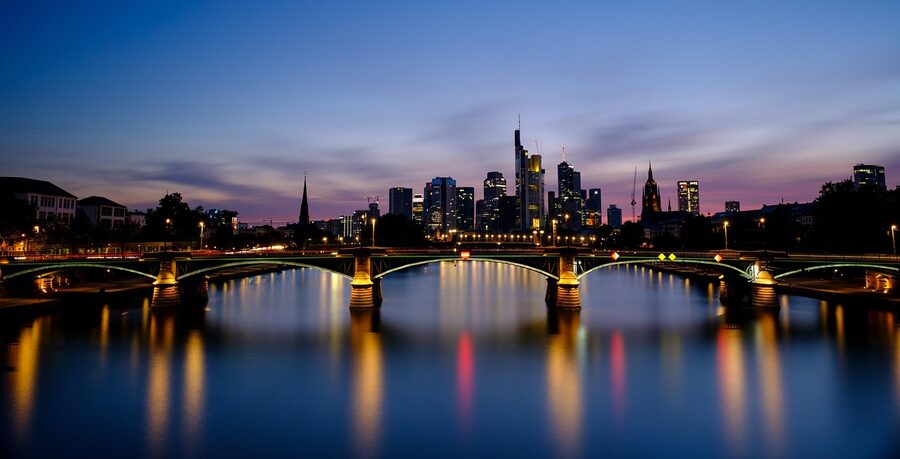
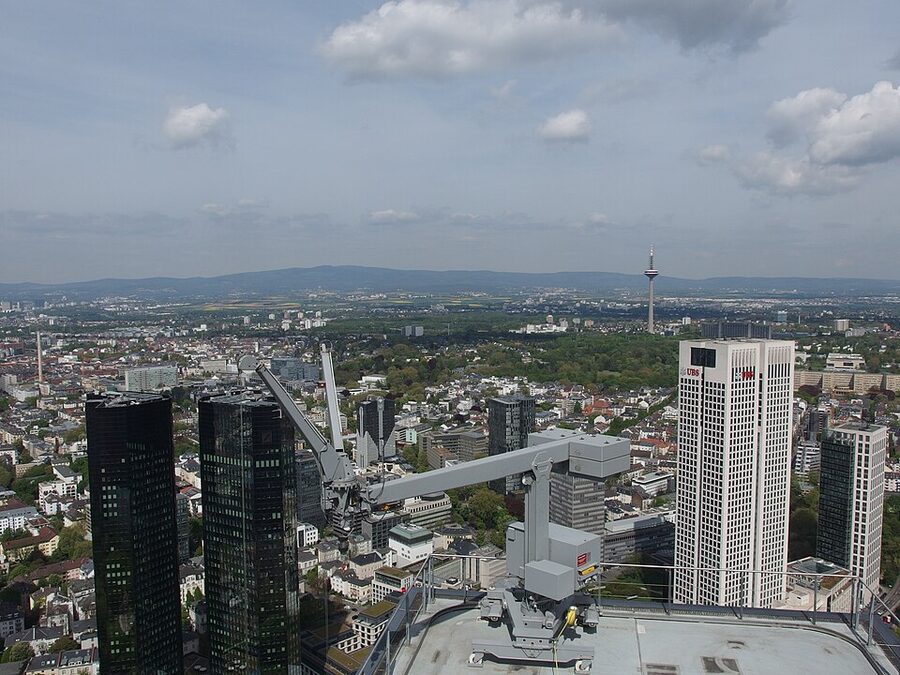
Almost every walk includes a skyline moment. Frankfurt holds 18 of Germany’s 20 tallest buildings, all crammed into a square mile. The Main Tower has a public observation deck (separate ticket, 20% off with a Frankfurt Card) and most guided walks at least point you toward it.
The Three Walking Tours I’d Actually Book
Frankfurt has dozens of walking tour listings. Most are minor variations on the same 90-minute Old Town loop. After looking through the most-reviewed options, I’d narrow it down to three. They cover three different needs and you can pick based on how much time you have and what kind of mood you’re in.
1. New Old Town and City Highlights Guided Walk: $21

This is the most-booked walking tour in Frankfurt by a wide margin, and the reason is simple: it’s $21 for 90 minutes with a real guide who knows the rebuild story. Our full review covers what the guide actually shows you and why the New Old Town section is the part that pays off most. If you’re doing one walking tour in Frankfurt, this is it.
2. Frankfurt on Foot Daily Walking Tour: $36
This is the same outfit I’d point a friend toward if they had half a day to spend and wanted the real story. The pace is slower, the guide explains why things are the way they are, and reviews are unusually consistent. our review notes that returning travellers specifically book this one over the cheaper alternatives. Worth the extra cost if you only have one tour to spend on Frankfurt.
3. Scary Sightseeing Tour with the Hangman: $16
Frankfurt’s third-most-popular walk is also the strangest. The hangman tour is led by a costumed actor who tells you about gruesome public executions at the spots where they happened, and the actual history is a lot more interesting than the gimmick suggests. Our review calls it the best evening tour in the city and the only one I’d recommend if you’ve already done a daytime walk and want to see the same streets in a different light.
Booking the Right Walking Tour
Five things matter when picking between Frankfurt walking tour listings.
Group size. The cheap walks (under $20) are usually 15-25 people. The mid-tier walks ($30-40) cap at 12-15. Above that, you’re paying for private. Group size matters more in Frankfurt than other cities because so much of the city’s story sits in details, like facade joints, plaque locations and ground-level reliefs. A guide running a group of 25 can’t physically point those out to everyone.
Tour length. 90 minutes is enough for a highlights loop. Two hours starts to fit in real explanation. Three hours is when you can actually go inside Paulskirche or sit at Hauptwache for a coffee mid-tour. Pick based on stamina, not on price-per-minute.
Start time. The 10am and 10:30am departures are the most popular and they get the squares before the cruise-ship crowds arrive. The 2pm and 3pm slots hit Römerberg at peak crowd. If you can pick, go early.
Free walking tours. Frankfurt has tip-based “free” walks that work fine. Quality varies more than paid tours because guides change weekly. Plan to tip €10-15 per person if you go this route. The maths usually lands you near the paid tour price anyway.
Language. English-language tours are everywhere. German tours are cheaper, sometimes by 30%. If your German is shaky, don’t try to save the difference. Frankfurt’s story leans heavily on the words.
The Two Halves of Frankfurt
Most walking tours stay on the north bank of the Main River. That’s the historic centre, the Cathedral, the Old Town, the financial district. But Frankfurt has a second half across the river, and a few of the better walks cross over.
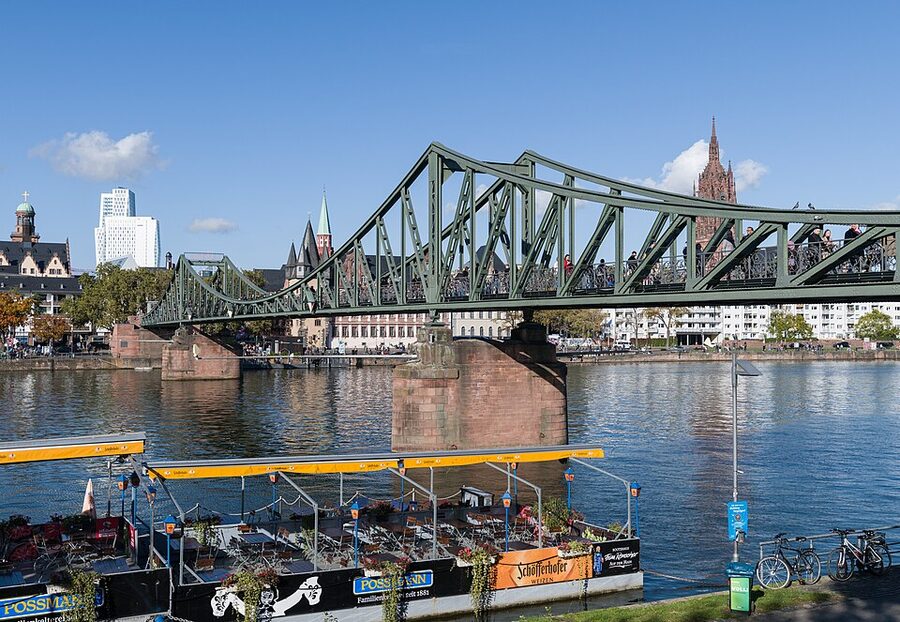
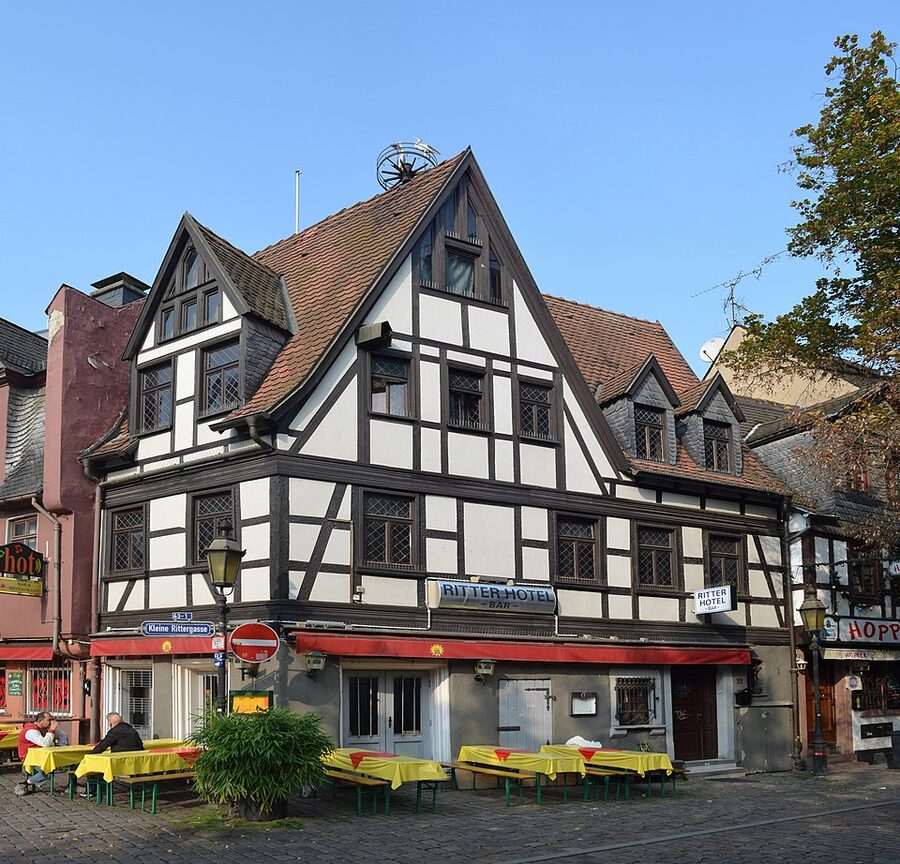
The south bank, Sachsenhausen, is the apple wine district. Narrow streets, traditional taverns, much more relaxed than the financial-district side. If you have an evening free, this is where you go for dinner. A handful of walking tours include a Sachsenhausen detour, but most don’t, so check the description.
Apfelwein, the Drink That Defines the South Bank
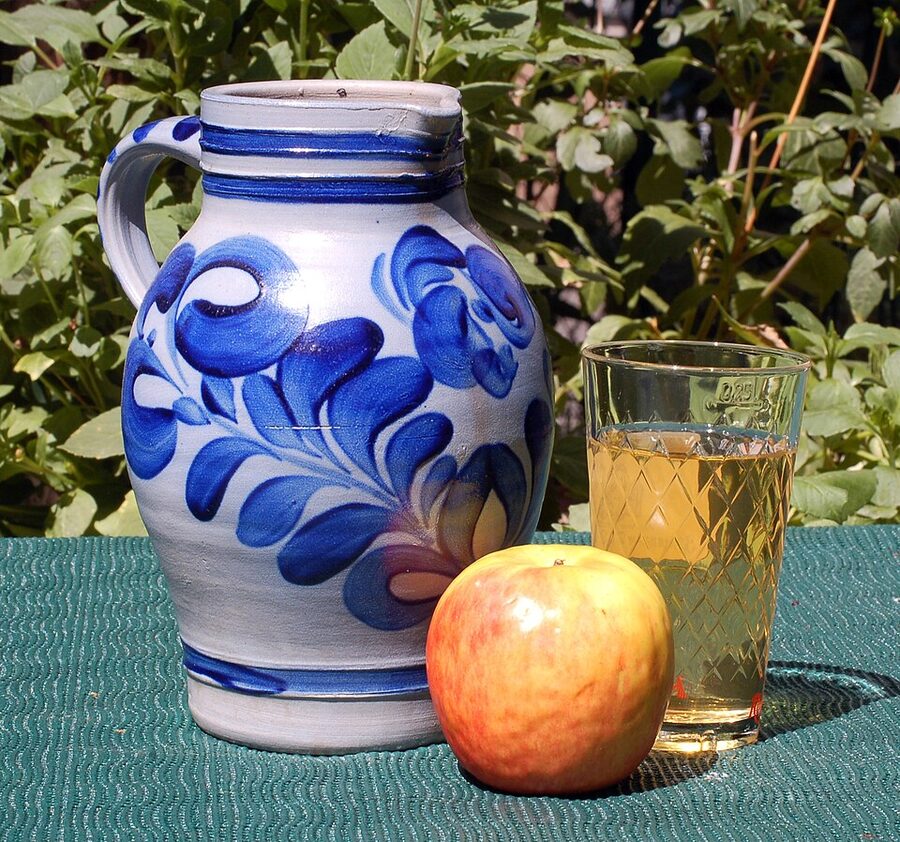
Sachsenhausen taverns serve Apfelwein, the local apple wine. It’s tart, sour, and not what you expect if you’re picturing English cider. The traditional serving is a Bembel, a grey-blue stoneware jug, poured into a ribbed glass called a Geripptes. Order it as a Schoppen if you want a single glass.
Pairing the Walking Tour With a River Cruise
A walking tour and a Main River cruise are the two best things to do on a short Frankfurt visit, and they fit together neatly. The walk explains what you’re seeing. The cruise gives you the panoramic view from outside the city. We’ve got a separate guide on how to book a Frankfurt River Main cruise with the three boat options that actually work for sightseeing.
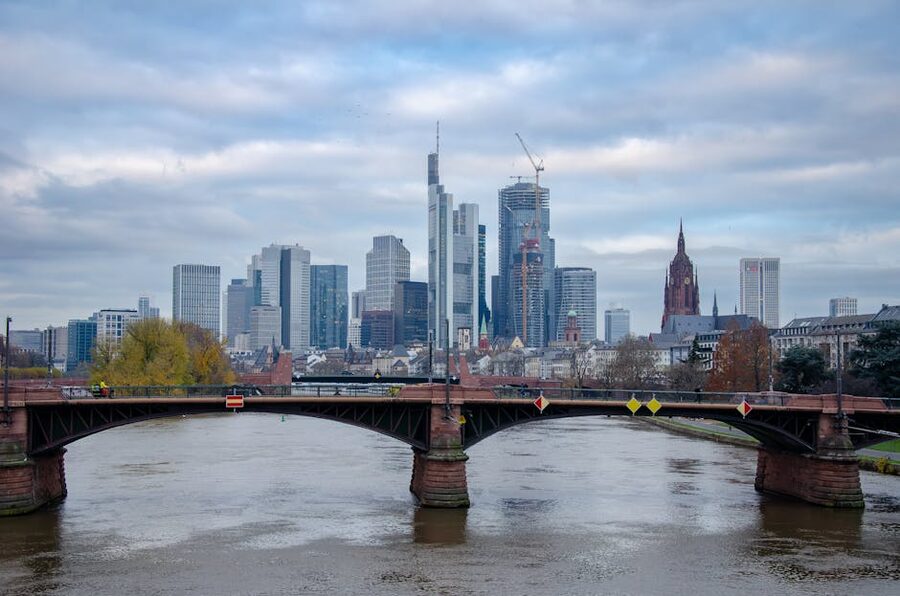
The order matters. Walk first, cruise second. The walking tour gives you the names of the buildings; the cruise lets you spot them at distance and feel the scale. Reverse it and the river view is just pretty pictures.
Hauptbahnhof and Getting to Your Tour
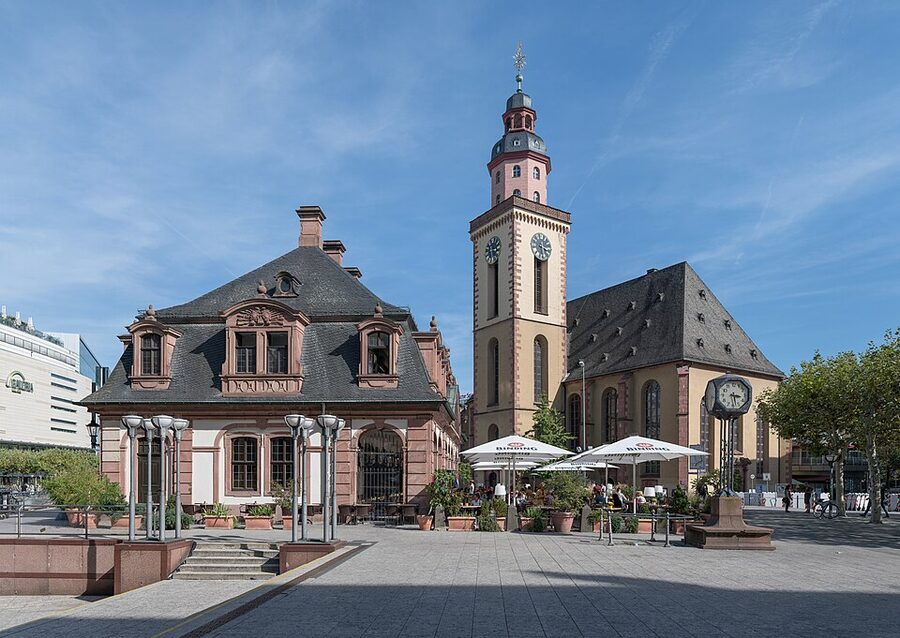
Most walking tours meet either at Römerberg or near Hauptwache. Frankfurt Hauptbahnhof, the central train station, is a 15-minute walk from both. If you’re arriving by train, that’s your reference point.
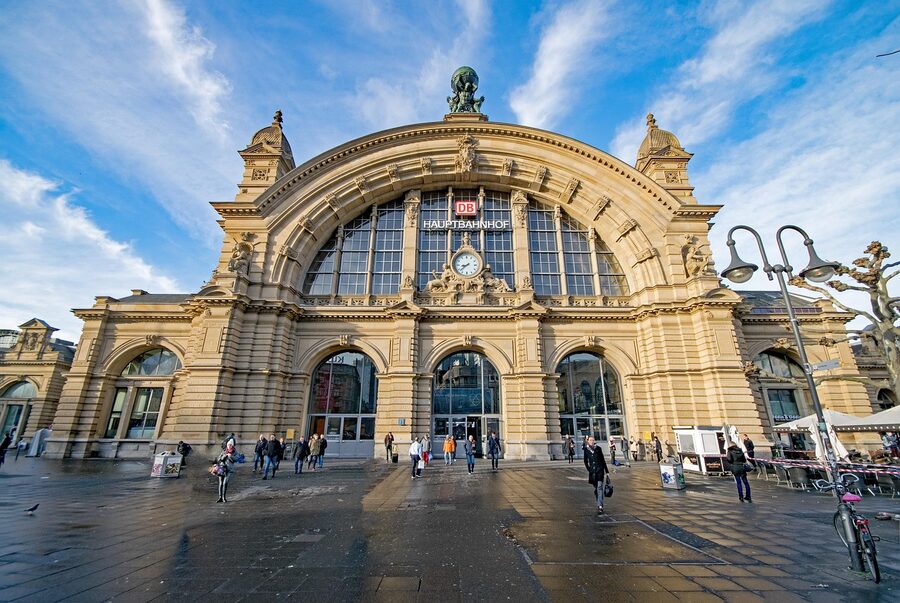
The walk from the station to the Old Town goes down Kaiserstrasse. It’s safe in daylight but feels grubby. The area is in a long, slow renovation. Most guides will pick the Hauptwache U-Bahn stop as a meeting point instead, which spares you that stretch. If you have luggage, leave it at the station’s left-luggage lockers (€6 for 24 hours) before joining the tour.
Frankfurt Card or Walking Tour?
The Frankfurt Card is €12 for 24 hours and covers all public transport plus discounts on most attractions, including the Main Tower observation deck (20% off) and Goethe House (50% off). If your day plan includes the Main Tower or two museums plus the walking tour, the card pays for itself. If your plan is just one walking tour, skip it. You can walk between every central sight.
The Best Time of Year for a Frankfurt Walking Tour
Frankfurt walking tours run year-round. Quality is consistent. Crowds and weather aren’t.
April-June and September-October are the sweet spot. Mild, dry, full menu of tour options, fewer cruise-ship groups than peak summer.
July-August means crowded squares, peak prices, and a lot of running between shaded spots. Tours still happen but Römerberg in mid-July at noon is not pleasant. Book the 9am or 6pm departures.
December is special. The Christmas market takes over Römerberg from late November through Christmas Eve, and several walking tours add a market-focused itinerary. The wooden stalls block some of the standard photo angles, but the night-time atmosphere more than compensates.
January-March is the cheapest time. Tours are still running but lightly booked. The grey weather actually suits the rebuild story. Sunshine flatters the new buildings, overcast skies make the cathedral and the Eschenheim Tower feel properly old.
The Kleinmarkthalle Detour
If your walking tour passes through Hasengasse, watch for the Kleinmarkthalle on your right. It’s Frankfurt’s covered food market, built in the 1960s on a market site that’s been there for centuries. Most walks point at it but don’t stop. They should.
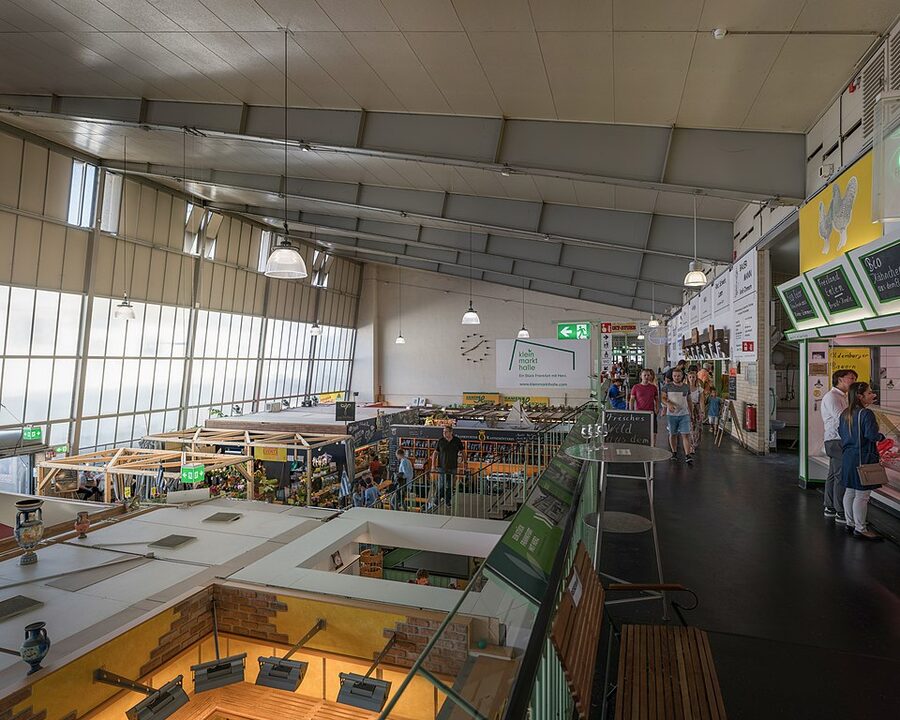
The local specialty to try here is Grüne Soße, green sauce, made with seven specific herbs, served cold over boiled potatoes and hard-boiled eggs. Sounds odd. Tastes great. Most stalls do a takeaway version for under €10.
Walking Tours Versus Self-Guided Walks
You can absolutely do Frankfurt’s main loop on your own with a phone map. The route is well-signed, the sights are obvious, and Google Maps will get you between them. There are decent free self-guided itineraries online if that’s your style.
What you lose without a guide is everything I’ve described above. The rebuild story, the 1848 democracy moment, why Eschenheim Tower has those weird arrow holes, what’s behind the New Old Town facades. Frankfurt without a guide is a 90-minute Instagram set. Frankfurt with a guide is a city you understand.
If budget’s the issue, the $21 New Old Town walk solves it. There’s no good reason to do Frankfurt cold.
Combining Frankfurt With a Day Trip
Frankfurt is small. Two days is enough for the city, and most travellers have at least a half-day to spare for somewhere nearby. Two strong options sit within 90 minutes by train.
Heidelberg is the obvious pick. Castle, river, classic Old Town, easy day trip. Our guide on how to book a Heidelberg day trip from Frankfurt covers the four operators that run organised excursions out of the city. If you’d rather DIY, the train takes 50 minutes and runs every 30.
The Rhine Valley is the other strong call. Castles, vineyards, the river bend at Loreley. We’ve covered how to book a Rhine Valley day trip from Frankfurt with the operators that include the boat segment, which is the part that matters.
Practical Notes
Cancellation. Both major booking platforms (GetYourGuide and Viator) offer 24-hour free cancellation on most Frankfurt walking tours. Lock in a slot and worry about your schedule later.
Tipping. €2-5 per person for a paid walking tour, €10-15 for a free walking tour. Cash is appreciated.
What to wear. Closed-toe shoes. Frankfurt’s cobblestones in the Old Town are real and uneven. Anything else is fine.
Weather. Tours run rain or shine. The squares have arcades and the cathedral porch works as shelter, so even a rainy walk gets covered downtime. Pack a small umbrella from October through April.
Accessibility. Most walking tours are wheelchair-accessible. The Old Town is flat, the squares are cobbled but smooth enough. Confirm with the operator before booking if it matters.
If You’re Doing Other German Cities
Frankfurt is the financial-and-rebuild city. It pairs with other German walks better than it sounds. If your Germany trip already includes Cologne, the contrast between Cologne’s surviving cathedral and Frankfurt’s reconstructed Old Town is one of the best lessons in postwar German heritage choices. Our Cologne old town walking guide covers what to expect over there.
If you’re heading north to Hamburg, the Elbphilharmonie and harbor cruise tell a different rebuild story. Hamburg leaned modern; Frankfurt leaned reconstruction. South in Munich, the old town walk goes through a city that took a third path: piecemeal restoration.
Berlin’s walking tour scene is its own beast, since the Cold War split makes it incomparable to anywhere else. But if you’re trying to understand 20th-century Germany through its cities, Frankfurt-Berlin-Munich-Cologne is the four-stop sequence that works.
For a regional pairing, Heidelberg is right next door. Both the Heidelberg old town walk and the Heidelberg night watchman tour are easy add-ons to a Frankfurt base.
The Bottom Line
Book the $21 New Old Town walk if you’re doing Frankfurt in a day. Book the $36 Frankfurt on Foot tour if you’ve got an afternoon and want depth. Add the Hangman tour as a second walk if you’re staying overnight and want something different from the daytime version.
The thing nobody tells you about Frankfurt is that the rebuild story is genuinely interesting and worth a guide to unpack. The half-timbered photos look pretty without one. They mean something with one.