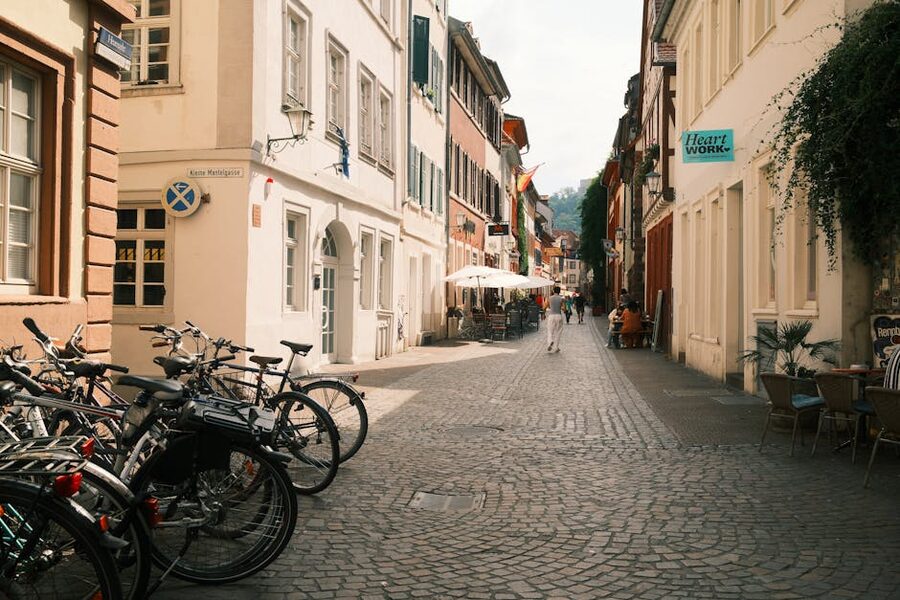
The moment Heidelberg’s Old Town clicked for me wasn’t on the Old Bridge or up at the castle. It was halfway down a side alley off Hauptstrasse, when our guide stopped under a worn sandstone arch, pointed at a date scratched into the stone, and explained why this particular doorway had survived three sieges, two royal weddings, and a near-total destruction of the town in 1693. Without that detail, I would have walked past it for the third time that morning. With it, suddenly the whole Altstadt rearranged itself into something I could actually read.
That’s the case for booking a walking tour here rather than winging it with a map. Heidelberg’s Old Town is small, dense, and easy enough to wander, but the layers don’t reveal themselves on their own. The good news: tours are cheap, frequent, and most clock in well under two hours, which is the right length for this town.
- In a Hurry?
- Why Book a Walking Tour Here at All
- What a Standard Old Town Walking Tour Covers
- Tour Length: 1.5 Hours Is the Sweet Spot
- How to Book and What It Costs
- The Three Walking Tours I’d Actually Book
- 1. Heidelberg: Walking Tour of the Old Town:
- 2. Heidelberg: Experience Our History Walking Tour:
- 3. Heidelberg: Entertaining Guided Tour to Old Town Highlights:
- Where Tours Start: The Two Meeting Points
- Highlights Worth the Story (and Why You’ll Miss Them Solo)
- The Brass Monkey on the Old Bridge
- The Studentenkarzer
- The Heiliggeistkirche’s Wall
- The 1693 Destruction Marks
- What to Pair It With
- What I’d Skip
- Practical Notes
- If You’re Doing Other German Cities
- Final Take
In a Hurry?
- Best overall pick (under $20): Walking Tour of the Old Town. 1.5 hours, 1,700+ reviews, the default for a reason.
- Best for storytellers: Experience Our History walking tour. Same 1.5 hours, leans harder into the historical drama.
- Best if you only want the highlights: Guided Tour to Old Town Highlights. Tight, well-paced, German-language guide.
Why Book a Walking Tour Here at All
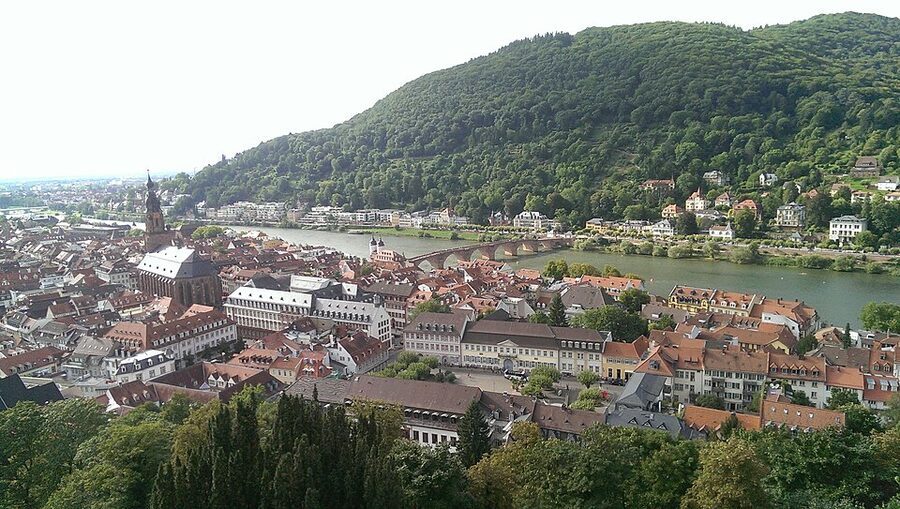
Heidelberg’s Old Town is roughly one long pedestrian street (Hauptstrasse) plus a tangle of side lanes between the Neckar and the hill up to the castle. You can absolutely walk it without a guide. I’ve done that too. The reason a tour pays off is that almost nothing here is labelled in a way that actually tells you what happened. The Heiliggeistkirche has no obvious sign explaining why the building was split in two for 200 years between Catholics and Protestants. The university buildings on Universitätsplatz look like ordinary lecture halls. Most visitors cross the Old Bridge without noticing the brass monkey at the end, let alone knowing why it’s there.
A 90-minute tour fixes all of that for around $15-18. By the end you’ve got context for everything you’ll see for the rest of the day, and the castle visit afterwards (or the cruise on the Neckar, or dinner on Marktplatz) lands differently because you actually know what you’re looking at.
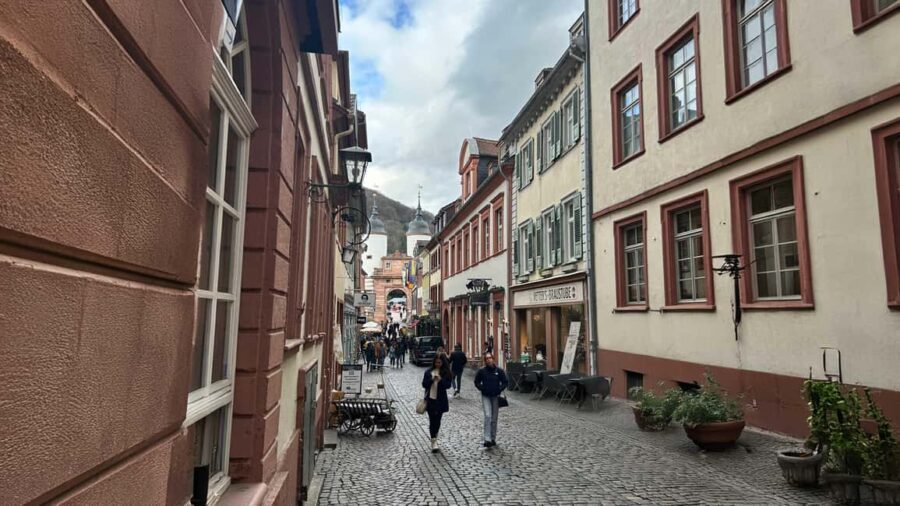
The other thing tours give you is rhythm. Heidelberg’s Old Town is shaped weirdly: long and narrow, with most highlights bunched at either end. Solo, people tend to over-walk Hauptstrasse and miss the side streets entirely. A guide will pull you into Steingasse, Untere Strasse, the courtyard behind the Hotel zum Ritter, and the Kornmarkt. None of those look like much from the outside.
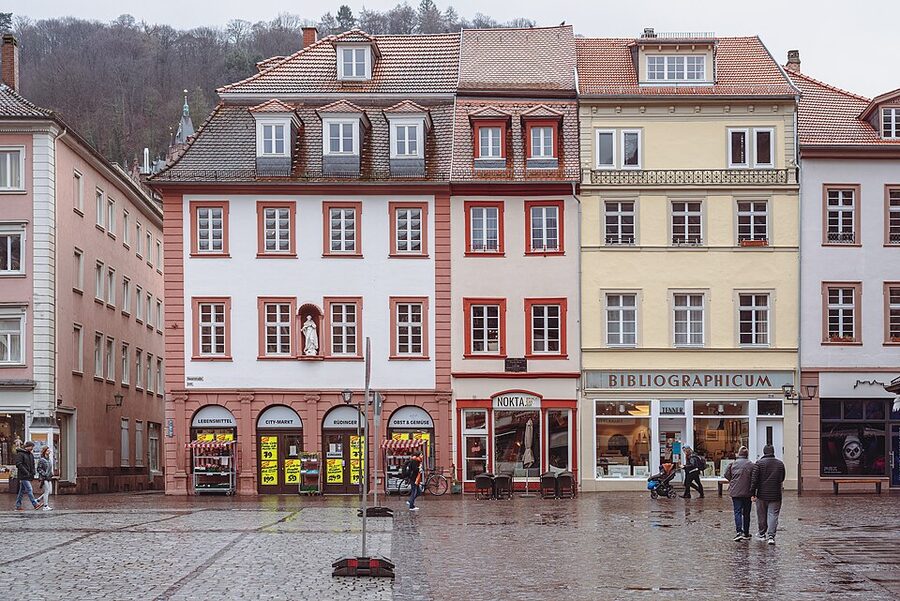
What a Standard Old Town Walking Tour Covers
Most 1.5-hour tours follow a similar route, in slightly different order. Here’s what you should expect to actually see and stop at:
- Bismarckplatz or the western end as a meeting point, with a quick framing of the town’s geography
- Hauptstrasse, walked in sections, with stops rather than a full pass
- Universitätsplatz and the old University buildings, including the story of the Studentenkarzer (the historic student prison)
- The Heiliggeistkirche on Marktplatz, usually from the outside, occasionally a quick step inside
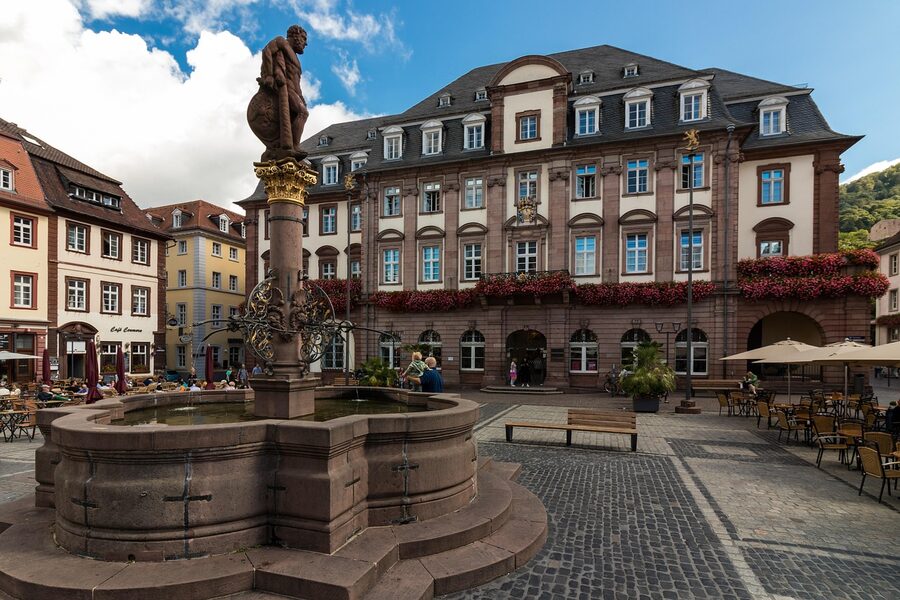
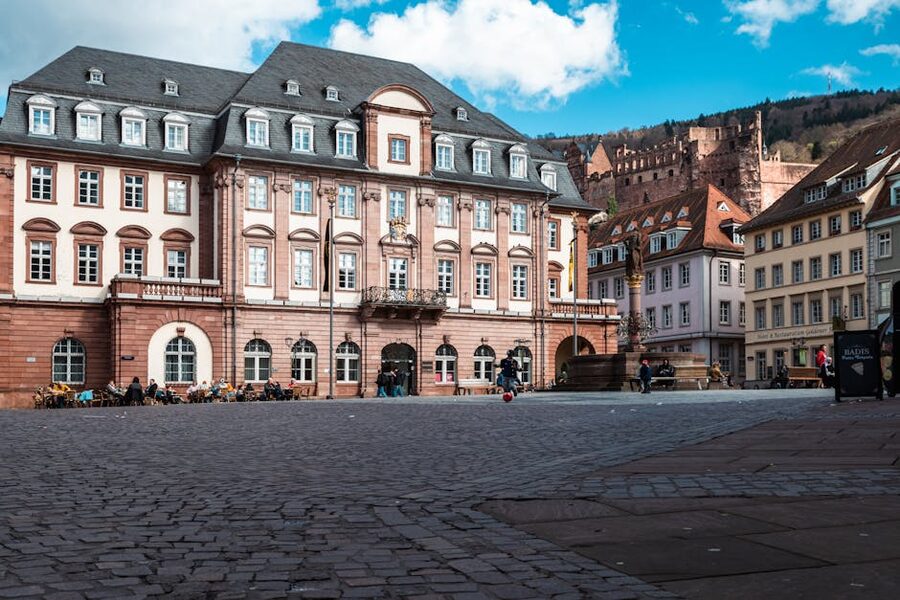
- Marktplatz itself, with the old town hall and the Hercules fountain
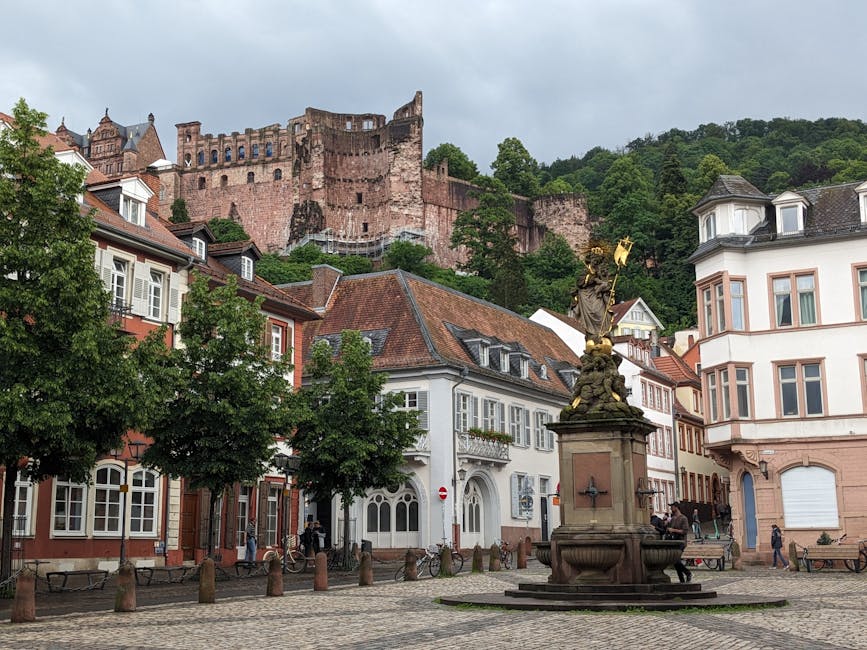
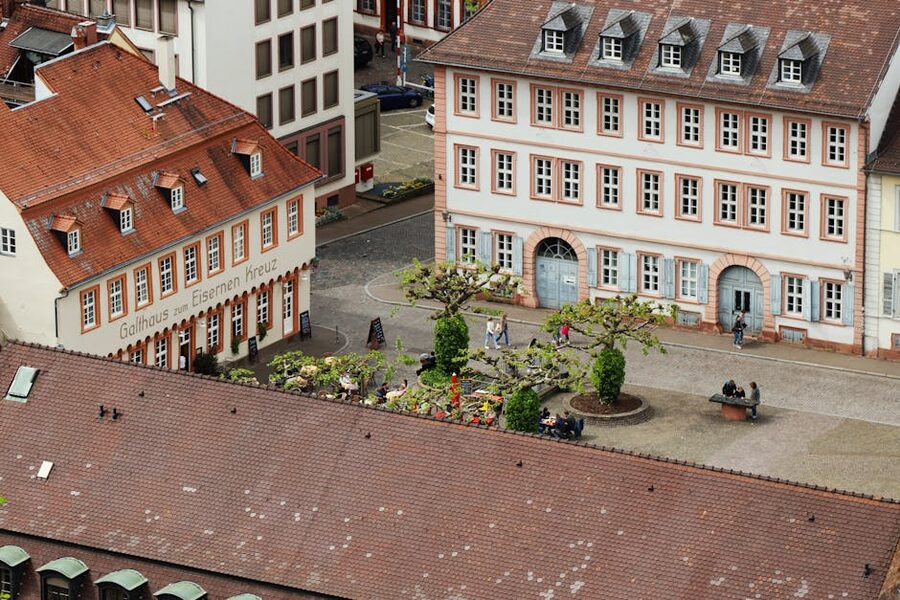
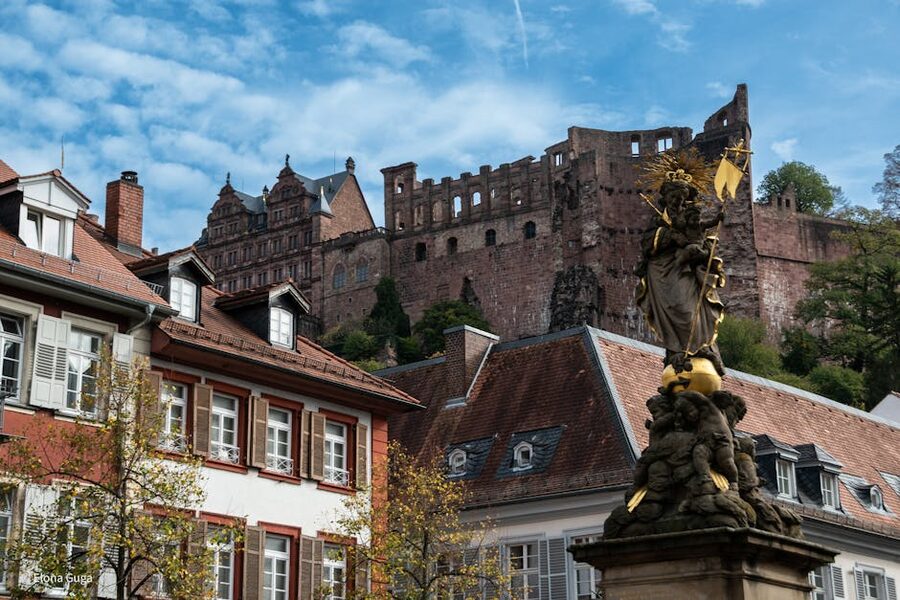
- Kornmarkt, the smaller square with the best ground-level view of the castle
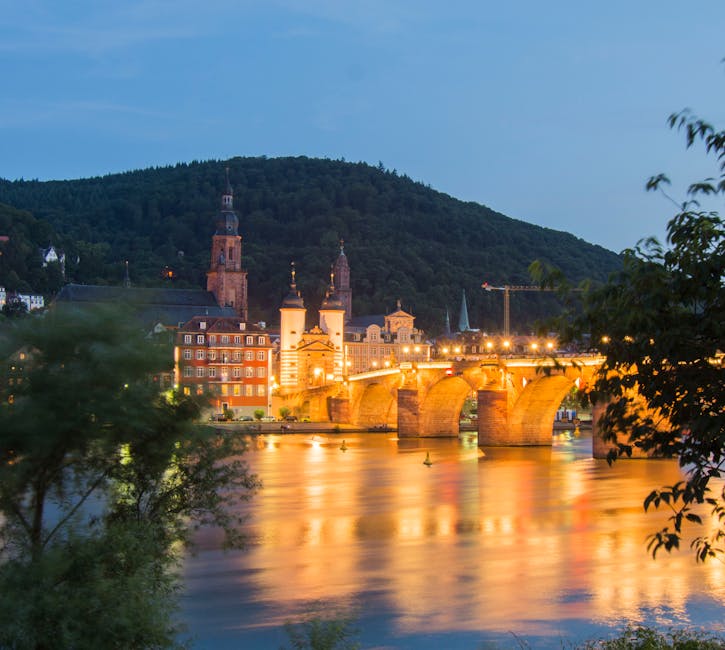
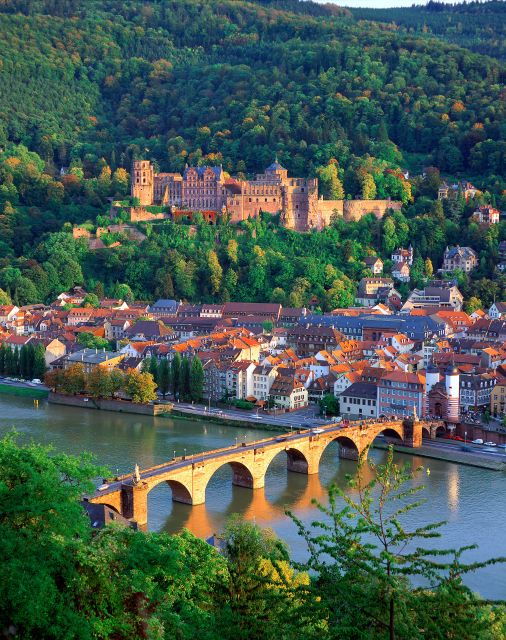
- The Old Bridge (Alte Brücke), with the famous brass monkey at the south gate
- Karlsplatz or the Karlstor area as a rough ending point
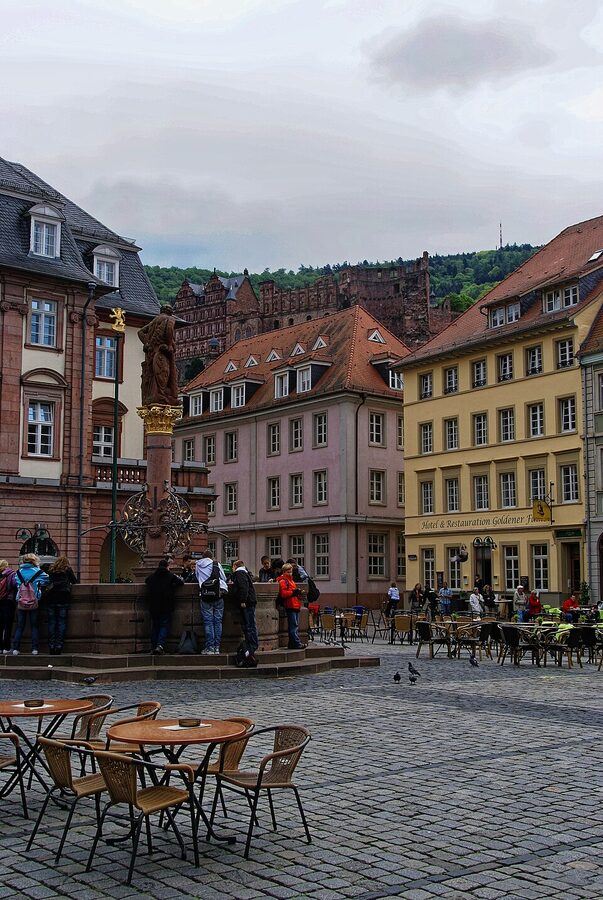
What you almost certainly will not get on these tours: the inside of the castle, the funicular up the hill, or a meal stop. Those need to be added separately. If you want the castle included, you’re looking at a different (and longer) product. The pure Old Town walks stop at the foot of the hill.
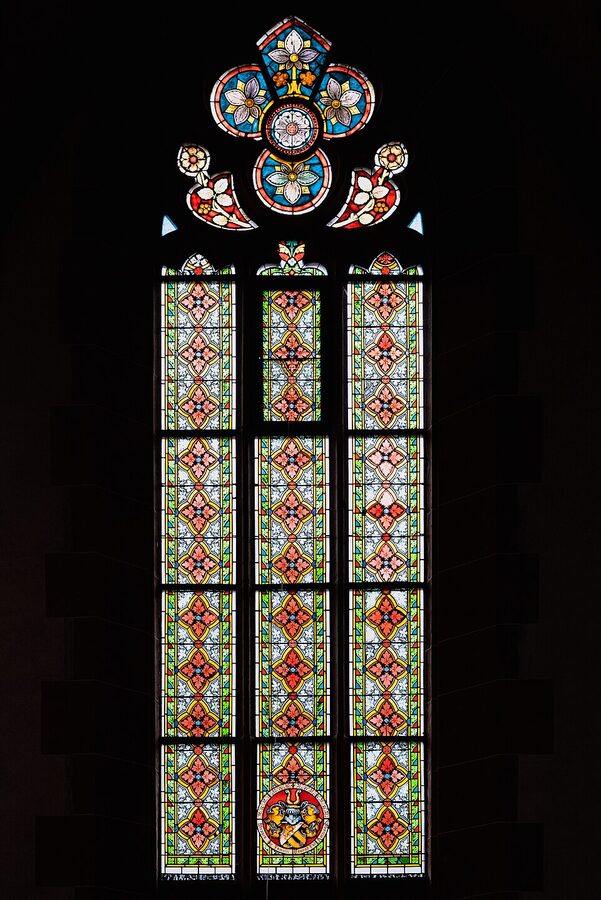
Tour Length: 1.5 Hours Is the Sweet Spot
The default Heidelberg Old Town walking tour is 90 minutes. After running this town several times now, I think that’s exactly right. Here’s why.
The Altstadt is small. From Bismarckplatz at the western end to the Karlstor at the eastern end is about 1.6 kilometres on a flat pedestrian street. You don’t need three hours to walk it. The 2-hour and 2.5-hour tours you’ll see listed usually pad with longer stops at the castle viewpoint or extra time on the bridge, which is fine but not strictly necessary. The 4-hour private tours add the castle interior, which is a separate experience and best treated as one.
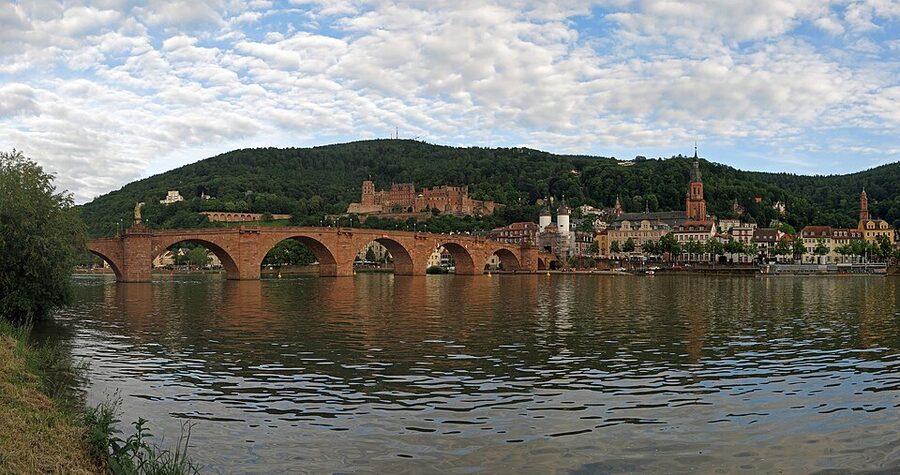
If you have one day in Heidelberg, do the 1.5-hour Old Town tour in the morning, then walk up to the castle on your own (the funicular costs about €9 return; the climb is steep but doable in 20 minutes). That’s a complete day, you’ll feel finished, and you won’t burn out.
If you have an afternoon only, the 1.5-hour tour still fits with time for a coffee stop afterwards. If you have two hours and need to choose, pick the tour over the castle. The castle is photogenic but doesn’t tell you anything about the town. The town tour explains both.
How to Book and What It Costs
The easiest booking path is GetYourGuide. Every reputable Old Town walking tour I’d recommend is listed there, mostly run by the same handful of local guide companies. Prices sit between $15 and $18 per person for the standard 1.5-hour group tours. Private guides start around $200-300 for a half day.
A few practical points worth knowing before you book:
Book a day or two ahead in summer. The 11am and 2pm slots fill first. In winter and shoulder season I’ve walked up day-of with no issues. If you’re travelling between November and February, check the schedule first; some operators reduce frequency or pause English-language departures.
Group sizes vary. The cheap public tours can get busy. Fifteen to 25 people on a peak summer day is normal. If you want a smaller group, look for products labelled “small group” (capped at 10-12), or pay up for private. The standard public tour is fine; just position yourself near the guide, especially around the Heiliggeistkirche where the crowd noise on Marktplatz can drown them out.
Language matters more than you’d think. Most tours offer English and German departures separately, not bilingually. If your tour is split-language (“Tour will be conducted in both English and German”), expect each section to take twice as long while the guide repeats themselves, and skip it. Pick a single-language English tour. If you read German, the German-language tours are usually more atmospheric and the guides feel less rehearsed.
Free walking tours exist. A handful of operators run tip-based free walks, usually starting at Bismarckplatz around 11am. The quality varies wildly. I’ve had a brilliant one and a very bad one. If budget matters, try the paid tour first; the price difference is small enough that the consistency is worth it.
The Three Walking Tours I’d Actually Book
I’ve trimmed this down to the three I’d genuinely recommend, ordered by what most people will want first.
1. Heidelberg: Walking Tour of the Old Town: $15
This is the most-booked Old Town walking tour in Heidelberg, and the one I’d start with. It’s a 1.5-hour group walk hitting every landmark you’d expect, and our full review of this tour covers what guests consistently praise about the guides. At $15, it’s the easiest yes on this list.
2. Heidelberg: Experience Our History Walking Tour: $18
If the standard tour’s lighter pace doesn’t appeal and you want a guide who leans into the dramatic side of Heidelberg’s past, this is the one to book. Our detailed review notes that some travellers find it a touch fast, which I think is a fair trade for the extra context per stop.
3. Heidelberg: Entertaining Guided Tour to Old Town Highlights: $16

This one runs in German and is built around personality more than linear history. If you read German or are travelling with native speakers, it’s the most fun of the three. Our full breakdown covers exactly what’s included and the typical group shape.
Where Tours Start: The Two Meeting Points
Almost every Heidelberg Old Town walking tour meets in one of two places: Bismarckplatz at the western end or Universitätsplatz in the centre. Your booking confirmation will specify, but as a general rule:
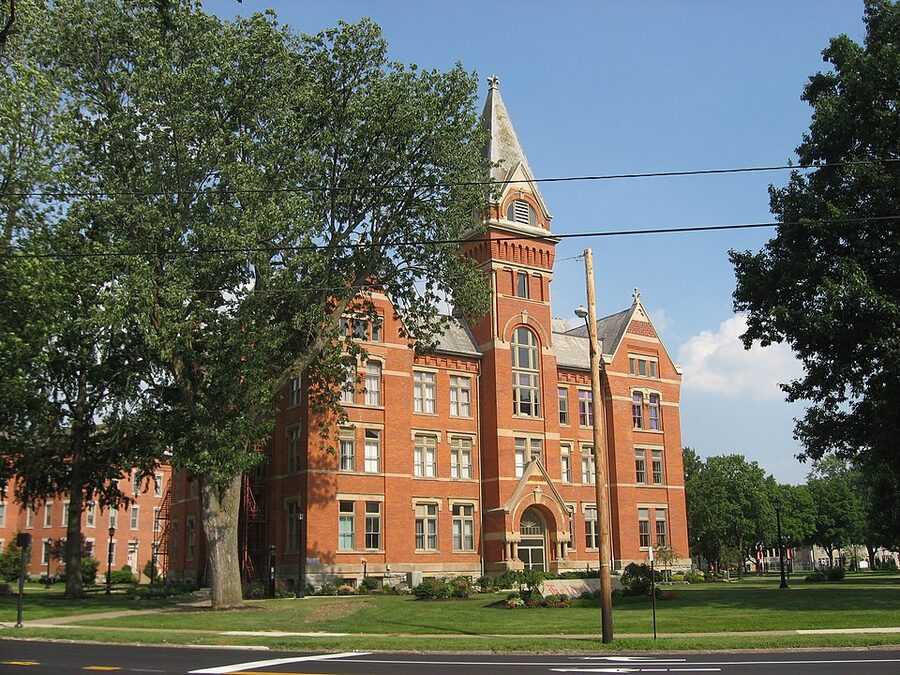
Bismarckplatz is the major transport hub. Trams, buses, and the main route to the train station all converge here. Easiest meeting point if you’re coming in from out of town for the day. The tour walks east from there, ending near Karlsplatz.
Universitätsplatz is mid-Altstadt, more atmospheric to start at, and saves you walking time at the start (though you’ll need to reach it on foot from Bismarckplatz, which is about 12 minutes). Better if you’re staying in the Old Town.
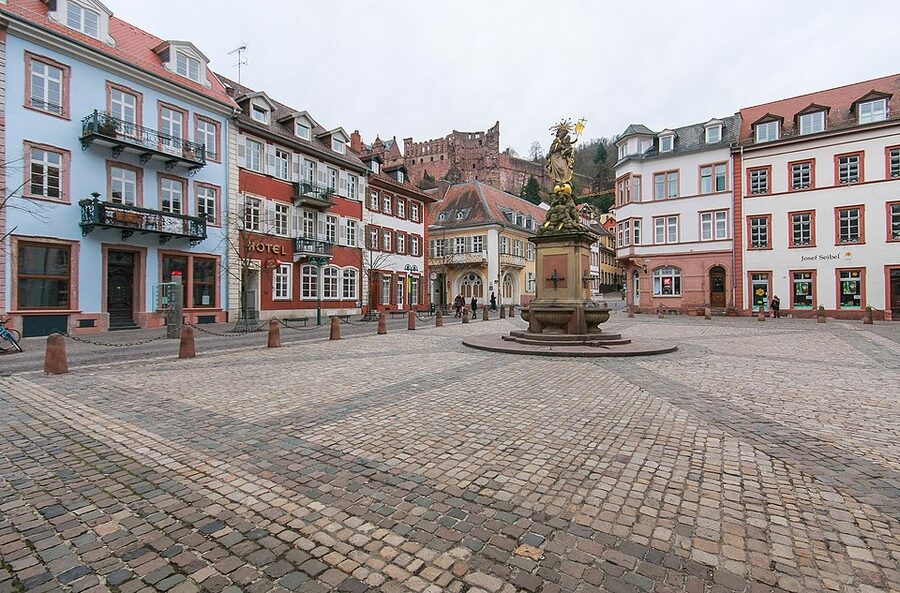
Either way, arrive 10 minutes early. Heidelberg guides tend to start on time and don’t wait for stragglers. There’s no time to waste in a 90-minute window.
Highlights Worth the Story (and Why You’ll Miss Them Solo)
This is the part where a guide earns their fee. A handful of stops on every Old Town tour look mundane until someone explains them. These are the ones I’d pay for the explanation alone.
The Brass Monkey on the Old Bridge
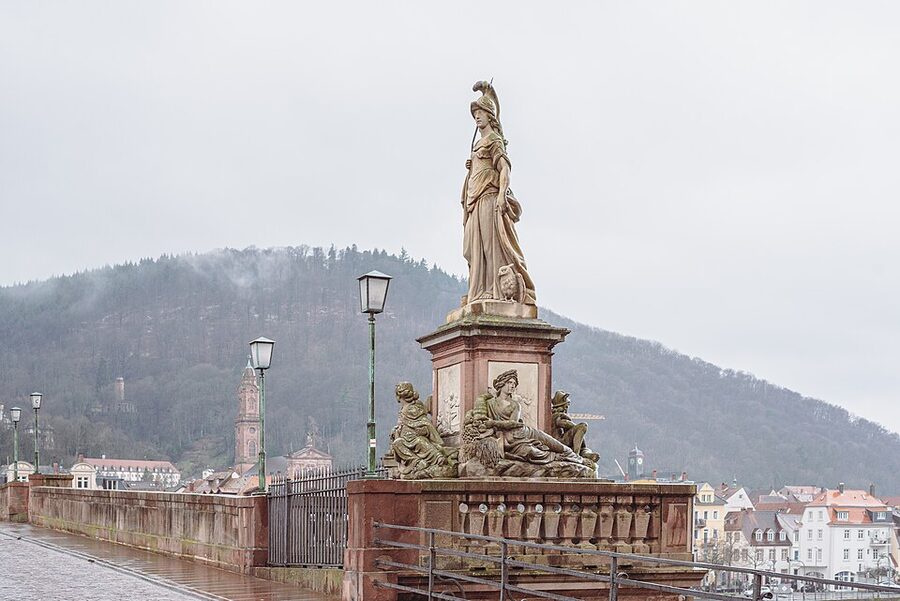
At the south gate of the Alte Brücke there’s a brass monkey holding a mirror. Tourists touch it constantly without knowing why. The original mediaeval statue mocked the bridge tax, the bourgeois townsfolk on one side, and the rural visitors on the other. It was a “you’re no better than this monkey” reminder for everyone passing through. It’s also a fertility charm, a wealth charm, and a “you’ll come back to Heidelberg” charm, depending on which finger you rub. Worth the 30-second story; it makes the bridge crossing feel different.
The Studentenkarzer
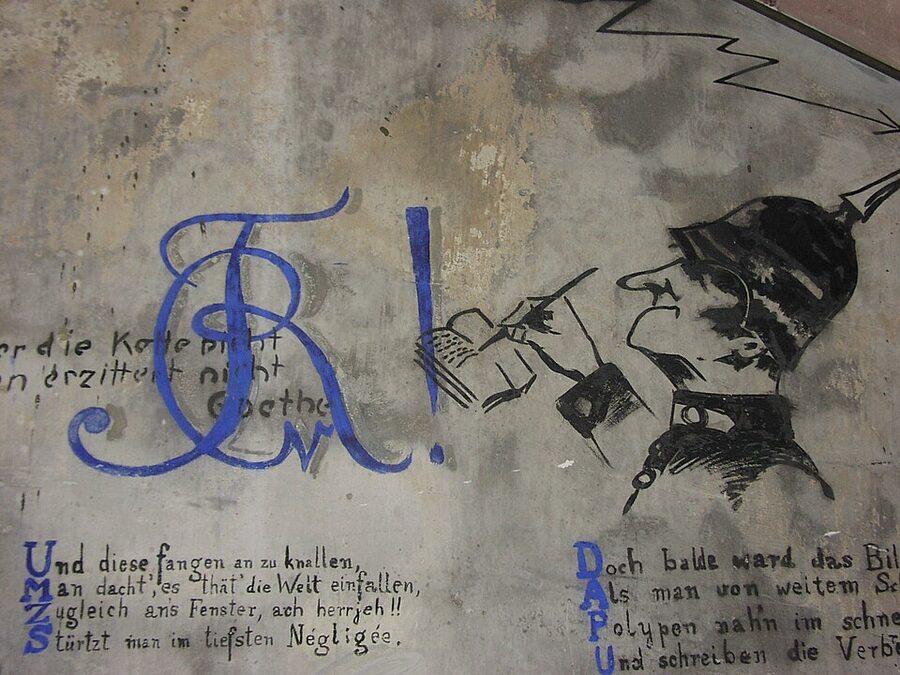
From roughly 1778 to 1914, the University of Heidelberg ran its own jail for misbehaving students. Sentences ranged from a few days to a few weeks for offences like duelling, drunkenness, or insulting professors. Students could attend lectures during the day, then return to their cell at night. Many treated it as a rite of passage and decorated the walls with elaborate graffiti, which is still there. A walking tour will point out the entrance on Augustinergasse; you can come back later for €4.
The Heiliggeistkirche’s Wall
The Heiliggeistkirche on Marktplatz looks like one church but for two centuries was effectively two, split down the middle by a wall, with Catholics on one side of the nave and Protestants on the other. The wall came down in 1936. Without that story, the church is just another late-Gothic exterior with shops built into the south wall (those are original, and the rents help fund the church).
The 1693 Destruction Marks
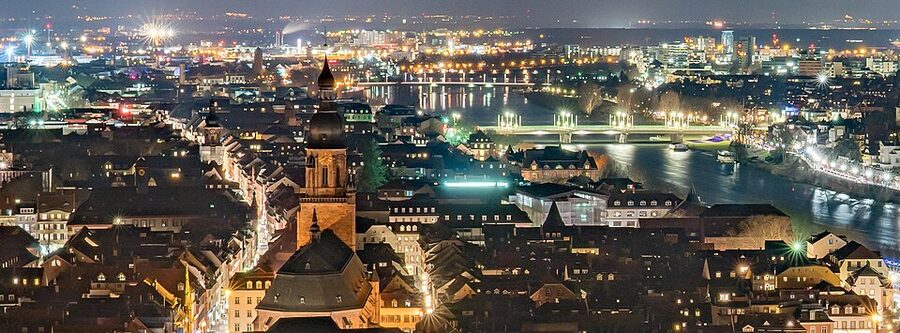
Most of “old” Heidelberg actually dates from after 1693, when French troops under Louis XIV burned the town to the ground in the Nine Years’ War. The reconstruction kept the mediaeval street plan but the buildings are mostly Baroque or later. A guide will point out the few survivors: chimneys, doorways, foundation stones with pre-1693 dates. Without knowing this, you’d assume the whole town is mediaeval.
What to Pair It With
The walking tour is the foundation; here’s what fits naturally on either side.
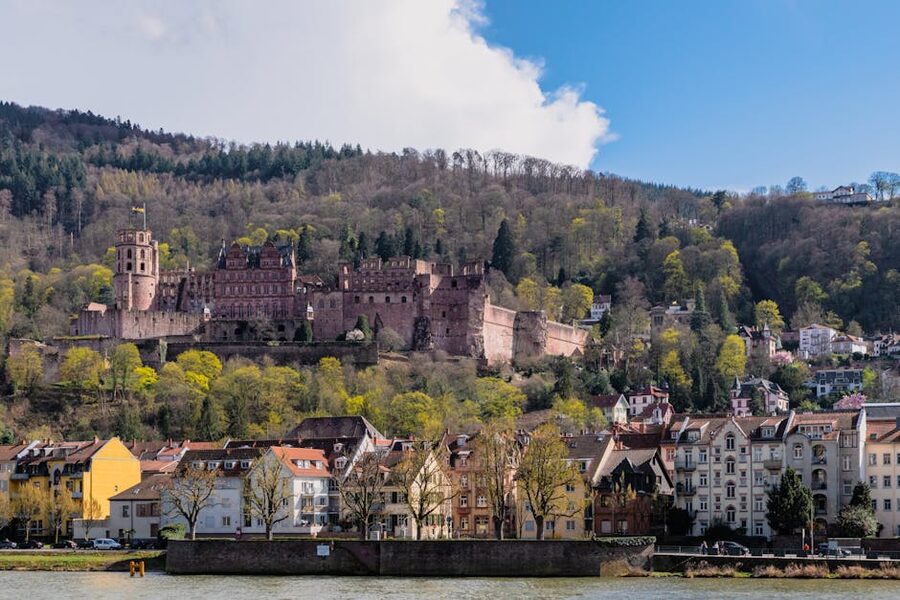
The castle, on your own. After the tour ends near Kornmarkt or Karlsplatz, the funicular base is a five-minute walk. Buy a return ticket (around €9), ride up, walk the courtyard, see the Great Tun (the world’s largest wine barrel, holding 220,000 litres). Allow 90 minutes total. The castle audio guide is fine if you want it; the printed pamphlet is enough for most people because the walking tour has already given you the framing.
A Neckar river cruise. The boats run from the foot of the Old Bridge and offer a totally different angle on the same town. If you want to extend a half-day in Heidelberg into a full day, our Heidelberg Neckar cruise guide covers the booking options and the best routes; the upstream run to Neckarsteinach is the more scenic of the two. A walking tour in the morning, lunch on Marktplatz, then a 90-minute cruise in the afternoon is a near-perfect day.
A night watchman tour. Heidelberg runs a separate evening walk in costume, lantern-and-staff, focused on the darker side of mediaeval city life: executions, plagues, curfews. It uses the same Old Town footprint but in a totally different register. If you’re staying overnight and have done the daytime walk already, the Heidelberg night watchman tour is the obvious second booking; doing both gives you the full daytime-and-nighttime read of the same streets.
If you’re coming from Frankfurt for the day, the math gets more complicated. A return train is around €30-40 and 50 minutes each way; a packaged day tour from Frankfurt is around €60-90 and includes transport. Our guide on doing Heidelberg from Frankfurt compares the two approaches. Short version: book the day tour if you don’t want to think, take the train if you want flexibility.
What I’d Skip
Two product categories I’d actively avoid in Heidelberg.
Hop-on hop-off buses. Heidelberg is too small. The Old Town is a pedestrian zone, the bus can’t go down Hauptstrasse, and the route ends up looping the new town and the train station, neither of which you came to Heidelberg to see. Pass.
Combined Old Town + Castle interior tours under three hours. Either the Old Town gets shortchanged or the castle does. If you want both done well, do them as separate products: a 1.5-hour Old Town walk, then the castle on your own.
Practical Notes
Cobblestones. Most of the Altstadt is cobbled and uneven. Wear something with a real sole, not flat sandals.
Weather. Tours run rain or shine. The pedestrian zone has enough cover (arcades, awnings, the Heiliggeistkirche porch) that you can shelter in light rain. Heavy rain is genuinely uncomfortable for outdoor tours; if the forecast is grim, postpone a day if you can.
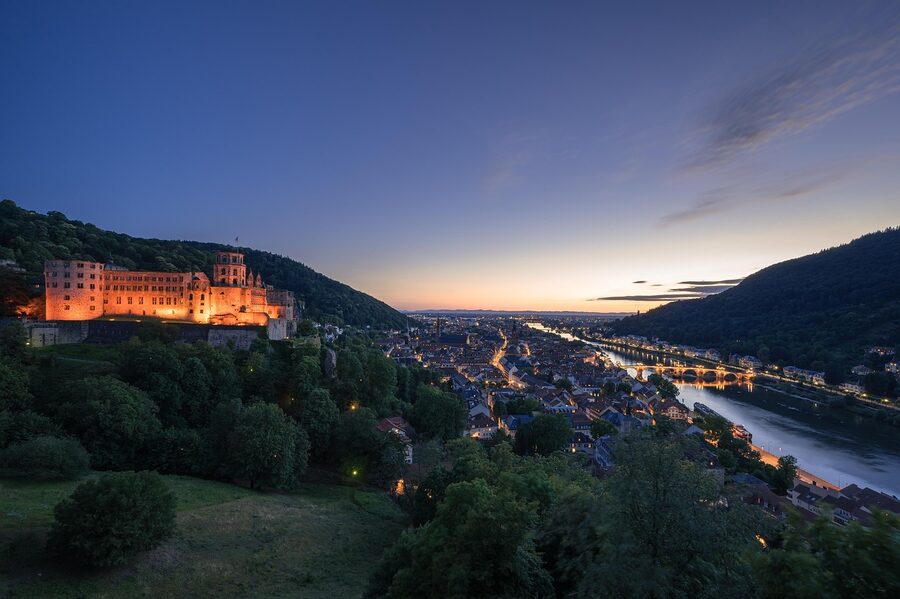
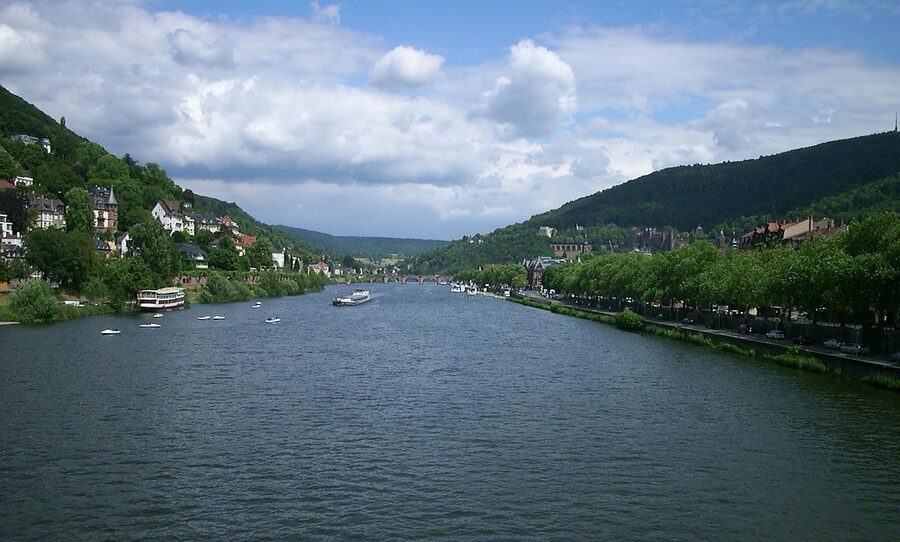
Group photos. The standard Old Town tour will pause at the Old Bridge specifically so you can take photos. If you want a great shot of the castle from the bridge, position yourself on the north side (the Neuenheim side); the south side is more crowded but the angle is worse.
Tipping. Tour guides in Heidelberg are typically employed by the operator and a tip isn’t expected on paid tours. €2-5 per person if the guide was excellent is generous. On free tip-based tours, €10-15 per person is the norm.
Accessibility. Hauptstrasse itself is flat and wheelchair-friendly. Some side streets and the Old Bridge approach are cobbled and uneven. If you have mobility limitations, message the operator before booking and ask which tour fits. Most will adjust the route on request.
If You’re Doing Other German Cities
Heidelberg’s Old Town walk pairs well with similar guided walks in other German cities; the comparisons are useful if you’re stringing a few together. Munich’s Old Town walking tour covers a much bigger and busier Altstadt and the energy is different: more royal grandeur, less mediaeval intimacy. Cologne’s Old Town walk is closer in scale to Heidelberg’s but built around a single overwhelming cathedral rather than a castle on a hill. Nuremberg’s Old Town walk is probably the closest in feel: similar size, similar pedestrian core, similar ratio of layers-per-step. If you’ve already done one of those and liked it, Heidelberg will land. If Heidelberg’s your first, the others build well on top.
For an in-depth night-watchman comparison, Dresden’s night watchman tour is the most theatrical of the German lantern-walks and worth a separate evening if you’re heading east. Munich’s Third Reich walking tour works as a heavier counterweight if you want a city walk with a more serious historical lens. None of these substitute for Heidelberg’s specific combination of small-town intimacy and big-history weight; they round out the picture.
Final Take
Heidelberg’s Old Town is the rare European Altstadt that’s both small enough to walk in 90 minutes and dense enough to deserve a guide. The standard $15 walking tour is a near-no-brainer if you’re spending more than a couple of hours in town. Book the morning slot, do the castle on your own afterwards, finish with a Neckar cruise or sundowner on the Old Bridge. That’s a complete Heidelberg day, and the tour is what makes the rest of it click.