
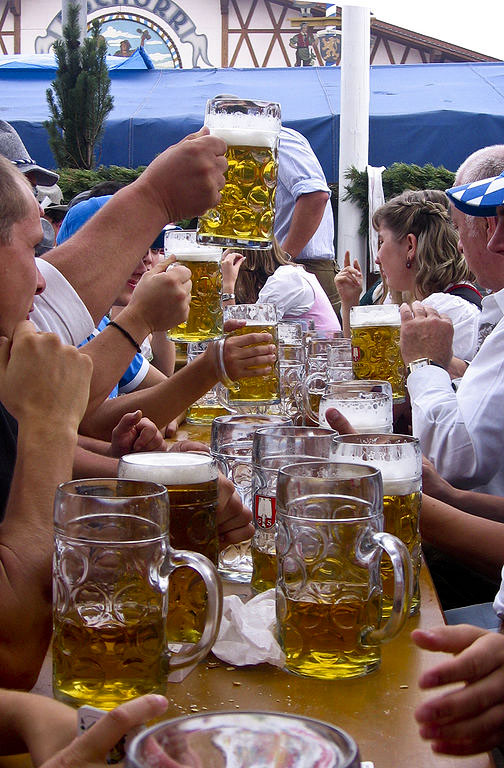
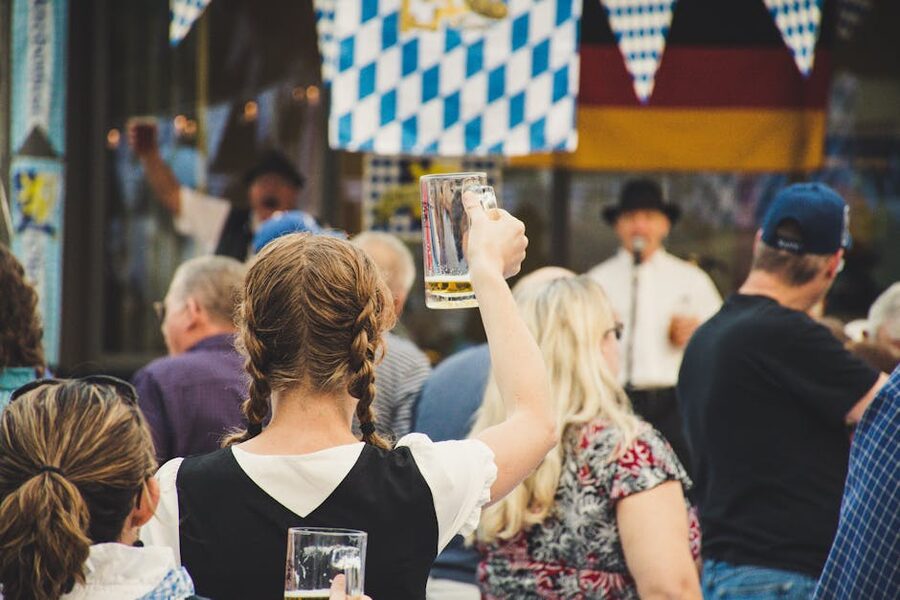
The brass band downshifts into a polka, the table next to me erupts in Prost!, and a litre of Hofbräu sloshes onto the back of my hand before I can lift it. The smell is yeast and pretzel salt and pine table varnish baked by 200 years of beer spills. This is what you book a Munich beer hall tour for.
Doing it on your own is fine, but a guided tour gets you behind the brewery doors, walks you between the big six breweries that feel basically identical from the street, and feeds you weisswurst before noon like a Bavarian. Below is what to book and why, sorted by the kind of evening you actually want.
- In a Hurry?
- The Six Breweries That Run This City
- Hofbräuhaus, and Whether It’s Still Worth It
- The Augustiner Pull
- Beer Garden Rules No One Tells You
- The Tours Worth Booking
- 1. Bavarian Beer and Food Evening Tour:
- 2. Munich Beer Halls and Breweries 3-Hour Tour:
- 3. Viktualienmarkt Gourmet Food Tour:
- What to Eat Before, During, and After the Beer
- The Other Halls Worth Walking To
- Booking Logistics
- Costs You’ll Actually Pay
- How a Beer Hall Day Pairs With the Rest of Munich
- Day Trips to Other Bavarian Beer Towns
- Other Munich Guides Worth Your Time
In a Hurry?
- Bavarian Beer and Food Evening Tour ($87): Three halls, dinner at Hackerhaus, the most thorough beer-and-food combo. Check availability
- Beer Halls and Breweries 3-Hour Tour ($50): Two complimentary beers, brewery insider stops, the strongest pure-beer focus. Check availability
- Viktualienmarkt Gourmet Food Tour ($50): Daytime, food-led, easier on the liver if you’re starting at 10am. Check availability
The Six Breweries That Run This City
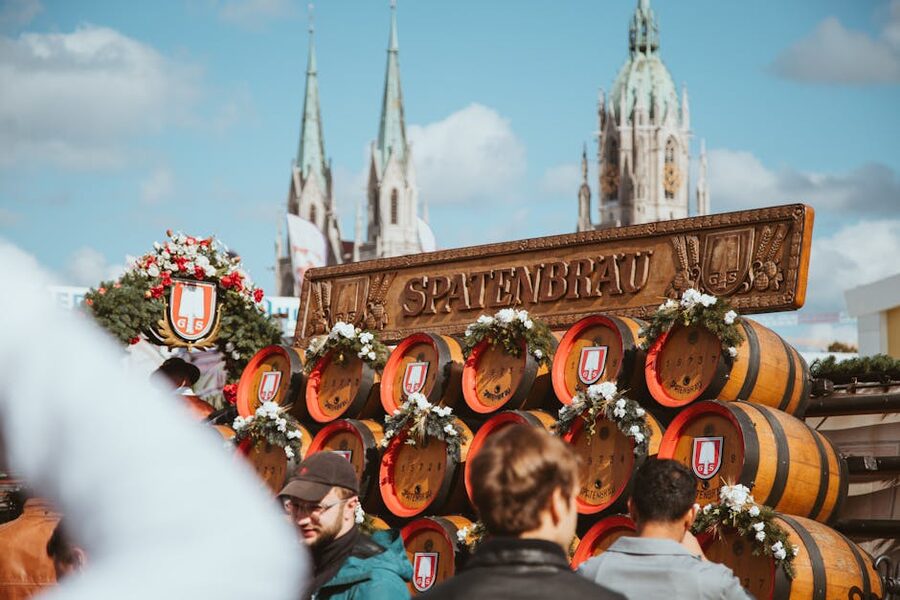
Before you pick a tour or wander into a beer hall blind, know who you’re drinking. Munich has six historic breweries that supply almost every beer hall and beer garden inside the city limits: Augustiner, Hofbräu, Paulaner, Spaten, Hacker-Pschorr, and Löwenbräu. They are the only ones legally allowed to pour at Oktoberfest. Each one runs at least one flagship beer hall in the centre, and that hall pours only their beer.
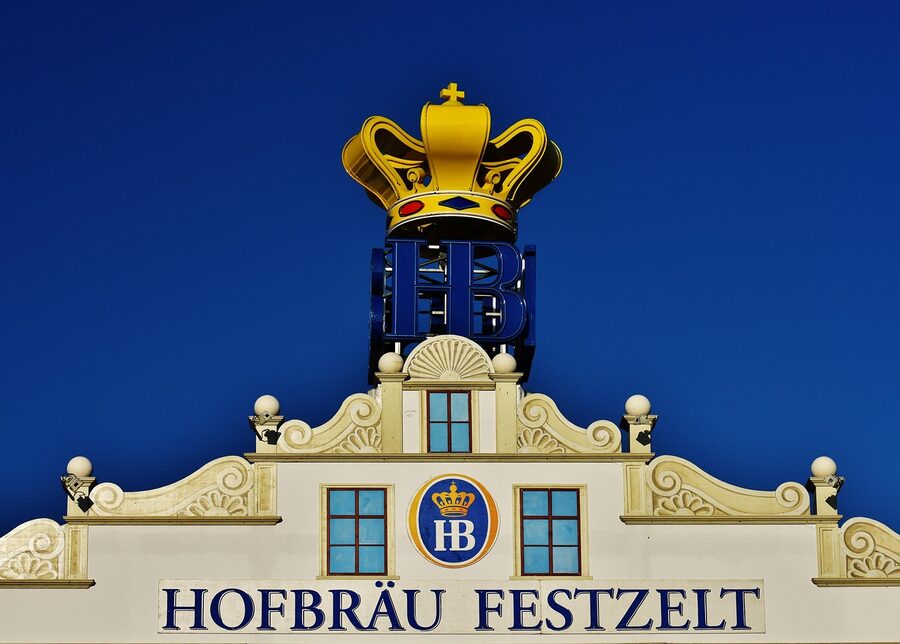
The practical version: if a place is called Augustiner-Keller, it pours Augustiner. If it’s Hofbräuhaus, it pours Hofbräu. If it’s Paulaner Bräuhaus, you get Paulaner. The locals have strong opinions about which brewery makes the best Helles. Augustiner usually wins those fights. Hofbräu wins the tourist count.
Hofbräuhaus, and Whether It’s Still Worth It
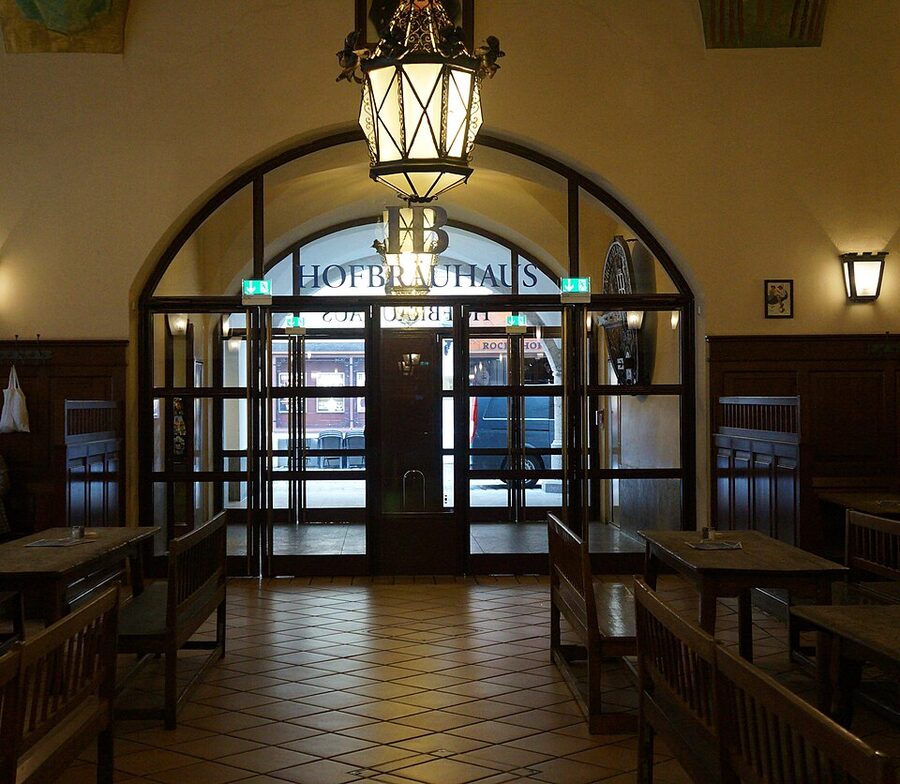
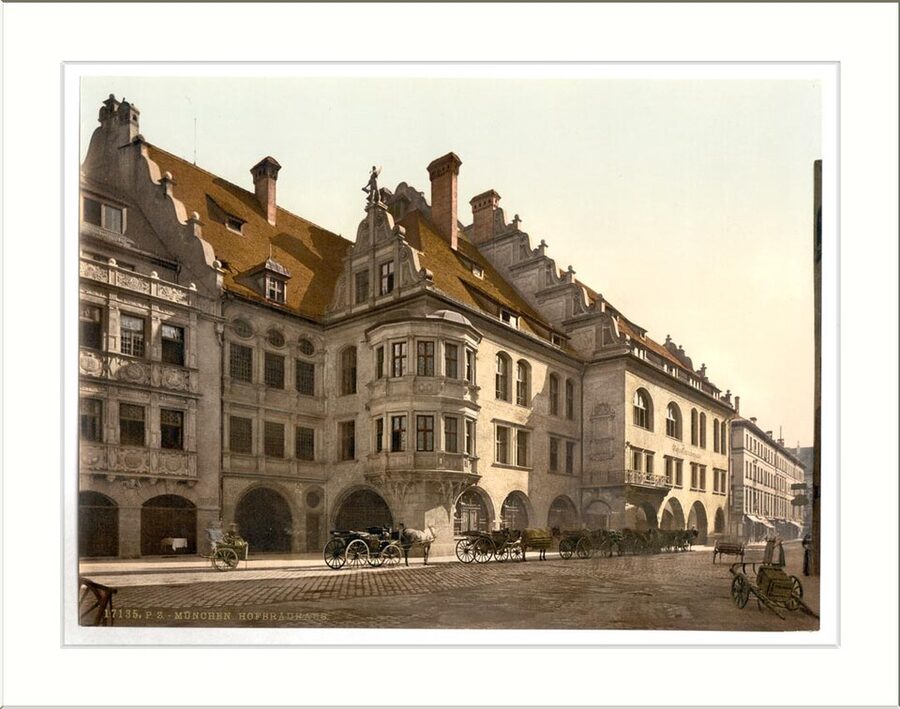
Yes. Skip the people who tell you it’s a tourist trap. Of course it’s a tourist trap. It’s also the loudest, most theatrical 200-year-old beer hall in Europe, and on a Friday night the brass band, the dancing waitresses, and 1,300 people roaring along to Ein Prosit add up to something you can’t get anywhere else.
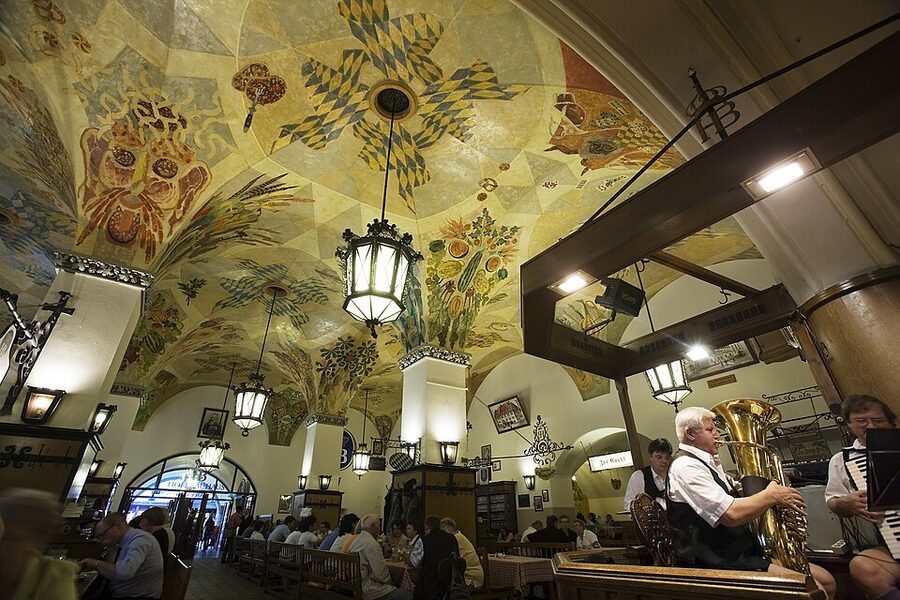
The trick is going at the right hour. Show up at 6pm on a Tuesday and the place is full but breathing. Show up at 8pm on a Friday in summer and you’re sharing a bench with a tour group from Texas. Lunch on a weekday is the locals’ shift. The Stammtisch table near the back, marked with a sign saying Nur für Stammgäste, is for regulars only and they will tell you politely if you sit there by accident.
Order the Hofbräu Original (a clean, light Helles), a half-roast chicken (halbes Hendl), a side of sweet mustard, and one warm pretzel. That meal costs around 25 to 30 euros. Cash is preferred but cards now work. Tipping: round up by a euro or two, not 20%.
The Augustiner Pull
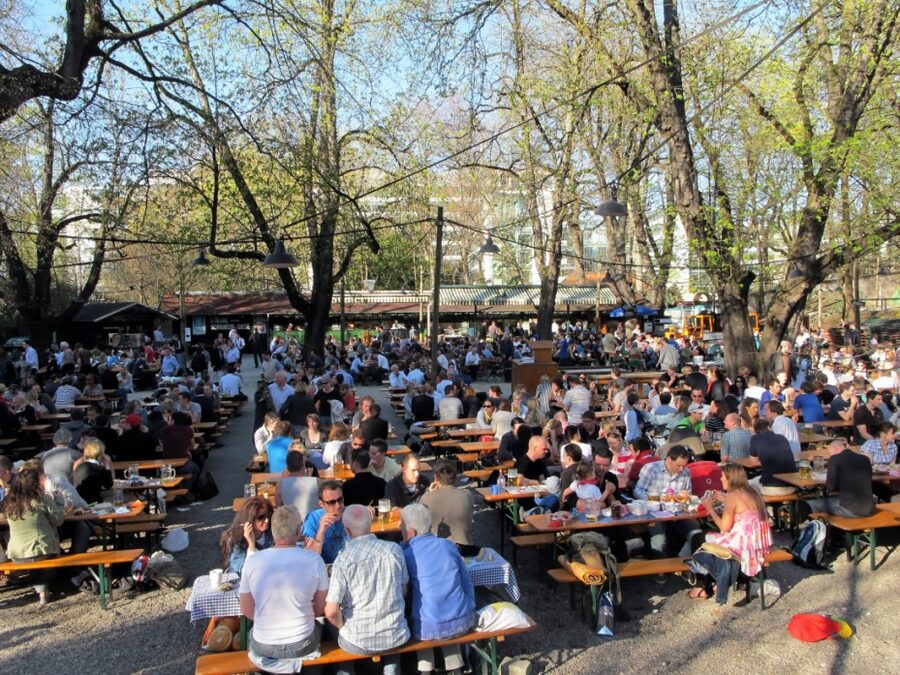
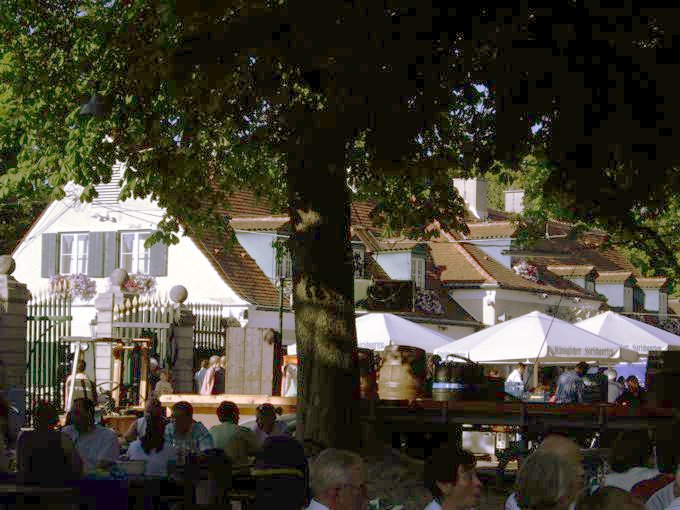
If you only have time for one beer-related stop in Munich and you don’t care about the show, go to Augustiner. There are several Augustiner venues in the city; the two that matter for a visitor are the Augustiner Bräustuben (the brewery taproom on Landsberger Strasse, attached to the actual working brewery) and Augustiner-Keller off Arnulfstrasse, with the famous beer garden under the chestnut trees.
Augustiner Helles from a wooden barrel is the order. The brewery is the only one of the big six that still serves wood-tapped beer regularly, and locals will argue it tastes different. They’re right. Slightly softer, less carbonated, more bread.
Beer Garden Rules No One Tells You
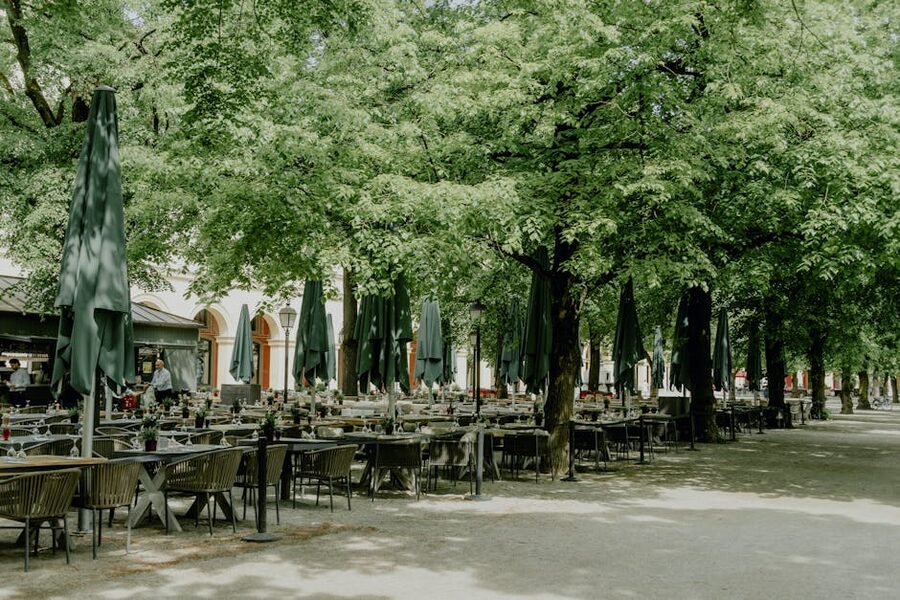
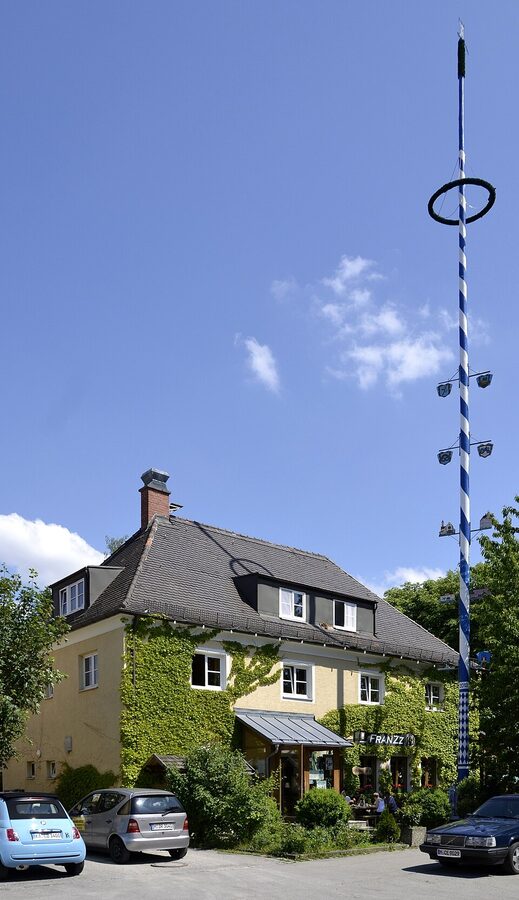
Munich beer gardens have one rule that surprises visitors every time. In the self-service section, marked clearly by signs, you are legally allowed to bring your own food. This is a 1812 royal decree the locals will fight to defend. The waitstaff section pours beer to your table and brings menus. The self-serve section means you walk to the kiosk for the beer and lay out your own pretzels, radishes, and cheese on a checked tablecloth.
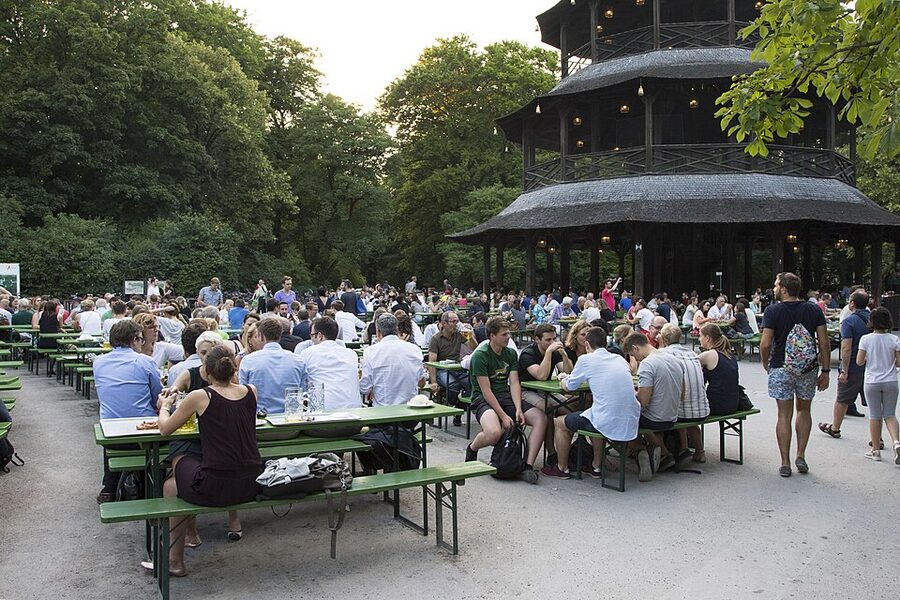
Practical things to know:
- Pfand on the stein. When you order a Maß, you pay a 1 to 2 euro deposit. Bring the empty mug back to the beer kiosk afterwards to get the deposit back. Don’t walk off with it.
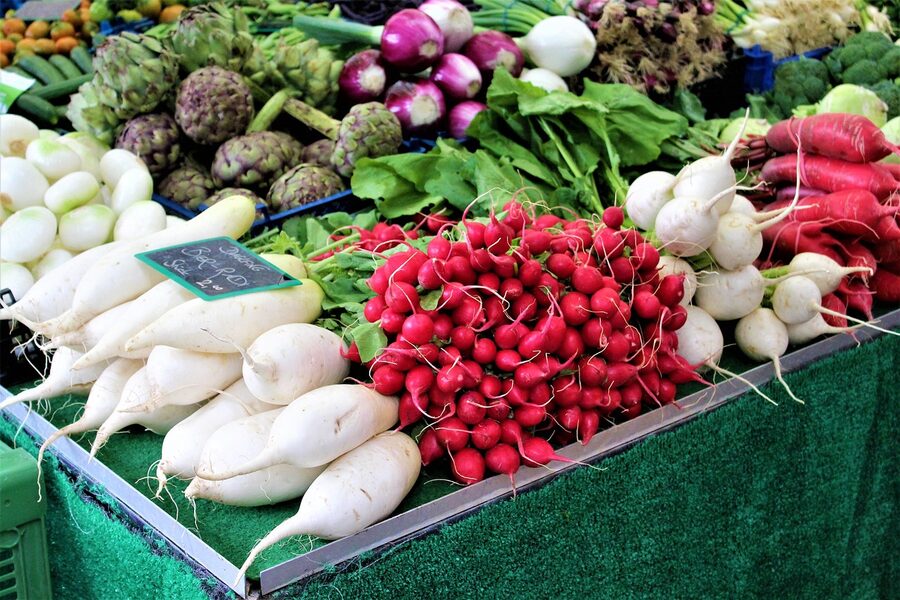
- Brotzeit board. The classic beer-garden self-serve plate: pretzel, Obatzda (a soft cheese paste with paprika and onion), radishes sliced into spirals, sliced sausage, and rye bread. Buy the cheese paste at the Viktualienmarkt that morning.
- Closing time. Beer gardens close at 10:30pm by city ordinance. Beer halls run later, until 11pm or midnight.
- Weather. Beer gardens close in rain. Hofbräuhaus and Paulaner Bräuhaus and the indoor halls run year-round.
The Tours Worth Booking
Self-guiding the beer halls is fine. But here’s what a tour adds: a guide who walks you between five places in 90 minutes (you’d never make that on your own), a brewery courtyard you don’t have access to as a walk-in, and someone who can explain why the Reinheitsgebot of 1516 still legally restricts what’s in your glass. Pick one of these three based on the kind of evening you want.
1. Bavarian Beer and Food Evening Tour: $87
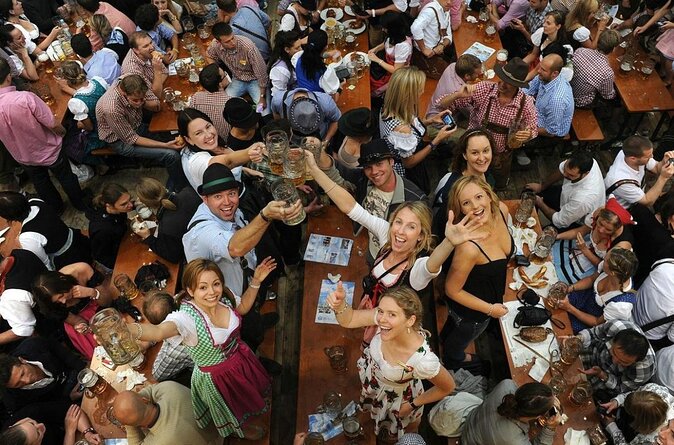
The most complete option of the three. You walk between three central beer halls, get tastings along the way, and finish with a real dinner at Hackerhaus. Our full review notes that the museum stop in the middle is the weakest part and a few visitors find it dry, but the food and beer halls hold up. Book this one if you want a single planned evening that feeds you, gets you drunk, and explains the city’s beer culture without having to think.
2. Munich Beer Halls and Breweries 3-Hour Tour: $50
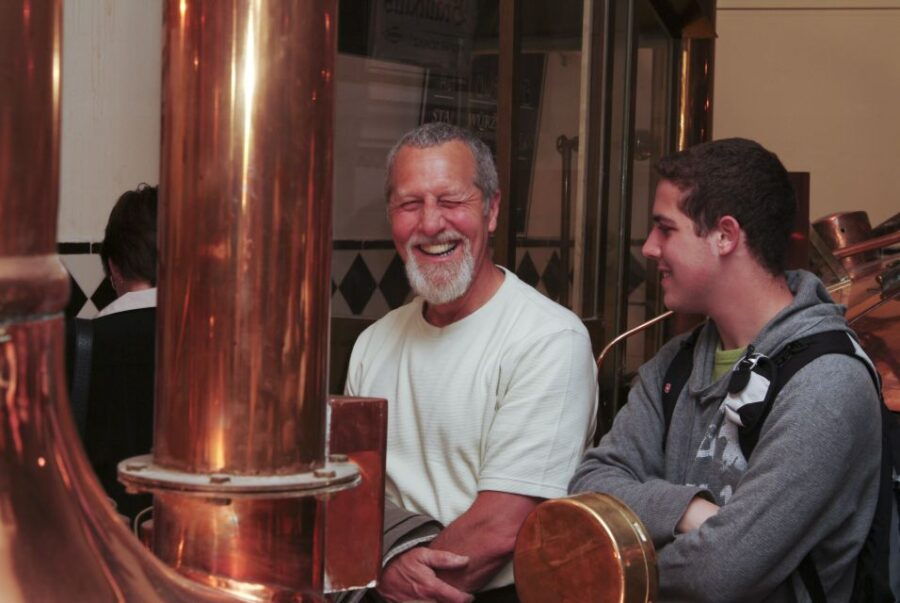
The strongest tour for someone who actually cares about the beer rather than the food. You walk through the city’s oldest beer houses, get inside one functional brewery, and the guide actually explains what makes a Helles a Helles. Our review covers what’s included in the two beer tastings and which brewery the route enters depending on the day. Lighter on food than the Bavarian Beer and Food tour, so eat first.
3. Viktualienmarkt Gourmet Food Tour: $50
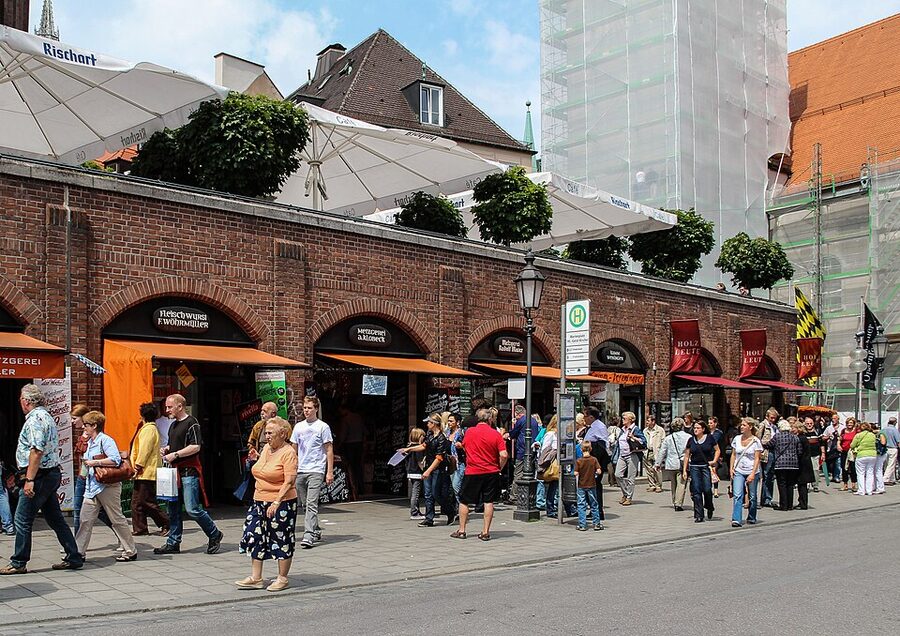
The daytime alternative for people who don’t want to start drinking at 5pm. A 2.5-hour walk through Munich’s largest open-air food market, sampling sausages, cheeses, breads, and exotic fruits with one local guide. Our full review highlights the cheese stand and the exotic-fruit-juice stop as standouts. Best paired with a beer hall on the same day, not as a substitute.
What to Eat Before, During, and After the Beer
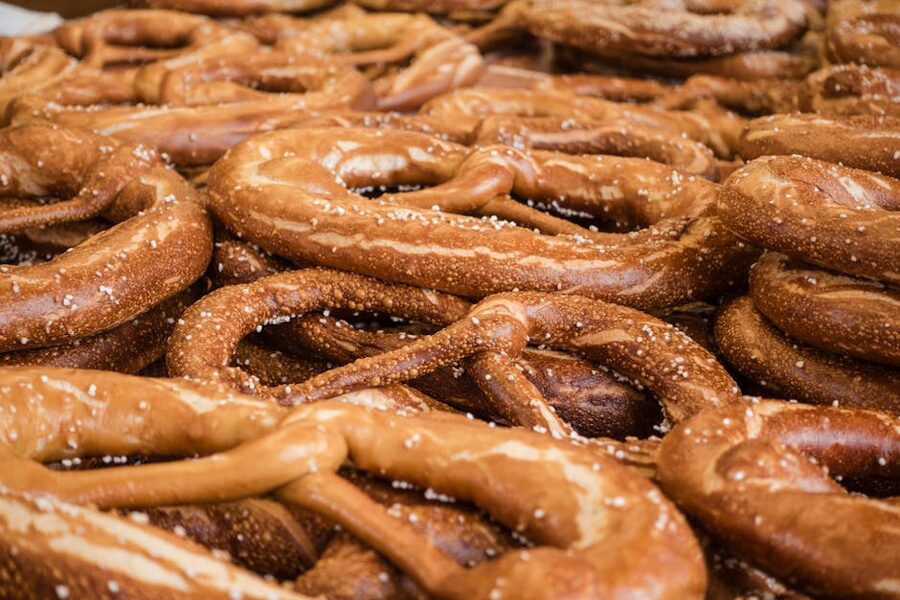
The food in a Munich beer hall is not an afterthought. The pretzel comes first, weisswurst before noon, roast pork by 7pm. Order in roughly that sequence and you’ll match what locals do.
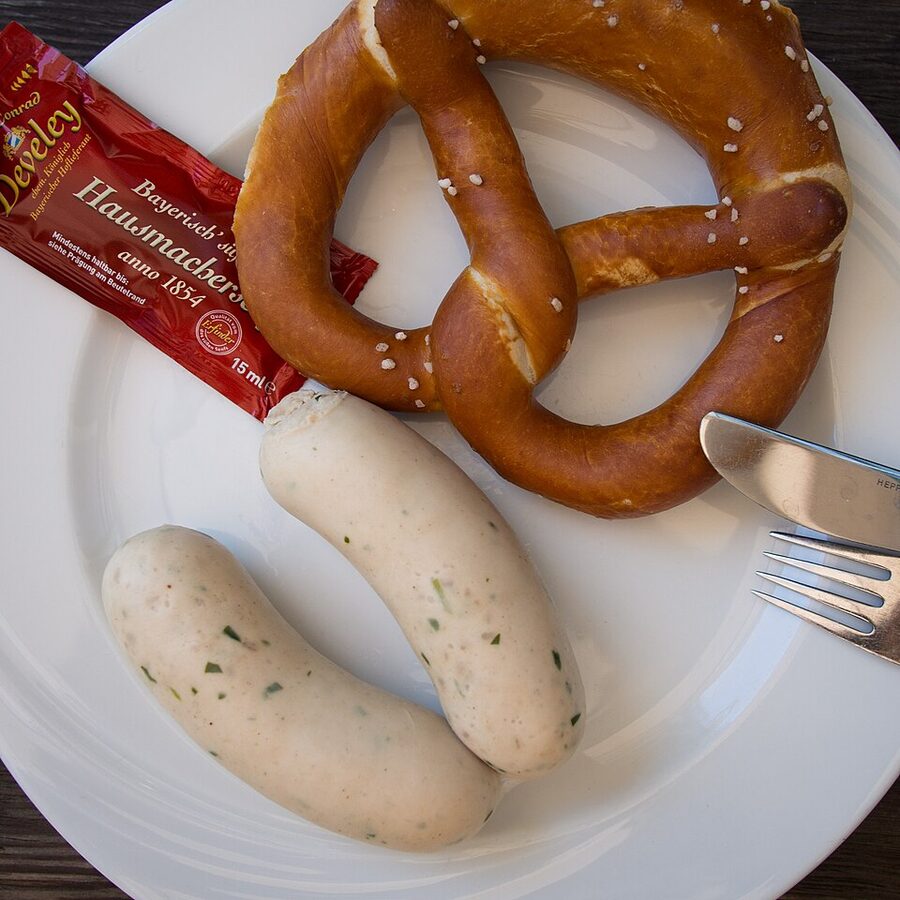
Weisswurst is the Munich breakfast sausage: white veal sausage, eaten with sweet mustard, a Brezel, and a Weissbier. The 12pm rule is no joke for traditionalists; the sausages were historically made fresh that morning without preservatives, so you ate them before noon or you didn’t eat them. These days fridges exist and most beer halls serve them all day, but a real Bavarian still won’t order them past lunch.
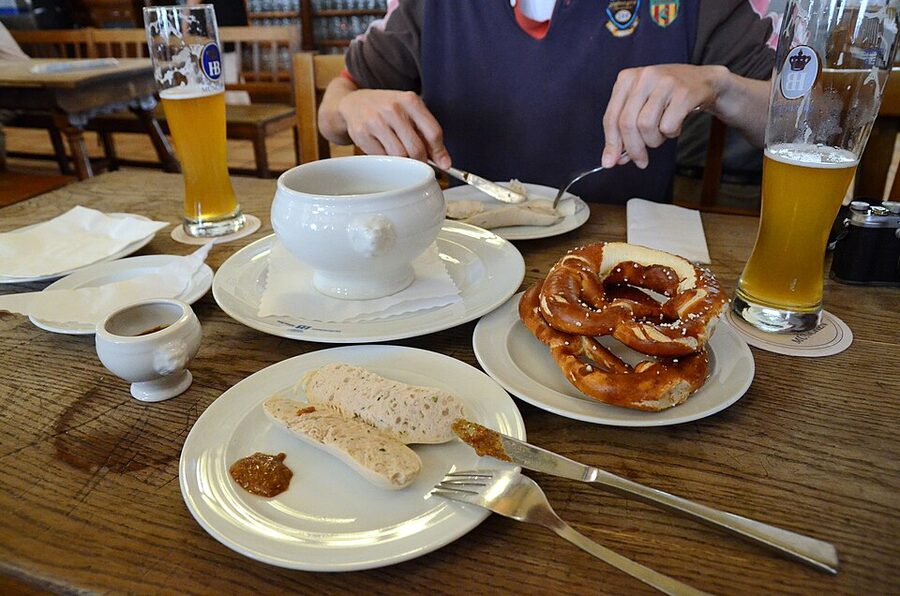
The big plates for later in the day:
- Schweinshaxe. Roasted pork knuckle with crispy skin, mountain of meat, served with potato dumplings and red cabbage. One Schweinshaxe feeds two people if one of them is small.
- Schnitzel Wiener Art. Veal cutlet pounded thin, breaded, fried. Lemon wedge on top. Order it without anything else and the kitchen knows you’re a regular.
- Obatzda. Cheese paste, paprika orange, mixed with butter and beer. Eat with rye bread and radishes.
- Halbes Hendl. Half a roast chicken. The rotisserie at the back of any beer hall is where you’ll see them spinning.
The Other Halls Worth Walking To
Beyond the Hofbräuhaus and the Augustiner venues, three more beer halls are worth knowing.
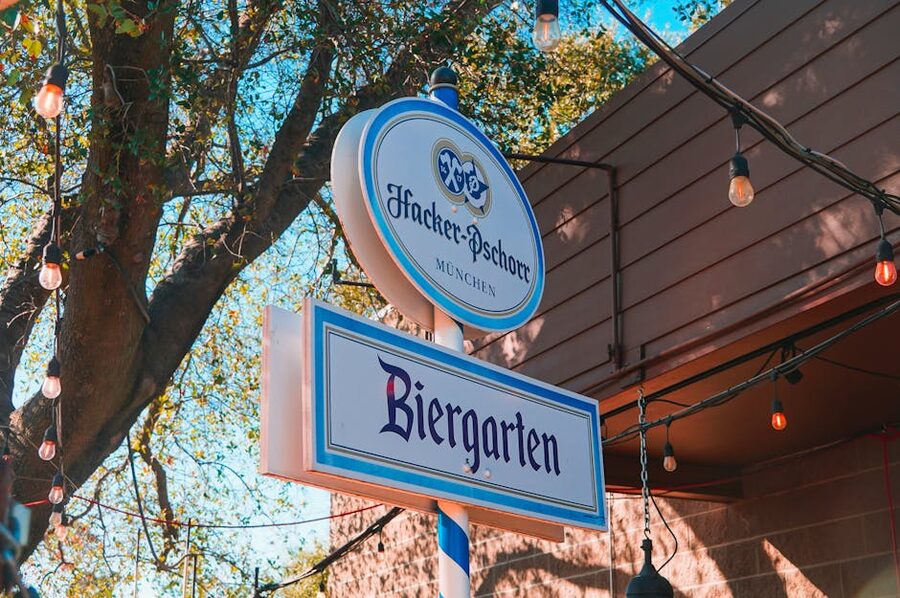
Paulaner Bräuhaus on Kapuzinerplatz. Smaller, more intimate, with a hidden beer garden through the back hallways. Paulaner brews the strong dunkel and the Salvator doppelbock here. Less of a tourist scene than Hofbräuhaus.
Schneider Bräuhaus on Tal, two blocks from Marienplatz. The home of Schneider Weisse, the famous Bavarian wheat beer. The dirndl-wearing staff actively dislike phone cameras pointed at them. Order the Aventinus, a strong dark wheat doppelbock, and the Münchner schnitzel.
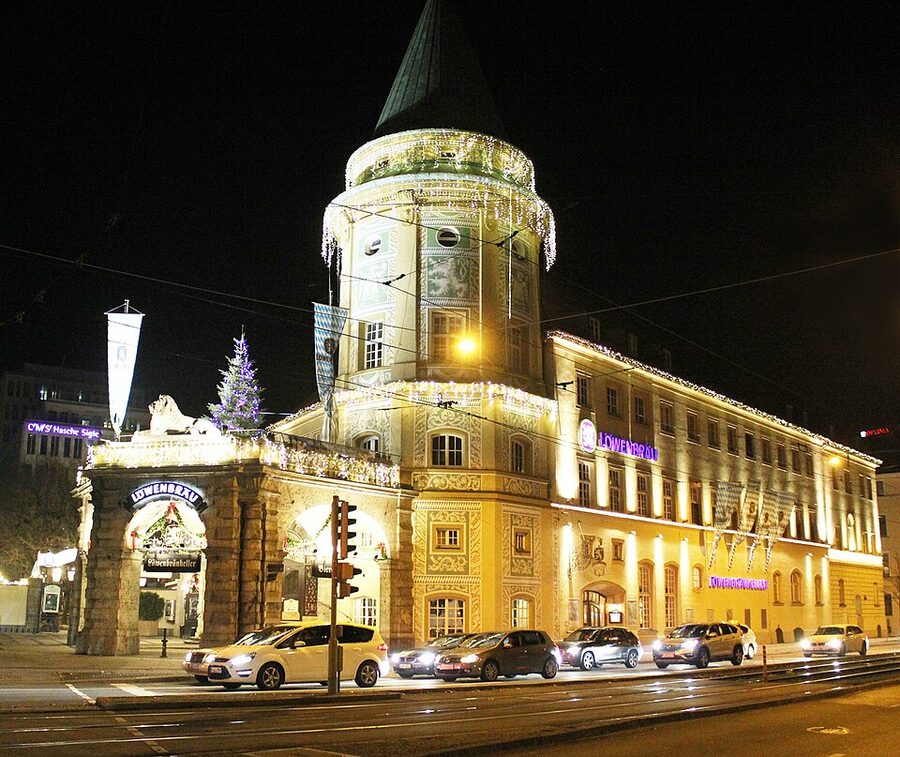
Löwenbräukeller on Stiglmaierplatz. Big, theatrical, less famous than Hofbräuhaus but built in the same style. The currywurst is good. The outdoor garden runs warm-weather only and seats around 1,000.
Booking Logistics
Walk-in is fine for almost every Munich beer hall outside of Oktoberfest. The exception is the Festsaal upstairs at Hofbräuhaus on weekend evenings; that one books out for tour groups weeks ahead. The ground-floor Schwemme is always walk-in.
For the guided tours, book at least 24 hours in advance through GetYourGuide or Viator. Same-day spots happen but you can’t count on them. Tours run year-round. They get more crowded in May, June, September, and October. Less crowded January through March, when the city’s also at its quietest and you can hear the band properly.
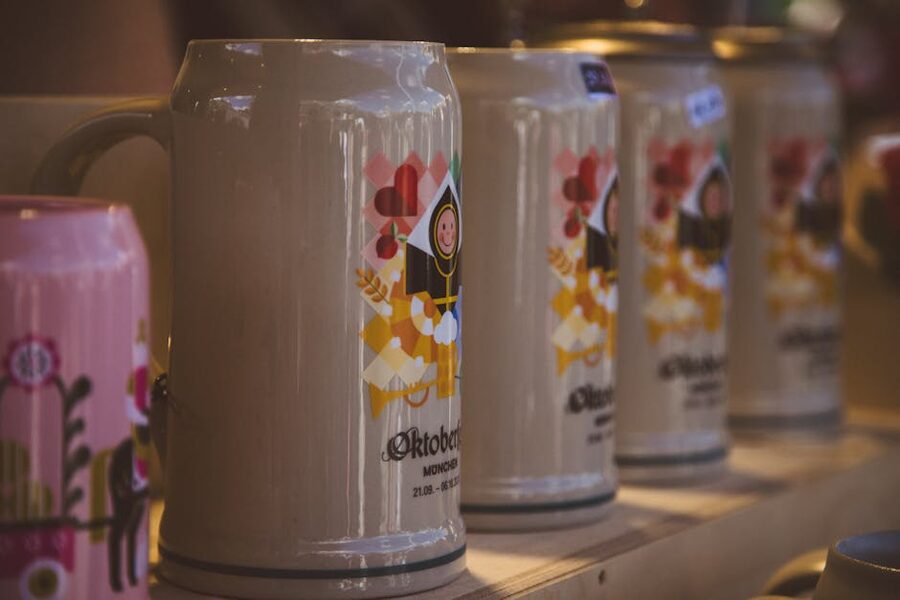
Oktoberfest exception. If you’re booking for Oktoberfest dates (mid-September to early October), forget walking in. The big tents at Theresienwiese require table reservations made the previous year. The regular city beer halls stay open during Oktoberfest but are also packed. The guided tours run a special Oktoberfest itinerary with reserved seats. Book those in February or March if you’re aiming for late September.
Costs You’ll Actually Pay
Rough budget for a beer-hall evening on your own without a tour:
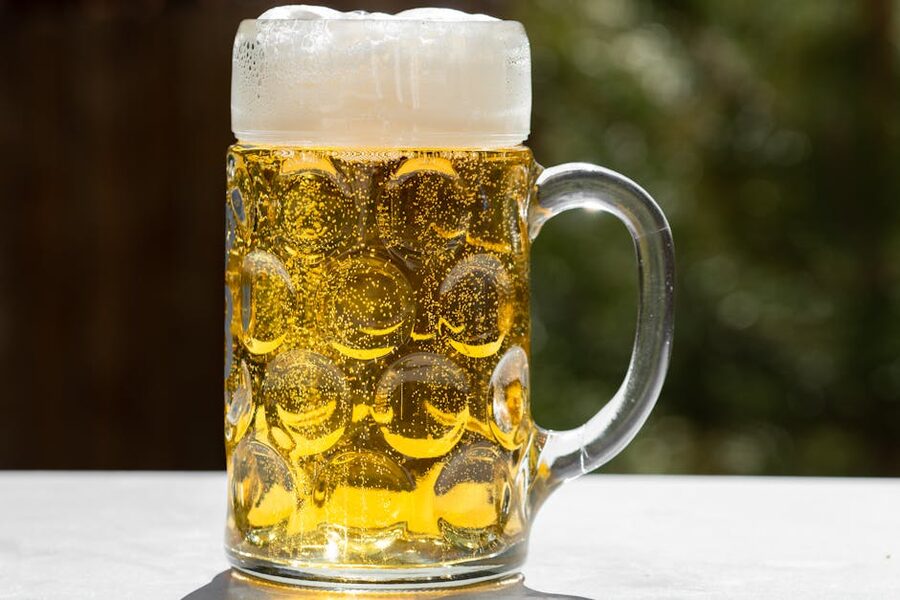
- One Maß (1L beer): 9.50 to 11.50 euros
- Pretzel: 4 to 5 euros
- Half-roast chicken: 14 to 18 euros
- Schweinshaxe: 22 to 28 euros
- Service charge: round up by 1 to 2 euros, that’s it
Total for one person eating well and drinking two Maß: about 45 to 55 euros. Cards are now accepted almost everywhere; cash is still smoother.
How a Beer Hall Day Pairs With the Rest of Munich
Don’t blow the whole trip on the beer halls. Two evenings is enough. The afternoons before are when you do everything else Munich does well.
The smartest pairing is the Old Town walking tour in the morning, the Viktualienmarkt for lunch, and the Hofbräuhaus or a guided beer hall tour in the evening. Marienplatz to Viktualienmarkt to Hofbräuhaus is a five-minute walk in total.
For the second day, a serious one: book the Dachau Memorial day trip in the morning or the Third Reich walking tour in the afternoon. Heavy material, but Munich is where the Nazi party started and ignoring that part of the city’s history is a choice. The beer halls themselves played a role; the Bürgerbräukeller hosted Hitler’s failed 1923 putsch and the Hofbräuhaus held early NSDAP meetings. The Third Reich tour walks past both.
If you have a third day in Munich, the Neuschwanstein day trip is the obvious one for first-time visitors. It’s a long bus day, so plan a quiet beer-garden evening afterwards rather than a beer-hall blowout. The Rothenburg day trip is the alternative if you’ve seen Neuschwanstein already; you’re back in Munich by 7pm, prime time for the Hofbräuhaus.
Day Trips to Other Bavarian Beer Towns
Bavaria’s beer culture doesn’t stop at Munich’s city limits. Two day-trip targets stand out for beer travellers.
Bamberg in northern Bavaria has nine working breweries inside the old town and is famous for Rauchbier, smoked beer that tastes like liquid bacon. It’s about 2.5 hours by train each way from Munich. Nuremberg, slightly closer at 1 hour 10 minutes by ICE, has its own historic beer halls and an old town that pairs well with a beer crawl. The Nuremberg Old Town walking tour is the best way to see both the city and a couple of its breweries in one go.
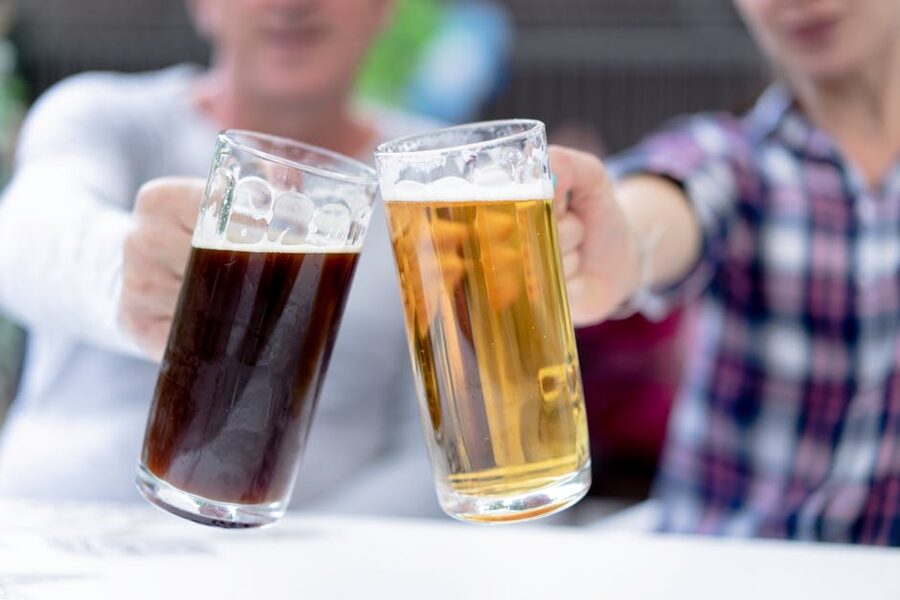
If you’ve already done the Munich beer halls and want a different take on German beer, the Cologne brewery tour covers the Kölsch tradition, which is the polar opposite of Bavarian beer culture. Same country, completely different glass (a 200ml Stange vs. a 1L Maß), different beer style, different drinking ritual.
Other Munich Guides Worth Your Time
The beer halls are one piece of Munich. If you’ve got more days here, the Old Town walking tour sets up your first morning, the Third Reich tour handles the heavy history (and walks past the beer halls that played a role in it), and the hop-on-hop-off bus covers the bigger sights you can’t walk to. For day trips out of the city, the Dachau Memorial, Neuschwanstein castle, Salzburg, and Rothenburg are the four that almost everyone books. Salzburg is the easiest sell for a second day. Rothenburg is the under-rated one.