
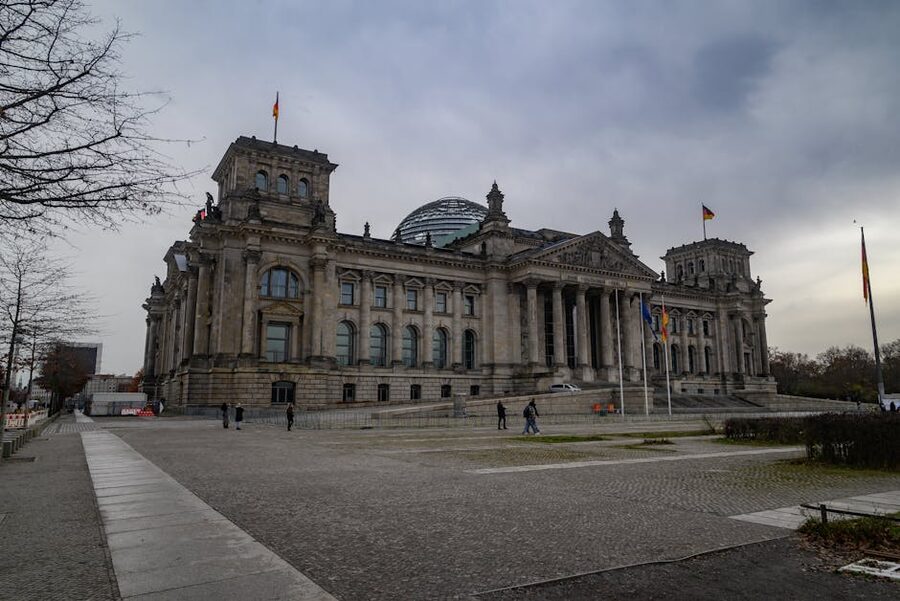
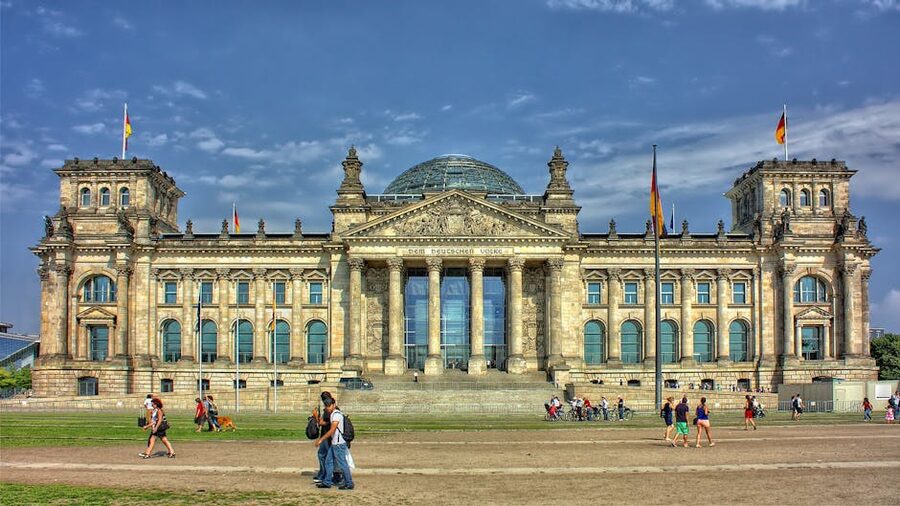
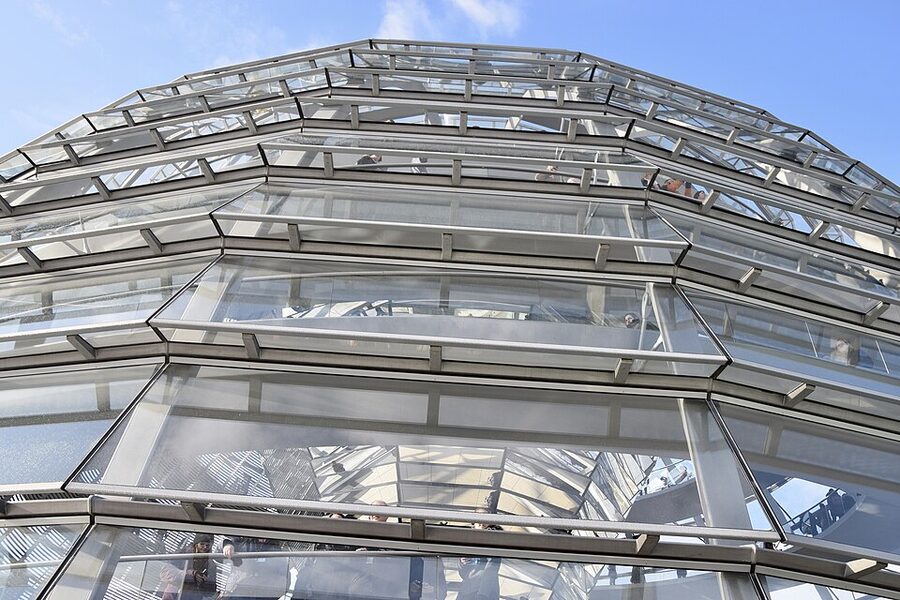
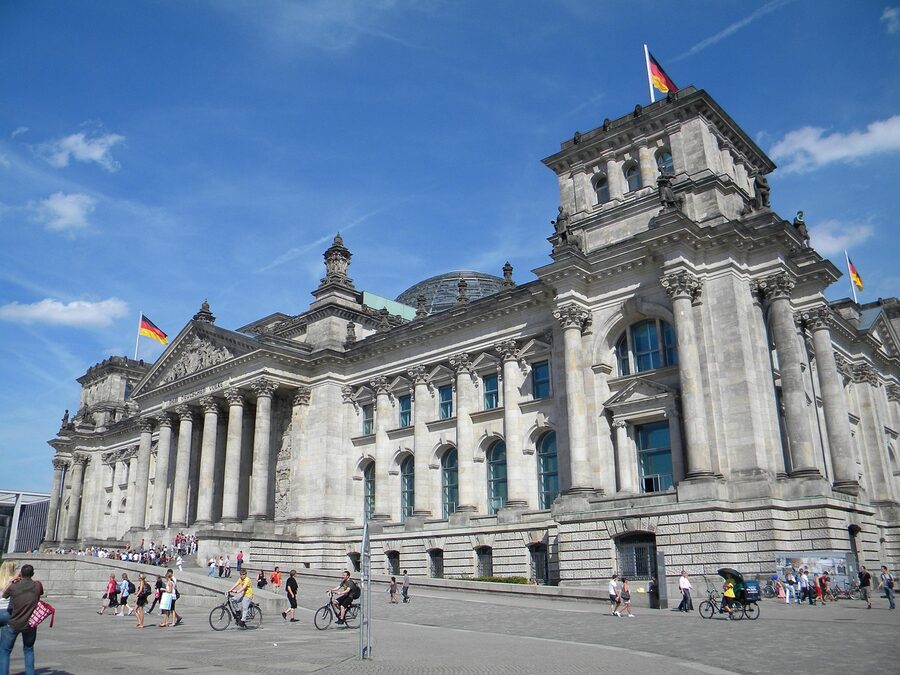
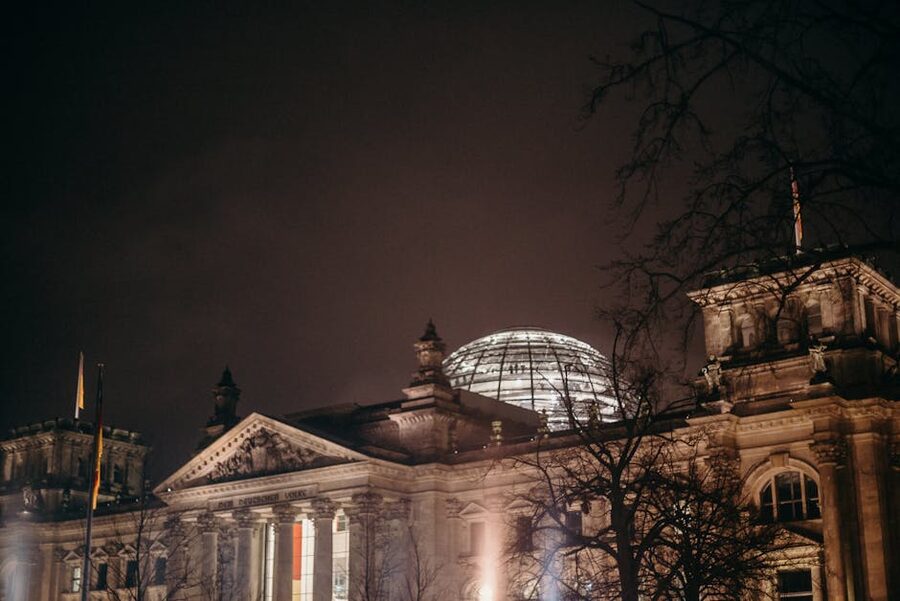
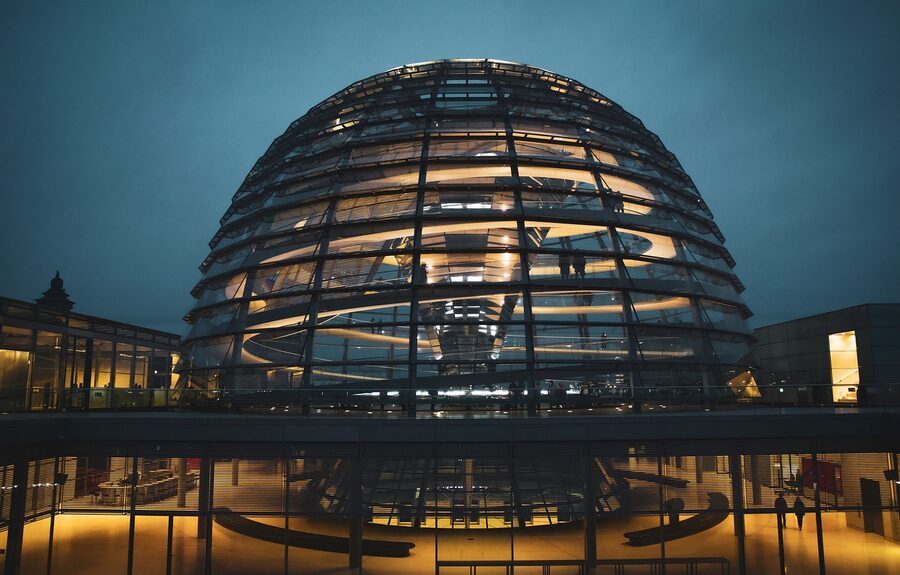
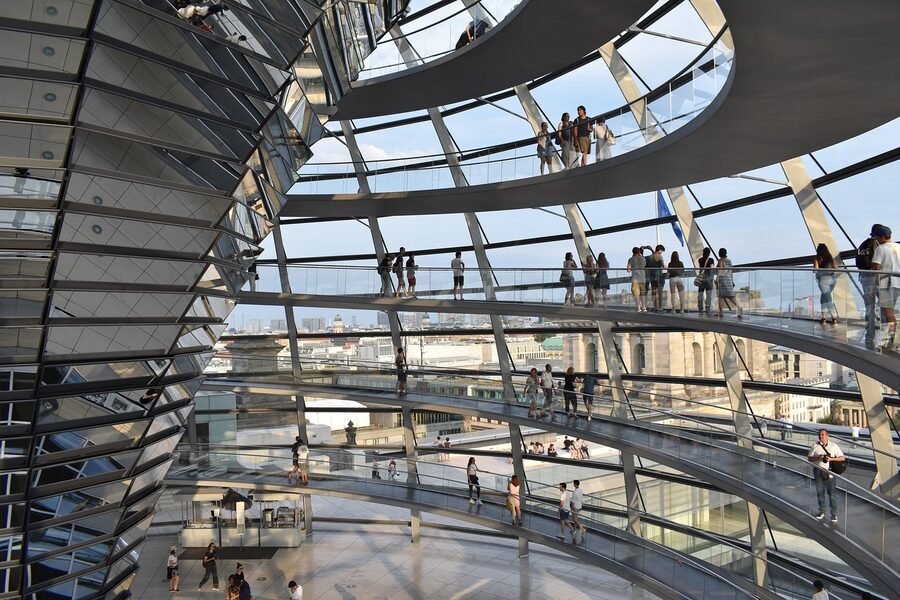
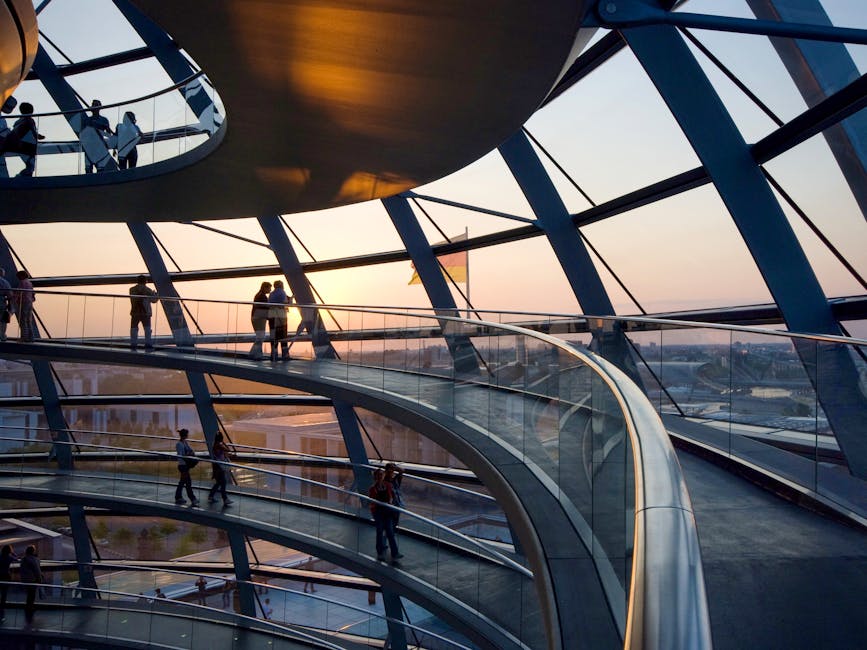
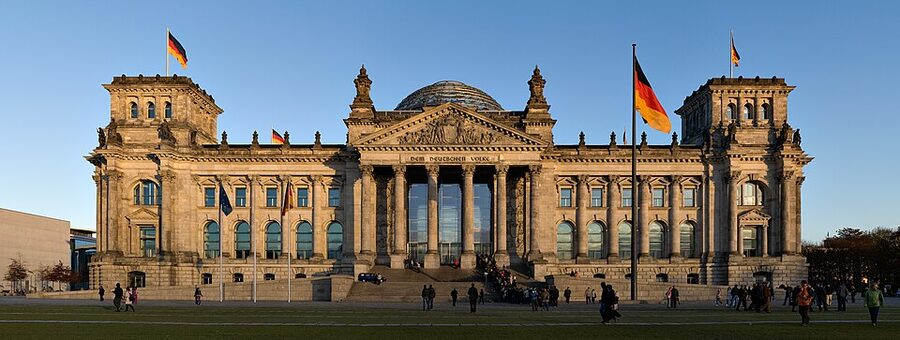
Here is a thing about the Reichstag dome that took me a minute to absorb. Norman Foster finished it in 1999 with a deliberate spatial pun: visitors walk a spiral ramp around the inside of the glass cupola, while five floors below them the elected Bundestag sits in the plenary chamber. The people are physically above the politicians. After 1990, that was the point.
The dome is free to visit. The catch is the timed-slot reservation system, which fills four to six weeks ahead in summer.
- In a Hurry? Top Three Reichstag Picks
- How the Reichstag Reservation Actually Works
- Why Book Through GetYourGuide Instead of the Bundestag Direct?
- The Three Tours I’d Actually Recommend
- 1. Reichstag, Dome and Government District Guided Tour:
- 2. Government District around the Reichstag Guided Tour: from 4 per private group
- 3. Private Reichstag and Glass Dome Tour: 8 for up to six
- What You Actually See Inside the Dome
- Government Quarter on Foot: What Most Tours Cover
- Costs, Timing, and a Few Honest Caveats
- The Käfer Rooftop Restaurant Loophole
- A Bit of Context the Audio Guide Skips
- Practical Logistics: Getting There and What to Bring
- Booking Strategy by Trip Type
- How the Reichstag Compares to Other Government Buildings I’ve Visited
- If You’re Building a Bigger Berlin Day
In a Hurry? Top Three Reichstag Picks
- Reichstag, Dome and Government District Guided Tour, $18: a two-hour walk through the parliament district that ends with group reservation entry to the dome. Check availability.
- Government District around the Reichstag Guided Tour, from $284 per private group: the same district walk but private. Useful if you missed the dome reservation window. Check availability.
- Private Reichstag and Glass Dome Tour, $288 for up to six: 90 minutes, dome included, your guide handles the registration paperwork. Check availability.
How the Reichstag Reservation Actually Works
Entry is free. That part throws people. There is no ticket counter, no paid skip-the-line, no upgrade tier. There is one queue: a timed-slot reservation made through the Bundestag’s official portal at visite.bundestag.de.
You can book up to three months ahead, and the system opens new dates daily. In June, July and August the popular evening slots tend to be gone four to six weeks out. Off-season (November to February) you can often get same-week dates, sometimes same-day.
There are three booking types on the official portal. Each one is run by the Bundestag itself, separate from the GetYourGuide tours below.
- Dome only: the standard option. You go up, walk the spiral ramp, listen to the audio guide, come back down. About 60 to 90 minutes total. This is what most tourists do.
- Plenary lecture plus dome: a 45-minute talk in the plenary chamber about how the Bundestag works, then the dome. Good if you want context. Slots are rarer.
- Guided architectural tour plus dome: 90 minutes inside the building with a Bundestag guide, then the dome. The deepest version, but it sells out earliest.
If the official portal is fully booked for your dates, this is where the GetYourGuide tours come in. Companies like the ones I cover below hold group reservations on their own dates and slot you into them. You pay for the tour, they handle the registration.
Why Book Through GetYourGuide Instead of the Bundestag Direct?
If you can get a Bundestag direct slot, take it. It’s free. But there are three real cases where the guided tours win.
One. You’re going in summer and the official portal is empty for your dates. The big-flagship Reichstag, Dome and Government District tour holds blocks of slots and resells them with a guide attached.
Two. You want context, not just the view. The dome is beautiful but the audio guide is mostly architectural. A live guide adds the politics, the 1933 fire, the wrapped-by-Christo summer of 1995, what happened on the lawn during reunification.
Three. You don’t want to wrestle with German bureaucracy in a foreign language. The Bundestag site is in English but it’s still a government portal. The guided tours just take a name and a passport number.
The Three Tours I’d Actually Recommend
I’ve cut the field to three. The flagship guided dome tour for most people, the government-district-only walk for travellers who missed the window, and the private dome experience for small groups who want the unhurried version.
1. Reichstag, Dome and Government District Guided Tour: $18
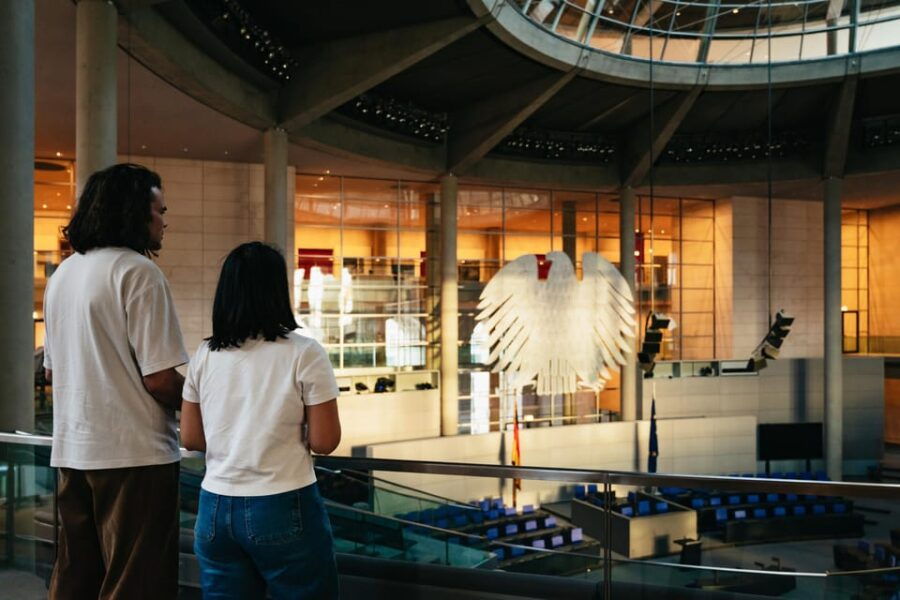
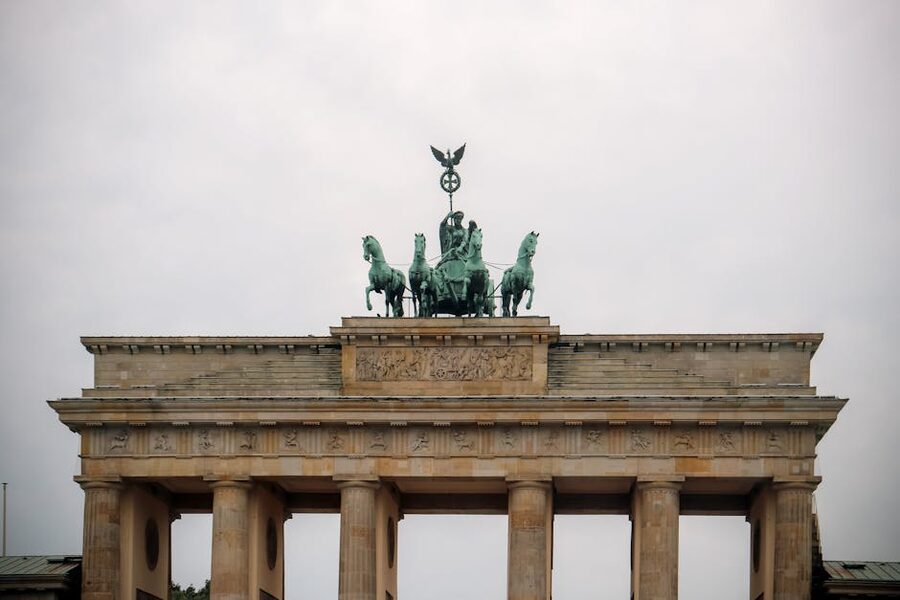
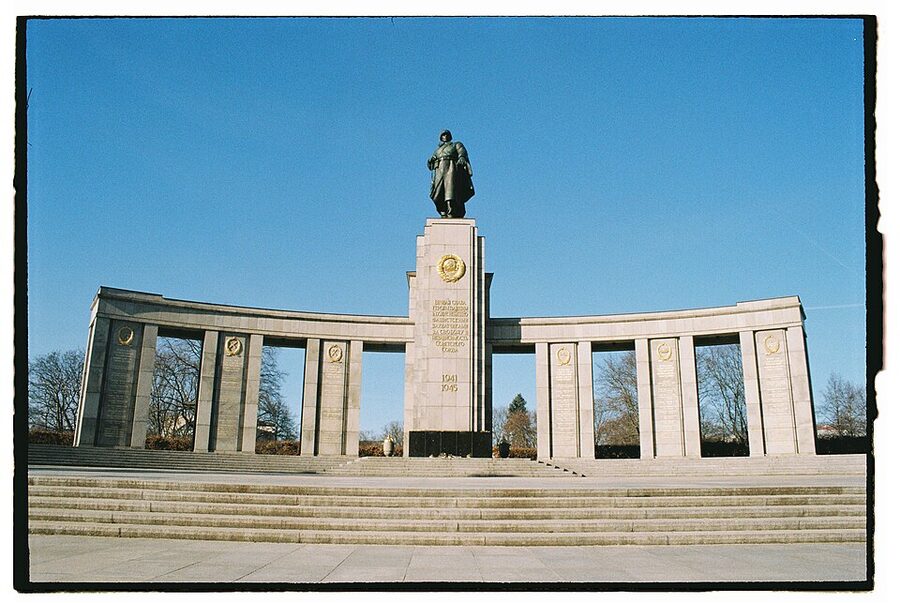
This is the default pick. You spend the first 90 minutes outside with a guide walking the parliament quarter (Spree riverbank, Brandenburg Gate, Soviet War Memorial in the Tiergarten), then the group enters the Reichstag together using a pre-booked slot. Our full review covers what the guides actually cover at each stop. At eighteen dollars a head it’s the best-value way I’ve seen to get the dome plus context.
2. Government District around the Reichstag Guided Tour: from $284 per private group
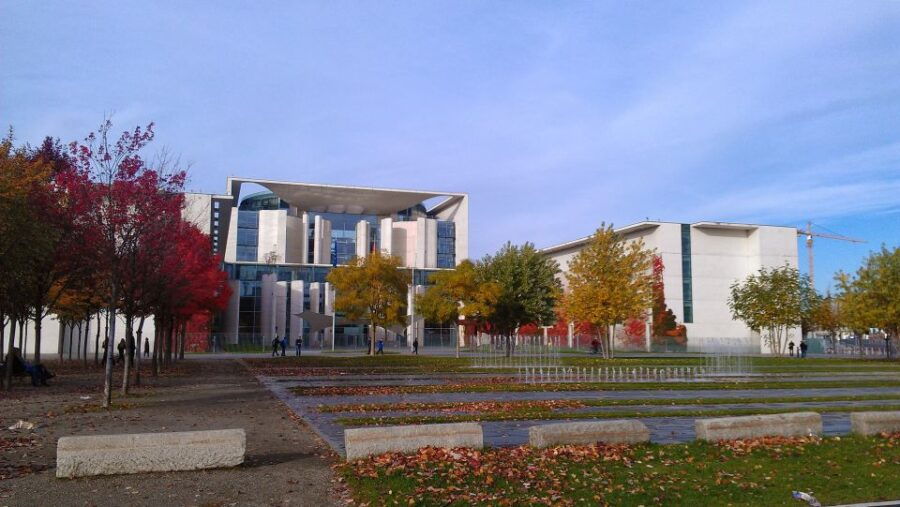
This one ends outside the building, not inside. So why book it? Because if the dome reservations are gone for your week, this is the cleanest way to still walk the political quarter with a knowledgeable guide. Our review explains how to combine it with a separate same-day dome slot if one frees up. Set price for the whole group makes it efficient for families or four-couple trips.
3. Private Reichstag and Glass Dome Tour: $288 for up to six
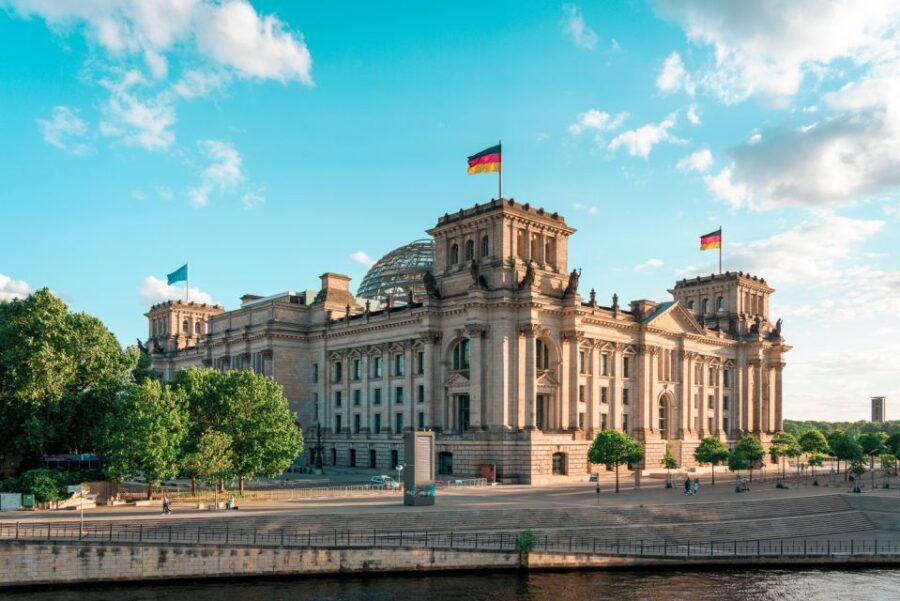
The pace is slower and the guide actually answers questions. At $288 split between six, that’s $48 each, which sits between the budget guided option and the full Bundestag-direct effort. Our review breaks down what’s covered and the small-group dynamic. Worth it for first-timers who want to ask follow-up questions about the fire, reunification, or the architecture.
What You Actually See Inside the Dome
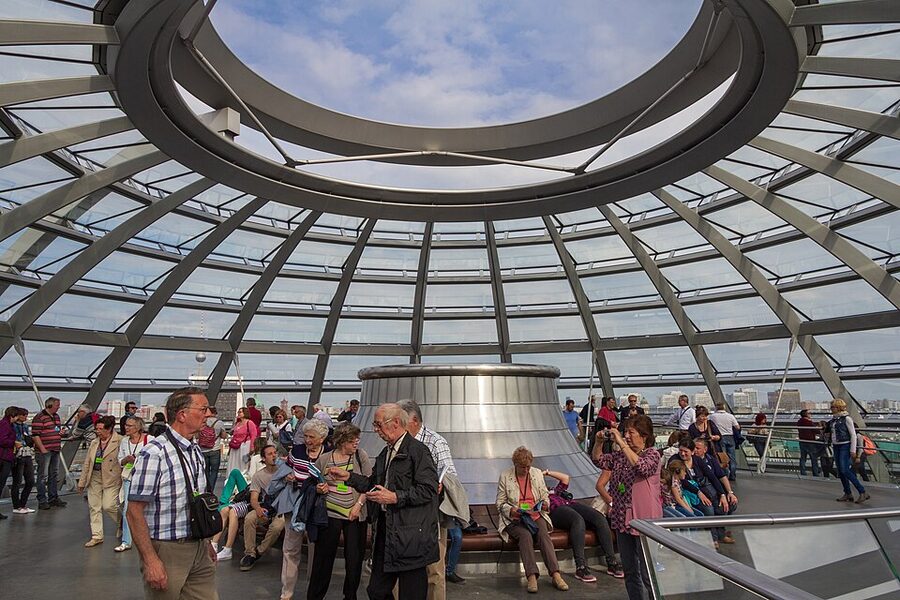
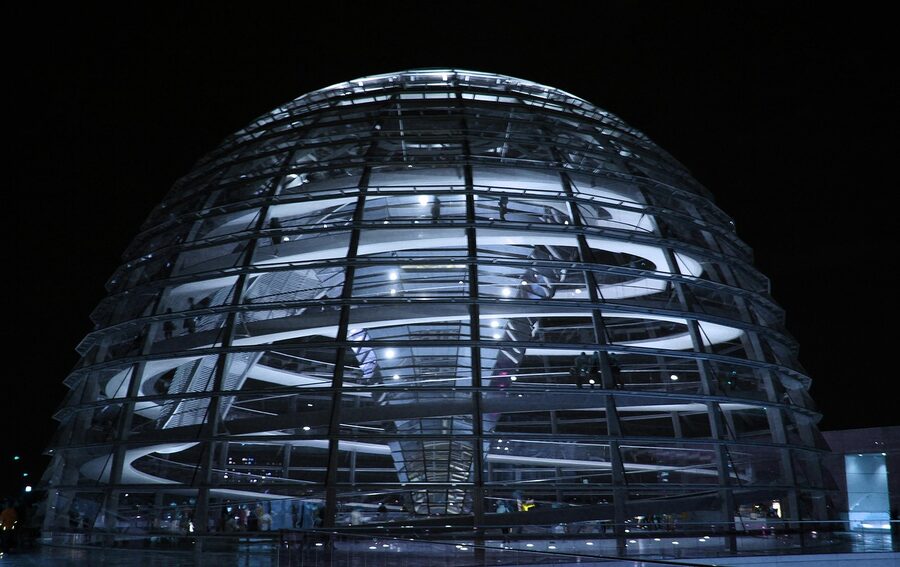
You enter at the rooftop terrace. The dome itself is glass-on-steel, 40 metres across at the base, 23 metres tall. Audio guide is automatic and triggers as you walk past sensors. Available languages: English, German, French, Spanish, Italian, Russian, Japanese, Mandarin, plus several more. It’s clear, well-paced, and not too long.
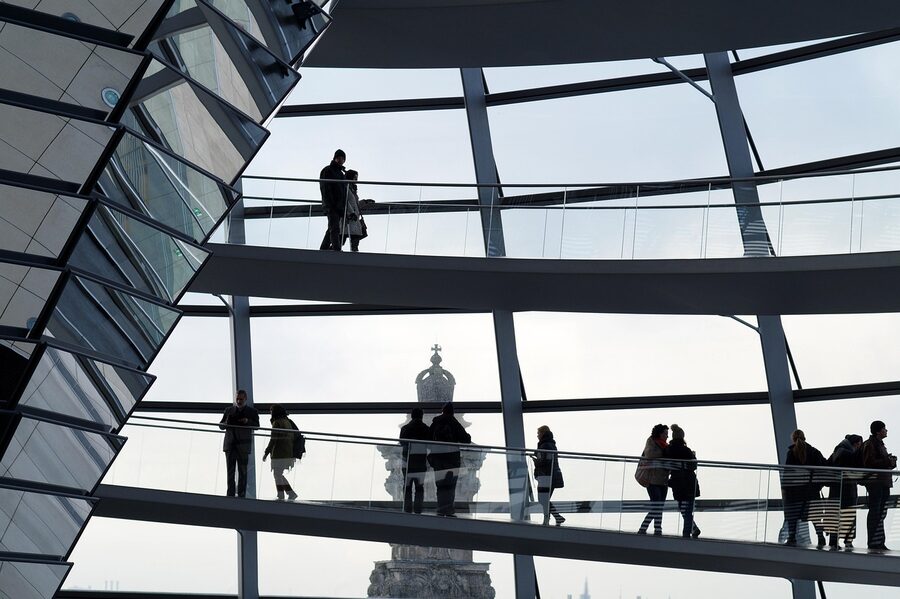
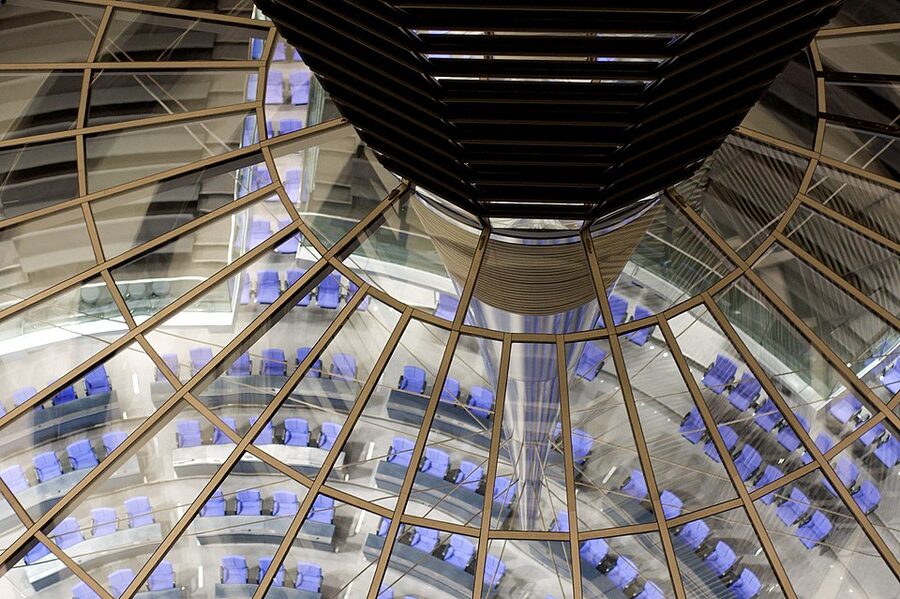
What surprised me on my first visit: you can look straight down through the floor of the cone into the plenary chamber. When the Bundestag is sitting, you can actually watch from above. They sit in a horseshoe of grey-blue seats, the chamber feels smaller than the TV cameras make it look, and the gigantic gold eagle on the wall is huge.
Government Quarter on Foot: What Most Tours Cover
The 90-minute walk before the dome entry is the part most visitors underestimate. Walk it once and the whole post-1990 Berlin reconstruction starts to make sense. The buildings cluster on the Spree’s north and south banks like a deliberate composition.
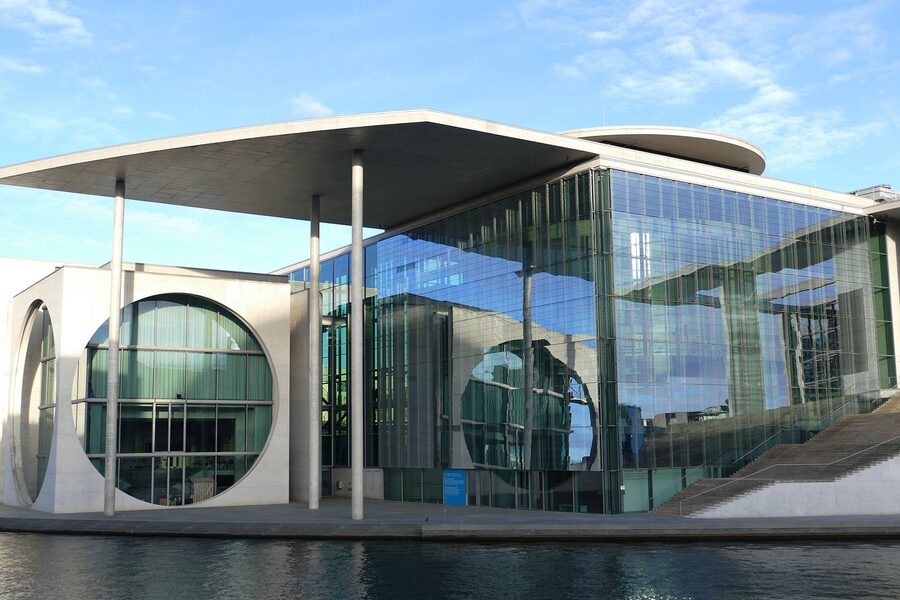
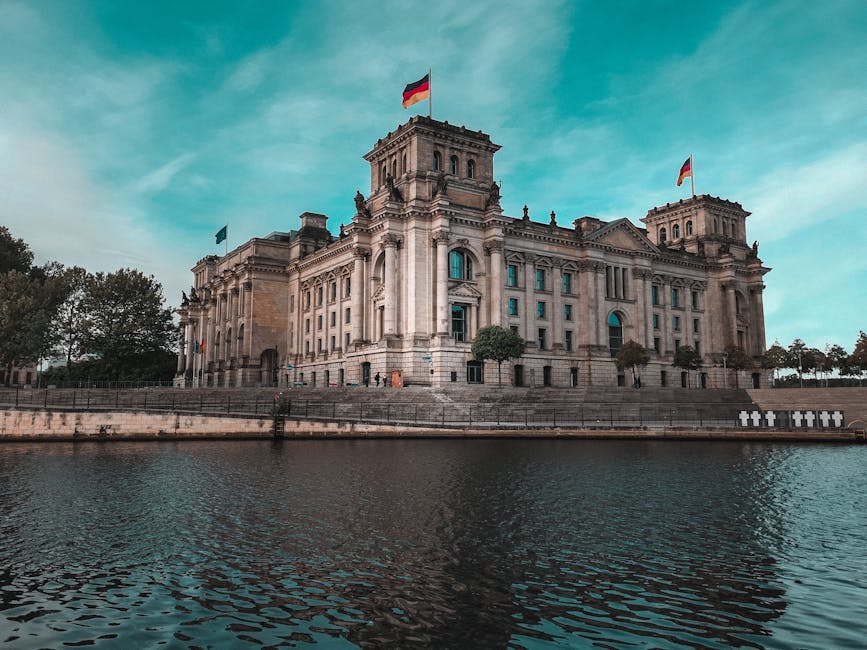
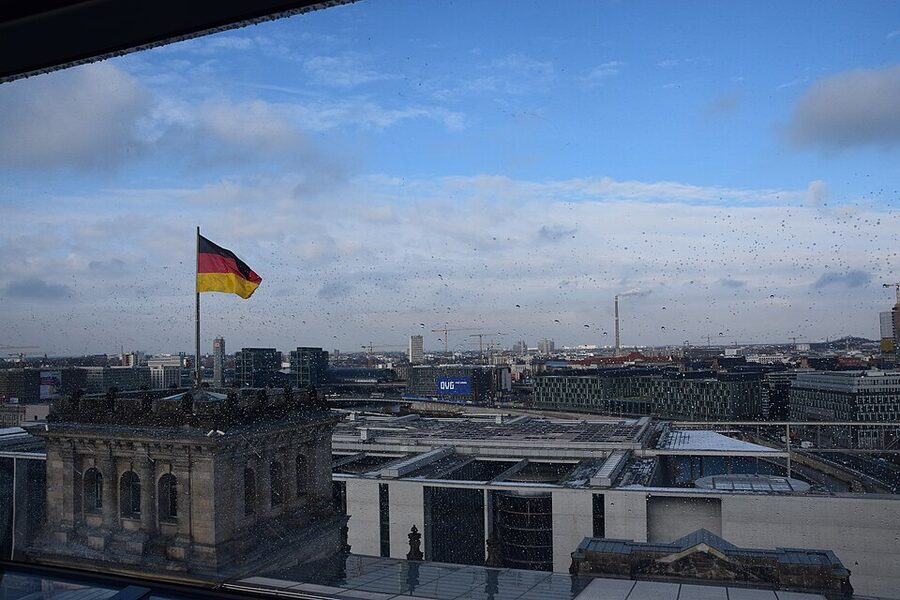
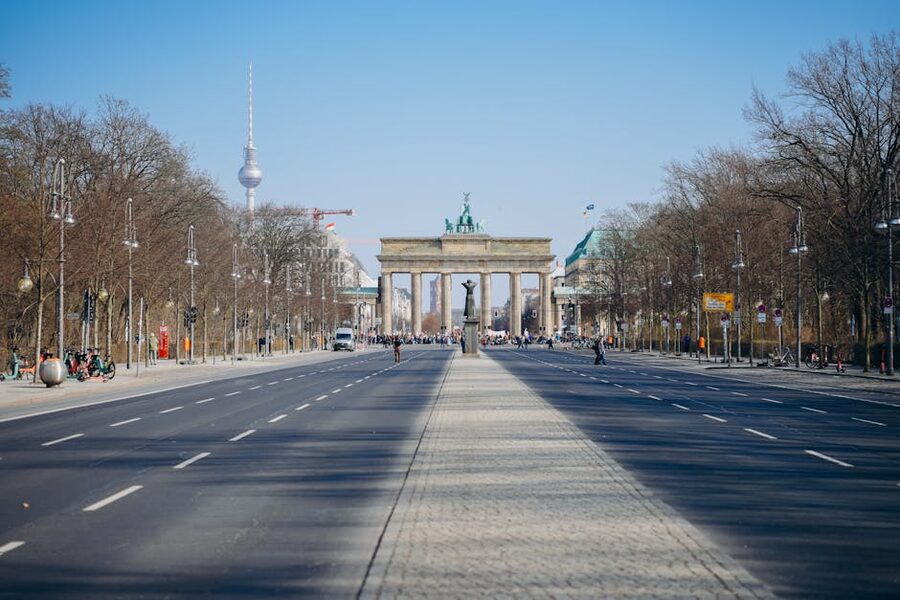
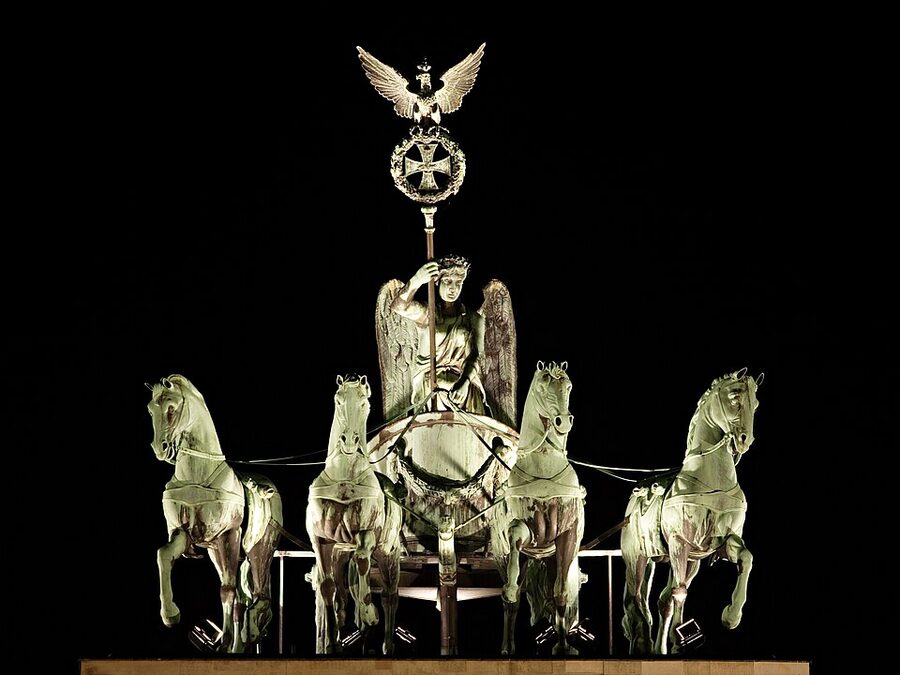
Most guided routes cover six or seven specific stops. Brandenburg Gate (top of the political-symbolism list, the gate Reagan stood at in 1987 and Kennedy avoided in 1963), the Reichstag itself, the Bundeskanzleramt (the Chancellor’s office, locally nicknamed “the washing machine”), the Spree riverside opposite Paul-Löbe-Haus, the Soviet War Memorial in the Tiergarten, and the Holocaust Memorial five minutes south. Some end inside the dome, some outside.
Costs, Timing, and a Few Honest Caveats
The breakdown:
- Dome only via Bundestag.de: free.
- Standard guided tour with dome entry: $18 a head, ~2 hours, group up to about 25.
- Private dome tour: $288 per group of six. Works out to $48 each.
- Government district walk only (no dome): $284 fixed for up to 24 people. Best value if you’ve got a big party.
- Käfer rooftop breakfast or aperitif: bookable separately, more on this below.
A few caveats worth knowing before you commit. The dome is closed roughly two days a year for cleaning, plus occasional state events. Check the calendar before you book non-refundable flights around a specific slot. The visit is uphill: a 230-metre ramp at a gentle gradient, which is fine for most people but no fun in heels or with a stroller. Lifts exist but you have to ask for one at the security desk.
Photography is allowed, no flash needed (the glass throws too many reflections back anyway). Tripods aren’t permitted. Bags above small daypack size go in lockers on the ground floor.
The Käfer Rooftop Restaurant Loophole
Here’s a thing not many guides mention. The Käfer rooftop restaurant sits on the Reichstag terrace, next to the dome entrance. If you book a meal there, you skip the public reservation queue. You still go through the same security but your slot is the dining time, not a tourist allotment.
Three options run regularly: breakfast (around 9:00 to 11:00), an aperitif slot (afternoon), and a sit-down lunch. The aperitif version is the cheapest entry point, basically a glass of sparkling wine and a small plate. After your meal you can walk straight up into the dome with the same security pass.
It’s not the best food in Berlin, frankly. It’s well-prepared restaurant cooking with a captive audience and a very specific view. But if you’ve left dome booking too late and the GetYourGuide group slots are sold out, this is the third path in. Reservations open further ahead than the dome itself.
A Bit of Context the Audio Guide Skips
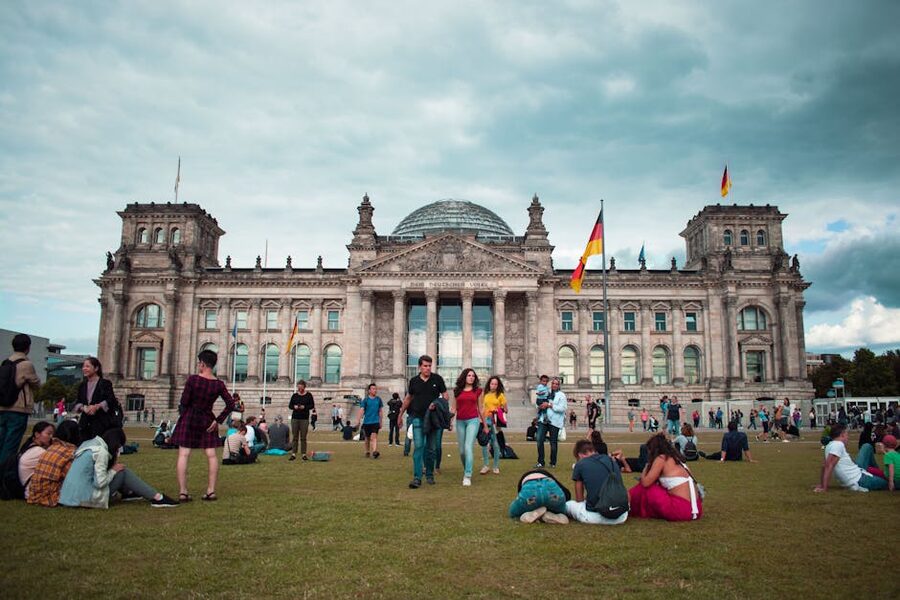
The Reichstag we walk through today is on its third life. The first one opened in 1894 as the seat of the Imperial Diet. The lawn out front is where Philipp Scheidemann declared the German republic from a window in November 1918.
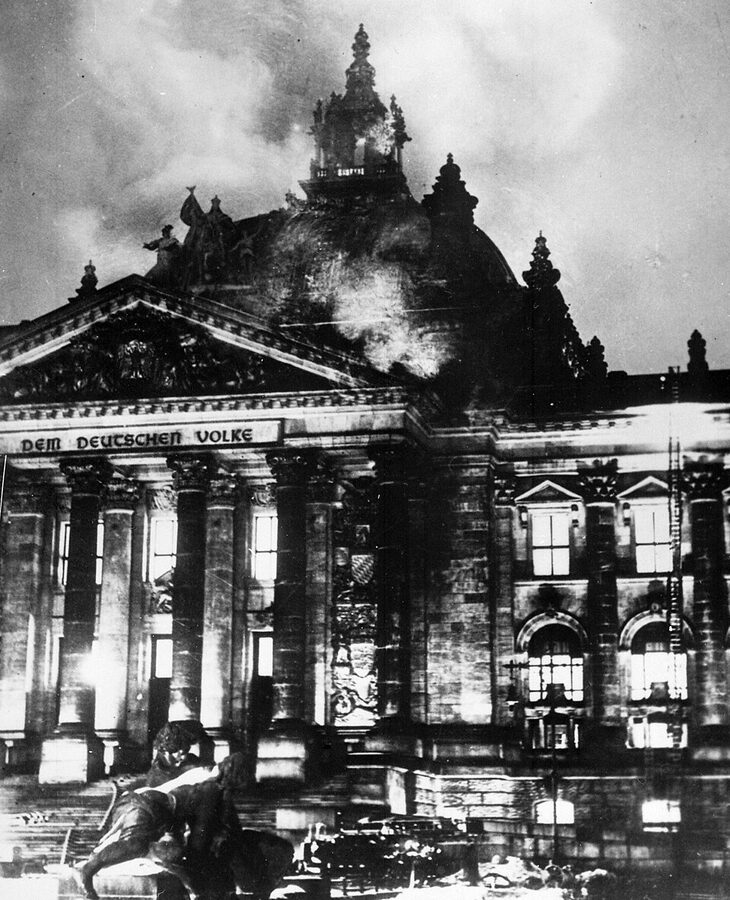
February 1933, the chamber burned. The fire is still debated (was it the Dutch communist who confessed, was it staged) but the political outcome is settled: emergency powers, civil liberties suspended, the path to dictatorship cleared in weeks. The building was a charred shell for the next twelve years.
Then 1945. Soviet soldiers raised the red flag on the roof on May 2nd, 1945, and the famous photo (Yevgeny Khaldei’s, partly staged) became one of the defining images of the Second World War. Walls inside still carry Cyrillic graffiti from those soldiers, deliberately preserved during the 1990s renovation.
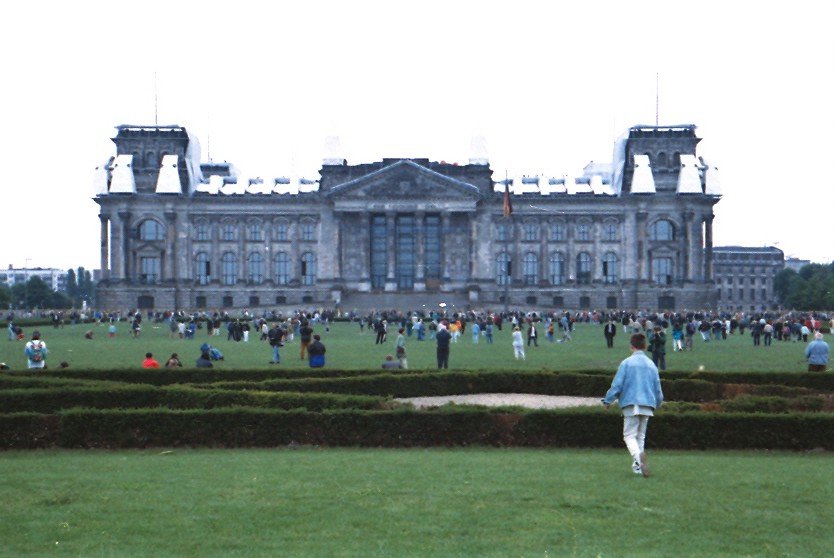
The Christo wrapping in summer 1995 is the underrated chapter. It was the symbolic line between the old building and the renovation, a way to say “everything from before is closed now.” When the fabric came down the construction crews moved in and Foster’s redesign started. The dome went on top in 1999 and the Bundestag moved back from Bonn that same year.
Practical Logistics: Getting There and What to Bring
The closest stations are Bundestag (U5, three-minute walk) and Brandenburger Tor (U5/S1/S2/S25, five minutes). If you’re coming from Hauptbahnhof, walk it. It’s eight minutes along the Spree and the river path is the prettiest approach.
What to bring:
- The exact passport or ID you registered with. They check.
- The reservation confirmation (PDF on phone is fine).
- A daypack at most. Larger bags go in lockers, which adds time.
- Layers. The dome is open-air at the top and Berlin gets cold even in summer evenings.
What to skip: tripods, flash, large camera bags, anything that triggers the metal detector. Security is genuinely thorough, like airport-thorough, but they move quickly.
Booking Strategy by Trip Type
A few patterns from past visits:
Tight schedule, summer: book the flagship guided tour as soon as you have flight dates. Don’t wait. Their group slots fill but they’re also the most plentiful.
Flexible dates, off-season: try the Bundestag.de portal first, free is free. If empty, fall back to the same flagship tour.
Family or small group, want depth: the private dome tour wins. Pace, questions, and the guide adjusts to your interests.
Missed the window entirely: the Käfer breakfast is the back door. Or do the plenary chamber and cupola variant if a slot opens up; that one tends to free up at odd hours.
How the Reichstag Compares to Other Government Buildings I’ve Visited
If you’ve toured Westminster Abbey in London, the Reichstag will feel different. Westminster is medieval ceremony and royal coronations; the Reichstag is post-1989 transparency made into architecture. Different eras, different things being said.
The closer cousin is Holyroodhouse in Edinburgh, where Scotland’s monarch still sleeps and parliament sits next door. There’s a similar tension between old and modern there, but the Scottish version stays explicitly monarchical. Berlin is republican, founded on the rejection of the previous order.
Or Amsterdam’s Royal Palace on Dam Square, which started as a 17th-century town hall and became a palace later, the opposite trajectory. Berlin moved towards transparency, Amsterdam towards ceremony.
If You’re Building a Bigger Berlin Day
The Reichstag is best done as the morning anchor. After the dome, walk south to the Holocaust Memorial (free, ten minutes), then to Brandenburg Gate (five), then either east to Museum Island or west to the Tiergarten. Pair it with the Berlin TV Tower for the contrasting observation deck, the GDR-era sphere at 200 metres versus Foster’s transparent glass cupola. If you want a heavy-history walk, the Third Reich and Cold War walking tour stops at many of the same political sites but goes deeper into the 1933-1989 period. And the Jewish Museum Berlin is the natural counterweight if you want a longer reflection on the same century.