
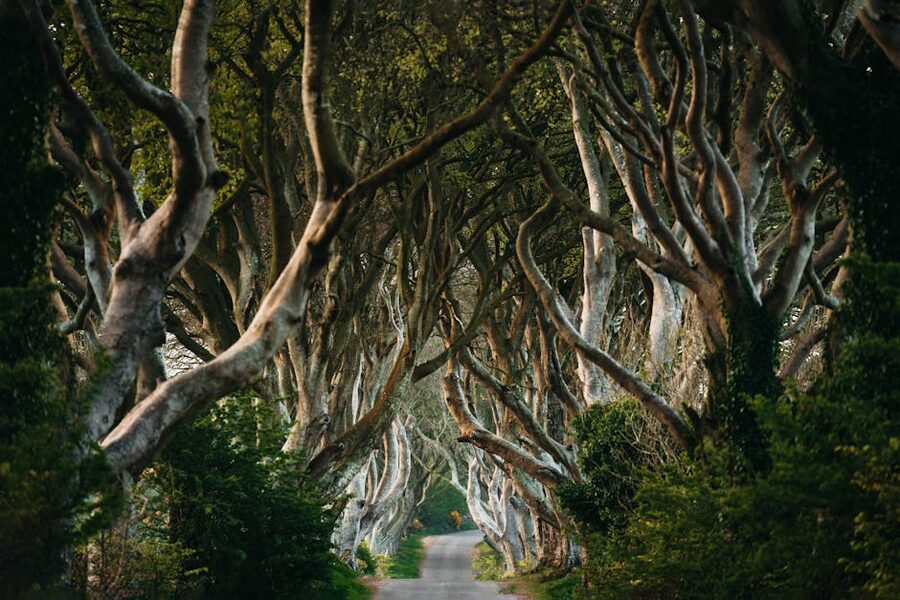
The wind catches the beech canopy and the whole tunnel shifts at once, ten thousand leaves moving in the same breath. I’m halfway down Bregagh Road, golden hour, and the trees that played the Kingsroad in season two of Game of Thrones are doing the thing they do for everyone who walks here. The road tilts. The light slides through. You stop pretending you came for any other reason.
Northern Ireland was the principal filming location for HBO’s Game of Thrones across all eight seasons, from 2011 to 2019. The studios sit on the Titanic Quarter in Belfast. The locations are scattered up the Antrim Coast, down to County Down, and out to Strangford Lough. You can do this DIY in a rental car if you have two days and a tolerance for narrow lanes. Or you can let a guide drive while you stare out the window. Most people pick option two.
Short on time? Here are my top picks:
Best for filming locations: Game of Thrones Film Tour with Giant’s Causeway. $103. Full day from Dublin. Hits Dark Hedges, Cushendun, Ballintoy, plus Giant’s Causeway. The most-booked filming location tour out of Ireland.
Best for the studio: Game of Thrones Studio Tour with Coach Transfer. $57. The official HBO Studio Tour at Banbridge with return coach from Dublin. The actual sets, costumes, and props from the show.
Best for Stark fans: Winterfell Trek from Dublin. $96. Castle Ward and Tollymore Forest with costumes, archery, and direwolves. The most hands-on of the three.
- Booking from Belfast vs Dublin
- The Locations You’ll Actually Visit
- Dark Hedges (the Kingsroad)
- Cushendun Caves (Melisandre’s shadow)
- Ballintoy Harbour (Iron Islands and Pyke)
- Larrybane Quarry (Renly’s camp)
- Carnlough Harbour (Arya as Mercy)
- Murlough Bay (Slaver’s Bay overlook)
- The Studio Tour at Banbridge
- The Tours I’d Actually Book
- 1. Game of Thrones Studio Tour With Coach Transfer from Dublin:
- 2. Game of Thrones Film Tour with Giant’s Causeway from Dublin: 3
- 3. Game of Thrones Winterfell Trek from Dublin:
- Castle Ward and Tollymore: The Winterfell Cluster
- Comparing With Other Screen Tourism in the British Isles
- Practical Booking Tips
- What Belfast Itself Adds
- How Much Time You Need
- What Belfast Locals Actually Think
- More Northern Ireland and Screen Tourism Reading
Booking from Belfast vs Dublin
This is the first thing to sort out, because it changes everything else. Most Game of Thrones tours leave from Dublin. The reason is straightforward: Dublin gets way more international arrivals, the coach companies are based there, and the day trip format works fine because the M1 motorway makes it 90 minutes door to door.
Tours from Belfast exist, but they’re a smaller market. They cost less because there’s no Dublin–Belfast leg. They give you more time on location because you start closer. They tend to be smaller groups. If you’re already in Belfast, this is the obvious move.
Tours from Dublin are longer days, often 11 to 13 hours, and you spend a chunk of that time in transit. The upside: you don’t have to organise getting to Belfast yourself. The companies are well-drilled. Most of them have been running these routes since 2012 and the guides know exactly which laybys give you 20 minutes at the Dark Hedges before the next bus arrives.
If you want to do this properly and you’re not already in Belfast, the cleanest pattern is: train from Dublin Connolly to Belfast Lanyon Place (2 hours, about £25 single), stay one night in Belfast, do the tour the next morning. The Enterprise train is comfortable. Belfast city centre is small enough to walk. There’s also the option of combining this with the Dublin to Northern Ireland day trip if you only have one day to give it.

The Locations You’ll Actually Visit
The standard Game of Thrones day tour out of Northern Ireland hits five or six locations along the Antrim Coast, plus the Dark Hedges inland. Here’s what they are and why each one mattered to the show.
Dark Hedges (the Kingsroad)
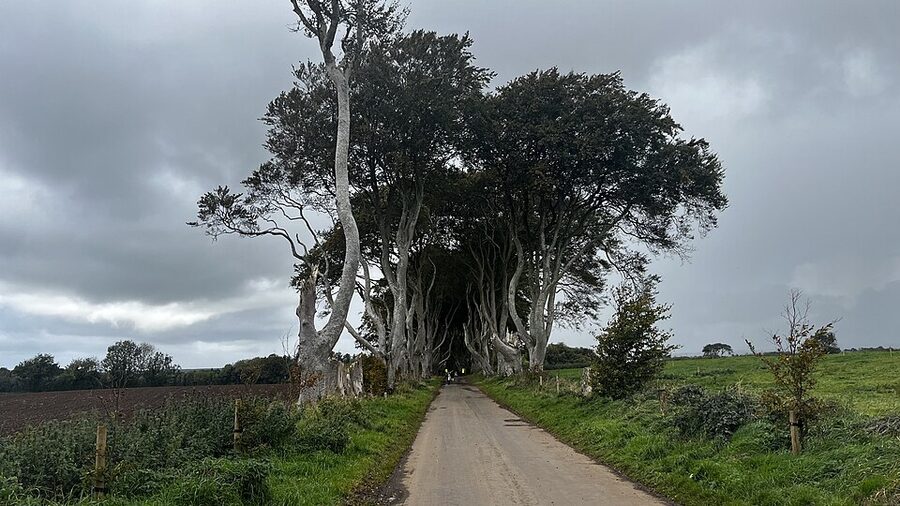
This is the one everyone wants. Bregagh Road, between Stranocum and Armoy, planted around 1775 by the Stuart family of Gracehill House to impress visitors. The trees are about 250 years old now and they’re at the end of their natural life. Fewer than 90 of the original 150 are still standing.
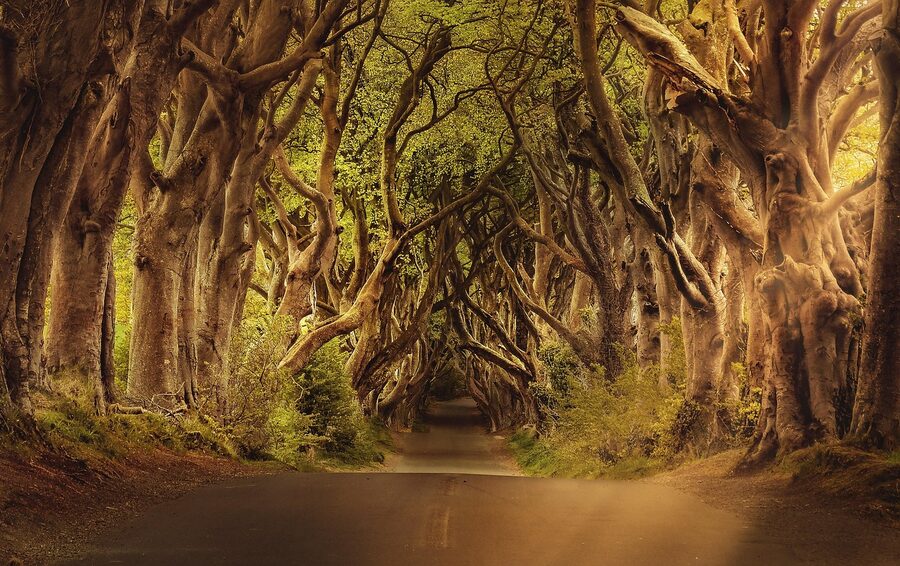
The show used the road as the Kingsroad, the highway running south from the Wall to King’s Landing. Arya Stark walked here in season two episode one, dressed as the boy “Arry” and hiding from Lannister soldiers. It’s about 30 seconds of screen time. It built the location’s reputation.
Practical: there’s a free car park about 200 metres south at Hedges Estate. The road itself is closed to vehicles. Allow 20-30 minutes. The trees photograph best at golden hour or when there’s mist, which in Northern Ireland means most mornings.
Cushendun Caves (Melisandre’s shadow)
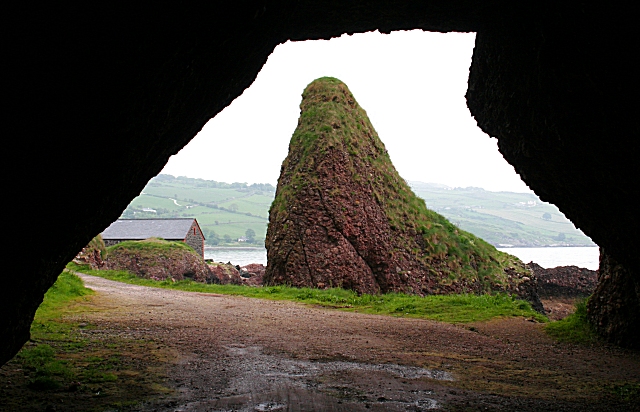
Cushendun is a small village 20 minutes north of Glenarm on the Antrim Coast Road. The caves are at the south end of the beach, about 5 minutes’ walk from the village green. They’re the location for season two episode four, where Melisandre births the shadow assassin that kills Renly Baratheon. The scene is shot mostly in close-up so the cave geometry doesn’t read on screen, but you’ll recognise the layered red sandstone walls immediately.
The village itself is worth the stop. National Trust owns most of the cottages on the green. There’s one pub, Mary McBride’s, which claims to be the smallest in Ireland and serves a decent pint of Guinness. Free parking next to the beach.
Ballintoy Harbour (Iron Islands and Pyke)
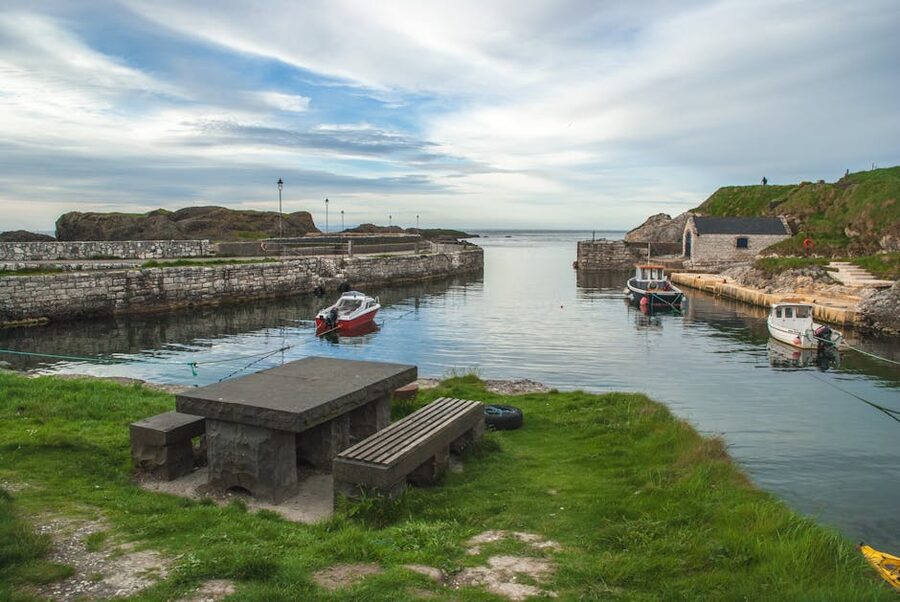
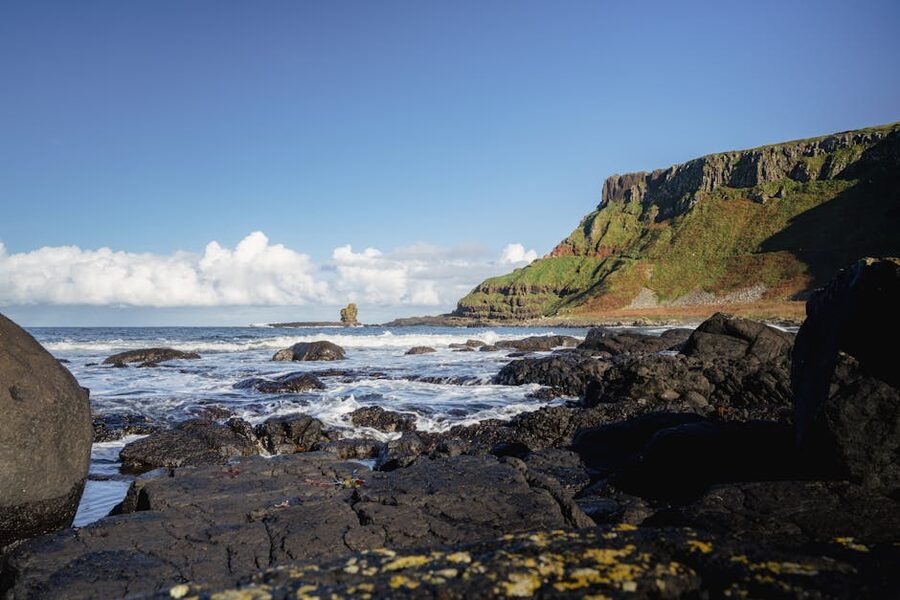
If you watched Game of Thrones, you spent more time at Ballintoy than you realise. It plays Lordsport Harbour, the port at Pyke where Theon Greyjoy returns to the Iron Islands in season two. The black volcanic rocks on either side of the harbour are exactly what the showrunners wanted for the Iron Islands aesthetic: bleak, hard, salt-sprayed, the kind of place where people drink seawater and worship a drowned god.
The harbour itself is tiny. A handful of fishing boats, one slipway, a small car park. You can walk out onto the rocks at low tide. The cottage at the top of the harbour was used in interior shots. There’s a tea shop in the old boat house in summer; closed October to March.
Larrybane Quarry (Renly’s camp)
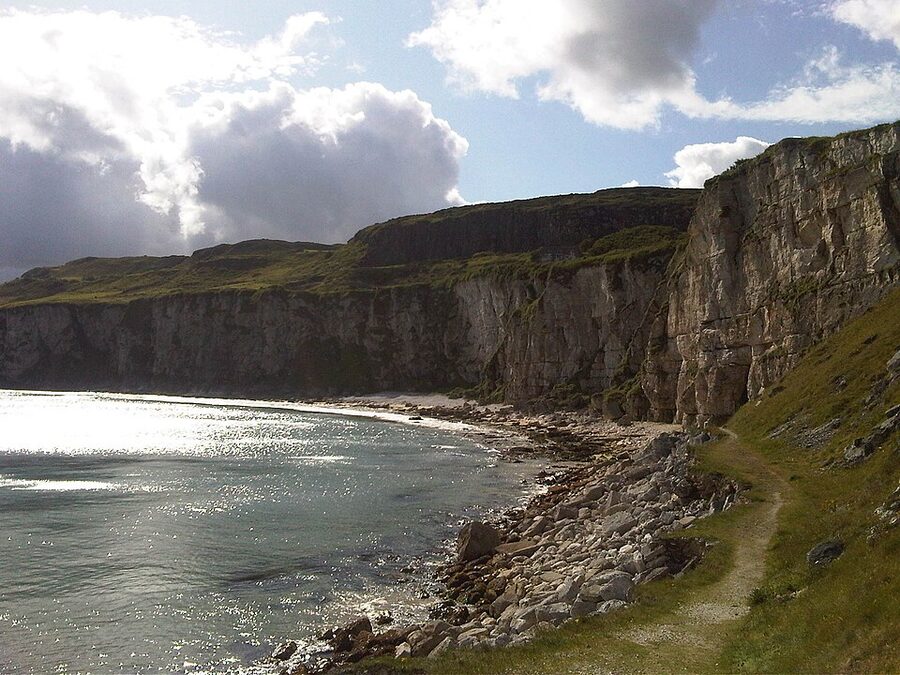
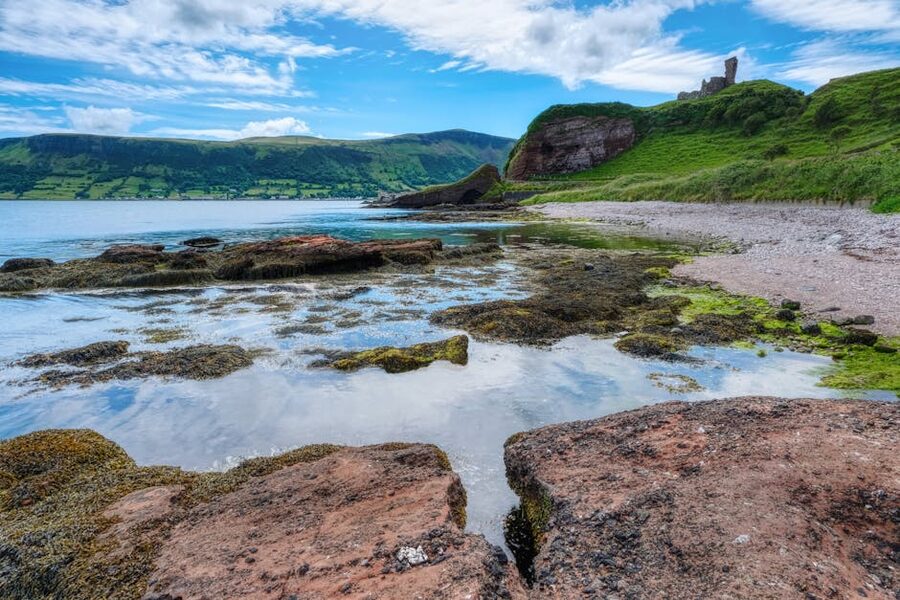
Larrybane is a chalk quarry between Ballintoy and Carrick-a-Rede. The flat field above the cliffs was used as Renly Baratheon’s camp in season two episode three: the scene where Brienne of Tarth defeats Loras Tyrell in the melee and gets named to Renly’s Kingsguard. It’s also the cliff edge where Catelyn Stark meets Renly later in the season.
The location reads better in person than on screen. The chalk walls are 80 metres high. The grass is the kind of impossibly bright green you only get in places that get rained on 200 days a year. National Trust owns the site and there’s a small fee to access the quarry edge (currently £3 for non-members). Allow 20 minutes minimum.
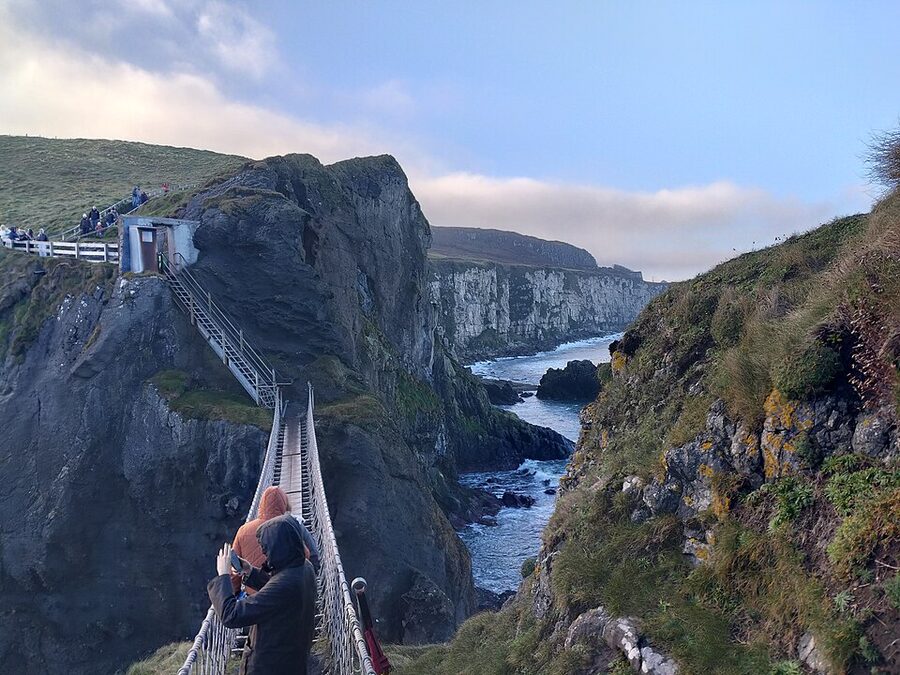
Carnlough Harbour (Arya as Mercy)
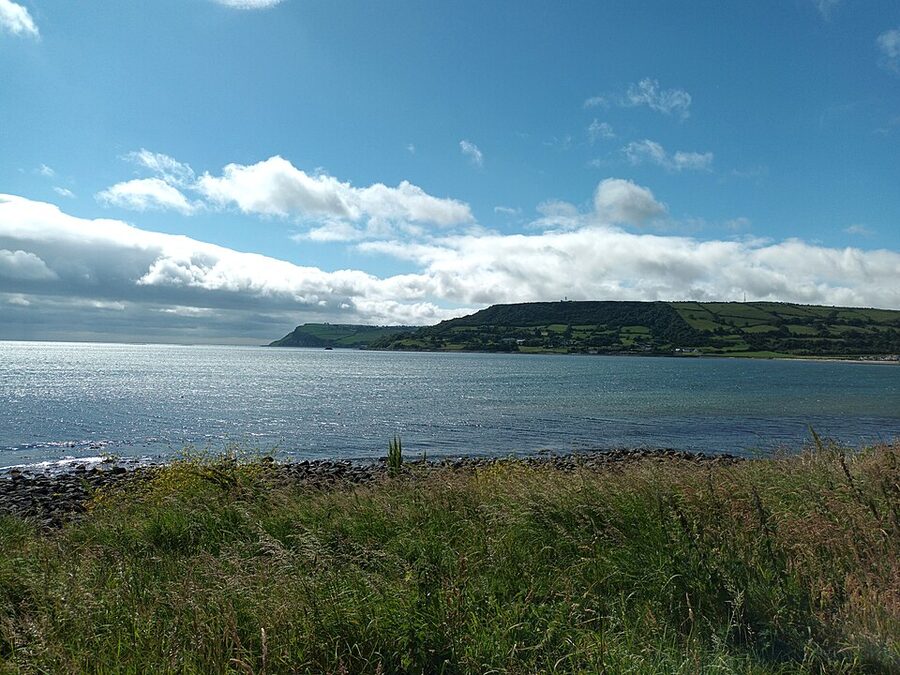
Carnlough is a fishing village on the Antrim Coast, halfway between Larne and Cushendun. The harbour was used in season six episode eight, where Arya, having been stabbed by the Waif, drags herself out of a canal in Braavos. The “canal” is the harbour. The stone steps she climbs are real and they’re at the south side.
This is one of the lower-effort stops on the tour. You’re there for the steps, you take the photo, you grab a coffee from the Stop Inn cafe across the road. The Londonderry Arms hotel was reportedly Winston Churchill’s ancestral property; the bar inside has a few HBO photos on the walls. Worth a look if your tour gives you 30 minutes.
Murlough Bay (Slaver’s Bay overlook)
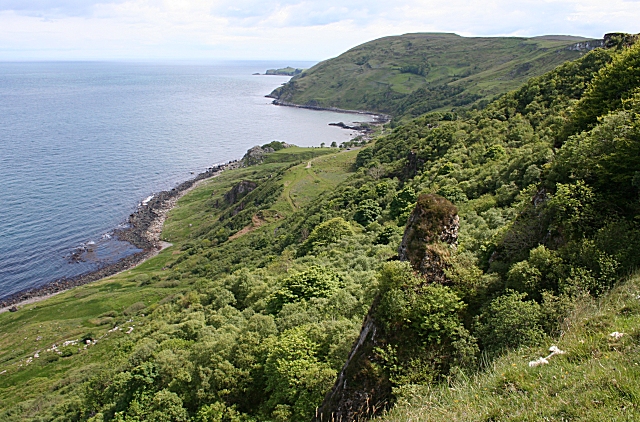
Murlough Bay sits on the headland between Ballycastle and Fair Head. The clifftop above the bay was used multiple times across the series, most notably as the spot where Tyrion and Jorah first see Slaver’s Bay in season five. It also doubled as the location where Theon and Yara escape after attacking Pyke.
This stop is weather-dependent. On a clear day you can see Rathlin Island, the Mull of Kintyre in Scotland, and on really clear days the Paps of Jura. On a wet day you can see the inside of your hood. Both are valid Game of Thrones experiences.
The Studio Tour at Banbridge
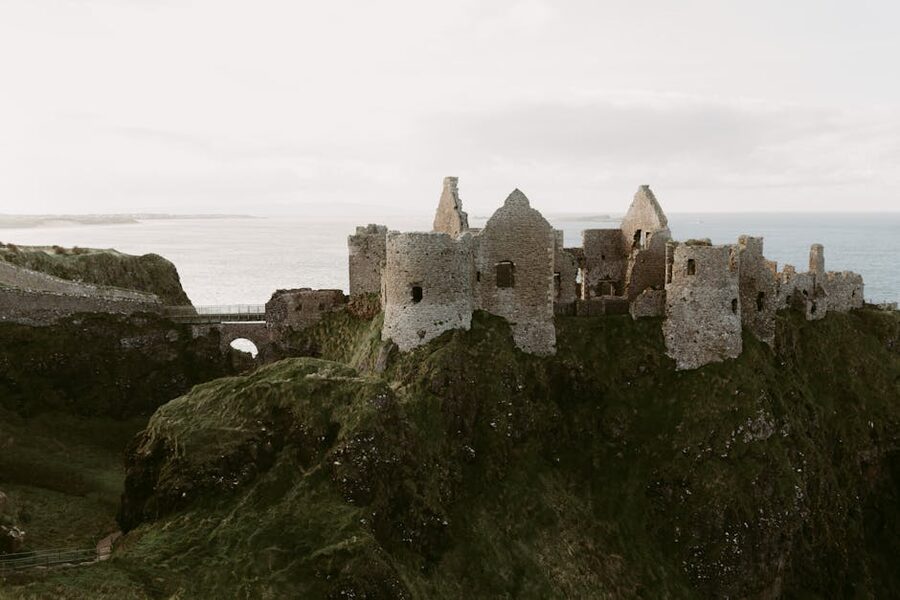
The Game of Thrones Studio Tour opened in February 2022 at the Linen Mill Studios in Banbridge, about 40 minutes south of Belfast. It’s the official HBO experience: 110,000 square feet of original sets, costumes, props, and weapons. This is where you stand inside the actual Iron Throne room, walk through the Stark crypts, and see the Night King’s costume close enough to count the icicles.
It’s not a filming locations tour. It’s a museum. You’re not on the Antrim Coast, you’re in a converted linen mill in County Down. But the production quality is high (HBO didn’t cut corners), and for serious fans it covers things the location tours can’t: how the costumes were made, how Drogon was animated, the actual Daenerys–Jon Snow throne room scene set, complete with original walls.
Allow 2 to 3 hours inside. There’s a cafe but the food is overpriced; eat in Banbridge town centre before or after. Tickets sell out 3 to 4 weeks ahead in summer. Combo tours from Dublin include the coach transfer, which is the simplest way to do it if you don’t have a car.
The Tours I’d Actually Book
I’ve sorted through what’s available out of Belfast and Dublin. The shortlist below is what I’d book if I were planning this trip myself, in order. Three tours, each doing a different thing. Pick based on what you actually want.
1. Game of Thrones Studio Tour With Coach Transfer from Dublin: $57

This is the official HBO Studio Tour at Banbridge plus return coach from Dublin, and it’s the most-booked Game of Thrones tour out of Ireland for a reason. Our full review covers what you actually see inside the studio. At 6.5 hours total it’s also the shortest day, which matters if you’re trying to fit other Dublin sightseeing into the same trip. Best for serious fans who want the props and the costumes over the landscape.
2. Game of Thrones Film Tour with Giant’s Causeway from Dublin: $103
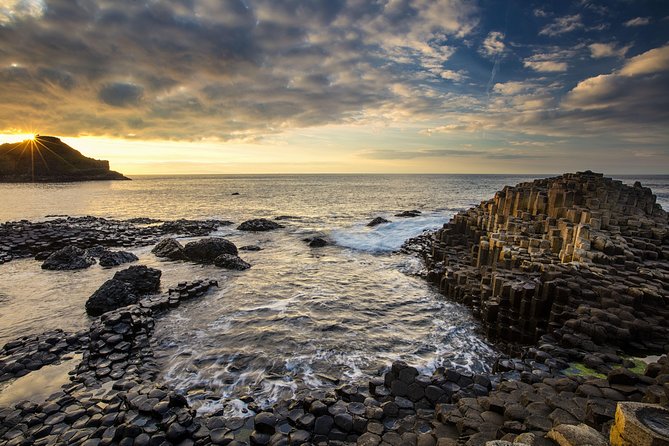
If you want the filming locations and you don’t want to come back for the Causeway separately, this is the answer. Our review breaks down which locations are included by season. Expect Dark Hedges, Cushendun, Ballintoy or Carnlough, and the Causeway itself. 13 hours from Dublin makes for a long day on the coach, but the route is well-paced and the guides are usually GoT obsessives. Pick this if you’re a fan of the show but also a fan of Northern Ireland scenery.
3. Game of Thrones Winterfell Trek from Dublin: $96
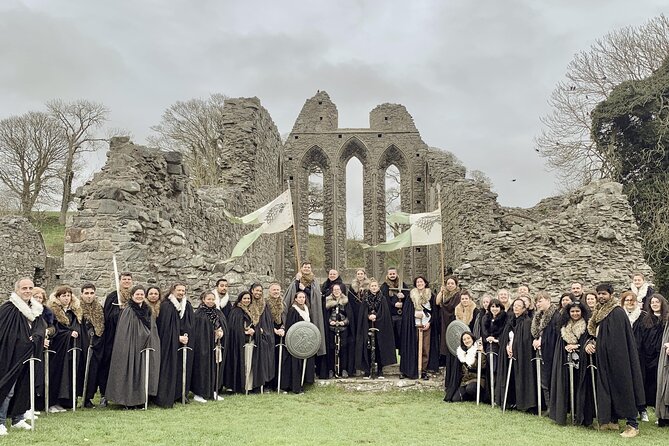
Different beast. This one focuses on Castle Ward and Tollymore Forest, the locations that played Winterfell and the surrounding Stark lands. The activities are the differentiator: archery range from the pilot episode, costumes you actually wear, and (depending on the day) a meet with two Northern Inuit dogs that played the Stark direwolves. Our review goes into what’s included in the gear. Best for hardcore Stark fans and groups who want a memorable photo shoot.
Castle Ward and Tollymore: The Winterfell Cluster
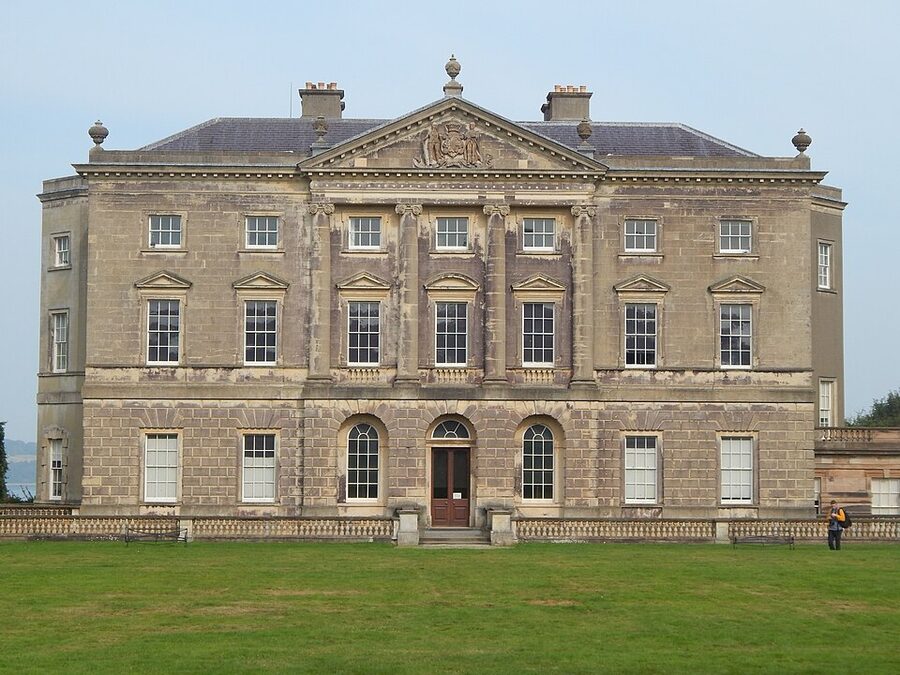
Castle Ward and Tollymore Forest are the two locations you won’t see on a standard Antrim Coast day tour out of Belfast. They’re on the wrong side of Belfast for the route, sitting south in County Down rather than north along the coast. To do them properly you either book the dedicated Winterfell Trek or you organise a separate day.
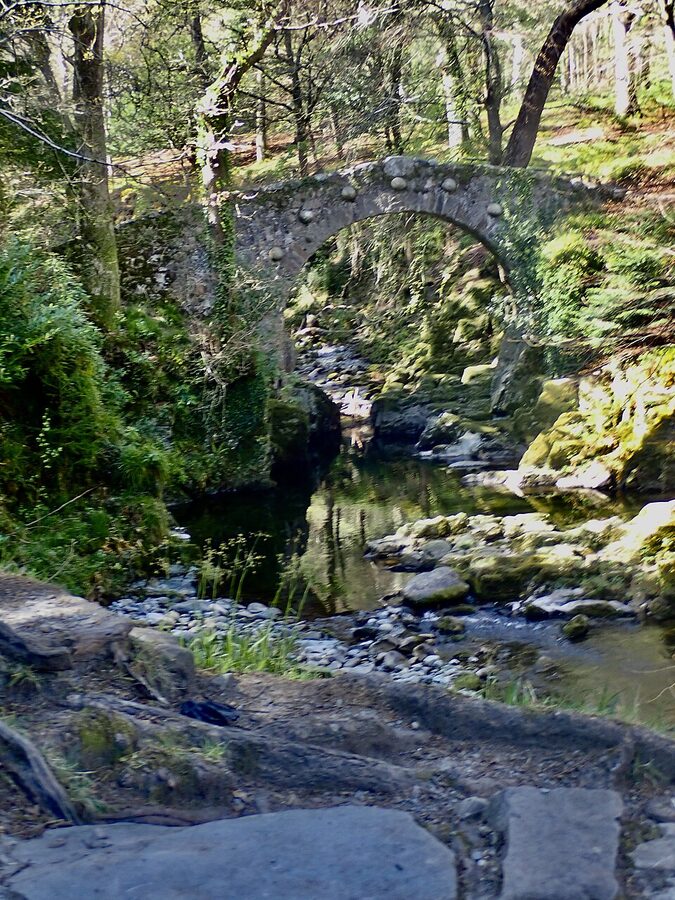
If you’re driving yourself, here’s how it works. Castle Ward is a 90-minute drive south from Belfast through Downpatrick. The estate has the Winterfell archery range as a permanent attraction (they keep the targets up year-round) and you can rent costumes by the hour. Tollymore Forest is another 30 minutes south, near the Mourne Mountains. The Stark direwolves are “discovered” near a small wooden bridge in the pilot; the same bridge is still there.
Comparing With Other Screen Tourism in the British Isles
Game of Thrones in Northern Ireland sits inside a wider screen tourism circuit. If you’ve already done the others, or you’re planning to, here’s how it lines up.
The closest cousin is Hogwarts Express country in the Scottish Highlands. The Edinburgh Glenfinnan and Glencoe day trip takes you to the actual viaduct used in the Harry Potter films, plus Glencoe (which doubles for Hogwarts grounds and several Skyfall scenes). Same vibe, different fandom: a tour built around the cinematic landscape rather than the studios. The viaduct does what the Dark Hedges does. People queue, the train passes, everyone gets the shot.
If your interest is the studio side rather than the locations, the closest analog is the Warner Bros. Studio Tour from London. WB Leavesden has 25 years of Harry Potter sets, costumes, and props laid out the same way the GoT studio at Banbridge displays GoT. The two studios were built by the same production company effectively, and the design language is similar. If you’ve done WB Leavesden and loved it, the Banbridge tour will land.
For the proper urban screen-tourism experience, the London Harry Potter walking tour covers Diagon Alley locations (Leadenhall Market), Platform 9 3/4 at King’s Cross, and various street locations used in the films. That’s a city walking tour, not a coach day. Different format, same instinct.
Practical Booking Tips
A few things worth knowing before you click book.
Pick your tour type first, not your departure city. If you want the studio, book the studio. If you want the locations, book the locations. Some tours combine them poorly and end up rushing both. The dedicated tours are better at what they do.
Book the studio tour separately if you can. The HBO Studio Tour at Banbridge sells direct tickets that are cheaper than the combo coach packages. If you have a car or you’re already in Belfast, drive there yourself and skip the coach add-on. The tickets alone are about £39.50 adult.
Avoid weekends in summer. The Antrim Coast Road is the main tourist route in Northern Ireland. Saturday and Sunday in July and August, you’ll spend more time in coach traffic than at locations. Book a Tuesday or Wednesday departure if you can.
Wear actual walking shoes. Several locations involve uneven cliff paths, wet rocks, or muddy fields. Trainers are fine for the Studio Tour. For the location tours, anything closer to a hiking shoe is better.
Bring snacks for the long day tours. The 13-hour Dublin combo tours stop for lunch but the lunch options at the chosen pub are typically average and not cheap. A sandwich and water from a Dublin Spar before you board saves you time and money.
The Iron Islands focus tour is real but rare. A handful of operators run Ballintoy + Murlough Bay + Cushendun-only days for hardcore Greyjoy fans. They’re smaller groups and they spend longer at each location. Worth the search if Theon’s arc is what got you here. The standard day tours include all three but only briefly.
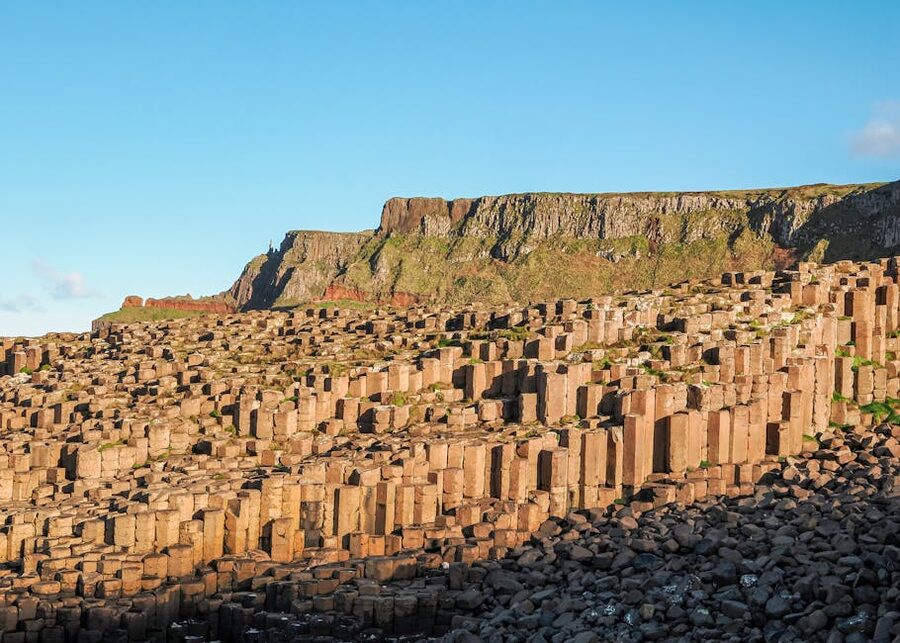
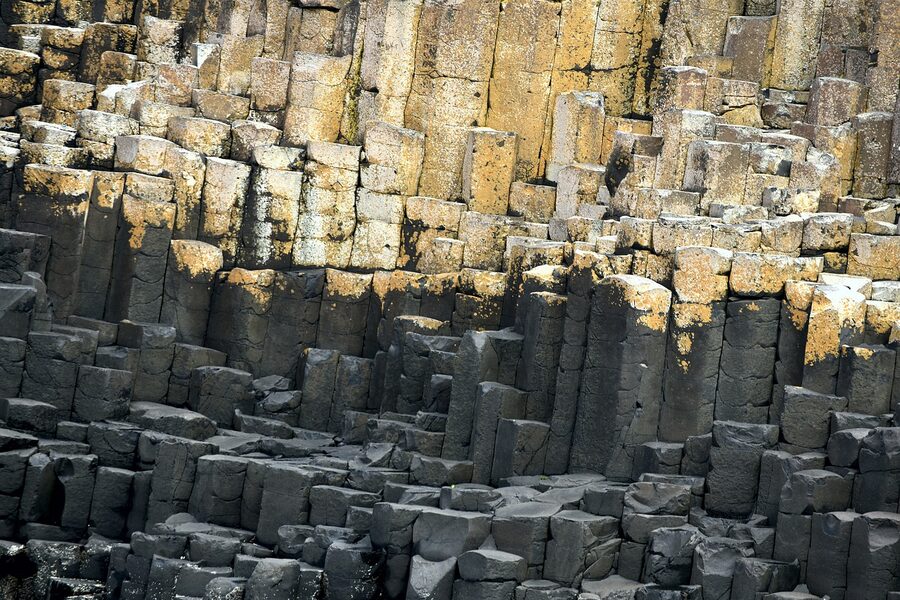
Combine with the Causeway if you can. The Cliffs of Moher are Ireland’s most-booked natural attraction by some distance, but the Giant’s Causeway is the Northern Ireland equivalent and it’s right next to Ballintoy. Most location tours include it. The two coastlines are very different, and seeing both gives you a complete picture of what the island looks like.
What Belfast Itself Adds
If you’ve made it to Belfast for the Game of Thrones tour, the city deserves more than a single overnight. Two nights gives you the GoT day plus a proper look at the rest of what’s here.
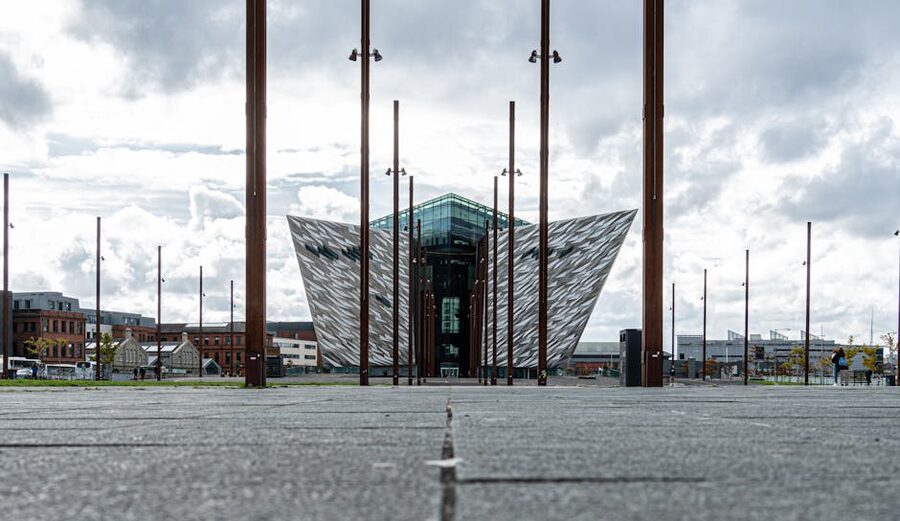
The Titanic Quarter is the obvious second day. The shipyard that built the Titanic is the same shipyard that became HBO’s principal Game of Thrones studio. The slipways are still there. The pump house where the ship was prepared is now a museum and restaurant. Titanic Belfast sits on the original slipway and is a separate booking project worth its own day. Good cluster with the GoT tour.
The other Belfast experience that pairs well with screen tourism is the political taxi tour. Belfast was a city at war for 30 years, and the murals, the Peace Wall, and the divided neighbourhoods are still here. It’s the opposite of a Game of Thrones day in tone: real history, recent enough that the drivers usually lived through it. Most visitors do both. The contrast between fictional violence rendered as set design and actual conflict rendered as wall paint is one of those things you only get from being here.
How Much Time You Need
One full day from Belfast covers the studio. One full day from Dublin covers the studio plus an early-morning coach, both ways. Two days from Belfast covers the location tour plus the studio if you book them on consecutive days.
Three days is the sweet spot if you’re a serious fan. Day one: location tour (Dark Hedges, Antrim Coast harbours, plus Giant’s Causeway). Day two: studio tour at Banbridge. Day three: Castle Ward and Tollymore on your own or via the Winterfell Trek tour. That’s the complete circuit and it’s how I’d plan it for someone who flew in just for this.
The full extended version would add a fourth day for an Iron Islands focus tour and quiet time at Ballintoy, plus a couple of evenings in Belfast pubs in the Cathedral Quarter. Five days for the full pilgrimage is not unreasonable, and the cost difference between a 3-day and a 5-day trip in Belfast is small because the city is cheap by UK standards.
What Belfast Locals Actually Think
Worth saying. Game of Thrones tourism brings a lot of money to Northern Ireland (HBO estimates the show generated around £250m for the local economy across nine years), and Belfast is generally happy about it. The studio at Banbridge employs hundreds of locals. The tour operators are mostly local companies. The merch stalls at the Dark Hedges are mostly run by farms whose land borders the road.
That said, ask any Belfast taxi driver about Game of Thrones tourism and you’ll get a knowing smile. The show ended in 2019. The city is moving on. The tourism is still huge, but the local pride has settled into something more pragmatic. The tour is a tour. The Dark Hedges are trees. The coast is the coast, and it was always the coast, before the show and after it. The best thing about doing this trip is that if you let yourself, you start to see Northern Ireland through the lens of the place itself rather than the show. That’s the part most people don’t expect.
More Northern Ireland and Screen Tourism Reading
If you’re planning a longer trip, three more booking guides on this site are worth a look. The Titanic Belfast tickets guide covers the museum next door to the Game of Thrones studios. The Belfast political taxi tour is the obvious second booking for any Belfast trip and the perfect counterweight to a day spent in Westeros. And if you’re combining this with screen tourism elsewhere, the Glenfinnan Viaduct day trip from Edinburgh is the closest direct cousin out of Scotland.