Tokyo’s giant torii gates and Kyoto’s mountain of red shrine gates make a striking pair. This five-day tour links both cities by bullet train, with guided visits to major sights and two nights in each city. You get the famous views, plus context for what you’re seeing.
I like that the Shinkansen and listed attraction admissions are included, so you can spend less time sorting out intercity transport and entry tickets. I also like the small-group limit of 16, which can make a guided day feel more manageable than a large coach excursion.
The trade-off is a packed schedule, especially in Kyoto, where several major sites and historic streets share one day. And while the Keisei Skyliner appears among the highlights, airport transfers are excluded, so confirm whether that train fare is included before you count on it.
- Key points to know before booking
- Two cities, five days, and little time to waste
- Day 1: Arrive in Tokyo and get your bearings
- Day 2: Meiji Shrine, Shibuya, Asakusa and Tsukiji
- Day 3: Ride the Shinkansen to Kyoto
- Day 4: Kyoto’s torii gates, temple slopes and Gion
- Day 5: Continue to Osaka on your own
- What the price includes, and what it does not
- Who should book this tour?
- FAQ
- How long is the tour?
- Where does the tour start?
- Where does the tour end?
- Is the Tokyo to Kyoto bullet train included?
- Are airport transfers included?
- Is the Keisei Skyliner included?
- How many breakfasts are included?
- What is the maximum group size?
- What language is the tour guided in?
- Are there any age requirements?
- The Best Of Tokyo!
- More 5-Day Experiences in Tokyo
- More Tours in Tokyo
- More Tour Reviews in Tokyo
- Not for you? Here's more nearby things to do in Tokyo we have reviewed
Key points to know before booking
 1 / 7
 2 / 7
 3 / 7
 4 / 7
 5 / 7
 6 / 7
 7 / 7
- Two nights in Tokyo and two in Kyoto: A fast introduction to both cities, not an in-depth stay.
- The Tokyo to Kyoto Shinkansen is included: The journey takes about two and a half hours.
- Groups are limited to 16: English-speaking guiding and a small-group format are part of the package.
- Four breakfasts are included: Other meals, international flights and airport transfers are not.
- Kyoto’s fourth day is a full sightseeing day: Expect temple visits, sloped streets and plenty of walking.
- The tour ends in Kyoto, not at Osaka airport: Arrange your own onward transport unless you book an optional private transfer.

👉 See our pick of the 25 Best Guided Tours In Tokyo
Two cities, five days, and little time to waste
This tour is built for a first visit. It pairs Tokyo’s modern city sights with Kyoto’s temples, shrines and traditional districts, then points you toward Osaka at the end. You cover a lot, but the plan is straightforward: arrive in Tokyo, tour the city, take the bullet train west, spend two days in Kyoto, and make your own way onward.
The price starts at $1,669. That buys four hotel nights, four breakfasts, an English-speaking guide, listed attraction admissions and transport between tour stops, including the Shinkansen. It can be good value if you want a structured introduction and would otherwise arrange those pieces separately. It is less useful if you prefer long, unscheduled visits or want a leisurely pace.
The listed hotels are four-star options, with accommodation based on two people sharing. Shibuya Excel Hotel Tokyu and Kyoto Tokyu Hotel are named as the default choices, but equivalent hotels may be substituted if they are full. The package describes the hotels as centrally located, with convenient transport and nearby restaurants. Ask for the confirmed hotel details before departure, since the specific hotel is provided three days beforehand.
UME Travel has an operator rating of 4.8 out of 5 across 224 reviews on TourRadar. That is a broader company rating, not a score for this exact five-day trip, so treat it as useful background rather than a guarantee of how your departure will run.
You can also read our reviews of more tours and experiences in Tokyo


Day 1: Arrive in Tokyo and get your bearings
Your first day is deliberately light. You make your own way to the Tokyo hotel, check in and rest before meeting the group. That breathing room matters after a long flight, and it keeps the tour from demanding a full day of sightseeing on arrival.
The package names the Keisei Skyliner from Narita as a highlight, but airport transfers are explicitly excluded. The arrival instructions say to reach the hotel independently, and a private pickup can be arranged for an extra charge. Before booking, ask UME Travel whether a Skyliner ticket is included or whether you should buy it yourself. Do not assume that the highlight means a transfer is part of the price.
The first hotel is listed as Shibuya Excel Hotel Tokyu, subject to availability. Its Shibuya location gives you a convenient base for the next day’s city tour. If you arrive early, keep the evening simple: recover, eat nearby and save your energy for the guided sightseeing.
Day 2: Meiji Shrine, Shibuya, Asakusa and Tsukiji
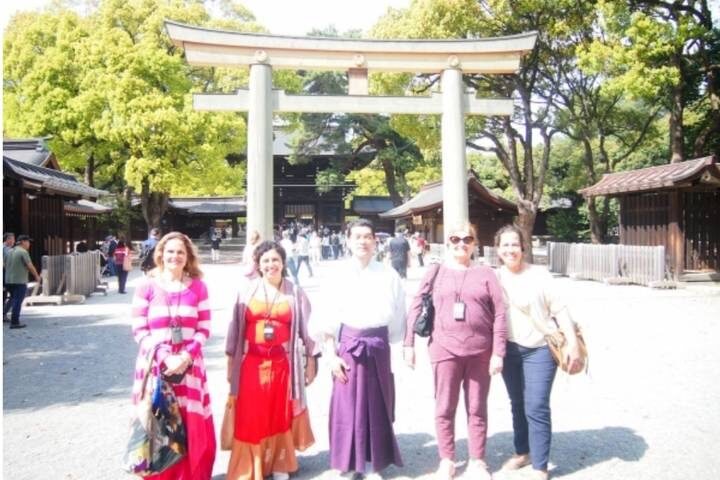
The Tokyo day moves from a quiet shrine approach to some of the city’s busiest streets. At Meiji Shrine, a large wooden torii marks the entrance to a wooded setting in the middle of the capital. The shift from city noise to a calm shrine path is part of the appeal. Your guide can explain the shrine’s connection to Emperor Meiji and Empress Shoken and the role of the torii gate.
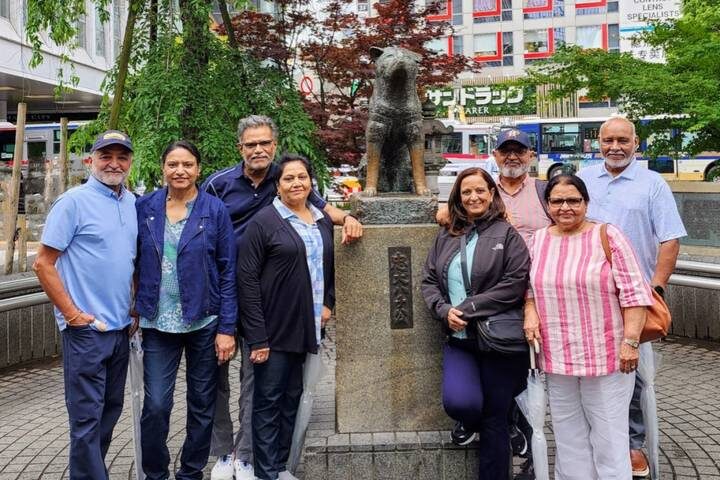
At Shibuya Crossing, you get the famous wall of pedestrians from street level. The tour also stops at the Hachiko statue outside the station. These are quick, recognizable Tokyo experiences rather than deep explorations, so take photos, notice how the crossing works and keep moving with the group.
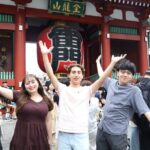
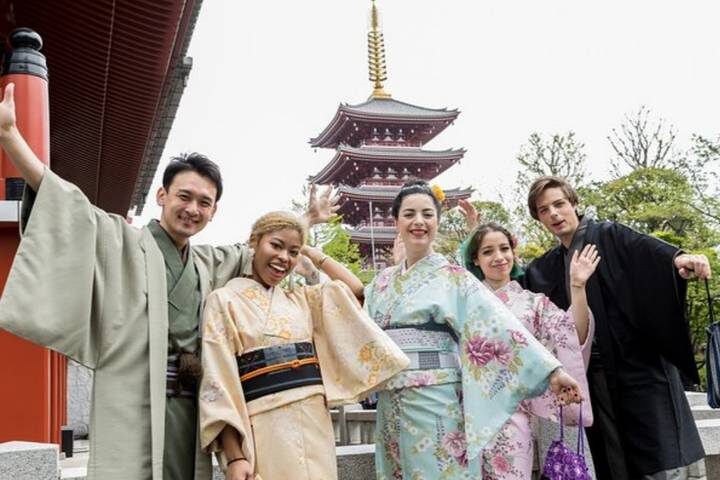
Senso-ji in Asakusa offers a different kind of visit. Founded in 645, it is one of Tokyo’s oldest Buddhist temples. You enter through Kaminarimon, the gate with its large red lantern, then pass along Nakamise, a shopping street lined with traditional snacks, souvenirs and craft goods. Beyond the shops are the Hozomon gate, the main hall and a five-story pagoda. The route is busy and commercial, but the temple remains an active place of worship. A guide helps you read the site as more than a photo stop.
Tokyo Skytree can be seen from the south side of Senso-ji, but the plan describes an overlook, not a visit to the tower. If going up Skytree matters to you, check whether there is free time to add it. The schedule does not promise a climb.
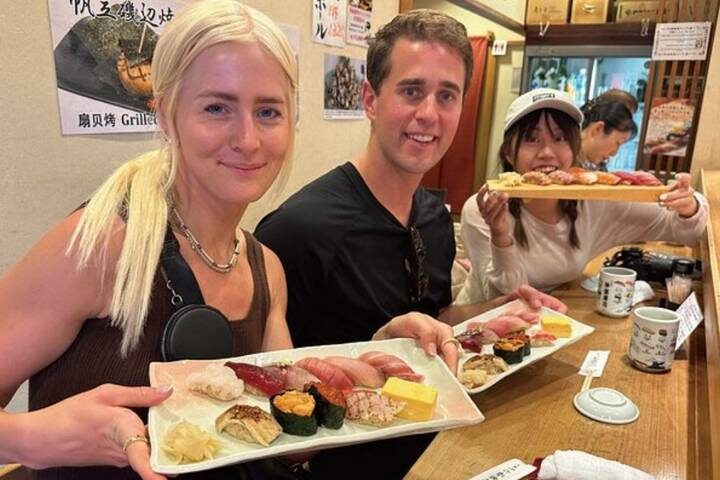
The day finishes at Tsukiji’s outer market. The wholesale and auction areas have moved, but the outer market remains a place to find seafood, sushi, kitchenware and casual food stalls. You can try local dishes, though meals beyond breakfast are not included. Bring spending money and remember that the group’s timing may limit how long you can linger over lunch.
Day 3: Ride the Shinkansen to Kyoto
After breakfast, you travel to Tokyo Station and board the Shinkansen for Kyoto. The ride takes about two and a half hours, and the ticket is included. For many first-time visitors, this is a highlight in its own right: fast, comfortable intercity rail that makes the long distance between the two cities feel easy.
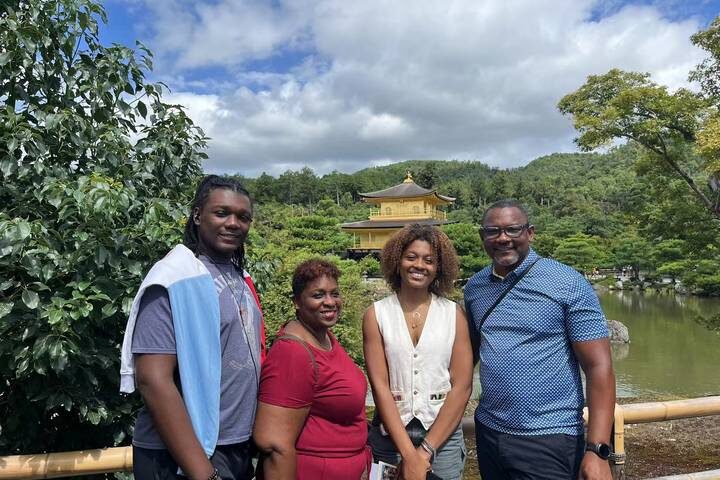
The schedule has you sightseeing in Kyoto after arrival, so it is a travel day as well as a temple-and-castle day. At Kinkaku-ji, the Golden Pavilion, the three-story building covered in gold leaf reflects over a pond. The view is especially striking when the water is still. The grounds follow a set path, and the pavilion is admired from outside rather than entered, so expect a scenic visit rather than a long indoor tour.
Next comes Nijo Castle, a former Kyoto residence of Tokugawa Ieyasu and a UNESCO World Heritage site. Its rooms, painted interiors and defensive features show how authority was displayed and guarded during the Edo period. Listen for the famed nightingale floors, designed to chirp underfoot and warn of intruders. The Ninomaru Garden adds a calmer counterpoint to the castle’s political story.
The day combines two major sites, but there is little detail about free time or the exact length of each stop. If you like to study every room or garden slowly, this guided pace may feel brisk. The advantage is having transport and entry organized on a day when you are also changing cities.
Day 4: Kyoto’s torii gates, temple slopes and Gion
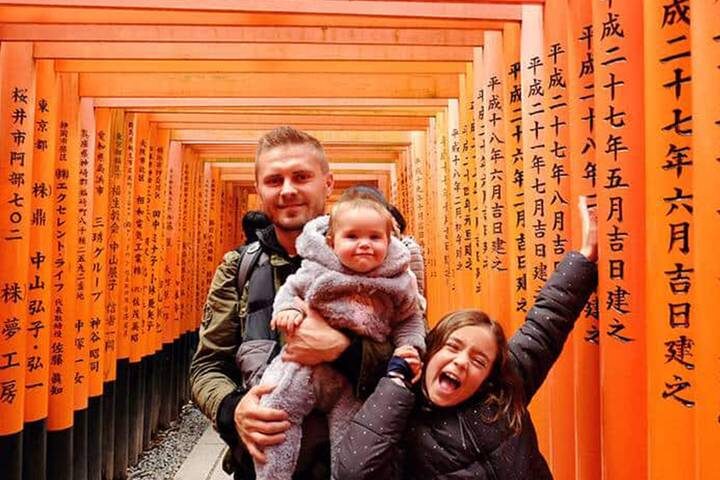
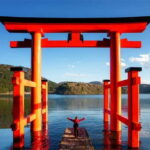
The final full sightseeing day brings together several of Kyoto’s best-known places. At Fushimi Inari Taisha, rows of red torii gates climb the wooded hillside. The shrine is dedicated to Inari, associated with rice, agriculture, business and safe travel. You can walk partway up the mountain to the Four-Way Crossroads, about 30 to 40 minutes from the lower area, for views across Kyoto. Reaching the summit takes around two to three hours round trip, so the suggested halfway point is a sensible choice within a busy group day.
Kiyomizu-dera dates to 778 and is known for its wooden stage projecting from the hillside. The temple is also associated with Otowa Waterfall, where visitors drink from separate streams believed to offer benefits such as health, wisdom or longevity. The site is a major draw in spring and autumn, and the crowds can be substantial at popular times. Wear comfortable shoes: the temple visit connects with a walk through nearby sloped lanes.
Ninenzaka and Sannenzaka are historic streets lined with shops, teahouses and places to stop for a snack. Their old-style buildings and sloping approach make them atmospheric, but they are also busy shopping streets. You may want to choose one or two shops rather than try to browse every storefront before the group moves on.
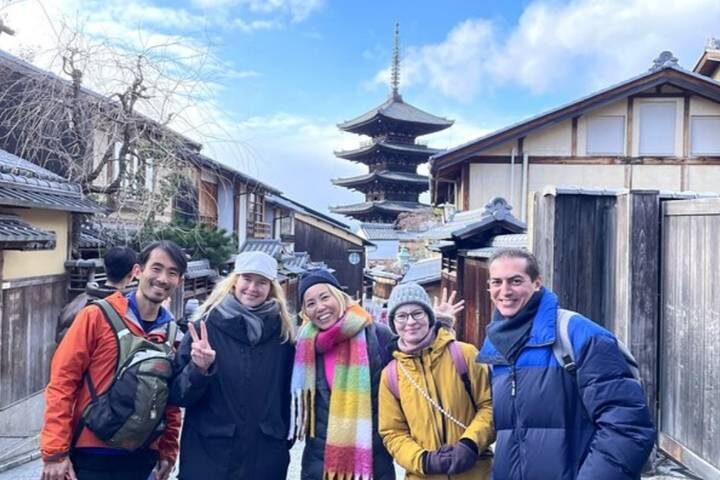
The route continues to Yasaka Shrine and Gion. Yasaka has a long connection to the Gion district and hosts the Gion Matsuri each July. In Gion, preserved wooden townhouses and tea houses give the streets a different feel from Tokyo’s modern shopping areas. You might see a geiko or maiko heading to an appointment, but that is not guaranteed. Treat the district as a living neighborhood, keep a respectful distance and avoid blocking narrow lanes for photos.
This day is the tour’s most concentrated. Fushimi Inari, Kiyomizu-dera, two historic streets, Yasaka Shrine and Gion make for a rewarding sweep of Kyoto, but not a slow one. If your priority is time to sit in a garden, visit a smaller temple or wander without a schedule, consider adding a night in Kyoto after the tour.

Day 5: Continue to Osaka on your own
The tour’s final morning includes breakfast and onward travel from Kyoto toward Osaka. The listed end point is Kyoto Tokyu Hotel, while Osaka is described as the destination for departure. The included information says the transfer from Kyoto to Osaka is on your own, and airport drop-off can be arranged for an additional cost.
That distinction matters if you have a flight the same day. Check the airport, departure time and transfer plan before booking. The tour does not include international flights, and you should not treat the Osaka airport journey as part of the package unless you arrange it separately.
What the price includes, and what it does not
At $1,669 and up, the package covers four hotel nights, four breakfasts, an English-speaking guide, listed admissions and transport during the tour, including the Tokyo to Kyoto Shinkansen. Those inclusions reduce the number of separate reservations you need to make and can be especially useful if Japan is new to you.
You pay separately for international flights, lunches, dinners, travel insurance, airport transfers and optional activities. Dietary needs also deserve advance attention. The operator says it tries to accommodate requirements, but options in Japan can be limited, particularly for vegans. If you have strict dietary needs, contact the company before booking and plan for some meals to require your own arrangements.
The tour is described as low intensity, but that does not mean little walking. Fushimi Inari includes an uphill walk if you choose the suggested viewpoint, and the Kyoto temple and old-street visits involve slopes and time on foot. The group size is 1 to 16, and English is the tour language. Anyone aged 75 or older must travel with a younger family member or friend on a one-to-one basis.
Who should book this tour?
I’d consider this trip if you want a guided first look at Tokyo and Kyoto, appreciate having the Shinkansen and sightseeing transport handled, and are content with a quick pace. It also suits people who want hotel accommodation and a small group without committing to a much longer itinerary.
I’d think twice if you want generous free time, need airport transfers included, or want to explore Kyoto at a slower pace. Before paying, confirm the Skyliner arrangement, the final hotel, and how you will reach Osaka airport. Book it if the headline sights and efficient planning matter more than lingering; add time on your own if you want Japan to unfold at a gentler speed.
5 Day Best of Japan: Tokyo to Kyoto Small Group Tour by UME Travel
“UML did good but we are disappointed with TOUR RADAR. This will our last trip with you.”
FAQ
How long is the tour?
It lasts five days and four nights, with two nights in Tokyo and two in Kyoto.
Where does the tour start?
It starts at the designated hotel in Tokyo. Shibuya Excel Hotel Tokyu is the named default, but another hotel of the same standard may be used if it is full.
Where does the tour end?
The listed end point is Kyoto Tokyu Hotel in Kyoto. You make your own onward arrangements to Osaka unless you book an optional transfer.
Is the Tokyo to Kyoto bullet train included?
Yes. The Shinkansen from Tokyo Station to Kyoto Station is included and takes about two and a half hours.
Are airport transfers included?
No. Airport pickup and drop-off are excluded. Private transfers can be arranged for an additional cost.
Is the Keisei Skyliner included?
The Skyliner is named as a tour highlight, but airport transfers are excluded. Confirm with UME Travel whether a ticket is included or needs to be purchased separately.
How many breakfasts are included?
Four breakfasts are included, one for each morning after your arrival day.
What is the maximum group size?
The group size is listed as 1 to 16 people.
What language is the tour guided in?
The tour is guided in English by an English-speaking local guide.
Are there any age requirements?
All ages are welcome, but anyone aged 75 or older must be accompanied by a younger family member or friend on a one-to-one basis.