Nanzoin’s huge bronze reclining Buddha is a striking start to a day that then crosses from temple grounds to shrine paths and Itoshima’s coast. You get several very different sides of the Fukuoka region without planning separate bus connections.
I like the mix of cultural stops and open-air scenery, and the chance to see the famed married rocks at Sakurai Futamigaura. The price also includes round-trip transport, tolls, parking and attraction admissions, which makes this a practical way to cover far-flung sights in one day.
The trade-off is a packed schedule, with stops in different directions and limited time at each. Lunch is not included, and the tour information is unclear about exactly when and where you’ll have time to eat.
- Nanzoin’s reclining Buddha is the morning’s headline sight, with an hour set aside to visit the Buddhist temple.
- Yamaya Factory Terrace adds a mentaiko factory visit, though lunch arrangements need clarifying.
- Miyajidake Shrine pairs a large sacred straw rope with the famous Path of Light leading toward the sea.
- Itoshima’s Totoro-like forest offers a short guided walk in a natural setting.
- Sakurai Futamigaura’s married rocks make a memorable coastal finale, though sunset views depend on conditions and timing.
- The $53.60 starting price includes transport, guide, tolls, parking and admissions, but not food or drinks.
- A full day beyond central Fukuoka
- Seeing Nanzoin’s reclining Buddha
- Yamaya, mentaiko and the lunch question
- Miyajidake Shrine and its Path of Light
- A quick pause at Anzu-no-Sato Market
- Walking through Itoshima’s Totoro-like forest
- The coast at Sakurai Futamigaura
- What the price includes, and what it doesn’t
- Who should book this Fukuoka day trip?
- FAQ
- Where does the tour depart from?
- What time does the tour return?
- What is included in the price?
- Are meals included?
- What should I wear to Nanzoin Temple?
- How old must children be to pay the adult rate?
- Does the tour always operate?
- What happens if the tour is cancelled because of severe weather?
- More Tours in Itoshima
- More Tour Reviews in Itoshima
- Not for you? Here's more nearby things to do in Itoshima we have reviewed
A full day beyond central Fukuoka
 1 / 9
 2 / 9
 3 / 9
 4 / 9
 5 / 9
 6 / 9
 7 / 9
 8 / 9
 9 / 9
This bus tour links Nanzoin Temple, Miyajidake Shrine and several Itoshima stops in one long day. It starts at 8:30 a.m. near Hakata Station and is scheduled to return there at 6:30 p.m. That’s useful if you want a broad look at the region but would rather not piece together transport yourself.
The route covers very different settings: a major Buddhist pilgrimage site, a shrine, a local market, a forest walk and a rocky stretch of coast. I like that variety. You get more than a string of temples, and the coastal stops give the day room to breathe.
The flipside is the amount of ground covered. The stops are spread across different areas, and the schedule includes several bus transfers. Treat this as a sampler, not a slow visit to any one place. If you want time to linger, take quiet photos or explore at your own pace, the short stops may feel rushed.
The tour is run by H.I.S. and costs from $53.60. That is a reasonable starting price for a full-day outing when admissions, transfers, tolls and parking are included. The value depends on your priorities: you’re paying for convenience and variety, not long visits or meals.
Seeing Nanzoin’s reclining Buddha
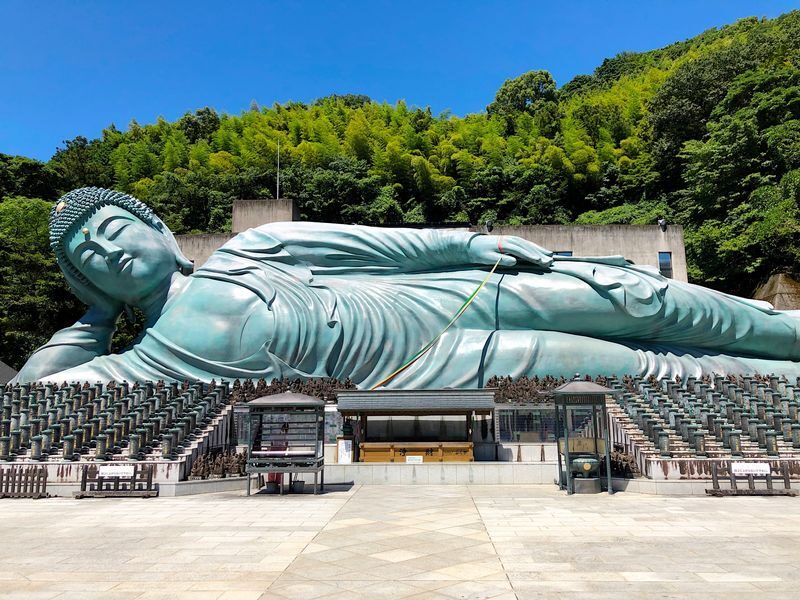
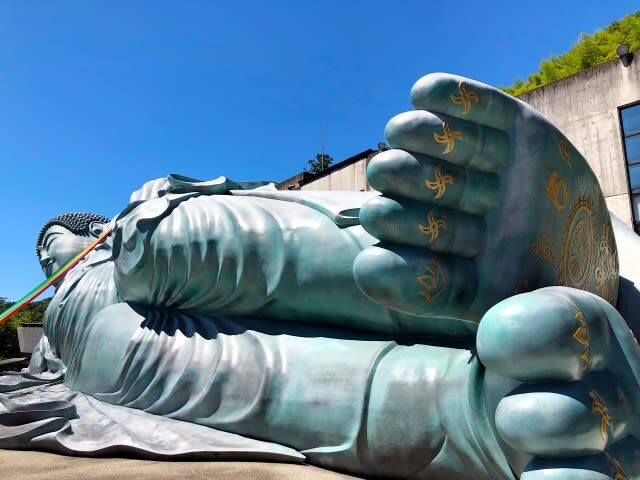
The day begins at Nanzoin Temple, in Kasuya County, about an hour after departure. The temple is known for its immense bronze reclining Buddha, described as the largest bronze reclining Buddha in the world. Its size alone makes this a striking introduction to Japanese Buddhist worship.
You have about an hour here. That gives you time to see the Buddha and take in the temple grounds, though it is not a leisurely, half-day visit. The guide is listed as accompanying the group, so you can expect some context about the temple’s importance and Buddhist traditions.
Dress with care. Nanzoin requires shoulders and knees to be covered. Tank tops, sleeveless shirts, crop tops, shorts, mini-skirts and ripped jeans that expose skin are prohibited. It’s worth choosing suitable clothes before leaving Fukuoka rather than discovering the rule at the entrance.
The temple stop is one of the tour’s clearest cultural highlights. If you’re drawn to religious sites, the scale and setting make it worth the early start. If you mainly want a quiet temple visit, however, a group schedule and one-hour limit may not be ideal.
You can also read our reviews of more tours and experiences in Itoshima.
Yamaya, mentaiko and the lunch question
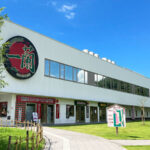
Next is Yamaya Factory Terrace, with a guided mentaiko factory visit and roughly 90 minutes scheduled. Mentaiko, seasoned pollock roe, is a well-known Fukuoka specialty. A factory stop can give you a closer look at a local food than you’d get by simply ordering it at a restaurant.
There’s a practical wrinkle: the tour details describe a factory visit and lunch, but meals and beverages are listed as not included. The timing also places free time for lunch at Miyajidake Shrine later in the day. Since those details don’t line up neatly, don’t assume lunch is covered. Bring money for food and ask the operator where the group will have time to eat.
There is also a useful caution about language. One past departure had a presentation in Japanese without translation, leaving a participant to use a phone translator. The tour guide may speak English, Chinese or Japanese, but that does not guarantee every factory presentation will be translated. If you need English explanations, ask about this before booking.
The factory stop can be an interesting change of pace, but it may suit food-curious visitors more than those who want uninterrupted time at temples and the coast. If the product presentation is not in a language you understand, you may get less out of this part.
Miyajidake Shrine and its Path of Light
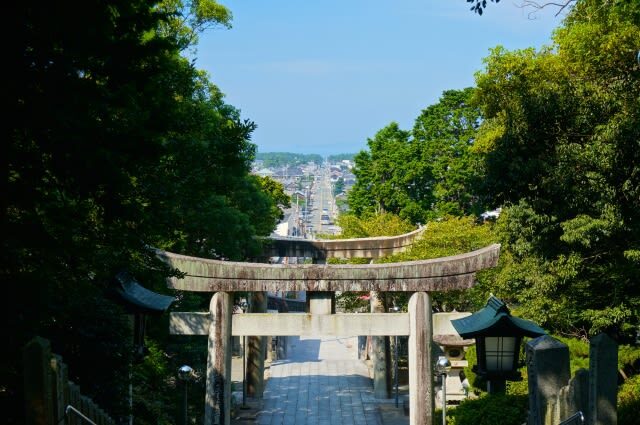
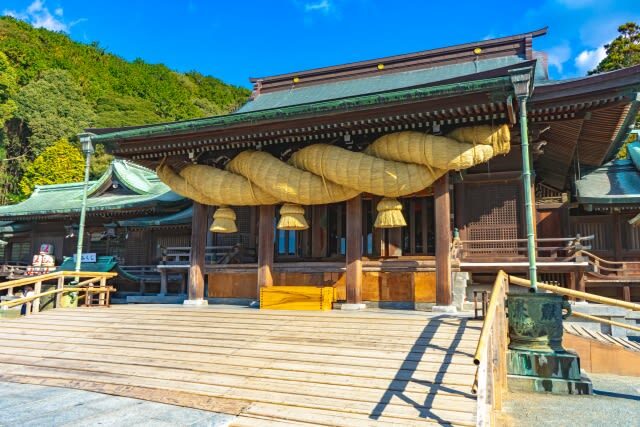
Miyajidake Shrine is scheduled for about 50 minutes. It is known for its large sacred straw rope and the Path of Light, a route that appears to lead toward the sea. The shrine’s setting and religious role offer a different perspective from Nanzoin, so the two stops work well as a pair.
This part is self-guided, with free time rather than a guided walk. That gives you some choice over how to spend the stop, though the allotted time is short. The schedule also points to lunch here, so this may be your main opportunity to eat, depending on the day’s actual arrangements.
The Path of Light is a particular draw for photos, but don’t plan the whole trip around seeing a specific effect. Weather and timing can affect what you see, and this tour gives you a brief visit rather than a long wait for ideal conditions. Think of the shrine as both a place of worship and a scenic stop, not a guaranteed photo setup.
A quick pause at Anzu-no-Sato Market
The bus then stops at Anzu-no-Sato Market for about 30 minutes. This is a short chance to browse a local market and take a break between shrine visits and the Itoshima portion of the day.
With half an hour, you should keep expectations modest. It is not enough time for an extended shop, meal and relaxed stroll all at once. If you see something you want, check the time before buying or settling in. The tour includes parking and transfers, but personal purchases are your own expense.
For some, this quick market visit will be a welcome glimpse of local shopping. If you prefer fewer stops and longer walks, it may feel like one more brief interruption in an already full itinerary.
Walking through Itoshima’s Totoro-like forest
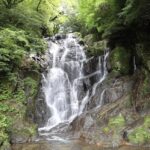
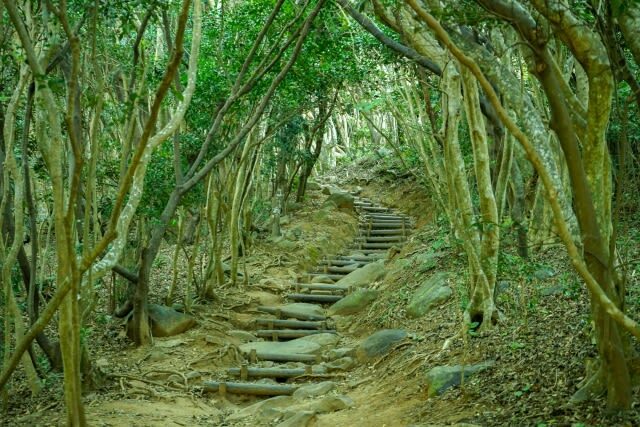
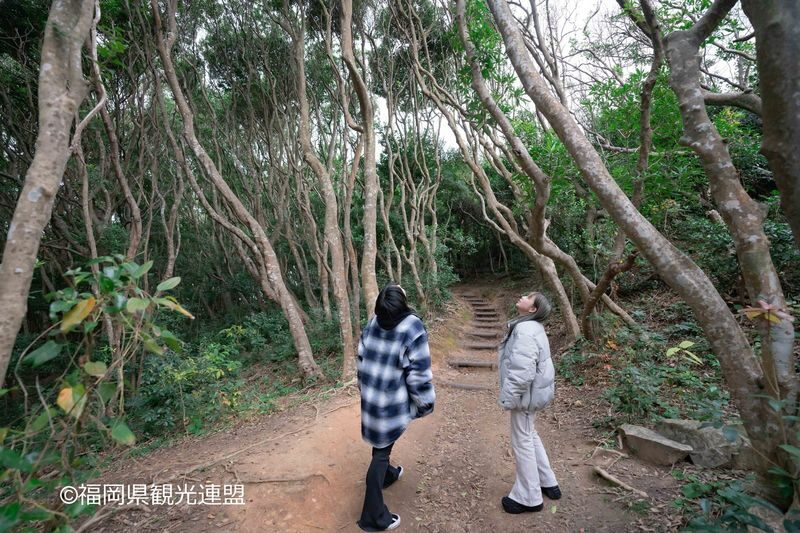
At around 4 p.m., the tour reaches Keyanooto Park, where a guided visit to the Totoro-like forest lasts about 30 minutes. The attraction is officially part of Genkai Quasi-National Park and has become popular for its resemblance to a forest from a Studio Ghibli film.
The appeal here is simple: a short walk through a natural setting after a day of temples, roads and scheduled stops. The forest is not presented as a film attraction, but as a real place whose trees and atmosphere recall the animated world. If you enjoy taking photos or spotting familiar shapes in nature, you’ll likely appreciate the brief visit.
Half an hour is enough for a stroll and a few pictures, not a long hike. The tour description does not promise a particular walking distance or trail conditions, so wear comfortable shoes and be ready for an outdoor stop. The guide accompanies the group, which can help keep the visit on schedule.

The coast at Sakurai Futamigaura
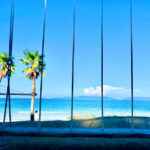
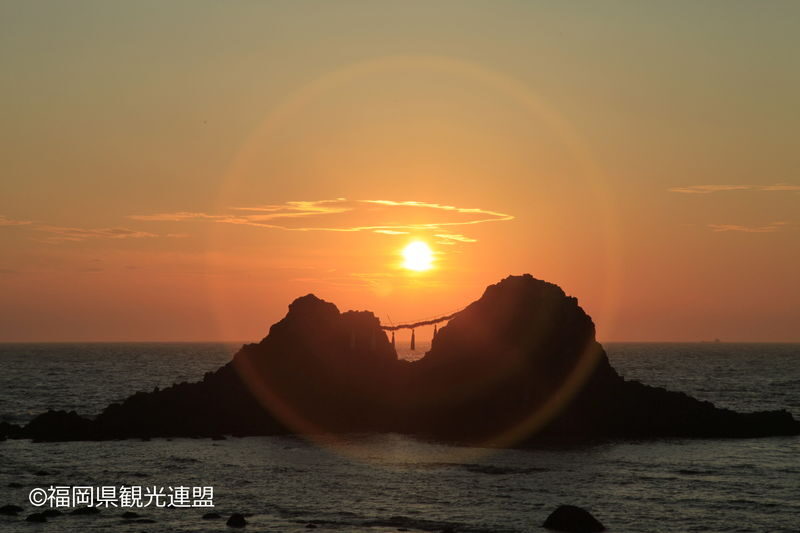
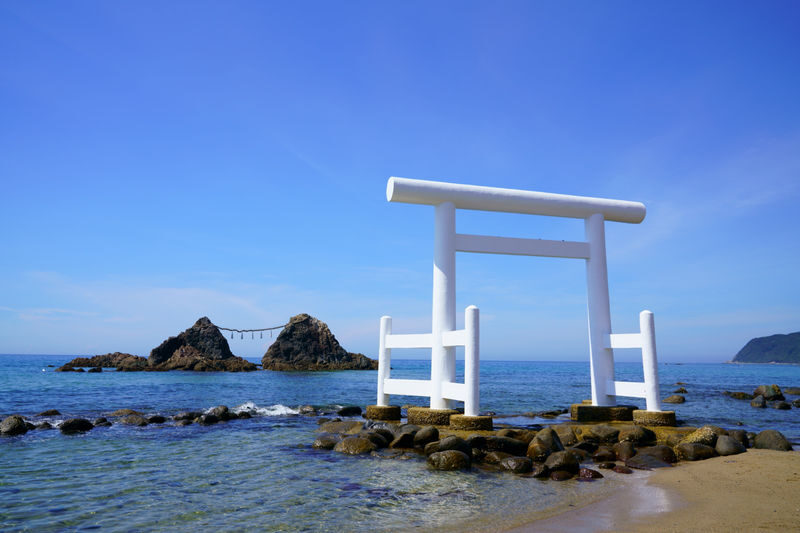
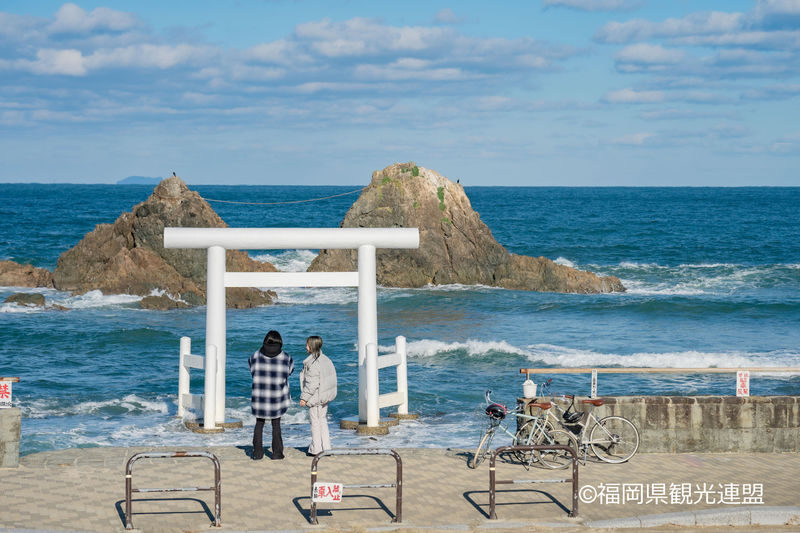
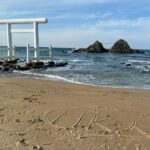
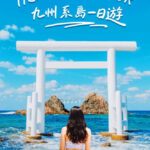
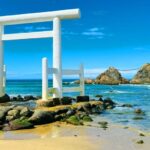
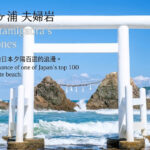
The last major stop is Sakurai Futamigaura, with about 40 minutes at the coast. Its best-known feature is the pair of married rocks, linked to marriage and lasting love in Japanese mythology. The coastal setting is a fitting change after the inland temple and shrine visits.
The tour highlights sunset views, but the scheduled stop is around 4:50 p.m. and the return to Hakata is set for 6:30 p.m. Sunset time varies through the year, and weather can obscure the view. So enjoy the rocks and shoreline for what they are, and treat a sunset as a possible bonus rather than a sure thing.
This is a strong finish for anyone who likes open skies and coastal photography. The limit is time: you have less than an hour, and the bus needs to keep moving. If Itoshima’s coast is your main reason for booking, a private or more coast-focused trip may give you longer to explore.
What the price includes, and what it doesn’t
At $53.60 to start, this tour offers a lot of transport value. The price includes round-trip transfers from Hakata, tolls, parking, attraction admissions and a guide who may speak English, Chinese or Japanese. With the sights spread across several areas, those inclusions save you the work of coordinating multiple connections.
Food and drinks are not included, nor are personal expenses such as market purchases. Budget for lunch and any snacks or souvenirs. Because the meal plan is not clearly described, bringing a little extra flexibility is sensible.
The vehicle is listed as a minibus for a group of 15. The minimum to run the tour is 15 participants, so a departure depends on enough people booking. If the minimum is not met, you can choose another date or request a full refund. Confirmation is due 48 hours before departure.
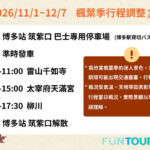
A few practical issues are worth knowing. The meeting point is at Hakata Station’s Chikushi Gate, in front of the LAWSON at Oriental Hotel Fukuoka 1F. Arrive 15 minutes early. One previous departure had no flag to identify the guide, and a participant found the guide late; another reported difficulty hearing the speaker system. Keep the meeting address handy and stay alert for tour staff in the morning crowd.
Who should book this Fukuoka day trip?
I’d choose this tour if you want to see several well-known places around Fukuoka without renting a car or planning a complex route. It suits first-time visitors, people with only one free day, and anyone who values an organized trip more than lingering at every stop. The range of temples, food culture, forest and coast is its main strength.
It is less suited to anyone who wants a slow, in-depth visit, needs a guaranteed English explanation at every stop, or wants lunch arranged and included. The itinerary moves quickly, and the factory presentation may not be translated. Families should also note that children aged four and older pay the adult rate, while children aged zero to three travel free.
Would I book it? If I had one day to sample Nanzoin and Itoshima, yes, provided I confirmed the lunch plan and accepted the tight pace. If I had several days in Fukuoka or cared most about the coastline, I’d compare it with a more focused tour that allows longer at fewer places.
YokaBus Nanzoin Bronze Buddha, Itoshima Totoro Forest, Futamigaura
“the tour guide Chen was late and theres no flag. but he was so nice. he even gave us oranges. overall experience was great.”
FAQ
Where does the tour depart from?
It departs from Hakata Station’s Chikushi Gate, in front of LAWSON at Oriental Hotel Fukuoka 1F. The meeting time is 8:30 a.m.; arrive 15 minutes early.
What time does the tour return?
The scheduled return is 6:30 p.m. at Hakata Station. Traffic and weather may change the schedule.
What is included in the price?
Round-trip transfers, attraction admissions, toll fees, parking fees and an English, Chinese or Japanese-speaking guide are included.
Are meals included?
No. Meals and beverages are not included. The tour details mention a mentaiko factory visit and lunch, but also say meals are excluded and note free time for lunch at Miyajidake Shrine. Ask the operator to confirm the plan.
What should I wear to Nanzoin Temple?
Your shoulders and knees must be covered. Tank tops, sleeveless shirts, crop tops, shorts, mini-skirts and ripped jeans that expose skin are prohibited.
How old must children be to pay the adult rate?
Children aged four and older are charged the same rate as adults. Children aged zero to three can join free.
Does the tour always operate?
The tour requires at least 15 participants. If the minimum is not reached, you can book an alternative date or request a full refund.
What happens if the tour is cancelled because of severe weather?
The operator may cancel in extreme weather or other unforeseen circumstances. You can reschedule or request a full refund.