Taishu-engeki is best approached as a lively local theater night, not a polished, English-friendly cultural presentation. At Gofukuza in Umeda, you may see a short opening show, a comic stage play, and a final dance performance with striking costumes and close audience interaction.
I like two things about this experience: the expressive acting and dance are easy to appreciate even when you do not speak Japanese, and the audience’s warm, enthusiastic response gives the theater a distinctly local feel. The ticket starts at $15.80, which is a modest price for a performance that can last around three hours.
One caution: the show is described as non-verbal, but parts of it are spoken in Japanese, and there are no English subtitles or synopsis listed. If you want to follow the story, or expect a formal, high-budget production, this may not be the right evening out.
- A quick guide to the experience
- What Taishu-engeki feels like in Umeda
- The lobby exhibition and first minutes
- Three parts, with different reasons to stay
- Language, expectations, and the value of watching
- Cost, comfort, and the small print
- Who will enjoy Gofukuza most?
- Should you book?
- FAQ
- How much does admission cost?
- How long does the performance last?
- Is the show really non-verbal?
- What are the three parts of the show?
- When should I arrive for the grand maiko show?
- Where is Gofukuza?
- How do I get there by train or metro?
- Can I eat or take photos inside?
- Is the venue accessible, and can I store luggage there?
- The Best Of Osaka!
- More Tours in Osaka
- More Tour Reviews in Osaka
- Not for you? Here's more nearby things to do in Osaka we have reviewed
A quick guide to the experience
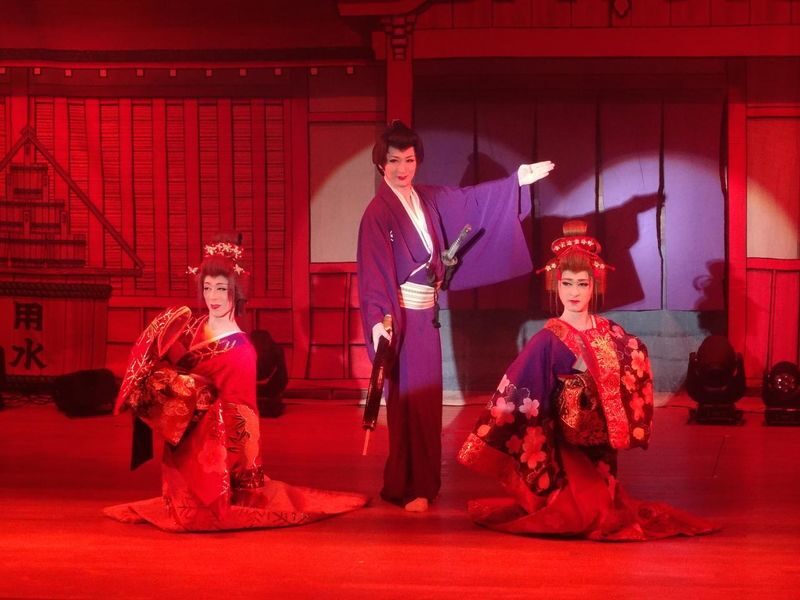
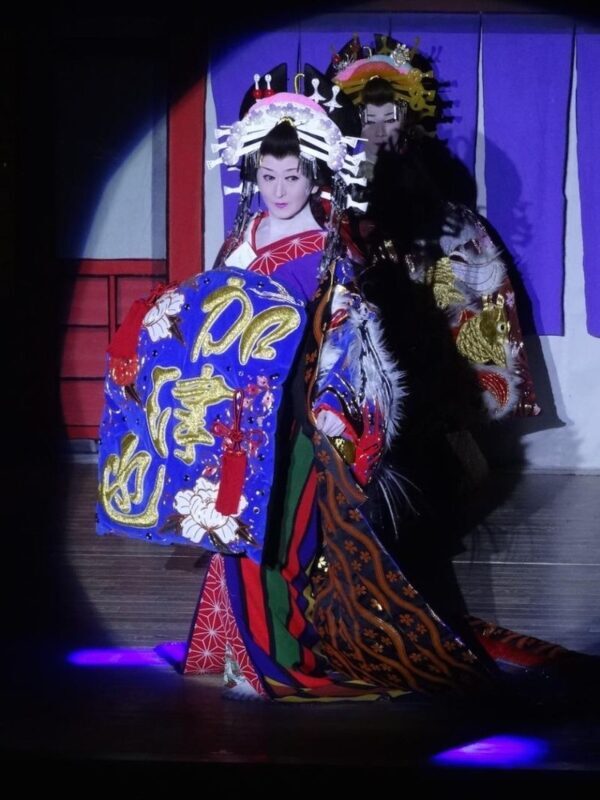
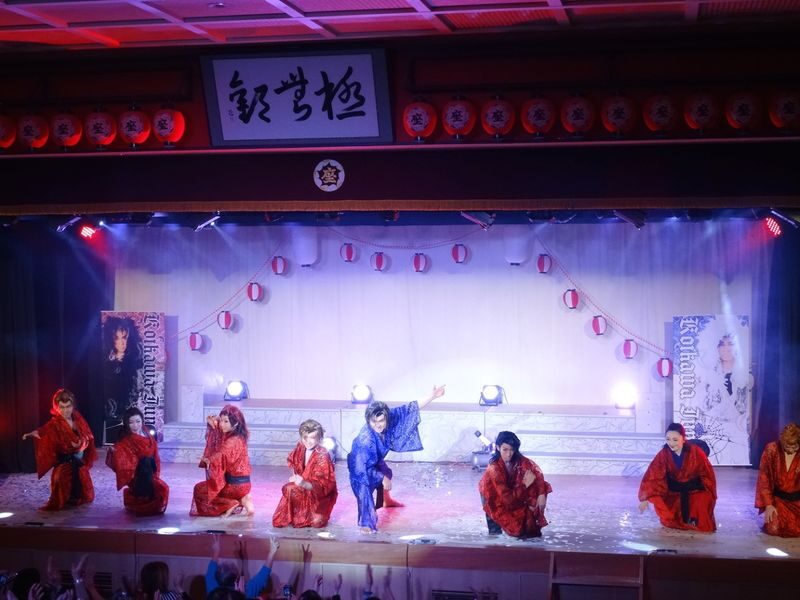
- A three-part program: The advertised format includes a mini-show, a play, and a grand maiko show. The exact balance of drama and dance may feel different from what you expect.
- The final section is the easiest entry point: You can arrive around 14:00 for the daytime grand maiko show or around 19:30 for the evening one.
- Expect Japanese dialogue: The dancing and expressive performances need no translation, but the play does.
- A local theater atmosphere: The audience may cheer and respond directly to the performers, making the room feel more intimate than a large theater.
- Find the right building: Search for Plaza Umeda Building, not simply Umeda Plaza. The theater is on the fifth floor at 8-17 Taiyujicho.
- Bring your appetite, but not a suitcase: Food and drinks, including alcohol, are allowed inside. There is no luggage storage.
👉 See our pick of the 24 Best Workshops And Classes In Osaka
What Taishu-engeki feels like in Umeda
Taishu-engeki is a form of popular Japanese theater, and Gofukuza offers a chance to see it in a compact, neighborhood setting. The draw is not only the acting. It is the full room: performers in costume, music and dance, and an audience that may cheer along rather than sit in silence.
That interaction is one of the most distinctive parts of the evening. If you are used to Western theater, where the audience usually saves its response for the end, the lively rapport here can be a show in itself. You are seeing a performance in a setting that attracts Japanese patrons, not simply a production designed to explain itself to international visitors.
The experience is also a little rough around the edges. Some descriptions suggest a modest production rather than a lavish stage spectacle. I would treat that as part of the bargain: you are paying a low admission price to see a local performance, not buying a ticket to a grand theater with extensive translation and production support.
You can also read our reviews of more tours and experiences in Osaka.



The lobby exhibition and first minutes
The suggested daytime plan begins with arrival at 12:30. Before the show, the entrance and lobby display traditional katana and hand fans. This is a small introduction, not a separate guided tour, but it gives you something to look at while you get oriented.
Take a moment to confirm you have reached the correct building before setting off. The address is Plaza Umeda Building, fifth floor, 8-17 Taiyujicho, Kita-ku, Osaka. The supplied address also appears in a shortened form as 8-17-5F Taiyujicho. Searching for Plaza Umeda Building is safer than entering Umeda Plaza alone: there are similarly named places, and the wrong map pin can send you far off course.
From JR Osaka Station, the walk is about eight minutes. From Umeda Station, it is about five minutes. Those are short distances, but Umeda’s station and building names can be confusing. Leave enough time to find the entrance, especially if you want to catch the opening. Late arrivals and no-shows are not eligible for refunds or changes.
Three parts, with different reasons to stay
The performance is presented in three parts: a mini-show, a play, and a grand maiko show. The available descriptions do not always describe the sequence and length in exactly the same way, so think of those labels as a useful guide rather than a guarantee of a fixed running order. The full experience is commonly described as lasting about three hours.
The mini-show is the opening act. It gives you an early taste of the performers and the theater’s style before the longer dramatic section. The short play has been described as entertaining and comic. Even if you cannot follow the dialogue, facial expressions, gestures, costumes, and the audience’s laughter can help you read the mood.
The play is the part most likely to test your patience if you do not understand Japanese. There are no English or Chinese subtitles or an English synopsis listed. Some people enjoy watching the performers’ movements and emotional delivery without following the words; others find a long spoken scene hard to track. Be honest with yourself about which kind of theatergoer you are.
The grand maiko show is the strongest choice if you want a more visual introduction. It centers on dance and elaborate costumes, and it is the section most often recommended for visitors who are unsure about the play. The published suggested arrival times are around 14:00 for the daytime performance and 19:30 for the evening one. Ask at the venue when you arrive if you need to confirm the timing for your date.
Some accounts describe the second half as a dance-focused set, with music, group dancing, and changes in costume and makeup. Fans in the audience may cheer, adding to the sense that you are watching a familiar local favorite rather than a detached stage show. If you come mainly for the dancing, arriving for the final section can make this a shorter and more manageable outing.
Language, expectations, and the value of watching
The activity is described as non-verbal, but that label needs a caveat. The play includes spoken Japanese, and the performance does not list subtitles or translation. In practice, the evening mixes elements that can be enjoyed visually with material whose humor and plot may depend on the language.
That distinction matters when you decide whether to book. If your main goal is to understand a traditional Japanese story from beginning to end, this may leave you wanting more context. If you are happy to watch expressive acting, costumes, dance, and audience response, the language barrier need not spoil the evening.
I would also set expectations about what traditional means here. This is a local popular-theater experience, not necessarily the highly formal style of a major classical theater. The mix of comedy, music, dance, and audience enthusiasm is part of its appeal. Go curious, not expecting a museum-like demonstration or a fully explained cultural lecture.
Cost, comfort, and the small print
Admission starts at $15.80 and covers entry to the Taishu-engeki show. Meals, beverages, personal expenses, and the kimono photo shoot are not included. The photo shoot costs an additional JPY 500.
Food and drinks are allowed inside, including alcohol. That can make the performance feel relaxed and informal, but it also means this is not the hush-and-sit-still atmosphere of every theater. If you prefer a quiet room, keep that in mind.
There is no luggage storage, so arrive with only what you can comfortably keep with you. The venue is not stroller- or wheelchair-accessible, a practical limitation worth checking against your needs before booking. Present your mobile voucher at the theater, and remember that it is valid only on the date and time specified.
The daytime performance hours are listed as 12:30 to 15:30, and the evening session as 18:00 to 21:00. Since the whole show can take around three hours, this is not a quick stop between dinner and another timed attraction. Plan your day around it, or choose the final section if you want a shorter visit.



Who will enjoy Gofukuza most?
This is a good fit if you are curious about Japanese popular theater and enjoy watching performance even when you cannot follow every word. It can also suit a budget-conscious evening in Umeda, especially if you want something more local than shopping or dining.
It is less suited to anyone who needs English narration, a clear plot summary, step-free access, or a short, tightly timed show. Families have attended with children, but the program is long, and there is no listed child-specific format. Think about your group’s patience and comfort before committing to the full performance.
Should you book?
Book if you want a reasonably priced, visually engaging look at a local theater tradition and can accept that the play may be hard to understand. For the most accessible slice of the program, aim for the grand maiko show at around 14:00 or 19:30. Skip it if English explanation, easy accessibility, or a polished production is essential to your night.
Traditional Japanese Performance “Taishu-engeki” in Umeda
“The atmosphere was great, the short play in the first part was very interesting, and the performance in the second part was also excellent.”
FAQ
How much does admission cost?
Admission starts at $15.80. The ticket includes entry to the Taishu-engeki show.
How long does the performance last?
The full performance is listed in some descriptions as lasting around three hours. The daytime hours are 12:30 to 15:30, and the evening hours are 18:00 to 21:00.
Is the show really non-verbal?
Not entirely. The program includes a play, and parts of the show are in Japanese. No English subtitles or synopsis are listed.
What are the three parts of the show?
The advertised program has a mini-show, a play, and a grand maiko show. Descriptions of the performance’s sequence and length vary, so confirm the timing at the venue if you plan to enter partway through.
When should I arrive for the grand maiko show?
The suggested arrival time is around 14:00 for the daytime show and around 19:30 for the evening show.
Where is Gofukuza?
It is on the fifth floor of Plaza Umeda Building, at 8-17 Taiyujicho, Kita-ku, Osaka. Search for Plaza Umeda Building to avoid confusion with similarly named locations.
How do I get there by train or metro?
From JR Osaka Station, walk about eight minutes. From Umeda Station, the walk is about five minutes.
Can I eat or take photos inside?
Eating and drinking, including alcohol, is allowed inside. A kimono photo shoot costs an additional JPY 500. The information provided about photography during the performance is inconsistent, so ask the venue about its current photo and video rules.
Is the venue accessible, and can I store luggage there?
The venue is not stroller- or wheelchair-accessible, and it has no luggage storage facility.