A miko experience is more than putting on a white robe and red hakama. At Takenobu-Inari-Jinja, you learn how a shrine maiden serves at a Shinto shrine, then practice customs such as purification, bell-ringing and formal worship. Some sessions also include a short kagura dance and an offering with a priest.
I like two things in particular: you get to practice the gestures instead of only hearing about them, and the small shrine setting makes the lesson feel personal. Instructors including Chihiro, Cherry and Sanae have been praised for patient, clear teaching, though the guide on your date may be someone else.
One consideration: this is a women-only activity for participants aged 12 and up. The shrine name can also be confusing in map searches, so use the street address, not a search for Kamigamo Shrine, and allow time to find the meeting point.
- You practice, not just pose: Learn shrine manners and take part in a formal worship ritual.
- The costume has context: Dressing as a miko is paired with an explanation of her duties and place in shrine life.
- Expect a small-group feel: Booking options cover one person or groups of two to four.
- Choose your pace: The courses last 100 or 150 minutes.
- Plan your outfit: Wear white innerwear, and check whether tabi socks and waist straps are included or need to be rented.
- Use the full address: Takenobu-Inari-Jinja is at 38 Ima Shinzaike Nishicho, Nakagyo-ku, Kyoto.
- A miko lesson, not only a costume photo
- Getting dressed and learning the basics
- Purification, bells and shrine manners
- Making offerings and practicing a kagura dance
- Formal worship and the shrine precinct
- Photo time, with a few practical limits
- Choosing 100 or 150 minutes
- What the price includes
- Finding Takenobu-Inari-Jinja
- Who will get the most from this experience
- Should you book the miko experience?
- FAQ
- Who can take part in the miko experience?
- How long does the experience last?
- What activities are included?
- What should I wear or bring?
- Where is the meeting point?
- Is English-language instruction available?
- The Best Of Kyoto!
- More Tours in Kyoto
- More Tour Reviews in Kyoto
- Not for you? Here's more nearby things to do in Kyoto we have reviewed
A miko lesson, not only a costume photo
 1 / 6
 2 / 6
 3 / 6
 4 / 6
 5 / 6
 6 / 6
In Japan, a miko is a shrine maiden. Historically, miko had roles associated with spiritual practice; today, they commonly assist Shinto priests. The work involves more than ceremony. Proper conduct, careful movement and attention to shrine customs are part of the role.
That context gives this activity its value. You are not simply borrowing a costume for a portrait. You dress for a guided introduction to shrine life, learn how to behave in the precinct, and practice actions that visitors often see without knowing their meaning.
The course is a short introduction, not professional training or a full account of Shinto. Still, it gives you a useful framework for later shrine visits. You learn why gestures matter and how formal worship differs from simply walking through a shrine.

👉 See our pick of the 25 Best Workshops And Classes In Kyoto
Getting dressed and learning the basics
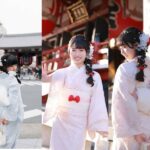
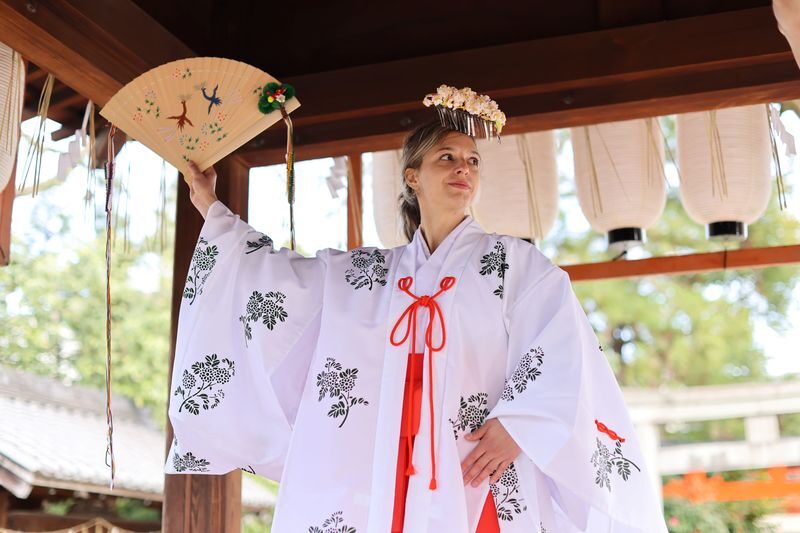
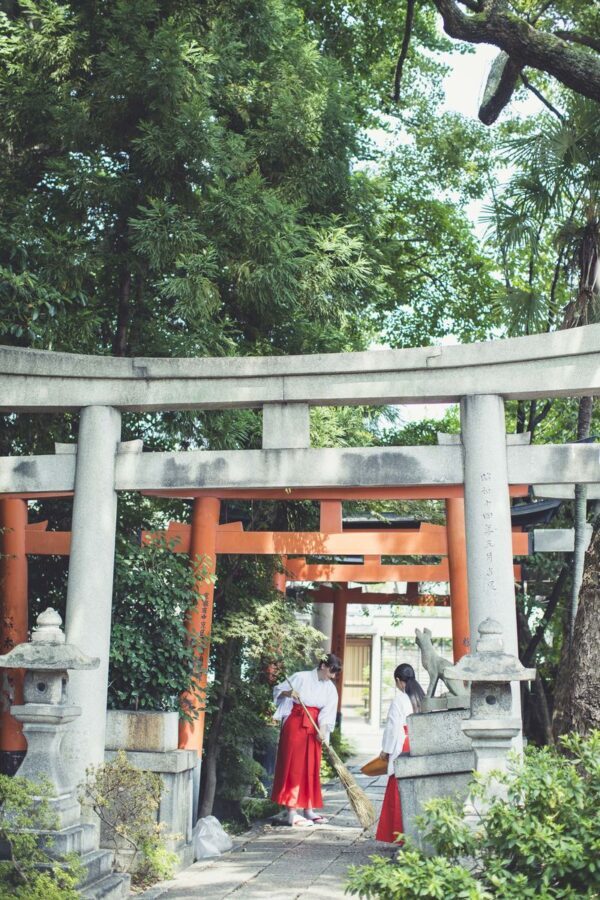
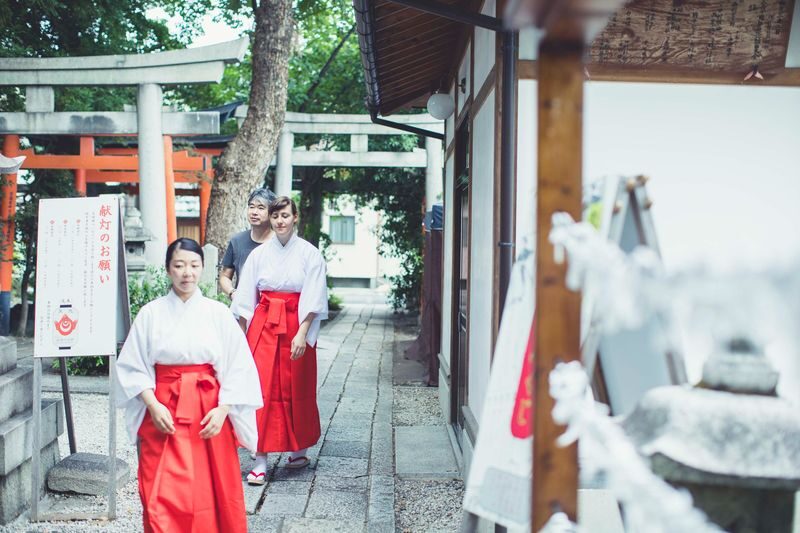
The session begins with costume dressing. Miko clothing typically includes a white top and red hakama, the pleated skirt-like trousers associated with the outfit. Staff help you put it on and explain the care and manners expected while wearing it.
Wear white innerwear under the costume, as requested. The experience instructions also say to bring tabi socks and waist straps if you have them. If you do not, you may be able to borrow them for 500 yen, payable at the shrine. One participant reported that these items were included in the price at the time of their visit, so check the current arrangement before you go.
The clothing is part of the lesson, not a quick change before the camera comes out. You are shown how to move and behave appropriately in the shrine setting. That practical attention helps the outfit feel connected to the work rather than like a dress-up prop.
You can also read our reviews of more tours and experiences in Kyoto.

Purification, bells and shrine manners
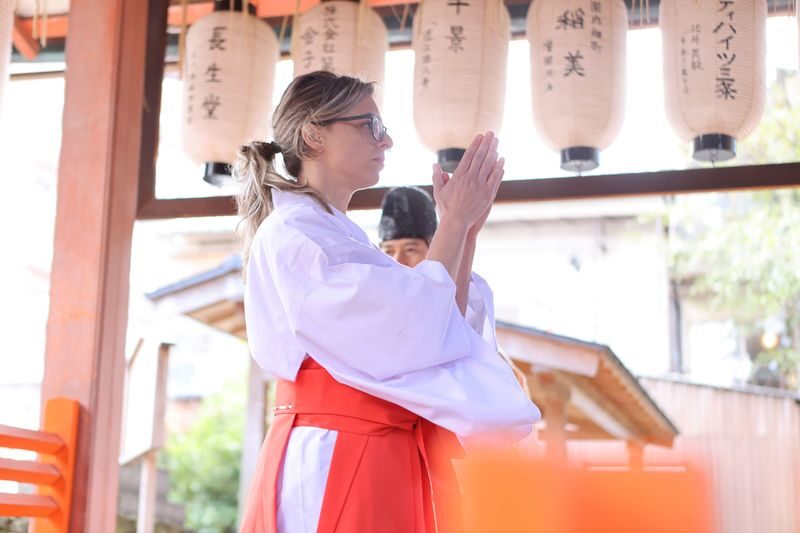
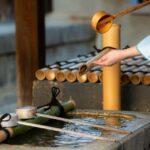
Next comes an introduction to ceremonial manners. You may learn how to purify your hands, approach the place of worship, and ring bells. These actions can seem simple, but the instructor explains their order and purpose so you can perform them with care.
Take your time. Participants have described practicing the sequence more than once, with patient correction when they mixed up the steps. That is a real benefit for anyone new to shrine customs, especially if you are nervous about making a mistake in a formal setting.
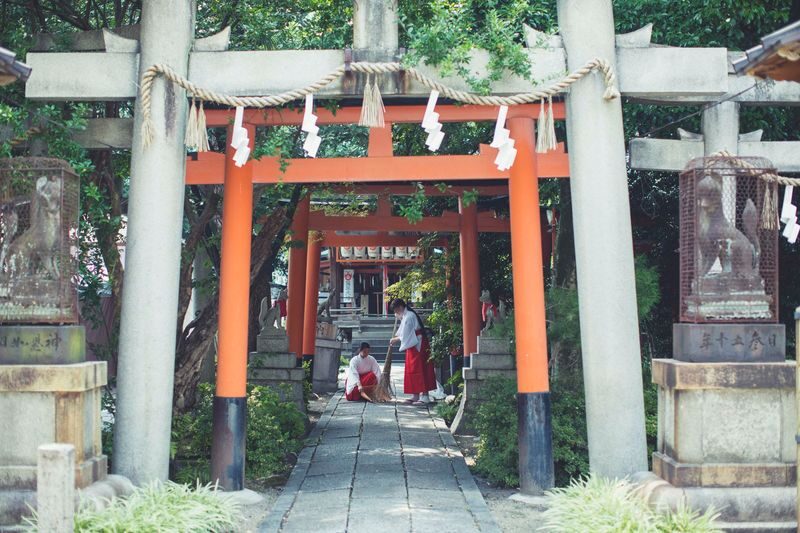
The setting is a small shrine rather than a grand temple complex. That can make the experience feel calm and close at hand, with room to ask questions. It also means you should not book expecting a large-scale sightseeing tour or an elaborate shrine backdrop.
Making offerings and practicing a kagura dance
Some sessions include hands-on preparation for a ritual. Participants have learned about shide, the zigzag paper streamers used in Shinto settings, and tamagushi, a sacred offering made from a branch with paper streamers. You may practice how to hold and present an offering before taking part in formal worship.
A short kagura dance may also be taught. Kagura is a ceremonial dance associated with Shinto worship; the session gives you a brief section to practice rather than a full dance performance. One participant described learning part of Toyosaka no Mai, but the precise content can vary.
These are the moments that turn a cultural talk into an active lesson. You are learning with your body as well as your ears: how to hold an object, where to direct your attention, and how to move in a set sequence. The pace is generally suited to beginners, and you do not need prior knowledge of Shinto.
Formal worship and the shrine precinct
The schedule includes formal worship, or sanpai. After instruction and practice, you may perform the ritual with a priest. This is a meaningful part of the session, and it calls for a respectful, attentive approach rather than treating the ceremony as a photo opportunity.
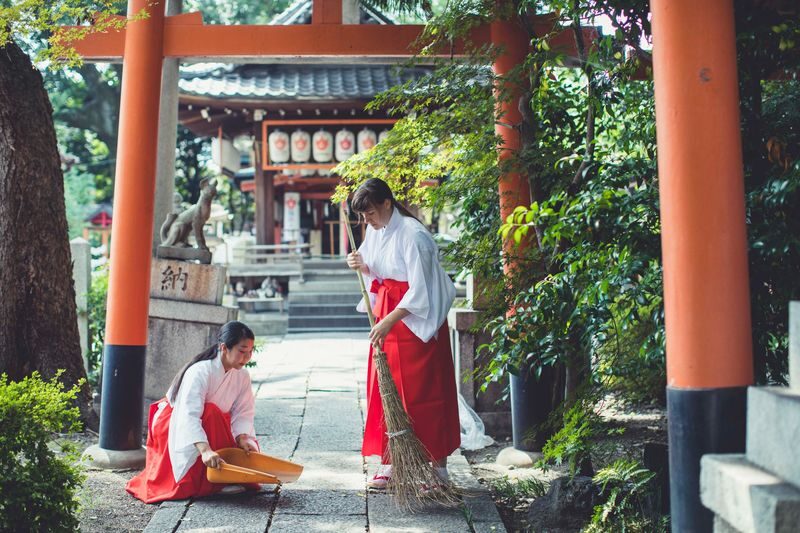
The activity also lists sweeping the shrine precinct. This small task gives a glimpse of the everyday care involved in maintaining a shrine, not just its public ceremonies. Together, the practical chores and ritual steps help show that a miko’s role includes service as well as formal observance.
A short lecture rounds out the learning. Use it to ask about customs or the miko’s duties while the details are fresh. English-speaking staff are included in the English plan, and the experience is also offered with Chinese-speaking staff. Choose a language in which you can comfortably follow everyday conversation; the instructions ask groups with different language needs to book separately.
Photo time, with a few practical limits
The session ends with time for photographs. You can wear a chihaya, a formal jacket, and a kanzashi hair ornament for pictures, and the activity information says you may take photos around the shrine. Bring your phone or camera if you want your own record.
If you are attending alone, you need not assume you will be left without pictures. Participants have described instructors helping take photos, though it is sensible to ask politely and not rely on a particular staff member being available. If a friend or partner comes along, one participant found it possible for a fiancé to watch and take photos, but confirm the current policy if having a spectator matters to your plans.
Keep the camera secondary during worship. A participant cautioned that someone taking pictures should avoid interrupting the person doing the ritual. That is good advice: the point is to learn and participate, with photos as a keepsake afterward.

Choosing 100 or 150 minutes
The 100-minute course is the shorter option and is likely the best fit if you want a focused introduction without giving up much of the day. It covers the main sequence of dressing, learning manners, practicing shrine activities, worship and photos. Participants have described the pace as comfortable, though the exact mix can vary.
Choose the 150-minute course if you want more time for instruction and practice. The available information does not specify precisely which extra activities are added, so do not assume it guarantees a particular dance, ceremony or additional lesson. If the subject is a central interest for you, the longer session gives more room for questions and repetition.
Both options are sold for one person or for groups of two to four. A solo booking can work well: several participants have attended alone and found the instruction personal. Going with friends lets you share the experience, but remember that every participant must meet the age and gender rules.
What the price includes
Prices start at $63.15. That starting price is a guide, not necessarily the cost for every duration, group size or staff language. Compare the exact package before booking, especially if you are choosing between a solo session and a group plan.
Admission, an English-speaking staff member and the miko experience are included in the listed package details. Personal expenses are not. The value comes from the guided teaching and participation, rather than from a long list of sights: you get costume assistance, cultural context, instruction in ritual manners and a chance to practice at the shrine.
For someone who already visits shrines and wants to understand what is happening, that can be a worthwhile use of part of a Kyoto day. If you mainly want a quick costume photograph, the session may feel longer and more instructional than you need. The best fit is a curious visitor who wants to learn the customs behind the clothing.
Finding Takenobu-Inari-Jinja
The meeting point is Takenobu-Inari-Jinja, at 38 Ima Shinzaike Nishicho, Nakagyo-ku, Kyoto, 604-8801. Arrive five minutes before the start time. A participant reported confusion after following a map search to Kamigamo Shrine, which is not the meeting point, so enter the full street address and check the location carefully.
The shrine name is also rendered in different ways. The supplied name is Takenobu-Inari-Jinja, while a participant identified it as Takebusa Inari Shrine. To avoid a wrong turn, rely on the street address and the meeting details for your booked date rather than searching only by name.
The address places the activity in Kyoto’s Nakagyo Ward. A participant described the area as near Omiya Station on the Hankyu Kyoto Line, but check your own route and timing before setting out. The booking confirmation is due 48 hours before the activity; contact customer support if it does not arrive.
The voucher is valid only for the date and time specified, and you present it on your phone. Cancellation terms depend on timing: the provided conditions offer a full refund for cancellations at least 72 hours before the activity, while the details also describe a four-day cutoff. Check the terms shown for your chosen package before paying.
Who will get the most from this experience
This is a strong choice for women aged 12 and older who are interested in Japanese religious customs, shrine etiquette or traditional dress. It also suits solo visitors: the format does not depend on bringing a group, and the guide can help with photos and instruction.
You do not need to be an expert in Shinto. In fact, beginners may find the step-by-step teaching especially useful. A respectful, simple attitude is a better preparation than detailed prior study; ask questions, listen closely and let the ceremony take its own pace.
It may not suit anyone who wants a purely theatrical costume session, a broad tour of Kyoto, or an activity open to all genders. It is a focused experience at one shrine, and the religious setting deserves your attention. Weather and site conditions can also affect where parts take place; one participant still completed an outdoor ceremony during nearby repair work after storm damage.
Should you book the miko experience?
Book it if you want more than a photograph and would value learning how shrine customs are practiced. The best parts are the chance to rehearse the gestures, take part in formal worship, and ask questions in a small setting. The 100-minute option is a sensible starting point; choose 150 minutes if you want more time around the subject.
Skip it if you are not eligible, are short on time, or mainly want a costume rental with no instruction. For the right visitor, this offers a thoughtful, hands-on pause in a Kyoto itinerary, and a better understanding of the rituals you may encounter at shrines elsewhere in Japan.
Shrine-Maiden Experience in Kyoto
“Safety: Experience: Location: Equipment: Instructor:”
FAQ
Who can take part in the miko experience?
The activity is available only to female participants aged 12 and older.
How long does the experience last?
You can choose a 100-minute or 150-minute course.
What activities are included?
The schedule includes costume dressing, ceremonial manners such as purification and bell-ringing, sweeping the shrine precinct, formal worship, a short lecture and photo time. Some sessions have also included practice with offerings and a short kagura dance.
What should I wear or bring?
Wear white innerwear. If you have tabi socks and waist straps, bring them. The activity information says they can be borrowed for 500 yen if needed, but confirm the current fee with the operator.
Where is the meeting point?
Meet at Takenobu-Inari-Jinja, 38 Ima Shinzaike Nishicho, Nakagyo-ku, Kyoto, 604-8801. Arrive five minutes before the start time.
Is English-language instruction available?
Yes. English-speaking staff are included in English-language plans. Chinese-speaking staff are also available through separate package options.