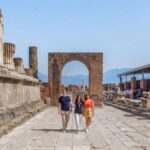
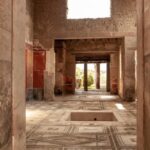
Pompeii makes more sense when someone helps you read it. On this two-hour walk, an archaeologist links the Forum, decorated houses, baths, and plaster casts to the ordinary routines and final hours of a Roman city. The included ticket saves time at the entrance, and a focused route helps you see major sights without trying to cover the whole site.
I like two things in particular: the guide’s archaeological perspective, which gives ruins a human scale, and the chance to see newly excavated areas alongside better-known places. The main trade-off is time: two hours is enough for an introduction, not a full exploration, and you may want to stay longer afterward.
At a glance
- A two-hour route through major sights: Visit public buildings, the Forum, homes, baths, taverns, and the plaster casts.
- An archaeologist leads the walk: Guides including Pasquale, Luisa, Younes, and Eleonora are praised for clear explanations and lively storytelling.
- Admission is included: The ticket is intended to help you skip the ticket-office line.
- New excavations are part of the experience: The route includes recently uncovered areas.
- Transport depends on your booking: Some options include round-trip travel from Naples; others start at a meeting point in Pompeii.
- Languages and group arrangements vary: Tours are offered in English, French, Italian, and Spanish, with private groups available.
- At a glance
- Why an archaeologist changes the visit
- Starting at Piazza Esedra, or arranging transport
- The first stretch: public buildings and southern Pompeii
- The Forum: Pompeii’s civic center
- Inside wealthy homes: frescoes and mosaics
- Baths and taverns: daily routines in view
- New excavations and the city’s last moments
- How the two-hour pace feels
- What buys you, and which option to choose
- Who should book this Pompeii tour?
- FAQ
- How long does the tour last?
- Is the Pompeii admission ticket included?
- Where does the tour meet?
- Does the tour include transport from Naples?
- Which languages are available?
- What should I bring?
- More Tickets in Pompei Campania
- More Tours in Pompei Campania
- More Tour Reviews in Pompei Campania
- Not for you? Here's more nearby things to do in Pompei Campania we have reviewed
Why an archaeologist changes the visit
 1 / 7
 2 / 7
 3 / 7
 4 / 7
 5 / 7
 6 / 7
 7 / 7
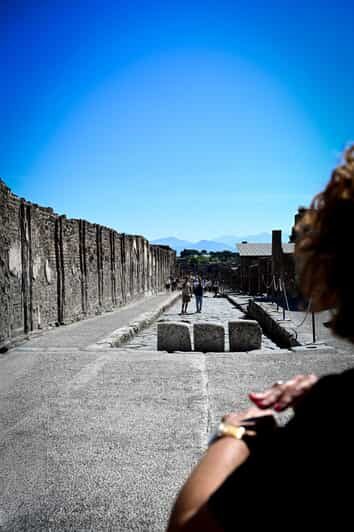
Pompeii is vast, and its remains can be hard to interpret without help. A wall, a mosaic, or a row of stone counters may catch your eye, but a good guide explains what the space did and how it fitted into daily life. This tour is built around that translation: from scattered evidence to a picture of a functioning Roman town.
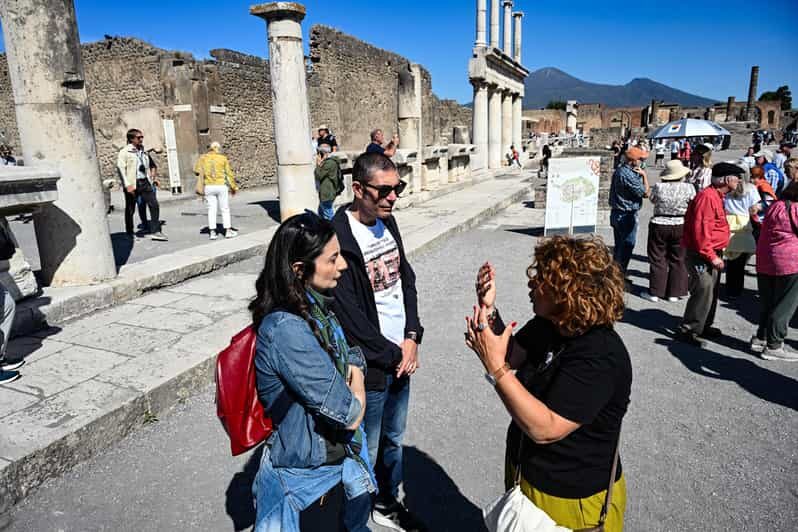
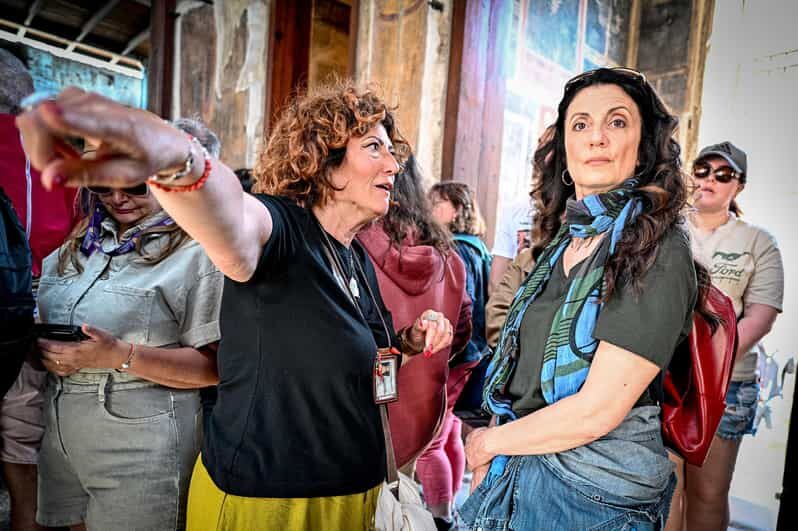
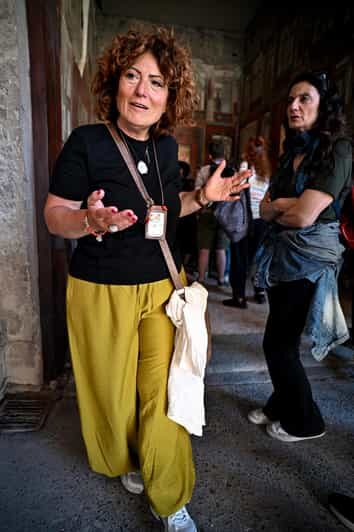
The guides are the main reason the experience earns such strong praise. Pasquale is often described as funny and clear, while Luisa and Younes are noted for explaining the site in accessible language. Eleonora, Costantino, Alessandra, and Lisa are also among the guides named by people who enjoyed their visits. The common thread is not a single scripted style, but an ability to make history easy to follow and to respond to questions.
That matters on a short tour. You are not just being led from one famous spot to another; you are being given a framework for seeing the rest of Pompeii. Some guides use comparisons with modern life, add details about Italian culture, or weave in anecdotes and humor. One visitor even received a small good-luck charm from a guide, a personal touch that shows how warm the experience can feel, though it is not something to expect as part of the standard tour.
You can also read our reviews of more tours and experiences in Pompei Campania

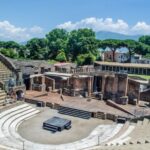

Starting at Piazza Esedra, or arranging transport
For the central meeting option, the tour begins at Piazza Esedra, a convenient place to meet before entering the ruins. The exact starting point depends on the option you select, so check the details for your chosen time and package rather than assuming every group meets there.
If you are staying in Naples, some versions include round-trip transport. That can make the day simpler, especially if you would rather have the journey organized with the visit. One person who chose pickup near their accommodation described a professional driver who shared historical anecdotes along the way; another praised an easy transfer. But transport is not included in every price or option. If you need a hotel pickup, the instructions ask you to contact the agency by email.
There has been occasional confusion around the meeting point, so confirm it carefully and keep an eye on messages from the operator before the tour. You are also asked to send all participants’ first and last names to the agency the day before and to bring an ID card. Those are small tasks, but missing them could create avoidable stress at the start.
The first stretch: public buildings and southern Pompeii
The route begins in the southern districts, among major public buildings. This is a useful way into the site: rather than starting with a string of private houses, you first get a sense of how Pompeii functioned as a community. Your guide can point out the roles of public spaces and explain how civic life shaped the town.
The two-hour format means the walk is selective. You should expect an edited route through important places, not a slow inspection of every corner. That is a plus if you have limited time or want a strong overview before exploring independently. It is a limitation if you have come to study particular buildings or prefer a leisurely pace.
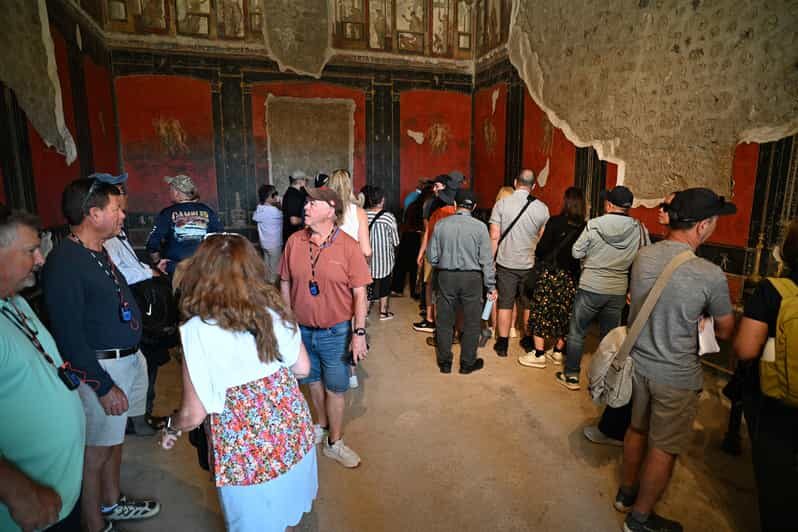
Crowds are another factor. Pompeii is popular, and busy routes can mean competing voices and a quicker pace. Guides sometimes adjust their path to avoid the largest crowds where possible, which can make the explanations easier to hear and the walk more pleasant. Still, the site is not guaranteed to feel quiet, and the route may pass through busy areas.
The Forum: Pompeii’s civic center
The Forum is the tour’s central stop, both in the geography of the ruins and in the story of the city. It was the focus of political and economic life, ringed by temples and other imposing buildings. With a guide, you can start to see the Forum as a working public space rather than simply a broad open area among columns and walls.
This is where the archaeologist’s context earns its keep. The remains can suggest scale and status, but the guide helps you picture the activities and relationships that once gave the space purpose. You get a clearer sense of how civic, religious, and commercial life met in one place.
Expect interpretation rather than a long, quiet pause. The group is moving through a large archaeological site, and the tour has several more stops to cover. If a particular building catches your interest, make a note of it and ask your guide a question. You may also want to return to it after the guided portion if your ticket and plans allow you to remain at the site.
Inside wealthy homes: frescoes and mosaics
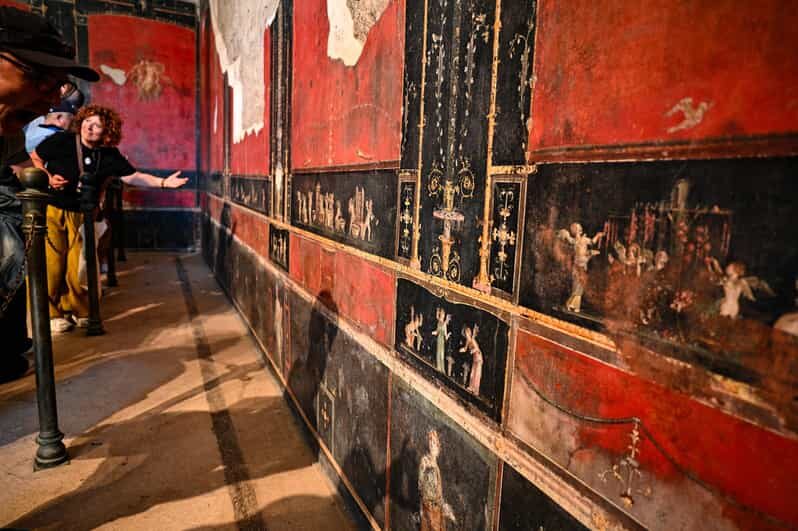
The route includes wealthy patrician houses, or domus, where frescoes and mosaics offer some of the most vivid evidence of private life. These rooms bring Pompeii down from public history to the scale of a household: decoration, taste, wealth, and the way people moved through their homes.
A guide can help you notice details you might otherwise pass by. The value is not only in seeing an intact or striking design, but in understanding what its placement and style can tell you. Several people describe guides who made the homes feel less like museum rooms and more like places where people once lived. That kind of explanation is especially helpful when time is short and you need to choose what to focus on.
The route is described as visiting wealthy homes, so do not assume you will see every house or every famous interior. Access and the exact sequence may vary. The tour’s aim is to show you notable examples and explain how they fit into a broader picture of Roman life.
You can also read our reviews of more guided tours in Pompei Campania
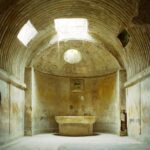
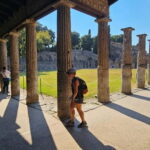
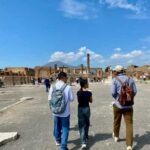


Baths and taverns: daily routines in view
Thermal baths and taverns help round out the walk. They shift the story from civic ceremony and elite homes to practical daily routines: where people went to bathe, eat, and spend time. These places also make it easier to imagine the city as a lived-in town, not just a collection of monumental remains.
The guide’s explanations are important here because the physical spaces may not explain themselves. You can look at a room or a set of counters and understand more once you know how it was used. The tour promises to explain how baths and taverns operated, connecting the layout to Roman habits and social life.
The route is described as covering these subjects, but the available time may not allow a detailed visit to every bath complex or food shop. If you are particularly interested in these buildings, ask how much time the group will spend on them, or plan to return after the tour. One person who stayed on independently after the guided walk used the extra time to see additional sights, including bath houses.
New excavations and the city’s last moments
Recently uncovered areas are included, offering a look at Pompeii’s ongoing archaeological work rather than only its most familiar ruins. That is a welcome element for anyone who has seen pictures of the Forum and famous houses before. New excavation areas can add a sense that Pompeii is still being studied and that the story of the site is not frozen in the past.
The tour ends at the plaster casts of victims. It is a sobering finish. The casts give physical form to the people who died during the eruption and make the city’s destruction feel personal, not abstract. This is not a lighthearted stop, and it changes the tone of the visit after the jokes and everyday details that may have carried you through earlier parts of the walk.
The cast display is often described as a moving moment, and it gives the route a clear emotional close. If you are visiting with children or anyone who may find the subject upsetting, keep in mind that the tour ends with an explicit reminder of the disaster’s human cost.
How the two-hour pace feels
The guided portion lasts about two hours, while the full activity is listed as two to three and a half hours depending on the selected option. That distinction matters: transport and other arrangements can extend the overall outing, but they do not mean you get more time with the archaeologist inside the ruins.
People repeatedly describe the two hours as passing quickly. The format is brisk by design, with enough time to cover the main themes but not enough to stop everywhere. If you like a clear route and a guide who keeps the story moving, this can be a good fit. If you prefer long pauses for photographs, close study, or wandering down side streets, the pace may feel tight.
The best plan is to treat the guided visit as your orientation, not necessarily your entire Pompeii day. Some tour participants have stayed in the ruins afterward to explore more on their own. Check the arrangements for your specific option before counting on extra time, and make sure you have enough energy for a large outdoor archaeological site.
What $43 buys you, and which option to choose
At $43 per person, the core offer combines an archaeologist guide, a two-hour route, and admission that lets you skip the ticket-office line. The value is strongest if you want an expert to explain what you are seeing and have limited time to organize the visit yourself. A guide can turn the Forum, a house, or a bath into a connected story, which is a meaningful upgrade over simply walking past ruins.
The ticket is useful, but skip-the-line refers to the ticket-office queue, not a promise that every entrance or path will be empty. The site can still be busy, and crowds may gather around popular areas. The price also does not automatically include transport from Naples; that depends on the option you choose. Compare the meeting point, pickup details, and duration before you book so you are weighing like against like.
A private group is available, which may suit you if you want a more personal pace or have specific questions. Group size is not fixed in the details, although some people have had small groups. Do not assume yours will be the same size. The tour is offered in English, French, Italian, and Spanish, so select the language that lets you follow the explanations comfortably.
Free cancellation up to 24 hours in advance and a reserve-now, pay-later option offer some flexibility. Starting times depend on availability. Bring a hat, camera, biodegradable sunscreen, and your ID card. Pompeii is an outdoor site, and sun protection is practical even on a short visit.
Who should book this Pompeii tour?
I would choose this tour if you want a fast, well-guided introduction to Pompeii and value interpretation more than an unhurried wander. It is particularly useful for a first visit, a tight schedule, or anyone who wants an archaeologist to explain the connection between public buildings, domestic interiors, and daily routines. The included admission and optional Naples transport can also reduce the number of moving parts in your day.
It may not suit you if you want to spend several hours exploring independently at a slow pace, or if you have a long list of specific houses and buildings to see. Two hours covers highlights, not the whole archaeological park. For a fuller visit, think of the guided route as the start, then allow extra time on your own if your plans and ticket arrangements permit.
Book it if you want the ruins to make sense quickly. Choose your language and transport option with care, confirm the meeting point, and leave room in your day if you do not want the visit to end at the guide’s final stop.
Pompeii: Guided tour with an archaeologist and ticket included
FAQ
How long does the tour last?
The activity is listed as two to three and a half hours, depending on the option. The guided walk inside Pompeii lasts about two hours.
Is the Pompeii admission ticket included?
Yes. The tour includes a skip-the-ticket-line admission ticket.
Where does the tour meet?
The meeting point depends on the option you select. The central meeting point is Piazza Esedra, but check the details for your specific booking.
Does the tour include transport from Naples?
Some options include round-trip transportation from Naples. Transport is not part of every option, so check before booking.
Which languages are available?
Live guides are listed for English, French, Italian, and Spanish.
What should I bring?
Bring a hat, a camera, biodegradable sunscreen, and your ID card. You are also asked to send the first and last names of all participants to the agency the day before the tour.
You can check availability for your dates here: