Peranakan culture took shape through generations of exchange, and this museum shows how that history lives in everyday things: clothing, tableware, furniture, family photographs, and food. Its three floors look at identity through origins, home, and style, pairing historic objects with videos, interviews, and contemporary work.
I like two things in particular: the collection makes cultural history tangible, and the personal stories and cooking demonstrations add voices beyond the display cases. The main consideration is scope: standard admission covers permanent galleries only, and the museum is focused enough that visitors seeking a large, all-day attraction may finish sooner than expected.
- At a glance
- What Peranakan means, and why the museum begins there
- Three floors, three ways to understand identity
- Objects are the draw, but the stories make them stick
- How much time to set aside
- Guided tours and small ways to get more from the visit
- What the ticket includes, and what it does not
- Opening hours and simple etiquette
- Who will value this museum most
- Should you book the Peranakan Museum?
- FAQ
- How long does a visit take?
- What does standard admission include?
- Who can use this ticket package?
- Are concession tickets available?
- What are the museum’s opening hours?
- Where is the Peranakan Museum?
- Can I take photographs inside?
- Can I use my voucher on a different date?
- Is the museum closing early on October 29, 2026?
- The Best Of Singapore!
- More Museum Experiences in Singapore
- More Tours in Singapore
- More Tour Reviews in Singapore
- Not for you? Here's more nearby things to do in Singapore we have reviewed
At a glance
 1 / 2
 2 / 2
- Three floors follow origins, home, and style: The themes offer a clear route through Peranakan identity rather than a room-by-room catalogue of objects.
- Historic objects share space with contemporary work: Look for ceramics, textiles, jewelry, furniture, and photographs alongside art, fashion, and design.
- Food and family stories add human detail: Cooking videos, recorded demonstrations, and community interviews put daily life beside the objects.
- Allow one to two hours, or longer if you linger: Some visitors move through in under an hour; taking time with the videos and interviews can extend a visit to two or three hours.
- The ticket covers permanent galleries only: Special exhibitions are separate, so check what is showing before you decide which admission to buy.
- Digital entry is simple, but the date matters: Have your voucher ready to scan, and use it on the date selected when booking.
👉 See our pick of the 25 Best Guided Tours In Singapore
What Peranakan means, and why the museum begins there
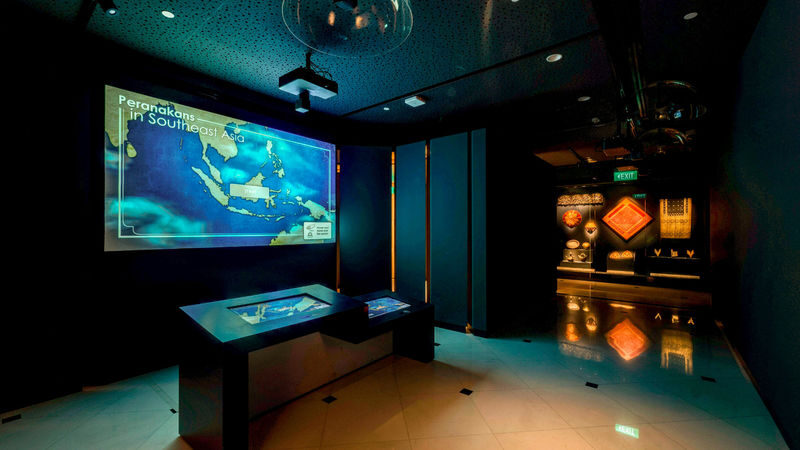
Peranakan is not just a label for one set of objects or one community. The museum explores how Peranakan identities formed across Southeast Asia and how people understand those identities today. Its central question, what is Peranakan, gives the galleries a useful thread: you are invited to consider origins, shared customs, family life, and change rather than treat culture as a fixed list.
That wider view matters. The displays address Peranakan communities beyond the familiar Baba Nyonya story, and visitors may encounter links among Chinese, Malay, Indian, and European influences. The point is not to reduce a complex history to a simple blend. Instead, the galleries show how contact between cultures can shape food, dress, craft, and everyday life over time.
The museum reopened on February 17, 2023, after nearly four years of renovation. Its refreshed design brings contemporary art, fashion, craft, and design into the permanent galleries. That approach helps the collection feel connected to living culture, rather than sealed off as a display of beautiful things from another age.
You can also read our reviews of more museum experiences in Singapore


Three floors, three ways to understand identity
The visit is organized around origins, home, and style, spread across three floors. This gives you a helpful frame as you move through the museum, though the experience is not a formal guided itinerary. You can follow the themes at your own pace, pause at objects that catch your eye, and spend more time with the media that interests you.
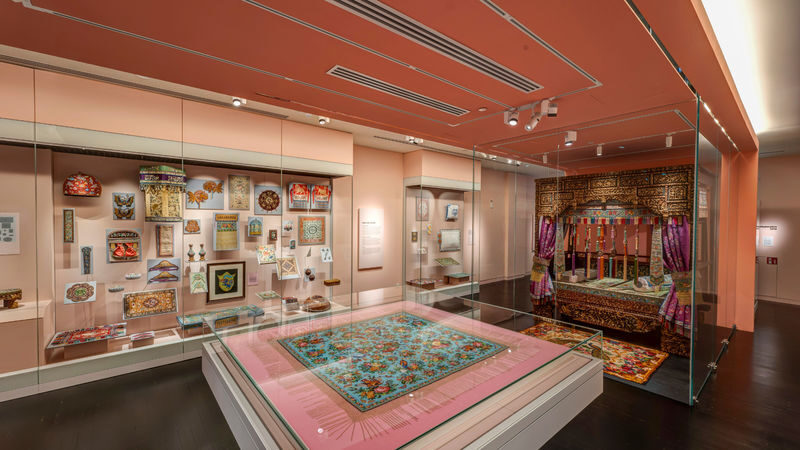
The origins galleries set up the story of Peranakan communities and the forces that shaped identity. Objects can make that history easier to grasp than dates alone: family photographs, household pieces, and craft show how broad changes played out in personal lives. Videos and community interviews add another layer, with people describing identity in their own terms.
The home galleries turn attention to domestic life. Furniture and everyday objects help you picture how a household was arranged and what mattered in family and social settings. The collection is not limited to grand possessions. Its value lies in showing how customs were practiced, passed on, and adapted.
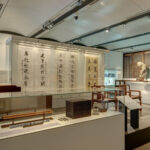
Style brings some of the museum’s most eye-catching displays. Expect textiles, clothing, jewelry, ceramics, and finely worked pieces that reveal taste as well as skill. Visitors particularly notice the textiles and accessories, including batik and kebaya. The jewelry display includes large diamonds and sapphires, while carved teak furniture and detailed ceramics reward a slower look.
Objects are the draw, but the stories make them stick
A museum of beautifully made things can leave you admiring craftsmanship without understanding the people behind it. Here, the mix of objects and interpretation helps bridge that gap. Cooking videos, recorded demonstrations, and personal reflections place cultural practices in daily life, while interviews offer different perspectives on identity and belonging.
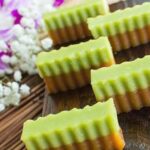
The food material is especially useful if you want more than a visual introduction. Cooking demonstrations connect ingredients and techniques with family customs, making the culture easier to remember after you leave. You may find yourself spending longer here than expected, particularly if you watch the videos rather than skim the labels.
The displays also include contemporary commissions and work by artists, artisans, and designers from Singapore and the region. These pieces show that Peranakan culture is not only a subject for historical study. It remains a source of ideas for current creative work, and the contrast between old and new gives the galleries a welcome sense of movement.
How much time to set aside
The suggested visit length is one to two hours. That is a sensible starting point for seeing the permanent galleries without rushing, especially if you read the text and stop for a few videos. The museum is compact compared with Singapore’s largest museums, but visitors with a strong interest in textiles, jewelry, food, or cultural history can easily spend more time.
If you move quickly, you may finish in less than an hour. If you want to watch interviews, cooking videos, and recorded demonstrations, plan on two hours or more. One visitor recommended allowing two to three hours, which makes sense if you like to read closely or join a guided tour.
The museum can also be a practical indoor stop during hot or rainy weather. It is an air-conditioned place to take a break while still doing something connected to Singapore’s cultural life. There are restrooms and water fountains, and the museum has lift access to all floors.
Guided tours and small ways to get more from the visit
Free guided tours have been available, and they can add personal context that labels alone cannot provide. Guides have included Joyce, who shared childhood experiences connected to Peranakan culture, Rapheal, and Miss Huang, who led a Mandarin tour. Tour availability and timing can change, so check the schedule at the museum before building your day around one.
If a tour is running, consider joining near the start of your visit. A guide can give you a framework for noticing details in the objects and explaining how they connect to broader cultural practices. If no tour fits your timing, the interviews and recorded demonstrations still give you more than a silent walk through cases.
Families can look for child-friendly prompts and activities. The museum has offered worksheets and artifact-finding flyers, along with a stamping activity. These can help children stay involved, though children must remain with an adult at all times. If you use a worksheet in the galleries, bring pencils rather than pens.
Some visitors have also used a QR code in the museum to access a Chinese audio guide. Treat this as a possible extra rather than a guaranteed feature, and check on site if you would like to use it.





What the ticket includes, and what it does not
The listed admission starts at $9.39 and is for foreign nationals. It covers the permanent galleries, not special exhibitions. That distinction matters: if a temporary show is the main reason for your visit, check its admission terms and cost separately before buying.
For the permanent collection, the price can represent good value if you are interested in Peranakan culture and take time with the displays. You are paying for access to three floors of objects, interpretation, videos, and contemporary work, not just a quick look at a handful of cases. The value drops if you expect a broad survey of all Singapore history or a full-day museum experience.
Children aged six and under enter free. Children aged seven and older need a ticket. Concession admission is available for students with a valid student pass and seniors aged 60 or above with valid identification. The ticket package described here is specifically for foreign nationals, so check the museum’s current admission rules if you are a Singapore resident.
You can book for the same day, and digital vouchers are accepted at the entrance for scanning. The voucher is valid only for the selected date, and the admission is non-refundable, so choose carefully. This is convenient when plans are firm, but not ideal if your schedule may change.
Opening hours and simple etiquette
The museum is at 39 Armenian St, Singapore 179941. It is open Friday from 10am to 9pm and Saturday through Thursday from 10am to 7pm. Last admission is 30 minutes before closing. Hours and closure dates can change, so check the latest information before setting out.
There is a scheduled early closure at 2pm on October 29, 2026. If your visit falls on that date, confirm the details before you go. More generally, Friday’s later closing gives you extra flexibility if you want to visit after other daytime plans.
Photography without flash and videography are permitted in the galleries. Commercial reproduction of images of the museum or its collection requires permission. Keep your voice low, do not touch objects or lean on display cases, and leave food and drink outside. Large backpacks, trolleys, and bulky items should stay out of the galleries.
Who will value this museum most
I would put the Peranakan Museum high on the list for anyone curious about Singapore’s multicultural identity, especially if you enjoy seeing how broad history appears in clothing, food, furniture, and family life. It is also a good fit if you prefer a focused museum with room to think, rather than a large institution that demands a full day.
Families can make the visit more engaging with activity sheets and object-finding prompts, while design-minded visitors may linger over textiles, jewelry, ceramics, and carved furniture. The contemporary commissions also give the museum something for visitors who want to see how heritage informs current art and design.
It may be less satisfying if you want a large collection spanning many unrelated subjects, or if you are buying a ticket mainly for a special exhibition. The permanent galleries have plenty to explore, but the museum is centered on one cultural subject and is not enormous. Check the exhibition details before you book, and plan your time according to how deeply you want to read and watch.
Should you book the Peranakan Museum?
Book it if you want a thoughtful, manageable introduction to Peranakan identity and enjoy museums that connect objects with personal stories. Its best feature is the balance between beautiful material culture and everyday context, from textiles and jewelry to cooking videos and interviews.
Before paying, confirm that the permanent galleries are what you want to see, since special exhibitions are not included in this ticket. Allow at least an hour, more if you plan to join a tour or watch the media, and select a date you can keep. If those conditions fit your plans, this is a worthwhile stop for understanding one important strand of Singapore’s cultural life.
Peranakan Museum
“Booking was indeed confirmed instantly. The building is very pretty and the exhibits inside a very informative glimpse into the Peranakan culture….”
FAQ
How long does a visit take?
The suggested visit takes one to two hours. You may finish sooner if you move quickly, or spend two to three hours if you watch videos, read closely, or join a guided tour.
What does standard admission include?
It includes access to the permanent galleries only. Special exhibitions are not included.
Who can use this ticket package?
The package is for foreign nationals. Children aged seven and older need a ticket. Children aged six and under enter free.
Are concession tickets available?
Concessions are available for students with a valid student pass and seniors aged 60 or older with valid identification. Show the required identification at the museum.
What are the museum’s opening hours?
The museum is open Friday from 10am to 9pm, and Saturday through Thursday from 10am to 7pm. Last admission is 30 minutes before closing.
Where is the Peranakan Museum?
It is at 39 Armenian St, Singapore 179941.
Can I take photographs inside?
Photography without flash and videography are permitted in the galleries. Commercial use of images of the museum or its collection requires permission.
Can I use my voucher on a different date?
No. The voucher is valid only on the selected date, and the admission is non-refundable.
Is the museum closing early on October 29, 2026?
Yes. The museum is scheduled to close at 2pm on October 29, 2026. Check the latest opening information before visiting, since hours and closure dates may change.