Tutankhamun’s tomb is the star here, recreated at full scale so you can get a sense of its rooms and treasures without making the long trip to Egypt. The exhibition pairs that physical setting with more than 130 replicas, projections, and 3D scans of the famous golden mask and throne.
I like two things especially: the show connects Tutankhamun’s brief life to the upheaval under his father, Akhenaten, and it gives you time to look closely at the objects rather than rushing you through a guided group. You can also take photos, and the displays are not behind glass cases, according to visitors who have been there.
One caveat: this is a replica exhibition, not a display of original treasures, and the hall is not large. Some video content may lack English translation, so if you rely on English, check what is available on your visit date.
- A full-scale tomb recreation gives you a more tangible sense of the burial space than a row of objects alone.
- More than 130 replicas cover Tutankhamun’s treasures and the story around their discovery.
- Digital elements include projections and 3D scans of the actual golden mask and throne.
- A self-guided visit lets you set your own pace, with most visits taking about one to one and a half hours.
- English support may vary: some written material is available in Japanese and English, but video translation is not assured.
- The venue address needs a quick check: the meeting-point details and museum address differ in the supplied information, so use the map and voucher before setting out.
- Tutankhamun’s tomb is the main event
- Akhenaten’s upheaval puts Tutankhamun in context
- How the exhibition unfolds
- Replicas, photos, and the value of seeing things up close
- Language and interpretation
- How long to allow, and what the ticket buys
- Getting to the museum in Minato Mirai
- Who will get the most from this visit
- Should you book the Tutankhamun exhibition?
- FAQ
- How long does the exhibition take?
- What is included in the ticket?
- Are the exhibits original artifacts?
- Can I take photos?
- Is the exhibition available in English?
- What are the opening hours?
- How do I get to the museum by train?
- Can children enter for free?
- Can I leave and re-enter?
- The Best Of Yokohama!
- More Museum Experiences in Yokohama
- More Tours in Yokohama
- More Tour Reviews in Yokohama
- Not for you? Here's more nearby things to do in Yokohama we have reviewed
Tutankhamun’s tomb is the main event
 1 / 3
 2 / 3
 3 / 3
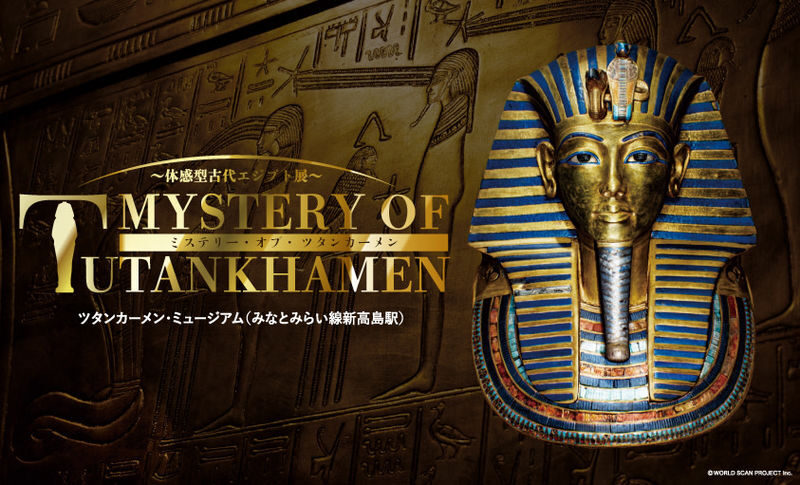
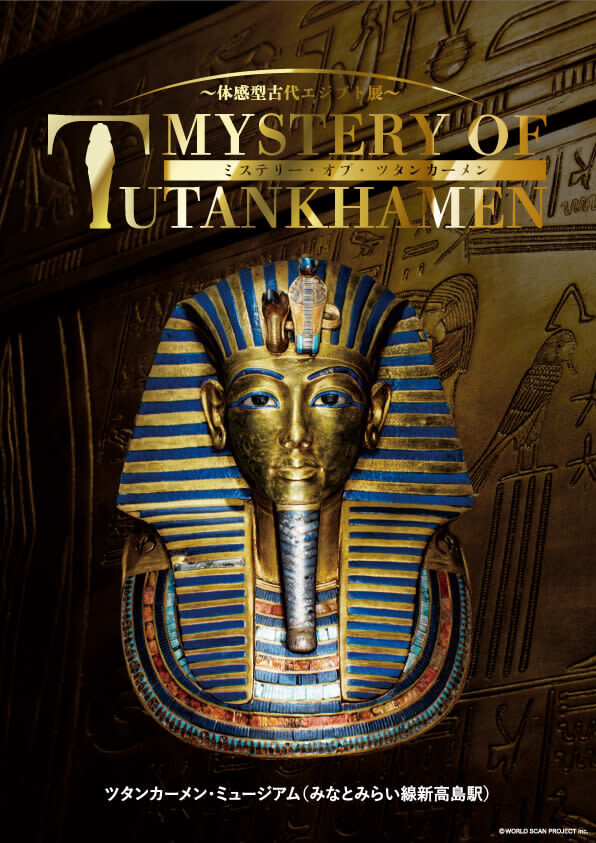
The exhibition’s central promise is a close look at the world of King Tut, with a reconstructed tomb and replicas of the objects associated with his burial. A full-scale recreation matters because tombs can be hard to picture from photographs or display cases. Here, you can move through a version of the space and consider how the objects fit into the story of a young ruler’s burial.
Keep expectations grounded: you are seeing replicas, not the original mask, throne, or tomb contents. For many people, that is still a worthwhile trade. The display aims to show the objects and setting in a way that makes them easier to see and understand, rather than asking you to peer at distant originals in a crowded museum.
The exhibition also uses CG 3D scans of the actual golden mask and throne. That gives the digital sections a different role from the physical replicas: one helps you examine the form of celebrated objects, while the other gives you a sense of their scale and presence. The mix of physical and digital material is the point. If you come expecting a conventional collection of authentic antiquities, you may be disappointed. If you want a visual introduction to Tutankhamun and his tomb, it has more to offer.

👉 See our pick of the 15 Best Guided Tours In Yokohama
Akhenaten’s upheaval puts Tutankhamun in context
Tutankhamun’s short life is only part of the story. The exhibition also introduces his father, Akhenaten, and the family’s role in a major religious shift, from polytheism toward monotheism. The supplied exhibition description says Akhenaten and his family were later erased from history for a long period, leaving their story and Tutankhamun’s place in it shrouded in mystery.
That context helps explain why a show about Tutankhamun is not just a parade of golden objects. The political and religious changes around his family give the exhibits a larger frame: they point to a period of upheaval, followed by a long gap in how that family was remembered. You do not need to arrive with a detailed knowledge of Egyptian history to follow the basic thread.
The approach should suit curious visitors who want a compact introduction, as well as history fans who enjoy seeing a story laid out through objects and reconstructions. But don’t expect an exhaustive account of ancient Egypt. The focus here is Tutankhamun, his family, the tomb, and the archaeological story connected to its discovery.
You can also read our reviews of more museum experiences in Yokohama


How the exhibition unfolds
This is a self-guided visit, so you can spend more time with the sections that interest you and move on when you are ready. The venue is described as relatively small, and most visits take about an hour to an hour and a half. Allow up to two hours if you like to read each explanation carefully or watch the digital content at a relaxed pace.
The exhibition’s subject matter gives you a natural route through the story. You begin with the historical setting of Akhenaten and his family, then encounter Tutankhamun and the mystery surrounding his life. From there, the recreated tomb and replicas make the burial and its objects more concrete. Projections and digital scans add another layer, including close views of the mask and throne.
That is a useful way to think about the visit, but exhibit content and access can change. Some facilities or displays may not be available on a particular date, and the exhibition itself may be changed or canceled. If one feature is the main reason you are booking, check the official information before you go rather than assuming every element will be on view.
A special event can also change the feel and length of a visit. One event used staff acting out scenes while explaining the archaeological process and the origins of exhibits. That is not something to count on as part of a standard ticket, but it shows how the venue may add live interpretation on selected dates. Check for event announcements if that kind of explanation would make the visit more engaging for you.
Replicas, photos, and the value of seeing things up close
The replicas are the exhibition’s strength and its main limitation. Their value is visual and educational: you can see a large number of objects arranged around the Tutankhamun story, with the recreated tomb helping you imagine how the material relates to a burial space. The displays are also reported to be free of glass cases, and photography is allowed, which makes it easier to look closely and keep a record of the visit.
But replicas do not have the same historical weight as original objects. If your priority is to see authentic ancient Egyptian artifacts, this is not a substitute for a museum collection. If you are more interested in the form, setting, and story, the replicas can still make the subject vivid and accessible. Some visitors have found the exhibition educational and entertaining; others have felt that the venue was too small for the admission cost. Both reactions make sense, depending on what you expect.
The final section is described as particularly atmospheric, with the tomb setting bringing the theme together. That may be the moment when the replica format works best: instead of considering objects one at a time, you get a broader impression of a burial space. Still, this is a short visit, not an all-day museum outing.
Language and interpretation
Language support deserves a little planning. Japanese and English writing is available in at least some parts of the exhibition, but English access is not guaranteed for every element. In particular, the first video section may not have an English translation, and another visitor wanted English subtitles and more video explanation during the tour.
If you are comfortable learning from visual displays and short written explanations, you can still follow much of the experience. If English narration or subtitles are essential for you, contact the venue or check the latest official information before booking. The exhibition is self-guided, so you are not relying on a named guide to explain everything in English.
Staff-led interpretation may occur during special events, but it should not be treated as a regular feature. For a standard visit, plan on moving through the displays at your own pace and using the written information provided.
How long to allow, and what the ticket buys
The listed duration is one to two hours. A brisk visit may take around an hour, while an unhurried look at the explanations and digital features can bring it closer to an hour and a half or two. That makes the exhibition a manageable indoor stop, especially if you want a shorter cultural visit rather than a full day devoted to a museum.
Tickets are advertised from $16.45, though the price you see can vary by date and package. One visitor referred to paying 2,600 yen and felt the venue was small for that cost. That is a fair point to weigh: the ticket buys access to a focused exhibition with over 130 replicas, a recreated tomb, and digital features, but not a large collection of original artifacts or several hours of displays.
I would judge the value by your interest in the subject. For someone curious about Tutankhamun, the tomb, or Egyptian history, the combination of replica objects and digital material may justify the cost. If you only want to see original antiquities, or expect a sprawling museum, save your money for a different attraction.
Children aged five and under enter free. Tickets are date-specific, and the voucher is valid only for the selected date and, where applicable, time. Re-entry is not allowed after you leave, so plan to finish your visit before stepping outside.




Getting to the museum in Minato Mirai
The museum is listed as Tutankhamun Museum, Yokohama Minato Mirai PLOT48, at 4-chome-3-1 Minatomirai, Nishi Ward, Yokohama. The stated train access is a seven-minute walk from Exit 2 of Shin-Takashima Station on the Minatomirai Line.
There is a discrepancy in the supplied location details: the meeting point is also listed as 3-chome-4-1 Minatomirai, while the museum address is 4-chome-3-1. Before you set out, check the map linked with your booking and match the address on your voucher to the venue. That small check may save you an unnecessary walk.
A visitor driving reported spending more than an hour looking for parking outside the premises. No parking arrangements are specified, so I would favor the train rather than assume a convenient space will be available. Opening hours are listed as 10:00 am to 6:00 pm daily, with last admission 30 minutes before closing. Hours and closure dates may change, so confirm them before traveling.
Who will get the most from this visit
This exhibition is a good fit if you are interested in ancient Egypt and want a compact, visual introduction to Tutankhamun. The full-scale tomb recreation, detailed replicas, and 3D scans offer several ways into the subject, and the self-guided format lets you take your time without being tied to a group schedule.
It can also work well as a rainy-day option. The venue is indoors, and the visit is short enough to slot into a day in Yokohama without taking it over. Families with young children may appreciate the visual displays, though the experience’s value will depend on how much the child enjoys museum-style exhibits and explanatory material.
I would think twice if you only want original artifacts, need English subtitles throughout, or expect a large exhibition that fills several hours. The attraction’s appeal lies in the presentation and the recreated setting, not in the size of the hall or the authenticity of the objects. Book it for the story and the tomb, not for a major archaeological collection.
Should you book the Tutankhamun exhibition?
Book if you want a focused look at Tutankhamun’s story, especially the recreated tomb and the blend of physical replicas with digital views of the mask and throne. At roughly one to one and a half hours for many visitors, it is a manageable stop and a useful indoor choice in Minato Mirai.
Skip it if original Egyptian artifacts are your main goal, or if the ticket price feels steep for a small venue. Before paying, check English-language support, opening details, and the correct address for your date. Those checks will help you decide whether this particular version of ancient Egypt fits your day in Yokohama.
Mystery of Tutankhamen: An immersive Ancient Egyptian exhibition in Yokohama
“It is a lot of fun. The exhibition hall is actually not very large, but the exhibits and explanations are very rich. We happened to catch an event…”
FAQ
How long does the exhibition take?
The stated visit length is one to two hours. A typical visit may take about one to one and a half hours, depending on how much time you spend with the displays.
What is included in the ticket?
Admission to MYSTERY OF TUTANKHAMEN is included. Personal expenses are not included.
Are the exhibits original artifacts?
The exhibition features replicas, including more than 130 replicas and a full-scale recreation of Tutankhamun’s tomb. It also uses CG 3D scans of the actual golden mask and throne.
Can I take photos?
Visitors have reported that photography is allowed and that the exhibits are not behind glass cases. Check any signs or staff instructions at the venue on the day.
Is the exhibition available in English?
Some written material is available in Japanese and English, but English support may not cover every part. The first video section may not have an English translation.
What are the opening hours?
The listed hours are 10:00 am to 6:00 pm every day, with last admission 30 minutes before closing. Hours and closure dates may change, so check the official information before visiting.
How do I get to the museum by train?
The stated route is a seven-minute walk from Exit 2 of Shin-Takashima Station on the Minatomirai Line.
Can children enter for free?
Children aged zero to five enter free.
Can I leave and re-enter?
No. Re-entry is not allowed after you leave the venue.