Phnom Penh’s story is impossible to understand from its riverfront and markets alone. This eight-hour tour takes you from the city’s everyday trade to Tuol Sleng, a former Khmer Rouge prison, and Choeung Ek, a site of mass executions. The contrast gives the day its purpose: Cambodia’s recent past is not a distant footnote here.
I like two things in particular: a local guide can put the sites in context, and the markets add a glimpse of daily life beyond the memorials. Guides including Nao Sok, Sam and Sandra have been praised for answering questions and explaining Cambodian culture as well as history. The main consideration is the emotional weight of the genocide sites, plus the fact that admission and lunch are not included.
- At a glance
- Why these four stops work together
- Central Market: a working city beneath the dome
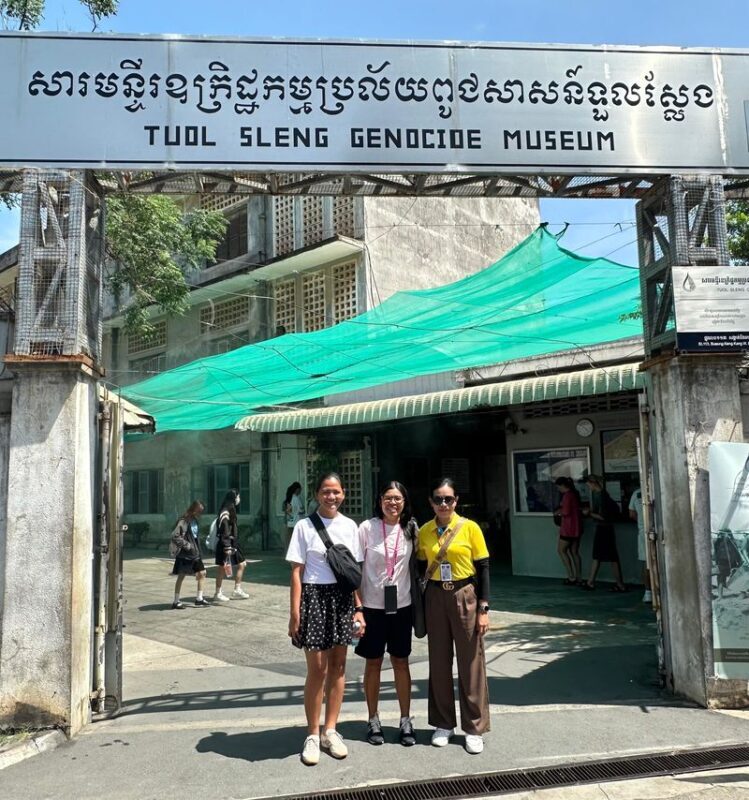
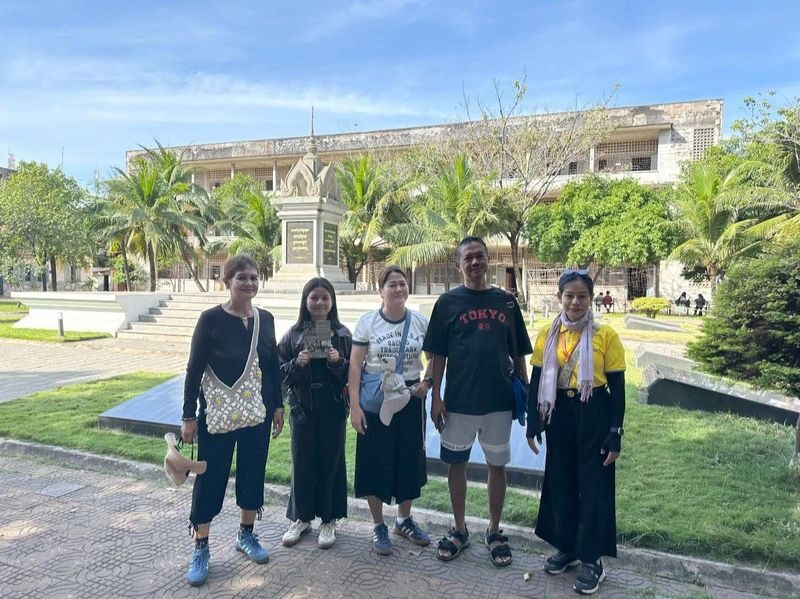
- Tuol Sleng: confronting the prison’s history
- Choeung Ek: a memorial, not a casual stop
- Russia Market: souvenirs and local trade
- The guide can make the day
- Eight hours on paper, possibly less in practice
- What the price covers, and what it does not
- Who should book this Phnom Penh tour?
- FAQ
- How long is the tour?
- What places are included?
- Are entrance fees included?
- Is lunch included?
- Where is the meeting point?
- What should I look for when meeting the guide?
- What transport is used?
- Is there a minimum age?
- What is included in the price?
- Can I choose a specific guide?
- The Best Of Phnom Penh!
- More Historical Tours in Phnom Penh
- More Tours in Phnom Penh
- More Tour Reviews in Phnom Penh
- Not for you? Here's more nearby things to do in Phnom Penh we have reviewed
At a glance
 1 / 10
 2 / 10
 3 / 10
 4 / 10
 5 / 10
 6 / 10
 7 / 10
 8 / 10
 9 / 10
 10 / 10
- Tuol Sleng and Choeung Ek bring the Khmer Rouge period into focus through a former prison and a memorial site.
- Central Market and Russia Market show different sides of local shopping, from daily goods to souvenirs and clothing.
- The guide matters: Nao Sok, Sam and Sandra are among the guides named in past accounts, but you cannot count on a particular assignment.
- Plan for extra costs: Tuol Sleng admission is US$5 and Choeung Ek admission is US$3. Meals and personal purchases are also extra.
- The day may run short: It is scheduled for eight hours, but some outings have finished after five or six.
- Transport depends on group size: If there are only three participants, the operator uses a tuk tuk.

👉 See our pick of the 6 Best Shopping Tours In Phnom Penh
Why these four stops work together
The tour pairs two markets with two sites tied to Cambodia’s darkest period. That balance matters. Tuol Sleng and Choeung Ek can leave you with a painful but incomplete picture if you see them as isolated places. The markets return you to the present, where people shop, work and go about ordinary business.
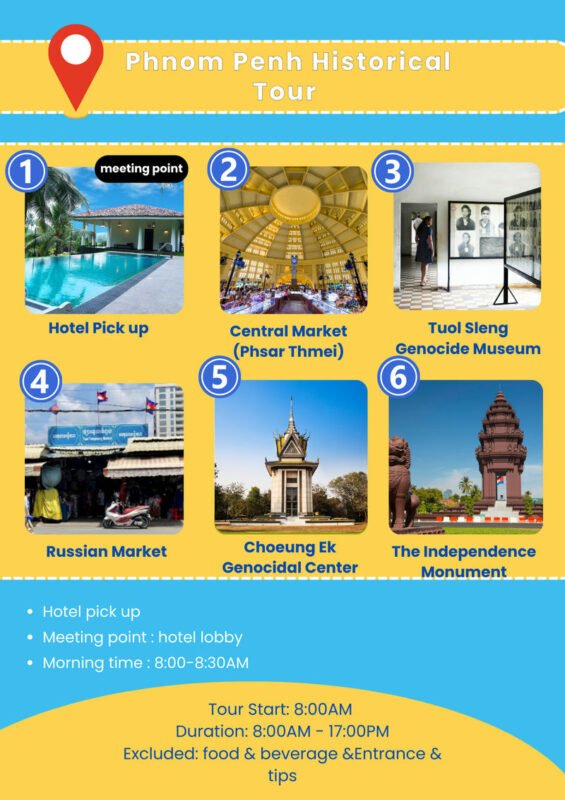
You begin with Central Market, formally called Phsar Thmey, before visiting Tuol Sleng and Choeung Ek. Russia Market rounds out the day. The exact order and timing can shift with traffic and weather, so treat the schedule as a plan rather than a promise.
The stops are not interchangeable. Central Market is a chance to watch the city at work; Tuol Sleng and Choeung Ek call for quiet attention; Russia Market is more about browsing and shopping. Taken together, they make a useful first-day introduction to Phnom Penh.
You can also read our reviews of more historical tours in Phnom Penh


Central Market: a working city beneath the dome
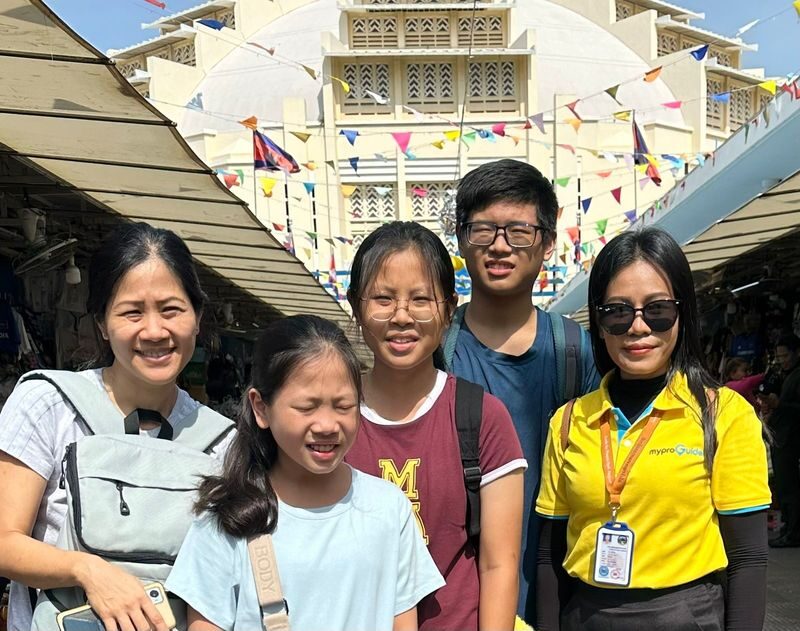
Central Market is the tour’s most ordinary stop in the best sense. It is Phnom Penh’s largest marketplace, with local shopping alongside goods such as clothing, jewelry, watches, sunglasses and souvenirs. The building itself is part of the visit, but the real interest lies in seeing how the market serves everyday needs as well as visitors.
A guide can help explain what you are seeing and point out local products. Cashews and peppercorns are among the Cambodian goods that have caught shoppers’ attention, while the market’s outer areas offer a glimpse of daily grocery shopping. If you have time to buy something, ask your guide for advice before bargaining or choosing a souvenir.
The market is not a single tidy row of craft stalls. Some sections are geared toward jewelry and accessories, while others feel more practical and local. That variety is useful, but it also means you may need to keep track of your group and your belongings in the crowds.
Market time is one of the tour’s more relaxed stretches. Still, do not assume you will have unlimited time to shop. The guide has several major stops to fit into the day, and market hours or traffic may affect the plan.
Tuol Sleng: confronting the prison’s history
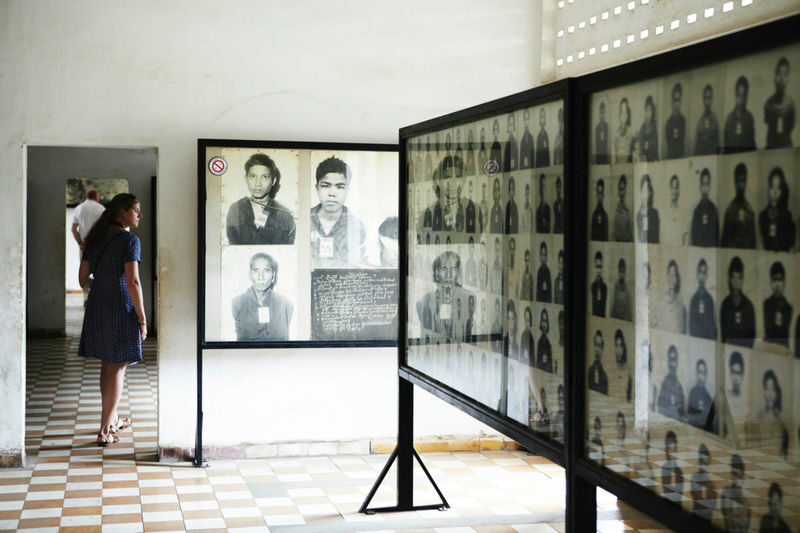
Tuol Sleng Genocide Museum occupies a former Khmer Rouge prison and interrogation center. It is a memorial to people who were imprisoned and tortured there, and it is likely to be the most difficult stop for many visitors. The point is not to rush through a checklist, but to take in what the site represents.
A guide can supply context that is hard to get from a building alone. Nao Sok, Sam, Sandra and other guides have been singled out for explaining the history, answering questions and helping visitors understand Cambodia beyond the exhibits. A good guide can also connect the events to the wider history of the country and the region.
Do not assume the guided visit will cover every floor or room. One visitor reported seeing only the first floor of each building, so if particular parts of the museum matter to you, ask your guide what the visit will include. The tour format gives you an introduction, but it may not leave the time you would have on a dedicated museum visit.
Admission is US$5 and is not included. The site can be emotionally upsetting, and that is a real part of the day to consider before booking. If you need time to pause or absorb what you have seen, tell your guide rather than feeling obliged to keep pace without a break.
Choeung Ek: a memorial, not a casual stop
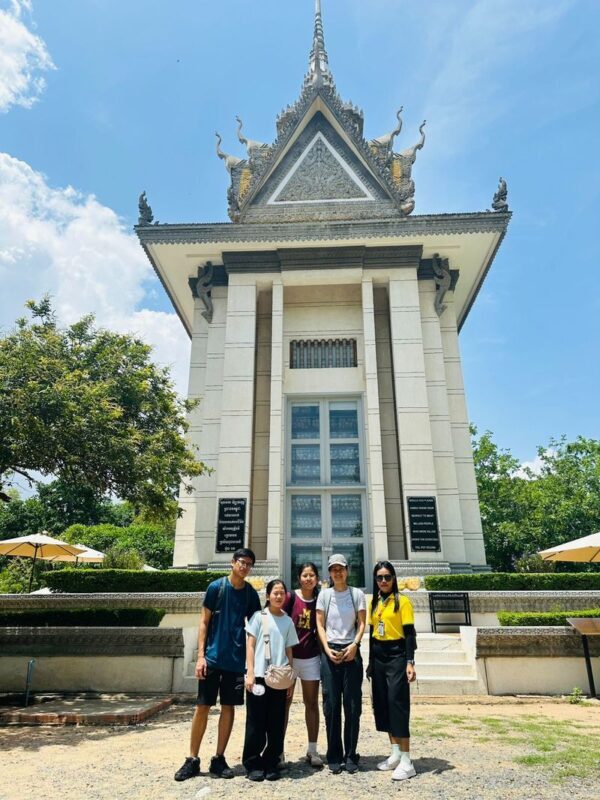
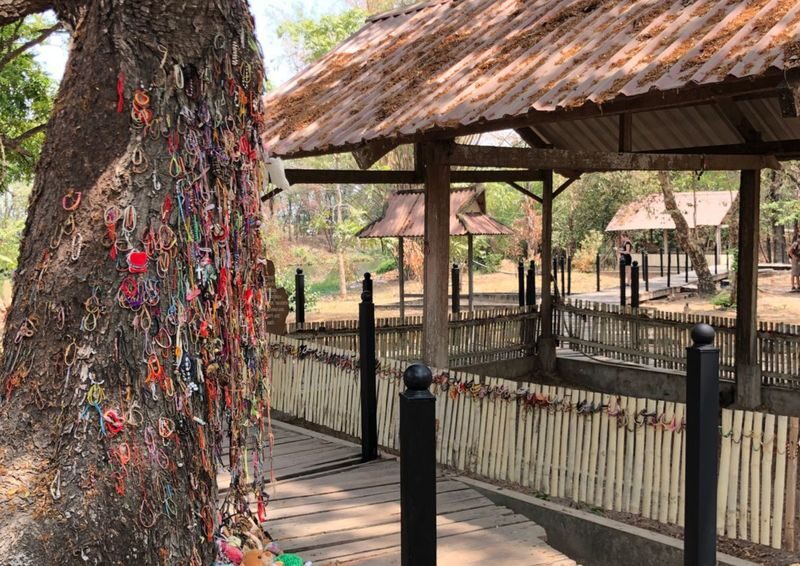
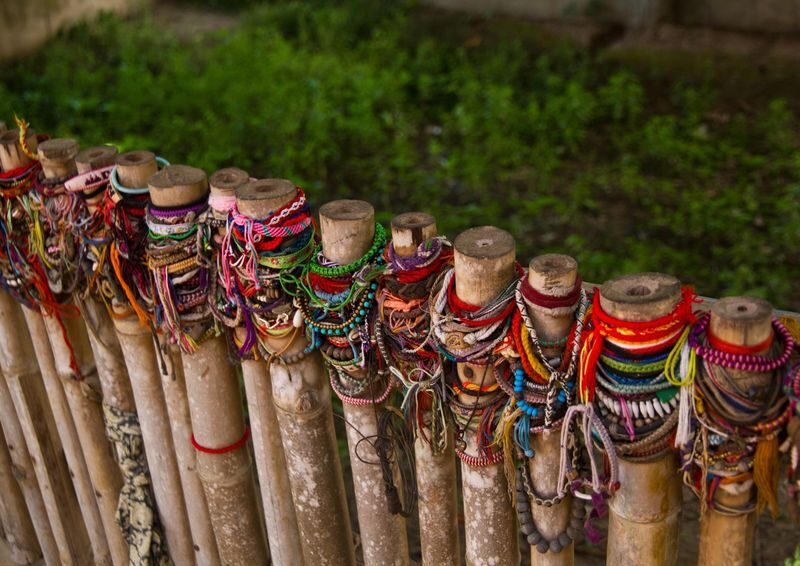
Choeung Ek Genocidal Center, commonly known as the Killing Fields, is a site of mass executions during the Khmer Rouge regime. It is now a memorial, including a memorial tower, and its quieter setting can make the history feel especially stark. This is a place for respectful behavior and time to reflect.
The guide’s explanation is valuable here because the site’s meaning extends beyond what you can see. Guides have shared historical context and, in some cases, personal memories of the period. That kind of account can make the visit more human, but each guide’s approach differs, and no particular story or guide is guaranteed.
Admission is US$3, separate from the tour price. Taken with the US$5 fee at Tuol Sleng, the two main historical sites add US$8 per person before you account for food, drinks or shopping.
The emotional intensity is not a drawback to hide, but it is worth planning around. If you are visiting with someone aged 12 or older, consider whether they are ready for difficult material. The activity sets 12 as the minimum age, but age eligibility does not necessarily mean the subject matter will suit every young person.
Russia Market: souvenirs and local trade
Russia Market adds a different note after the memorial sites. It is known for a wide range of goods, including clothing, electronics, souvenirs and local crafts. You can browse for a keepsake or simply observe how another Phnom Penh market works.
This is the more obvious place to shop for items such as krama, the traditional checked scarf sold in many shops. The market is worthwhile if you enjoy comparing goods and seeing local trade up close, but it may feel less compelling if you are not interested in shopping. Keep your expectations grounded: the value is in the mix of stalls and local atmosphere, not in a guaranteed bargain.
Market visits also depend on the day’s timing. The itinerary may change with traffic or weather, and one outing has substituted Wat Phnom when Central Market was closing. That is a reminder to stay flexible rather than treating every stop as fixed to the minute.


The guide can make the day
The strongest reason to choose a guided tour is the explanation between places. The history of the Khmer Rouge is complex, and the sites are more meaningful when you understand how they fit into Cambodia’s past and present. Several guides, including Nao Sok, Sam and Sandra, have been praised for answering questions, offering cultural context and taking care of the group.
Guide assignments are not something you can rely on in advance. If a particular guide is available, you may be able to ask, but the operator does not promise a specific person. The style can vary, too: some guides offer a more detailed historical account, while others make space for broader conversation about Cambodian life.
You can help shape the experience by asking what you want to understand. If you prefer slower, simpler English, say so; one visitor found that asking for a slower explanation made the tour easier to follow. A little background reading on twentieth-century Southeast Asian history can also help, though it is not required.
Eight hours on paper, possibly less in practice
The stated schedule runs from an 08:00 departure to a 16:00 return. In practice, some outings have ended after five or six hours. That can be welcome if the heat and difficult subject matter have worn you down, but it is a drawback if you expected a full day of guided visits.
Traffic, weather and group size can affect the pace. The operator may also adjust the route if a market is closing or conditions make the planned schedule difficult. Ask your guide early in the day how much time is planned at each stop, particularly if you want more time at Tuol Sleng or the markets.
Round-trip transfers are included from the meeting location, with hotel or personal-address pickup details entered at checkout and confirmed in advance. The listed meeting point is Cambodia Railway Station on St 93, and the guide is described as wearing a yellow uniform and carrying a Klook sign. Arrive ten minutes before the departure time.
Transport depends on the group. If there are only three participants, the tour uses a tuk tuk; larger groups may use a vehicle such as a minivan. A tuk tuk gives you an open-air ride through the city, but it may be less comfortable in traffic and on rough roads than an enclosed vehicle. Luggage storage and delivery are not provided, so leave bags elsewhere.
What the price covers, and what it does not
The tour’s headline price is listed from US$44.25, while the join-in package is also shown from US$38.49. Prices can vary by date or booking details, so check the total shown at checkout rather than assuming one figure applies to every departure. The private option is listed from US$150.
The included guide, transfers, refreshments, operator-provided insurance and free eSIM give you more than a simple ride between sights. The eSIM code is sent in the tour confirmation email, so check your inbox and spam folder. The separate entry fees are modest, but meals, drinks and personal purchases are not covered.
Value depends on what you want. If you mainly need transport, you may find a tuk tuk and independent visits cheaper. If you want help understanding the historical sites and prefer someone else to coordinate the route, the guided format can justify the added cost. A private tour costs more but gives you a private outing; the available information does not specify every difference in its schedule or inclusions, so confirm those before paying.
Lunch is not included, and no meal is guaranteed as part of the itinerary. A local restaurant stop has been arranged on some outings, but bring money for food and drinks and ask your guide about the plan for your day.
Who should book this Phnom Penh tour?
I would choose this tour if it is your first visit to Phnom Penh and you want a structured introduction to its recent history, with a local guide to connect the sites. It is especially suited to people who value context and are comfortable spending part of the day at memorials and a former prison.
It may not suit you if you want a light sightseeing day, need a guaranteed eight hours of activity, or prefer to explore the markets at your own pace. It is also not suitable for children under 12. The subject matter is heavy, so make the decision based on your comfort, not just the convenience of fitting the sights into one day.
Before booking, check the current price, plan for the US$8 in site fees, and ask about the expected transport and timing. If those terms work for you, this is a practical way to meet Phnom Penh through both its painful history and its present-day markets.
Must Visit Phnom Penh Historical Tour
“It was a great tour. Our guide took the time to explain everything to us in detail and was always friendly.”
FAQ
How long is the tour?
The scheduled duration is eight hours, from 08:00 to 16:00. Actual outings may finish earlier, with some lasting around five to six hours.
What places are included?
The planned stops are Central Market, Tuol Sleng Genocide Museum, Choeung Ek Genocidal Center and Russia Market. The schedule can change due to traffic or weather.
Are entrance fees included?
No. Tuol Sleng admission is US$5, and Choeung Ek admission is US$3.
Is lunch included?
No. Meals and beverages are not included. A local restaurant stop has taken place on some outings, but you should budget for your own meal.
Where is the meeting point?
The meeting point is Cambodia Railway Station on St 93 in Phnom Penh. Enter your hotel name and address at checkout, and the operator will reconfirm your pickup time.
What should I look for when meeting the guide?
The guide is described as wearing a yellow uniform and carrying a Klook sign. You are asked to arrive ten minutes before departure.
What transport is used?
Round-trip transfers are included. If there are only three participants, the tour uses a tuk tuk; the vehicle may differ for a larger group.
Is there a minimum age?
Yes. Participants must be at least 12 years old.
What is included in the price?
The tour includes an English-speaking guide, refreshments, round-trip transfers from and to the meeting location, insurance provided by the operator and a free eSIM.
Can I choose a specific guide?
The available information does not guarantee a particular guide. Nao Sok, Sam and Sandra are among the guides who have led the tour, but assignments may vary.