Katong and Joo Chiat make a good setting for a real-world Monopoly game: you follow WhatsApp clues through a residential neighborhood, pausing to read buildings, spot details and learn the stories behind local places. I like that the puzzles give you a reason to look closely, and that Monopoly money can be used at some participating shops for food, drinks or discounts.
I also like that the walk has room for detours. You can finish the game briskly, or stop for a snack, browse a small shop and turn it into a longer neighborhood outing. The main drawback is Singapore’s heat: much of the activity is outdoors, and the stated half-day format can stretch well beyond 90 minutes.
- Key points before you book
- A board game that makes you look up
- What the route feels like on foot
- The stories behind the buildings and streets
- Spending Monopoly money at local shops
- Timing, weather and the phone
- Who will get the most from it
- Is it worth the price?
- Should you book this Katong and Joo Chiat walk?
- FAQ
- How long does the activity take?
- How do you receive the clues?
- Can you use the Monopoly money for food?
- Does each person in a family need a ticket?
- What should I prepare before starting?
- Is the route suitable for strollers or wheelchairs?
- The Best Of Singapore!
- More Tours in Singapore
- More Tour Reviews in Singapore
- Not for you? Here's more nearby things to do in Singapore we have reviewed
Key points before you book
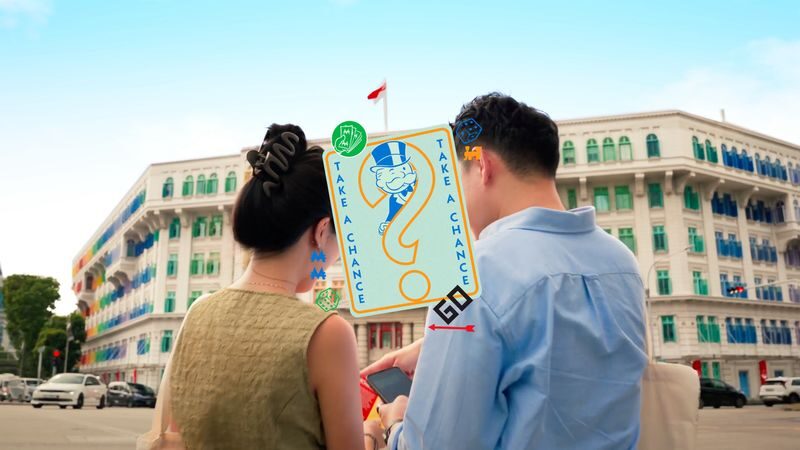
- WhatsApp runs the game: Clues and instructions arrive on your phone, so bring a charged device and make sure you can use WhatsApp.
- The puzzles reveal local stories: Expect questions about buildings, road names, murals and neighborhood life, not just a basic point-to-point walk.
- Monopoly money has limited uses: You can spend it at selected partner businesses, but it is not a cash refund or a ticket-price credit.
- Allow more than 90 minutes: A focused walk may take around 1.5 to 2 hours, while stops, photos and snacks can bring it closer to three hours or an afternoon.
- Heat and opening hours matter: Choose a cooler time if you can, and check whether participating shops are open before setting out.
- One ticket may suit a family or couple: The game can be played together, but each ticket comes with its own game money and completion gift.

👉 See our pick of the 25 Best Guided Tours In Singapore
A board game that makes you look up
The central idea is simple: play Monopoly on foot, using Katong and Joo Chiat as the board. WhatsApp guides you through questions and challenges, and solving them moves the game along while drawing your attention to the streets around you.
That format is more engaging than a standard self-guided heritage walk if you enjoy solving clues. You are not only reading about a place, you are scanning the surroundings for the detail that answers a question. The puzzles are generally described as accessible rather than difficult, so think of them as prompts to notice more, not a serious test of local expertise.
The subject matter reaches beyond architecture. You may learn about the people behind road names, local customs and the changing uses of familiar buildings. One stop described by a participant connected the Red House with matchmaking, while another led to a small silkscreen-printing business inside Katong Plaza, where the owner could share more about the work.
These are the kinds of details that give the walk its value. Katong and Joo Chiat are not just a backdrop for a game: the clues invite you to notice how the neighborhood’s past and present sit side by side. Even people who already know the area may find a new story tucked into a street they have walked before.
You can also read our reviews of more tours and experiences in Singapore.



What the route feels like on foot
The route takes you around Katong and Joo Chiat, with stops that may include heritage buildings, murals and local businesses. The exact sequence and experience depend on how you play and how long you stop. You use your phone to receive the next instruction, then look for the relevant clue in the area.
This is a walk, not a bus tour or a guided group outing. That brings welcome freedom: you can pause for photos, take a break or step into a shop without holding up a group. It also means you are responsible for keeping an eye on your progress and making sure the next instruction has arrived.
The route can involve backtracking, and it may not feel perfectly streamlined at every turn. If you enjoy a puzzle walk, a little retracing can be part of the fun. If you are watching the clock or walking with young children, it is worth building in extra time rather than expecting a brisk, direct loop.
The first part can require a little orientation. The collection point and start instructions have caused confusion for some players, and morning starts can depend on a participating shop’s opening hours. Read the directions carefully before leaving, and check any QR code or start information on arrival instead of setting off based on assumptions.
The stories behind the buildings and streets
The history is woven into the game rather than delivered as a long lecture. Questions draw your attention to the names of roads, the details on buildings and the lives attached to local landmarks. That makes the information easier to connect with the place itself.
One especially appealing theme is how the neighborhood has changed while retaining traces of earlier community life. The Red House, for example, is linked to matchmaking traditions. A stop at a small printing business offers a different angle, bringing the present-day work of an independent artist into the walk.
The experience also includes wordplay and visual clues. Participants have called out playful references such as Turtle Square and Double Chin, alongside murals and local details. You do not need to be a history specialist to enjoy this. The format works best if you are curious, willing to look around and happy to compare ideas with whoever is walking beside you.
I would not expect every clue to be hard. Some questions may feel easy, especially if you know the area or are used to puzzle games. The reward is less about being stumped and more about having a reason to notice things you might otherwise pass.
Spending Monopoly money at local shops
The game adds an edible, practical twist: you receive Monopoly money and Chance cards that can be used at selected partner businesses. Depending on the offer, you may be able to exchange game currency for a small food or drink item, or use a card for a discount.
Dumplings, coffee, tea and banh mi are among the items players have mentioned. One participant described using the money for dumplings and coffee, while another enjoyed redeeming banh mi. These examples show the appeal of the system, but do not assume every shop offers the same deal or that every item will be available when you arrive.
The money is a bonus, not a way to recover the ticket price. Its value depends on which partner shops are open, what they offer and whether those options suit you. Some players have found that they could not use all their Monopoly cash, or that the available food choices were limited. If you have dietary requirements, check the participating options in advance where possible. Halal choices, in particular, may be limited.
A useful move is to scan the partner-shop information at the beginning. Some businesses where you can spend the game money may not be marked as a required game stop, so you could pass nearby without realizing you can redeem an offer. If you do not use all your money along the route, you may be able to circle back to participating businesses afterward, subject to opening hours and offer terms.
The game may also include a small completion gift, such as a tote bag or Monopoly keychain. The exact gift can vary, and each ticket is associated with its own game money and completion item. For a couple or family playing as one team, one ticket may be enough if you do not need separate sets of money or gifts.
Timing, weather and the phone
The activity is described as a half-day discovery game, but the time you need depends on your pace. A focused walk may take around 1.5 to 2 hours. Stop to browse shops, eat, take photos or read every clue carefully, and three hours is a sensible allowance. A leisurely afternoon is also possible.
Singapore’s heat is the clearest practical challenge. Several parts of the walk take place outdoors, and searching for clues in direct sun can wear you down. If the forecast looks hot, choose a cooler time and take breaks when you need them. The route is not described as having indoor rest stops at every stage, so do not count on air-conditioned pauses throughout.
Your phone is essential. The activity runs through WhatsApp, and some players have encountered slow responses, missing instructions or video-loading problems. A support contact may be able to help, but a technical delay can interrupt the game. Make sure your phone is charged and that mobile data or Wi-Fi will let you use WhatsApp reliably. If you are visiting from a place where WhatsApp is restricted or unreliable, sort out access before starting; one participant needed local Wi-Fi or a VPN for images to load.






Who will get the most from it
This is a strong fit for families with school-age children, couples and friends who like doing something together rather than following a guide with a flag. The clues give children a role, and the shared problem-solving can make the walk feel like an activity instead of a march between landmarks.
It can also suit Singapore residents. Knowing the roads does not mean knowing the stories behind them, and the game offers a fresh reason to explore a familiar district. For visitors, it is a useful way to spend time in a neighborhood beyond the city-center sights, especially if local heritage and small businesses interest you.
It is less suitable if you want a fully guided history tour, a tightly timed itinerary or a strenuous puzzle challenge. The game’s support comes through your phone, not a guide walking alongside you, and the riddles may be straightforward for experienced puzzle-solvers. The route is also not recommended for strollers or wheelchairs, according to one family’s experience, so contact the operator before booking if access is essential.
Is it worth the price?
The listed starting price is $30.49. Whether that feels fair depends on what you want from the outing. You are paying for a designed, phone-led game, a neighborhood route, heritage prompts and the chance to use game money or Chance cards at selected shops. You are not buying a guided tour or a meal package with guaranteed value equal to the ticket price.
I see the best value when you treat it as a shared activity. If you enjoy discovering a neighborhood, solving clues and stopping at local businesses, the game provides a structure that can make an ordinary walk more memorable. The optional food and drink redemptions add a playful extra, but should not be the main reason to book.
For families or couples, consider whether one ticket can cover your group. The game can be played together, and buying a ticket for each person may not be necessary unless everyone wants their own Monopoly money and completion gift. If you are using a local Culture Pass credit, that may also affect the calculation, but check the current terms before booking.
Should you book this Katong and Joo Chiat walk?
Book it if you want an independent, playful way to explore local streets and you are happy to let clues set the pace. The strongest parts are the neighborhood stories, the chance to notice small details and the option to stop at participating shops. It is especially appealing for families and groups who like solving things together.
Skip it if you need a guided, fully accessible or tightly scheduled outing, or if the heat will make an outdoor walk unpleasant. Before you go, check the starting instructions, shop hours and partner offers, and allow more time than the shortest estimate. That preparation helps keep the focus where it belongs: on the streets, stories and small discoveries along the way.
MONOPOLY: HIDDEN Singapore – Katong-Joo Chiat
“MONOPOLY: HIDDEN Singapore – Katong-Joo Chiat is a fantastic, interactive way to explore the neighborhood's rich heritage with family. Guided by a…”
FAQ
How long does the activity take?
A focused walk may take around 1.5 to 2 hours, but allowing about three hours is sensible if you plan to stop for shops, food or photos. A leisurely outing can take longer.
How do you receive the clues?
The game is guided through WhatsApp on your phone. You solve questions and follow the instructions sent during the walk.
Can you use the Monopoly money for food?
You can use Monopoly money or Chance cards at selected participating shops for certain items or discounts. Offers and opening hours vary, and the money should not be treated as a refund or equivalent to the ticket price.
Does each person in a family need a ticket?
A family or couple can play together using one ticket. Each ticket comes with its own game money and completion gift, so you may want more than one if everyone wants their own set.
What should I prepare before starting?
Bring a charged phone and make sure you can use WhatsApp reliably. Check the start instructions and participating-shop details, and allow extra time for the walk.
Is the route suitable for strollers or wheelchairs?
One family found the route somewhat inaccessible and did not recommend it for a stroller or wheelchair. If access is a concern, check with the operator before booking.