
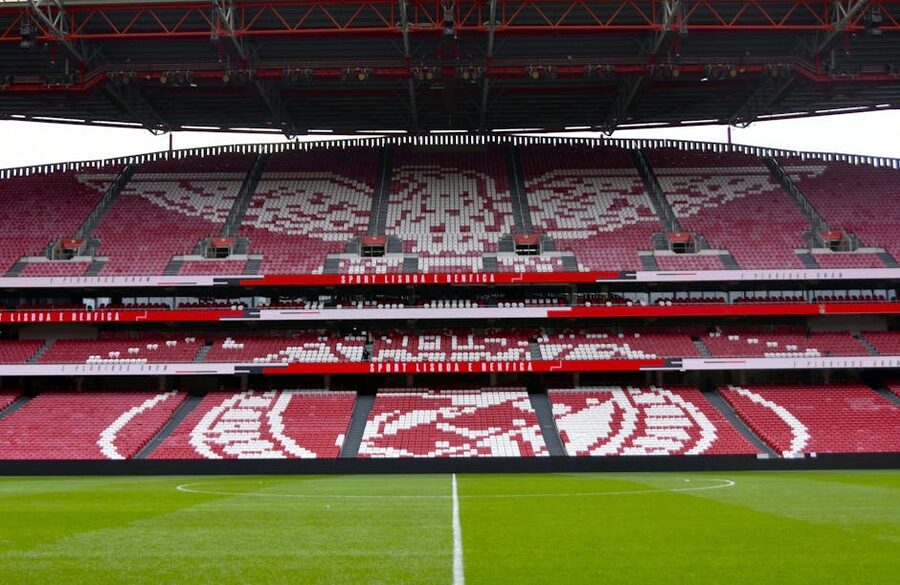
You walk out of the player’s tunnel and the pitch hits you all at once. Sixty-four thousand red seats curve up around you in a steep, tight bowl. Vitória the eagle’s perch sits empty above the substitute bench, the sound system testing somewhere in the upper tier, the silence weirdly loud before kickoff.
That moment is the whole point of the Luz Stadium and Benfica Museum tour. You get the dressing rooms, the press room, the players’ walk to the pitch, and a museum stuffed with the trophies and shirts that turned this club into one of the loudest in Europe. This is how to book it without overpaying or showing up at the wrong gate.
- In a Hurry? My Quick Picks
- Why Estádio da Luz is Actually Worth Visiting
- Ticket Types: What You’re Actually Buying
- What the Tour Actually Includes
- The Three Tours I’d Actually Book
- 1. Luz Stadium Tour and SL Benfica Museum Entry:
- 2. Luz Stadium and Museum Ticket with Souvenir Scarf:
- 3. Two-Hour Luz Stadium and Guided Museum Tour:
- Inside the Museu Cosme Damião
- Eusébio’s Ballon d’Or
- Mário Coluna and the European Cup Wins
- The Trophy Wall
- Vitória the Eagle and the Pre-Match Flight
- The Souvenir Scarf Question
- How to Get to Estádio da Luz
- Best Time to Visit and How Long to Allow
- Comparing It with Bernabéu and Camp Nou
- Practical Tips Before You Book
- Should You Book Directly or via a Marketplace?
- Pairing the Tour with Other Lisbon Football Stops
- What I Wish I’d Known Before I Went
- More Lisbon Reading
In a Hurry? My Quick Picks
Flagship stadium and museum tour: Best all-rounder, includes the Eagles’ enclosure, around $31. Check availability
Same tour with the souvenir scarf: If you want a Benfica scarf to take home, this bundles it cheaper than buying separately. Around $24. Check availability
Two-hour guided museum and stadium walk: Smaller groups, a real human guide rather than the audio loop. Around $29. Check availability
Why Estádio da Luz is Actually Worth Visiting
I’ll be honest. I went in skeptical. I’d done the Bernabéu in Madrid and Camp Nou in Barcelona on previous trips and figured Lisbon would be the smaller, less interesting third option. That’s not how it played out.
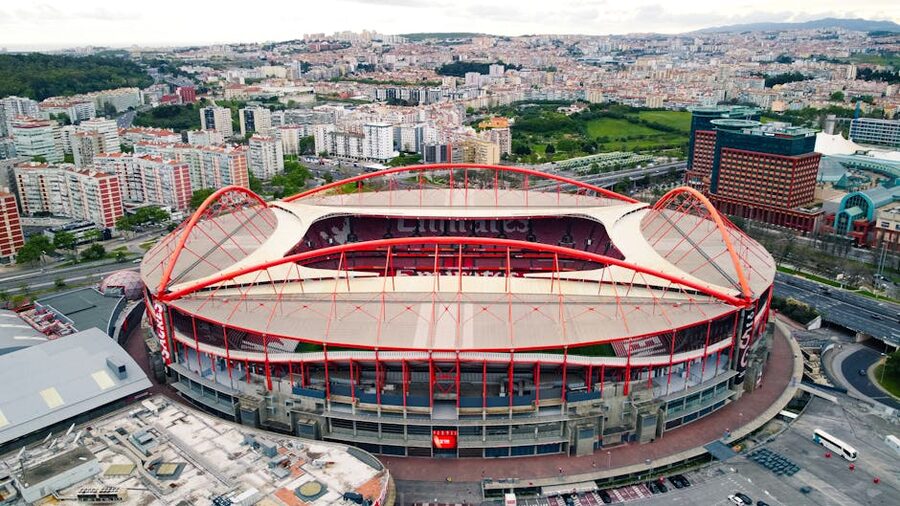
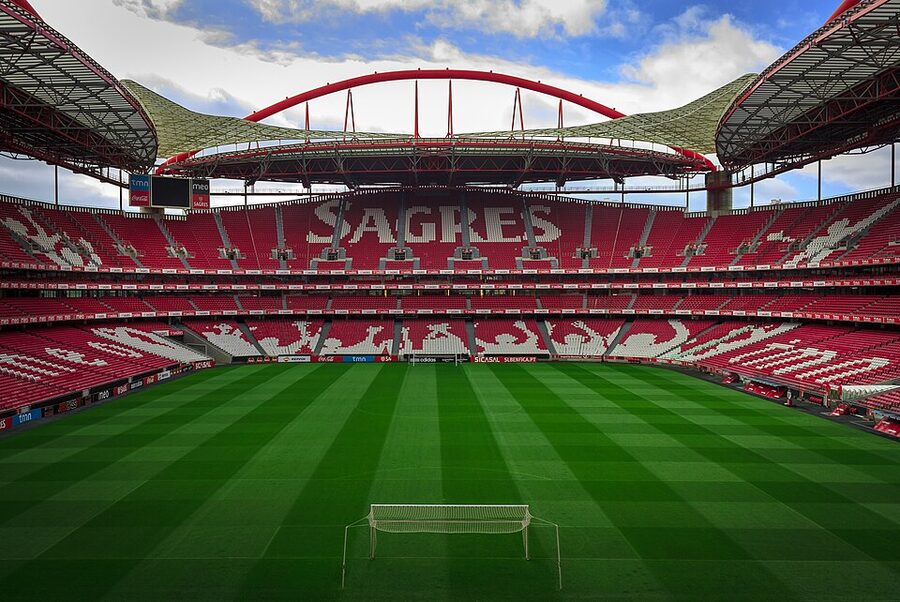
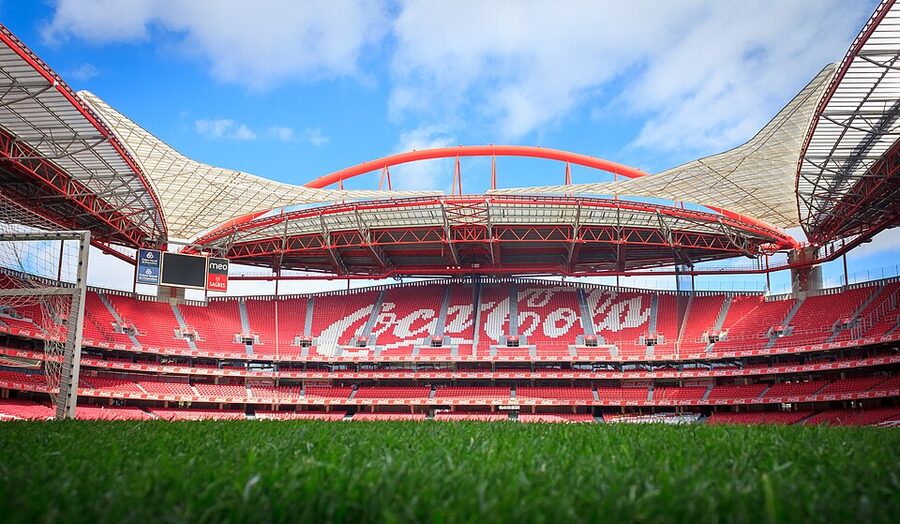
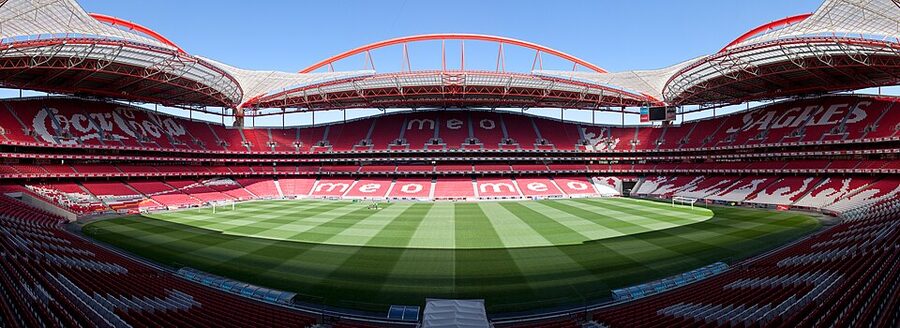
The current Estádio da Luz opened in October 2003, built from scratch on the site of the old 1954 ground for Euro 2004. Capacity is 64,642, which makes it the biggest stadium in Portugal. UEFA gave it a five-star rating, which is why it hosted the 2014 Champions League final between Real Madrid and Atlético Madrid. The roof is cable-supported, the lower tier wraps tight to the touchline, and the upper tier is steep enough that the noise stays trapped instead of escaping out the top.
What makes it different from the Spanish giants is the intimacy. Bernabéu is grand and corporate. Camp Nou is a basin so wide the players look like dots. Luz feels closer to the action. And SL Benfica, the club the stadium belongs to, has won the Portuguese top flight thirty-seven times, more than any other team in the country, which is the sort of context the museum hammers home.
Ticket Types: What You’re Actually Buying
This trips a lot of people up. There are three official ticket categories sold at the stadium, plus the same products via GetYourGuide and Viator at slightly different prices. Here’s the plain-English version.
The flagship combined ticket covers the full self-guided stadium tour plus the SL Benfica Museum (officially the Museu Cosme Damião). You walk the route at your own pace using the audio guide loop, then spend as long as you want in the museum afterwards. This is what most visitors should book. Our full review of this option covers the timing windows and what the audio guide actually tells you.
The scarf bundle is the same product with a Benfica souvenir scarf included. The scarf is the official red-and-white club one, the kind people wave on the kop end. Buying it separately at the gift shop costs more than the bundle markup, so if you were going to grab a scarf anyway, take the combined ticket. My take on the scarf version is here, including how the scarf compares to the ones sold inside the museum shop.
The guided two-hour tour is the upgrade pick. A real guide walks you through with a smaller group, the museum portion gets proper context, and you end up asking questions you wouldn’t think to ask the audio guide. It’s the version football obsessives should book. Read why I think the guided format is worth the small upgrade.
There’s also a museum-only ticket if you genuinely don’t care about the stadium. I wouldn’t bother. The pitch tunnel and dressing rooms are the best bits.
What the Tour Actually Includes
The route runs in a fixed order because of how the corridors work behind the scenes. You start at the players’ entrance below the main stand. Then it goes:
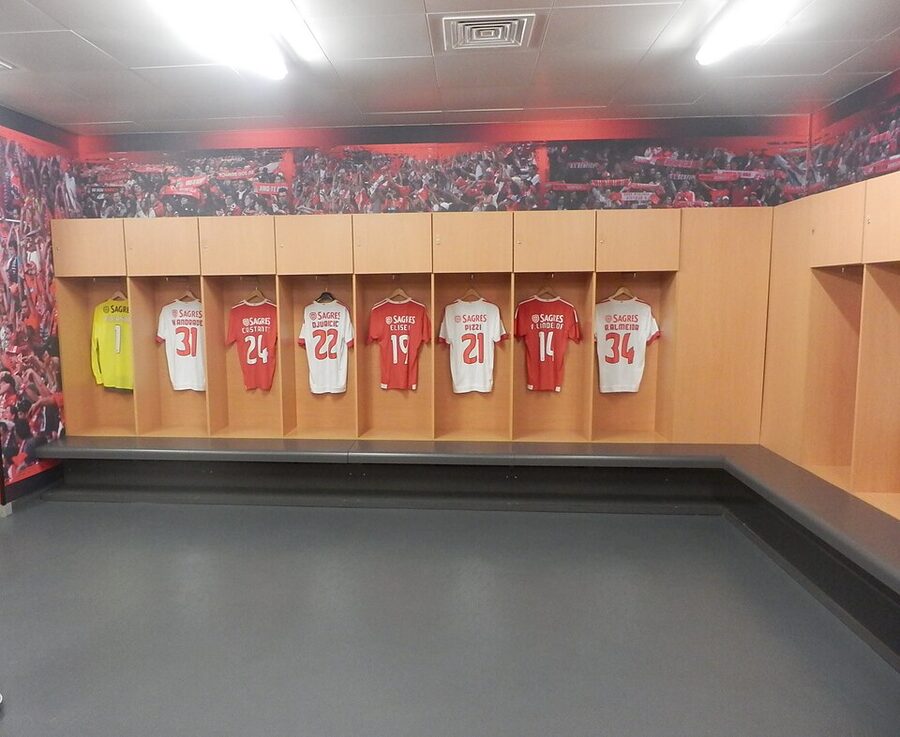
The home dressing room. Smaller than you’d expect. Each peg has a player’s name and squad number printed on it. There’s a tactics whiteboard at one end and a small ice bath room off to the side. They rotate the names depending on the current squad, so if you’re a fan of a specific player, ask the staff which peg is theirs before they tell you to move along.
The away dressing room. Deliberately less plush. This is universal across La Liga, the Premier League and the Portuguese top flight. The away bench in the home dressing room corridor passes a wall covered in old club crests, which is a nice touch I’d never seen before.
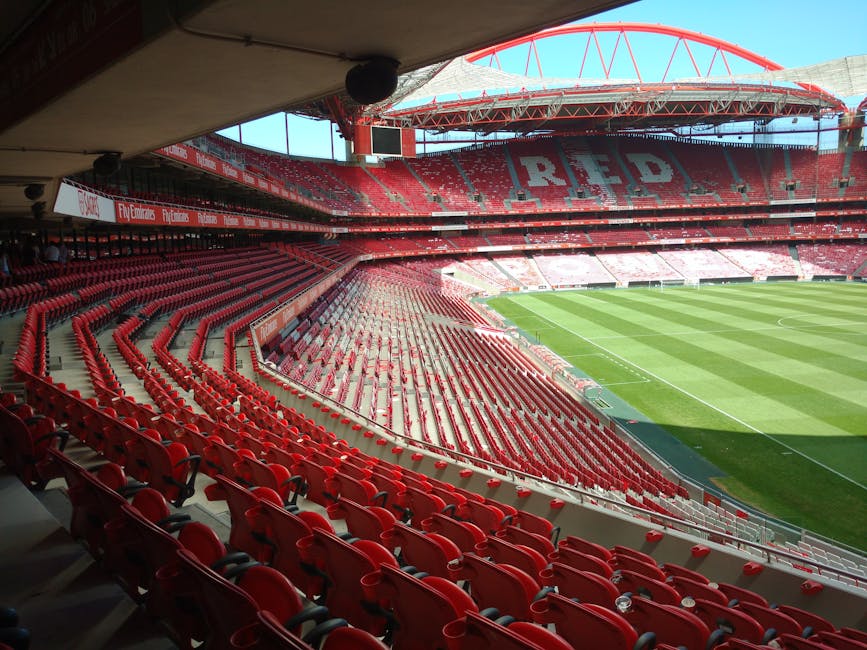
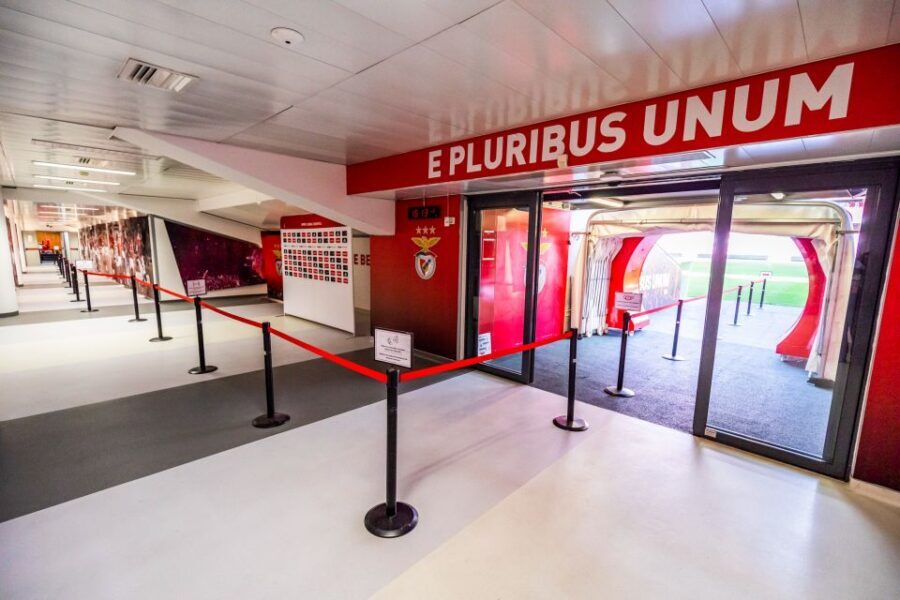
The pitch tunnel walk. This is the bit. You walk the same metres the squad walks before kickoff, out into the bowl with the lights still on the pitch. Bring a phone or camera, the photo opportunity is exactly here and it’s worth the price of admission on its own.
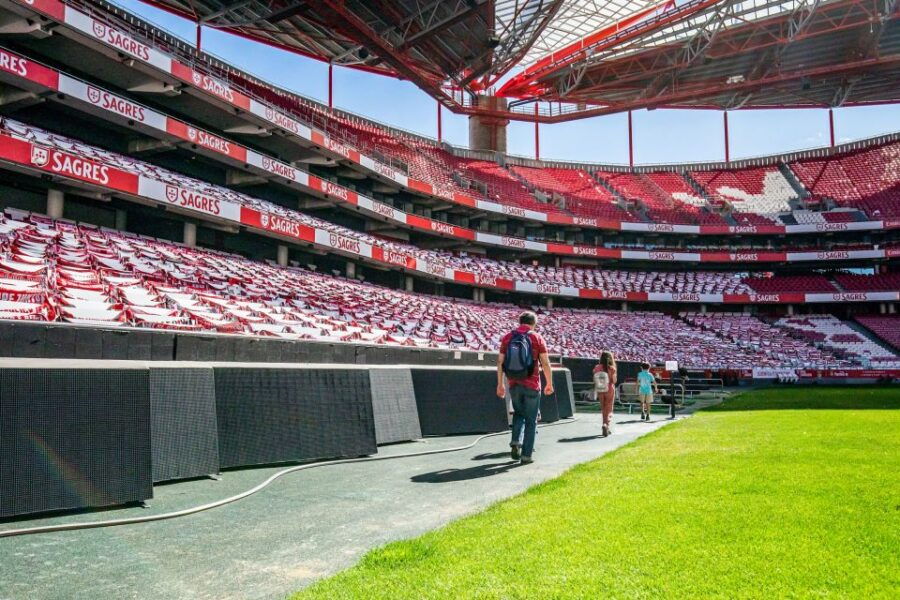
Pitchside and the home dugout. You can sit in the manager’s seat. People do, almost everyone takes a phone shot of it. There’s a velvet rope keeping you off the actual pitch grass, which is fair, but you get within a metre of the touchline.
The press conference room. Posters of the current sponsors on the back wall, the Benfica eagle crest behind the head table. You can sit at the table where the manager sits after Champions League nights. It’s smaller than it looks on TV.
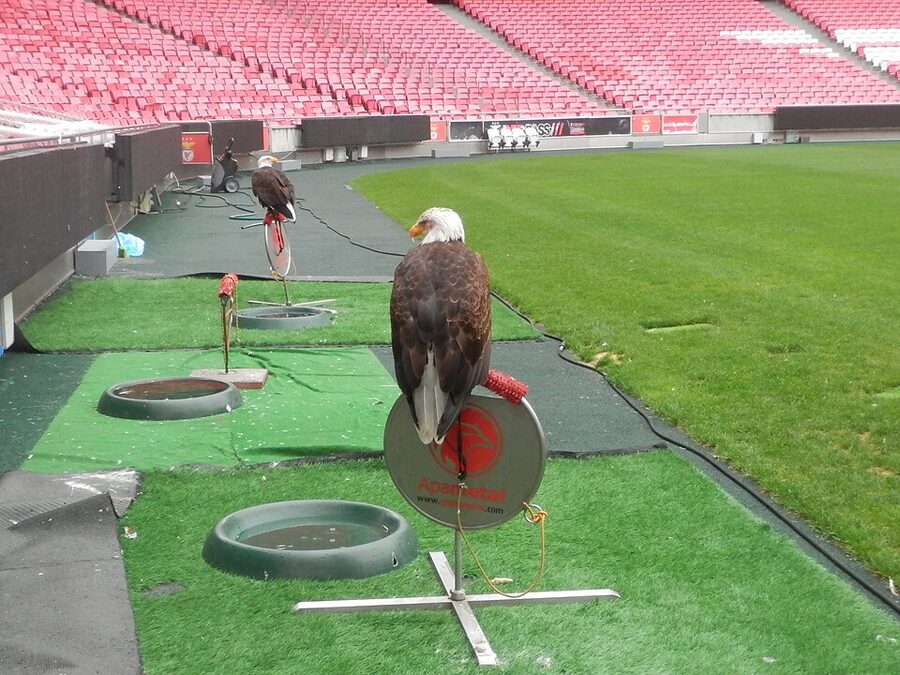
The Eagles’ enclosure. Where Vitória and the second eagle live between matches. They’re not always present, depending on training and weather. More on the Eagles in the full review.
The museum. Last stop, and probably where you’ll spend the longest.
The Three Tours I’d Actually Book
I went through every Luz Stadium tour I could find on the major platforms. Three rise to the top depending on what you want.
1. Luz Stadium Tour and SL Benfica Museum Entry: $31
This is the most-booked Luz tour for a reason. You get the full stadium walk plus the museum on one ticket, and the audio guide hits the right pace if you don’t want a stranger telling you when to look at things. Our full review covers timing slots and how long the whole thing takes (allow about two and a half hours).
2. Luz Stadium and Museum Ticket with Souvenir Scarf: $24
If you were going to leave with a scarf regardless, this bundle works out cheaper than the standalone shop price. Same stadium and museum content, plus the scarf at the end. My notes on the scarf bundle walk through the small print on which scarf design you actually receive.
3. Two-Hour Luz Stadium and Guided Museum Tour: $29

This is the upgrade for football people. A real guide walks the route with you, and you can ask the questions the audio loop ignores. The two-hour run includes both the stadium and the museum portion. My full review explains why I’d book this for repeat visitors who already know the basics.
Inside the Museu Cosme Damião
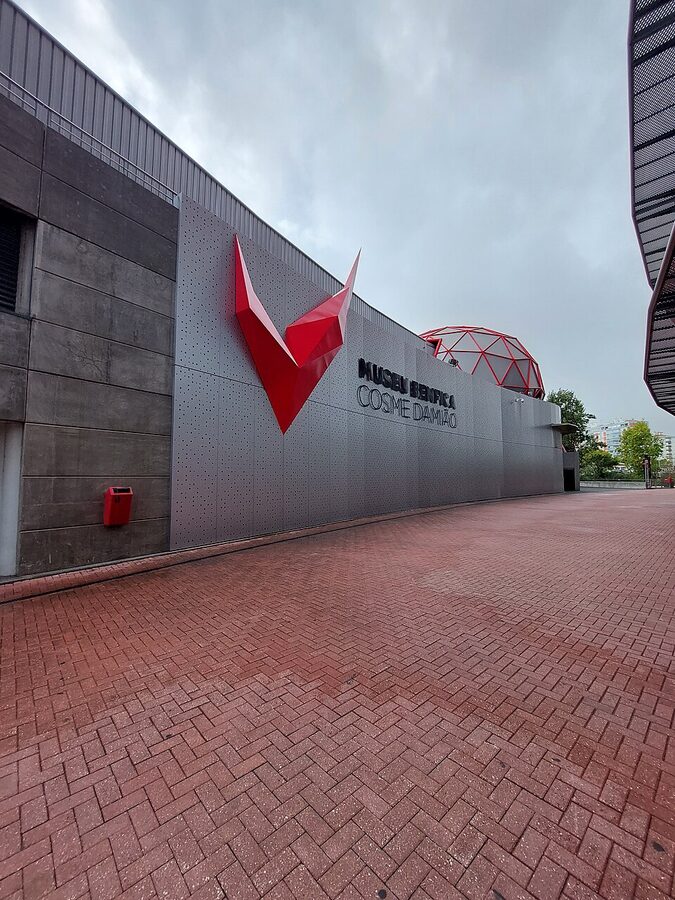
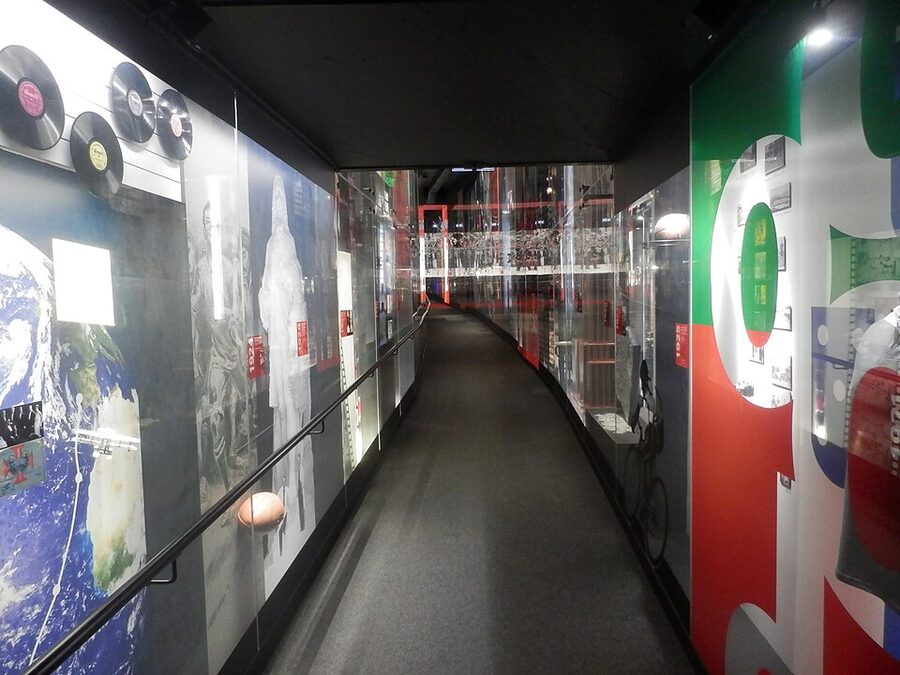
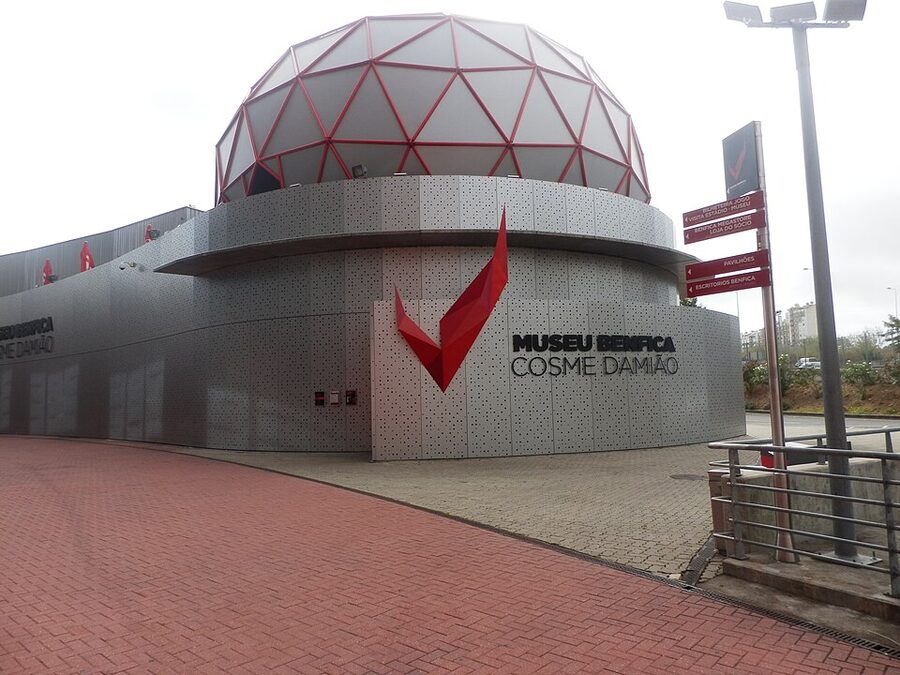
The museum is named after Cosme Damião, one of the founders of Sport Lisboa e Benfica back in 1904. It opened in its current form in 2013, ten years after the stadium itself, which is why it feels modern in a way the older European football museums sometimes don’t.
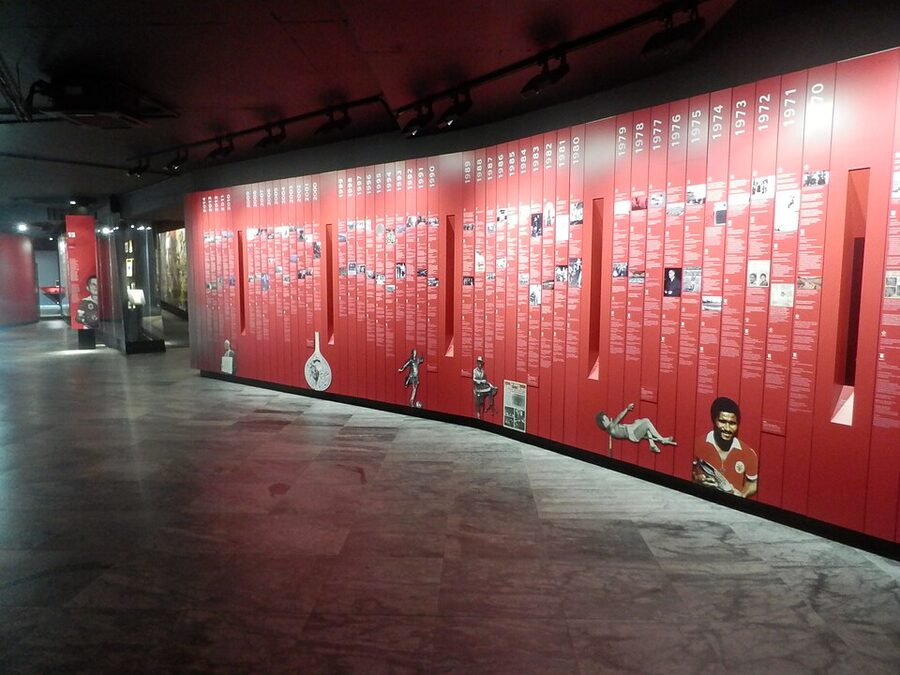
It’s set out chronologically. You walk through the founding years, the early league wins, the European glory of the 1960s, the fallow decades, the rebuilds, and then the recent run of titles. The interactive sections are surprisingly good. There’s a touchscreen wall where you can pull up any past match result and see the lineup. There’s a section on the women’s team and the youth academy, including the famous Caixa academy that produced João Félix and Bernardo Silva.
Eusébio’s Ballon d’Or
This is the headline exhibit. Eusébio da Silva Ferreira, born in Mozambique in 1942, joined Benfica in 1960 and went on to score 473 goals in 440 games for the club. He won the Ballon d’Or in 1965, finishing ahead of Bobby Moore and Giacinto Facchetti. His trophy is in the museum, behind glass, with the citation card from France Football alongside it.
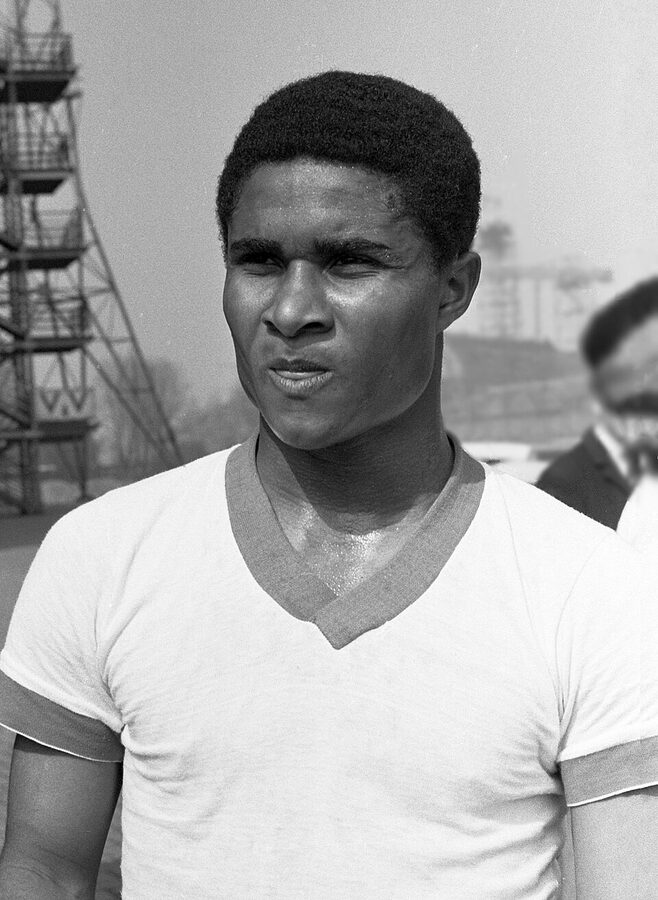
The Eusébio room sits halfway through the museum loop. It has match-worn boots, the No.10 shirt from the 1965-66 season, and a wall of photographs from his international career, including Portugal’s 1966 World Cup run where he finished as top scorer. There’s also a quietly moving section about his death in 2014, with handwritten letters from fans laid out under glass.
Mário Coluna and the European Cup Wins
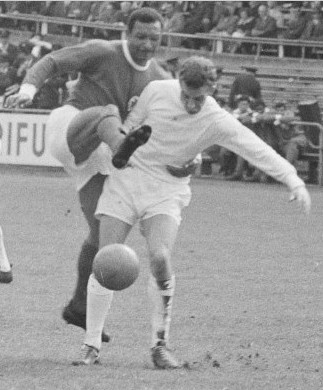
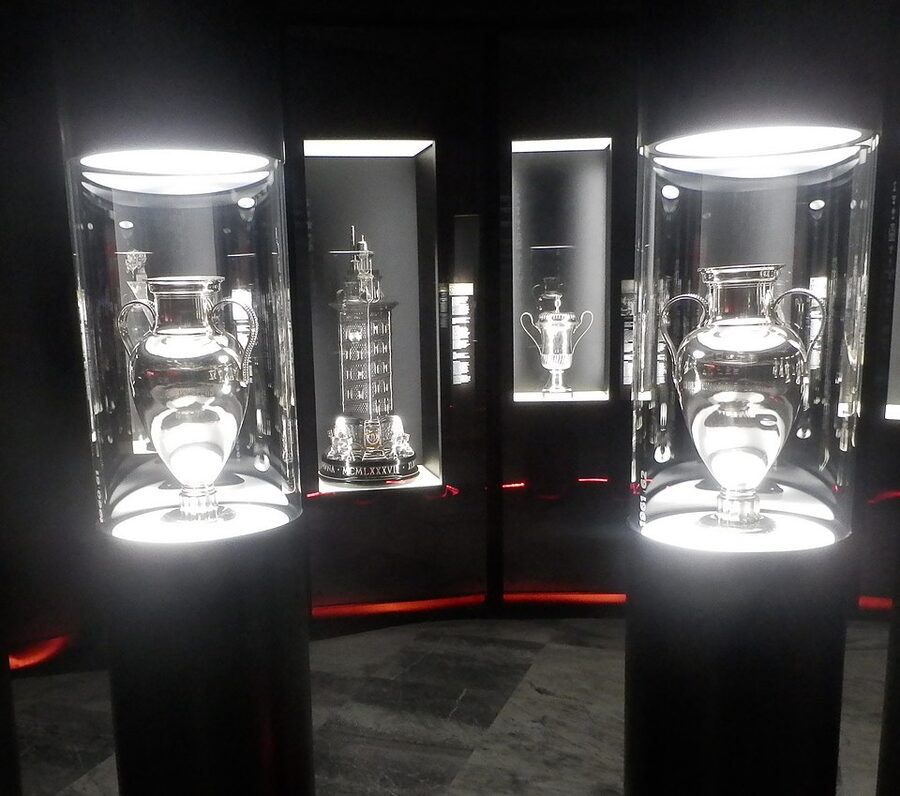
Coluna was the captain. Eusébio scored, Coluna marshalled. The midfielder lifted the European Cup in 1961 and 1962, beating Barcelona and then Real Madrid in successive finals. The trophy room has the actual cup replicas from those seasons (the originals stayed with UEFA) plus Coluna’s captain’s armband and the matchball from the 1962 Madrid win, signed by every player.
The Trophy Wall
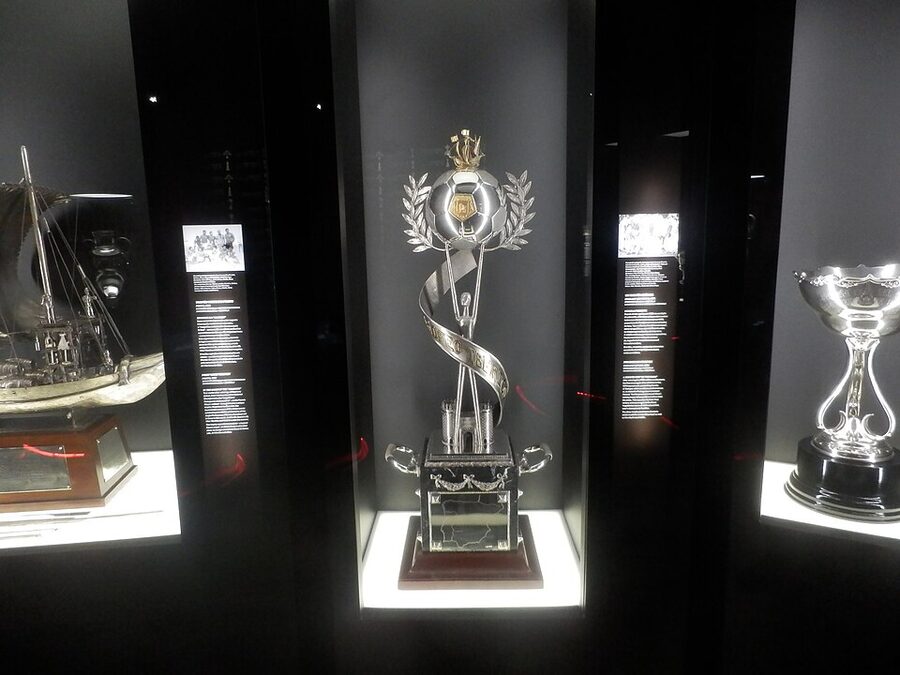
The big room at the end is where they keep the league silverware. Thirty-seven Primeira Liga titles, the most of any Portuguese club. There are also twenty-six Taça de Portugal cups, plus the hardware from the 1961 and 1962 European Cup wins. The display has each trophy in its own backlit alcove, with the year and the captain’s name underneath. It takes a while to walk past them all.
Vitória the Eagle and the Pre-Match Flight
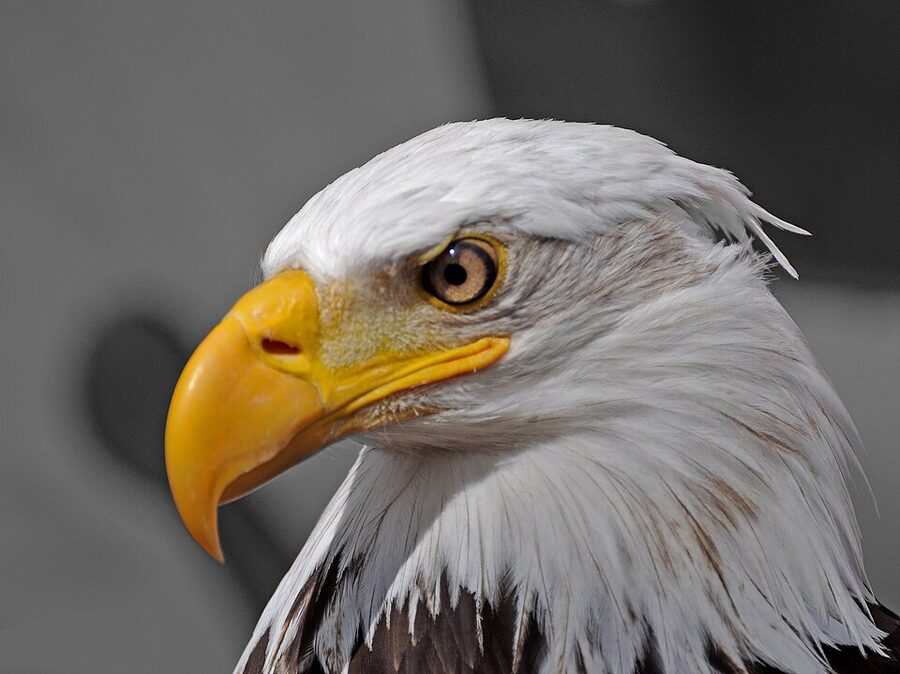
If you’ve watched a Benfica home match on TV you’ve seen this. A live golden eagle, the club mascot, gets released from the upper tier before kickoff and flies a circuit of the stadium before landing back on a perch above the dugout. The current bird is named Vitória. There’s also a backup eagle, Águia, who alternates flights to give Vitória rest.
On tour days, the eagles are usually in their enclosure on the south side of the stadium. Whether they’re visible depends on training schedules and weather. I’ve been twice. First time, both eagles were out and I got close enough to hear the wing feathers move. Second time, neither was on display because they were in their off-day rotation. It’s a coin flip.
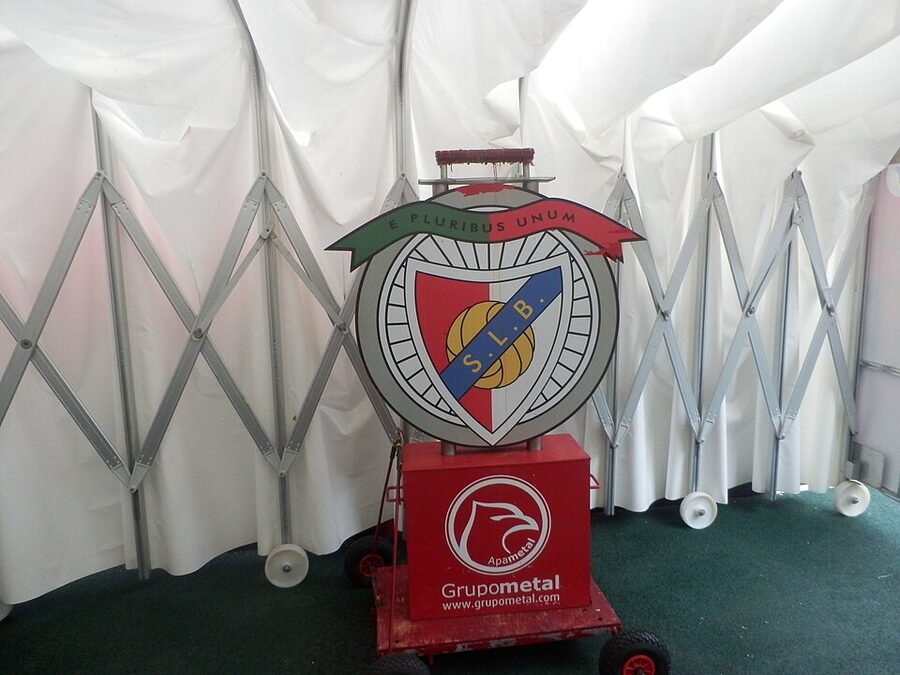
If seeing Vitória in flight is the dealbreaker for you, book a matchday ticket instead of a tour. They fly before every home league match and most cup nights. The flight happens about twenty minutes before kickoff, after the warm-ups have cleared the pitch.
The Souvenir Scarf Question
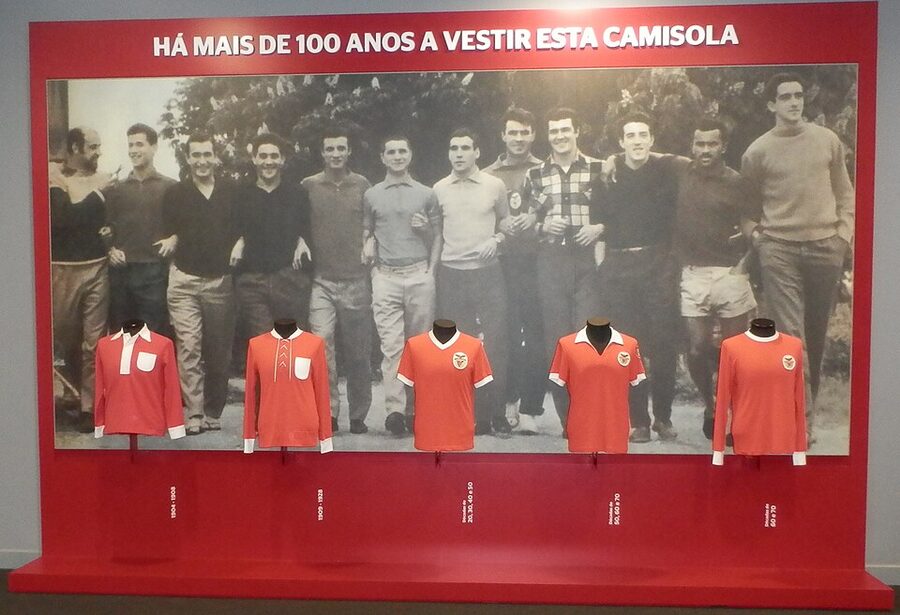
The scarf bundle is the most-booked add-on, and there’s a reason. The standalone scarf in the gift shop costs about €12 to €15 depending on the design. The scarf bundled with the tour costs less than buying both separately. So if you wanted a Benfica scarf anyway, it’s a no-brainer.
The scarf you get with the bundle is the basic red and white club one with the eagle crest woven in. There are fancier limited-edition designs in the shop (the 1962 European Cup commemorative is the one I’d actually buy), so if you’re a collector, take the standard tour and pick out a different scarf at the gift counter on the way out. My take on the souvenir scarf option compares the included one against the shop alternatives.
How to Get to Estádio da Luz
The stadium is in the Benfica district, about 6km north-west of the city centre. The metro is the answer.
Take the Blue line (Linha Azul) to Colégio Militar / Luz station. The exit is signposted for the stadium, and you walk maybe five minutes through the shopping centre and across a footbridge to reach the main entrance. A single metro ticket is around €1.65. If you’re already using a Lisbon Card for other attractions, the metro is included on it.
Bus 750 from Marquês de Pombal in central Lisbon also stops outside the stadium, but the metro is faster. A taxi or Uber from the centre runs about €10 to €15 depending on traffic. Don’t drive yourself unless you’re staying out near Sintra and passing through, parking around the ground is genuinely scarce on tour days when there’s also a matchday in the upper tier later.
The hop-on hop-off bus loops do not include the stadium on their core route. If you want to combine your stadium tour with broader Lisbon sightseeing, see my full guide on the hop-on hop-off options, which covers which loops actually go where.
Best Time to Visit and How Long to Allow
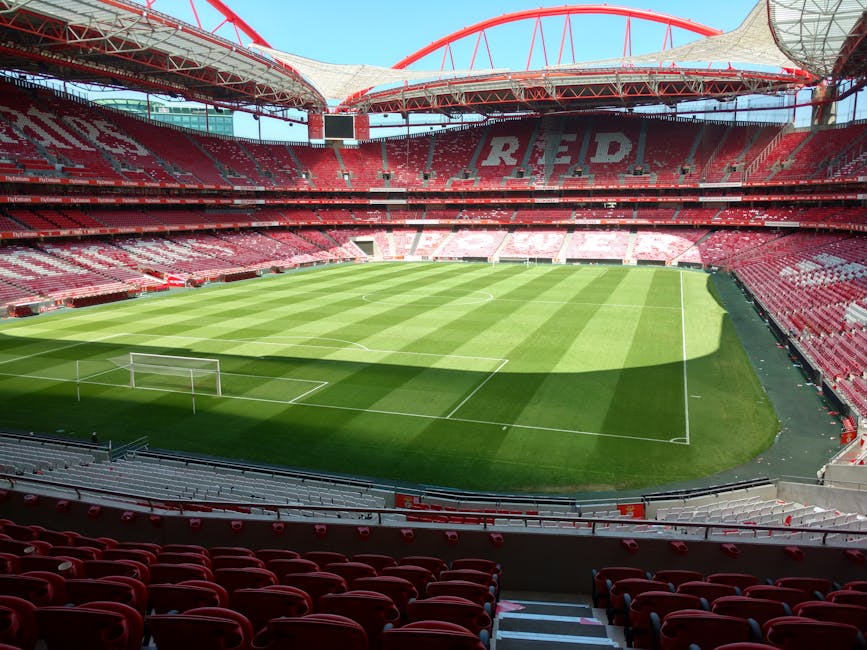
Tours run roughly from 10am to 5pm most days, with last entry around 4pm. The first slot of the day (10am or 10:30am) is the quietest. Cruise ship groups tend to arrive after lunch, so by 2pm the dressing rooms can get tight.
Allow about two and a half hours for the full self-guided experience. The stadium walk takes maybe an hour, the museum another sixty to ninety minutes if you’re reading the placards properly. The guided two-hour tour is exactly what it says on the tin.
Avoid matchdays unless you’ve booked specifically for that. The stadium tour shuts down on the day of a home match, and the museum closes earlier than usual. Check the Primeira Liga calendar on the SL Benfica official site before you book. Wednesday and Thursday Champions League nights are the trickier ones to spot because they’re not on the regular weekend calendar.
Closed days are limited but real. The stadium tour skips Christmas Day and New Year’s Day. The museum has the same closures plus occasional maintenance days. Always check the date on the booking page before you commit.
Comparing It with Bernabéu and Camp Nou
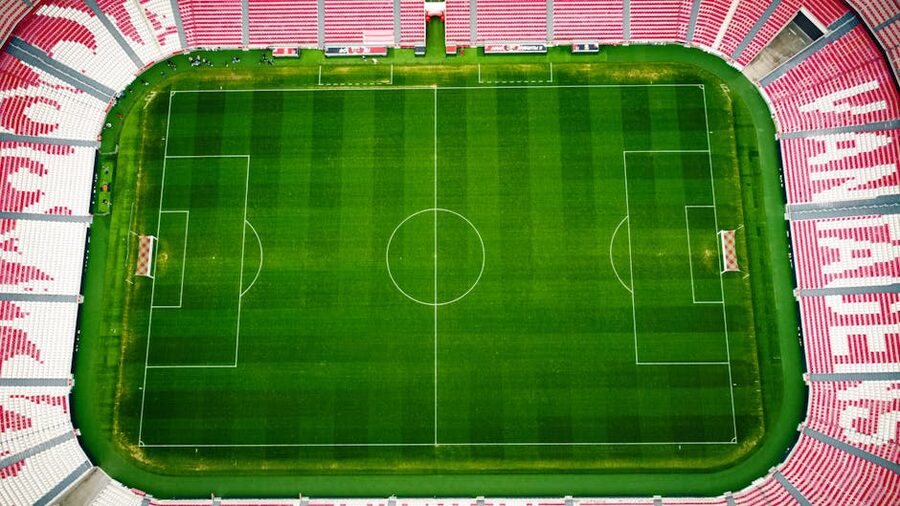
If you’re doing a stadium tour run on an Iberia trip, you’ll probably weigh Luz against the two Spanish giants. They’re not the same product.
The Bernabéu tour in Madrid is the most polished of the three. New roof, retractable pitch, holographic exhibits. It’s also the most expensive and the most crowded. The trophy hall is honestly unrivalled, but the tour itself is more like a museum visit than a stadium walk.
Camp Nou in Barcelona is currently mid-renovation, so check carefully which sections are open before you book. The Messi era museum is the highlight when it’s accessible. The actual stadium itself is less photogenic on tour than Luz because it’s under construction.
Luz sits between the two on price and ahead of both on intimacy. You get closer to the pitch, the dressing rooms feel more lived-in, and the museum is a sensible size rather than overwhelming. If I had to pick one for a football-focused traveller doing all three, I’d do Bernabéu for spectacle, Camp Nou when it’s done renovating, and Luz for the actual stadium-walk feeling. The price gap also matters. Luz is the cheapest of the three by a meaningful margin.
Practical Tips Before You Book
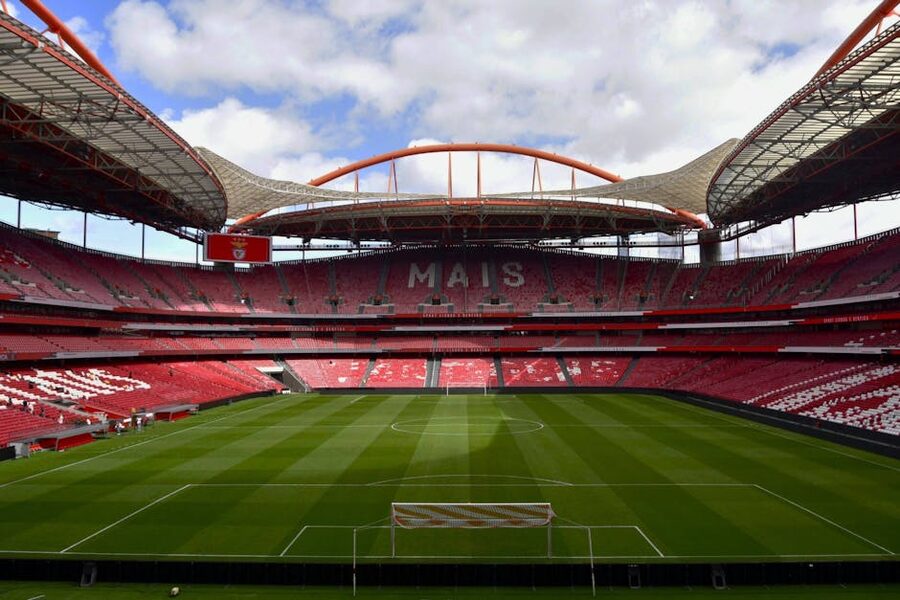
Photography is fine in most areas. The dressing rooms ask you not to use flash. Tripods are not allowed. Phone shots are fine throughout, including pitchside.
Bags get checked at the entrance, the same way they do on matchday. Don’t bring large rucksacks. There’s no left luggage facility on site, so plan for that if you’re coming straight from the train station.
Wheelchair access is good. The route is fully accessible with lifts to every level. The museum has the same accessibility. If you have specific access needs, email the booking platform ahead and they’ll arrange a member of staff to walk with you.
Kids get a discount. Under-fives are free, kids 6 to 12 are half price. The audio guide has a children’s version with shorter explanations and more focus on the eagles, which is the bit kids actually care about.
Combine with the rest of north Lisbon. The neighbourhood near the stadium isn’t a tourist hotspot, but you can pair the tour with a metro ride down to the Jerónimos Monastery in Belém later in the afternoon, or with a tuk-tuk loop of the old centre if your legs are tired after the stadium walk.
Should You Book Directly or via a Marketplace?
The official SL Benfica site sells the tickets at face value (around €24 for the standard combined). GetYourGuide and Viator add a small commission but bundle in the perks I find genuinely useful: free cancellation up to 24 hours before, instant confirmation, and the in-app voucher works as your entry pass directly. You skip the printed-ticket queue.
I book through GetYourGuide on stadium tours specifically because the cancellation window has saved me twice. Plans change, fixture lists shift around Champions League ties, and the marketplace flexibility is worth the few extra euros. Our flagship review goes into the cancellation terms with more detail.
If you’re absolutely certain about the date and you’re already at the stadium box office, the official ticket window is fine. They take card payments and there’s almost never a queue on weekday mornings.
Pairing the Tour with Other Lisbon Football Stops
If you’re a serious football traveller, you can pair the Luz visit with a few other stops. The Estádio José Alvalade, home of Sporting CP, is across town and also offers a stadium tour. Sporting and Benfica share Lisbon and the rivalry is real. Doing both in one trip is what football tourists actually do, and the Sporting tour is shorter and cheaper but covers similar ground (dressing rooms, pitch tunnel, museum).
For a closer look at Lisbon’s broader sports culture, the city walking tour covers Praça do Comércio and the streets where the post-match Eagles celebrations happen. It’s also the easiest way to fit football context into a day with non-fan companions.
What I Wish I’d Known Before I Went
Three honest notes from doing the tour twice.
First, the pitch tunnel walk happens early in the route. If you want to take a long phone video of yourself walking it, get to the front of the group as you’re approaching. The route doesn’t loop back, so this is your one chance.
Second, the museum is bigger than it looks from the outside. The chronological loop has more rooms than the entrance suggests. Don’t rush the first half of it expecting the second half to be small. Pace yourself, especially in the Eusébio room.
Third, the gift shop is at the end, and the queue is real. Either grab what you want fast or budget another twenty minutes for the till queue. The most-bought item is the basic scarf, which is the one bundled in the scarf-tour version anyway, so just book that bundle if you know you want one.
More Lisbon Reading
If you’ve got the rest of a Lisbon trip to plan around the stadium, a few of my other guides will probably help. The Lisbon fado evening guide pairs well with a matchday because both are about Portuguese passion at full volume. My Sintra day trip notes are useful if you want to escape the city the day after the stadium walk, and the Oceanário guide works as a non-football pairing for travellers with kids in tow.