Dazaifu’s shrine approach, Yufuin’s lanes and Beppu’s steaming hot springs make an appealing Kyushu sampler, especially if you have just one day outside Fukuoka. The trip trades a day of transport planning for a single shared bus ride and four very different stops.
I like two things in particular: you get a taste of shrine culture, mountain scenery and hot spring life in one outing, and Kamado Jigoku includes an onsen egg and marble lemon soda, small treats that make its geothermal sights feel more hands-on. The multilingual guides, including guides named Ryu and Vivian, have also been praised for clear explanations and attentive help.
The main compromise is time. Yufuin gets two hours, while the Beppu Ropeway and Kamado Jigoku each have shorter stops, so this is a sampler, not a slow visit. The ropeway also costs extra, and weather can affect whether it runs.
- Dazaifu Tenmangu: A shrine visit with time to walk the approach and explore the grounds.
- Yufuin: Two free hours for Yunotsubo Street, Lake Kinrin, shops and lunch.
- Beppu Ropeway: A ride up Mount Tsurumi, weather and operations permitting, with the fare paid separately.
- Kamado Jigoku: A hot spring attraction with a foot bath, onsen egg and marble lemon soda included.
- Simple transport: Round-trip shared transfers from Fukuoka, with a guide speaking Chinese and English.
- A full day out: Plan for roughly 8:20 a.m. to 6:30 p.m., with traffic and weather able to shift the return.
- A four-stop taste of Kyushu
- Dazaifu Tenmangu and the shrine approach
- Two hours in Yufuin
- Beppu Ropeway and the view from Mount Tsurumi
- Kamado Jigoku’s steaming pools and small treats
- The bus, guide and pace of the day
- What the price covers, and what to plan for
- Should you book this Fukuoka day trip?
- FAQ
- Where does the tour depart from and return to?
- How long is the tour?
- Is the Beppu Ropeway fare included?
- What is included at Kamado Jigoku?
- What happens during Beppu Ropeway maintenance?
- Are meals included?
- What should I bring?
- More Spa & Hot Springs in Yufu
- More Tours in Yufu
- More Tour Reviews in Yufu
A four-stop taste of Kyushu
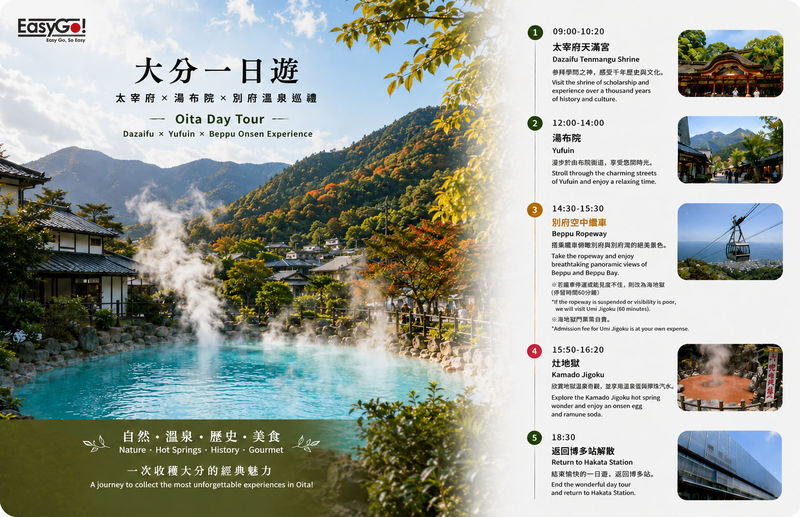
This day trip links places that are spread across Fukuoka and Oita prefectures, making it useful if you want a broad introduction without renting a car or piecing together several train and bus connections. You travel by shared vehicle, with a guide, and spend the day moving between a major shrine, a hot spring town, a mountain viewpoint and one of Beppu’s famous hot spring sites.
The route’s range is its appeal. Dazaifu offers a change of pace from Fukuoka’s city streets; Yufuin brings shops and mountain-town scenery; the ropeway gives you a high view over Beppu Bay; and Kamado Jigoku shows hot spring water and steam up close. Each stop has its own mood, but none is long enough for an in-depth visit.
The listed price starts at $44.25. That can be good value if you are traveling alone or as a pair and want transport to all four destinations taken care of. Add the ropeway fare, about 1,800 yen per adult in cash, and budget separately for meals, drinks and any purchases. If you are traveling as a group of three to five, compare the total with the cost of a private taxi or rental car. The bus tour’s main advantage is convenience, not a private or flexible schedule.
Dazaifu Tenmangu and the shrine approach
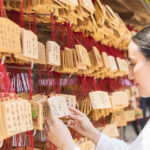
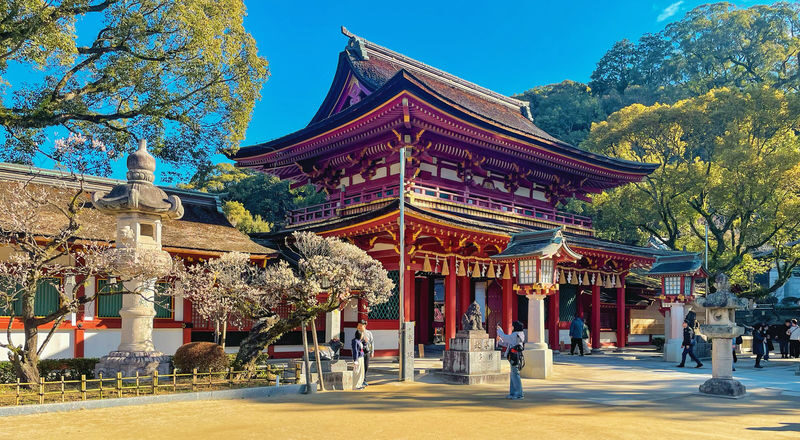
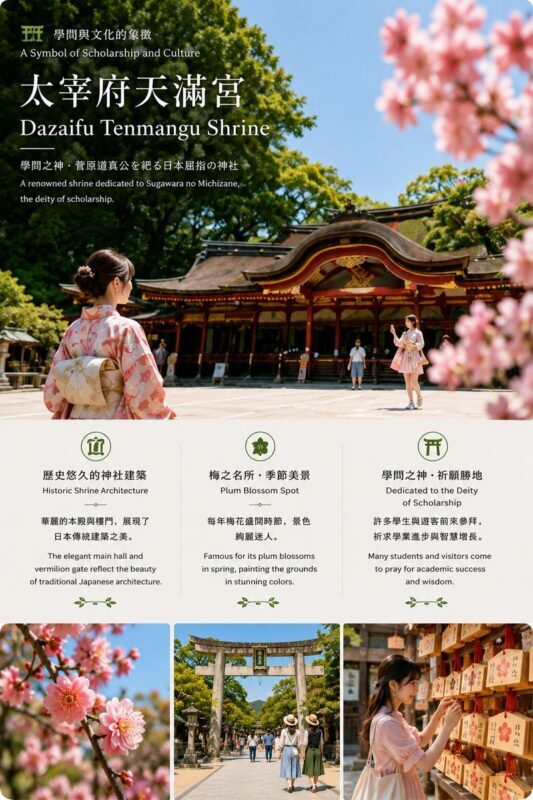
Dazaifu Tenmangu is dedicated to Sugawara no Michizane, a scholar and government official revered as a deity of learning. People visit to pray for academic success and exam results, but you do not need a school-age student in your party to appreciate the grounds. The shrine’s traditional buildings and seasonal scenery make a good first stop on a day that soon turns toward mountains and hot springs.
You have about an hour here, which is enough for a focused walk around the shrine and a look along the Japanese-style approach. The approach is also where you can find food and souvenir shops. One famous local snack is Umegae Mochi, a freshly grilled sweet rice cake. Because the stop is early, some shops may not yet be open, so do not count on having the full range of stalls available when you arrive.
Use the hour with a little intention. Walk toward the shrine first, then browse or buy a snack on the way back if shops are open. If you want time for a slow visit, shopping and a sit-down meal, this schedule may feel tight. Dazaifu is not the place to linger for half a day on this tour.
Two hours in Yufuin
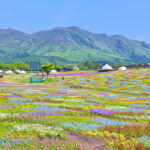
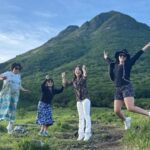
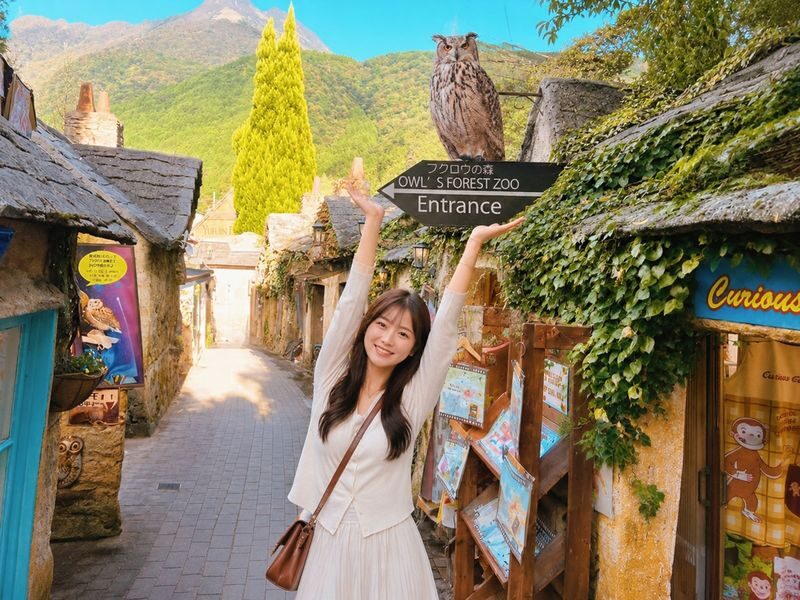
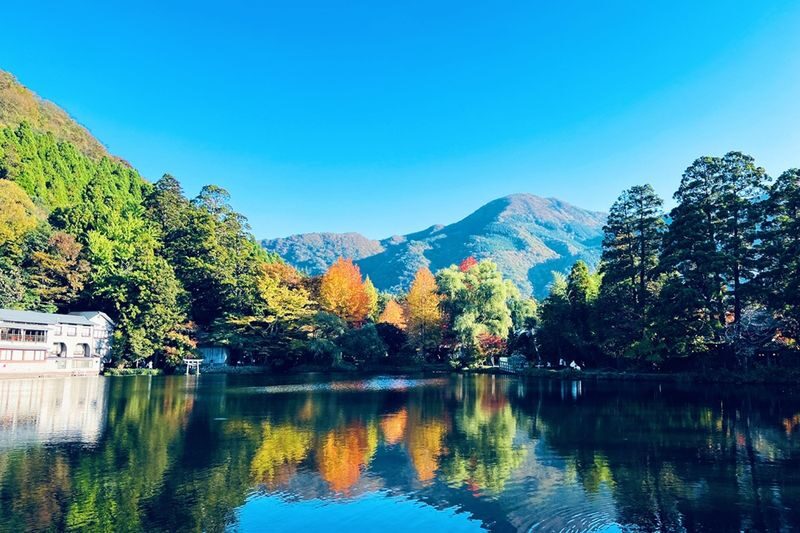
Yufuin is the longest stop, with two hours to explore on your own. It is a mountain-ringed hot spring town known for its relaxed pace, small shops, sweets and handmade goods. Yunotsubo Street is the main browse-and-snack stretch, while Lake Kinrin and Yufuin Floral Village offer different reasons to wander.
Two hours sounds generous after the shorter Beppu stops, but it goes quickly once you factor in lunch and walking. Decide what matters most before setting off. If you want to see Lake Kinrin, head there first or make it your priority; if shopping and food are your main draw, spend more of your time along Yunotsubo Street. Trying to do everything at a leisurely pace may be a stretch.
Yufuin’s appeal is less about one must-see sight than the pleasure of strolling. You can browse shops, stop for a dessert and take in the surrounding mountain views. The trade-off is that this is not a guided walking tour, and there is no set route through town. Keep an eye on the meeting time and allow room to get back to the bus without a last-minute sprint.
If you prefer a quiet, unhurried visit, you may wish this stop were longer. The timetable gives you enough time for a useful introduction, but not a full afternoon. I’d treat it as a chance to get a feel for Yufuin and choose one or two priorities, rather than trying to cover every lane and attraction.
Beppu Ropeway and the view from Mount Tsurumi
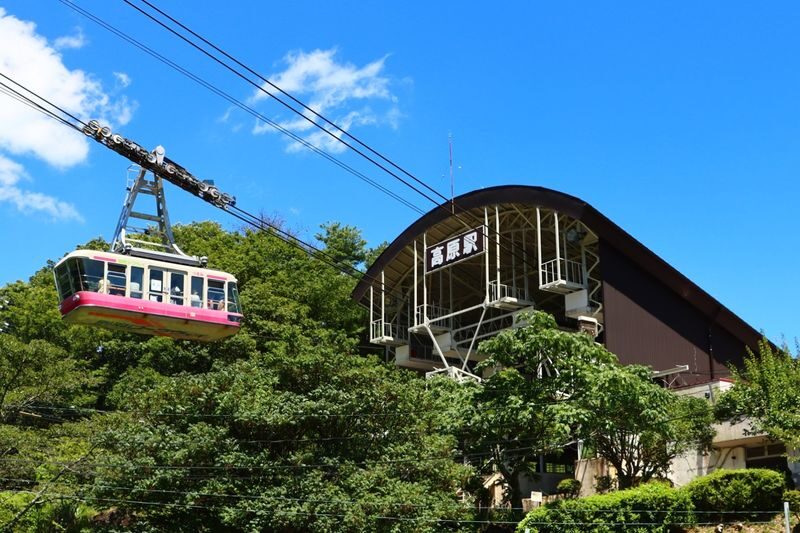
The Beppu Ropeway climbs Mount Tsurumi, which reaches about 1,300 meters. On a clear day, the ride offers wide views over Beppu Bay, the city and surrounding mountains. The scenery changes with the seasons, making the ascent a different prospect in spring, summer, autumn or winter.
The stop is scheduled for about an hour, and the ropeway fare is not included. Expect to pay around 1,800 yen per adult in cash. Bring enough yen before leaving Fukuoka, since the tour information specifies cash payment. The time at the mountain can feel short if you want to take the ropeway, look around at the top and hike. This is better treated as a viewpoint stop than a mountain walk.
Weather matters. Lightning, poor conditions or operational changes can interrupt the ride, and the tour may adjust the day’s plan for safety. A canceled ropeway can be a disappointment if the view was your main reason for booking, so think of it as a weather-dependent highlight, not a guarantee.
There is a scheduled maintenance exception from June 22 to July 17, 2026. During those dates, the group visits Umi Jigoku, or Sea Hell, instead. Admission is 500 yen per person and paid separately. Check the date-specific plan before booking, since this swap changes the balance of the day from mountain views to another hot spring attraction.
Kamado Jigoku’s steaming pools and small treats
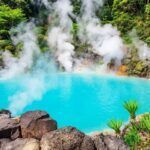
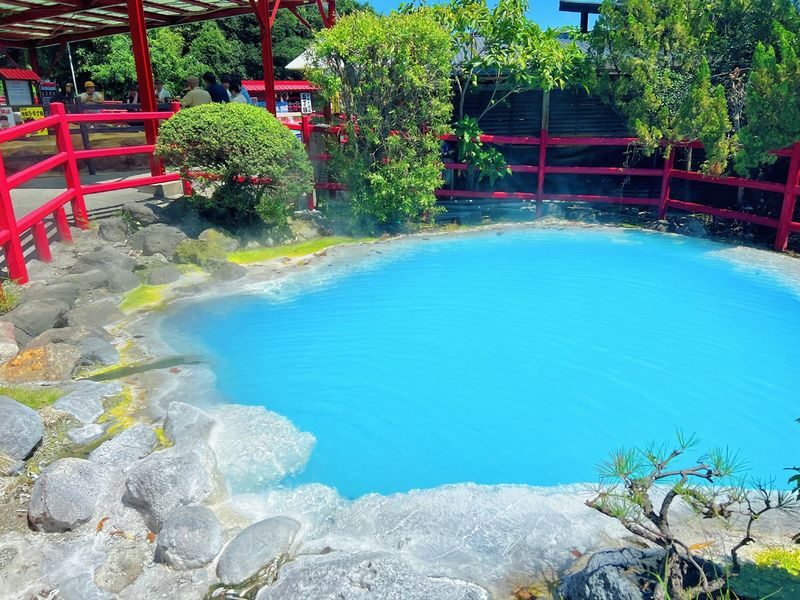
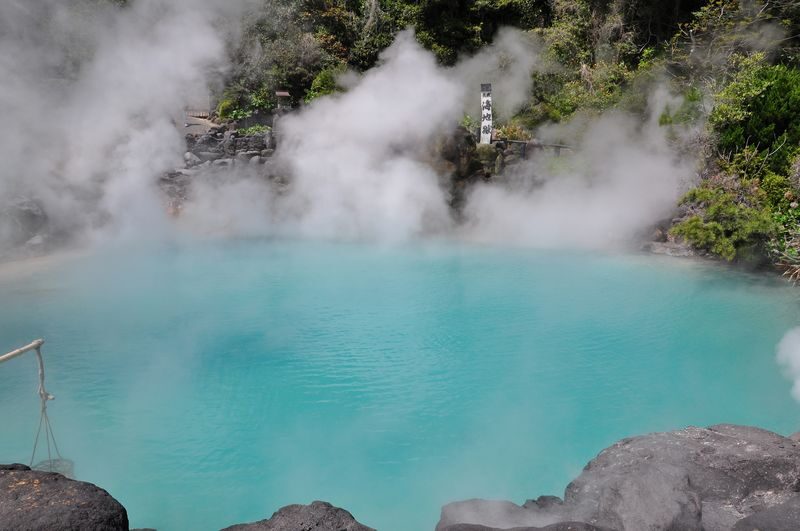
Kamado Jigoku, often translated as Cooking Pot Hell, is one of Beppu’s eight hells: hot spring sites known for their striking pools, steam and geothermal activity. Here, different colors and types of hot spring water gather in one attraction, offering a close look at the unusual effects of heat and minerals. The name is more dramatic than the visit needs to be. Think of it as a compact, visual stop that shows how central hot springs are to Beppu.
The tour allows about 30 minutes. Your admission includes a hot spring egg and marble lemon soda, also known as Ramune. There is a foot bath in the park, too, though the short stop and crowd levels may make it hard to enjoy at a relaxed pace. If you want to use the foot bath, have a towel handy and be ready to move efficiently; time is limited.
This is a short visit, but the included snacks add a bit of local character without extra planning. The egg is cooked using hot spring heat, and the marble soda is a fun, refreshing contrast to the steam around you. Do not expect a long soak or an extended tour of Beppu’s hot spring district. You are seeing one site, not all eight hells.
The bus, guide and pace of the day
The vehicle leaves Fukuoka in the morning and returns to Hakata Station at about 6:30 p.m. The stated meet-up time is 8:20 a.m., with departure at 8:30 a.m. Be there early: the vehicle leaves promptly and does not wait for late arrivals. The day is long, and traffic or weather can delay the return, so avoid booking an important evening activity.
The vehicle type depends on the number of people booked, and seats are generally assigned in boarding order rather than selected in advance. The first rows are reserved for those who have booked front-row seats; the tour information varies on whether that means two or three rows, so confirm the seating arrangement when booking if it matters to you. If you need a particular seat for comfort, do not assume that arriving early will guarantee it.
A Chinese- and English-speaking guide is included, and the group may include people speaking other languages. Guides named for this outing include Ryu and Vivian, among others, but the assigned guide varies by date. Multilingual explanations and helpful direction can make a packed day easier, particularly when you are trying to find the bus again in a busy town. As with any shared tour, stay alert for meeting times and listen carefully to the guide’s instructions.
Expect a full day rather than a restful day. The bus gives you a place to sit between stops, and some people appreciate being able to rest during the longer drive. But the schedule still asks you to get on and off several times, walk around independently and keep to the group’s timing. Children aged three and older are charged the adult rate; children aged zero to two travel free. Child seats are not available.
What the price covers, and what to plan for
The tour price covers round-trip transport, a Chinese- and English-speaking guide, and Kamado Jigoku admission with the onsen egg and marble lemon soda. Meals, other drinks, personal purchases and the Beppu Ropeway fare are extra. The route has plenty of chances to buy food, especially in Yufuin, but there is no included meal.
For the best value, think about how much transport convenience matters to you. Public transport and transfers between these stops take planning, while a rental car puts the driving and navigation on you. This tour bundles the long-distance travel into one day and makes a broad route possible without arranging each leg. In exchange, you follow a fixed timetable and have limited time at each attraction.
Bring water, sunscreen, a hat and a raincoat or poncho. The tour is exposed to the weather at outdoor stops, and conditions can affect the ropeway or other activities. You may bring one standard-sized piece of luggage free, but tell the operator in advance in the booking’s special requirements. Unannounced extra luggage may take up space in the vehicle and could be refused.
The voucher is valid only for the date booked, and you present it on your phone. Confirmation is usually sent within minutes. The tour allows free cancellation with at least 24 hours’ notice, and changes are generally allowed up to 24 hours before departure, subject to booking restrictions. The operator sends guide and pre-trip details by email around 7 p.m. the day before; check spam if it does not arrive.
Should you book this Fukuoka day trip?
Book it if you want to see several distinct sides of Kyushu in one day and value straightforward transport more than a slow, flexible pace. It suits solo visitors, couples, friends and families who would rather let a guide handle the route than coordinate trains, buses and transfers. It is also a practical choice if you have limited time in Fukuoka and want to reach Yufuin and Beppu without arranging a separate overnight stay.
Skip it if your priority is a long visit to Dazaifu, an unhurried afternoon in Yufuin, a hike on Mount Tsurumi or a thorough tour of Beppu’s hot spring sites. The schedule offers an introduction, not a deep exploration. Before booking, check whether your date falls during the 2026 ropeway maintenance period, set aside cash for the ropeway if it is operating, and decide which stop matters most to you. That small bit of planning helps turn a packed day into a satisfying sampler.
Dazaifu Tenmangu Shrine, Yufuin Town, Beppu Ropeway, Kamado Jigoku (with complimentary onsen egg and lemon soda) | Departing from Fukuoka
“Had a great time on the tour! Our tour guide Vivian was very friendly, helpful, and accommodating throughout the trip. Everything went smoothly, an…”
FAQ
Where does the tour depart from and return to?
The tour departs from Fukuoka. The stated return point is Hakata Station, with an estimated arrival around 6:30 p.m.
How long is the tour?
It runs for about 10 hours, from a morning meet-up around 8:20 a.m. to an estimated return around 6:30 p.m. Traffic and weather can affect the schedule.
Is the Beppu Ropeway fare included?
No. The reference fare is 1,800 yen per adult, tax included, and payment is by cash.
What is included at Kamado Jigoku?
Admission, an onsen egg and marble lemon soda are included. A foot bath is available at the attraction.
What happens during Beppu Ropeway maintenance?
From June 22 to July 17, 2026, the tour visits Umi Jigoku instead. Admission costs 500 yen per person and is paid separately.
Are meals included?
No. Meals and other beverages are not included. You have free time in Yufuin to buy food.
What should I bring?
The tour recommends sunscreen, a cap or hat, a raincoat or poncho, and a water bottle. Bring cash if you plan to take the Beppu Ropeway.