At Katsuoji Temple, red Daruma dolls turn a hillside visit into a small adventure: you can follow a stamp route through the grounds and make a commemorative postcard. The same day also takes you to Arashiyama’s bamboo path and Nara Park, a striking mix of temple culture, scenery and deer.
I like two things in particular: the bus links places that can take time to reach by public transport, and the generous 2.5-hour Arashiyama stop leaves room for a walk and lunch. Guides such as Jackie, Victoria, Wang and Liu have been praised for clear directions, helpful photo tips and restaurant suggestions.
The trade-off is distance. You spend a good part of this 10-hour day on the road, and each stop is an introduction rather than a thorough visit. At Nara, deer crackers are no longer included from September 10, so check the current details before you go.
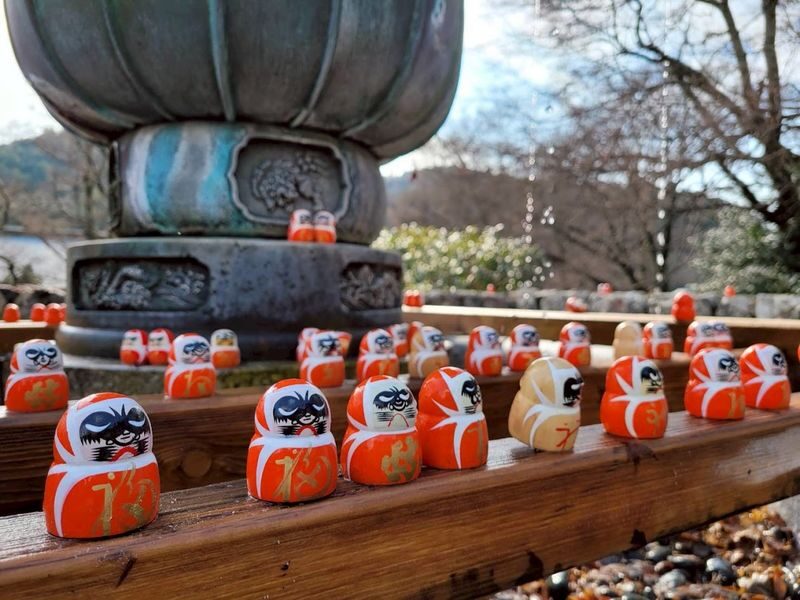
- Katsuoji’s Daruma trail: Find red dolls across the temple grounds and follow a stamp route to a keepsake postcard.
- Three distinct stops: Pair a prayer temple near Osaka with Kyoto’s Arashiyama and historic Nara Park.
- Useful time at Arashiyama: The 2.5-hour stop allows time for the bamboo path, Togetsukyo Bridge and a meal.
- Transport made simple: Round-trip bus travel saves you from piecing together a long route by train and local transport.
- A self-guided pace at each site: Your guide sets the schedule and shares practical advice, while you explore independently.
- Plan for walking and changing conditions: Bring comfortable shoes, and expect stop times to shift with traffic and weather.
- A three-stop day from Osaka
- Katsuoji Temple and its Daruma trail
- Arashiyama’s bamboo path and river views
- Nara Park and the deer
- What the guide adds, and what the tour does not do
- The value of a long bus day
- Who should book this day trip?
- Should you book it?
- FAQ
- How long is the tour?
- What is included in the price?
- How much is admission to Katsuoji Temple?
- Are deer crackers included at Nara Park?
- Where does the tour return to?
- Can children join the tour?
- More Tours in Mino
- More Tour Reviews in Mino
A three-stop day from Osaka

This day trip strings together places that are appealing for different reasons. Katsuoji is known for its Daruma dolls and prayerful atmosphere; Arashiyama offers a famous bamboo walk and river scenery; Nara Park brings you close to free-roaming deer and major religious sites.
The route runs from a 7:55 a.m. departure to a return around 6 p.m. Round-trip transfers and a Chinese-speaking guide are included, with English support also advertised. The guide generally gives information and directions, then you have free time at each stop. That mix suits you if you like a little context but prefer to explore at your own pace.
The price starts at $44.85, an attractive rate for a full day of transport linking three areas. It does not include Katsuoji admission, meals or personal purchases, so budget for those separately. Katsuoji charges 500 yen for adults, 400 yen for elementary and junior high school students, 100 yen for preschoolers aged 3 and up, and nothing for children under 2.
Katsuoji Temple and its Daruma trail
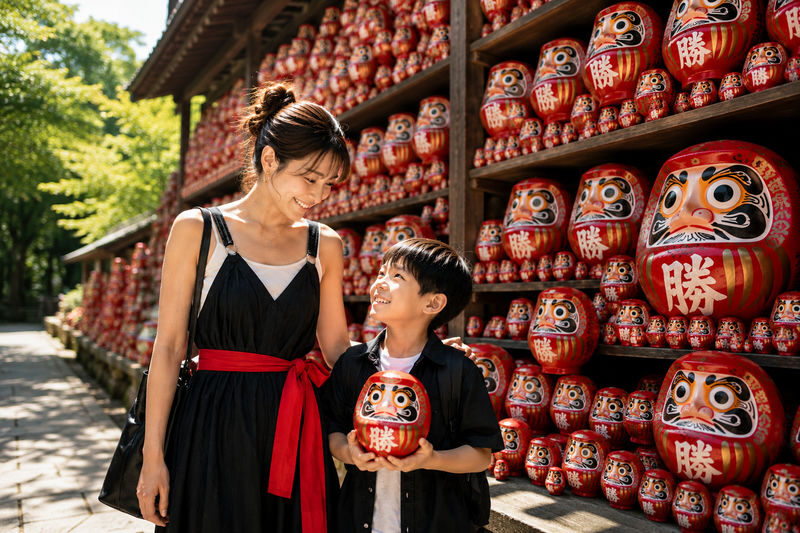
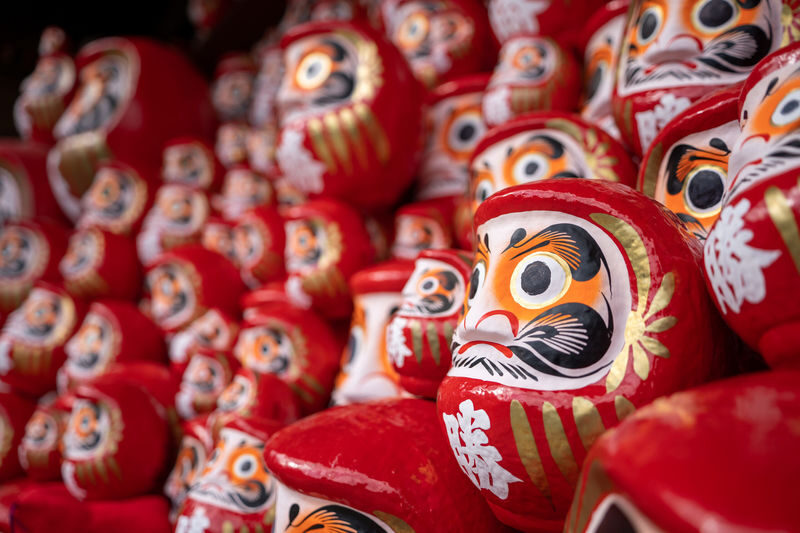
The first stop is Katsuoji Temple, reached at about 9 a.m. You have roughly 90 minutes to explore. The temple is associated with prayers for victory and success, represented by Daruma dolls placed throughout its grounds. Here, victory is framed as overcoming your own obstacles, not defeating someone else.
A Daruma is a round, weighted doll inspired by Bodhidharma, the founder of Zen Buddhism. Its shape recalls the story of his long meditation facing a wall, and the saying fall seven times, stand up eight. That idea gives the many small figures more meaning than a mere photo prop: each can represent effort, persistence or a wish you are working toward.
The temple’s stamp collection adds a useful purpose to your walk. Pick up or buy a special card, use the map to find designated stamps, and follow the route through the grounds. Complete the card and you have a personal souvenir rather than a generic postcard. The temple admission is extra, as are any purchases related to the stamp activity.
Ninety minutes is enough to see the main areas and try the stamp route, but it can feel short if you like lingering at temples or stopping often for photographs. One useful tip is to check the postcard and stamp arrangements as soon as you arrive, so you can plan your walk around them instead of retracing your steps.
Arashiyama’s bamboo path and river views
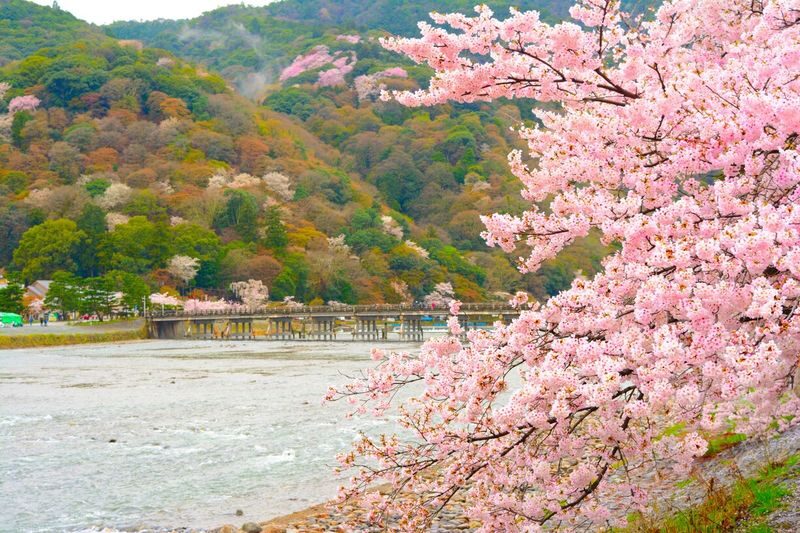
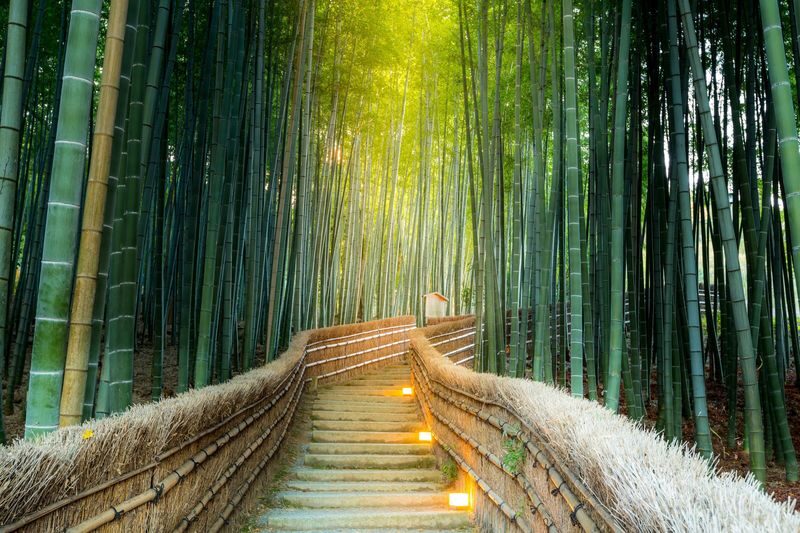
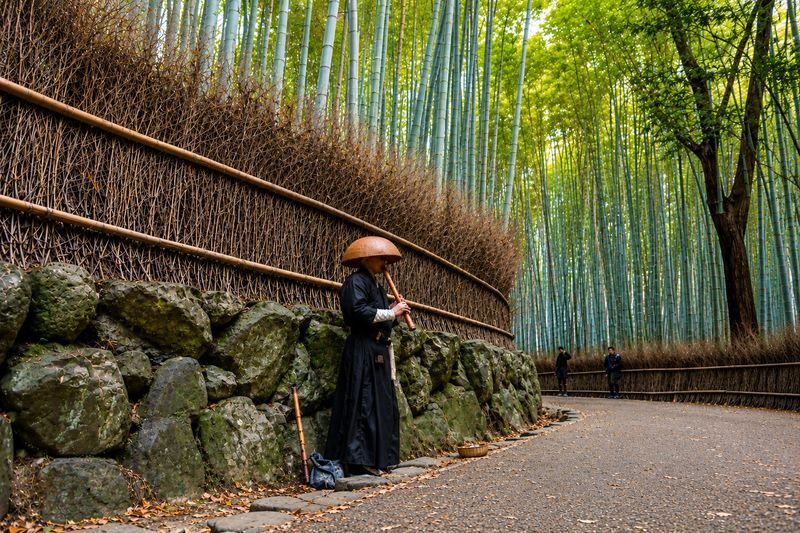
At about 11:40 a.m., the bus reaches Arashiyama for a 2.5-hour stop. That is the longest visit of the day, and with good reason: the district has more to offer than a quick walk through its famous bamboo. The grove’s path stretches about 400 metres, while Togetsukyo Bridge is another landmark to seek out.
The bamboo walkway is atmospheric, but it is a short route and a popular one. Think of it as one memorable part of a larger outing, not a secluded forest trek. Arashiyama’s seasonal scenery changes through the year, and the area’s river setting gives you a different feel from the temple grounds at Katsuoji and the open parkland in Nara.
The time here gives you a chance to walk, take photos and find lunch. Guides have offered practical suggestions for local restaurants and snack shops, which can help when you would rather spend your break eating than searching for a place. Meals are not included, so lunch is on your own.
A little planning makes this stop work better. Decide whether the bamboo path, bridge, food or relaxed wandering matters most to you; two and a half hours is generous compared with the other stops, but it is not enough to see every corner of the district. If your priority is a full exploration of Arashiyama, consider giving it a separate day.
Nara Park and the deer
The final stop is Nara Park, scheduled for about 3:20 p.m. You have around 90 minutes before the return journey. The park is famous for deer roaming freely, and it also puts you near Todai-ji Temple and Kasuga Taisha Shrine, both recommended sights in the area.
This is the most playful stop, but remember that the deer are animals, not props. They can approach quickly, especially around food, and the tour’s own guidance is to avoid getting too close. Keep your belongings secure, stay calm and give them space. Some visitors have found the deer pushier than expected, and a bite can damage clothing.
There is an important change to the snack arrangement: deer crackers are not provided from September 10 onward. The package name may still refer to deer feeding, so check the details for your travel date rather than assuming crackers are part of the experience. If you do buy crackers yourself, follow local instructions and do not tease the deer with food.
Ninety minutes gives you time for a walk and photographs, but not a full visit to the park, Todai-ji and Kasuga Taisha. These are substantial places, and the schedule is designed to sample Nara rather than cover it all. Choose your priorities before getting off the bus.
What the guide adds, and what the tour does not do
The guide’s role is practical as much as educational: explain the next stop, flag meeting times, share background and help you make good use of free time. Names that have been mentioned positively include Jackie, Victoria, Wang Hongxia, Liu and David. Guides change, so you cannot book a particular person. Their contributions have included photo-location tips, restaurant recommendations and help finding souvenirs.
The tour is described as having Chinese and English guidance. The level of detail and English fluency may vary by guide, so do not expect a specialist lecture at every site. One useful way to approach it is to treat the guide as your route manager and local helper, then read more on your own if you want a deeper account of the temples.
This is not a private tour, and it does not provide a guided walk at every attraction. You have free time at all three stops, which is a plus if you like independence and a limitation if you want continuous interpretation. The bus is arranged according to the number of bookings, and seating is free choice when boarding.
The value of a long bus day
The main value is convenience. Katsuoji is not as straightforward to reach as central Osaka sights, and the three destinations sit far apart. A bus takes the planning burden off your shoulders and gives you a chance to rest between visits. That matters on a day that begins early and involves a lot of walking.
The cost looks strong for the amount of ground covered, particularly if you value direct transport over building a route yourself. Still, the low starting price is not the whole bill: temple entry, meals, drinks and souvenirs are extra. Nor does the tour buy you more time at the sights. You are paying chiefly for transport, coordination and a structured way to fit three popular places into one day.
Expect schedule changes if traffic or weather interferes. Japanese rules limit daily vehicle use, and the guide may adjust stop lengths to keep the day within those limits. Avoid booking a flight, Shinkansen or dinner that depends on a precise return time. The stated return is around 6 p.m., but the actual timing can shift.
Who should book this day trip?
I’d choose it if you are based in Osaka, short on time and keen to see Katsuoji, Arashiyama and Nara without managing the connections yourself. It is also a good fit for families and mixed-age groups who can handle a full day, although there are no child seats, and children aged 2 and older pay the adult rate. Children under 2 can travel free without occupying a seat.
It is less suitable if you want a slow temple visit, a long lunch or a close study of Nara’s major sites. People who dislike bus travel should also think twice: the route covers considerable distance, and some of the day will be spent in transit. Wear comfortable shoes, carry water and keep your schedule open after the return.
Arrive at the meeting point before 7:55 a.m.; the guide will not wait for late arrivals, and missed departures are not refundable. Look for the guide holding a YOUTOURBUS flag, and check your confirmation and reminder emails for the exact meeting details. At booking, note any luggage, since one piece per person is allowed if declared in advance.
Should you book it?
Book this tour if your goal is three classic stops in one day with the transport handled for you. Katsuoji’s Daruma trail gives the day a distinctive opening, Arashiyama has enough time for a proper walk and lunch, and Nara brings a lively finish among deer and historic sites.
Skip it if you want to spend most of a day at one place or dislike a tight schedule. The strongest reason to go is the combination: these stops are different enough to make a varied day, and the bus makes the route far simpler. Just treat it as a well-organized sampler, not a leisurely, in-depth tour.
Kyoto Nara Classic Day Trip: Katsuoji Temple Daruma Wall & Arashiyama Bamboo Grove & Nara Park (Departing from Osaka)
“Tour leader Wang Hongxia was extremely warm and helpful. At every attraction, she reminded us of important details and recommended local souvenirs…”
FAQ
How long is the tour?
The tour runs from about 7:55 a.m. to 6 p.m., roughly 10 hours. Traffic, weather and operational limits can change the schedule.
What is included in the price?
Round-trip transfers and a Chinese-speaking guide are included. Katsuoji admission, meals, beverages and personal expenses are extra.
How much is admission to Katsuoji Temple?
Admission is 500 yen for adults, 400 yen for elementary and junior high school students, 100 yen for preschool children aged 3 and up, and free for children under 2.
Are deer crackers included at Nara Park?
No. Deer crackers are no longer provided from September 10 onward. Check the package details for your travel date.
Where does the tour return to?
The stated return and drop-off point is Tsurutontan Soemoncho. The exact timing can change with traffic and weather.
Can children join the tour?
Yes. Children under 2 can travel free if they do not occupy a seat, with one such child allowed per adult. Children aged 2 and older pay the adult rate. Child seats are not available.