A taiko drum is not a delicate instrument. Its beat lands in your hands, shoulders, and chest, and this Gion workshop lets you try the rhythms yourself before watching professionals perform. You don’t need musical experience, and the instructors guide you step by step.
I like two things in particular: you get hands-on practice as well as a live show, and the location puts you right in Gion, an easy fit with a day of sightseeing. English-speaking support also helps make the instruction accessible if you don’t know Japanese.
One thing to keep in mind: this is a focused workshop, not a full evening of cultural programming. The listed price starts at $40.99, and the experience is best for you if you’re keen to take part, not just sit back and watch.
- Key points before you book
- From Gion’s streets to the fourth-floor studio
- Learning the first taiko rhythms
- Putting the beat together as a group
- The professional show makes the lesson click
- Is the .99 starting price good value?
- Who will enjoy this Gion workshop?
- Should you book the taiko workshop?
- FAQ
- Where does the taiko workshop take place?
- How do I get to EN-LAB.?
- Do I need taiko or musical experience?
- Is English-language help available?
- Is there an age limit?
- What is included in the activity?
- Can I cancel for a refund?
- The Best Of Kyoto!
- More Workshops & Classes in Kyoto
- More Tours in Kyoto
- More Tour Reviews in Kyoto
- Not for you? Here's more nearby things to do in Kyoto we have reviewed
Key points before you book
 1 / 4
 2 / 4
 3 / 4
 4 / 4
- You play the drums yourself: Professional performers teach rhythms in a step-by-step class designed for beginners.
- The program includes a live performance: After practicing, you can watch professional taiko up close.
- It’s in central Gion: EN-LAB. is about a five-minute walk from Gion-Shijo Station and seven minutes from Kawaramachi Station.
- English support is available: The activity includes an English-speaking guide and staff.
- You may perform with the group: The workshop includes a mini group performance, giving you a chance to put the rhythms together.
- The entry price is $40.99: The price buys more than a seat at a show, since you also take part in the instruction and practice.
👉 See our pick of the 25 Best Workshops And Classes In Kyoto
From Gion’s streets to the fourth-floor studio
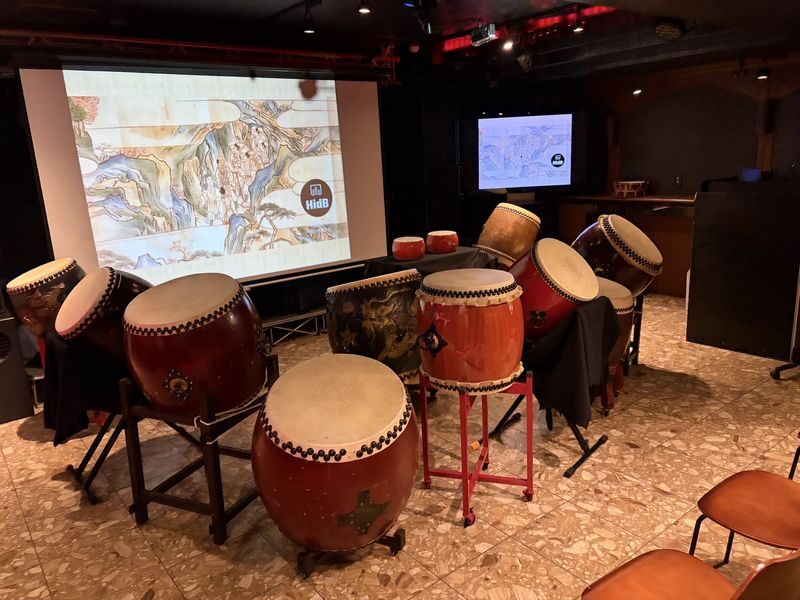
The workshop meets at EN-LAB., inside Gion First Building at 281-1 Gionmachi Kitagawa, Higashiyama-ku. That central address makes the class practical to pair with sightseeing in Gion, rather than requiring a special trip to a distant venue.
Getting there is straightforward once you know where to look. From Gion-Shijo Station on the Keihan Line, it’s about a five-minute walk; from Kawaramachi Station on the Hankyu Line, allow about seven minutes. The studio is on the fourth floor. On the event day, a workshop signboard is placed outside the building. Take the elevator in the middle of the building, turn right when you reach the fourth floor, and follow the corridor to the end.
That last bit is useful: the workshop is not at street level, so don’t expect to see a large storefront. I’d save the address and directions before setting off, especially if you’re navigating Gion’s smaller streets between sights.
You can also read our reviews of more tours and experiences in Kyoto


Learning the first taiko rhythms
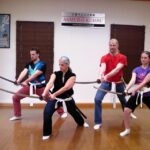
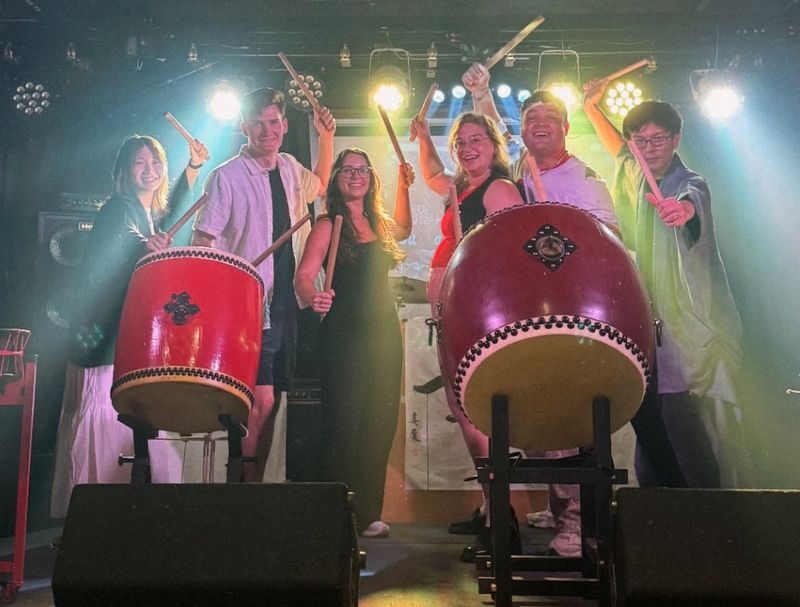
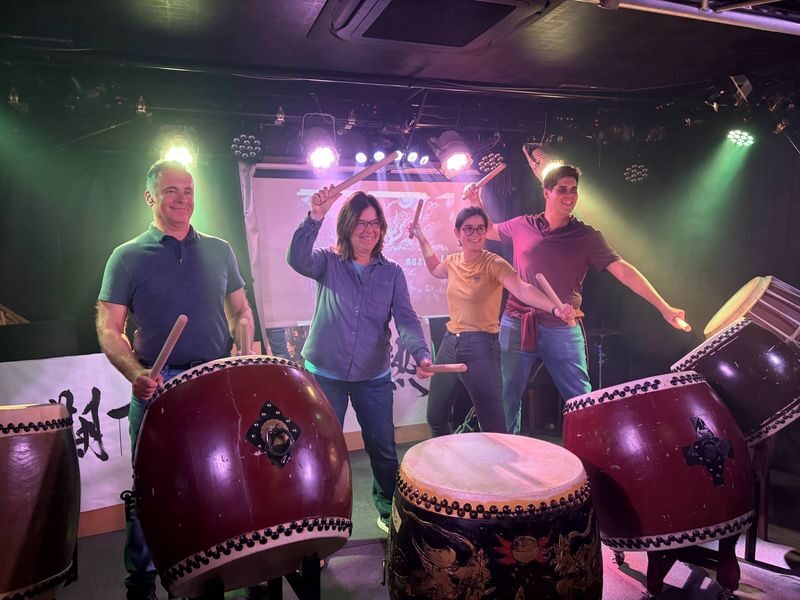
Taiko is the Japanese tradition of ensemble drumming, and the appeal here is physical as much as musical. You’re not simply hearing a beat from the audience. You’re holding the sticks, following the instructor’s cues, and learning how to bring your strikes into time with the group.
The professional performers teach you step by step, so a blank musical résumé is no problem. One attendee described learning several rhythms in roughly an hour, and another noted that the pace can be a real challenge. That’s a useful expectation: the class is approachable, but keeping a steady beat and coordinating your movements may take concentration.
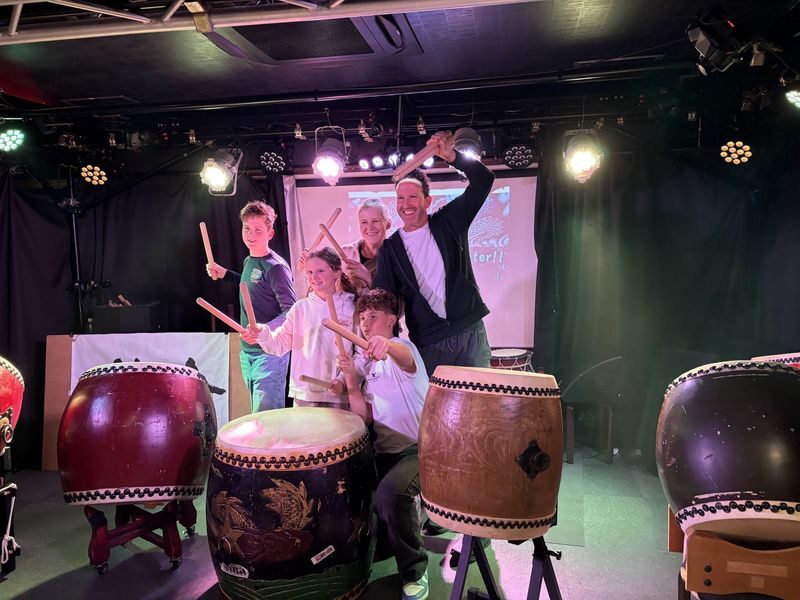
The instructors are described as friendly, with English support available. One small class had three participants and two teachers, but that is a snapshot, not a promise about the size of every session. If a small group appeals to you, it’s worth remembering that class numbers can vary. The main advantage is clear: you’re not expected to figure out the rhythms on your own.
I like that the workshop moves quickly from explanation to doing. Repeating a pattern gives you a chance to hear how your beat fits with everyone else’s. By the time you’ve worked through several rhythms, the activity feels less like a drum demonstration and more like a short lesson in listening, timing, and playing together.
Putting the beat together as a group
The class includes a mini group performance, which gives your practice a natural goal. You learn individual patterns, then get the chance to bring them together with the other participants. That collective part is where the workshop’s hands-on approach pays off: a rhythm that feels simple alone can demand sharper attention when you have to keep time with others.
This is not a test, and beginners are welcome. Still, the activity is more engaging if you’re willing to make some noise and try again when a pattern slips away. If you prefer a quiet, purely observational experience, the live show may suit you better than the lesson itself.
You can take photos and videos, so you can capture the class and performance. That’s handy if you want a record of your first go at taiko, though it’s sensible to stay attentive to the instruction rather than watch the whole session through a phone screen.
The professional show makes the lesson click
The live taiko performance is a key part of the experience. After you’ve felt the effort involved in keeping a rhythm, watching professionals play gives you a closer sense of what the instrument can do. You’ll see the music at close range, rather than experiencing it only as background sound.
The combination matters. A performance on its own can be impressive, but the workshop gives you some context for the coordination behind it. You’ve already tried to follow a beat, so the precision and pace of the professional playing have a practical point of comparison.
The available information doesn’t specify the show’s length, the exact number of pieces, or a detailed schedule. So think of this as a compact introduction that pairs participation with a live demonstration, not a long concert with a set program.
Is the $40.99 starting price good value?
At a starting price of $40.99, this makes most sense if you want an activity you can actively join. The fee covers admission, an English-speaking guide, and English-speaking staff. You also get instruction, drum practice, a group performance, and the professional show. That is a fuller outing than simply paying for a seat at a performance.
Value depends on what you enjoy. If you’re curious about Japanese music but would rather watch than participate, a live show ticket may be a better match. If you like learning by doing, the class adds a personal element that a performance alone can’t provide.
The class appears to run for about an hour, based on one participant’s account, but an official duration is not specified. Use that as a rough planning guide, not a guaranteed timetable. The central location can help you fit it around other plans in Gion, but allow time to find the building and reach the fourth floor.
A full refund is available if you cancel at least 24 hours before the activity date, using the destination’s local time. The voucher is valid only for the specified date and time, so check those details when you book. Outside food and drinks are not allowed.




Who will enjoy this Gion workshop?
This is a good fit for first-time visitors who want more than another temple stop, and for anyone interested in Japanese music who wants to try an instrument rather than just watch it. No experience is needed, and there is no age limit, making it a flexible option for mixed-age groups.
It can also suit solo visitors and small groups. The activity is guided, and the group practice gives you a shared task without requiring you to arrive with a musical partner. If you’re traveling with children or older family members, the lack of an age limit is helpful, but it doesn’t tell you how physically demanding the activity feels for each person. If that matters, ask the operator before booking.
The workshop may be less suitable if you have a very tight schedule or only want a passive show. The lesson involves following rhythms at a pace that one participant found challenging. You’ll get more from it if you’re ready to join in, make mistakes, and try again.
Should you book the taiko workshop?
Book it if you want a compact, hands-on cultural activity in central Kyoto and are happy to trade a little sightseeing time for a chance to make music. The strongest reasons to go are the beginner-friendly instruction, English support, and the pairing of group practice with a professional performance.
Skip it if you want a long concert, need a confirmed minute-by-minute schedule, or would rather keep your day to quiet activities. For everyone else, this offers a lively change of pace in Gion: you learn a few rhythms, feel the drum’s force for yourself, and leave with a better ear for the performance.
Kyoto: Japanese Taiko Drum Workshop in Gion
“Great Taiko experience. You quickly learn the rhythms and can play in harmony in no time. The instructors are bilingual and very friendly. I highly…”
FAQ
Where does the taiko workshop take place?
It meets at EN-LAB., A-401, Gion First Building, 281-1 Gionmachi Kitagawa, Higashiyama-ku, Kyoto. The studio is on the fourth floor.
How do I get to EN-LAB.?
It’s about a five-minute walk from Gion-Shijo Station on the Keihan Line and about a seven-minute walk from Kawaramachi Station on the Hankyu Line. Take the building’s central elevator to the fourth floor, turn right, and walk to the end of the corridor.
Do I need taiko or musical experience?
No. Beginners are welcome, and professional performers guide you through the rhythms step by step.
Is English-language help available?
Yes. The activity includes an English-speaking guide and English-speaking staff.
Is there an age limit?
No. The activity has no age limit.
What is included in the activity?
Admission, an English-speaking guide, and English-speaking staff are included. The experience involves taiko practice, a mini group performance, and a live performance by professionals.
Can I cancel for a refund?
You can get a full refund if you cancel at least 24 hours before the activity date, using the destination’s local time.