
Etosha’s wildlife moves on its own schedule. This open-4×4 safari starts at park opening, when the roads are quieter, and a guide who grew up near Etosha can adapt the route to recent sightings. Elephants, lions, giraffes and more are possible, but no one can promise which animals will appear.
I like two things in particular: the flexible route, which lets the guide respond to current sightings, and the chance to learn about Etosha from someone with lifelong ties to the region. The early start also gives you a better shot at quiet viewing and good photo moments.
The main drawback is practical: an open vehicle can feel very cold at dawn, especially from May to August. You’ll also pay the park entrance fee separately, and half-day bookings require you to meet at Anderson Gate rather than arrange pickup.
- At a glance
- Starting at Anderson Gate before the crowds
- Reading the park from an open 4×4
- A route shaped by sightings, not a fixed script
- Choosing between half-day and full-day
- What the price covers, and what it doesn’t
- Cold mornings and other useful preparation
- Is this Etosha safari a good fit?
- FAQ
- Where does the safari start?
- Is pickup included?
- How long does the safari last?
- What is the park entrance fee?
- Is lunch included?
- Is drinking water provided?
- What should I wear?
- Which languages are available?
- Are there extra charges for Halali or Namutoni departures?
- Can I bring a drone?
- More Tour Reviews in Okaukuejo
- Not for you? Here's more nearby things to do in Okaukuejo we have reviewed
At a glance
 1 / 8
 2 / 8
 3 / 8
 4 / 8
 5 / 8
 6 / 8
 7 / 8
 8 / 8
- Start at Anderson Gate: Free, secure parking makes it easy to drive yourself and be ready to enter at opening time.
- An open 4×4 brings you close to the view: It is built for wildlife watching, but pack layers to guard against the morning chill.
- The route changes with sightings: Your guide can adjust the day’s driving based on conditions and reports from other guides.
- Full-day means time in the park: Expect a one-hour lunch break at an in-park restaurant, with lunch at your own cost.
- Know the extra costs: The park fee is NAD 150 per person in cash. Departures from Halali or Namutoni have additional surcharges.
Starting at Anderson Gate before the crowds
The safari meets at Anderson Gate, near Okaukuejo, at park opening time. If you have your own car, driving to the gate is recommended: free, secure parking is available, and arriving there directly can help you enter with the first vehicles. It also avoids an unnecessary drive by the safari vehicle.
That early start is more than a scheduling detail. Fewer vehicles can mean a quieter first stretch and less competition for a good view. Wildlife sightings are never guaranteed, but getting inside early gives your guide more of the day to work with.
Pickup is available for some accommodations within a 30-minute radius of Anderson Gate on eligible bookings. Confirm the pickup location clearly in advance. One safari was delayed after the meeting point was misunderstood, so a quick message to settle the exact place and time is sensible.
If you’re staying at Okaukuejo inside the park, don’t assume the guide can collect you there. The meeting point may still be Anderson Gate, particularly if the guide has no other clients entering the park that day. Half-day safaris have no pickup at all: you must meet at Anderson Gate.
You can also read our reviews of more tours and experiences in Okaukuejo.
Reading the park from an open 4×4
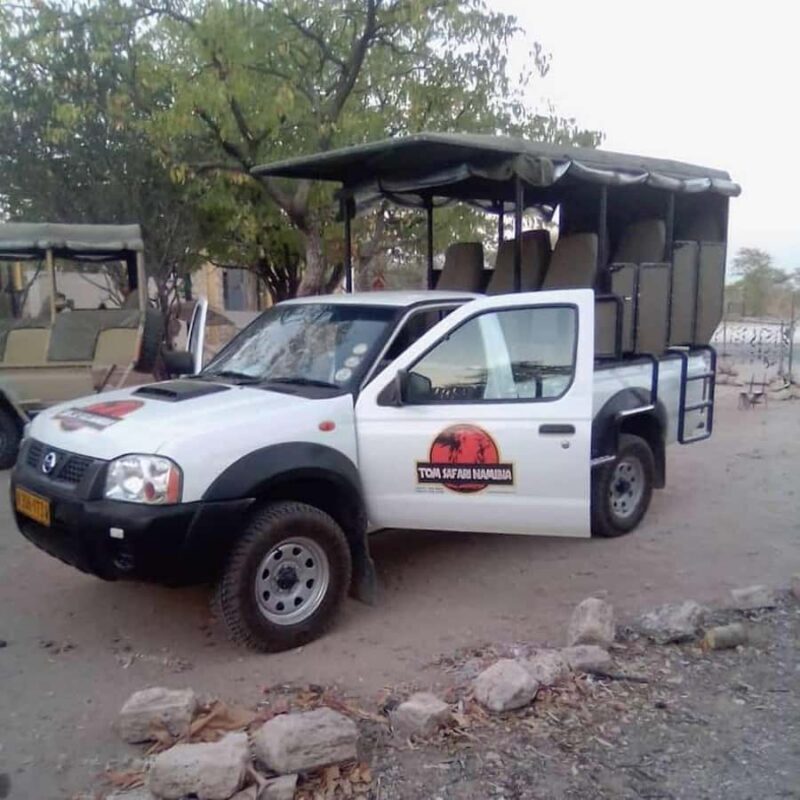
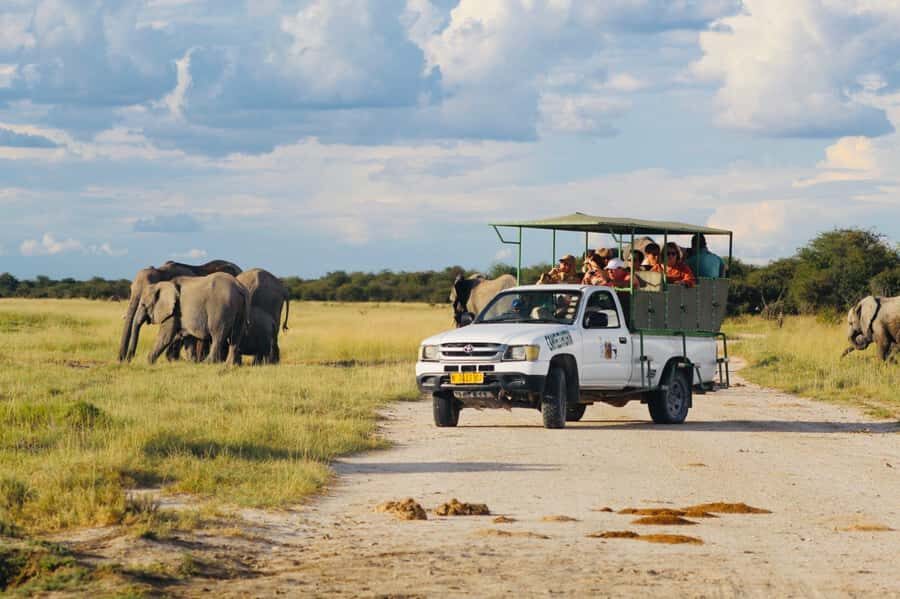
The safari vehicle is an open 4×4 designed for wildlife viewing. You have an unobstructed view for spotting animals and taking pictures, but the same open sides let in the cold air as the vehicle moves. Warm clothing is not optional comfort; it can make the early hours much more pleasant.
A warm fleece poncho is provided, and binoculars are available for shared use on board. Bring your own binoculars if you have them and prefer not to share. A windbreaker is useful, too, especially when the vehicle is moving.
The guide’s role is part driver, part spotter, part interpreter. Guides named by people on these safaris include Ben, Amone and Matias. Ben is often praised for his careful animal spotting, patient stops and ability to explain both wildlife and Namibian history. The guides also communicate with one another, which can help them respond to recent sightings rather than follow a rigid route.
That local experience is the tour’s strongest asset. A guide can help you notice animal behavior and details you might otherwise miss, as well as position the vehicle for a better view. Still, the guide can’t control the animals. Treat a sighting as a gift, not a checklist item.
A route shaped by sightings, not a fixed script
The route changes with the weather and the latest animal sightings. That flexibility is valuable in a large park: instead of committing to one set course, the guide can make choices based on what is happening that day. Reports from other guides can also point the way toward recent activity.
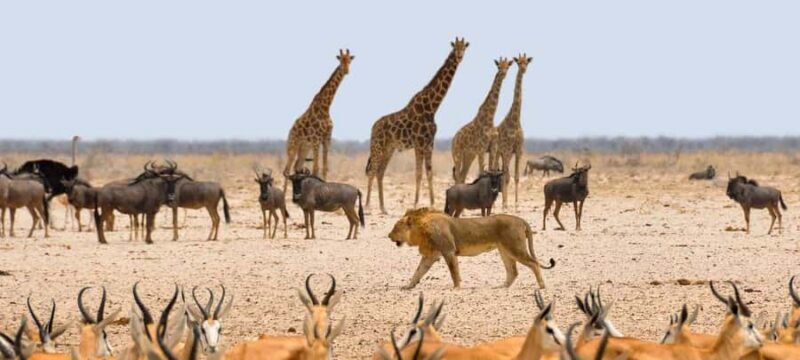
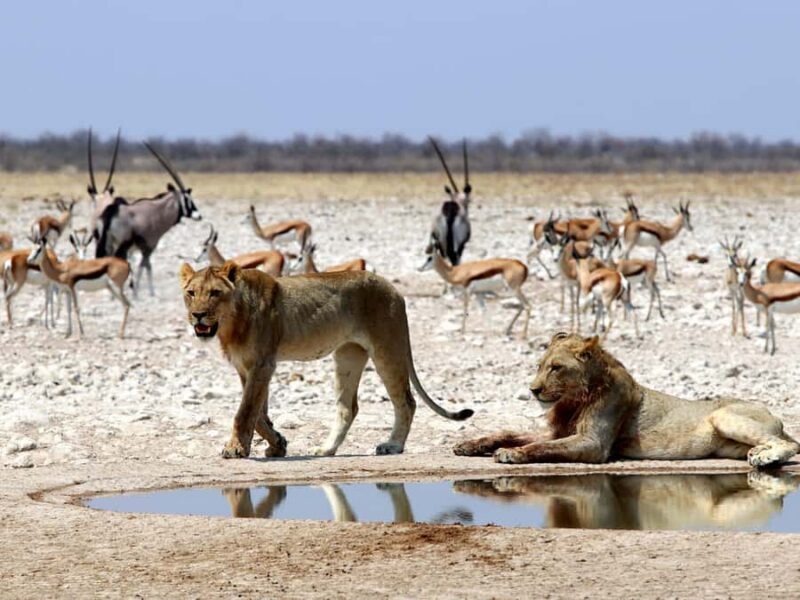
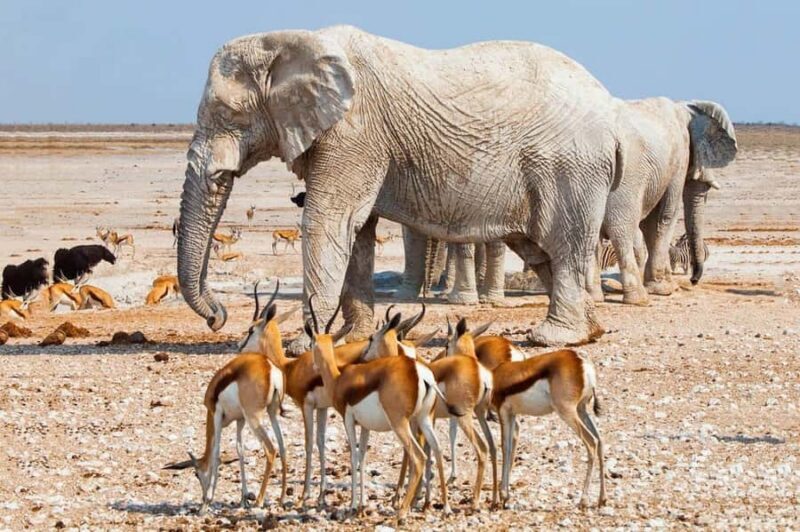
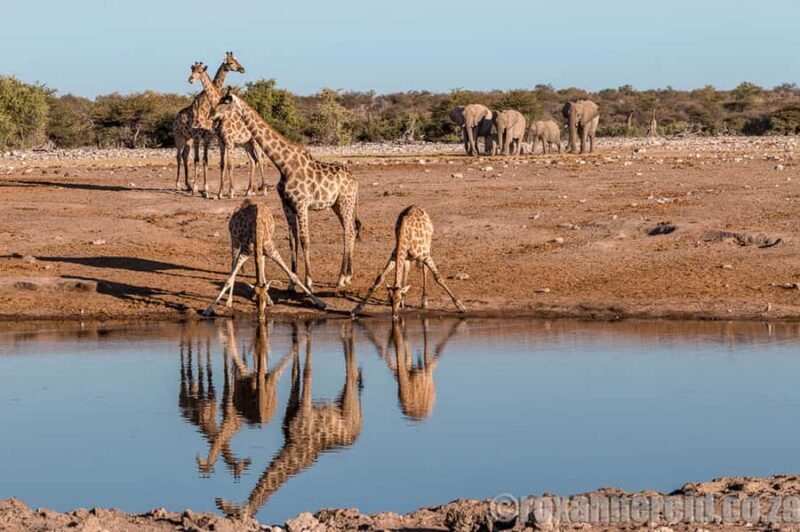
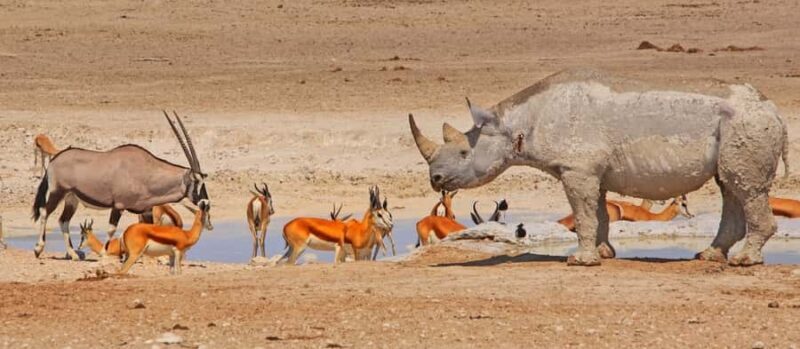
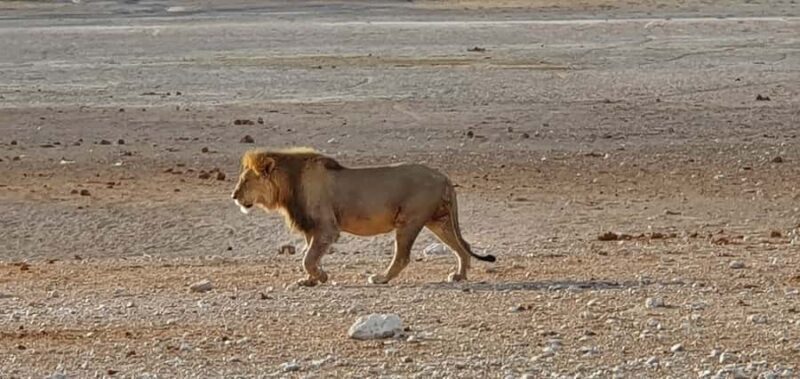
Etosha’s iconic animals may include elephants, lions, giraffes, zebras, rhinos, springboks and oryx. Cheetahs and leopards are also possible, but are less predictable. You might see several kinds of antelope and birds along the way, too. The variety of wildlife means a day can be rewarding even when a particular animal stays out of sight.
Make space in your expectations for waiting. A useful stop may last longer than you first expect, and a good guide won’t necessarily rush off as soon as you’ve taken one picture. Patience gives you time to watch an animal rather than simply record its presence. It also leaves room for the guide to explain behavior and habitat.
For photography, the early start is an advantage, but it is not a guarantee of perfect light or a close encounter. Bring your camera ready, and listen to the guide’s directions about where to look. Binoculars help you scan the open country while the vehicle is stopped.
Choosing between half-day and full-day
The tour is offered as a half-day or full-day outing, with overall durations listed from five to ten hours. Check the available start times and exact option before booking, since the length of your safari affects how much time you spend exploring the park.
A full day lets you cover the morning and afternoon, with a one-hour midday break at a restaurant inside the park. You can buy lunch there or bring your own. Meals and drinking water are not included, so pack water and plan your lunch rather than assuming refreshments will be supplied.
The long format suits you if wildlife watching is a main reason for visiting Etosha and you want time for the guide to change plans as sightings develop. It can also be a tiring day. One family described coming back worn out but happy, a fair picture of a dawn-to-afternoon safari in an open vehicle.
A half-day is a shorter commitment, but it comes with a firm transport condition: there is no pickup, and you meet at Anderson Gate. If your accommodation is not close to the gate, allow for that drive yourself. The available information does not specify whether every half-day departure follows the same route or timing, so check the exact booking details.
More Great Tours NearbyWhat the price covers, and what it doesn’t
At $123 per person, the safari price covers the open 4×4, fuel, an experienced local guide, shared binoculars, and a warm fleece poncho. Pickup and drop-off at selected lodges are included when offered for your booking, but not for half-day tours. The price also buys you the guide’s time and local knowledge, which can make a real difference when the route is flexible and animal sightings are changing.
The park entrance fee is separate: NAD 150 per person, payable in cash on site. Lunch and drinking water are also extra. Bring cash for the park fee, and carry your own water whether you plan to eat at the restaurant or bring lunch.
Departures from Halali and Namutoni require extra planning and cost more. Halali bookings need to be made at least 48 hours ahead, with a NAD 1,500 surcharge paid directly to the guide. Namutoni Gate departures also require 48 hours’ notice and carry a NAD 3,000 surcharge. Contact the operator directly by WhatsApp about these departure points.
The tour’s value is strongest if you want a guide and an open vehicle without organizing the game drive yourself. If you already have a car and prefer to drive independently, compare the total costs and decide how much you value having someone else handle the route, wildlife spotting and driving.
Cold mornings and other useful preparation
May through August are winter months in Namibia, and mornings in an open vehicle can be especially cold. Wear warm layers, bring a windbreaker and keep the fleece poncho handy. Even outside winter, it is wise to prepare for a brisk start rather than dress only for the warmer afternoon.
Pack water and cash, and consider bringing your own binoculars. Drones are not allowed. Babies under two can join for free while sitting on a lap.
The tour is guided in English or Afrikaans. Free cancellation is available up to 24 hours in advance for a full refund, and the reserve-now, pay-later option lets you hold a place without paying immediately. Those terms are useful if your Namibia plans are still shifting, but be sure to verify availability and the departure time for your chosen date.
Is this Etosha safari a good fit?
I’d choose this safari if you want an early start, an open 4×4 and a guide who can share local knowledge while adapting the route to animal sightings. The strongest reasons to book are the flexible wildlife search, the guide’s local background and the option to spend a full day in the park.
It may be less suitable if you dislike cold mornings, want lunch and drinks included, or expect guaranteed sightings of specific animals. For a half-day, make sure you can reach Anderson Gate yourself. For a full day, pack layers, water and lunch money, and treat the wildlife as a welcome surprise rather than a promise.
Etosha National Park: Full or Half-Day Game Drive
FAQ
Where does the safari start?
The meeting point is Anderson Gate near Okaukuejo, where free, secure parking is available.
Is pickup included?
Pickup and drop-off are available for selected lodges within a 30-minute radius of Anderson Gate. Half-day safaris do not include pickup.
How long does the safari last?
The listed duration is five to ten hours. Check the available start times and select either the half-day or full-day option.
What is the park entrance fee?
The fee is NAD 150 per person. It is not included in the safari price and must be paid in cash on site.
Is lunch included?
No. You can bring your own lunch or buy a meal at a restaurant inside the park during the planned one-hour break.
Is drinking water provided?
No. Drinking water is not included, so bring your own.
What should I wear?
Bring warm clothing and a windbreaker. Open-vehicle mornings can be very cold, especially from May to August. A warm fleece poncho is provided.
Which languages are available?
The live guide speaks English or Afrikaans.
Are there extra charges for Halali or Namutoni departures?
Yes. Halali departures have a NAD 1,500 surcharge, and Namutoni Gate departures have a NAD 3,000 surcharge. Both require booking at least 48 hours in advance.
Can I bring a drone?
No. Drones are not allowed.
You can check availability for your dates here: