HMS Belfast makes London’s wartime history tangible: you step aboard a Royal Navy cruiser and move through the cramped spaces where hundreds of sailors lived and worked. I like the contrast between the ship’s cavernous machinery rooms and its small everyday rooms, and the climb to the Flag Deck, where the view takes in central London and Tower Bridge.
I also like that the Life at Sea exhibition brings personal accounts into the visit, rather than leaving you with guns and machinery alone. The main drawback is physical: steep ladders, narrow stairs and confined spaces are part of the ship, so this is a poor fit if climbing is difficult or tight quarters make you uneasy.
- Nine decks to explore: Move from working and living spaces to command areas, with the ship’s size and layout telling their own story.
- Engine rooms below deck: See the machinery that powered HMS Belfast through Arctic conditions.
- A gun turret experience: Get close to the equipment that made the cruiser a formidable warship.
- The Flag Deck above the Thames: Climb nine levels for views across central London, including a memorable Tower Bridge photo angle.
- Life at Sea stories: Hear veterans’ first-hand experiences alongside displays about the 950 men who served aboard during the Second World War.
- A physical visit, not a flat museum: Expect steep ladders and tight spaces, and plan your visit around your comfort and mobility.
- Boarding a warship on the Thames
- Exploring nine decks, one ladder at a time
- Engine rooms and the work behind the guns
- Gun turrets and the machinery of combat
- Life at Sea and first-hand accounts
- Climbing to the Flag Deck for London views
- What the ticket costs, and what it buys you
- Getting there and planning a comfortable visit
- Who should book HMS Belfast?
- FAQ
- Where is HMS Belfast?
- How do I get to HMS Belfast by Underground?
- How many decks can I explore?
- Is there an audio guide?
- What does the ticket include?
- What are the opening hours?
- Do I need to print my voucher?
- Can children visit HMS Belfast?
- Is HMS Belfast suitable for someone who has trouble climbing?
- Can I cancel my booking?
- The Best Of London!
- More Tours in London
- More Tour Reviews in London
- Not for you? Here's more nearby things to do in London we have reviewed
Boarding a warship on the Thames
 1 / 4
 2 / 4
 3 / 4
 4 / 4
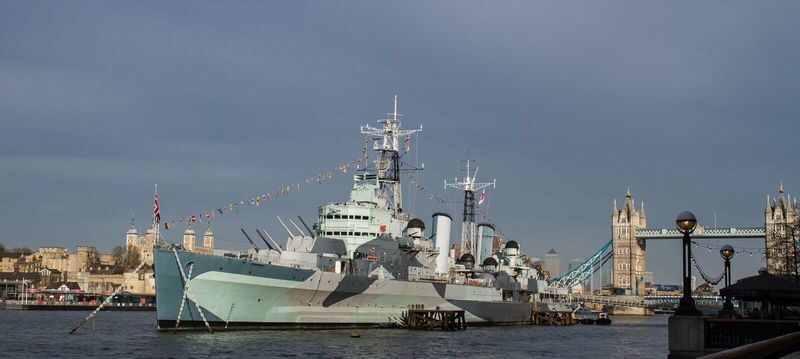
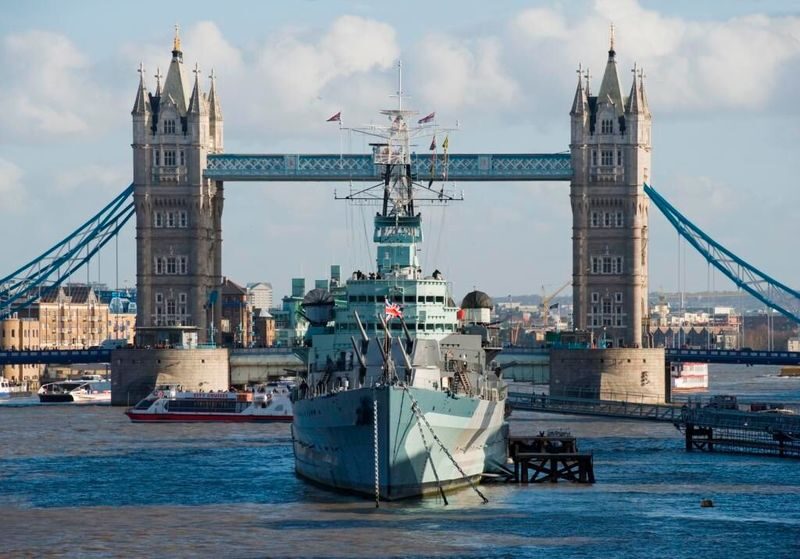
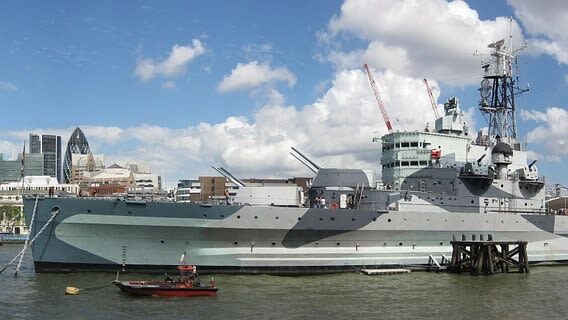
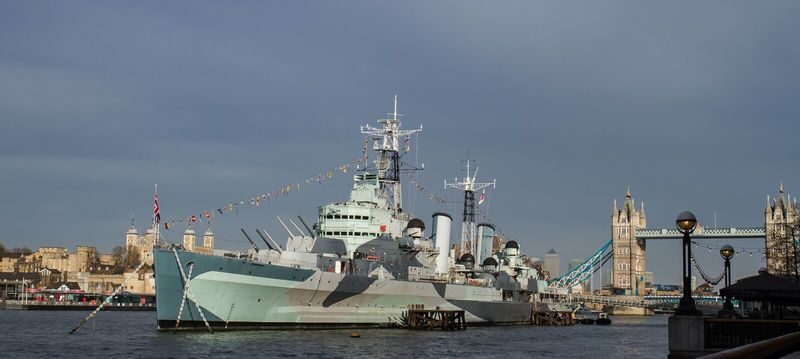
HMS Belfast is permanently moored on the River Thames at The Queen’s Walk, near London Bridge. Before you even reach the exhibits, the ship itself sets the scene: this is a large fighting vessel designed to carry heavy guns, machinery, ammunition and a crew through the demands of war.
The cruiser was commissioned into the Royal Navy in 1939 under Captain G. A. Scott. Its armament included sixteen 6-inch guns arranged in four quadruple turrets. That scale is easier to grasp aboard the ship than from a photo: the decks are layered, the passageways are narrow, and the working spaces are packed into a vessel that also had to be a home.
HMS Belfast survived major historic events, including the Second World War. The museum’s focus is not only on the vessel’s military role, but also on the daily lives of the roughly 950 men who lived and worked aboard during the war. I find that human scale makes the visit more meaningful. A cruiser can sound like a list of weapons and campaigns; the mess spaces, laundry and medical rooms show what that life involved between battles.

👉 See our pick of the 25 Best Workshops And Classes In London
Exploring nine decks, one ladder at a time
There is no gentle, level route through HMS Belfast. You explore by climbing between decks, often on steep ladders or narrow stairs, then finding your way through passageways and rooms. That physical layout is part of the point: the ship was built for sailors who needed to move around it efficiently, not for modern museum visitors in a hurry.
Give yourself time to pause and get your bearings. The nine decks hold a lot to see, and rushing from one display to the next can make the ship feel like a maze. If you are visiting with children, it helps to agree on a comfortable pace and keep close in tighter sections.
The ship’s compartments offer a varied picture of life aboard. You can see working areas and domestic facilities, including a laundry, as well as spaces that served the ship’s medical needs. One of the most memorable rooms is the operating room, where mannequins and sound effects create a vivid scene. It is an unusually direct way to show the reality of shipboard medicine, and younger children or visitors sensitive to surgical imagery may find it unsettling.
The cramped dimensions are not a minor inconvenience you can avoid by taking another route. They are central to the visit. If you are active and comfortable with ladders, they help you understand how sailors moved through the ship. If you have limited mobility, a fear of confined spaces or a medical condition that could make climbing difficult, consider that before booking. The activity information advises people with certain medical conditions to consult a doctor.
You can also read our reviews of more tours and experiences in London.



Engine rooms and the work behind the guns
Below deck, the engine rooms show the power and labour behind HMS Belfast’s movement. The spaces are cavernous compared with the sleeping and living quarters, and their machinery offers a clear contrast with the quiet, personal rooms elsewhere on board. These were not decorative parts of the ship. They were essential to keeping the cruiser moving, including through the icy conditions of the Arctic.
The engine spaces are among the best stops for anyone who likes engineering or wants to understand how a warship worked as a whole. Guns may draw your eye first, but a ship’s engines, boilers and support systems made it possible to carry people and weapons across the sea. The visit connects those systems to the sailors who operated them.
You may not be able to enter every part of the ship. A visitor with a young child reported that the boiler room was not accessible during their visit, so do not assume that every machinery space will be open. Even without access to every compartment, the engine rooms help make the ship’s scale and practical demands clear.
Gun turrets and the machinery of combat
The gun turret experience brings you close to one of HMS Belfast’s most striking features. The cruiser was built with four quadruple turrets, each carrying four 6-inch guns. Seeing the turret setting helps you picture how much equipment, coordination and crew effort sat behind a weapon that can look simple from a distance.
This stop works best when you take time to consider the people as well as the hardware. The ship was not an abstract military machine. Sailors had to load, operate and maintain its weapons in difficult conditions, while living in the same confined environment you are exploring. The displays help link the cruiser’s firepower with the human routines required to use it.
If you are travelling with children, the guns can be an immediate point of interest, but they are only one part of the visit. Pairing the turret with the Life at Sea exhibition makes for a fuller understanding of the ship: one focuses on its role in battle, the other on the lives of the crew.
Life at Sea and first-hand accounts
The Life at Sea exhibition adds personal voices to the machinery and military displays. You can hear veterans’ first-hand experiences and connect the ship’s compartments to the people who lived and worked in them. This matters because the vessel’s narrow bunks, working rooms and crowded routes can otherwise feel like an impressive collection of objects rather than a place where people spent long stretches of their lives.
The exhibition also gives families a useful way to talk about the human side of wartime service. You can ask what a room was used for, how sailors managed ordinary tasks at sea, and what it might have felt like to work far from home. The ship’s size and details invite questions without requiring you to arrive with specialist military knowledge.
Allow a few hours if you want to explore at an unhurried pace, listen to the audio guide and stop in the rooms that catch your interest. The audio guide is available in English, French, German and Spanish. It gives you a way to move at your own speed rather than follow a fixed group schedule.
Climbing to the Flag Deck for London views
The Flag Deck is nine levels up and gives you a fresh view of central London from the Thames. After the enclosed passages below, the open-air deck feels like a reward for the climb. From here, you can take in the river and nearby landmarks, with Tower Bridge making a particularly strong backdrop for photos.
The view is not a separate attraction bolted onto the ship. It helps explain the vessel’s position on the river and gives you a sense of how the historic ship sits within present-day London. The contrast between the old cruiser and the city around it is one of the visit’s most memorable moments.
That climb is also a practical consideration. The Flag Deck is reached by steep stairs, so you may choose to skip it if climbing is uncomfortable. There is plenty to see lower down, but the highest deck is a major part of what makes the visit feel complete.





What the ticket costs, and what it buys you
Admission starts at $39.50 for one HMS Belfast ticket. The price is most worthwhile if you plan to spend several hours exploring the ship, listening to the audio guide and making time for the exhibitions, rather than treating it as a quick photo stop.
Your ticket includes entry, with audio guides available in English, French, German and Spanish. Meals, drinks, tips and gratuities are not included, so plan to eat separately. The visit is self-paced, which gives you more freedom than a timed group tour, but also means you need to manage your own time and energy across the decks.
Booking terms state that the voucher is valid only on the selected date and time, if a time applies. You must bring a printed voucher and passport or valid ID, then exchange the voucher for a physical ticket. Free cancellation is available with at least 48 hours’ notice before the activity date, using local time.
The opening details supplied for this experience list hours of 10:00 to 17:00, with last admission at 16:00, but they also include dated and conflicting notes about opening days. Check the current schedule before you set out, especially if you are planning around a particular weekday or short London stay.
Getting there and planning a comfortable visit
The address is HMS Belfast, The Queen’s Walk, London SE1 2JH. The simplest stated public transport option is the Jubilee or Northern Underground line to London Bridge station, followed by a walk of about five minutes. That short approach makes the ship easy to fit into a day in central London.
Children aged 0 to 4 enter free. Children aged 0 to 15 must be accompanied by a paying adult, and those aged 16 or older are charged the adult rate. Students need to provide a student ID when booking and bring it on the day.
Wear comfortable footwear and keep your hands free where possible, since you will be climbing ladders and moving through tight spaces. If anyone in your group has a medical condition that could be affected by the physical demands, take the activity’s advice seriously and check with a doctor before going.
Who should book HMS Belfast?
I would put HMS Belfast high on the list for anyone interested in naval history, engineering or the everyday realities of wartime service. It also works well for families with children who are old enough to manage the ladders and enjoy exploring rooms, machinery and weapons. The ship offers a more active visit than a conventional museum, and that physical quality is exactly what makes its history easier to picture.
It is less suitable if you need step-free access, dislike enclosed spaces or cannot manage steep climbs. The ship’s tight passages are part of its authentic character, but they are also a real limitation, not a detail to brush aside.
Book if you have time to explore at a measured pace and want history you can walk through, from the engine rooms to the Flag Deck. Skip it if stairs and confined rooms would make the visit stressful. For the right visitor, HMS Belfast is a rewarding way to spend a few hours beside the Thames, with a strong mix of human stories, wartime machinery and London views.
HMS Belfast Experience in London
“nice tour. but alot of climbing and narrow stairs. those who cannot climb or scared or confined places should not come here.”
FAQ
Where is HMS Belfast?
HMS Belfast is moored on The Queen’s Walk, London SE1 2JH, on the River Thames.
How do I get to HMS Belfast by Underground?
Take the Jubilee or Northern line to London Bridge station, then walk about five minutes to the ship.
How many decks can I explore?
The ship has nine decks to explore. Moving between them involves steep ladders and narrow stairs.
Is there an audio guide?
Yes. Audio guides are available in English, French, German and Spanish.
What does the ticket include?
The package includes one HMS Belfast entrance ticket. Meals, beverages, tips and gratuities are not included.
What are the opening hours?
The supplied opening information lists 10:00 to 17:00, with last admission at 16:00, but it also contains dated and conflicting opening-day notes. Check the current schedule before visiting.
Do I need to print my voucher?
Yes. The stated redemption instructions require a printed voucher and a passport or valid ID. You exchange the voucher for a physical ticket.
Can children visit HMS Belfast?
Yes. Children aged 0 to 4 enter free, and children aged 0 to 15 must be accompanied by a paying adult. Visitors aged 16 or older pay the adult rate.
Is HMS Belfast suitable for someone who has trouble climbing?
The visit involves steep ladders, narrow stairs and confined spaces. It may not suit someone who has difficulty climbing or is uncomfortable in tight quarters.
Can I cancel my booking?
Free cancellation is available if you cancel at least 48 hours before the activity date, using destination local time.