Buenos Aires makes more sense when you can read its streets as a record of ambition, upheaval, and reinvention. On this three-hour walk, German-speaking guide Wim Wortmann links grand avenues and historic squares with everyday details, from the money changers known as arbolitos to the city’s tango-era theaters.
I like two things in particular: the small group, limited to five, leaves room for questions, and the visit to Wim’s office inside Palacio Barolo adds a city view without requiring a tower or roof-terrace visit. The German-language commentary is led by a guide whose first language is German.
The main consideration is the pace and access: you’ll walk about three kilometers, and Buenos Aires has limited accessibility in some places. Comfortable shoes are wise, and you should tell Wim in advance about any access needs.
- Key points
- A city’s story told through its center
- Palacio Barolo and the view from Wim’s office
- Plaza de Mayo and the foundations of the city
- Calle Florida and the Microcentro’s money changers
- Corrientes, tango, and a classic coffee house
- The Obelisk and Buenos Aires as a modern metropolis
- Retiro’s palaces and the Belle Époque
- Wim’s small-group style and the value of the tour
- Practical details before you go
- Should you book this Buenos Aires walk?
- FAQ
- How long is the tour?
- What language is the tour in?
- How large is the group?
- How much does the tour cost?
- How far will I walk?
- Does the tour include Palacio Barolo’s tower and roof terrace?
- Is a subway ride included?
- Where is the meeting point?
- The Best Of Buenos Aires!
- More Tours in Buenos Aires
- More Tour Reviews in Buenos Aires
- Not for you? Here's more nearby things to do in Buenos Aires we have reviewed
Key points
 1 / 10
 2 / 10
 3 / 10
 4 / 10
 5 / 10
 6 / 10
 7 / 10
 8 / 10
 9 / 10
 10 / 10
- Palacio Barolo from the inside: Visit Wim’s office for a view over the city. The tower and roof terrace are not included.
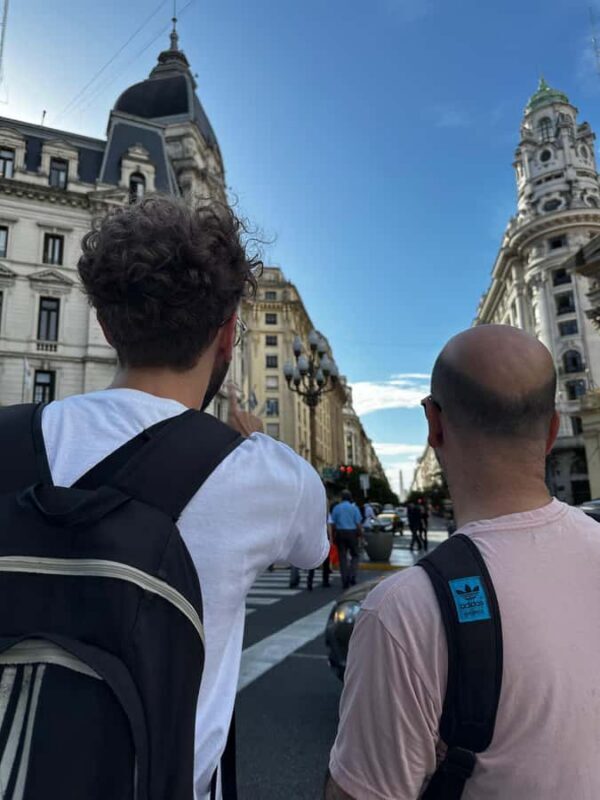
- A citywide introduction in three hours: The route connects Avenida de Mayo, Plaza de Mayo, Calle Florida, Avenida Corrientes, the Obelisk, and Retiro.
- German with room for questions: Wim speaks German as his first language, and the group is capped at five participants.
- Local details, not just facades: Hear about arbolitos, tango’s Golden Age, Argentine identity, architecture, and current affairs.
- A Subte ride is part of the tour: The walk includes a short ride on Buenos Aires’s subway.
- Plan for three kilometers on foot: The route is a walking tour, with food and drinks not included.

👉 See our pick of the 3 Best 3 Day Tours In Buenos Aires
A city’s story told through its center
Buenos Aires grew from a remote village into a major metropolis during the 19th century. That change still shows in its downtown streets: European influences sit beside local styles, while grand civic ambitions share space with the marks of economic crises and constant change.
Wim’s tour is designed to help you make sense of those contrasts rather than simply tick off famous buildings. You hear about Argentine and Latin American history, urban culture, architecture, current events, and the habits and character associated with the country. The aim is to connect what you see to the forces that shaped it.
That context matters in Buenos Aires. A grand avenue or elegant facade can suggest wealth and confidence, but the story behind it may also involve political change or a less settled economy. With a guide to explain the background, the city center becomes easier to understand as a living place, not just a collection of impressive buildings.
The three-hour format is useful if you’re new to the city and want a broad orientation before exploring on your own. It won’t cover every neighborhood, and it isn’t meant to. Instead, it gives you a map of key places and themes to carry into the rest of your stay.
You can also read our reviews of more tours and experiences in Buenos Aires.
Palacio Barolo and the view from Wim’s office
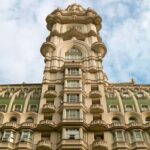
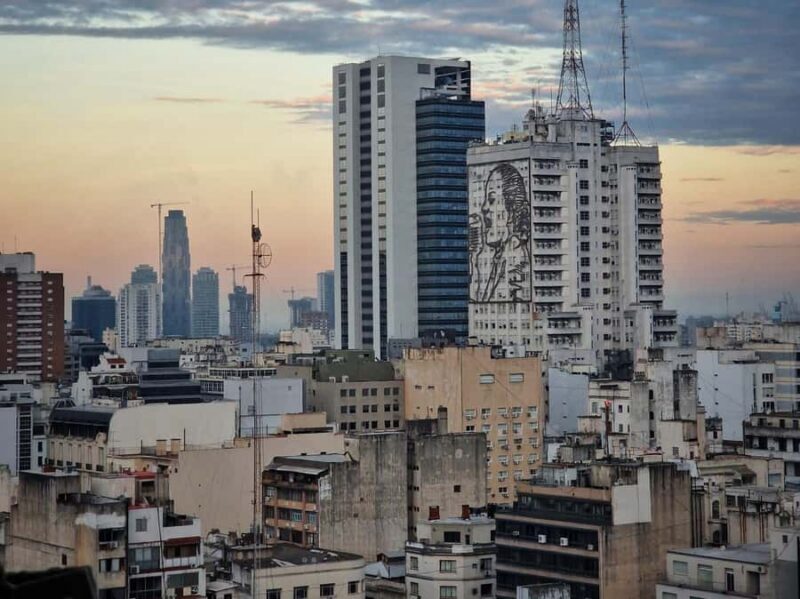
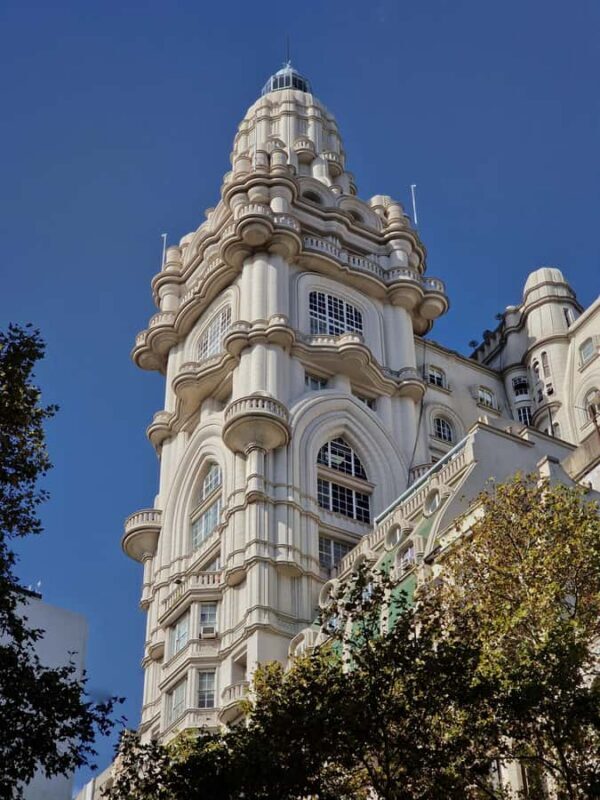
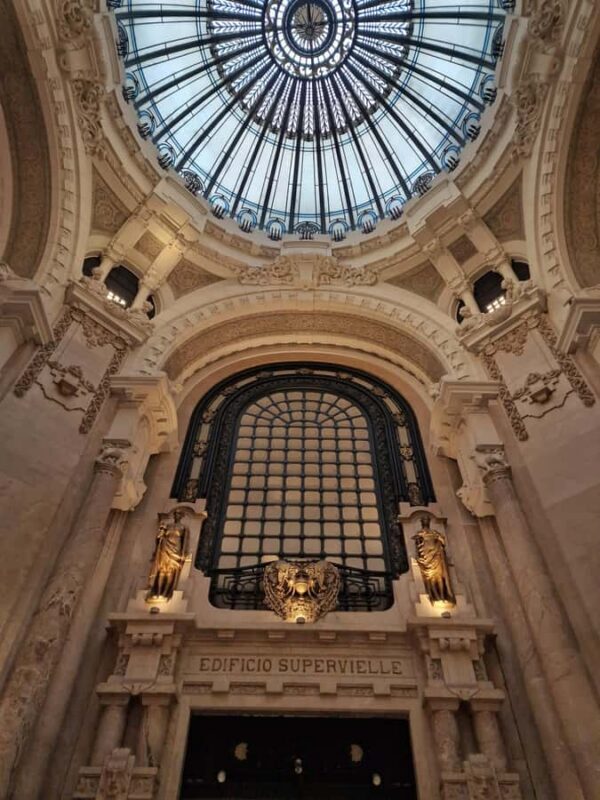
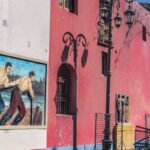
The tour begins near Palacio Barolo, an ornate building that makes a fitting introduction to the city’s architectural ambition. One unusual part of the visit is a stop inside Wim’s office, where you can look out over Buenos Aires. That personal viewpoint gives the building a practical purpose within the tour: you get a chance to take in the city from above while hearing how its center fits together.
It’s important to know what this visit does and does not include. You visit the office, but the tower and roof terrace are not part of the tour. If a climb to the top is your main reason for coming, this walk won’t provide it. If you’re more interested in seeing the building from within and gaining a city view as part of a guided introduction, the office visit is a distinctive bonus.
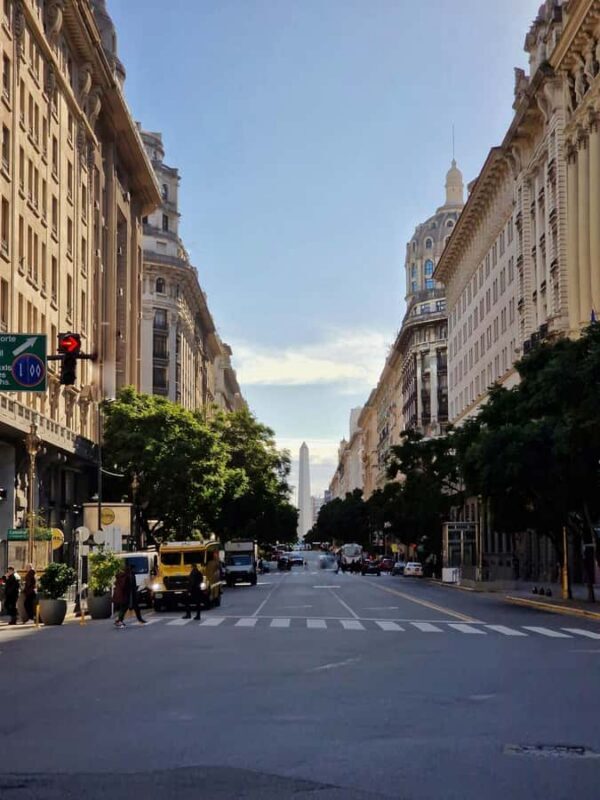
From here, the walk takes in Avenida de Mayo, whose broad avenue and European-influenced character are often described as Parisian in feel. Look at the streetscape as you go, but also listen for how its appearance relates to Buenos Aires’s changing fortunes. The route’s strength is in pairing architecture with explanation, so the grand style is more than a photo stop.
Plaza de Mayo and the foundations of the city
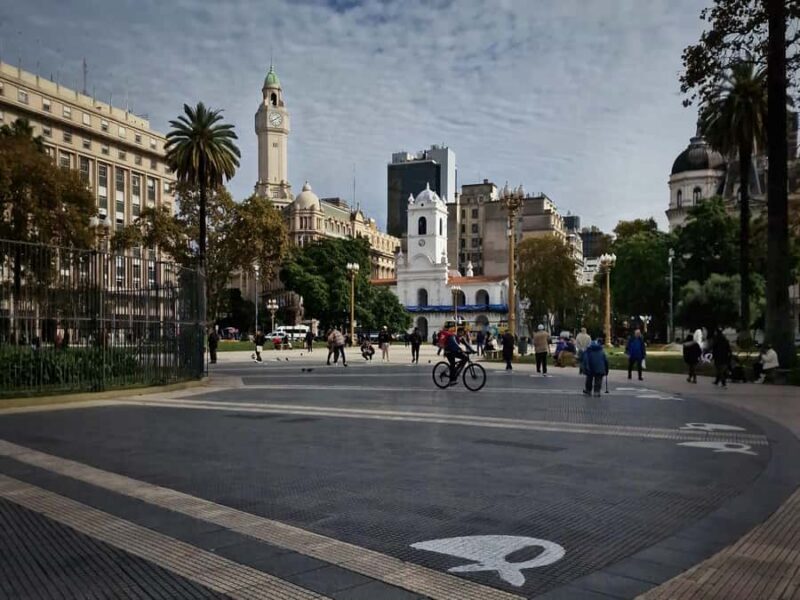
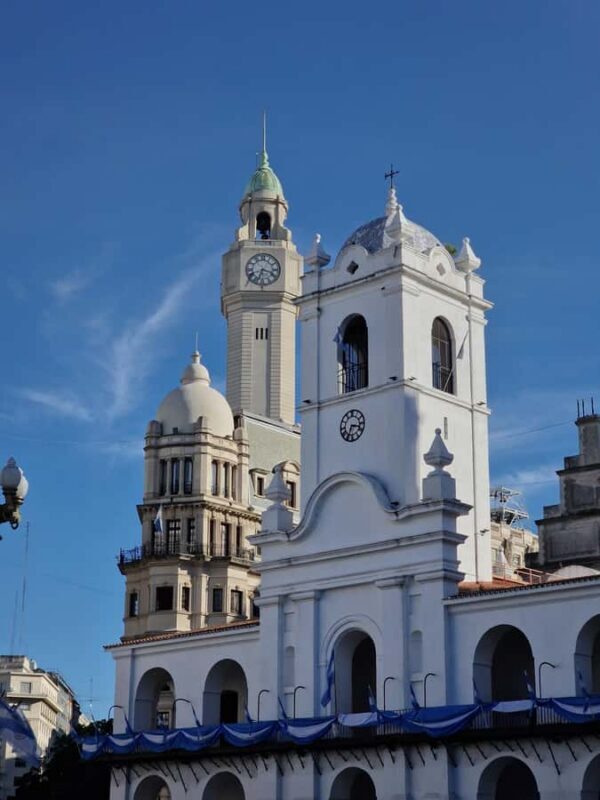
Plaza de Mayo is one of the tour’s essential stops. It is described as the place where the city was founded, and its place in the story of Buenos Aires makes it a natural point for a wider discussion of the country’s past and present.
The tour includes historic sites around the square, but the value is not only in seeing them. Wim also sets the city’s political and cultural history within a Latin American context. That broader frame can help you understand why Buenos Aires feels both strongly tied to Europe and distinctly Argentine.
This is also a good place to ask questions. The group is small, and the tour is built around explanation rather than a one-way recital of dates. If you want to know how a particular building fits into the city’s development, or how the past connects with everyday life now, you have room to ask.
Calle Florida and the Microcentro’s money changers
On Calle Florida, the tour brings you into the Microcentro, the commercial heart of the city center. Here, Wim explains the arbolitos, the informal money changers whose presence is part of the street’s local character. It’s a useful detail because it connects the economy to what you can actually see around you.
You’ll also see what is known as the corner of the five domes. The name itself invites you to look up and notice the roofline and architectural details that might otherwise pass by at street level. This kind of stop suits the tour’s approach: familiar streets become more interesting when someone points out what to notice and tells you why it matters.
The Microcentro can feel very different from the grand avenues and palaces nearby. That contrast is part of the lesson. Buenos Aires is not one consistent architectural mood; it is a city shaped by changes in wealth, culture, and daily life. The walk helps you notice those shifts without pretending that every block tells the same story.
More Great Tours NearbyCorrientes, tango, and a classic coffee house
Avenida Corrientes is often called the Argentine Broadway, and the tour uses it to explore the Golden Age of tango. The avenue’s association with theater and performance gives you a different way into the city’s cultural identity. Instead of treating tango as a symbol detached from daily life, the discussion places it in the streets and venues that helped define its place in Buenos Aires.
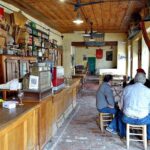
There may also be an opportunity to look inside one of the city’s most beautiful coffee houses. The tour information doesn’t promise a particular venue or guarantee entry, so treat this as a possible stop rather than a fixed appointment. Even from the outside, the coffee-house tradition helps round out the picture of the city’s public life and its European influences.
The walk’s mix of subjects is one of its strongest features. You move from architecture to music, then from cultural history to current economic realities. That range is especially useful if you want a first introduction that gives you more than a list of monuments.



The Obelisk and Buenos Aires as a modern metropolis
At the Obelisk, the focus shifts to how Buenos Aires became a modern metropolis in the 20th century. The monument is an easy visual marker in the city, but the guide’s explanation gives it a larger role in the story of urban growth and changing ideas about the capital.
This stop helps tie together the earlier parts of the walk. The city’s 19th-century growth, its European-influenced avenues, its cultural life, and its economic changes all feed into the modern city you see today. The point is not to make every detail fit a neat story, but to give you a useful way to interpret the differences.
A short Subte ride is included in the experience. That small change of pace adds a practical glimpse of local transport and breaks up the walking. The exact length or station details aren’t specified, so think of it as one part of the route rather than a separate subway tour.
Retiro’s palaces and the Belle Époque
In Retiro, you’ll see elegant facades of former palaces and hear about Argentina’s past wealth and the glamour of the Belle Époque. The buildings give visible form to a period when the city’s elite expressed status through grand residences and European styles.
This section offers a clear contrast with the streets around Calle Florida. The palaces speak of exceptional wealth, while other parts of the route bring you face to face with the pressures and adaptations of everyday urban life. That contrast is central to understanding Buenos Aires. Its architecture can be beautiful, but it also records who had money and influence at different moments.
The guided walk runs from Palacio Barolo to Plaza Embajada de Israel. Retiro is one part of the journey through the center, not a separate palace tour. Expect the emphasis to remain on the city’s history, buildings, and identity rather than extensive interior visits.
Wim’s small-group style and the value of the tour
Wim Wortmann leads the tour in German, his first language. That is a real advantage if you prefer to hear complicated history and current affairs in German rather than rely on a second-language explanation. The small group, with no more than five participants, also makes it easier to ask follow-up questions and keep the experience personal.
The tour has shown flexibility when conditions in the city change. During a downtown strike, Wim adapted the route and still covered the planned sights and more. That doesn’t mean every disruption can be overcome, but it suggests the tour is guided with some room for practical decisions rather than a rigid script.
At $41 per person for three hours, the price is best judged by what is included: a German-language guide, a focused introduction to central Buenos Aires, a visit to an office with a city view, and a Subte ride. The group limit adds value for anyone who prefers conversation over a large crowd. Food and drinks are not included, and there is no tower or roof-terrace visit at Palacio Barolo, so budget separately if either matters to you.
Practical details before you go
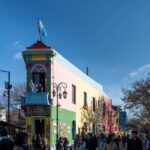
The meeting point is at the corner of Avenida de Mayo and San Jose, by the pizzeria La Continental, beneath the corner balcony. Wim is described as slim, wearing glasses, with curly dark blond hair. Check the location carefully before setting out, since this is a walking tour rather than a bus pickup.
You’ll walk about three kilometers over three hours. Wear comfortable shoes, and bring anything you need for a city walk; snacks, drinks, and meals are not included. Starting times vary, so check availability for the date you want.
Buenos Aires is accessible in only a few places. If you have a specific access requirement, contact Wim in advance so he can discuss adapting the tour. Free cancellation is available up to 24 hours before the activity, and you can reserve now and pay later, which keeps plans flexible.
Should you book this Buenos Aires walk?
Book this tour if you want a compact, thoughtful introduction to central Buenos Aires in German, especially if you like asking questions and prefer a very small group. The office visit at Palacio Barolo, the Subte ride, and the mix of history, architecture, tango, and local economic detail give the route a more personal feel than a simple monuments walk.
It is less suited to anyone seeking a tower climb, a food-focused outing, or a route with minimal walking. If three kilometers on foot works for you and you want to understand how the city’s grand avenues, everyday streets, and shifting identity fit together, Wim’s walk is a strong way to begin.
Buenos Aires: Welcome tour in German
FAQ
How long is the tour?
The guided tour lasts three hours.
What language is the tour in?
The tour is in German. Wim speaks German as his first language.
How large is the group?
The group is limited to five participants.
How much does the tour cost?
The price is $41 per person.
How far will I walk?
You’ll walk about three kilometers. Comfortable shoes are recommended.
Does the tour include Palacio Barolo’s tower and roof terrace?
No. The tour includes a visit to Wim’s office inside Palacio Barolo, with a view over the city, but not the tower or roof terrace.
Is a subway ride included?
Yes. The tour includes a ride on the Subte, Buenos Aires’s subway.
Where is the meeting point?
Meet at the corner of Avenida de Mayo and San Jose, by the pizzeria La Continental, beneath the corner balcony.
You can check availability for your dates here: