Budapest’s Jewish Quarter is not a museum district tucked away from city life. It is a working neighborhood where synagogues, memorials, cafés, nightlife, and the past share the same streets. This 2.5-hour walk links those layers, with entry to the Great Synagogue and the restored Rumbach Synagogue.
I like two things in particular: you get inside major religious sites rather than just hearing about them from the pavement, and the route connects Holocaust history with the community’s present-day life. Guides such as Milan, Flavia, David, and Dorina have brought personal and family stories into the walk, though your guide will depend on the date and language.
The main consideration is the $61 price. It includes three listed admissions and a live guide, but one stop, Kazinczy Street Synagogue, is not included for entry. The tour also covers difficult history, so it may feel emotionally demanding as well as informative.
- Great Synagogue entry is included: See Europe’s largest synagogue and learn about Budapest’s Neologue Jewish community.
- Three admissions are covered: The Great Synagogue, Rumbach Synagogue, and Holocaust Memorial Park are included.
- The walk reaches beyond the major sights: Kiraly Street, Gozsdu Udvar, Carl Lutz Memorial, and Dob Street add local context.
- Kazinczy Synagogue is an outside stop: Admission to this active Orthodox synagogue is not part of the tour.
- Guides can add a personal lens: Guides named in tour accounts include Milan, Flavia, David, Dorina, and Christian.
- Plan for synagogue dress rules: Cover your shoulders and knees; men can get head coverings at the synagogue entry.
- A walk through a living Jewish Quarter
- Starting at the Great Synagogue
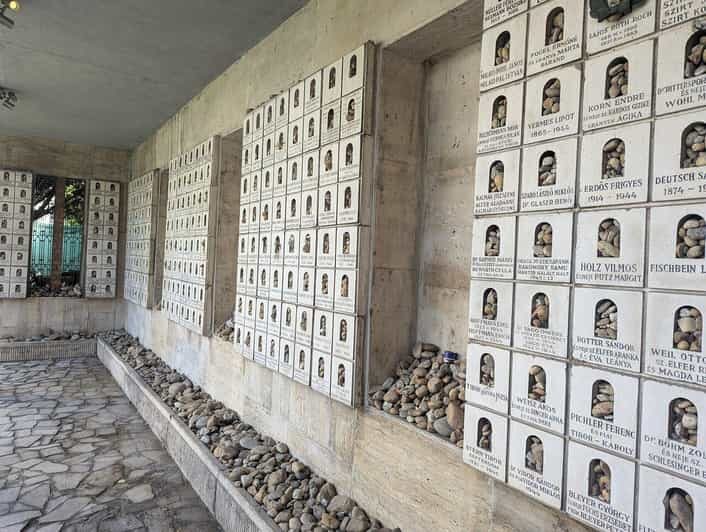
- Pausing at the Holocaust Memorial Park
- Seeing the restored Rumbach Street Synagogue
- Following Kiraly Street into Gozsdu Udvar
- Remembering Carl Lutz and the ghetto streets
- Finishing at Kazinczy Street Synagogue
- Is good value?
- Who should take this walk?
- Should you book it?
- FAQ
- How long is the tour?
- What languages are available?
- Which entries are included?
- Is entry to Kazinczy Street Synagogue included?
- What should I wear inside the synagogues?
- Can I take photos?
- Is the route wheelchair and stroller accessible?
- Can I cancel for a refund?
- The Best Of Budapest!
- More Walking Tours in Budapest
- More Tours in Budapest
- More Tour Reviews in Budapest
- Not for you? Here's more nearby things to do in Budapest we have reviewed
A walk through a living Jewish Quarter
 1 / 8
 2 / 8
 3 / 8
 4 / 8
 5 / 8
 6 / 8
 7 / 8
 8 / 8
District VII is a good place to understand Budapest as more than a collection of grand buildings and river views. Here, the Jewish Quarter’s history sits close to everyday city life. A synagogue may stand a short walk from a café or nightlife courtyard, and a memorial may be part of a route people take on an ordinary day.
That contrast is central to the experience. You move between sites that tell different parts of the story: religious life, architecture, the Holocaust, rescue efforts, and the return of Jewish culture in Budapest. The guide helps connect them, which matters because the stops are spread across streets that can otherwise seem like a series of separate sights.
The tour is offered in English and French. Several guides named in tour accounts, including Milan and Flavia, are praised for clear explanations, humor, and a personal approach. Some guides have shared family histories or ties to Budapest’s Jewish community. Those details can make abstract history feel close, but no particular guide is guaranteed, so treat a named guide as a possibility rather than a booking promise.
👉 See our pick of the 22 Best Shopping Tours In Budapest
Starting at the Great Synagogue
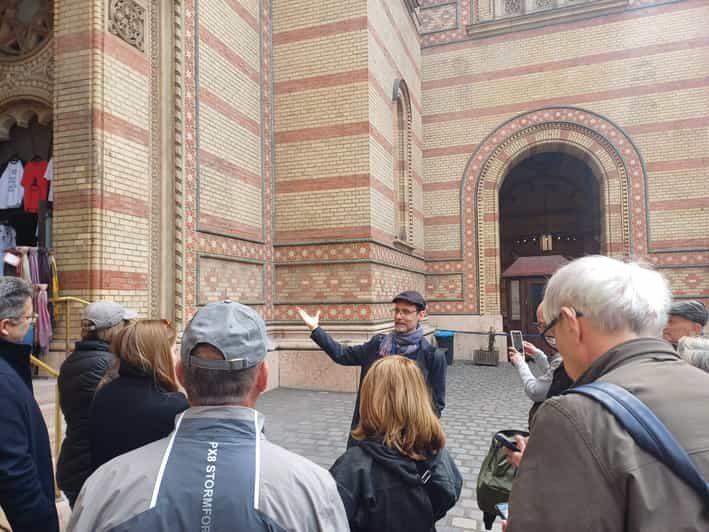
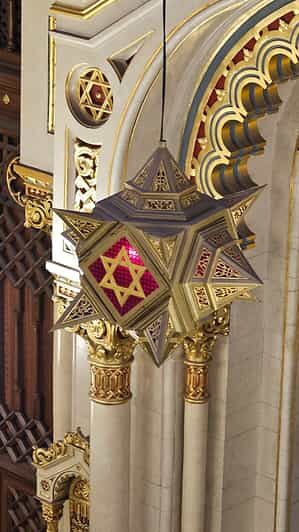
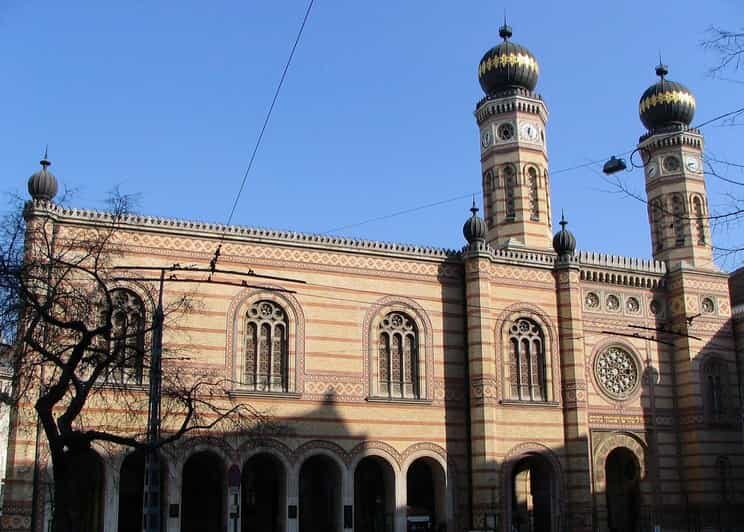
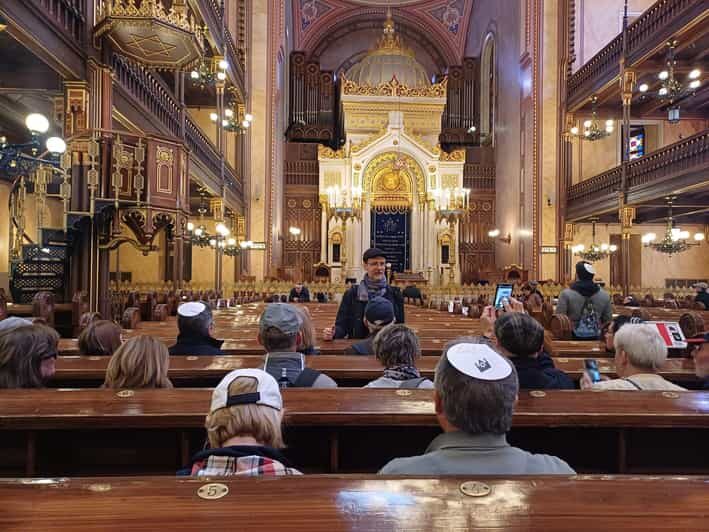
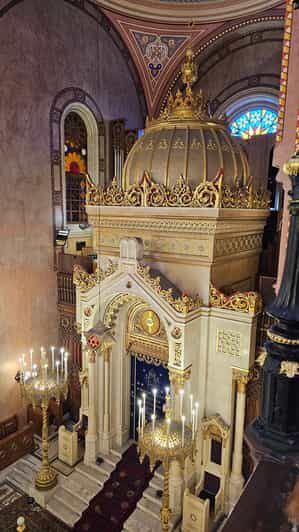
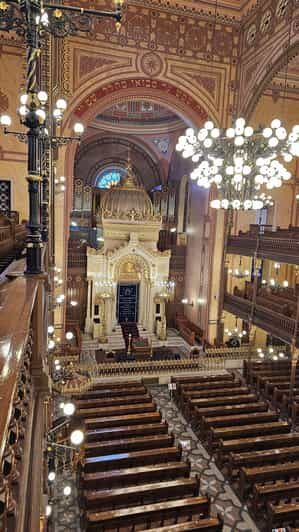
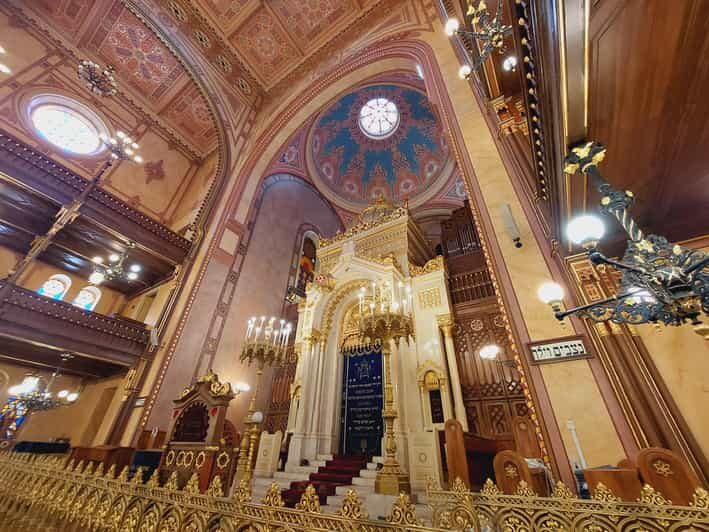
The Great Synagogue, also known as the Dohány Street Synagogue, is the tour’s biggest architectural and historical stop. It is described as Europe’s largest synagogue, and its Moorish Revival design makes an immediate impression. The building is not just a striking exterior: included entry gives you time inside and a chance to learn about the Hungarian Neologue community.
A guide can help explain why this community and its religious traditions matter to Budapest’s Jewish history. The value of the visit is not only the scale of the building, but also the context: you begin with a place of worship and community life before moving on to memorials and streets shaped by persecution and change.
One tour account describes spending about an hour at the Great Synagogue and its adjacent memorial area. That is a substantial part of the outing, and a good reason to arrive ready to listen rather than treat the first stop as a quick photo break. The tour includes skip-the-ticket-line access, which can save time, though it does not mean you should rush through the site.
Dress modestly inside synagogues. Shoulders and knees should be covered, and men can get a head covering at the synagogue entry. Flash photography is not allowed, so keep your camera settings in mind before you start taking pictures.
You can also read our reviews of more walking tours in Budapest

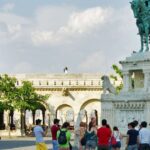

Pausing at the Holocaust Memorial Park
The route continues to the Raoul Wallenberg Holocaust Memorial Park, where the tour turns to the Holocaust in Hungary and the people who risked their lives to help others. The park honors the courage of the Righteous Gentiles, who saved tens of thousands of Hungarian Jews, and includes a memorial setting for reflection.
This is an important change in pace. A guide’s account can give shape to the history, but the subject is painful, and the memorial deserves quiet attention. If you are travelling with a teenager, the subject may prompt questions; one parent specifically noted that their 15-year-old was able to ask questions and take part in the discussion.
The listed admission is to the Holocaust Memorial Park. Do not assume it includes entry to a separate museum. The focus here is the memorial and the history explained on the walk.
Seeing the restored Rumbach Street Synagogue
From the memorial area, you continue to the Rumbach Street Synagogue, designed by Otto Wagner and built in 1872. Its restoration gives you another chance to see how varied Budapest’s synagogue architecture is. The Great Synagogue and Rumbach are not identical versions of one style, and that contrast helps make the quarter’s religious and architectural history easier to grasp.
Entry is included, so this is more than a passing look at the façade. Guides explain the synagogue’s place in the community and point out details you might miss on your own. Some visitors have also encountered a rehearsal for an evening concert during a tour, but that is an occasional bonus, not something to plan around.
The synagogue visits are a strong part of the value here. You are paying for more than a walk past notable buildings: you get access to two major sites and a guide who can explain what you are seeing. Still, if you have already visited both synagogues independently, the tour’s value will depend more on how much you want the neighborhood history and guided interpretation.
Following Kiraly Street into Gozsdu Udvar
The walk then moves through Kiraly Street, once a main commercial street in Pest, and into Gozsdu Udvar. Today, Gozsdu Udvar is known for dining and nightlife. In the past, it held kosher food stores and apartments, a shift that makes it a useful place to talk about how the quarter has changed.
This is where the tour moves from monuments to the ordinary patterns of neighborhood life. The route gives you a sense of how Jewish culture and commerce were part of the district, rather than confined to religious buildings. It also makes the area easier to explore afterward: you finish with cafés, shops, and street life close at hand.
Gozsdu can be lively, especially as a dining and nightlife hub, so it may feel less solemn than the memorial stops. That contrast is part of the point. The Jewish Quarter is not frozen in one period of history, and the tour does not treat it as though it were.
More Great Tours NearbyRemembering Carl Lutz and the ghetto streets
A stop at the Carl Lutz Memorial brings the story of rescue back into focus. Lutz was a diplomat who saved thousands during the Second World War. The memorial gives the guide a chance to explain individual acts of courage alongside the broader history of the Holocaust in Hungary.
From there, the walk passes the Spinoza Theatre, named for the Jewish Dutch philosopher of Portuguese Sephardi origin. It is a small but telling reference to the cultural range of Budapest’s Jewish past. The tour also moves along Dob Street, the historic core of the Jewish Ghetto, where the street itself becomes part of the story.
These stops are not all visits to indoor sites. Much of the tour’s value comes from having someone explain what happened on streets that now look like ordinary parts of the city. That makes the route especially useful if you want more than a list of dates and buildings. Guides have been praised for answering questions and sharing personal connections, but the amount of personal detail will vary with the guide and group.






Finishing at Kazinczy Street Synagogue
The walk ends at the Kazinczy Street Synagogue, described as the center of Orthodox Jewish life today. It is a fitting final stop because it shifts attention from historic memory to Jewish life in the present. You can see the synagogue as part of a living community, not just as an architectural landmark.
There is an important catch: admission to Kazinczy Street Synagogue is not included. The route takes you there, but do not count on going inside as part of the tour. If entering the building is a priority, check the separate admission arrangements before you go.
The tour ends in the Jewish Quarter, so you can continue exploring on your own. It is a useful place to pause for a café or look for traditional flódni cake, which the guide may point out along the way. You will also be well placed to return to nearby streets or spend more time in the area.
Is $61 good value?
At $61 per person, this is not a bargain-priced stroll. The fee includes entry to the Great Synagogue, Rumbach Synagogue, and Holocaust Memorial Park, plus a live guide for a route that covers a wide range of history. If you would otherwise pay for the main admissions and want someone to connect the sites, the package has a practical case.
The price will feel less compelling if you prefer to explore at your own pace or only want to see the buildings from outside. One person felt the cost was high for what amounted to admission fees and a guide. That is a fair way to judge it: the tour’s value rests on the quality of the interpretation, not on transport or a meal, neither of which is listed as included.
The guide appears to be the key variable. Accounts of Milan, Flavia, David, Dorina, and Christian describe guides who made the history clear, welcomed questions, and sometimes added family or community perspectives. That kind of storytelling can be hard to reproduce with a guidebook. But it is sensible to book for the route and included entries, not on the assumption you will get one specific guide.
The advertised duration is 2.5 hours. Some tours have run closer to three hours, so leave a little space in your schedule afterward rather than booking a tight connection or timed activity. The route is wheelchair and stroller accessible, and comfortable shoes, water, a hat, and weather-appropriate clothing are useful. The tour is outdoors between sites, so conditions matter.
Who should take this walk?
I would choose this tour if you want a structured introduction to Budapest’s Jewish heritage and prefer to hear the history from a guide rather than piece it together alone. It suits visitors interested in architecture, religious life, the Holocaust, or the way a neighborhood changes over time. The English and French options make it accessible to a broad range of visitors.
It can also work well for families with older children who are ready for serious subject matter and enjoy asking questions. The route combines indoor synagogue visits with outdoor walking and discussion, so it is not a museum lecture, but the Holocaust history is central and should not be treated as a light sightseeing stop.
If you are mainly interested in nightlife, this is not the best way to spend 2.5 hours. You will pass places associated with the area’s current food and evening scene, but the tour’s focus is Jewish history and culture. If that is what you came to understand, the mix of synagogues, memorials, and everyday streets makes the walk worthwhile.
Should you book it?
Book this tour if you want synagogue entry, a clear route through District VII, and a guide who can connect Budapest’s Jewish past with its community today. The strongest reasons to go are the two included synagogue visits and the personal, question-friendly style that guides such as Milan and Flavia have brought to the walk.
Skip it if you want a self-paced outing, have already visited the main sites, or are not comfortable spending time with difficult Holocaust history. Before booking, remember that Kazinczy Synagogue entry is extra, dress for synagogue rules, and allow a little more than the advertised 2.5 hours in case your walk runs long.
Budapest: Jewish Quarter Walking Tour with Synagogue Entries
FAQ
How long is the tour?
The stated duration is 2.5 hours. Some tours have taken close to three hours, so leave a little extra time afterward.
What languages are available?
The live guide is available in English or French. Check the available starting times for the language you want.
Which entries are included?
Entry is included to the Great Synagogue, Rumbach Synagogue, and Holocaust Memorial Park.
Is entry to Kazinczy Street Synagogue included?
No. The tour finishes at Kazinczy Street Synagogue, but its admission ticket is not included.
What should I wear inside the synagogues?
Cover your shoulders and knees. Head coverings for men are available at the synagogue entry.
Can I take photos?
You can bring a camera, but flash photography is not allowed.
Is the route wheelchair and stroller accessible?
Yes. The activity is described as wheelchair and stroller accessible.
Can I cancel for a refund?
Yes. You can cancel up to 24 hours in advance for a full refund.
You can check availability for your dates here: