Chinese painting turns a brush, ink, water, and rice paper into a quiet counterpoint to Hong Kong’s fast-moving streets. I like that you get a real introduction to traditional brushwork, not just a quick craft demonstration, and that you leave with your own painting rather than a souvenir bought off a shelf.
The 90-minute class suits beginners as well as people with some painting experience, and all materials are included. One consideration: the session is short for learning a new, precise brush technique, so a complicated subject can feel rushed, especially if you have never handled a calligraphy brush.
- The workshop at a glance
- A slower hour and a half in Causeway Bay
- What happens from brush to finished painting
- What the teaching feels like
- The souvenir is part of the point
- Times Square makes the location convenient, not foolproof
- Does the price make sense?
- Who should book this class?
- FAQ
- How long is the Chinese painting workshop?
- Where does the class take place?
- What is included in the price?
- Do I need painting experience?
- Which days and times are available?
- Can children take part?
- Can I book alone, and is the studio wheelchair-accessible?
- The Best Of Hong Kong!
- More Workshops & Classes in Hong Kong
- More Tours in Hong Kong
- More Tour Reviews in Hong Kong
- Not for you? Here's more nearby things to do in Hong Kong we have reviewed
The workshop at a glance
 1 / 5
 2 / 5
 3 / 5
 4 / 5
 5 / 5
- You’ll learn with traditional tools: Brush, ink, water, and rice paper are used to practise Chinese painting techniques.
- A tutor guides the session: Expect an introduction to the materials, subjects, and brush strokes, with instruction from a professional tutor.
- You take your work home: The finished painting makes a personal keepsake from Hong Kong.
- No art background is required: Beginners and more experienced painters are welcome, though the class calls for some hand motor skills.
- It’s in Times Square, Causeway Bay: The central location makes it easy to pair the class with time in the shopping centre or nearby.
- Plan for two: At least two people must book, and the class is not wheelchair-accessible.
👉 See our pick of the Best Historical Tours In Hong Kong
A slower hour and a half in Causeway Bay
Chinese painting, known as guó huà, is a long-standing artistic tradition. This workshop offers a hands-on introduction to its water-and-ink approach, often called Shui Mo. Rather than using a range of colours to build an image, you work with ink and water, controlling the brush to make marks that can feel simple but take practice.
That makes this class more than a pleasant way to fill an hour. You get to try a form of art built around attention to the brush and the paper, a change of pace from shopping, sightseeing, and the city’s busy streets. The emphasis is on trying the technique yourself, not only hearing about it.
I’d think of the session as an introduction, not a full course in Chinese painting. In 90 minutes, you have time to learn some strokes and produce a small finished work, but probably not to master a new artistic language. Go in ready to experiment, and the lesson is more likely to feel rewarding than if you expect a polished result on the first try.
You can also read our reviews of more tours and experiences in Hong Kong

What happens from brush to finished painting
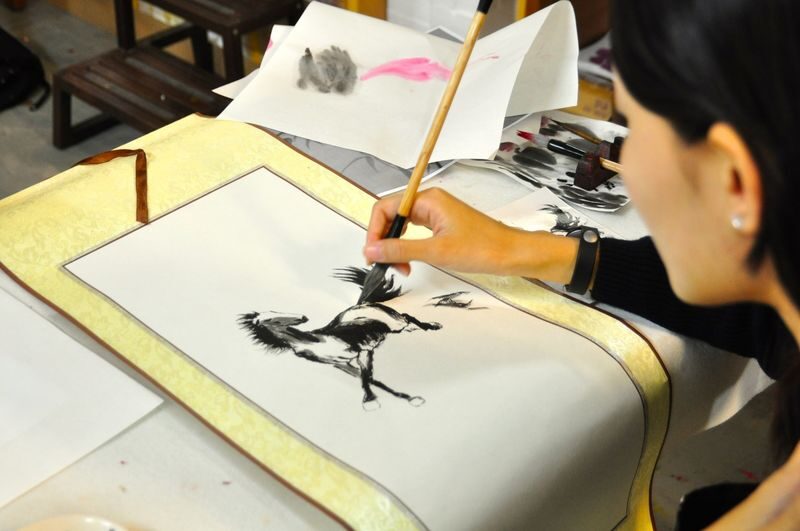
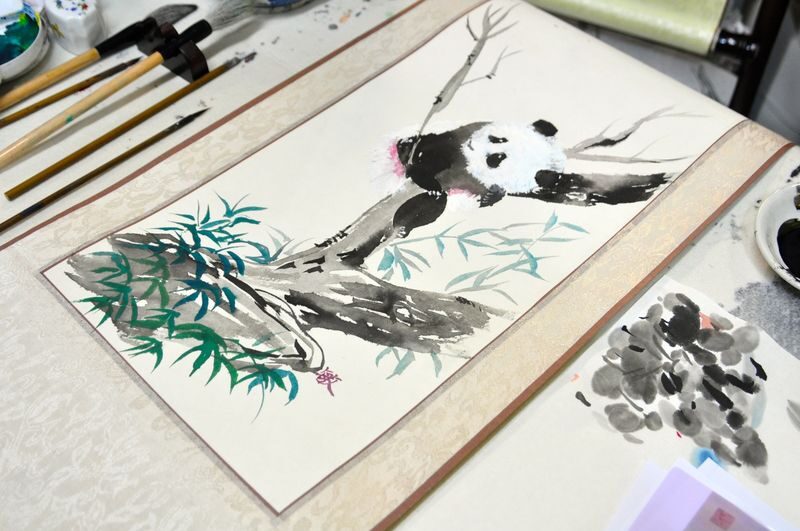
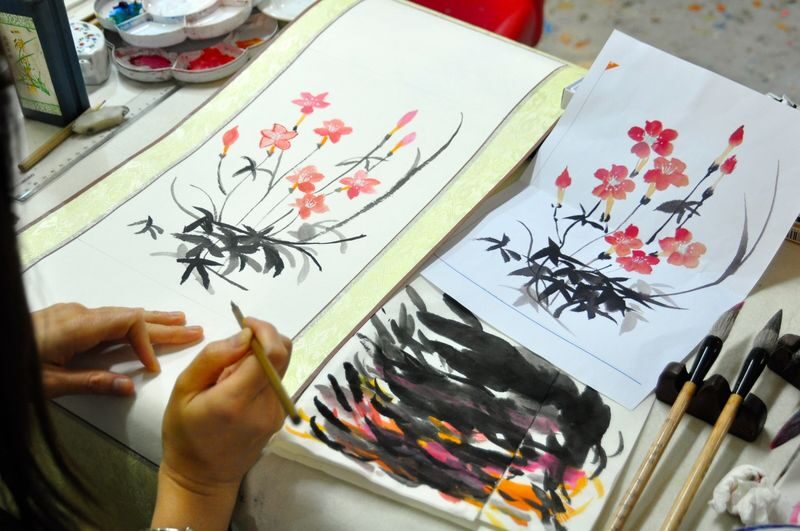
The session begins with a professional tutor introducing the materials, tools, subjects, and basic brush strokes. You’ll use a brush with ink and water on rice paper, and the tutor will guide you through the process. The available information doesn’t specify a fixed subject or exact step-by-step lesson plan, so the particular painting may vary.
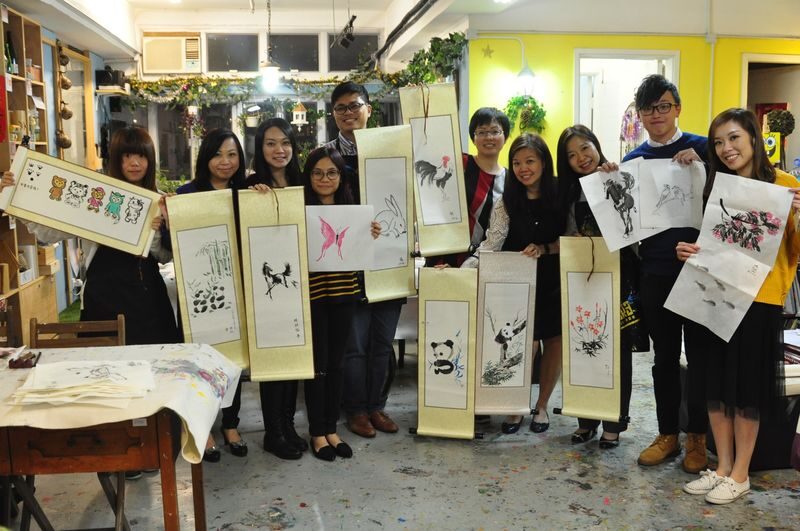
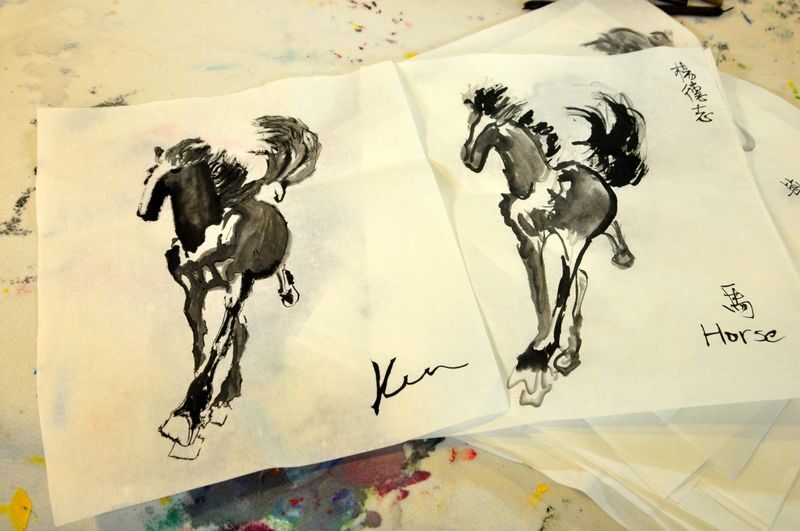
The choice of subject matters. Some past classes have produced paintings of birds or a temple, while another included writing a Chinese name. Those examples give you a sense of the range, but they don’t guarantee that you’ll paint the same subject. If you have a preference, ask the studio when you arrive rather than assuming it is part of every class.
The brush can be less forgiving than a pencil or a familiar acrylic brush. Pressure, ink, and water all affect the mark, and once you make a stroke on rice paper, you can’t treat it like a pencil line you can erase. That’s part of the interest, but it also explains why a first attempt may feel challenging.
There is no need to arrive with a finished design in mind. The tutor’s introduction is meant to help you understand the tools and strokes before you begin. If you are new to painting, say so early and ask for a manageable subject. In a short class, a simpler composition gives you more room to learn the brush rather than race to complete a difficult picture.
What the teaching feels like
The most consistently praised part of the experience is the instructor’s approach. The tutor has been described as calm, friendly, patient, and helpful, including with beginners. One family class included a mother, grandmother, and child, while another accommodated two girls aged 10 and 14. These examples suggest the format can work across generations, though the activity is best suited to people aged four and up.
A tutor has also taught in both Cantonese and English. That is useful if you are concerned about following instructions, but it does not establish that every session is bilingual. If language support is important to you, confirm it with Aura Art before booking.
Teaching style matters here. A supportive correction can help you improve a stroke; a blunt comment about the artwork can be discouraging when you are learning. If you feel unsure, ask for a specific suggestion, such as how to make a line or shape look more natural. You are there to learn, not to arrive with an artist’s hand.
Some people with experience in watercolor may find the materials familiar, but Chinese brush painting has its own demands. If you’ve never used a calligraphy brush, expect a learning curve. Keep your goal modest: understand a few basic movements, enjoy the process, and make a piece that feels like yours.
The souvenir is part of the point
Taking the painting home gives the workshop a satisfying finish. It is a keepsake you made yourself, tied to a particular afternoon in Hong Kong. The art may not be flawless, and it doesn’t need to be. The value is in remembering the brushwork, the lesson, and the time you set aside to make something by hand.
Some sessions have also included writing a participant’s name in Chinese and adding a stamp to the painting. That adds a personal touch, but it is not stated as a standard feature of every class, so ask in advance if it matters to you.
The activity can work well for friends or family because you share the same lesson while making separate pieces. It may also suit a couple looking for something quieter and more interactive than a meal or a shopping stop. For children, the suggested minimum age is four, but the class requires a certain level of hand motor skills. A child’s interest in sitting and practising careful movements matters as much as age.
Times Square makes the location convenient, not foolproof
Aura Art is at Shop 832-833, 8/F, Times Square, 1 Matheson Street, Causeway Bay. The address puts the class in a well-known shopping centre, which is handy if you want to combine painting with a meal or browsing before or after.
Still, don’t assume that finding the building is the same as finding the studio. The studio can be tucked into a corner away from an entrance, and visitors have nearly arrived late after struggling with directions. Allow time to locate the shop once you reach Times Square, and check the exact shop number before you set off.
Choose from sessions on Monday, Tuesday, Thursday, Friday, Saturday, or Sunday. Listed start times are 12:45, 14:30, 16:00, and 18:00, with each class lasting 90 minutes. Arrive five minutes early; late arrivals and no-shows are not refundable. The voucher is for the date and time you selected, and you present it on your phone.
- The Peak Tram Fast-Track Combo Tickets: Peak Tram, Sky Terrace 428, Madame Tussauds HK
★ 4.5 · 49,191 reviews






Does the price make sense?
The supplied price information is inconsistent: the overall starting price is shown as US$60.55, while the 1.5-hour workshop package is shown from US$55.05. Treat those as starting figures, not a guaranteed total, and check the final price for your date before paying.
The package includes the professional tutor and all painting materials. That is useful because you don’t need to buy brushes, ink, or paper for a single class. You are paying for guided instruction and a take-home piece, not for an extended course, so the value depends on whether you want a short cultural activity or a serious programme of study.
The location adds practical value if you are already spending time in Causeway Bay. If you are choosing the class mainly to learn a new art form, remember that 90 minutes is brief. You can expect an introduction and a finished painting, but not in-depth training.
There are no cancellations or refunds. The booking requires at least two people, so solo visitors should plan with someone else rather than assuming they can join a public group. Confirmation is expected within 24 hours; if it does not arrive, contact customer support.
Who should book this class?
I’d recommend it to pairs, families with children who can manage careful hand movements, and curious beginners who want a practical introduction to Chinese painting. It also makes sense for someone who likes the idea of a thoughtful, hands-on activity and values leaving with a personal souvenir.
It may be a poor fit if you need wheelchair access, dislike time-limited instruction, or want a highly structured course with a guaranteed subject and detailed progression. And if your main goal is to produce a technically polished painting, set your expectations carefully. The brush is a skill, not a magic wand.
Book it if you’re happy to learn by trying, and can give the session your full 90 minutes. Before paying, confirm the price, check the studio directions, and ask about the language of instruction or subject if either matters to you. That small bit of preparation can make the difference between a calm art break and a last-minute dash around Times Square.
Aura Art – Traditional Chinese Painting Workshop
“My daughter and mom came to do this activity together, and it was a great experience! The instructor was very patient and knew how to teach beginne…”
FAQ
How long is the Chinese painting workshop?
The workshop lasts 1.5 hours.
Where does the class take place?
It is held at Aura Art, Shop 832-833, 8/F, Times Square, 1 Matheson Street, Causeway Bay, Hong Kong.
What is included in the price?
A professional tutor and all painting materials are included. Other personal expenses are not included.
Do I need painting experience?
No. Beginners and more experienced artists are welcome.
Which days and times are available?
Classes are listed on Monday, Tuesday, Thursday, Friday, Saturday, and Sunday. Start times are 12:45, 14:30, 16:00, and 18:00.
Can children take part?
There is no age limit, and the activity is recommended for people aged four and up. It requires a certain level of hand motor skills.
Can I book alone, and is the studio wheelchair-accessible?
At least two people must book. The activity is not wheelchair-accessible.
The Best Of Hong Kong!

More Workshops & Classes in Hong Kong

More Tours in Hong Kong
- The Peak Tram Fast-Track Combo Tickets: Peak Tram, Sky Terrace 428, Madame Tussauds HK
★ 4.5 · 49,191 reviews
More Tour Reviews in Hong Kong
- The Peak Tram Fast-Track Combo Tickets: Peak Tram, Sky Terrace 428, Madame Tussauds HK
★ 4.5 · 49,191 reviews