
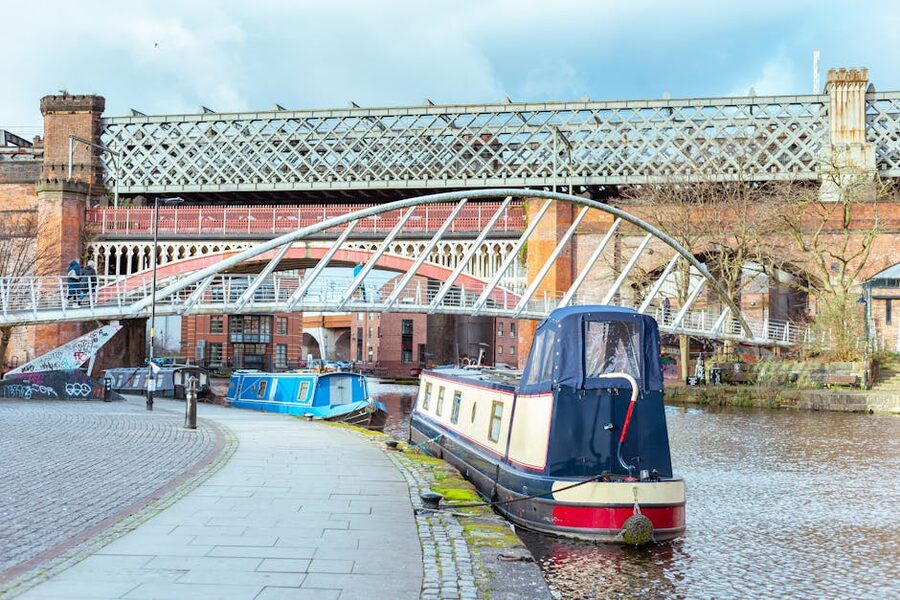
The boat threads under the Bridgewater Hall canopy, the engine settling to a low hum as Castlefield’s Roman fort foundations slide past the starboard rail and Victorian-brick warehouses lean over the water like they’re listening. Then the engine drops to a murmur at Salford Quays and the Lowry Centre’s silver hull rises above the basin, all glass and angled steel, like a ship that decided to live on land. That’s the moment a Manchester canal cruise sells itself.
This guide covers how to actually book one, which operator runs the standard hour-long route, and which themed variants are worth the extra fiver.
In a Hurry? Here Are the Top Three Picks
- The standard one-hour cruise (about $16): the workhorse loop through Castlefield, Pomona, and Salford Quays. Book it here.
- Swing & Rat Pack themed cruise: live Sinatra-era covers, fizz, and the same canal route after dark. Check dates.
- The alternate canal & river cruise (about $16): a sister departure on a different boat, useful when the flagship sells out. See availability.
- In a Hurry? Here Are the Top Three Picks
- Why Manchester Has Canals at All
- The Standard Hour-Long Route
- How Booking Actually Works
- Standard vs Themed: Which One Should You Actually Pick
- Best Time of Day, Best Time of Year
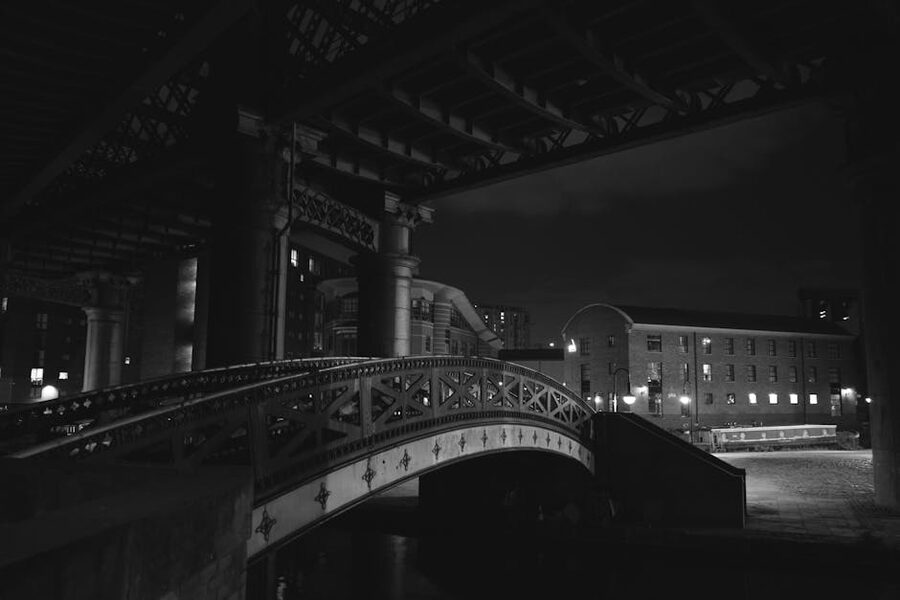
- Castlefield: The Bit Most Visitors Skip
- The Three Tours Worth Knowing About
- 1. Manchester: Canal & River Cruise (about ): The Flagship
- 2. Swing & Rat Pack River Cruise: Evening Themed
- 3. Manchester Canal & River Cruise (alt listing, about ): The Backup
- What’s at Salford Quays Worth Adding On
- Old Trafford and the Football Question
- What to Skip and What to Watch For
- Pairing the Cruise With the Rest of a Manchester Day
- How Manchester Stacks Up Against Other Canal Cities
- Practical Bits
- Got Time for More UK Days?
Why Manchester Has Canals at All
Most visitors picture canals and think Venice or Amsterdam. Manchester is the unlikely third name on that list, and for a working reason. In the 1700s and 1800s this was the textile-industry capital of the world, and cotton bales had to move from the port at Liverpool to the spinning mills here without breaking the supply chain.
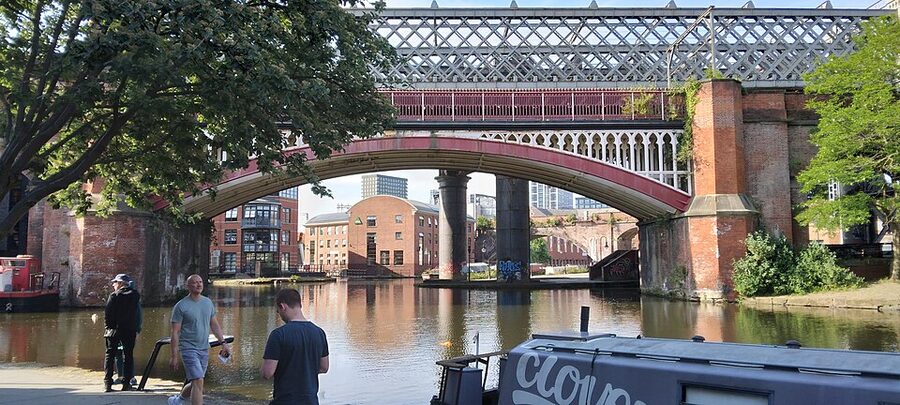
The Bridgewater Canal opened in 1761. It is generally considered the world’s first true canal, in the sense that it didn’t follow an existing river. The Duke of Bridgewater’s engineers cut a fresh channel from his coal mines at Worsley straight into central Manchester, halving the price of coal in the city overnight. That single project kicked off the canal age across Britain.
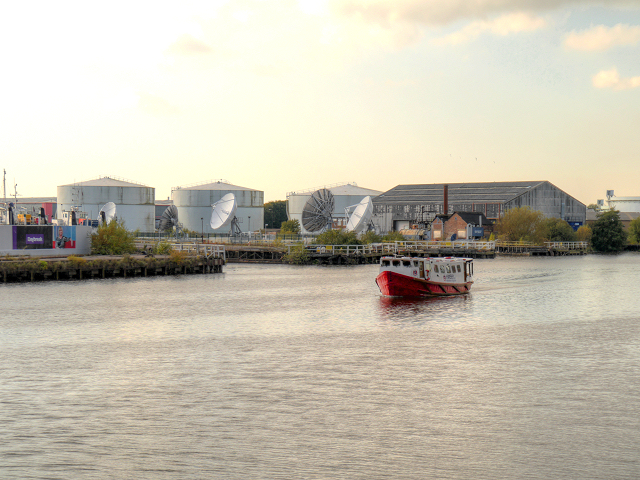
A century later, in 1894, the city went bigger. The Manchester Ship Canal opened: 36 miles of cut waterway running from the Mersey Estuary at Eastham all the way into Salford. Ocean-going freighters could dock 36 miles inland, which made Manchester the world’s third-busiest port by tonnage despite sitting nowhere near the sea. That is the canal you’ll be on for the back half of the cruise.
So when the boat eases out of Castlefield basin, you’re floating on the Bridgewater. When you reach Pomona Lock and drop down through it, you swap onto the Ship Canal. Two different waterways, 133 years apart in age, joined by a single hour-long ride.
The Standard Hour-Long Route
One operator runs almost all the public cruises: Irwell & Mersey Packet Company, with a glass-roofed boat that seats around 60 and has a small bar at the back. The route hasn’t changed much in years, because the geography hasn’t. You head out from Castlefield, drop through Pomona Lock onto the Ship Canal, slide past Old Trafford, then turn at Salford Quays before heading back the same way.
What you see, in the order you see it:
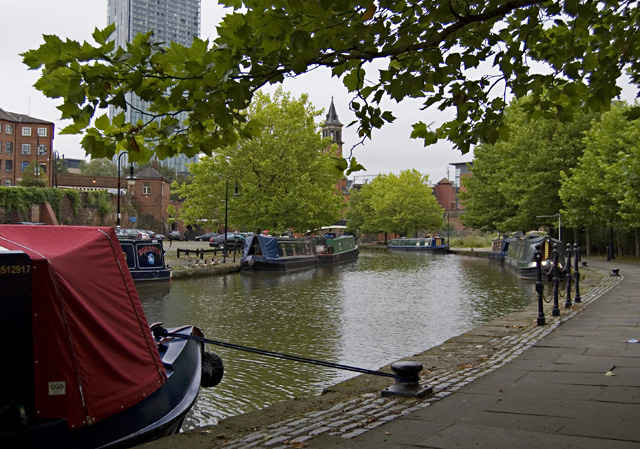
- Castlefield Roman fort foundations. Mancunium, the Roman fort that gave Manchester its name, sat right here from around AD 79. The reconstructed gateway you can spot from the boat is on the original alignment.
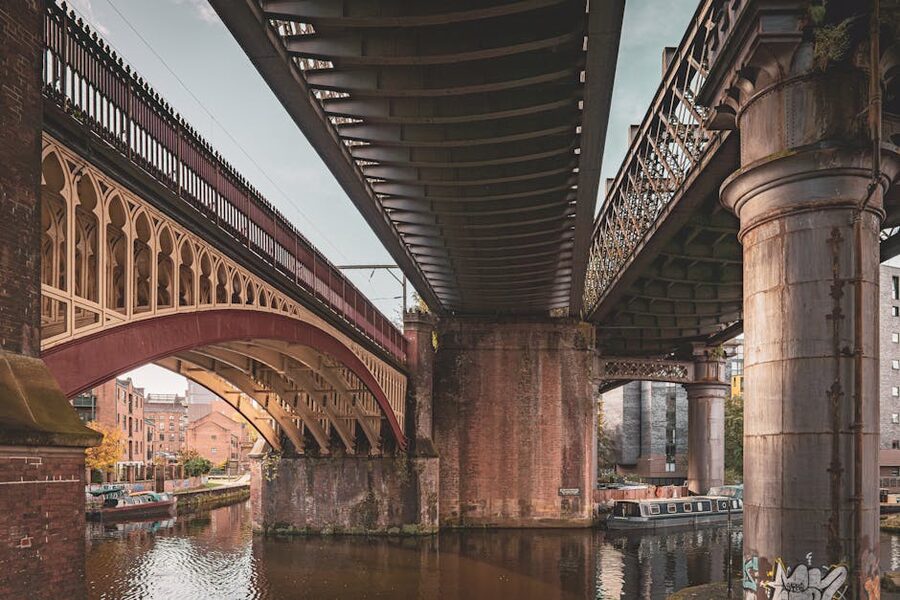
- Victorian-brick warehouses. The converted cotton warehouses lining the basin were where the bales came in off narrowboats. Most are now bars or flats. The brickwork hasn’t been cleaned, which is part of why the area still looks the way it does.
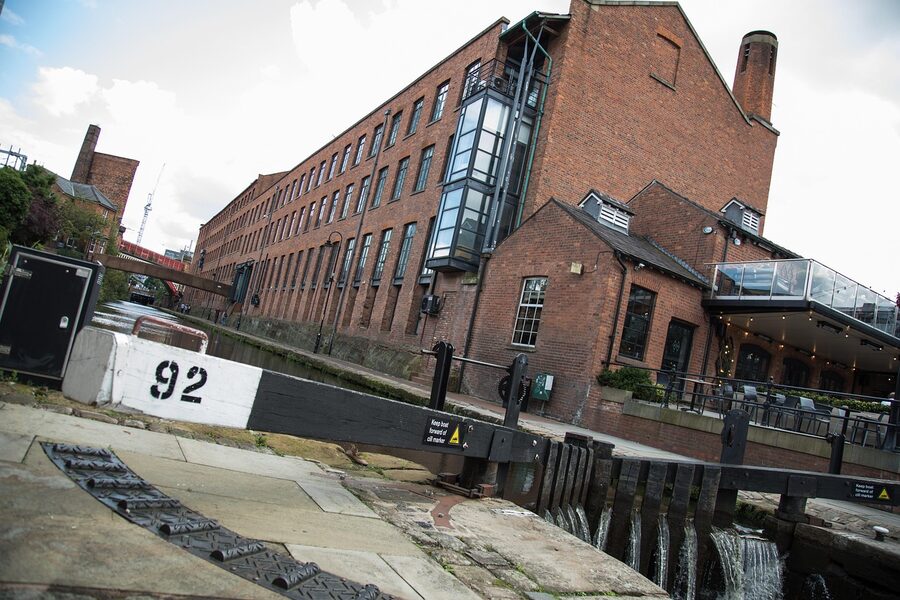
- Pomona Lock. The boat drops about ten feet here, joining the Ship Canal. The lock cycle takes a few minutes and it’s the most photogenic part of the trip.
- Old Trafford. A glimpse of the back of the stadium across the towpath, far enough away that you’ll miss it if you blink. United fans tend to go quiet for a minute when it appears.
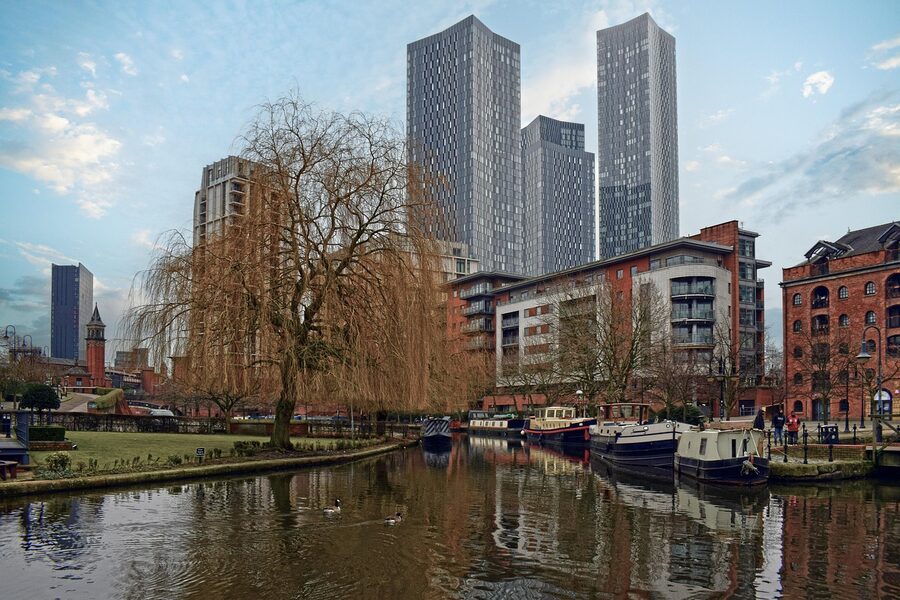
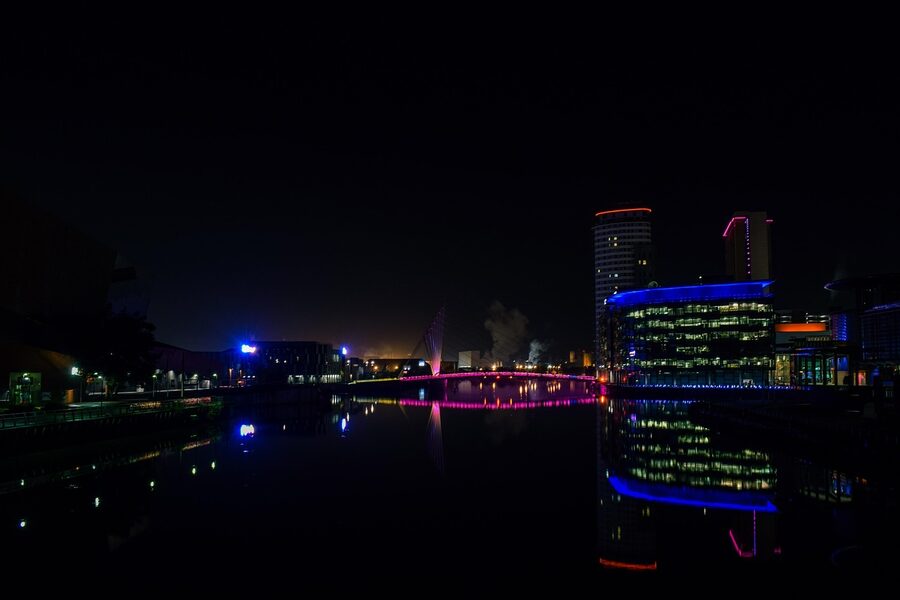
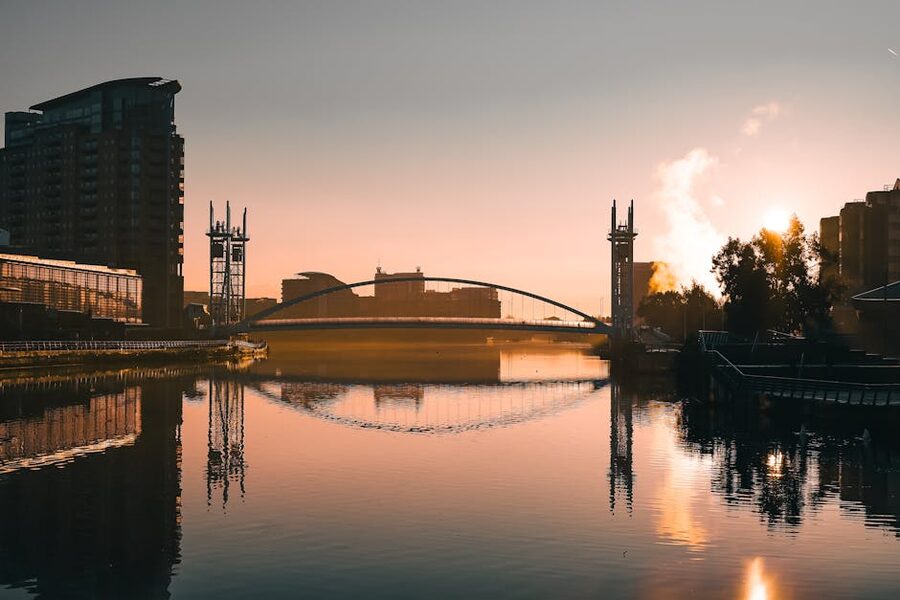
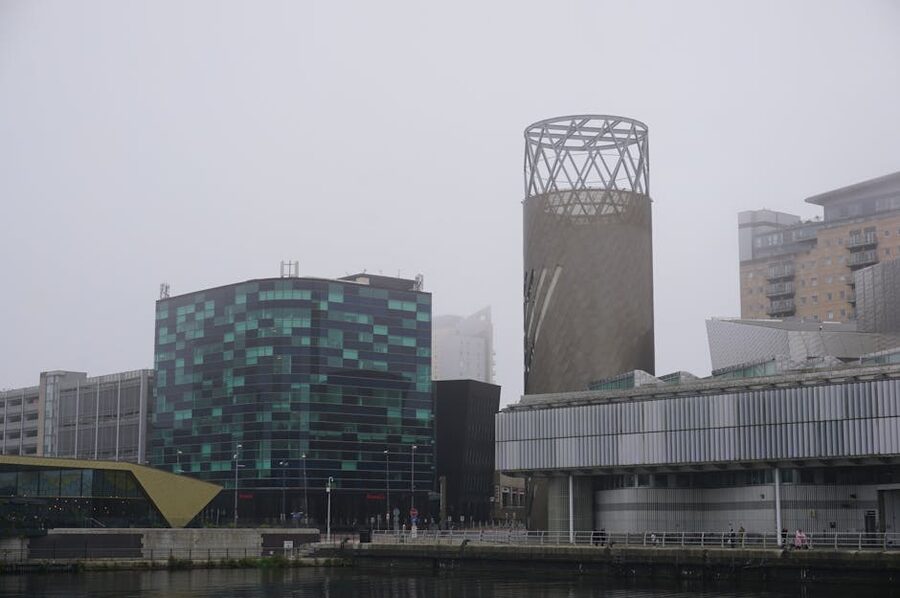
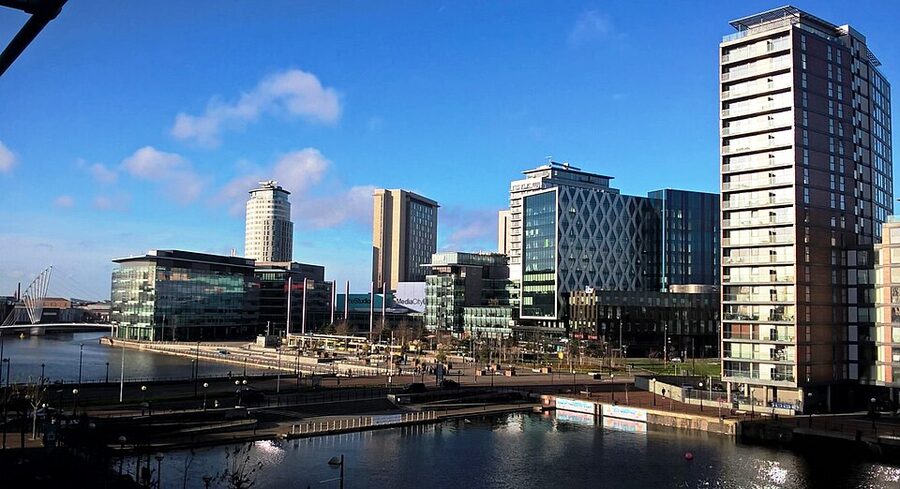
- Salford Quays redevelopment. The old docks, rebuilt from the 1980s onward into apartment towers, MediaCityUK (BBC and ITV), and the Lowry. This is the bit that surprises people. There’s a lot more glass than they expect.
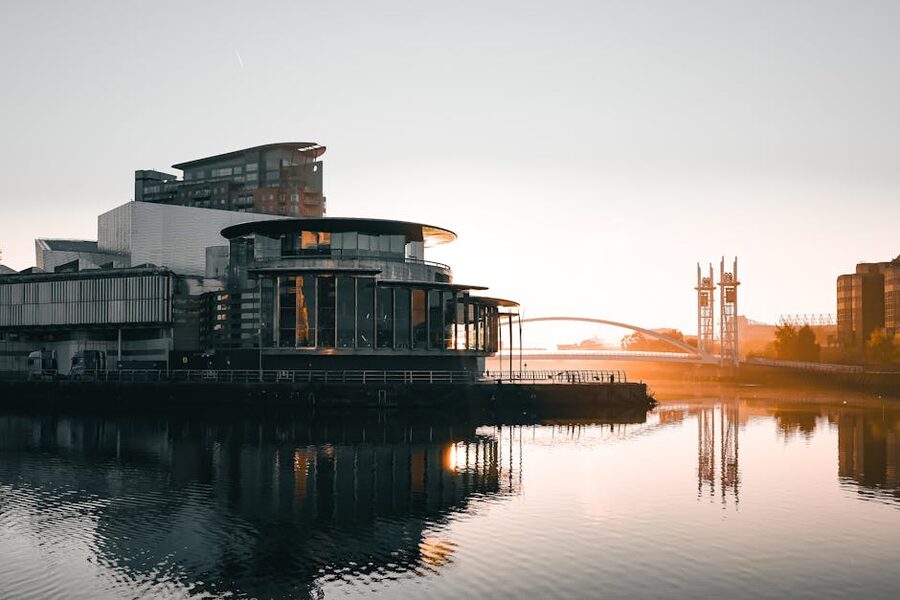
- The Lowry Theatre. Daniel Libeskind designed the angled silver building you’ll see across the basin. The boat usually slows here for two minutes so people can get the photo.
The boat is heated and covered, so a rainy April afternoon is fine. The roof has a clear strip down the middle, and the side windows open if it gets stuffy. Drinks are cheap by Manchester standards, which is to say they’re not cheap, but they’re not the captive-audience prices you get on Thames cruises in London. If you’ve already done a Thames sightseeing cruise in London, you’ll find Manchester quieter and a bit more low-key, which suits the city.
How Booking Actually Works
Three things to know up front. First, this is one of those tours where booking online is meaningfully cheaper than turning up at the kiosk: the walk-up rate at Castlefield is higher and weekends often sell out by Friday morning. Second, departures cluster around midday and late afternoon, with evening sailings only on the themed cruises. Third, the boat almost never cancels for weather.
For ticket prices, a one-hour standard cruise is about $16 per person. The themed cruises (Swing & Rat Pack, Elvis tribute, food canapes) run higher because they include drinks and live music or food. The food cruise is the priciest of the bunch and operates as a small-group experience with a local host, more like a floating dinner than a tour.
Where to board: the standard cruise leaves from Castlefield Wharf, opposite the Castlefield Hotel, a five-minute walk from Deansgate-Castlefield Metrolink stop. The Salford Quays end of the route doesn’t have a public boarding point. If you’re staying in MediaCity and want to do the cruise, you still have to start at Castlefield. That trips up a lot of first-timers.
Cancellation policy varies by operator and platform. The flagship listing on GetYourGuide allows free cancellation up to 24 hours before. The Viator-run food tour has stricter rules because of the catering side, so check before you book.
Standard vs Themed: Which One Should You Actually Pick
The standard one-hour cruise is the right answer for first-time visitors. You get the geography, the history, and the photo of the Lowry, and an hour is the right length. Two hours would be too much. Half an hour wouldn’t do the Salford Quays section justice.
The themed cruises are different beasts. They use the same boat and the same waterway, but the route gets shortened and the focus shifts indoors. You’re there for the entertainment more than the view. A few notes:
- The Swing & Rat Pack evening uses a live duo doing Sinatra, Dean Martin, Bobby Darin, and similar standards. The crowd skews older and the atmosphere is closer to a floating supper club than a tour. Bring the parents.
- The Elvis tribute cruise is what it sounds like, sequined jumpsuit and all. It is genuinely good fun if you are in the mood for that exact thing. If you are not, it will be a long ninety minutes.
- The food canapes cruise with a local host is not really a cruise in the touristy sense. It’s a small-group dinner on the water with several courses and Manchester history threaded through it. The host I’d compare it to is the level you get on a serious food walking tour, just on a boat. It’s not cheap.
If you can only do one, do the standard. If you’ve done it before, the food cruise is the most interesting upgrade. Save the Elvis night for a hen do.
Best Time of Day, Best Time of Year
Manchester gets dark early in winter. From November through February the only way to do the cruise in daylight is the lunchtime departure, which means you miss the golden-hour Salford Quays light that makes the photos. Late spring through early autumn is when the late-afternoon slot pays off, with the boat hitting Salford Quays just as the sun drops behind MediaCityUK.
Weekday cruises are noticeably quieter than weekends. Saturday afternoons in summer can be standing-room only on the back deck. Tuesday afternoon is a different boat, half-full, and you can move around. If your trip is flexible, pick a midweek slot.
Weather: the boat runs in pretty much everything short of a Storm Eunice repeat. Manchester rain is the standard kind that comes and goes, and the covered boat handles it. The only weather that genuinely hurts is wind, because the cruise has to slow at Pomona Lock and the open Ship Canal section gets choppy. Look at the forecast wind speed, not the rain probability.
Castlefield: The Bit Most Visitors Skip
Most tourists step off the cruise and walk back into the city centre. That’s a mistake. Castlefield itself is one of the most interesting square miles in Manchester, and you’ve already paid a return train fare to be there.
It’s a Roman fort site, the oldest part of the city, and you can still walk through the reconstructed north gateway of Mancunium. Most of what you see is rebuilt rather than original, but the alignment is correct. Free, no booking needed.
The Science and Industry Museum is a five-minute walk from the boarding wharf. It’s built on the site of the world’s first inter-city passenger railway station (Liverpool Road, 1830) and the working steam-engine hall is genuinely loud and hot, the way a working industrial museum should be. Free entry.
Dukes 92 and Albert’s Schloss are the two obvious post-cruise drinks options, both right on the canal. The terrace at Dukes 92 in summer is one of the better outdoor pints in the city.
The Three Tours Worth Knowing About
I’ve narrowed the field to three. The flagship for everyone, the Swing & Rat Pack for an evening out, and the alternate canal & river cruise as a backup when the main listing is sold out. Skip the Elvis cruise unless you have a very specific reason. The food cruise is excellent but a different category of experience.
1. Manchester: Canal & River Cruise (about $16): The Flagship
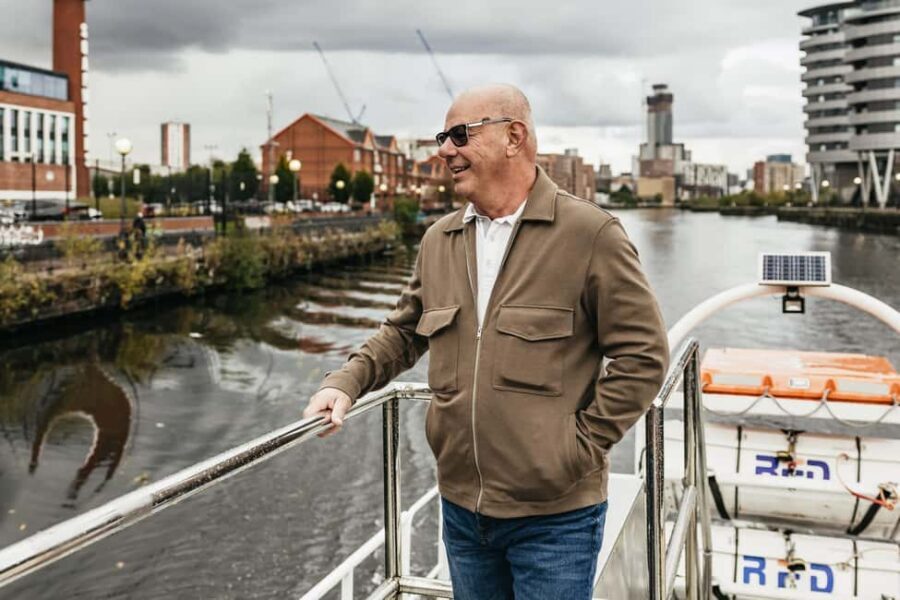
This is the listing the city has settled on as the default. Our full review goes into the operator quality and the small bar set-up at the back. The hour-long timing is right and the commentary is decent without being overbearing.
2. Swing & Rat Pack River Cruise: Evening Themed
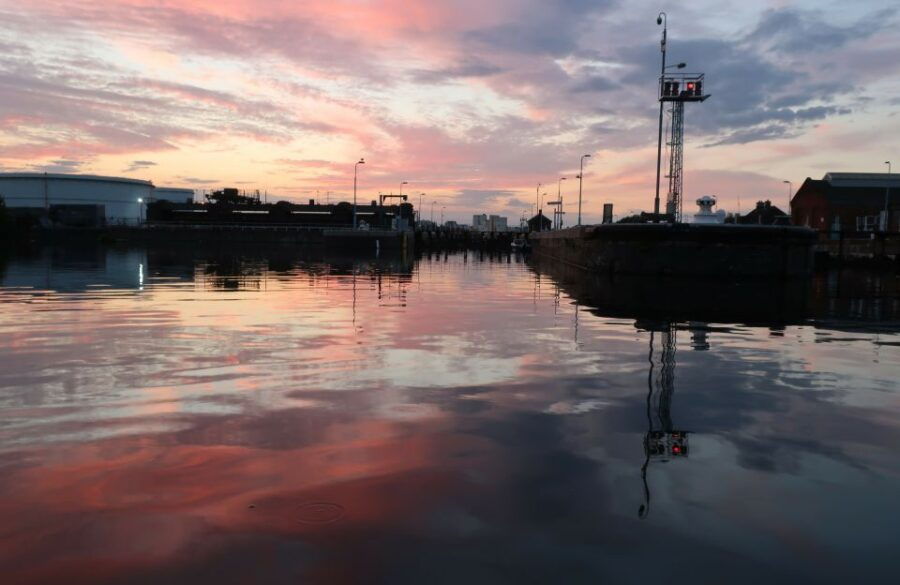
If you’re in town for an anniversary or a parents’ visit, our notes on the Swing & Rat Pack cruise cover what to expect: live duo, three-course-ish menu of canapes, and a route that prioritises the Salford Quays photo lights over the Castlefield history. Book early, it sells out further ahead than the standard.
3. Manchester Canal & River Cruise (alt listing, about $16): The Backup
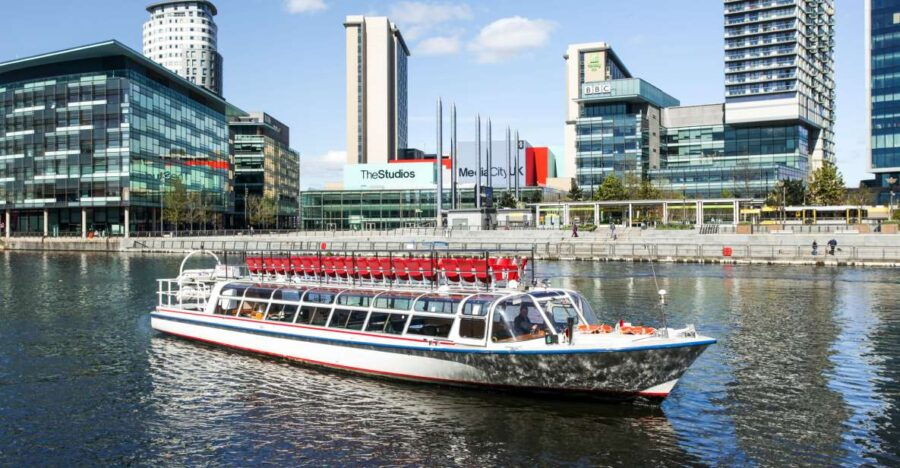
The alternate booking uses the same operator and same route, just listed as a separate departure. Worth knowing about because the flagship sells out for weekends. Our take on the alt listing walks through when this saves your trip.
Two more options that nearly made the list: the Elvis-on-the-River cruise if that’s specifically your night out, and the Canals to Canapes food tour for a slower-paced food-led experience.
What’s at Salford Quays Worth Adding On
The cruise turns at Salford Quays and heads back, which means you only see the area from the water. If you’ve got an extra half-day in town, the Quays are a destination in their own right.
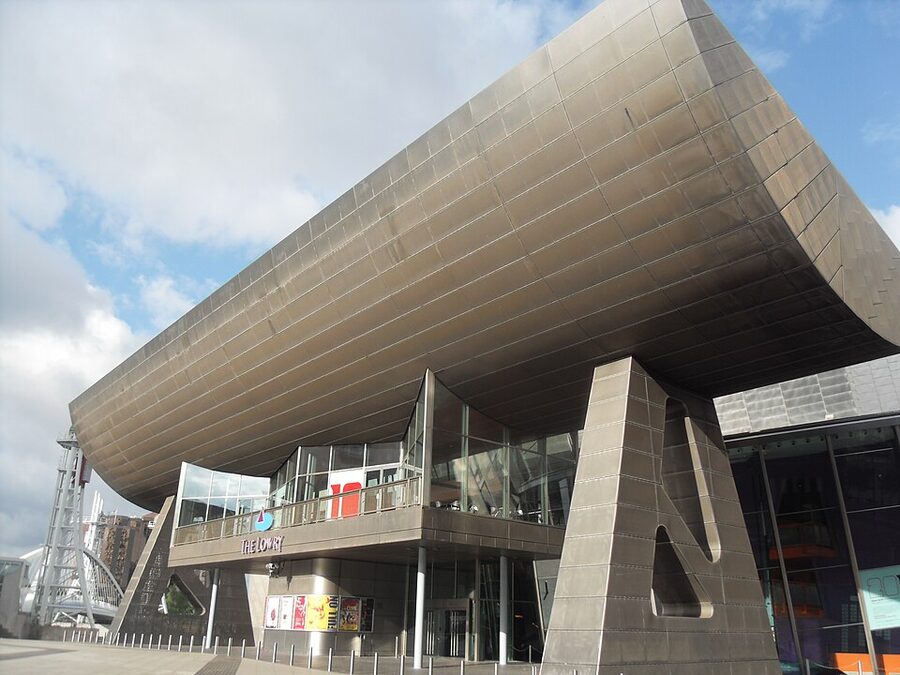
The Lowry Centre houses both a theatre and a permanent art gallery dedicated to L.S. Lowry, the Salford-born painter of matchstick figures and industrial chimneys. The gallery is free. The architecture is the draw even if you don’t care for the paintings, and the views back across the basin from the upper deck are genuinely good.
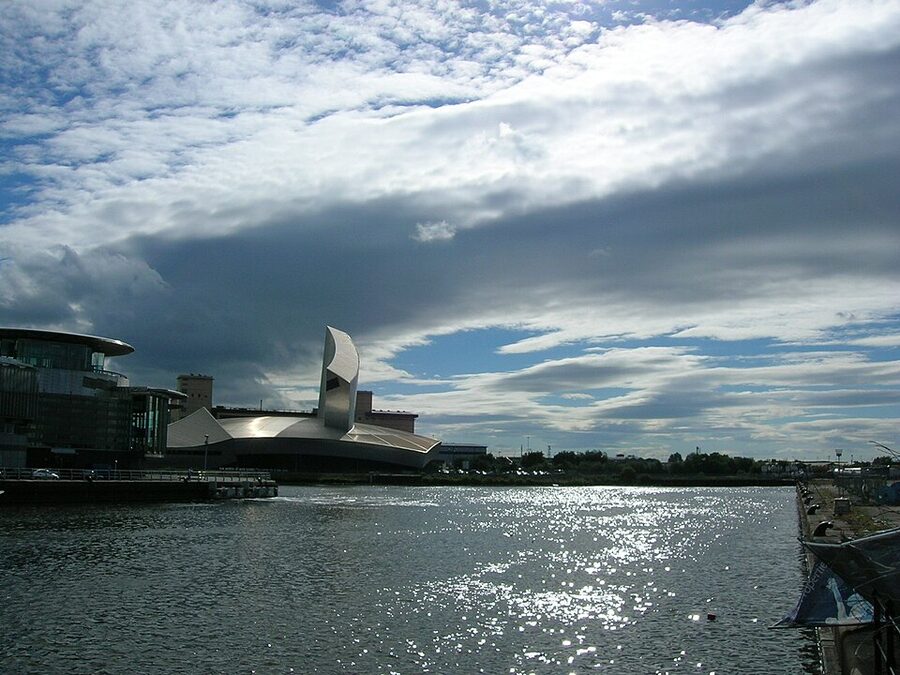
Walk across the footbridge and the Imperial War Museum North is on the other side, also free. Libeskind designed this too, on a much darker brief, and the silhouette of the broken globe is the bit that sticks in the memory. Allow ninety minutes.
MediaCityUK is mostly a working television campus (BBC, ITV) but the BBC tours have ended, so don’t trek over expecting one. The waterside food court at Lowry Outlet Mall is mall food but inexpensive, and the tram back to Manchester city centre runs every five minutes.
Old Trafford and the Football Question
The cruise gives you a quick glimpse of Old Trafford, Manchester United’s home, from the canal. It’s not a substantial view, you’ll see the back of one stand for about ninety seconds. If you actually want to see the stadium, you need to do the stadium tour separately.
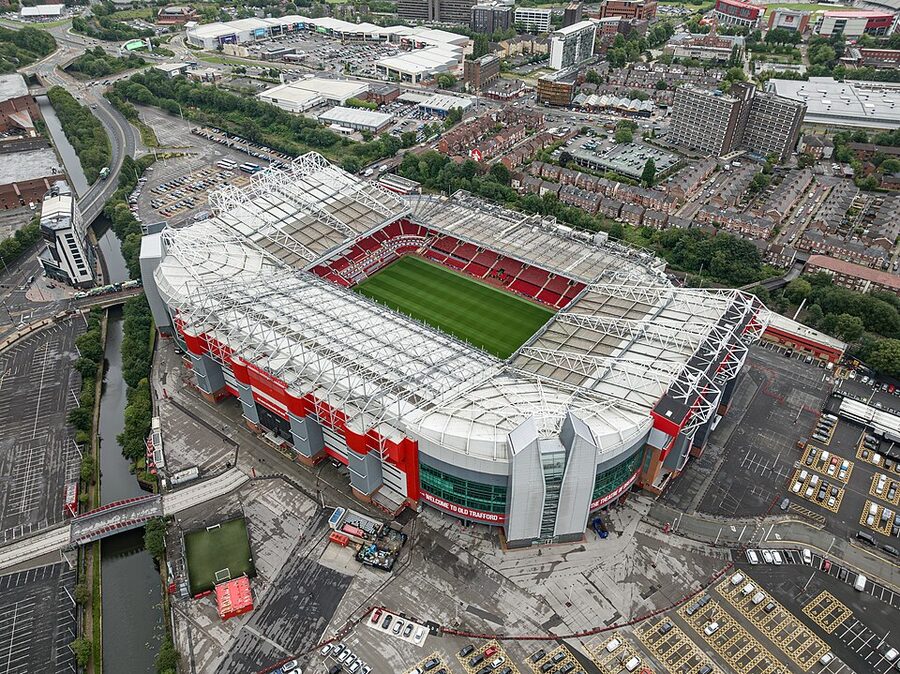
If you’re a City fan rather than United, the Etihad Stadium tour is the equivalent on the other side of town. Pair the canal cruise with the stadium tour you actually care about, because doing both stadium tours in one day is overkill. The City complex is a short tram ride from Piccadilly.
What to Skip and What to Watch For
A few practical takes after a few rides on this thing.
The narrated commentary is good but not great. It’s pre-recorded for parts of the route, and the live segments depend on which crew member is on the day. Don’t book the cruise for the audio. Book it for the view.
The bar serves coffee, tea, basic spirits, and a small wine selection. They run out of red wine on busy weekends. If you specifically want a glass of red, bring it.
The boat is wheelchair accessible at the rear deck, but the front-of-boat steps are awkward. If you have mobility limitations, ask for the back deck when booking. The crew is helpful, and they’ll move tables.
Dogs are technically allowed on the standard cruise but not on the themed ones. I’ve never seen a dog on board, but the policy says yes.
The toilets are below deck and small. Use the ones at Castlefield Wharf before boarding if you can, and you’ll thank me half-way to Salford.
Pairing the Cruise With the Rest of a Manchester Day
An hour on a boat is one piece of a day, not a full day. Here’s what slots in around it without feeling forced.
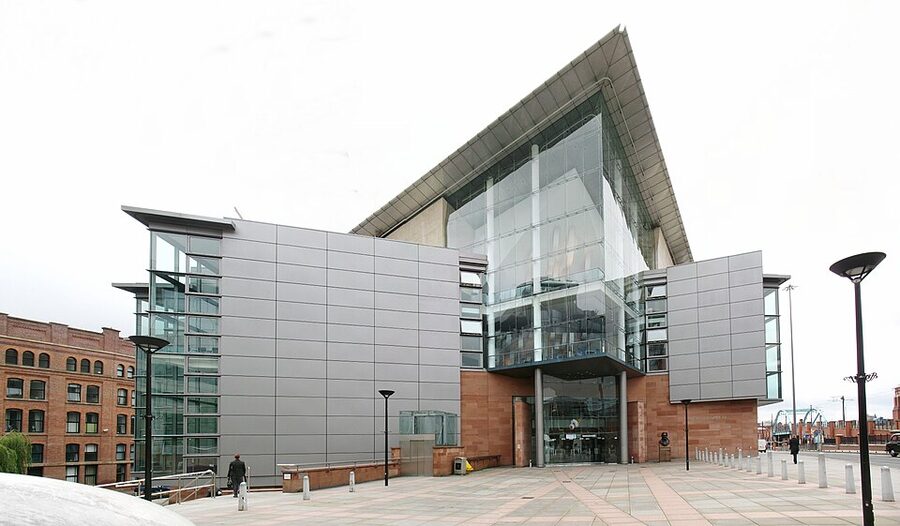
Morning: Manchester Cathedral and the National Football Museum (or, if you’re not into football, the John Rylands Library, which is the Victorian Gothic library that everyone underestimates). Lunch: Mackie Mayor or the Northern Quarter for serious coffee and small-plates places. Cruise: 2pm or 4pm slot. Post-cruise: drinks at Dukes 92 or a walk through Castlefield. Evening: dinner in the Northern Quarter, or a Hallé concert at the Bridgewater Hall if there’s one on.
If you’ve got two days, day two is Etihad or Old Trafford in the morning depending on your loyalty, then Castlefield walking tour and the Science and Industry Museum in the afternoon.
From London, Manchester is about two hours on the Avanti West Coast train from Euston. Book a couple of weeks ahead for advance fares. If you’re planning a multi-stop UK trip and want a parallel water-based experience earlier on, the Thames RIB speedboat is the polar opposite of this cruise: 35 minutes, very fast, very loud. Useful contrast.
How Manchester Stacks Up Against Other Canal Cities
I’ve done a lot of canal and river boat tours in different cities over the years, and Manchester sits in an unusual spot in the rankings.
Compared to London’s Thames cruises, Manchester is shorter, smaller, and a lot less expensive. The Thames sightseeing trips in London are bigger boats with more famous landmarks, but they’re also crowded and pricey for what they are. Manchester is the better value if you actually want to see something rather than be photographed seeing it.
Compared to continental options, the Lisbon sunset Tagus cruise wins on light and Atlantic atmosphere, the Porto six-bridges Douro tour wins on architecture and port wine, and the Seville Guadalquivir cruise is the prettiest in pure scenery terms. Manchester wins on history. There is nowhere else in the world where you can ride two of the most consequential canals ever built in a single hour. The Bridgewater started the canal age and the Ship Canal wrapped it up.
Practical Bits
Where you actually meet the boat: Castlefield Wharf, off Slate Wharf in the Castlefield basin. Postcode M15 4ST. Five minutes from Deansgate-Castlefield Metrolink (yellow line). Ten minutes’ walk from Manchester Oxford Road railway station. Fifteen from Piccadilly.
Time the boat actually leaves: arrive at least 15 minutes early. The boarding queue forms at the wharf and the seats fill in order, so if you want a window seat (you do), don’t be the last on. The crew won’t refuse late arrivals but they will be the ones in the corner.
Bag rules: small bags fine, large suitcases not allowed. There is no luggage storage at the wharf, so don’t roll your bag down before checking out of your hotel. Manchester Piccadilly has left luggage if you need it.
Children: small kids are fine on the standard cruise but get bored at around the 35-minute mark. Bring something for the back third. Under-fives travel cheaper, and there’s a family ticket option on the GetYourGuide listing.
Refreshments: the bar takes card and contactless. There’s no on-board cash. Snacks are crisps and chocolate, not food.
Photo tip: the photo most people want is the Lowry from across the basin with the lift bridge in the foreground. The boat passes that exact angle once on the outbound and once on the return. Have your camera ready as you cross under the footbridge, the angle opens up about ten seconds later.
Got Time for More UK Days?
If Manchester is part of a longer English itinerary, the most natural pairings from here are the football and theme-park days the city travellers tend to bolt on. The Etihad Stadium tour sits in the same city and is the obvious add-on if you’re a City supporter. Heading back to London afterwards, the family-friendly day-trip options are Legoland Windsor for the under-twelves and Thorpe Park for the teenagers who think Legoland is for kids. None of those need to clash with the cruise, the cruise is a half-day and the rest of the trip can build around it.
Book the standard one-hour cruise. Pick a midweek afternoon if you can. Sit on the right-hand side going out, left coming back. You’ll see Manchester from the angle that built it.