At the Colosseum, the missing pieces are the story: packed seats, gladiators, animal shows, trapdoors, and the lifts that brought people and scenery into the arena. This family tour uses those details to help children picture the ancient city, then carries the story into the Forum and up to the emperors’ homes on Palatine Hill.
I like two things in particular: the guide builds the visit around children’s questions, and reconstruction images help explain ruins that can otherwise look like a jumble of stone. One consideration is the cost, $168 per person, and the walk is exposed to Rome’s summer heat; it may be a harder sell if your child tires quickly or would rather explore at their own pace.
- Gladiator stories with context: Learn about training, combat, animals, trapdoors, and ancient lifts, without any live reenactments.
- Everyday Roman life: Talk about clothing, school, food, homes, and the very different lives of wealthy and ordinary families.
- Three major sites in one outing: Visit the Forum, Palatine Hill, and Colosseum with an official guide.
- Pictures that fill in the gaps: Reconstructed images help you imagine buildings and scenes no longer visible in the ruins.
- A family-focused pace: Guides such as Rocco, Stefania, and Floriana have been praised for adjusting explanations to children’s attention and questions.
- Plan for sun and strict timing: Arrive 15 minutes early, bring ID for every participant, and consider a morning or late-afternoon departure in summer.
- Ancient Rome, Told for Curious Kids
- Starting Near the Colosseum
- Reading the Roman Forum as a Public Square
- Climbing Palatine Hill and Looking Back
- Inside the Colosseum: More Than Gladiators
- What the Guides Do Well
- Is 8 Per Person Good Value?
- Heat, Bags, and Other Practical Details
- Who Should Book This Family Tour?
- FAQ
- What ages is the tour designed for?
- Which sites are included?
- How long does the tour last?
- Which languages are available?
- What is included in the price?
- What should I bring?
- Can I bring a stroller, and is the tour wheelchair accessible?
- The Best Of Rome!
- More Tours in Rome
- More Tour Reviews in Rome
- Not for you? Here's more nearby things to do in Rome we have reviewed
Ancient Rome, Told for Curious Kids
 1 / 6
 2 / 6
 3 / 6
 4 / 6
 5 / 6
 6 / 6
This 2.5-hour guided walk is designed for families with children aged 7 to 15. Instead of asking children to absorb a list of dates and emperors, the guide starts with what you can see: a stone passage, a temple remnant, a hilltop view, or the vast bowl of the Colosseum.
That approach makes sense for a family visit. The ruins are impressive, but their original purpose is not always obvious. A guide can turn a broken wall into a clue about Roman life, then invite children to imagine the color, noise, and movement that are gone.
The questions range from how the Colosseum was built to what children studied, what people ate, and how Roman women dressed. You do not need a background in ancient history. The guide adapts the explanations to the children’s ages and the family’s interests, while adults can join in with their own questions.
There are no live fights or staged gladiator scenes. The experience is about interpreting the sites through stories and visual material, not watching a show. That distinction matters if your child expects a performance, but it also keeps the focus on how the monuments worked and how people lived around them.
👉 See our pick of the 25 Best Guided Tours In Rome
Starting Near the Colosseum
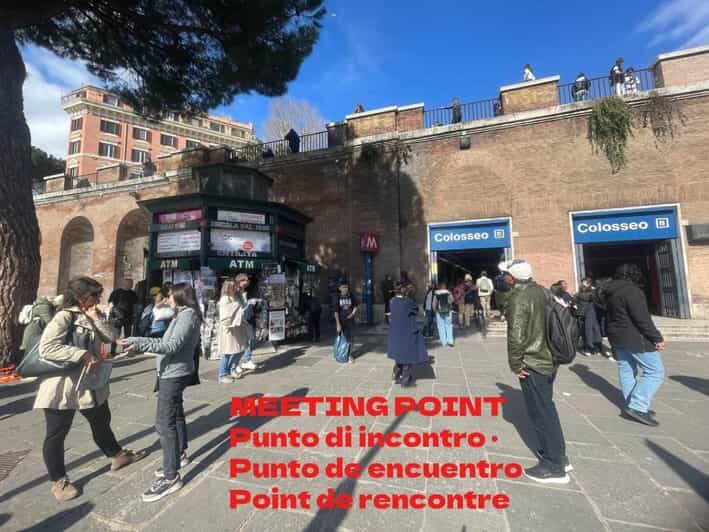
The meeting point is at Colosseo, and the tour returns there. The planned route visits the Roman Forum and Palatine Hill as well as the Colosseum, though the order may vary. Check your departure details so you know where to meet, and be there 15 minutes early for ticket distribution, instructions, and radios when applicable.
Timing is firm. The tour leaves promptly, and late arrivals may miss it and be refused entry. That is worth treating as a real constraint, not a suggestion: plan to reach the meeting point with a cushion rather than trying to arrive just in time.
You must enter every participant’s full name as it appears on their ID, and everyone, including children and babies, needs to present ID at the entrance. Take passports or ID cards for the whole family. Incorrect names can cause access problems, so check the booking details before you go.
You can also read our reviews of more tours and experiences in Rome.
Reading the Roman Forum as a Public Square
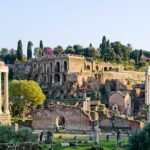
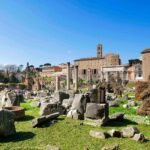
The Forum was the center of Roman public life, and the guide helps you picture more than its remaining columns and foundations. Here, families can discuss where people gathered, held ceremonies, conducted business, and moved through the city’s daily routines.
This is where the tour’s everyday-life questions can give the stones a human scale. What did a wealthy child study? What did Romans write with? What foods appeared on an emperor’s table, and what was more typical for an ordinary household? These comparisons help children see that ancient Rome was not just an empire of generals and monuments.
The guide also points out the traces of streets, temples, and public spaces, then uses reconstructed images to show what the remains may once have looked like. Children who like visual clues may find this especially helpful. If your family prefers to linger and examine every detail, keep in mind that this is a guided route with several sites to cover, not an open-ended visit.
The Forum can be hot and exposed, particularly in summer. One family who experienced a longer visit wished they had reached the sunny Forum at a different time in the route. You cannot control the exact sequence, but you can improve the day by choosing a cooler departure time and bringing water before the tour begins.
Climbing Palatine Hill and Looking Back
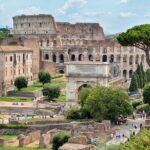
Palatine Hill shifts the story from public Rome to the world of emperors. The guide explains the traditional origins of the city and why this hill became a place for imperial residences. From among the monumental remains, you can look out over the Forums and connect the separate sites into one city.
The guide’s questions make the view more than a photo stop: who lived here, how might they have spent their day, and what would they have seen from their windows? These prompts help children compare a ruler’s home with the crowded public spaces below.
The walk includes the Clivus Victoriae, an ancient street that offers a way to talk about movement through Rome and daily life beyond palace walls. You will also hear about the House of the Vestals, where the women who guarded Vesta’s sacred fire lived. The guide explains how Vestals were selected, what duties and privileges they had, and how their clothing marked their role. Reconstruction images help make sense of spaces that are now mostly traces.
There is walking between sites, including on Palatine Hill, so this is not a sit-still lesson. That movement can suit children who learn better while exploring, but it may be tiring in high temperatures. The tour is not suitable for wheelchair users, and strollers and baby carriages are not allowed.
Inside the Colosseum: More Than Gladiators
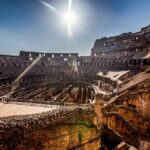
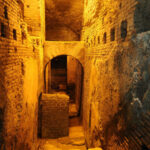
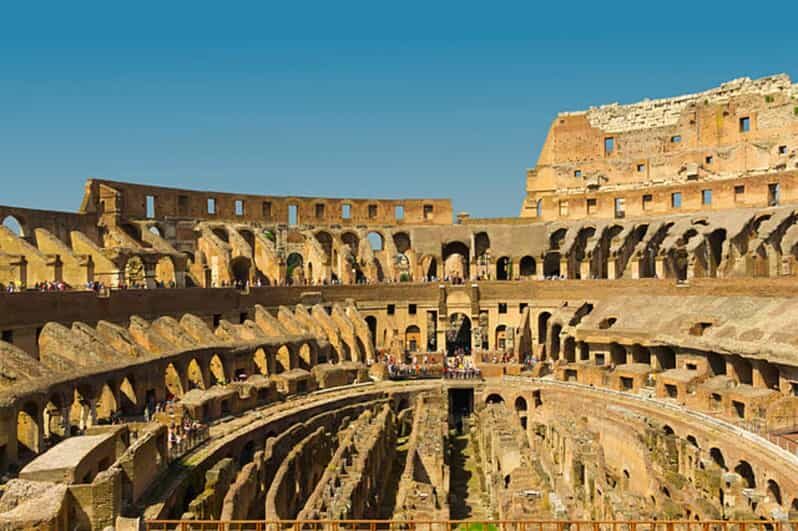
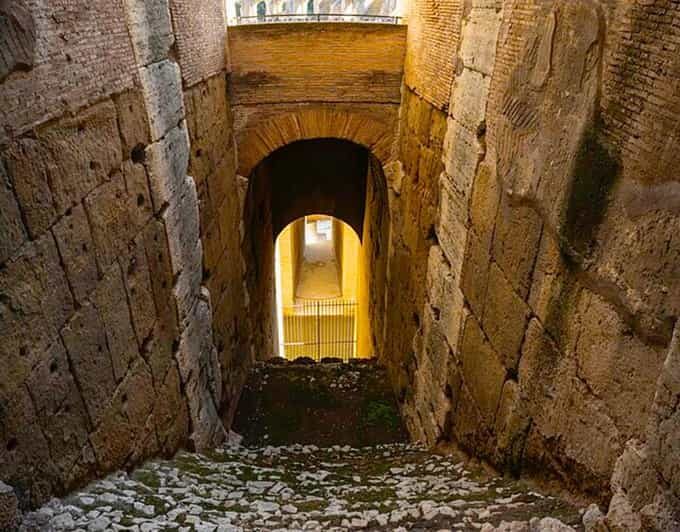
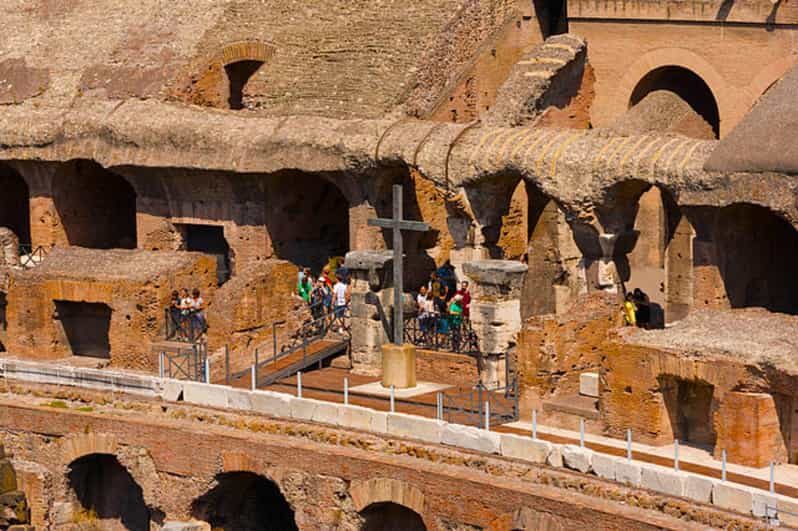
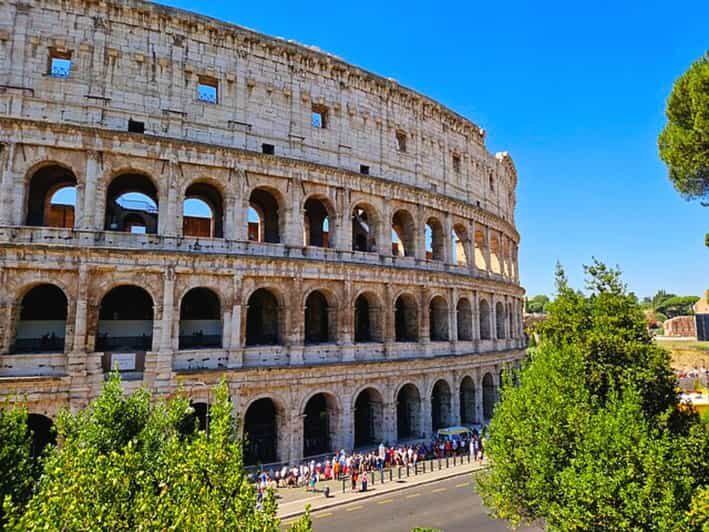
At the Colosseum, the guide takes on the questions children often bring with them: who the gladiators were, how they trained and fought, and what animals did during the shows. The arena’s trapdoors and ancient elevators offer a useful way to explain the mechanics behind the spectacles, while the building itself prompts questions about how Romans managed a crowd of thousands.
The structure can be easier to understand when you compare what remains with an image of its former appearance. Reconstruction pictures show the busy stands and the building’s lost features, helping children imagine a working arena rather than a hollow shell. Guides have also used pictures to keep younger visitors engaged and to make explanations easier to follow.
The guide may talk about the crowd’s anticipation, the colors, and the roar that filled the arena. These details are a prompt for imagination, not a claim that you will see a reenactment. If you want a family tour that explains the site rather than stages its violence, that is a good fit. If your child expects actors, costumes, or combat, set expectations before you arrive.
Children can ask questions as the visit unfolds, and the strongest part of this format is the guide’s ability to respond in plain language. Families have highlighted guides including Rocco, Stefania, Floriana, Felix, and Alberto for warmth, humor, patience, and care in keeping children involved. Individual guides vary, of course, but the tour is expressly built around family-friendly explanations.
More Great Tours NearbyWhat the Guides Do Well
A good guide matters more here than a long list of facts. A child who is curious about gladiators may be ready for one kind of explanation; a child who is losing focus may need a shorter story or a new detail to look for. Several guides have been praised for noticing those shifts and adjusting their approach.
Stefania is often singled out for combining clear history with humor, while Rocco has been noted for reading the room and keeping both children and adults engaged. Floriana has been praised for explaining the site to a seven-year-old and using images as reference points. Those names are useful examples, but you cannot count on a particular guide unless your booking confirms it.
The experience also works for adults who are new to Roman history. You are not expected to know the names of emperors or the layout of the Forum in advance. The guide starts with the visible remains and builds the story from there, so parents can learn alongside their children instead of serving as the family’s resident history teacher.

Is $168 Per Person Good Value?
At $168 per person, this is a substantial outing for a family. The price includes admission to the Colosseum, Roman Forum, and Palatine Hill, an official guide with expertise in history and archaeology, family-oriented explanations, and priority access that skips the ticket line.
The value is strongest if your child benefits from a guide who can turn the sites into a story. The ticket access saves time at the entrance, while the guide helps you understand three major archaeological areas in a single visit. For families who would otherwise find the ruins hard to explain, that support can make the difference between a memorable lesson and a hot walk among old stones.
The price is less compelling if your children are happy to explore independently, or if you want to spend a long time at just one site. You are paying for the guided format and the family focus, not a meal, hotel transport, or a live show. Food and refreshments and transport to and from your hotel are not included.
The advertised duration is 2.5 hours, but it is sensible to leave some flexibility in your day. Some families have spent around three hours on the visit, and one reported a much longer tour. Treat the stated duration as a planning guide, not a guarantee that you will be back at precisely the 2.5-hour mark.
Heat, Bags, and Other Practical Details
Rome’s summer sun can turn an absorbing archaeological walk into a test of patience. For children, morning departures or tours from 4:00 pm onward are recommended when available, as those times are generally more comfortable. The route includes outdoor areas, so the forecast should shape your plans.
Bring ID for everyone, arrive 15 minutes early, and travel light. Oversize luggage, bags, coolers, strollers, baby carriages, and electric wheelchairs are listed as not allowed. The tour is not suitable for wheelchair users. Since no food or refreshments are included, plan what your family needs before the walk, while respecting the restrictions on what you may bring into the sites.
Guiding is available in English, French, Italian, and Spanish. Free cancellation is available up to eight days in advance for a full refund. Check the available departure times before booking, especially if you are planning around heat, naps, or other family activities.
Who Should Book This Family Tour?
I would consider this tour for a family with school-age children who ask questions, like stories, or need a guide to make ancient remains feel relevant. Ages 7 to 15 are the target range, and the child-focused style can also help adults who are seeing the sites for the first time.
It may not be the right choice for a family with a stroller, a wheelchair user, a child who cannot manage an outdoor walking visit, or anyone expecting an arena performance. The cost also deserves careful thought if you are comfortable exploring on your own and would rather set your own pace.
Book it if you want the Colosseum, Forum, and Palatine Hill explained as parts of a lived-in city, with children’s questions at the center. Skip it if flexibility, accessibility, or a lower-cost independent visit matters more. For the best chance of a smooth outing, choose a cooler time, check every name against ID, and arrive early.
Rome: Colosseum for Kids, a Journey Among Gladiators and the Wonders of Rome
FAQ
What ages is the tour designed for?
It is designed for families with children and young people aged 7 to 15. The guide adapts explanations to children’s ages and the family’s interests.
Which sites are included?
The tour includes admission to the Colosseum, Roman Forum, and Palatine Hill. The itinerary starts and ends at Colosseo.
How long does the tour last?
The stated duration is 2.5 hours. The time on the ground can vary, so allow some flexibility in your schedule.
Which languages are available?
Live guides are available in English, French, Italian, and Spanish.
What is included in the price?
Admission to the Colosseum, Roman Forum, and Palatine Hill, an official guide, family-focused explanations, and priority access that skips the ticket line are included.
What should I bring?
Bring a passport or ID card for every participant, including children and babies. Arrive 15 minutes before departure.
Can I bring a stroller, and is the tour wheelchair accessible?
No. Strollers and baby carriages are not allowed, and the tour is not suitable for wheelchair users.
You can check availability for your dates here: