Zellige is the geometry that gives many Moroccan buildings their color and rhythm. In this two-hour Marrakech workshop, you learn about the craft, arrange tiles into a pattern, and make a mosaic of your own, a hands-on way to connect with the art you see around Morocco.
I like two things in particular: you leave with a real keepsake, not just a few photos, and patient instructors such as Salma and Laila help beginners get past the first moment of uncertainty. Tea and Moroccan pastries add a welcome pause.
One consideration: this is a guided mosaic-making session, not a full course in cutting and shaping tiles. The pieces are pre-cut, and the choice of colors and patterns may be more limited than you expect.
- Pre-cut tiles make the craft approachable: Your task is to arrange and assemble pieces, rather than cut them yourself.
- You make a personal souvenir: Choose a design and colors, then take your completed mosaic home.
- Instructors help at every skill level: Salma, Laila, and Leila are among the instructors named by past participants.
- Tea and pastries are included: A short refreshment break is part of the two-hour session.
- The studio is in the Medina: It is described as a spacious, well-ventilated workshop reached from a side street off a souk.
- What You Make in Two Hours
- From Zellige’s Patterns to Your Own Design
- Arranging Pre-Cut Tiles, One Piece at a Time
- A Relaxed Studio Break in the Medina
- Is Good Value?
- Who Will Enjoy This Workshop Most?
- Should You Book the Zellige Workshop?
- FAQ
- How long is the zellige workshop?
- What does the price include?
- Do I make the tiles from scratch?
- Can beginners take part?
- What languages do the instructors speak?
- What should I bring or wear?
- Is the activity suitable for young children or wheelchair users?
- Can I cancel, and do I have to pay when I book?
- More Tours in Marrakesh
- More Tour Reviews in Marrakesh
- Not for you? Here's more nearby things to do in Marrakesh we have reviewed
What You Make in Two Hours
 1 / 7
 2 / 7
 3 / 7
 4 / 7
 5 / 7
 6 / 7
 7 / 7
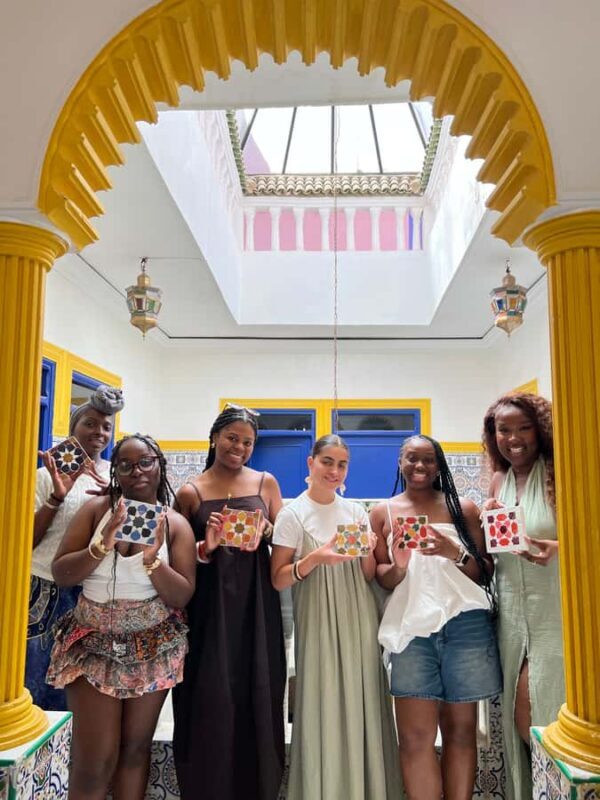
This is a practical introduction to zellige, the traditional Moroccan art of arranging small tiles into geometric designs. You get a short explanation of its history and design principles, then put those ideas to work by making your own mosaic.
The session is designed for beginners as well as people with some artistic experience. You do not need to arrive with a plan or a steady hand. Examples and proposed patterns help you get started, and instructors can guide you through placing the pieces.
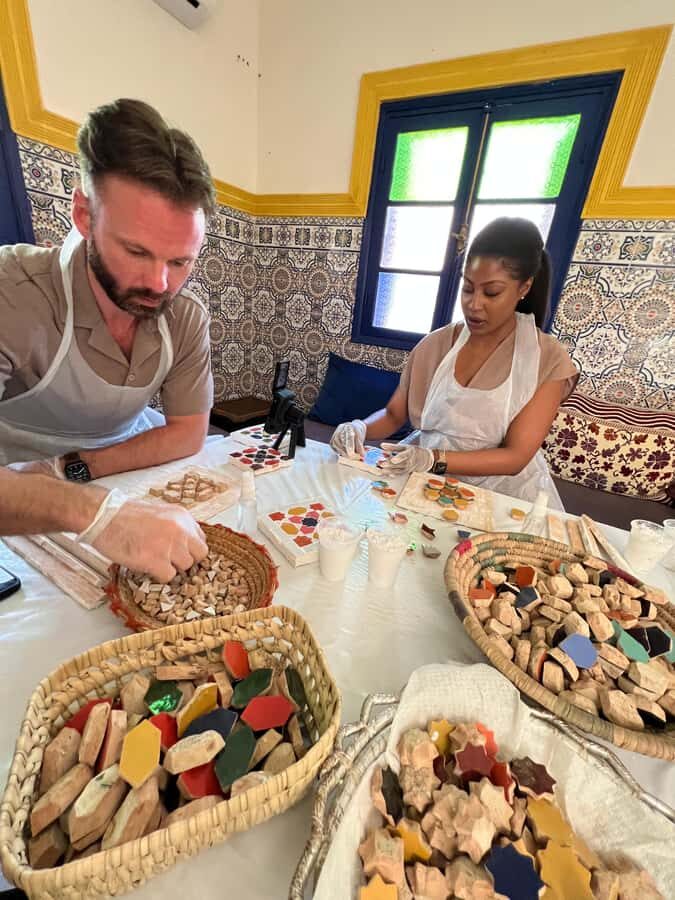
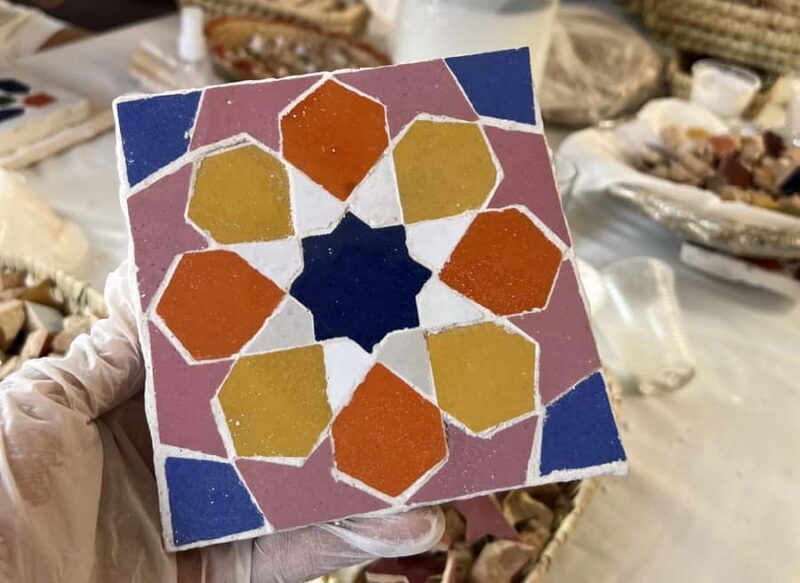
The hands-on process uses pre-cut tiles. You arrange them into a pattern and assemble your design, rather than learning the entire process of making tiles from raw material. That distinction matters if you are hoping to study every stage of zellige production. If what you want is a tactile introduction and a finished piece to remember Marrakech by, the format makes sense.
There is room for personal choice. You can select colors and a design, though the available range may not be as broad as you imagine. One participant found the color selection limited and wished for more help choosing combinations. Go in ready to work with what is on hand, and treat the exercise as a chance to create with constraints rather than order a custom piece.
You can check availability for your dates here:From Zellige’s Patterns to Your Own Design
The workshop begins with context: an introduction to zellige’s history, design principles, and practical techniques. That background helps explain why the craft is more than decoration. Repeated shapes and careful placement are central to the look, and you begin to see the logic behind the patterns as you start arranging your own.
The lesson is not described as a long lecture. The main value is the link between a brief explanation and the work in front of you. A pattern that might seem intricate on a wall becomes easier to understand when you are deciding where each piece belongs.
You can follow one of the suggested designs or make choices of your own. The activity is suitable for novices, and instructors are there to help if the arrangement feels confusing at first. That support is especially useful early on, when it can take a little time to see how the pieces fit together.
Instructors named by participants include Salma and Laila, also spelled Leila in some accounts. They have been praised for clear explanations, patience, and encouragement. You are not guaranteed a particular instructor, but the activity is offered in Arabic, French, and English.
You can also read our reviews of more tours and experiences in Marrakesh.


Arranging Pre-Cut Tiles, One Piece at a Time
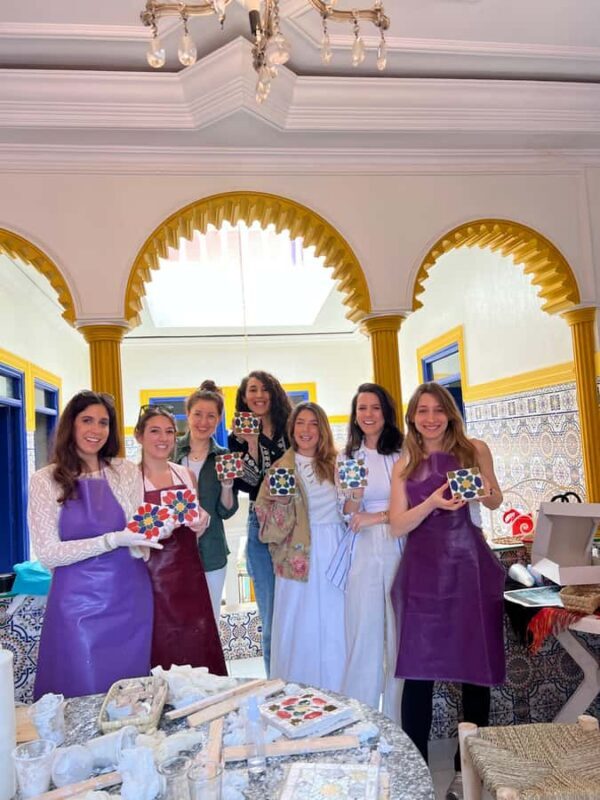
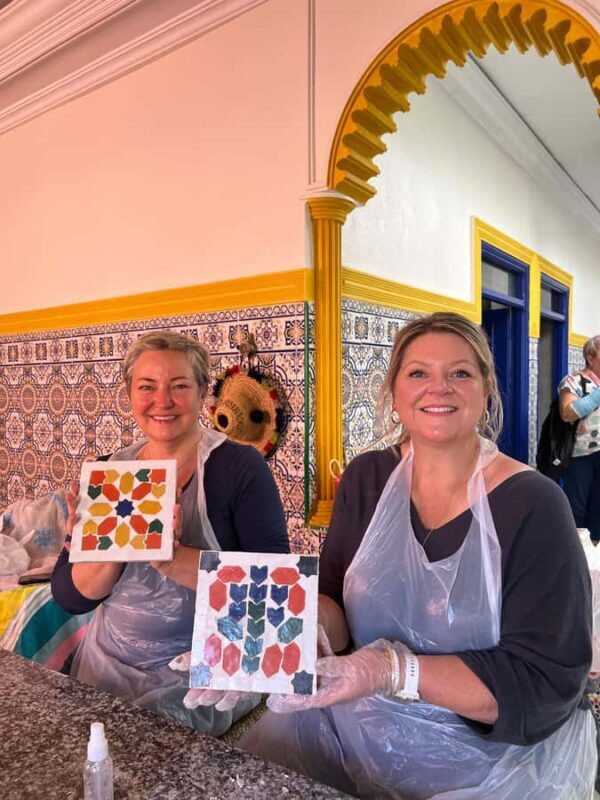
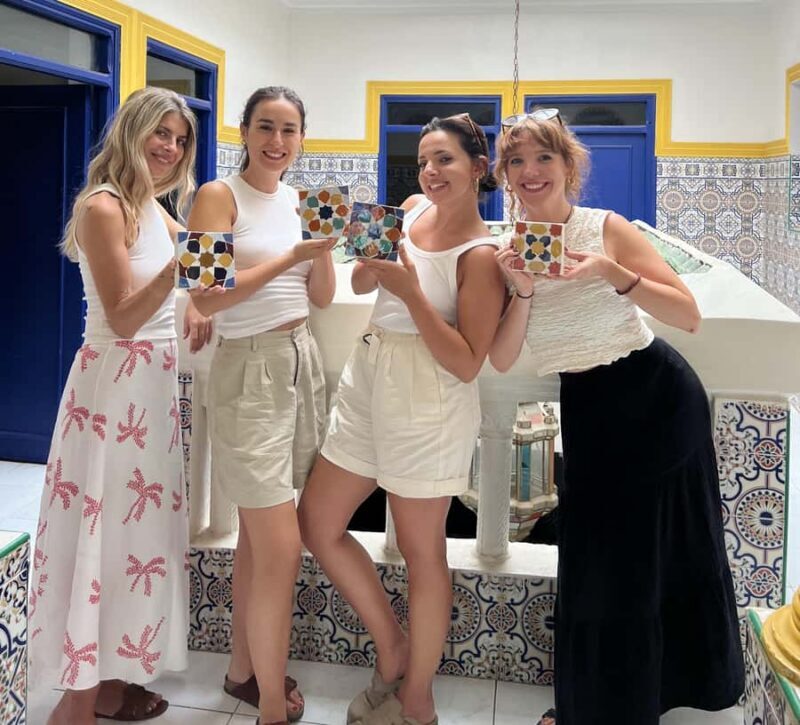
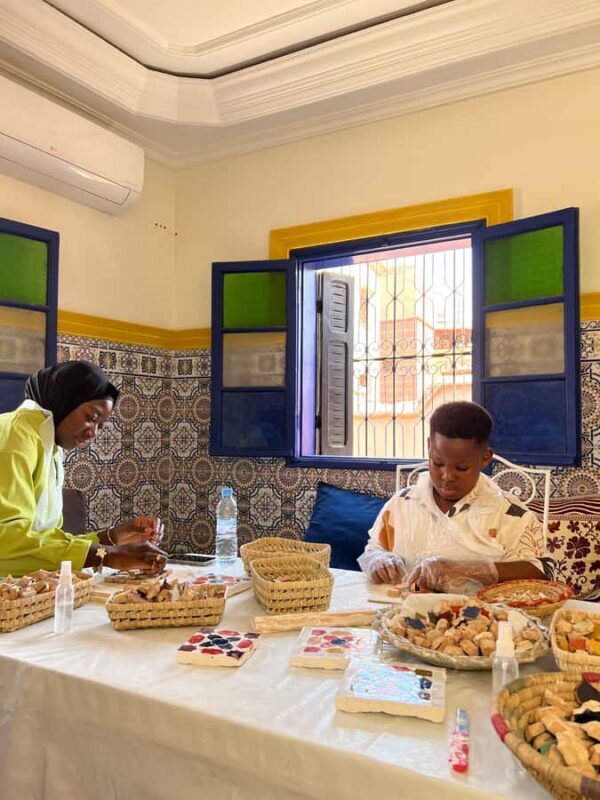
The making is the heart of the session. You work with pre-cut tiles, choose from the available patterns and colors, and assemble a mosaic. Having the pieces ready means you can focus on composition and placement, rather than handling tile cutting.
That makes the class accessible to people who have never tried mosaic work. You can take your time, ask for help, and make adjustments as the design comes together. Past participants have described feeling muddled at first, then finding the instructor’s guidance helpful. If you are nervous about your artistic ability, that is a good sign: this is set up as a supported activity, not a test.
There is a trade-off. Because the tiles are already cut and patterns are proposed, this is not the same as training as a zellige artisan. You may learn more about the craft’s broader history and production by visiting a museum or reading further, but the workshop offers something those options cannot: a chance to build a small piece yourself.
At the end, you take your mosaic home. Some instructors may add a personal touch: one participant’s instructor wrote their name in Arabic on the back. That is a lovely possibility, but not a guaranteed part of the activity.
A Relaxed Studio Break in the Medina
The workshop takes place in a spacious, well-ventilated studio in Marrakech’s Medina. The location has been described as a side street off a souk, so getting there may be part of the pleasure: the surrounding lanes offer a little local texture before you settle in to work.
The room is described as comfortable, and one participant noted that it was air-conditioned. Since that detail is not guaranteed for every session, I would not book on the assumption of a particular temperature. Do wear comfortable clothes suitable for crafting, and arrive 15 minutes early so you can settle in.
Tea and Moroccan pastries are included, providing a pause during the activity. They are a small but thoughtful part of the experience, especially if you are spending a rainy afternoon indoors or want a break from sightseeing. The workshop does not include a meal, so plan lunch or dinner separately.
Transportation to and from the studio is not included. You will need to make your own way there, and the meeting point details should guide your route. Bring water and a camera. Smoking is not allowed.
Is $42 Good Value?
At $42 per person, the price covers two hours of instruction, all workshop materials, tea, Moroccan pastries, and a mosaic to take home. That is a fair bundle if you value an activity you can participate in, rather than another stop where you mainly look and take pictures.
The keepsake is a big part of the value. It is a souvenir you made yourself, with a story attached to it, and more personal than a mass-produced item from a shop. Families and couples can also make the session feel like a shared project, while each person still creates an individual tile.
The price will feel less compelling if you are mainly looking for a technical course in traditional tile production. The supplied tiles and suggested patterns keep the session beginner-friendly, but they also limit how much of the artisan’s process you learn. Think of it as a creative introduction and a cultural activity, not professional training.
A few participants have described sessions of around six people, while another noted that the instructor remained attentive despite a larger group. Group size can affect how much individual help you get, and it is not specified as fixed. If one-to-one instruction is important to you, ask about the group before booking.
More Great Tours NearbyWho Will Enjoy This Workshop Most?
This is a good fit if you like making things, want a break from walking around the city, or are curious about Moroccan architecture and craft. You do not need art experience. The step-by-step help makes it approachable, and the short duration fits neatly into a day of sightseeing.
Couples can make it a relaxed shared activity, while families with older children may enjoy seeing how everyone approaches the same materials differently. Children under five are not suitable, and the workshop is not suitable for wheelchair users. If you are planning with children, remember that the activity requires sitting and concentrating on a small creative task.
It can also be a useful rainy-day plan. The work takes place indoors, and the two-hour length gives you a change of pace without taking up an entire day. On a sunny day, it works well as a break from the heat and the busy pace of the Medina.
If you prefer a completely open-ended art class, you may find the proposed patterns and available colors restrictive. If you want a friendly, guided first encounter with zellige and a finished object to carry home, those boundaries are part of what makes the activity manageable.






Should You Book the Zellige Workshop?
Book it if you want a hands-on way to connect with Moroccan craft, are happy to work with pre-cut tiles, and like the idea of taking home something you made. The instruction, materials, refreshments, and personal keepsake make $42 reasonable for a two-hour activity.
Skip it if your main goal is to learn tile cutting or to follow a full artisan production process. Also consider the practical limits: arrange your own transportation, arrive early, and note that wheelchair users cannot take part. For a creative Medina break that turns a little patience and pattern-making into a personal souvenir, it is a strong choice.
Marrakech: Make Your Own Moroccan Zellige Mosaic Masterpiece
FAQ
How long is the zellige workshop?
The workshop lasts two hours. Starting times vary, so check availability when planning.
What does the $42 price include?
The price includes expert instruction, all workshop materials, tea, Moroccan pastries, and a zellige piece to take home.
Do I make the tiles from scratch?
No. The tiles are pre-cut. You arrange them into a design and assemble your mosaic.
Can beginners take part?
Yes. The workshop is intended for all skill levels, and instructors help participants with the process.
What languages do the instructors speak?
Instruction is available in Arabic, French, and English.
What should I bring or wear?
Wear comfortable clothing suitable for crafting, and bring water and a camera. Arriving 15 minutes early is recommended.
Is the activity suitable for young children or wheelchair users?
It is not suitable for children under five or for wheelchair users.
Can I cancel, and do I have to pay when I book?
You can cancel up to 24 hours in advance for a full refund. A reserve-now, pay-later option is also available.
You can check availability for your dates here: