Pula’s Roman past is not tucked away in a museum: it shapes the streets you walk every day. This private tour links the Forum, ancient gates and the Arena, while a local historian, usually Adriano, adds the stories that make those stones easier to read.
I like the mix of famous Roman landmarks and lesser-known corners, and the chance to ask questions as you go. I also like that the guide brings in Pula’s Italian and Austro-Hungarian legacies, local habits and Istrian products, not just ancient dates.
The main consideration is that this is an outdoor city walk, not an indoor tour. You may meet crowds around Forum square and the Arena, and the route’s pace and comfort can depend on the weather.
- What to know before you book
- Start at the Forum, where Pula’s eras meet
- At the Arch of the Sergii, look for Joyce
- Giardini Street shows the city at street level
- Hercules Gate and Circolo reveal different sides of Pula
- Twin Gate leads toward the underground tunnels
- Tito Park brings the walk into the twentieth century
- Finish at the Arena, Pula’s grand Roman finale
- How the guide shapes the experience
- Is per person good value?
- Practical details that can make the walk easier
- Who should take this Pula walk?
- FAQ
- How long does the Pula walking tour last?
- What landmarks are included?
- Does the tour include entry to the Arena or Zerostrasse?
- What languages are available?
- Is this a private tour?
- Is the tour wheelchair accessible?
- Are food and drinks included?
- What is the cancellation policy?
- The Best Of Pula!
- More Walking Tours in Pula
- More Tours in Pula
- More Tour Reviews in Pula
- Not for you? Here's more nearby things to do in Pula we have reviewed
What to know before you book
 1 / 8
 2 / 8
 3 / 8
 4 / 8
 5 / 8
 6 / 8
 7 / 8
 8 / 8
- The route ends at the Arena: You get a close look at Pula’s best-known Roman monument, but entry is not included.
- A historian leads the walk: Adriano is the guide named most often, and the experience is designed to combine historical detail with local life.
- The walk takes about 90 minutes to two hours: Expect several short stops rather than a long visit inside any one site.
- You’ll see more than Roman remains: Giardini Street, Tito Park and Circolo add a feel for the city beyond its ancient center.
- It is listed at $22 per person: The price covers the private walking tour and guide, not food, drink or entry fees.
- English and Czech are available: The activity is also listed as wheelchair accessible, and a private group can be arranged.

👉 See our pick of the 9 Best Guided Tours In Pula
Start at the Forum, where Pula’s eras meet
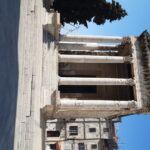
The walk begins at the Forum, Pula’s central square and a natural place to get oriented. The Temple of Augustus, built in the early first century AD, is the headline sight here. The guide can help you notice its proportions and architectural details, and explain how Roman public and religious life shaped this part of town.
The Forum is more than a backdrop for a photo. It gives you a clear starting point for understanding how Pula’s old center is arranged, and why Roman remains appear so naturally woven into its present-day streets. If you arrive early, take a moment to look around before the group sets off. The square can be busy, particularly in the middle of the day.
This stop also sets the tone for the tour: you’ll hear about the past, but the focus is not limited to ancient history. Pula’s later cultures and communities are part of the story too. That wider view is useful if you want to understand the city as a place where people live, rather than a string of Roman monuments.
You can also read our reviews of more walking tours in Pula

At the Arch of the Sergii, look for Joyce
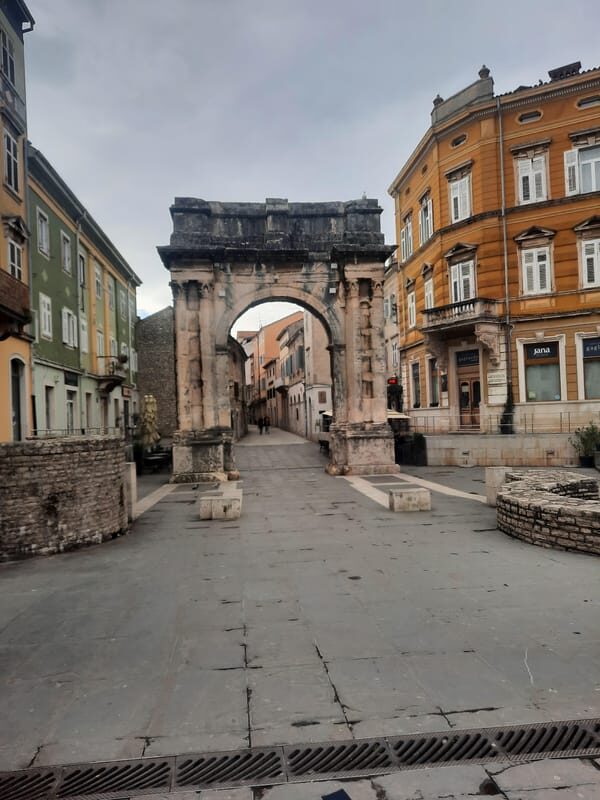
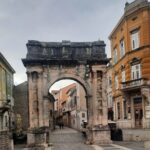
The Triumphal Arch of the Sergii dates to the late first century BC. Built by Salvia Postuma Sergi, it offers a striking example of how Roman monuments were used to mark family status and public achievement. Your guide can put the arch in context, giving you more to think about than its graceful stonework.
Look nearby for the bronze statue of James Joyce. Its presence is a small reminder that Pula’s cultural story reaches beyond Rome. The city’s varied influences are one of the more interesting threads of the walk, and the guide is there to connect the monuments with the later layers of local history.
This is also a good place to ask questions. The walk is private, so it is easier to set the conversation at your pace than it would be in a large group. Past visitors have found the guide willing to field questions on everything from history to present-day life. If you have a particular interest, bring it up rather than waiting for the next stop.
Giardini Street shows the city at street level
Giardini Street shifts the focus from stone monuments to everyday Pula. It is associated with social life and events, with coffee bars and four lines of hackberry trees that are about 130 years old. That detail gives the street a different sense of time: its trees are not ancient Roman, but they have watched generations of city life pass by.
I like this kind of stop because it helps you read the city between the big sights. The Roman remains tell you what Pula once was; a street where locals gather tells you something about how it works now. The guide also covers local habits and Istrian products, so you can use this part of the tour to ask for practical suggestions for the rest of your stay.
The route is still in the central area, so crowds and street activity are possible. Giardini’s cafés may tempt you to linger, but this is a walking tour with several stops to fit into a short time. Treat the guide’s recommendations as a useful starting point, then return later if something catches your eye.
Hercules Gate and Circolo reveal different sides of Pula
Hercules Gate is described as the oldest gate in Pula. It is a modest-sized sight compared with the Arena, but that is part of its appeal: the gate helps you picture how people moved into the Roman city, and how its edges and entrances were defined. Here, a little historical explanation can turn a quick glance into a more meaningful stop.
Nearby is Circolo, the Italian community centre. Its presence brings the city’s multicultural character into view in a direct way. Pula’s story is not only Roman, and the guide’s attention to its Italian and Austro-Hungarian legacies helps explain why the city feels layered rather than belonging to just one era.
These stops are also a reminder that the tour is not a long examination of each monument. It is a compact overview, with short pauses to give you context and keep moving. If you are hoping to spend a long time inside individual sites, you will want to plan extra time on your own after the walk.
More Great Tours NearbyTwin Gate leads toward the underground tunnels
The Twin Gate was built in the second century as an official entrance to the small Roman theater. It is also the main entrance to Zerostrasse, Pula’s underground tunnels. The route includes the gate and the tunnels’ entrance, but admission is not part of the walking tour, so don’t assume you will go underground with the guide.
This is a useful distinction when planning your day. The guide can explain what you are seeing and point out the relationship between the gate and the tunnel system, while you can decide separately if you want to visit the tunnels. The walk’s strength is the overview and local context, not access to every site.
The gate also adds variety to the route. After the open Forum and a lively central street, you get a closer look at the city’s Roman infrastructure. For anyone interested in how an ancient town functioned, this is one of the stops worth listening closely at.
You can also read our reviews of more private tours in Pula




Tito Park brings the walk into the twentieth century
Tito Park offers a change of pace from the stone streets. It includes a World War II memorial, a city map and a fountain. The stop makes room for a more recent chapter of Pula’s history and gives you a view of the city as a modern place, not just an archaeological showcase.
The park is also a practical pause in a walk that spends most of its time outdoors. On a hot day, the temperature and shade can matter as much as the dates being discussed. One person who took the tour in high heat found the pace manageable, but weather varies, so bring water and dress for the conditions.
The guide’s wider account of local life can be especially useful here. This is a good moment to ask about the city’s communities, habits or what to see next. Past participants have valued the recommendations for places to eat and things to do elsewhere in Istria, making the tour a helpful first activity rather than only a history lesson.
Finish at the Arena, Pula’s grand Roman finale
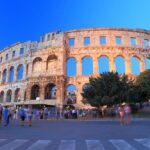
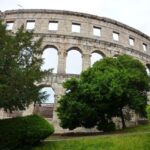
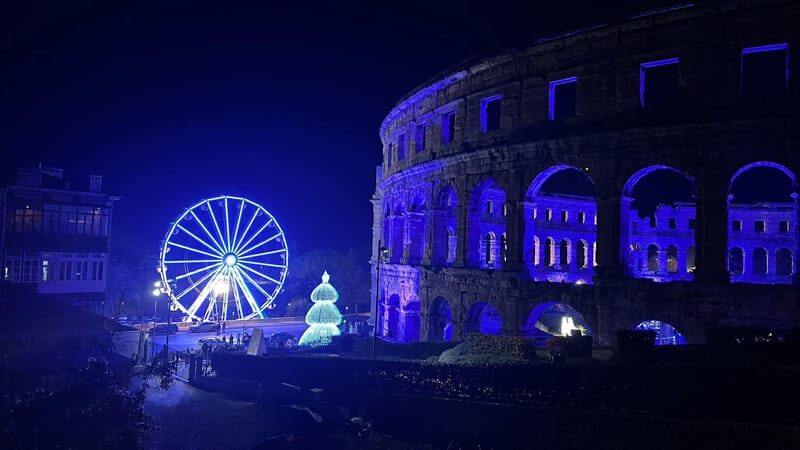
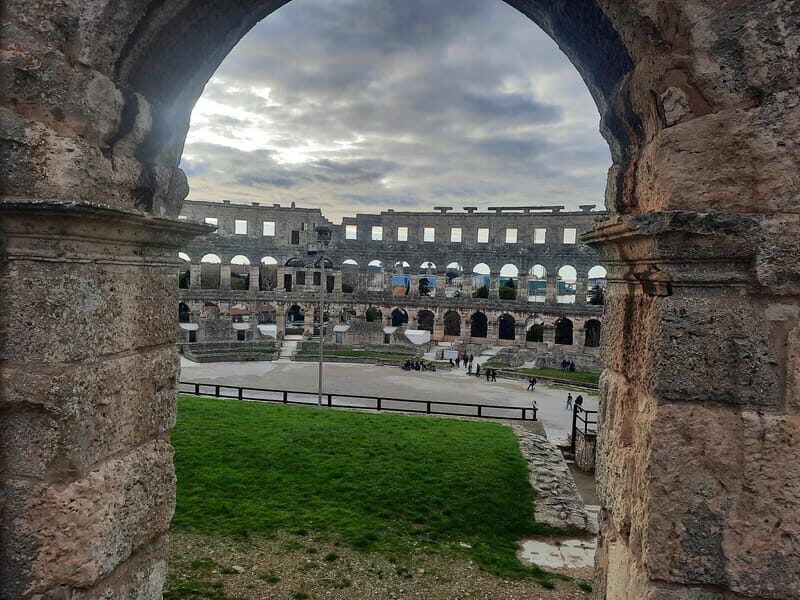
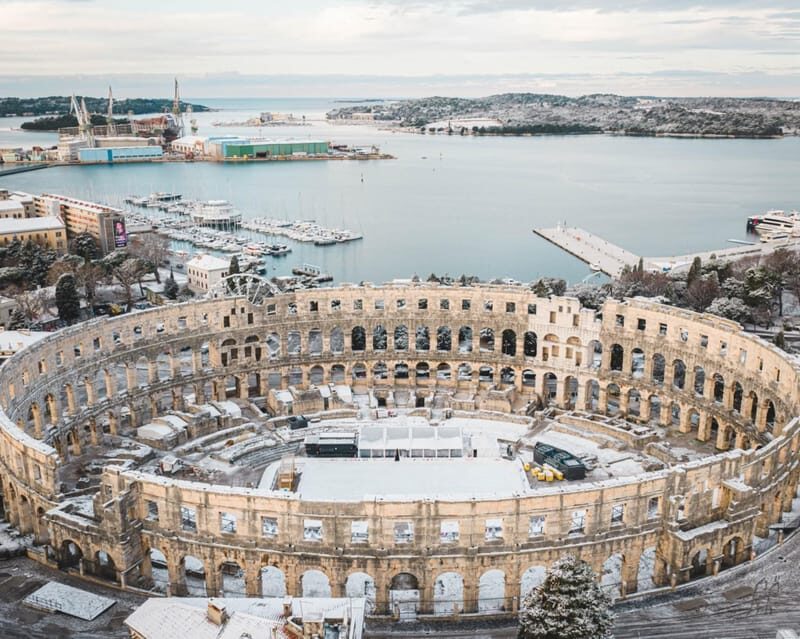
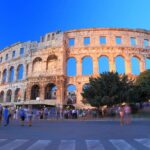
The walk ends in front of the Pula Arena, built in the first century AD. It is described as one of the world’s best-preserved amphitheaters, with all four vertical stair towers still in place. Even if you have seen Roman arenas elsewhere, the structure makes a powerful finish because you can take in its scale from outside.
The Arena is a highlight, but remember that the tour ends in front of it, and entry is not included. If you want to go inside, allow extra time and check admission separately. The guide’s explanation will give you a useful frame for understanding the building before you decide how long to spend there.
Ending here also makes practical sense. You finish at the landmark many people most want to see, with the option to continue exploring independently. Since the Arena area can draw crowds, it is worth paying attention during the explanation and saving your unhurried photos for after the tour.
How the guide shapes the experience
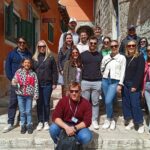
The guide is a major part of what you are paying for. Adriano is described as a local historian who has spent his life in Pula, and the tour’s strongest feature is the way history is paired with everyday context. His approach is often described as clear, relaxed and humorous, with room for questions and a steady pace.
One couple specifically asked him to describe sights in detail for a blind participant, and found that he adapted thoughtfully. That is a useful indication of the tour’s personal format, though it is not a guarantee of any particular accommodation. The activity is listed as wheelchair accessible; if you have specific access needs, confirm details for your chosen departure.
A few participants name Antonio instead of Adriano, so the guide may vary. The experience is described as led by a professional local guide and historian, and the provider is Adriano Pula Private Tour. If meeting a particular guide matters to you, confirm when you book.
Is $22 per person good value?
At the stated price of $22 per person, this is a good-value way to get a coherent introduction to Pula. You are paying for a private guided walk, historical interpretation and the chance to ask questions, rather than entry to attractions or a meal. Since there are no included admissions, compare the price with what you want from the tour: it suits someone who wants context and direction, not a package that covers every site.
The private format can make the price especially appealing for a couple, family or small party, because the conversation can respond to your interests. It is also a sensible choice early in a stay. The guide’s suggestions for restaurants and further sights can help you make better use of the days that follow.
Expect a fairly brisk overview with frequent short stops. The listed duration is 1.5 hours, while the route is also described as taking up to two hours. Plan for about 90 minutes to two hours and leave a little flexibility if you have a firm appointment afterward.
Practical details that can make the walk easier
The meeting point may vary by the option you select, so check the exact location and time when choosing a departure. If you arrive by car, allow extra time to find parking. One person had to park well away from the meeting spot, so a last-minute arrival could add avoidable stress.
The activity is outdoors for most of its duration. Wear comfortable walking shoes and check the weather before setting out; central Pula can be hot, and the route may feel different in sun, rain or crowds. Food and drink are not included, so plan a café stop separately if you want one.
You can book in English or Czech. The activity offers reserve-now, pay-later booking and free cancellation up to 24 hours in advance, which can be helpful if your plans are still shifting. Check the available start times and the details for your selected option before confirming.
Who should take this Pula walk?
I would choose this tour if you want to understand the old center quickly, especially if Pula is part of a short visit to Istria. It is well suited to history fans, curious first-time visitors, families with teenagers and anyone who likes asking questions rather than following a fixed audio guide. The manageable length and steady pace make it a practical introduction for a mixed-age group.
It is less suitable if your priority is spending extended time inside the Arena, the tunnels or other attractions. This is a guided walk through the center, with context at the main landmarks and some less obvious places along the way. You will need separate time and tickets for site visits.
I’d take it near the start of a Pula stay, when recommendations can still shape your plans. Book if you want a local historian to connect the Roman sights with the city’s later cultures and daily life. Skip it if you prefer to explore entirely alone or want a tour built around indoor visits.
Pula: Private Walking Tour
FAQ
How long does the Pula walking tour last?
It is listed as 1.5 hours, and the route is also described as taking about 1.5 to two hours. Allow roughly 90 minutes to two hours.
What landmarks are included?
The walk includes the Forum and Temple of Augustus, the Arch of the Sergii, Hercules Gate, Twin Gate, Tito Park and the Pula Arena. It also passes Giardini Street and Circolo.
Does the tour include entry to the Arena or Zerostrasse?
No. Entry fees are not included. The tour ends in front of the Arena and visits the entrance to the Zerostrasse tunnels, but admission is separate.
What languages are available?
The live guide is available in English and Czech.
Is this a private tour?
A private walking tour is included, and a private group is available. Check the option details when selecting a departure.
Is the tour wheelchair accessible?
The activity is listed as wheelchair accessible. If you have particular access requirements, confirm the relevant details for your selected option before booking.
Are food and drinks included?
No. Food and drink are not included in the tour price.
What is the cancellation policy?
You can cancel up to 24 hours in advance for a full refund. Reserve-now, pay-later booking is also available.
You can check availability for your dates here: