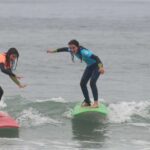
Porto’s surf lesson starts before you reach the water: you’ll get an ocean-safety briefing and practice the pop-up on the sand, then work on catching waves with a certified instructor nearby. The session suits beginners, but it’s also designed to adapt to different skill levels and goals.
I like two things in particular: the small group cap of eight, which gives the instructor room to offer individual pointers, and the 30 minutes of extra equipment time after the lesson, a useful chance to try a few more waves at your own pace. Instructors named by participants include João, Joel, Márcio and Milan.
One thing to weigh is the ocean. Conditions can make a session easier, harder or less productive, and the school cannot control the waves. You’ll also need to be a swimmer, and the activity is not suitable for anyone under 16 or over 65.
- At a glance
- From beach briefing to first waves
- Why the eight-person limit matters
- Surfing for the first time
- The waves set the pace
- Equipment, showers and the extra half-hour
- Is a fair price?
- Who should book this lesson?
- Booking and practical notes
- Should you book?
- FAQ
- How long is the activity?
- Is the lesson suitable for beginners?
- How many people are in each group?
- What languages are offered?
- What equipment is included?
- What should I bring?
- Who is the activity not suitable for?
- Is the extra equipment time supervised?
- The Best Of Porto!
- More Workshops & Classes in Porto
- More Tours in Porto
- More Tour Reviews in Porto
- Not for you? Here's more nearby things to do in Porto we have reviewed
At a glance
- Practice the pop-up on land first: Learn basic positioning and movement before heading into the water.
- Get hands-on coaching: Your instructor offers guidance as you paddle and try to catch waves.
- Keep the group small: A maximum of eight participants allows for more individual attention.
- Plan for 90 minutes of instruction: The full activity lasts two hours, including 30 minutes of free equipment rental afterward.
- Expect conditions to vary: Wave quality and weather affect how much surfing you can do.
- Bring the basics: Pack swimwear, a towel, sunscreen and water.

👉 See our pick of the 10 Best Shopping Tours In Porto
From beach briefing to first waves
The session begins with a beach briefing tailored to your level, goals and confidence in the ocean. Your instructor covers ocean awareness, safety and the basic mechanics of surfing, giving you a clearer idea of what to do before you are faced with moving water and incoming waves.
Next comes practice on the sand. You’ll work on paddling and the pop-up, the movement from lying on the board to standing. One participant described a lesson with around 30 minutes of theory and warm-up, including safety rules and pop-up practice, before heading into the water. The exact balance can vary, but the point is to make the first attempt less of a guessing game.
Then you take your board into the water for hands-on coaching. The instructor can help with timing and positioning, watch your technique, and offer corrections as you try to catch a wave. Some instructors give a small push to help you get moving. That support can make a real difference when you are new to surfing and still working out when to paddle.
The full activity lasts two hours, while the included lesson itself is listed as one and a half hours. The remaining 30 minutes are free equipment rental after instruction. Treat that extra time as an opportunity to keep practicing, not as another coached lesson: one participant noted that the final period was without an instructor, so you are responsible for yourself in the water.
You can also read our reviews of more tours and experiences in Porto



Why the eight-person limit matters
A group of up to eight is small enough for an instructor to keep an eye on individual technique, though it is still a group class rather than private coaching. If you want a lesson built entirely around your pace, this format may feel busy. If you like learning alongside others, it can make the session more relaxed and sociable.
The school’s teaching approach appears to leave room for personal help. Instructors have been named for clear explanations and patient coaching, with João, Joel, Márcio and Milan among those praised. One participant described an instructor adjusting the lesson for each person, while another appreciated being corrected on technique in the water. The particular instructor depends on the session, so don’t book expecting a specific person unless the school confirms it.
Group size is worth checking in context, too. The stated maximum is eight, but one participant described a larger booking being split into three smaller groups. The key thing to clarify, if you are especially concerned about attention, is how many people will be in your actual lesson group.
Surfing for the first time
This is a strong option if you have never surfed and want a structured introduction without committing to a long course. You do not need prior surfing experience: the instructor explains the basics, demonstrates the pop-up and then helps you apply it in the water. Some first-timers have managed to stand on a board during their first session, but that is not something to count on. Your progress depends on your balance, effort and the waves that day.
You should be ready for a workout. Paddling takes effort, and the water portion can feel tiring, especially when you are learning how to time a wave and move into position. The lesson’s step-by-step format helps, but it does not make surfing effortless. Think of standing up as a welcome bonus, not the only measure of a good session.
The school also welcomes more experienced surfers, with lessons tailored to ability and goals. Still, if you already surf confidently, ask whether this particular session will offer the technical coaching you want. The supplied details promise a tailored lesson, but don’t specify advanced drills or a separate class for each level.
The waves set the pace
Surfing is unusually dependent on conditions. The same beach lesson can feel ideal one day and frustrating the next, because wave size and timing affect how many chances you get. One participant described beginner-friendly waves; another found the conditions less suitable for surfing. That variation is part of the sport, not a guarantee of a poor lesson, but it is worth factoring into your expectations.
The instructor can adapt the session to the day’s conditions, helping you focus on safety and choose appropriate waves. But even a skilled coach cannot create surf where there isn’t much to work with. If conditions are mild, the session may lean more toward fundamentals and practice than repeated rides.
I’d approach this as a chance to learn how surfing works, rather than as a promise that you’ll spend two hours riding waves. If the ocean is cooperative, you may catch several. If it isn’t, the sand practice and coaching still give you a foundation to build on.
More Great Tours NearbyEquipment, showers and the extra half-hour
High-quality equipment is included, along with a board and wetsuit, according to participants. You don’t need to arrive with your own surf gear. Bring swimwear to wear under the wetsuit, plus a towel, sunscreen and water. Food is not included, so plan to eat before or after as needed.
The extra 30 minutes of equipment rental gives you more time to use the board after the lesson. It is a useful bonus if you still have energy and conditions are workable. Just remember that the instructor’s hands-on guidance is part of the lesson, not the rental period, and the extra time is your own responsibility.
A bathroom and shower for a quick rinse have been available at the facility. That can make changing after a wet session easier, though the supplied details do not promise a particular changing-room setup. One practical point: the school has been described as a bit of a walk from the ocean. Check the meeting details before you set out, and allow time for the walk with your gear.






Is $29 a fair price?
At $29 per person, the package offers a 90-minute lesson, a certified instructor, equipment, insurance and 30 minutes of extra rental. That is good value if you want a first lesson with gear included and hands-on guidance, rather than simply renting a board and figuring things out alone.
The value rests chiefly on the instruction. A beach briefing and practice on the sand can make your first moments in the water less confusing, while individual pointers may help you correct mistakes sooner. The group cap of eight also gives the lesson more potential for personal attention than a much larger class.
There are limits. The extra rental is not extra coaching, food costs extra, and surf conditions can shape how much you get out of the water time. If you are hoping for a private lesson, a guaranteed number of rides or a full two hours of instruction, this isn’t that product. For an affordable, guided introduction, though, the price covers the essentials.
Who should book this lesson?
Book it if you’re curious about surfing, can swim and want a supported first go. The lesson is aimed at beginner, intermediate and advanced surfers, and its adaptable format should suit friends or couples with different levels. It can also work for families with teenagers, provided everyone meets the age requirements; one group included parents and teenage children.
Solo participants should feel comfortable joining a group. The small-group format gives you company without requiring you to bring a partner, and the instructors teach in English, Portuguese and Spanish. If you need a language other than those three, the supplied information does not confirm that it is available.
Skip it if you cannot swim, are under 16 or over 65, or would be uncomfortable in changing ocean conditions. And if you’re after a tightly controlled activity with predictable results, surfing may test your patience. The sea gets a vote.
Booking and practical notes
The activity lasts two hours, and you can check available starting times when you choose a date. You can reserve without paying immediately, and cancellation up to 24 hours in advance is eligible for a full refund. Alcohol and drugs are not allowed.
Bring swimwear, a towel, sunscreen and water. You do not need to bring food or surf equipment, but food is not included. Discounts at local restaurants and surf shops are part of the package, though the details of those offers are not specified.
Should you book?
I’d book this lesson if you want an affordable, practical introduction to surfing and are happy to let the day’s waves shape the session. The strongest reasons are the on-land preparation, attentive coaching and extra equipment time. Those features give you a good starting point without asking you to buy gear or commit to a longer course.
Go in with realistic expectations: you may stand up on your first wave, but the real win is learning the basics safely and getting a feel for the water. If you can swim, meet the age requirements and don’t mind a little uncertainty, Kiber SurfSchool’s small-group class is a sensible way to try surfing in Porto.
Porto: Surf Lesson with Experienced Surf School
FAQ
How long is the activity?
The full activity lasts two hours. The included surf lesson is one and a half hours, followed by 30 minutes of free equipment rental.
Is the lesson suitable for beginners?
Yes. The instructor covers surf basics on the sand before offering hands-on guidance in the water. The lesson is designed for beginner, intermediate and advanced surfers.
How many people are in each group?
The maximum group size is eight participants.
What languages are offered?
Lessons are offered in English, Portuguese and Spanish.
What equipment is included?
High-quality surf equipment is included. Participants have also described being provided with a board and wetsuit.
What should I bring?
Bring swimwear, a towel, sunscreen and water. Food is not included.
Who is the activity not suitable for?
It is not suitable for children under 16, people over 65 or non-swimmers.
Is the extra equipment time supervised?
The 30 minutes of free equipment rental takes place after the lesson. It is not described as instructor-led, so you should treat that time as your own responsibility.
You can check availability for your dates here: