Rome’s center is a maze of famous names and easy-to-miss details. This 2.5-hour walk starts inside the Pantheon, where a guide explains the dome and open oculus, then connects that ancient monument to Piazza Navona, the Spanish Steps, and Trevi Fountain.
I like two things in particular: you get a proper 45-minute Pantheon visit, not just a quick look from the piazza, and the walk links the sights with stories about Rome’s fountains and water supply. Guides such as archaeology-trained Janina and the animated Berk have made the history feel clear and lively, even for families.
The trade-off is a steady walk through busy streets, with limited time at each stop. Summer heat, a fast-speaking guide, or difficulty walking could make the route less comfortable. The tour is not suitable for wheelchair users, and the Pantheon requires covered knees and shoulders.
- Start inside the Pantheon: Set aside 45 minutes for its dome, oculus, engineering, and long history.
- Connect the landmarks on foot: The route takes in Piazza Navona, the Spanish Steps, and Trevi Fountain, with historic streets in between.
- Follow Rome’s water story: The Aqua Virgo aqueduct adds context before the final fountain stop.
- Choose your timing: Small-group options run in the morning, during the day, or around sunset; private tours are also available.
- Expect active guiding: Guides including Sonia, Berk, Cesare, and Janina are praised for clear explanations, anecdotes, and thoughtful answers.
- Bring ID and dress for a church: Tickets are issued in each participant’s name, and shoulders and knees must be covered inside the Pantheon.
- The Pantheon gives the walk a strong start
- Piazza Navona turns Rome into an open-air room
- The walk links famous sights with lesser-noticed streets
- The Spanish Steps are a brief stop, not a long visit
- Aqua Virgo brings the water story into focus
- Trevi Fountain is the grand finale
- What buys you, and who will get the most from it
- Should you book this Rome walking tour?
- FAQ
- How long is the tour?
- Which sights are included?
- Are entry tickets included?
- What languages are available?
- What should I bring and wear?
- Is the tour suitable for wheelchair users?
- The Best Of Rome!
- More Guided Tours in Rome
- More Tours in Rome
- More Tour Reviews in Rome
- Not for you? Here's more nearby things to do in Rome we have reviewed
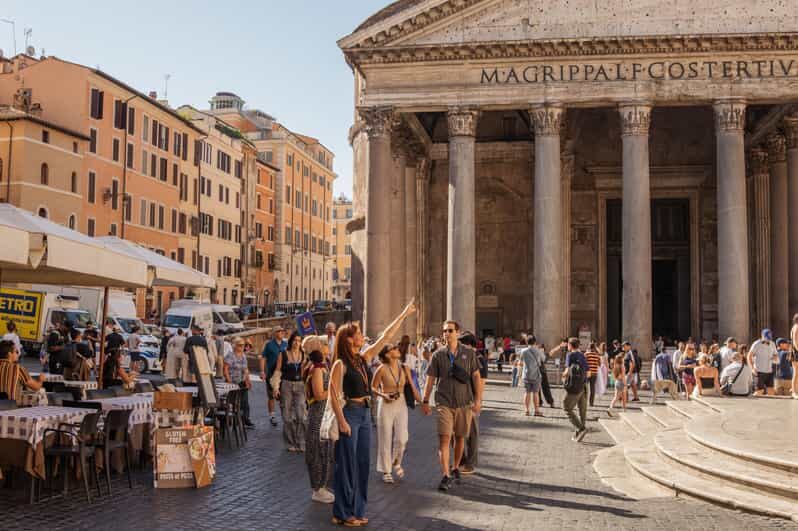
The Pantheon gives the walk a strong start
 1 / 8
 2 / 8
 3 / 8
 4 / 8
 5 / 8
 6 / 8
 7 / 8
 8 / 8
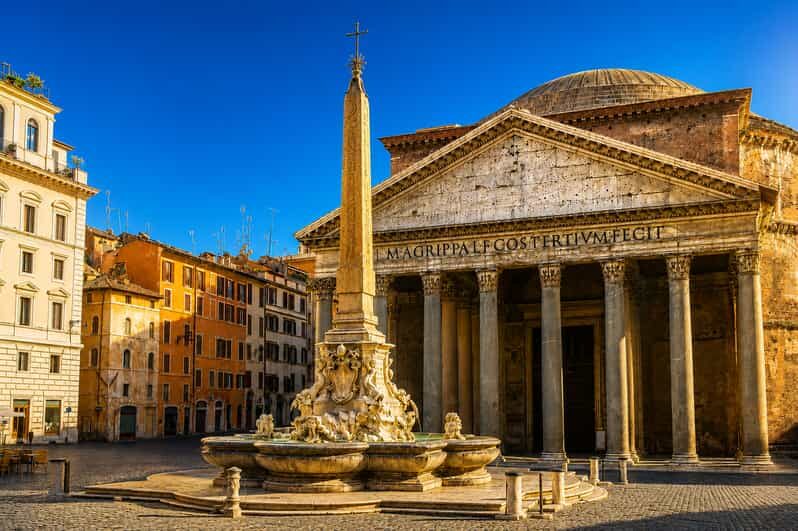
The tour meets at Piazza della Minerva, beside the Pantheon. Starting here is a practical choice: you reach the monument before setting off on the longer walk, and the guide can explain what you are seeing while you are inside rather than trying to compete with the building from the street.
The 45-minute guided visit focuses on the Pantheon’s striking dome, its open oculus, its engineering, and the many chapters of its history. Those details matter. The building is not simply an impressive ancient room; it is a place where looking up, noticing how the structure is shaped, and hearing how it has endured can change your sense of what Roman builders achieved.
A guide also gives you a thread to follow. Janina, who studied archaeology, has led tours with a broad range of information about Rome’s different eras. Berk has been praised for explaining how historical details fit together and for taking questions patiently. The particular guide on your departure will vary, but the route is designed around live commentary rather than a list of monuments to tick off.
Do not treat the Pantheon visit as a quick photo stop. You have a set period inside, and it is the most focused part of the tour. If you like to linger over architecture or take a lot of photos, you may want to return on your own later.
The Pantheon is a place of worship, so dress modestly: shoulders and knees need to be covered. Tickets are nominative, which means every participant must bring an ID and provide their full name when booking. Children need ID too.
You can check availability for your dates here:
👉 See our pick of the 25 Best Guided Tours In Rome
Piazza Navona turns Rome into an open-air room
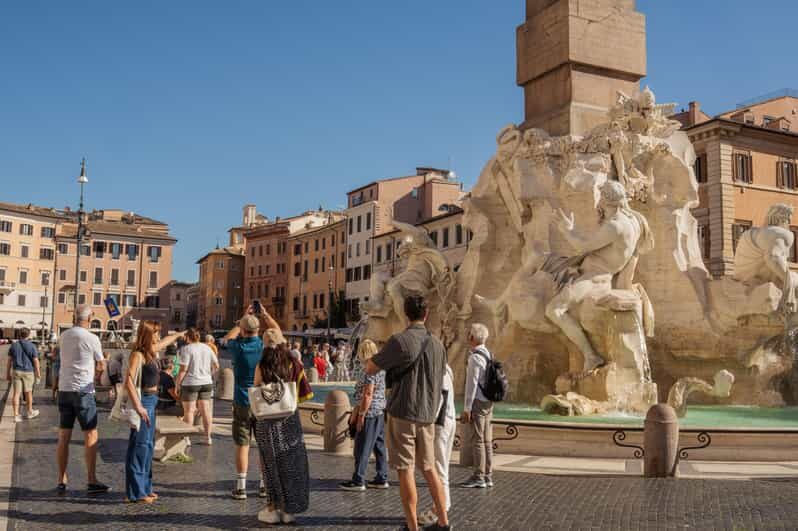
After the Pantheon, the route heads to Piazza Navona. The square’s fountains, artists, and Baroque architecture make it one of the most rewarding places on this walk for simply looking around. The tour allows about 15 minutes here for a guided visit, a short walk, and photos.
That is enough time to get the shape of the square and hear some context, but not enough for a long café stop or a slow visit to every corner. Think of Piazza Navona as a vivid chapter in a larger story, not a destination where you will spend the afternoon.
This is also where a good guide can make the walking part count. Rather than treating the distance between monuments as dead time, guides share anecdotes and point out features along the way. Cesare, who has guided in French, is known for bringing a particular interest in Baroque Rome, while Sonia has been praised for folding in neighborhood stories. You can ask questions about places you pass, not only the sights listed in the route.
The appeal is partly the change of pace. The Pantheon is an enclosed monument that rewards close attention; Piazza Navona opens the tour onto Rome’s public life, with fountains and street activity around you. If the square is crowded, though, you may need to stay close to the group to hear the guide and keep moving together.
You can also read our reviews of more guided tours in Rome



The walk links famous sights with lesser-noticed streets
From Piazza Navona, the route continues through historic streets toward the Spanish Steps. Along the way, you pass the exterior of Palazzo Borghese and the area around the Ara Pacis Museum. These are waypoints, not full visits, but they help make the route feel like a walk through a real city rather than a shuttle between photo stops.
The walking commentary is one of the tour’s most useful features. Rome’s center can feel like a string of grand sights until someone explains how the streets, squares, and fountains relate to one another. Guides have shared practical tips about restaurants and gelato shops as well as historical stories. That local advice can help you decide where to return after the tour.
The tour is about 2.5 hours overall. The listed stops account for a little over two hours, leaving time for the walks between them. Expect to be on your feet for most of the outing, with short pauses for commentary and photos rather than a long sit-down break.
Group size can shape the feel of the walk. This is sold as a small-group tour, and some departures have been especially intimate. That can make it easier to ask questions or hear a guide, though the exact group size is not specified. If you want the guide’s attention reserved for your party, choose the private option. It follows the same main route, with a more personal feel for couples, families, or friends.
The Spanish Steps are a brief stop, not a long visit
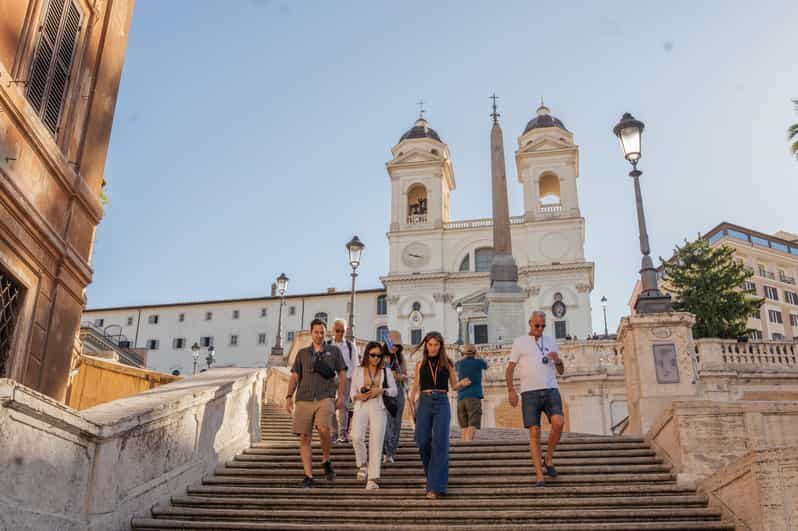
The Spanish Steps get about 30 minutes, including a guided visit, time to look around, and photos. This gives you a chance to hear the stories behind the area and take in its views without having to plan the route yourself.
The stop is useful in the context of the whole walk: by this point, you have seen an ancient interior and a grand Baroque piazza, and the Spanish Steps add another familiar face of central Rome. The guide can help you notice more than the obvious photo angle, while the walk itself provides the transition from one part of the historic center to another.
Still, do not expect a private, quiet visit. These are popular public steps, and the pace of the tour means you will not have unlimited time to sit or explore nearby streets. If the steps are a priority for you, consider returning after the tour for a slower look.
Aqua Virgo brings the water story into focus
On the way to Trevi Fountain, the guide introduces the Aqua Virgo Roman aqueduct. This short 15-minute section gives the final stop a useful frame: Rome’s fountains are not just sculptural showpieces. They also belong to a larger story about water reaching the city and shaping its public spaces.
That connection is one of the route’s smartest choices. You hear about the aqueduct before arriving at the fountain, so the destination becomes more than a famous backdrop. The guide also covers the streets and stories along the way, keeping the walk connected rather than leaving you to puzzle out the context on your own.
If you enjoy history in manageable pieces, this is a good format. You do not need to arrive already knowing Roman infrastructure. The guide introduces the subject as part of the walk, then gives you a chance to see how the story meets the city’s present-day landmarks.
More Great Tours NearbyTrevi Fountain is the grand finale
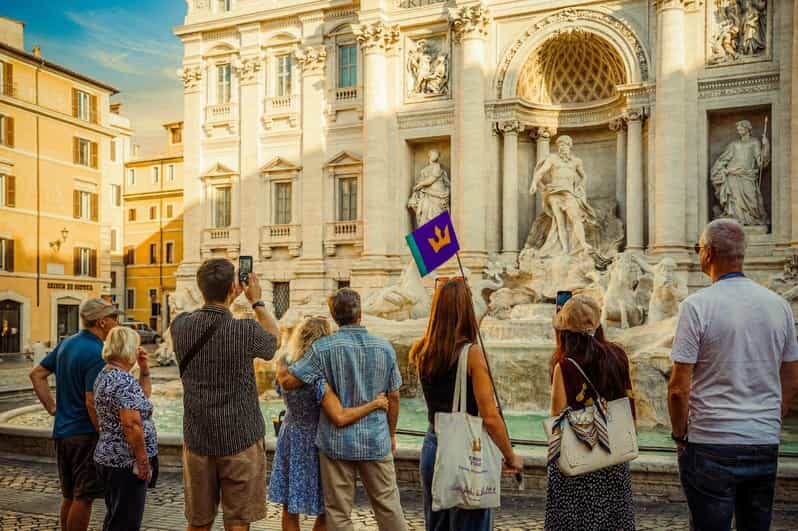
The final stop is Trevi Fountain, with about 30 minutes for a guided visit, photos, sightseeing, and free time. The tour includes a Trevi access ticket as well as the Pantheon entry ticket. It also advertises skip-the-ticket-line access, a useful feature at two of Rome’s busiest sights, though it does not mean you should expect a completely empty monument or fountain.
Trevi is a fitting end because the route has already prepared you to look beyond the spectacle. You arrive with the Aqua Virgo story in mind, and the guide can tie the fountain to the water history discussed earlier. There is still time for the classic Rome moment: stand back, take in the whole scene, and get your photographs.
Sunset is the most atmospheric choice if you want the monuments and fountains in changing evening light. The later outing moves through the same main stops, but the softer light and evening setting can make the walk feel more scenic. Morning or daytime tours are better if you prefer a clear, straightforward introduction to the center. The sunset option does not change the core route, so choose it for mood, not extra sights.
Trevi can be crowded, and 30 minutes is not a guarantee of solitude. Keep your belongings close and be ready to follow the guide’s instructions in a busy space. If the fountain is a major personal priority, you can always come back at another hour after the tour.



What $44 buys you, and who will get the most from it
At $44 per person, the value comes from combining the Pantheon entry and guided visit with a walking tour through several central landmarks, ending with Trevi Fountain access. You are paying not only to reach the sights, but also for the explanations that connect them. If you would otherwise book a Pantheon visit and a separate city walk, this can be an efficient way to cover ground and get your bearings.
The price is most compelling for a first visit to Rome, especially if you want help understanding what you are seeing without building a route yourself. It also suits a short stay: in one outing, you get the Pantheon, Piazza Navona, the Spanish Steps, and Trevi Fountain, with commentary along the streets between them.
The private option may be worth considering if your group has children, wants more flexibility, or prefers a guide’s full attention. Families have found the stories engaging for children, and guides have been noted for answering questions beyond the basic script. The tour still involves sustained walking, however, so it is not a good fit for wheelchair users or anyone who needs a slower, more accessible route.
Practical comfort matters. Rome can be very hot, and the walk has limited time for rest. Bring water, wear comfortable shoes, and choose morning or evening timing if heat is a concern. In a group, keep near the guide so you can hear the commentary. One person suggested that two-earbud headphones would improve the listening setup, which is a reminder that hearing every word can be harder in busy public spaces.
The language options are German, French, Spanish, Italian, and English. Guide style varies, but the strongest accounts of the tour point to lively storytelling, clear explanations, good answers to questions, and a pace that lets the group see the main sights. Guides including Rita, Renata, Arturo, and Cesare have also been praised for warmth and practical help. For a smooth outing, bring the required ID, make sure names match the tickets, and dress appropriately for the Pantheon.
Should you book this Rome walking tour?
Book it if you want a guided introduction to central Rome that starts with a substantial Pantheon visit and finishes at Trevi Fountain. The route is especially useful early in a stay, when a little context can help you make sense of the streets and choose where to return.
Choose the sunset departure for atmosphere, a daytime option for a clear schedule, or the private tour if personal attention matters more than price. Skip it if you want long, unhurried visits at each stop, need a wheelchair-accessible route, or would rather explore without a guide. For most first-time visitors who can comfortably walk for 2.5 hours, it is a well-shaped way to see four central landmarks and understand how they fit together.
Rome: Pantheon, Navona, Trevi & Spanish Steps Guided Tour
FAQ
How long is the tour?
It lasts about 2.5 hours, including guided visits and walking between the stops.
Which sights are included?
The route includes a guided Pantheon visit, Piazza Navona, the Spanish Steps, the Aqua Virgo aqueduct story, and Trevi Fountain.
Are entry tickets included?
Yes. The tour includes a Pantheon entry ticket and a Trevi Fountain access ticket.
What languages are available?
Live guides are available in German, French, Spanish, Italian, and English.
What should I bring and wear?
Bring a passport or ID card, including ID for children. At the Pantheon, shoulders and knees must be covered.
Is the tour suitable for wheelchair users?
No. The tour is listed as not suitable for wheelchair users.
You can check availability for your dates here: