Portuguese azulejos are more than pretty walls: they tell stories about changing styles, city life, and centuries of craft. In this workshop, you paint two tiles using the majolica technique, with historic patterns and playful Lisbon motifs as inspiration.
I like the combination of a short introduction to tilemaking and time to make something yourself. I also like that you can choose between freehand painting and stencils, so the activity works for confident artists and people who would rather not start with a blank tile.
The main catch is practical: your tiles go into a kiln after the workshop, so you will not take them home that day. Allow three to four business days for store pickup, or budget extra for shipping if your Lisbon stay is short.
- At a glance
- A tile shop, not a generic craft room
- A short introduction before the paint comes out
- Two tiles, several ways to make them yours
- How much time to allow
- The kiln is part of the experience
- What the price gets you
- Who will enjoy this hour most
- Should you book the Lisbon tile workshop?
- FAQ
- How long does the tile painting workshop last?
- How many tiles can I paint?
- Do I need painting experience?
- When can I collect my finished tiles?
- Can the tiles be shipped to my home?
- Where does the workshop take place?
- What languages are available, and who can attend?
- The Best Of Lisbon!
- More Workshops & Classes in Lisbon
- More Tours in Lisbon
- More Tour Reviews in Lisbon
- Not for you? Here's more nearby things to do in Lisbon we have reviewed
At a glance
 1 / 8
 2 / 8
 3 / 8
 4 / 8
 5 / 8
 6 / 8
 7 / 8
 8 / 8
- Paint two tiles each: One tile is not much of a souvenir set; two give you room to try different colors or designs.
- Learn majolica basics: The instructor explains painting on unfired glaze before you begin.
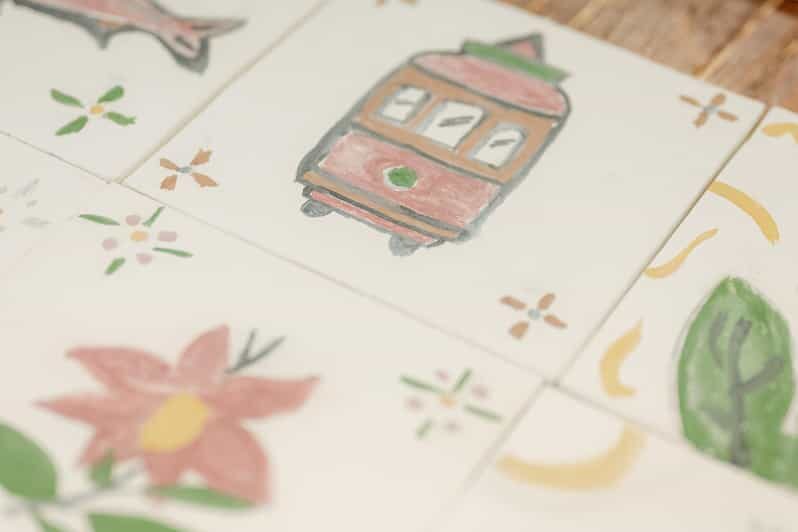
- Choose your approach: Work freehand or use stencils based on Portuguese patterns, Lisbon trams, sardines, and more.
- Expect a calm, self-paced session: The booking is for 60 minutes, though some people take longer to finish.
- Plan for kiln time: Pickup is generally within three to four business days; shipping starts at €35.
- Find it in the historic center: The workshop is at Rua da Misericórdia 10, near the Baixa-Chiado metro stop.

👉 See our pick of the 19 Best Shopping Tours In Lisbon
A tile shop, not a generic craft room
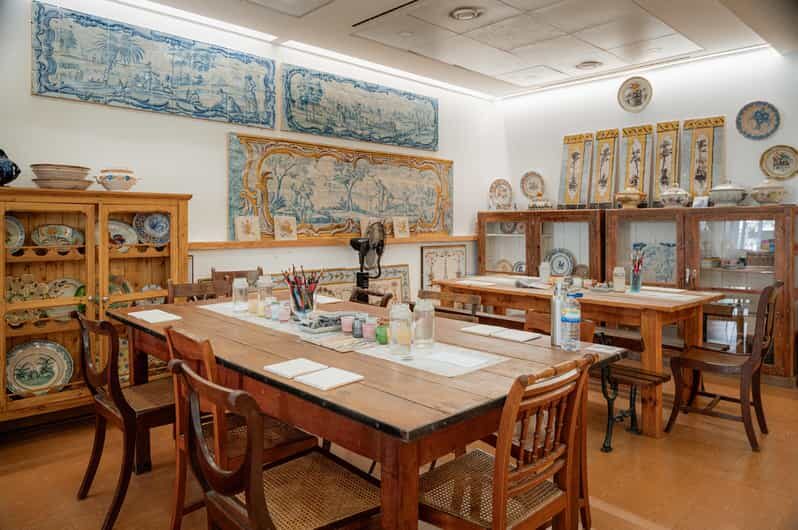
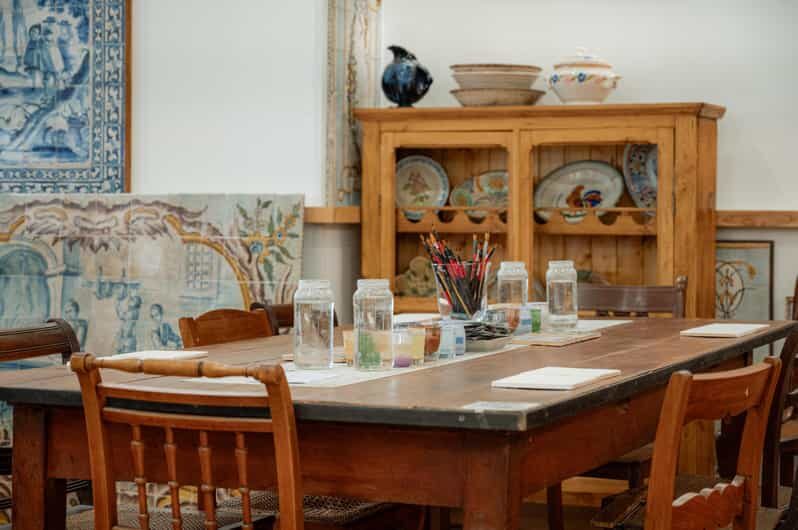
The workshop takes place at D’orey – Azulejos e Antiguidades, a specialist shop surrounded by antique and historic tiles. That setting gives the activity a sense of place before you even pick up a brush. Instead of making a souvenir with no connection to Lisbon, you are working with a craft that appears across the city’s churches, homes, stations, and public spaces.
The shop is at Rua da Misericórdia 10, 1200-270 Lisbon. It is in the historic center, and the Baixa-Chiado metro stop is nearby. The location makes this an easy activity to fit between sightseeing stops, particularly if you want a quieter hour after a morning on Lisbon’s hills.
There is a 10% discount throughout the shop for workshop participants. That could be useful if you are already interested in taking home a tile or another item, but treat it as a small extra rather than the main reason to book. The real value is getting to make a piece yourself and seeing the craft in its natural setting.
You can also read our reviews of more tours and experiences in Lisbon



A short introduction before the paint comes out
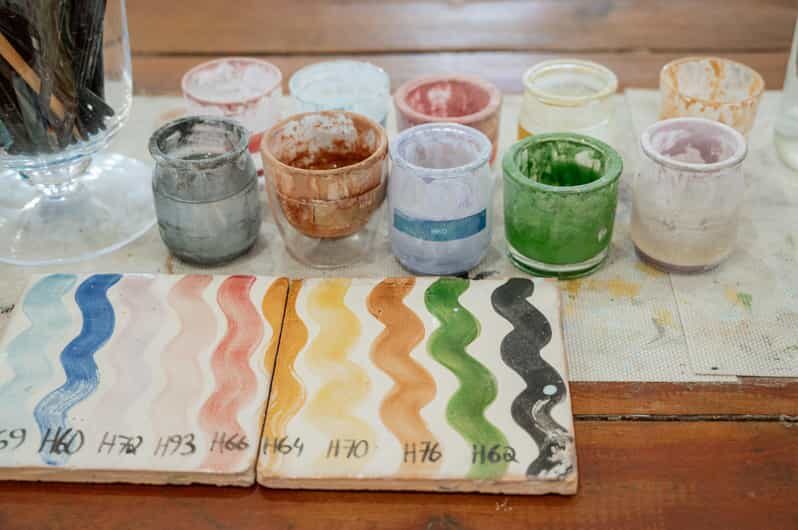
The session begins with a hands-on explanation of majolica, a method that involves painting on an unfired glaze. You get an introduction to the materials and process, along with historical context about Portuguese tile styles. The talk is meant to inspire your design, not turn the hour into a lecture.
That balance matters. A little background helps you recognize the patterns you see around Lisbon, but most of the time is reserved for making. In some sessions, an instructor named Anna has introduced the history and different kinds of azulejos. The instructors speak English and Portuguese, and guidance is available as you work.
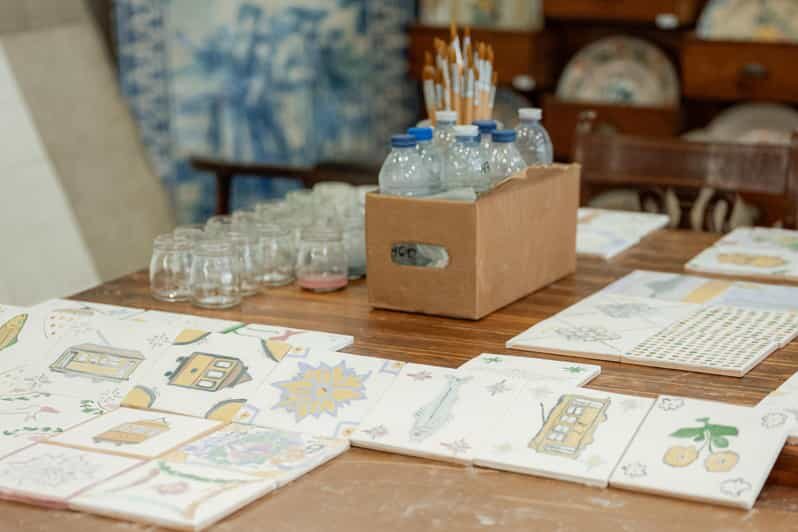
The historical references give you several ways into the design. You might choose a 17th-century pattern, a Pombaline-style motif associated with Lisbon’s rebuilding after the 1755 earthquake, or an individual figure in the style of 18th-century tiles. If you prefer something lighter, the options include a Lisbon tram or the familiar Portuguese sardine.
You do not need to arrive with an art degree, or even much confidence with a paintbrush. Stencils and clear demonstrations help make the task approachable. Still, if you already have an idea in mind, bring a picture or sketch. Planning ahead can save time, especially if you want to create a more personal design rather than choose from the examples on hand.
Two tiles, several ways to make them yours
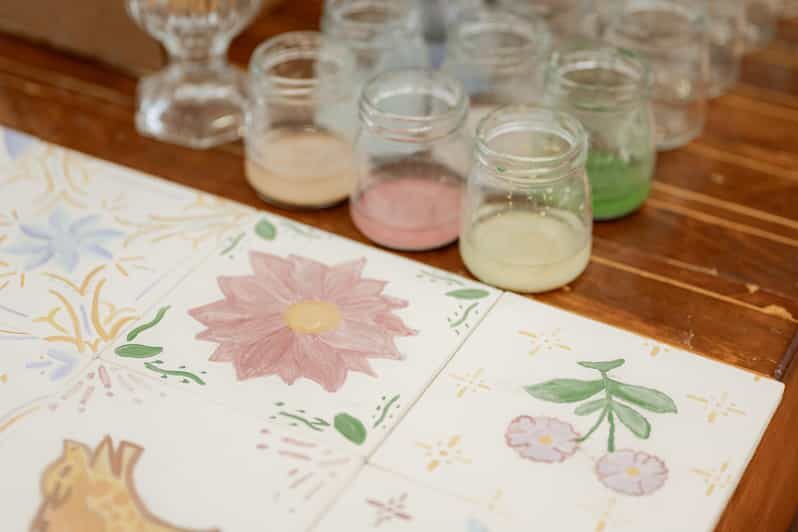
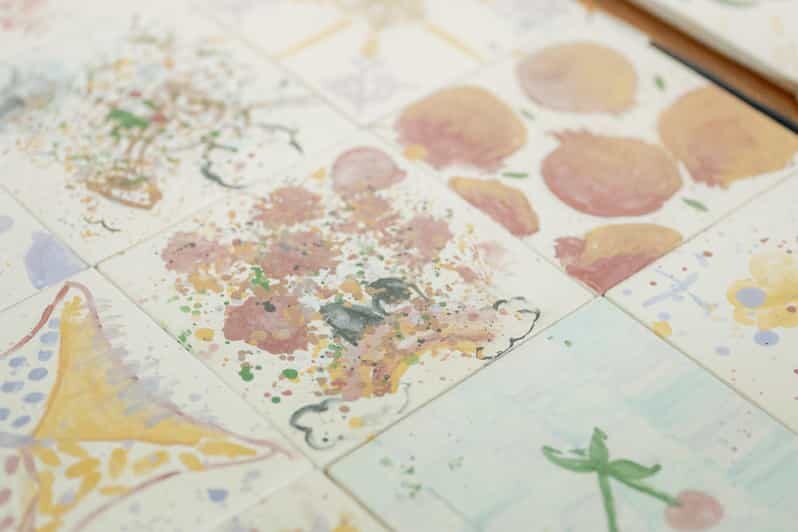
Each participant gets two tiles to paint during the workshop. You can use stencils or work freehand, and you can explore different colors and compositions. The instructor provides the supplies and basic guidance, then leaves room for you to make your own decisions.
That freedom is part of the appeal. You can keep things traditional with familiar patterns and colors, or make a less formal souvenir with a tram, fish, or personal design. You are not being asked to reproduce an antique tile exactly. The point is to make a piece that reminds you of Lisbon and the time you spent there.
If you are unsure how to begin, a stencil gives you a helpful outline. You can still make choices about color and finish, so the result does not have to feel like a paint-by-numbers project. If you would rather draw your own design, freehand work is welcome. Staff can offer help with materials or technique when you ask.
The workshop includes two tiles per person. Additional tiles cost €10 each. That may be worthwhile if you want to make gifts or try more than one idea, but remember that each extra tile adds painting time as well as cost.
A practical tip: take a few minutes to look through the examples and settle on a design before the clock starts. Some people find that choosing colors and planning a pattern takes longer than expected. A reference image can help you get straight to painting, while the ready-to-use stencils are a simple option if you would rather decide on the spot.
How much time to allow
The activity is listed as one hour, and that is the booked session length. In practice, the time you need can depend on your design, how many colors you use, and whether you are painting with children. Some people finish within the hour; others stay engaged for closer to an hour and a half or two hours.
That difference is worth keeping in mind if you have a tight schedule. The workshop is relaxed rather than rushed, but do not assume that every group will finish at exactly the 60-minute mark. If you are planning another timed activity afterward, leave a little breathing room.
The pace suits a wide range of ages. Children aged four and up can take part, and families with school-age children may find it a welcome change from walking through monuments and museums. The activity is not suitable for children under four, people with mobility impairments, or wheelchair users.
It can also make a good rainy-day plan or a low-key break from Lisbon’s steep streets. You spend the time seated and focused on a small creative task, with conversation and help available when needed. The setting and subject give the hour a local connection without demanding a full afternoon.
More Great Tours NearbyThe kiln is part of the experience
At the end, the tiles are placed in a ceramic kiln for drying and firing. This is why you cannot carry your finished work out of the shop immediately. Firing changes the surface and completes the tile, so the piece you collect later may look different from the wet paint you leave behind.
The stated pickup window is three to four business days. Some batches may be ready sooner, but timing can depend on the firing process and the kiln schedule. Do not build your plans around a same-day pickup, and avoid booking this activity on your final day in Lisbon if you want to collect the tiles in person.
If you are leaving before the tiles are ready, shipping is available at an additional cost starting from €35. That fee can be worthwhile for a one-of-a-kind souvenir, but it is a noticeable extra on top of the $56 per-person workshop price. Confirm the shipping arrangement and cost at the shop before you leave your tiles.
There is also a storage limit to remember. The shop guarantees storage for up to three months after your workshop date. After that, uncollected tiles may be discarded or used for non-commercial purposes, so set a reminder if you choose pickup.






What the $56 price gets you
At $56 per person, this is not the cheapest hour you can spend in Lisbon. But the fee includes 60 minutes of painting, two tiles, materials, an introduction to majolica, access to stencils, and guidance from the instructor. You are also making a souvenir rather than buying a mass-produced object, which gives the price a different kind of value.
For a couple, family, or small group, the cost covers an activity you can do together without needing previous art experience. Each person gets their own tiles, so the result is personal rather than a single shared craft. The 10% shop discount adds a modest saving if you decide to buy something else while you are there.
The extra costs are easy to overlook. Additional tiles are €10 each, and shipping starts at €35. If you are counting on taking your work home, consider whether you will still be in Lisbon several business days later. For a short stay, shipping may be the simplest option, but it changes the total cost.
Who will enjoy this hour most
I would recommend the workshop if you want a hands-on way to connect with Lisbon’s tile tradition, especially if you like making things or want a personal keepsake. It is also a sensible choice for families with children old enough to follow the painting activity. The stencils and friendly guidance mean that artistic skill is not a requirement.
It suits people who enjoy a calm activity more than a high-energy group experience. You get a brief introduction, then spend much of the session concentrating on your own design. The setting is part of the pleasure: antique tiles, books, and examples around the shop offer plenty to look at while you decide what to paint.
It may not be the best fit if you are short on time, uncomfortable with a delayed pickup, or hoping for a long formal lesson in ceramic history. The historical introduction is brief by design. The focus is on making, with enough context to give your tile a connection to Portuguese styles.
Should you book the Lisbon tile workshop?
Book it if you want a relaxed, beginner-friendly activity and do not mind waiting for your tiles to be fired. The two-tile format, stencil option, and helpful instruction make it a strong choice for couples and families, while the shop setting ties the activity directly to Lisbon’s azulejo tradition.
Skip it if you need a souvenir in hand before you leave and do not want to pay for shipping. Otherwise, schedule it early enough in your stay to collect the finished tiles, bring a design idea if you have one, and leave a little more than an hour in your day. That small bit of planning makes this a practical way to turn a Lisbon afternoon into something you made yourself.
Lisbon: Tile Painting Workshop
FAQ
How long does the tile painting workshop last?
The scheduled activity lasts 60 minutes. The time needed can vary, and some people take around an hour and a half to two hours to finish their tiles.
How many tiles can I paint?
The workshop includes two tiles per person. Additional tiles are available for €10 each.
Do I need painting experience?
No. The instructor explains the majolica technique, provides the materials, and can help during the activity. You can also use stencils rather than create a design freehand.
When can I collect my finished tiles?
The stated pickup window is three to four business days after the workshop. The tiles must be dried and fired in a ceramic kiln first.
Can the tiles be shipped to my home?
Yes. Shipping is available for an additional cost starting from €35.
Where does the workshop take place?
It takes place at Rua da Misericórdia 10, 1200-270 Lisbon, at D’orey – Azulejos e Antiguidades.
What languages are available, and who can attend?
Instruction is available in English and Portuguese. The workshop is not suitable for children under four, people with mobility impairments, or wheelchair users.
You can check availability for your dates here: