The Venus of Willendorf, a small figure made about 29,500 years ago, is the star of a museum that ranges from ancient stone tools to meteorites and mounted animals. I like the contrast between the museum’s grand palace-like rooms and the remarkable objects inside, and I like that the collections move from Earth’s deep past to the diversity of life today.
One thing to keep in mind: the dinosaur displays are not extensive. If dinosaurs are your main reason for visiting, set your expectations accordingly. The museum’s strengths are broader, with minerals, fossils, prehistoric archaeology, and zoological specimens filling its 39 halls.
- What to know before you go
- A small figure, a very long human story
- Start downstairs with minerals, fossils, and meteorites
- Follow the archaeological trail to Hallstatt
- Head upstairs for the animal collections
- Take in the building as well as the exhibits
- Consider the rooftop view, but check the tour details
- Is the ticket good value?
- Who will get the most from this visit?
- Should you book it?
- FAQ
- What does the ticket include?
- Is the Venus of Willendorf on display?
- How many exhibition halls does the museum have?
- What can I see on the lower floor?
- What can I see on the upper floor?
- Is the museum wheelchair accessible?
- Is a rooftop tour included with admission?
- The Best Of Vienna!
- More Tickets in Vienna
- More Tours in Vienna
- More Tour Reviews in Vienna
- Not for you? Here's more nearby things to do in Vienna we have reviewed
What to know before you go
 1 / 6
 2 / 6
 3 / 6
 4 / 6
 5 / 6
 6 / 6
- The Venus of Willendorf is displayed in the Venus Cabinet alongside another ancient figure, the Venus of Galgenberg.
- The museum has 39 exhibition halls on two floors, with minerals, fossils, meteorites, prehistoric archaeology, and animal specimens.
- The meteorite collection is especially notable, described as the world’s largest and oldest.
- The building is part of the experience, designed by Gottfried Semper and Carl von Hasenauer and opened in 1889.
- A rooftop visit may be possible on a guided tour, with views across central Vienna and the Ringstrasse buildings.
- The ticket is valid for one day and covers museum admission. A rooftop tour is an additional opportunity, not a listed part of the ticket.

👉 See our pick of the 11 Best Shopping Tours In Vienna
A small figure, a very long human story
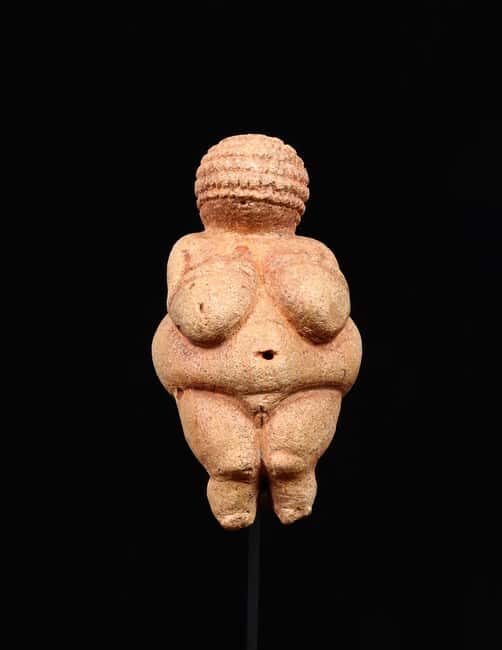
The Venus of Willendorf is tiny compared with the grand rooms around it, but it carries enormous weight. Made around 29,500 years ago, this prehistoric figure gives you a direct encounter with human artistic expression from a time far removed from written history. It is one object, not a whole museum, yet it offers a good reason to slow down and look closely.
The Venus Cabinet also contains the Venus of Galgenberg, a stone figure dated to about 36,000 years ago. It is described as the oldest known human figure made of stone. Seeing these works together helps put the Willendorf figure in context: the museum is not simply collecting famous objects, but presenting evidence of how people made, used, and valued things across immense stretches of time.
That makes the Venus Cabinet a natural first stop if prehistoric art is your priority. It is also a reminder that the museum’s scale can be both a pleasure and a challenge. With 39 halls spread across two floors, you will need to choose where to linger rather than expect to give every display equal attention.
You can also read our reviews of more tours and experiences in Vienna


Start downstairs with minerals, fossils, and meteorites
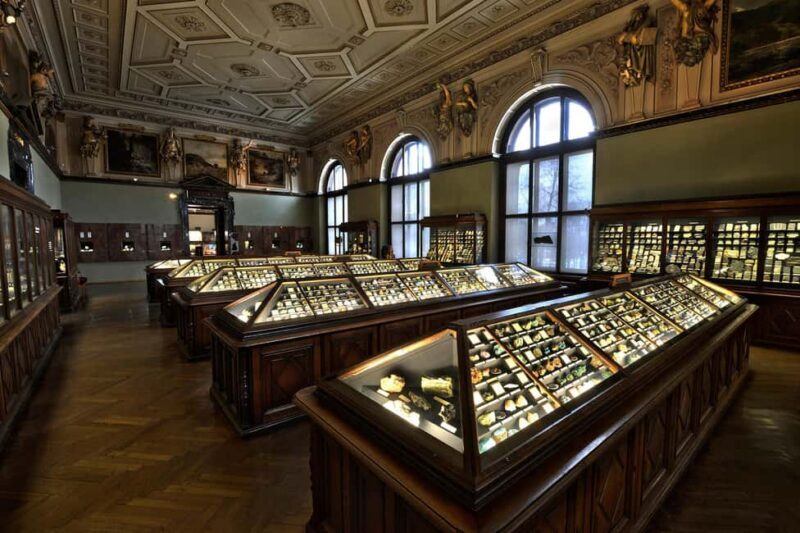
The lower floor moves through the material history of the planet. You can see precious gemstones and minerals, fossils, dinosaur specimens, and meteorites, alongside displays on human origins and special exhibitions. The subjects vary widely, so this level suits visitors who enjoy moving between natural science and archaeology rather than following a single narrow theme.
The museum’s meteorite collection is a particular draw. It is described as the largest and oldest collection of meteorites in the world, a distinction that gives the display more than visual appeal. Meteorites offer evidence from beyond Earth, and here they sit within a museum that also traces the planet’s own history through rock, fossils, and living species.
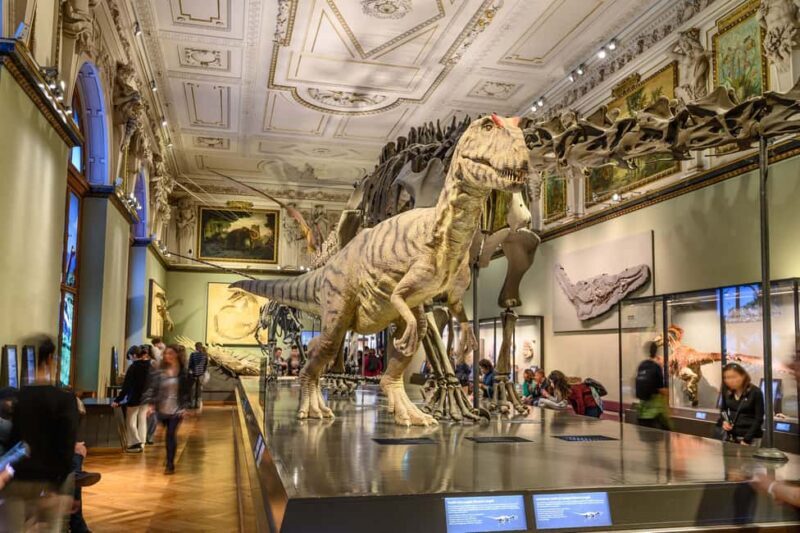
The dinosaur rooms are part of the lower-floor collection, but they are not numerous. If you are planning a visit mainly for dinosaurs, this is worth knowing before you buy. The museum covers a much wider range of natural history, so the dinosaur displays make more sense as one part of a broad collection than as a stand-alone dinosaur attraction.
Among the more unusual objects is the gemstone bouquet, given by Maria Theresa to her husband, Emperor Franz I Stephan of Lorraine. It brings a courtly story into the mineral galleries: precious stones are not only geological specimens here, but objects with a place in the lives and tastes of Austria’s rulers.
Follow the archaeological trail to Hallstatt
Prehistory takes a different form in the Gold Cabinet and the Hallstatt displays. The Gold Cabinet presents prehistoric gold and silver treasures, including the second-oldest gold find in the world. These are objects to take in slowly. Their value lies not only in their age or materials, but in what they show about skilled work and human communities long before modern Austria existed.
A room is devoted to finds from the prehistoric mine and burial ground at Hallstatt. Salt has been mined there for about 7,000 years, leaving a long record of human activity. That continuity makes the displays especially useful for connecting an archaeological object to a real place and a sustained practice, rather than treating the past as a row of unrelated treasures.
If you have limited time, this area makes a worthwhile counterpart to the Venus Cabinet. Together, the prehistoric figures, precious metals, and Hallstatt finds give you several ways to think about early human life: art, technology, trade, burial, and the use of natural resources.
Head upstairs for the animal collections
The upper floor shifts from Earth’s materials and early human history to the diversity of animal life. Its displays range from marine organisms to mammals, with mounted amphibians, reptiles, birds, and mammals, including rare and extinct species. Many specimens are historical treasures, so the galleries bring together zoology and the museum’s own collecting history.
The change in subject is welcome after the concentration of fossils and archaeology downstairs. You can move from the very old remains of life to examples of animal forms, including species that are now rare or extinct. For families and visitors with different interests, that variety can help keep the visit engaging even if not everyone is drawn to prehistoric archaeology or minerals.
The collections are arranged across many halls, so there is no need to treat the upper floor as a quick add-on. If animals are your main interest, give it time. If your priorities are the Venus figures, meteorites, and Hallstatt, you can focus on those first and use the remaining time to choose animal galleries that catch your eye.
Behind the public displays, about 60 scientists work across human, Earth, and life sciences. Their research includes environmental and climate questions, and findings are incorporated into the public collections. You will not see the research work as part of a standard admission visit, but it helps explain why the museum is more than a storehouse of old objects: its collections remain connected to current scientific questions.
More Great Tours NearbyTake in the building as well as the exhibits
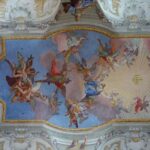
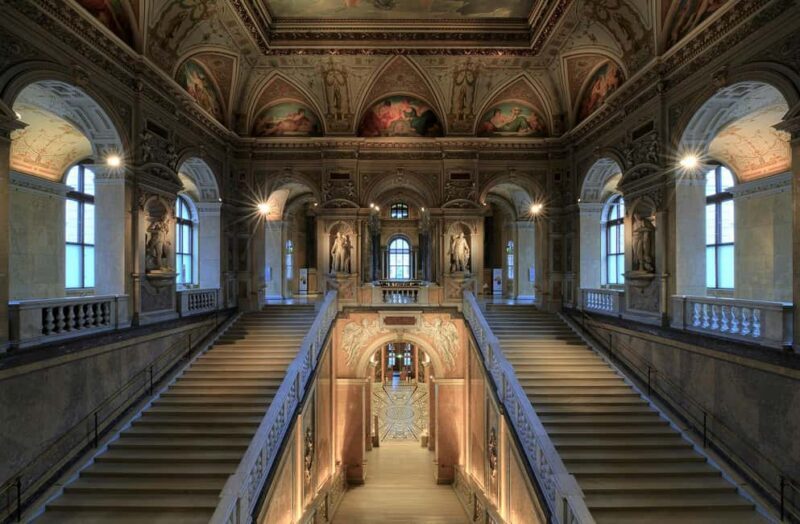
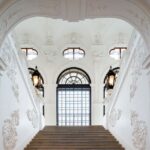
The museum occupies one of the Ringstrasse’s most imposing buildings. Architects Gottfried Semper and Carl von Hasenauer designed it as a Palace of Natural Science and Evolution, and Emperor Franz Joseph I opened it on August 10, 1889. The architecture is not just a backdrop. It reflects a period when museums were built to present knowledge on a grand public scale.
Give yourself a moment to notice the exterior before heading inside or after you leave. The broad historic setting can be as memorable as the galleries, particularly if you are already walking around the Ringstrasse and its monumental buildings. The museum’s own highlight list draws attention to the exterior, and that is a sensible suggestion: the visit begins before you reach the collection cases.
Inside, the historic setting gives the natural science displays a distinctive feel. The rooms and their contents belong to different eras, and that contrast is part of the appeal. You are looking at objects that span immense periods of natural and human history within a building opened in the late nineteenth century.
You can also read our reviews of more historical tours in Vienna






Consider the rooftop view, but check the tour details
A guided tour to the rooftop is described as a visitor highlight, offering views over Vienna’s city center and the Ringstrasse buildings. It is a chance to connect the museum with the city outside: from above, the grand architecture becomes part of a wider urban arrangement rather than an isolated landmark.
The admission ticket described here covers entry to the museum. It does not say that a rooftop tour is included, so treat that as a separate possibility and check the details before planning around it. The information provided also does not give rooftop tour times or availability, so you should not assume you can simply add it on when you arrive.
Is the $21 ticket good value?
At $21 per person, the ticket buys access to a large museum with 39 exhibition halls and collections spanning minerals, fossils, meteorites, archaeology, and zoology. That breadth makes the price easier to justify if you like museums and plan to spend time with more than one section. The ticket is valid for one day, giving you room to visit at your own pace rather than rushing through every floor.
The value is less clear if you want only a short dinosaur visit. The dinosaur displays are limited, and the ticket is for the full museum rather than a focused dinosaur exhibit. You are paying for breadth: the Venus figures, meteorites, historic objects, animal specimens, and the building itself.
The museum has a 4.8 out of 5 rating from 426 ratings, which points to a strong overall response. Still, ratings cannot tell you which collection you will personally enjoy most. Think about your interests first, then decide whether the combination of natural science, archaeology, and architecture earns a place in your Vienna plans.
The ticket information states that the museum is wheelchair accessible. It also offers free cancellation up to 24 hours before the visit and a reserve-now, pay-later option. These terms can make planning more flexible, but they do not change what the ticket includes: museum admission for one day.
Who will get the most from this visit?
I would put this museum high on the list if you enjoy prehistoric objects, Earth science, or animal collections, or if you want to see one of Vienna’s major historic museum buildings from the inside. The range makes it a good choice for a mixed-interest group: one person can focus on gems and meteorites while another spends longer with archaeology or zoology.
It also suits visitors who prefer museums with objects to discover at their own pace. There is no guide included with the admission ticket, and no guided route through the galleries is specified. You can build your own visit around the Venus Cabinet, Hallstatt, or the meteorites, then adjust as you go.
If you have only a little time in Vienna, be selective. The scale of the collection means you may not want to see all 39 halls in one go, and the ticket’s one-day validity does not mean you need to stay all day. Pick your priorities before entering, then leave space for an unexpected display to hold your attention.
Should you book it?
Book this ticket if you want a broad natural history museum with real archaeological depth, a world-famous prehistoric figure, and an impressive Ringstrasse setting. The Venus of Willendorf, the older Venus of Galgenberg, the meteorites, and the Hallstatt room give the visit several distinctive focal points.
Skip it, or choose another attraction, if your main goal is a large dinosaur exhibit. The dinosaur rooms are limited, and the museum’s appeal rests on the range of its collections rather than one headline theme. For $21, it offers good value when you are ready to explore that range; the best plan is to arrive with a few priorities and let the rest of the museum surprise you.
Vienna: Ticket to the Museum of Natural History
FAQ
What does the ticket include?
It includes admission to the Museum of Natural History in Vienna for one day.
Is the Venus of Willendorf on display?
Yes. It is housed in the Venus Cabinet, along with the Venus of Galgenberg.
How many exhibition halls does the museum have?
The museum has 39 exhibition halls on two floors.
What can I see on the lower floor?
The lower floor includes minerals, gemstones, fossils, dinosaurs, meteorites, human origins displays, special exhibitions, prehistoric treasures, and finds from Hallstatt.
What can I see on the upper floor?
The upper floor presents animal life, from marine organisms to mammals, including mounted amphibians, reptiles, birds, and mammals.
Is the museum wheelchair accessible?
Yes, the activity information describes the museum as wheelchair accessible.
Is a rooftop tour included with admission?
The ticket includes museum admission. A guided rooftop tour is described as an available visitor experience, but it is not listed as included with the ticket.
You can check availability for your dates here: