The best part of this Paris class is that you work with dough in a real bakery, not just watch someone else bake. You’ll learn to shape a baguette, handle croissant dough, and tell different breads apart. I like the small group of up to eight and the mix of hands-on practice with stories about French baking.
It’s a short, focused session, so don’t expect to leave as a pastry chef. The class lasts two hours, and the experience depends on the guide; one past session was led by Jess, another by Priya. Arrive 15 minutes early, and keep in mind that children under five may attend free but cannot take part in the hands-on work.
- Key points before you book
- Inside a working Paris bakery
- Learning to read a baguette
- Working with croissant dough
- Tasting the results, not just the theory
- What the small group changes
- Choosing between the two Paris locations
- Is the price worth it?
- Who should book this baking class?
- Should you book it?
- FAQ
- How long is the Paris Baking Insider Experience?
- How many people can join the group?
- What baking techniques will I learn?
- Where is the meeting point?
- Can children take part?
- Is the activity wheelchair-accessible?
- The Best Of Paris!
- More Tours in Paris
- More Tour Reviews in Paris
- Not for you? Here's more nearby things to do in Paris we have reviewed
Key points before you book
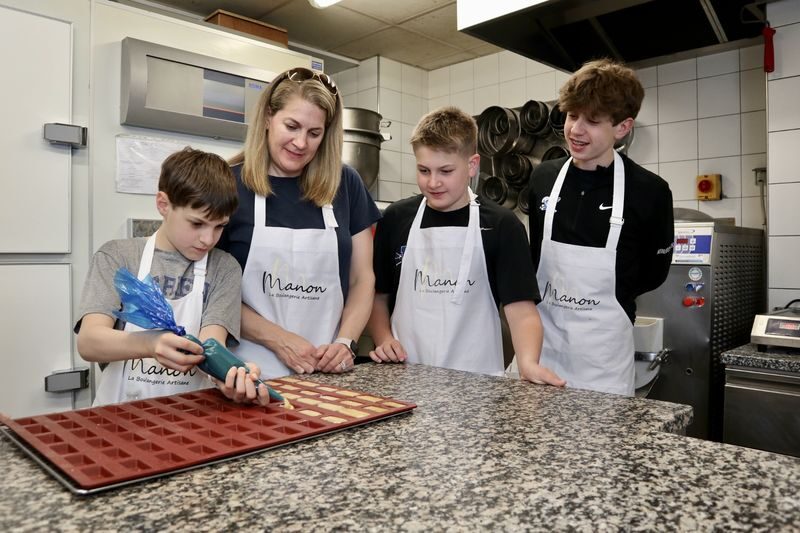 1 / 4
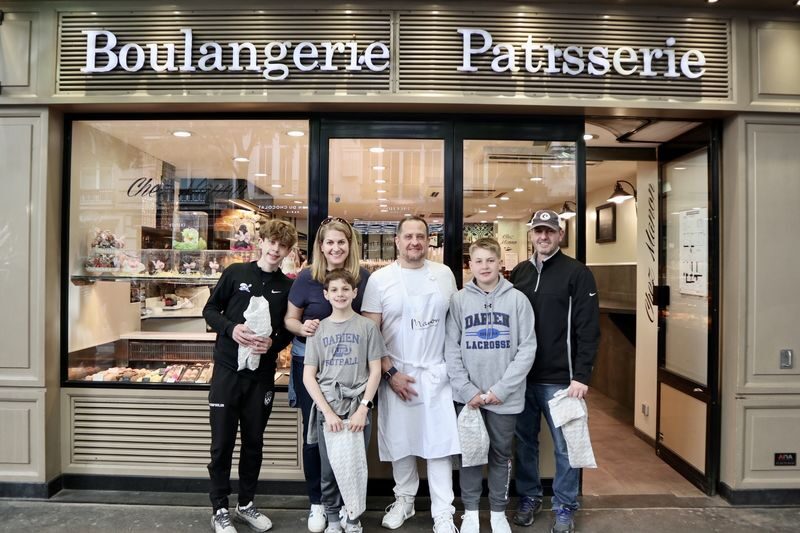 2 / 4
 3 / 4
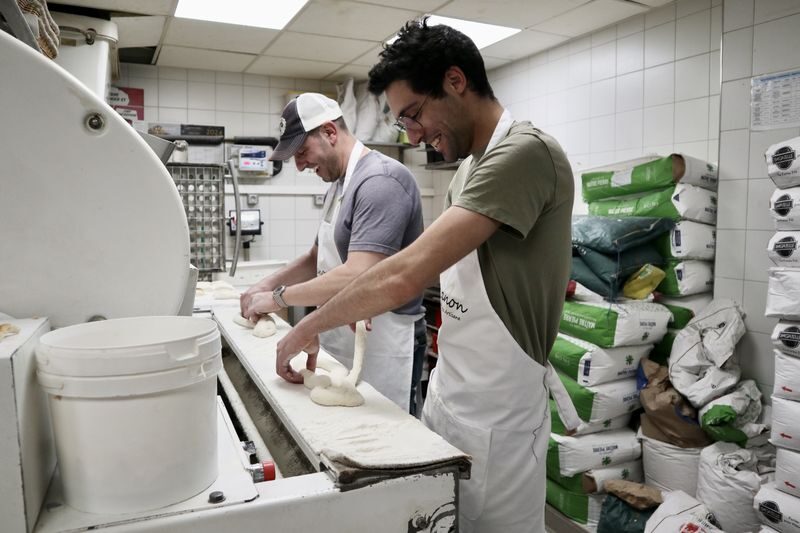
 4 / 4
- Baguette shaping is part of the lesson: You’ll learn techniques for forming the loaf and how to distinguish one baguette from another.
- Croissant dough gets hands-on attention: The class covers lamination, the process of layering dough, as well as shaping.
- You’ll taste as you learn: Sweet and savory breads help you connect flavor and texture with the methods behind them.
- The group is capped at eight: That’s a useful size for asking questions and getting personal guidance.
- There are two Paris package options: One is near the Eiffel Tower and one is near Notre Dame. Check the address for your chosen option before setting out.
👉 See our pick of the 25 Best Shopping Tours In Paris
Inside a working Paris bakery
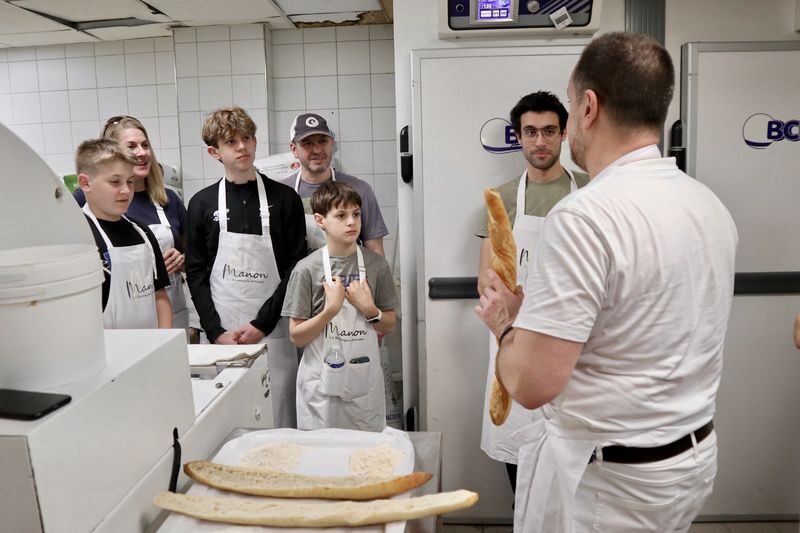
This is a practical class built around French bread and pastry, held in a traditional bakery. Rather than spending two hours in a demonstration kitchen, you get a chance to see baking as part of a working bakery setting. That can make the small details feel more meaningful: dough has a texture, flour behaves differently, and a baguette’s shape takes practice.
The meeting point for the Eiffel Tower package is Aux Pains de Manon at 31 Rue de l’Annonciation in the 16th arrondissement. The experience information also names Chez Manon, so check the details for your specific package and meet at the stated address. The Notre Dame option has a different neighborhood focus, and the package you choose determines where you should go.
The class is scheduled for two hours. That’s enough time to learn several techniques and taste along the way, but it is not a full-day course where you’ll make a range of recipes from start to finish. Think of it as an introduction to the craft, with a handful of useful skills to take home.
You can also read our reviews of more tours and experiences in Paris.



Learning to read a baguette
The class starts with the basics behind bread-making, including how flour, yeast, and sourdough differ. These are not just terms to memorize. They help explain why dough handles as it does and why loaves can vary in flavor and texture.
You’ll also learn baguette-shaping techniques. Shaping matters: the form affects how a loaf bakes, and practicing it helps explain why two baguettes from the same city can look and taste different. You won’t only hear that French bakeries take bread seriously; you’ll get a chance to handle the dough yourself.
Tastings bring the lesson back to the table. The class includes a variety of sweet and savory breads, giving you a direct way to notice differences in flavor as well as appearance. If you’re used to choosing a baguette by size alone, this is a more useful way to start paying attention.
A past class led by Priya included careful explanations of the production process alongside stories about the history of French treats. That combination is a good fit for curious eaters: technique helps you understand how a pastry is made, while its background gives the finished food a place in French daily life.
Working with croissant dough
Croissants are the trickiest part for many home bakers, and this class tackles the principle behind their flaky layers: lamination. You’ll learn how dough is layered and worked to create the texture that makes a croissant puff. The class gives you hands-on exposure, not a promise that you’ll master the technique in one go.
A past session with guide Jess included rolling croissants, alongside baguette-making and financiers. Financiers are small French cakes, and making them gives the class a sweet-baking counterpoint to the bread lesson. The exact activities can depend on the session, so treat those particular pastries as a useful example rather than a guarantee for every date.
This is where an expert’s guidance matters. Dough can be sensitive to handling, and a short demonstration can show you what to watch for in a way a recipe often cannot. You can ask questions while you work, and the small group size makes that more feasible than in a crowded class.
Tasting the results, not just the theory
Sampling is woven into the experience. You taste breads and other treats as you learn, using flavor to understand what you’re making and the differences between styles. That’s more than a snack break: tasting gives you a practical reference point for the techniques and ingredients discussed in class.
Coffee and treats were part of one past session, and participants were able to take some of their baked goods away. Those details sound appealing, but they are not listed as guaranteed inclusions. The confirmed promise is a two-hour French baking experience with tastings along the way.
The class is also an easy way to bring a food experience into a sightseeing trip without giving up a whole day. Two hours is manageable, and you’ll leave with a better eye for bread and pastry in Paris bakeries. You may also leave with some of what you make, depending on the session.
What the small group changes
With no more than eight participants, this is a more personal format than a large demonstration. You have a better chance of seeing the baker’s technique up close and getting a turn with the dough. If you’re shy about asking questions in a crowd, that smaller cap is a real advantage.
The group size is also a reason to arrive on time. The class starts promptly, and the instructions warn that late arrivals may not be able to catch up. Aim to be inside the bakery 15 minutes before the start, rather than planning to slip in at the last minute.
English-speaking staff are included, so you can follow the explanations without needing to know French baking vocabulary in advance. The class is still about doing, not only listening, so it suits people who want an active food experience more than a formal lecture.





Choosing between the two Paris locations
The package options are described as near the Eiffel Tower and near Notre Dame. That choice can help you fit the class into your day, but do not rely on the neighborhood label alone when navigating. For the Eiffel Tower package, the specified meeting address is Aux Pains de Manon, 31 Rue de l’Annonciation, 75016 Paris.
The information also identifies the meeting point as Chez Manon. Since the names and package locations can be easy to mix up, check the meeting details on your confirmation and use the exact address for the option you booked. The class takes place rain or shine, so weather is not a reason to skip it.
Is the price worth it?
The supplied starting prices differ: one summary gives a price from $111.09, while the package options are listed from US$100.99. Prices can vary by package or booking details, so check the final total before paying. The class includes two hours of instruction and tastings, but not personal expenses or tips.
For the price, the main value is access to a working bakery and guided practice with core French techniques. You’re paying for more than a pastry to eat: you learn how to handle dough, shape a baguette, and understand lamination. If you’re genuinely interested in baking or food culture, that practical knowledge may make the cost feel worthwhile.
If you mainly want a quick pastry tasting, this is probably more class than you need. If you want to understand how French staples are made and enjoy doing the work yourself, the combination of bread, croissant dough, pastries, and tasting makes better use of the time.
Who should book this baking class?
I’d recommend it to curious eaters, home bakers, and anyone who likes learning a craft while traveling. It’s a good choice for couples or small groups who want an activity that feels different from a museum visit or a standard food walk. The class is also suitable for children aged five and older, though they pay the adult rate.
Families with younger children should plan around the safety limits. Children aged zero to four can attend free, but they cannot participate in hands-on baking. All children must be accompanied by an adult, and the activity is not wheelchair-accessible.
The small group and practical format are the strongest reasons to choose this experience. The main cautions are its short length, the need to arrive early, and the importance of checking the correct bakery address. A past session had a serious delay, so if anything goes wrong on the day, contact the operator promptly rather than waiting until after the class.
Should you book it?
Book this if you want to do more than eat French bread: you’ll handle dough, learn baguette and croissant techniques, and get context for the pastries you see across Paris. The two-hour format and eight-person limit suit a short, hands-on outing, especially if baking is already an interest.
Skip it if you want a guaranteed take-home haul, a long course, or a class built for very young children to participate. Before booking, compare the two location options, confirm the exact meeting address, and arrive 15 minutes early. That small bit of planning should help you spend the class thinking about flour and flaky layers, not finding the bakery.
Paris Baking Insider Experience
“Miss Priya carefully explained the production process, and in addition to the production method, she also explained the historical story, which was…”
FAQ
How long is the Paris Baking Insider Experience?
The experience lasts two hours.
How many people can join the group?
The group size is one to eight participants.
What baking techniques will I learn?
The class covers differences between bread flours, yeast and sourdough, baguette shaping, and croissant dough lamination. You’ll also get hands-on practice preparing bread and croissant dough.
Where is the meeting point?
For the Eiffel Tower package, the address provided is Aux Pains de Manon, 31 Rue de l’Annonciation, 75016 Paris. The meeting information also names Chez Manon, so confirm the exact address for your selected package before you go.
Can children take part?
Children are allowed when accompanied by an adult. Children aged five and older pay the adult rate. Children under five can attend free but cannot take part in the hands-on baking for safety reasons.
Is the activity wheelchair-accessible?
No. The activity is not wheelchair-accessible.