Beneath Paris’s streets, miles of old limestone tunnels hold the bones of more than six million people. This semi-private Catacombs tour adds something you cannot get with a standard visit: access to sections closed to the general public, with a guide to explain what you’re seeing.
I like two things in particular: the group is capped at seven people, so it’s easier to hear the guide and ask questions, and the stories go beyond the ossuary to cover the people who worked in the tunnels and the secret societies that visit them today.
The main drawback is physical and emotional. You’ll descend 130 steps, walk through narrow, sometimes low-ceilinged passages, and see wall after wall of human bones. The dark, confined setting is not a good fit for everyone.
- Key points
- What the VIP access changes
- From limestone quarries to the Empire of Death
- Following the route underground
- Why a group of seven helps
- The physical and emotional demands
- Is 3.85 good value?
- Should you book this Catacombs tour?
- FAQ
- How long is the tour?
- How many people can join the group?
- Is a Catacombs entry ticket included?
- Does the tour enter areas closed to the public?
- How many stairs are there?
- What should I wear?
- Where do I meet the guide?
- The Best Of Paris!
- More Private Tours in Paris
- More Tours in Paris
- More Tour Reviews in Paris
- Not for you? Here's more nearby things to do in Paris we have reviewed
Key points
 1 / 3
 2 / 3
 3 / 3
- Restricted access: Enter parts of the Catacombs that are closed to the general public.
- Seven people at most: The small group makes it easier to hear explanations and ask questions.
- A guide adds context: Learn how the tunnels began as quarries and became a vast underground ossuary.
- A serious atmosphere: This is a historic burial site, not a light-hearted underground attraction.
- Plan for the stairs: There are 130 steps down and 112 steps up, with no wheelchair or stroller access.
- Bring a layer: The Catacombs stay at about 14°C (57°F), and the floor may be slippery.

👉 See our pick of the 25 Best Shopping Tours In Paris
What the VIP access changes
The Catacombs are open to independent visitors, so you can see part of the underground ossuary without booking a guide. This tour’s real distinction is access to areas that are not open to the general public, as well as an English-speaking guide who can put the site into context.
The description promises entry to rooms with fragile artifacts and access to special sections, but it does not name specific chambers. Think of restricted access as a chance to see more of the underground complex, not a guarantee of one particular room or artifact. The route may also be shaped by site conditions and the Catacombs’ staff.
That difference matters here. The public route already shows the ossuary’s striking walls of carefully stacked bones. The additional areas and guide can help make sense of the tunnels as a working place, a burial site, and a place that has drawn visitors and secret societies over the years.
You can also read our reviews of more private tours in Paris


From limestone quarries to the Empire of Death
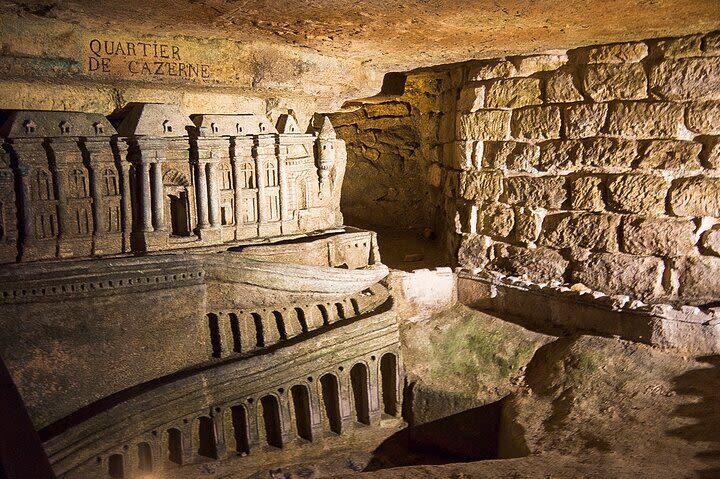
The tunnels began as quarries. Their limestone was used to build Parisian buildings and bridges, leaving a maze beneath the city. Galleries extend for more than 200 miles and reach at least 20 meters below street level, though the tour visits only a portion of this underground network.
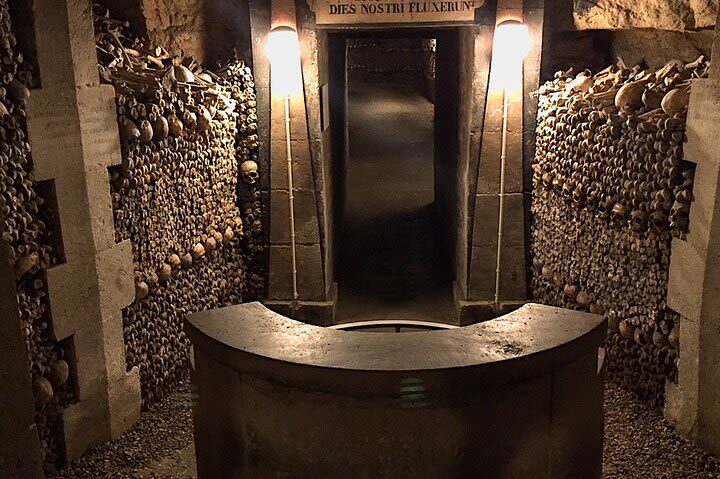
In the 18th century, city officials began moving human remains from crowded, unhealthy cemeteries into the former quarries. The transfer was carried out discreetly. Today, the ossuary holds the bones of more than six million former Parisians.
That history gives the tour its unusual mix of engineering and mourning. You are walking through a former source of building stone that became a resting place for generations of the city’s dead. The bones are not displayed as isolated curiosities: they form walls and arrangements that make the scale of the burial site hard to ignore.
The guide’s stories can also bring attention to the people behind the site: those who quarried the stone, those who moved the remains, and those who were eventually laid to rest here. The Catacombs have connections to French history too. The Man in the Iron Mask is said to be among the dead, and the bones of people executed during the French Revolution are believed to include both executioners and their victims. Treat those particular claims as stories attached to the site, not a reason to expect a confirmed identification.
Following the route underground
Meet outside the main entrance at 1 Avenue du Colonel Henri Rol-Tanguy, beside Square de l’Abbé Migne. Look for the guide wearing an orange lanyard. Do not join the public line or go inside before meeting the group.
The tour includes a fast-track ticket, which helps avoid buying a separate admission ticket at the entrance. It does not mean you can ignore the meeting time: arrive 15 minutes early, since late arrivals and no-shows are not refunded. The nearest Metro stop is Denfert-Rochereau on lines 4 and 6. Use Sortie 1, and the entrance is directly across the street.
After the entry process, the route descends 130 steps into the tunnels. The passages lead through the old quarry galleries toward the ossuary, where bones are arranged along the walls. Expect an enclosed, dim setting rather than a polished museum interior. Some passages are narrow, and low ceilings in places may mean stooping slightly, although the tour information says you remain standing upright.
The guided portion is described as about 1.5 hours, while the activity is listed as two hours. Allow for the longer figure when planning your day, and follow the selected departure time. Available departures include 13:30, 16:30, and 17:30, but schedules can vary by season.
The Catacombs limit the number of people in the tunnels to 200 at a time. If the site reaches capacity, staff may briefly hold the entry line until space opens. Any such delay is expected to be short, but a timed tour is still best treated as one appointment in your day, not something to squeeze between two tightly scheduled plans.
The route ends several blocks from the entrance, on Rue Rémy Dumoncel. Metro stations Alésia and Mouton-Duvernet are nearby, so keep in mind that you will not come back out where you started. This is a small but useful detail when arranging transport or meeting someone afterward.
Why a group of seven helps
A small group changes the feel of a guided visit in a tunnel. You are more likely to hear the explanation without straining, and there is room to ask a question when a story or a section of the route catches your attention. One tour group was six people, but the maximum is seven, so do not count on having the place to yourself.
The guide is described as English-speaking, but no guide names are provided. The most valuable part of the guide’s role is not simply pointing out the bones. It is connecting the quarry tunnels, the transfer of remains, and the Catacombs’ later associations with secret societies and mysterious rituals. Those topics can make the experience more layered, though tales of secret activity should be understood as stories rather than proof of a particular event.
The small format also suits families better than a large crowd might, especially when children can listen and handle the solemn subject matter. All ages pay the same price, and infants and children must be included in the passenger count. The experience is still a poor choice for young children who are uneasy around bones, dark spaces, or confined passages.
The physical and emotional demands
This is not a strenuous hike, but the stairs and underground conditions matter. You descend 130 steps and climb 112 to exit. The activity is not wheelchair or stroller accessible, and it is not recommended for people with impaired mobility, respiratory difficulties, cardiac problems, or claustrophobia.
The tunnels remain at about 14°C (57°F), so a light jacket or sweater is sensible even if Paris above ground is warm. Wear sturdy shoes: the floor may be slippery. Some sections are narrow, and occasional low ceilings call for a little care.
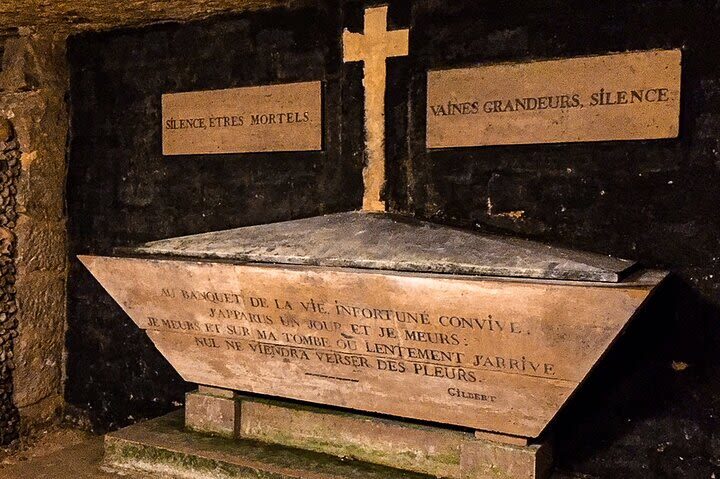
The bigger consideration is the subject itself. The ossuary contains the remains of more than six million people, stacked in a way that is visually powerful and, for some, unsettling. One visitor described the Catacombs as shocking and warned that the experience is not for the faint-hearted. That is fair advice. If you are comfortable with the subject, the site is compelling; if you prefer a gentle historical outing, choose another Paris attraction.
You can also read our reviews of more tours and experiences in Paris




Is $233.85 good value?
At a starting price of $233.85, this is a premium way to visit the Catacombs. The value rests on three things: fast-track entry, a group no larger than seven, and access to sections closed to the general public. You are paying for a more personal guided visit and a portion of the site that an independent ticket does not include.
That price will make less sense if you mainly want to see the main ossuary and are happy to explore on your own. The standard Catacombs visit already offers the central experience of walking through the tunnels and seeing the bone displays. If special access and a guide’s stories are not important to you, compare this tour with a basic ticket before booking.
For a history-minded visitor, or someone who wants a closer look at the site’s less familiar spaces, the smaller group can justify the extra cost. It is also a stronger choice if you value being able to hear the guide clearly and ask questions rather than following a larger group through a crowded underground route.
The experience has a 5.0 rating from three reviews, a small sample rather than a broad measure of quality. The specific praise is consistent with the tour’s design: a professional, attentive guide, a group small enough for clear explanations, and access to areas not normally open to the public. One family found the tour suited the whole group, but the subject and setting still make this a personal call.
Should you book this Catacombs tour?
Book it if you want more than the standard ossuary route and are comfortable with darkness, stairs, narrow passages, and the sight of human remains. The maximum group size of seven, guide, fast-track ticket, and restricted access make this a thoughtful choice for visitors who want context as well as atmosphere.
Skip it if you have mobility or health concerns noted above, dislike confined spaces, or only want a quick look at the public route. At this price, the extra access and small-group guidance should be the reason you choose it. If those details appeal to you, this is one of the more personal ways to explore the subterranean side of Paris.
Paris Catacombs Tour: Semi-private VIP with Restricted Access
“Great tour with a super knowledgeable guide.. fantastic for the entire family.”
FAQ
How long is the tour?
The activity is listed as two hours, while the guided Catacombs portion is described as about 1.5 hours. Allow for the full two hours when planning your day.
How many people can join the group?
The small-group option allows up to seven people. Infants and children count toward the passenger total.
Is a Catacombs entry ticket included?
Yes. The tour includes a fast-track Catacombs ticket and an English-speaking guide.
Does the tour enter areas closed to the public?
Yes. Special access to parts of the Catacombs closed to the general public is included. Specific rooms are not named, so no particular chamber is guaranteed.
How many stairs are there?
There are 130 steps to enter the Catacombs and 112 steps to exit. The activity is not wheelchair or stroller accessible.
What should I wear?
Wear sturdy shoes because the floor may be slippery, and bring a sweater or light jacket. The temperature remains around 14°C (57°F).
Where do I meet the guide?
Meet outside the main gate at Square de l’Abbé Migne, 1 Avenue du Colonel Henri Rol-Tanguy. Arrive 15 minutes early and look for a guide with an orange lanyard. The nearest Metro station is Denfert-Rochereau, lines 4 and 6.