Italica’s amphitheatre once held about 25,000 spectators, and its scale gives this Roman city a striking first impression. On this English-language walking tour, you explore the ancient streets with a guide, taking in the amphitheatre, mosaics, baths, aqueducts, and the House of Neptune.
I like two things in particular: admission is included, so you can focus on the site rather than sorting out entry separately, and a guide can connect scattered ruins to the city they once formed. The tour also introduces Italica’s importance in Roman Hispania, including its links to emperors Trajan and Hadrian.
One point needs checking before you book: the tour is described as one hour, but the posted schedule runs from 10:30 to 12:00 and gives the guided site visit as 90 minutes. Confirm the expected duration, and arrive early: latecomers and no-shows cannot get a refund.
- What makes the Italica walk worth your time
- A Roman city with an outsized place in Hispania
- Starting at the entrance in Santiponce
- Walking the streets, then looking closer at the mosaics
- The amphitheatre: Italica’s grand public stage
- Baths and aqueducts: the city’s everyday machinery
- What the price includes, and how to judge the value
- The duration discrepancy is worth resolving
- Who should book this Italica tour?
- FAQ
- Where does the tour meet?
- What time does the tour depart?
- How long does the tour last?
- Is admission to Italica included?
- Is the tour conducted in English?
- What should I bring and wear?
- Is the tour accessible for wheelchairs or strollers?
- Can children join the tour?
- What is the cancellation policy?
- The Best Of Seville!
- More Walking Tours in Seville
- More Tours in Seville
- More Tour Reviews in Seville
- Not for you? Here's more nearby things to do in Seville we have reviewed
What makes the Italica walk worth your time
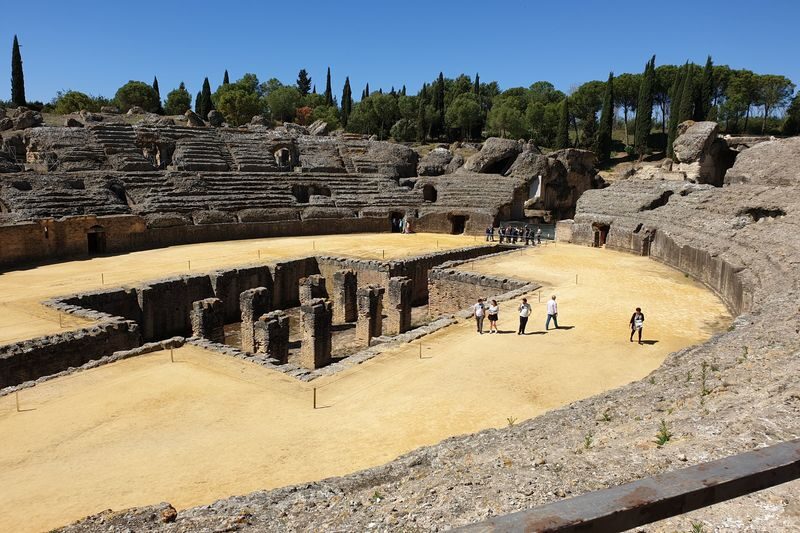
- A huge Roman amphitheatre: Imagine the scale of a venue built for around 25,000 spectators, then look for the features that made it work as a place for public events.
- Mosaics in their original setting: Street remains and decorated houses help you picture Roman urban life beyond the grand monuments.
- The House of Neptune: Its mosaics and frescoes offer a close look at domestic decoration and craftsmanship.
- Baths and aqueducts: These remains show how engineering supported everyday public life, not just spectacles and elite homes.
- A guide and admission together: An English-speaking guide leads the visit, and entry to the archaeological site is included.
- A short outing from Santiponce: The meeting point is at Italica’s entrance, with a scheduled morning departure and return to the same address.
👉 See our pick of the 25 Best Guided Tours In Seville
A Roman city with an outsized place in Hispania
Italica was founded in 206 B.C. by the Roman general Publius Cornelius Scipio, known as Scipio the African. Its location in Santiponce makes it an accessible way to spend time with Roman history outside Seville’s city center, and the site is regarded as the most important archaeological site in Seville province.
The city’s historical reach is part of what makes a guided visit worthwhile. Italica is associated with emperors Trajan and Hadrian, as well as senators and other figures of the Empire. A walk among the remains gives those names a physical setting: streets, public facilities, and houses rather than a list of dates.
I would not expect a single short tour to explain every period or feature of the site. Instead, think of it as a focused introduction. A guide can help you see how the amphitheatre, baths, water systems, and homes fit into a Roman city, giving you a better frame for exploring the ruins.
You can also read our reviews of more walking tours in Seville


Starting at the entrance in Santiponce
The meeting point is Av. Extremadura, 2, 41970 Santiponce, at the entrance to the ruins of Italica. The tour departs at 10:30 and is scheduled to return to the same address at noon. Arrive 15 minutes early, since late arrival can mean missing the tour without a refund.
The group size is listed as four to 30 people. That is enough room for a small group feel at the lower end, but a group near the maximum may make it harder to stay close to the guide or hear every detail. The English-speaking guide gives the visit its structure, and the two short written comments available describe the guide as professional and helpful, with interesting content. No guide’s name is provided, so you cannot request a particular person.
The schedule may change because of traffic or weather. The tour begins at the site, so do not assume transport from central Seville is included. Plan your own way to Santiponce and allow a little extra time to reach the entrance.
Walking the streets, then looking closer at the mosaics
The visit begins with a brief presentation from an official guide before you move into the ancient city. That introduction matters: ruins can be hard to read on their own, especially when walls and foundations sit low against the ground. A little context helps you imagine how streets and buildings related to one another.
From there, you explore Italica’s ancient streets and mosaics. The streets offer a sense of the city’s layout, while the mosaics bring attention to the skill and care invested in Roman decoration. Rather than treating them as isolated pretty patterns, look at them as part of lived-in spaces and a larger urban plan.
The House of Neptune is one of the named highlights. Its mosaics and frescoes make it a useful stop for thinking about how Roman homes could combine function with display. The tour information does not specify the condition or exact number of decorations on view, so go with an open eye and let the guide point out what is visible on the day.
The amphitheatre: Italica’s grand public stage
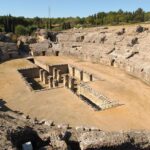
The amphitheatre is likely to be the tour’s most dramatic stop. Described as the third largest in the world, it once accommodated about 25,000 spectators and hosted gladiator contests. Even without a performance, its size helps you grasp the scale of public entertainment in the Roman world.
I like that this stop gives the tour a strong point of comparison. A house mosaic speaks to private life; the amphitheatre speaks to a crowd and the city’s public identity. Look around at the structure and imagine the practical demands of moving thousands of people through a venue. The guide’s explanation can help turn a large ruin into a place with a purpose.
The site visit is short, so you may not have long to linger at each feature. If the amphitheatre is your main reason for going, stay attentive during the guide’s explanation and use any free moments to take in the scale rather than rushing from one photo to the next.
Baths and aqueducts: the city’s everyday machinery
The thermal baths and aqueducts may sound less dramatic than gladiator contests, but they reveal another side of Roman life. Baths were public amenities, and water systems demanded planning and engineering. Together, these remains help explain how a city supported daily routines as well as major events.
I find this practical side of the visit especially valuable. It is easy to leave a Roman site remembering emperors and arenas while overlooking the systems that made urban life possible. At Italica, the baths and aqueducts offer a chance to consider how engineering shaped public life.
The tour includes these features, but the details you see and the time spent at each can depend on the guide’s route and conditions. Bring comfortable walking shoes and casual clothing, as recommended. The activity is not wheelchair- or stroller-accessible, so it is not a good fit if you need step-free access or are bringing a stroller.






What the price includes, and how to judge the value
The stated price starts at $20.59, while the Join-In English Tour option is shown from US$17.95. Prices can vary, so check the amount displayed for your chosen date and package before paying. The English tour includes admission to the ruins and an English-speaking guide, which makes the price easier to assess than a guide-only walk with a separate entrance fee.
For a short guided outing, value depends on what you want from Italica. If you want a clear introduction to the amphitheatre, mosaics, baths, aqueducts, and Roman city planning without arranging a guide on site, the combined entry and interpretation are useful. If you prefer to wander at your own pace or spend a long time examining each ruin, a scheduled group walk may feel restrictive.
Personal expenses and tips are not included. A student card is listed among items to bring, but no student discount is specified. Children aged zero to three are free, but they still need to be included in the passenger headcount. Anyone aged 17 or younger must come with a paying adult; those aged 18 and up pay the adult rate.
The duration discrepancy is worth resolving
The tour is presented as one hour in its short description, but the detailed schedule lists a 10:30 departure, a 90-minute guided visit, and a 12:00 return. Those figures do not match. Since the difference affects how you plan the rest of your day, confirm the expected duration with the provider before booking rather than assuming the shorter estimate is correct.
The start and end location are both given as Av. Extremadura, 2, at the entrance to Italica. The ticket is valid only for the date and time selected, and you can present a mobile voucher. Confirmation is expected within minutes; if it does not arrive, contact customer support.
Cancellation terms allow a full refund if you cancel at least 24 hours before the activity date, using local destination time. After that point, the stated full-refund condition no longer applies. Check the current terms during booking, especially if your plans are uncertain.
Who should book this Italica tour?
This tour suits you if you are curious about Roman history and want a guided overview rather than a solo wander through ruins. It is a particularly sensible choice if the amphitheatre and mosaics are high on your list, or if you want a short, structured visit with admission and an English-speaking guide included.
It can also work well for families with older children who can manage a walking tour. Children are welcome under the stated age rules, but the site is not stroller-accessible, and the visit requires walking around an archaeological area. Check the accessibility limits carefully if anyone in your party has mobility needs.
I would hesitate if you need a fully accessible route, want transport from central Seville included, or have a tight schedule that depends on an exact one-hour visit. The duration mismatch is the main practical wrinkle. If the provider confirms the timing and you can reach Santiponce independently, this is a strong way to give Italica context in a compact visit.
Ruins of Italica Walking Tour in Seville
“Great guide. He was really professional and helpful great tour!”
FAQ
Where does the tour meet?
Meet at the entrance to the ruins of Italica, at Av. Extremadura, 2, 41970 Santiponce, Sevilla, Spain.
What time does the tour depart?
The stated departure time is 10:30. Arrive 15 minutes early.
How long does the tour last?
The short description says one hour, but the schedule runs from 10:30 to 12:00 and lists a 90-minute guided visit. Confirm the duration before booking.
Is admission to Italica included?
Yes. Admission to the Ruins of Italica is included.
Is the tour conducted in English?
Yes. The Join-In English Tour includes an English-speaking guide.
What should I bring and wear?
Bring a student card and wear casual clothing and walking shoes.
Is the tour accessible for wheelchairs or strollers?
No. The activity is not wheelchair-accessible or stroller-accessible.
Can children join the tour?
Children aged zero to three are free but must be included in the passenger headcount. Children aged zero to 17 must be accompanied by a paying adult. Participants aged 18 and older pay the adult rate.
What is the cancellation policy?
A full refund is available if you cancel at least 24 hours before the activity date, using the destination’s local time.