At Roland-Garros, the story starts where the public usually stops: in the corridors behind the stands and along the route players take toward the clay court. A guided visit gives you a look at the working spaces of the French Open, along with the history behind one of tennis’s most famous stages.
I like two things in particular: you can connect the stadium’s rooms and rituals to the champions who used them, and the guide puts the modern Philippe Chatrier court in context, explaining its architectural and technical changes. One caveat matters: access can change when the stadium is being used for another event, so the main court or a particular feature may not be available.
- At a glance: the details that matter
- What the backstage visit feels like
- From the Boutique to the stadium route
- Press rooms, locker rooms and the presidential tribune
- The corridor to the clay court
- Philippe Chatrier: a court rebuilt for modern tennis
- Is the price worth it?
- Booking, timing and practical tips
- Who should book the Roland-Garros tour?
- FAQ
- Where does the tour meet?
- What departure times are offered?
- How early should I arrive?
- Is the tour offered in English?
- What is included in the tour price?
- Is the stadium tour wheelchair-accessible?
- Can children join the tour?
- Can I visit the Roland-Garros shop?
- Are the court and all stadium areas guaranteed to be open?
- The Best Of Paris!
- More Tours in Paris
- More Tour Reviews in Paris
- Not for you? Here's more nearby things to do in Paris we have reviewed
At a glance: the details that matter
 1 / 5
 2 / 5
 3 / 5
 4 / 5
 5 / 5
- Follow the players’ route: The tour includes the corridor leading toward the clay court, a simple walk with real resonance if you follow the sport.
- Go beyond the stands: The route can include the press areas, locker rooms and presidential tribune.
- Hear tennis stories in context: Guides connect the Four Musketeers and champions such as Björn Borg, Chris Evert, Steffi Graf and Rafael Nadal to the stadium.
- Look for the Philippe Chatrier story: Its transformation combines architectural changes with modern technology.
- Expect access to vary: Events and stadium operations can close areas, including the main court.
- Allow time for the shop: The Roland-Garros store is open from 9:30 a.m. to 6:30 p.m. and can be visited before or after the tour.

👉 See our pick of the 25 Best Shopping Tours In Paris
What the backstage visit feels like
This is not a match ticket or a chance to wander the grounds at your own pace. You join an English- or French-speaking guide and move through the stadium as a group, with access to areas that are normally out of reach without a tour.
That guided format is part of the value. The locker rooms, press spaces and stands are more than a collection of rooms when someone explains how they fit into tournament life. The guide’s anecdotes help link the physical setting to the people who made it famous, from the early champions known as the Four Musketeers to later winners such as Nadal.
The strongest appeal is the behind-the-scenes access. A tennis fan can picture the build-up to a match in the players’ corridor, then see the spaces where interviews and tournament business happen. If you are not a devoted fan, the tour still offers an unusual look at how a major sports venue is organized, though the player stories will likely mean less to you.
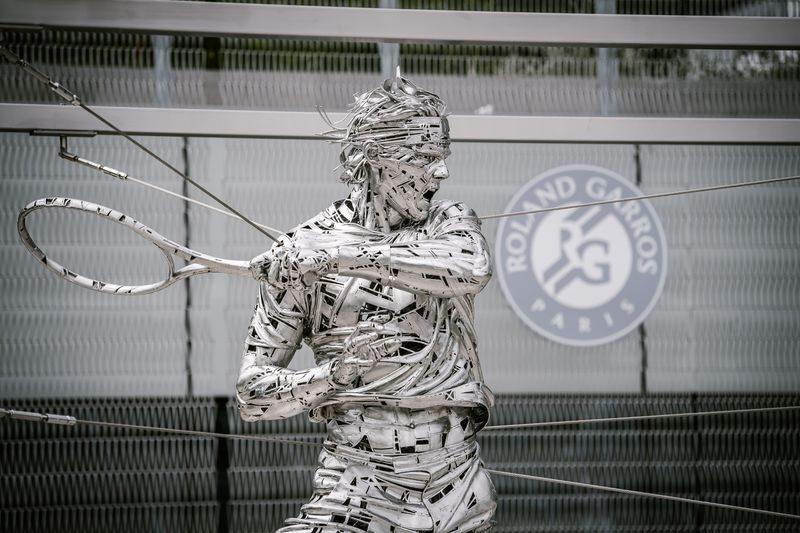
The experience also depends on what is happening at Roland-Garros that day. A court may be closed or covered for another event, and access to individual rooms can change. If seeing the main court or a specific Nadal tribute is the reason you are booking, treat that as a possibility, not a guarantee.
You can also read our reviews of more tours and experiences in Paris.



From the Boutique to the stadium route
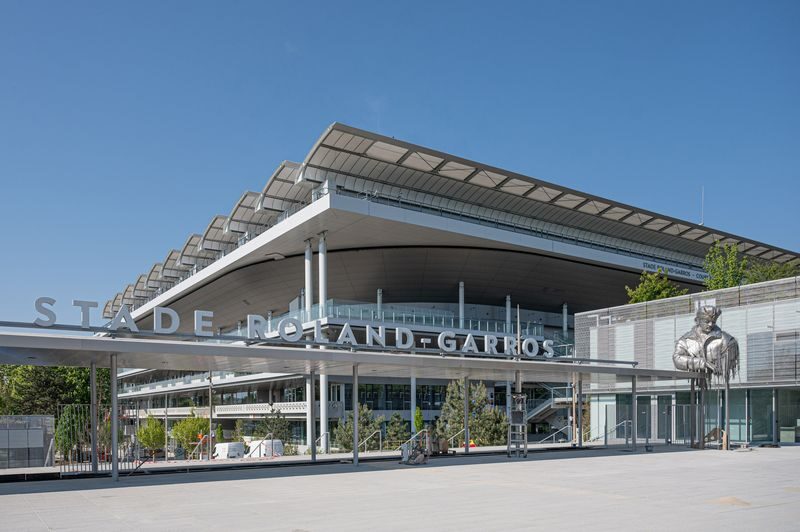
The meeting point is the Boutique du Stade Roland-Garros by Gate 36, at 2 Av. Gordon Bennett in Paris’s 16th arrondissement. Departure choices listed are 10:15, 11:00, 11:45 and 13:30, but the available return times depend on the departure you select and the tour’s duration.
Arrive 15 minutes before your chosen time. The guide confirms names and the group sets off when everyone is present, so being late is a poor gamble. A visitor who arrived several minutes after the start was not allowed to join or switch to a later departure, even though another time was available. Build in a buffer rather than racing across Paris.
The route is described as a stadium tour, with the departure and return both at the Boutique. There is no hotel pickup or drop-off, so plan your own journey to and from the meeting point. The supplied details do not give a fixed tour length; recent visits have taken close to two hours, while the listed time slots suggest the visit can be shorter. Keep some flexibility around the tour rather than scheduling a tight connection immediately afterward.
Press rooms, locker rooms and the presidential tribune
The tour’s interior stops help explain how the tournament works beyond the visible court. In the press areas, you can see where players face reporters after matches. The locker rooms bring the focus back to preparation, routine and the people who use the stadium when the cameras are elsewhere.
The presidential tribune offers a different perspective, one tied to the formal and public side of the event. Together, these spaces make a useful contrast: there is the performance on court, and then the rooms and systems that support it. Depending on the day’s route, a visit may also take in interview rooms, a trophy room or the museum, but access to every stop should not be assumed.
A good guide can make these spaces feel specific rather than generic. One guide, Mattieu, was praised for a professional, well-paced explanation through the media room, players’ dressing room, stadium and museum. That is the sort of approach that suits this tour: steady enough to keep a group together, but detailed enough to give tennis fans a few new stories.
The pace has also worked well for visitors who needed more time walking. If you are travelling with an older family member, the tour is listed as wheelchair-accessible, and a French-language guide was described as patient with an older participant. Still, if you have particular mobility needs, it is sensible to confirm the route and access arrangements before booking.
The corridor to the clay court
The walk toward the court is the emotional center of the visit. You follow the route used by players as they head for the playing surface, a moment that can feel more vivid than simply looking down from a seat. For a fan of Nadal or another Roland-Garros champion, the connection between the corridor and the court is the point: you are seeing the approach to the stage, not just the stage itself.
The guide’s stories add names and episodes to the architecture. Expect references to Björn Borg, Chris Evert, Steffi Graf and Rafael Nadal, as well as the Four Musketeers and other tournament winners. The tour is not a match replay, but the anecdotes help you imagine the pressure and ceremony around a French Open appearance.
The crucial qualification is court access. Stadiums host events other than tennis, and the main court may be closed, covered or otherwise unavailable. A basketball tournament, for example, has affected what could be seen on the court. In that situation, you may still get the backstage tour, but you could miss the clay surface and a particular courtside tribute.
That distinction matters most if your visit has one must-see item. If the players’ corridor, press rooms and locker areas would satisfy you, the tour can still be worthwhile when the court is unavailable. If you are booking mainly to stand near the clay or see a Nadal marker, check the stadium’s current access conditions as close to your date as possible.
Philippe Chatrier: a court rebuilt for modern tennis
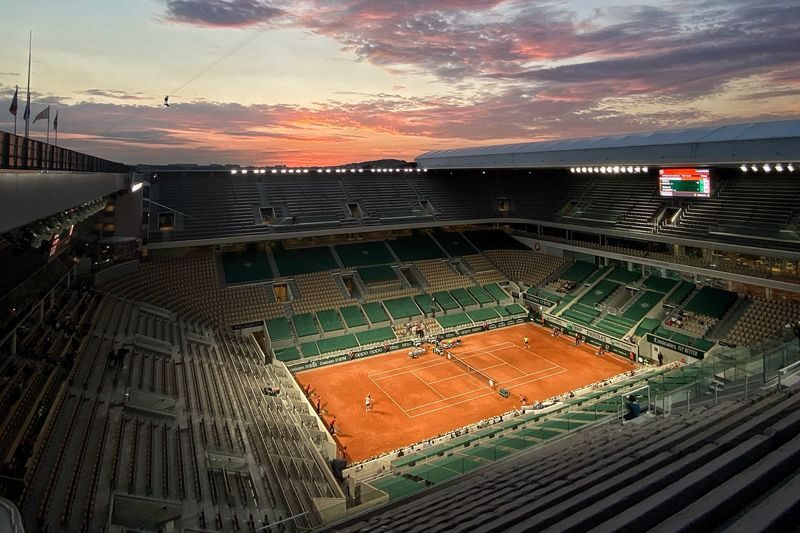
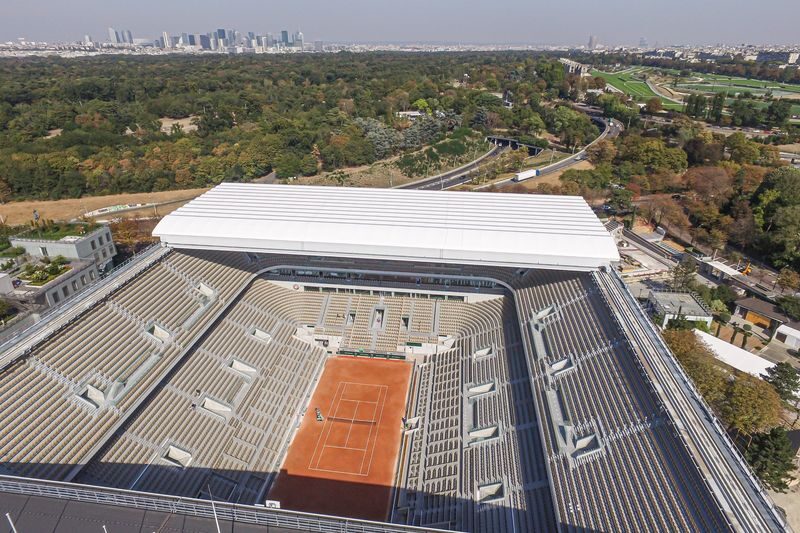
Philippe Chatrier is the stadium’s main court and a major part of the tour’s architectural story. The guide explains its high-tech transformation, showing how the venue has been adapted while preserving its role as the tournament’s central stage.
That context is useful even if you are not studying stadium design. A tennis court at this level has to serve players, spectators, officials and broadcast crews, all within a venue that changes between match days and other events. The tour’s account of the renovation helps explain why the building is more than a set of seats around a rectangle of clay.
Still, the court is also the element most exposed to scheduling changes. The tour can be compromised if an event has taken over the space, so do not confuse a stadium tour with guaranteed court access. When the main arena is open, it is likely to be a highlight; when it is not, the indoor areas and guide’s commentary carry more of the visit.




Is the price worth it?
The stated starting price is from US$27.15, while the package information also gives a figure from US$23.59 for the guided stadium tour. Prices can vary, so check the final amount for your selected date and language before paying.
For that price, the value comes from access and interpretation, not from the length of the walk alone. You are paying to enter parts of Roland-Garros that you cannot normally visit independently, and to hear how the stadium’s spaces connect to the tournament and its champions. For a tennis fan who is unlikely to attend a match, that can be a practical way to see the venue from close up.
The value is less certain if you mainly want an unobstructed view of the court. Event use can limit access, and the gift shop’s souvenirs may feel expensive if you are tempted to take home official merchandise. The shop is convenient and can be visited before or after the tour, but it is an extra, not part of the ticket.
The overall rating is 4.3 out of 5 from 18 ratings, and the provider, Cultival, has a reported good-review rate of 89 percent across 255 reviews. Those figures offer a broad signal, not a promise that every stop will be open on your date. The more useful question is whether the back corridors, tennis stories and stadium design appeal to you even if the court itself is unavailable.
Booking, timing and practical tips
Tours are offered in English and French. Choose your language carefully: English departures can sell out, and a French tour with occasional English explanation is not a substitute for a full English-language visit if you need continuous interpretation.
The stadium shop is open from 9:30 a.m. to 6:30 p.m., which gives you a chance to browse before or after the tour. The meeting point is at the shop, so it is easy to combine the two, but be sure you are ready for your selected tour time rather than assuming shopping can be squeezed in beforehand.
The activity is wheelchair-accessible, and children aged 0 to 4 can join free. A mobile voucher is accepted, and confirmation is normally sent within minutes. The voucher is valid only for the date and time specified.
Tours are suspended during the French Open period listed as April 22 to June 30, 2025. Stadium schedules can also change outside that period. If the visit is important to a tightly planned Paris day, verify that the tour is still running shortly before you go; a cancellation may mean a refund, but it will not restore time lost travelling to the venue.
Who should book the Roland-Garros tour?
I would put this near the top of the list for a tennis fan, especially if you enjoy the stories behind a sporting venue as much as the match itself. The mix of player spaces, press areas and the corridor to the court gives you a sense of how the event functions, while the guide adds the names and anecdotes that make the place more than a stadium tour.
It also suits curious visitors who want a different kind of Paris outing. Roland-Garros offers a focused look at sport, architecture and event operations, rather than a broad survey of the city. If you are travelling with someone who does not follow tennis, decide together whether the backstage access and stadium design will be enough to hold their interest.
I would pause before booking if your entire reason for going is to see the main court or a specific Nadal tribute. Access can change, and the tour cannot promise that every feature will be available. If you are happy with the stadium’s working spaces and the stories around them, book a language and time that fit your plans, arrive early, and let the guide take you through the game’s Paris home.
Roland Garros Stadium Backstage Tour in Paris
“Great tour, with an inside out informational guide on Roland Garros. Everything from the court, locker rooms, press conference rooms are a part of…”
FAQ
Where does the tour meet?
Meet at Boutique du Stade Roland-Garros by Gate 36, at 2 Av. Gordon Bennett, 75016 Paris.
What departure times are offered?
The listed departure choices are 10:15, 11:00, 11:45 and 13:30. Availability may depend on the date.
How early should I arrive?
Arrive 15 minutes before the departure time you selected.
Is the tour offered in English?
Yes. The listed language options include English and French. Choose the language you need when booking.
What is included in the tour price?
Admission to Roland-Garros Stadium and an English-speaking guide are included in the English package. Hotel transfers, personal expenses and tips are not included.
Is the stadium tour wheelchair-accessible?
Yes, the activity is listed as wheelchair-accessible.
Can children join the tour?
Children aged 0 to 4 can join free.
Can I visit the Roland-Garros shop?
Yes. The stadium shop can be visited before or after the tour and is listed as open from 9:30 a.m. to 6:30 p.m.
Are the court and all stadium areas guaranteed to be open?
No. Stadium use can affect access, and the main court or other areas may be closed or covered for an event. Tours are also listed as suspended during the French Open period from April 22 to June 30, 2025.