Classical riding at the Henrique Calado Riding Ring is less about a polished show than the work that goes into one. You can walk among the school’s stable spaces, then watch riders guide Lusitano horses through training exercises shaped by Portuguese court tradition.
I like two things here: you get a close look at the horses and the practical spaces where they are cared for, and the training offers a rare glimpse of a living equestrian tradition. The main caution is timing: the advertised 10:00 start has not always matched the on-site opening schedule, so check before setting out.
The experience lasts about three hours and costs roughly $9 to $10, depending on the option and date. That is good value if horses and classical riding interest you. If you want a dramatic performance, note that a gala is not included, and a training session can feel repetitive if you are not keen on the details.
- At a glance
- The school’s tradition, without the gala polish
- A three-hour visit, from stable spaces to the arena
- Choosing North Stall or South Stall
- Timing, weekdays, and the walk from Jerónimos
- Is about to good value?
- Who will enjoy this most?
- Practical details before you book
- Should you book the Portuguese School of Equestrian Art?
- FAQ
- How long is the Portuguese School of Equestrian Art experience?
- Where is the meeting point?
- Does the ticket include a gala performance?
- What is included in the ticket?
- Is the experience wheelchair-accessible?
- Do children need a ticket?
- Can I take photographs?
- Is the 10:00 start time reliable?
- Can I cancel for a refund?
- The Best Of Lisbon!
- More Tours in Lisbon
- More Tour Reviews in Lisbon
- Not for you? Here's more nearby things to do in Lisbon we have reviewed
At a glance
 1 / 2
 2 / 2
- The horses are Lusitanos: The school trains this Portuguese breed in classical techniques tied to the country’s royal riding heritage.
- You see practice, not a gala: The ticket covers access to the school and a training session, not admission to a formal performance.
- Stable spaces are part of the visit: Expect to see areas such as the horses’ washing and shoeing spaces, along with an outdoor practice ring.
- North and South Stall options are available: The package options differ by area; one visitor found the South Area easier to view from the third row or higher.
- Timing needs a second look: The stated meeting time is 10:00, but the ticket office has been reported to open at 10:30, with stable access from 11:00.
- Plan around the calendar: Monday practice and Wednesday show activity may differ, and schedules can change.

👉 See our pick of the 19 Best Shopping Tours In Lisbon
The school’s tradition, without the gala polish
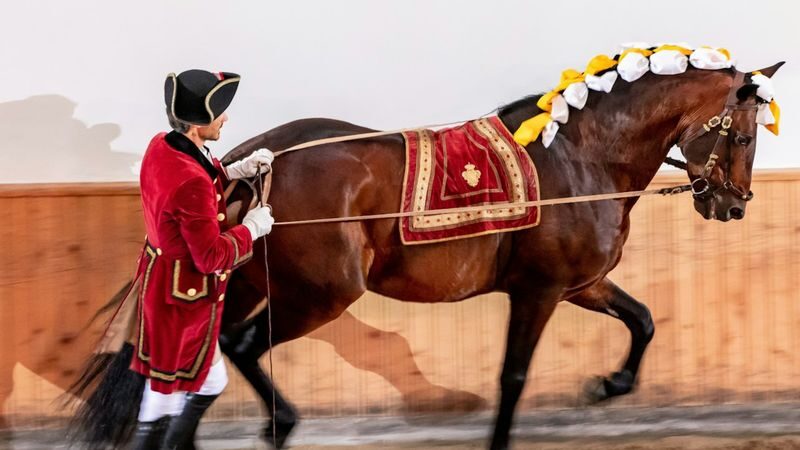
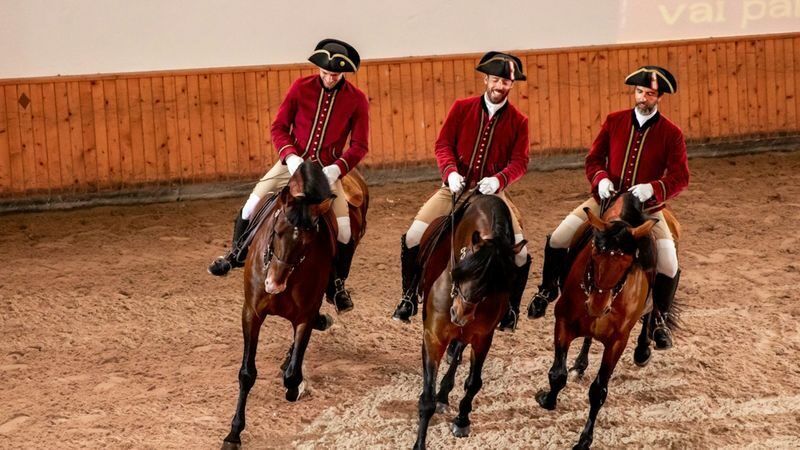
The Portuguese School of Equestrian Art keeps alive a formal style of riding linked to Portugal’s royal past. Here, that heritage is not simply presented as a story on a wall. You watch riders working with Lusitano horses, using traditional techniques in the same broad world of preparation that leads to choreographed performances.
The distinction between training and performance matters. A gala is designed for an audience, with ceremony and spectacle. A training session is about repetition, control, and small adjustments. You may see a horse warm up or practise agility work, but you should not expect a full sequence of polished moves set to music.
That quieter format can be a strength. It lets you pay attention to the relationship between horse and rider, and to the discipline behind a formal display. But it also asks more of you as a spectator. If you are curious about horsemanship, the repetition is part of the point. If you mainly want a lively show, you may find the session slow.
The school’s setting adds another layer. The Henrique Calado Riding Ring is where the horses train, while the experience also includes access to stable areas and an interpretative route at the Nora Pateo. The atmosphere draws on royal ceremony, but the central attraction is the living practice of training.
You can also read our reviews of more tours and experiences in Lisbon.



A three-hour visit, from stable spaces to the arena
The visit is scheduled for about three hours, from 10:00 to 13:00, at Calçada da Ajuda 102. The supplied timing information is not entirely consistent with the on-site schedule reported for the ticket office and stable access, so treat the stated start as something to verify rather than a guarantee. Arrive 15 minutes early as instructed, and confirm the current opening and session times before you go.
The first part of the visit is a chance to look around the school’s working spaces. That can include the stables, a horse-washing area, the shoeing space, and a small outdoor practice ring. These practical areas help put the performance tradition in context: horses need care and preparation long before they enter an arena.
This is not a guided tour with a named guide listed, and no guide’s name is provided. An English guide to the stables has been available for an additional fee, but check locally to confirm that it is offered when you visit. The route and the spaces themselves may give you a useful overview, though anyone hoping for a detailed explanation should not assume it is included.
The indoor training session is the main event. You watch riders work with the horses in the arena, where warm-ups and exercises can repeat. That makes the experience a better fit for someone who enjoys observing technique than for someone expecting a succession of dramatic highlights.
Music and lighting are described as part of rehearsals that evoke royal ceremony. Still, this is not a promise of a full performance. The ticket excludes gala admission, so keep your expectations grounded: this is a working view of preparation, not a seat at the finished production.
Choosing North Stall or South Stall
The experience is sold in North Stall and South Stall options. Both are described as three-hour experiences and include admission to the school and a training session in the selected area. The available details do not explain every difference between the two sections, so check the package carefully before booking rather than assuming the views or access are identical.
One practical tip points toward the South Area: a visitor found it easier to see from the third row or higher. That is useful if you have a choice, but it is not a guarantee of the best position on every date. If a clear view matters, ask about seating or viewing arrangements when confirming your booking.
Photography rules also depend on where you are. Photos are allowed in the stable areas, according to the available visit information, but photography is prohibited in the show venue. Follow signs and staff instructions, especially if you move from the stables to the arena.
Timing, weekdays, and the walk from Jerónimos
The biggest planning wrinkle is the start time. The scheduled departure is 10:00, yet the ticket office has been reported to open at 10:30, with stable access from 11:00. That mismatch can turn a simple morning visit into an awkward wait, or worse, leave you unsure whether you have arrived at the right time.
Before you go, confirm the actual start and entry arrangements for your date. The schedule can also change with weather and traffic. The meeting and return point is the same address, and late arrivals or no-shows are not refundable, so do not rely on an old timetable or an unverified third-party detail.
The weekday can shape what you see. The available schedule notes say that Monday practice at the show venue may begin at noon, while Wednesdays may include part of a show. Those details are subject to change, but they suggest that the experience may vary by day. If you are choosing dates, ask which training or performance activity is planned rather than assuming every visit follows the same pattern.
The school is within walking distance of Jerónimos Monastery, according to a visitor who made the trip on foot. That makes it possible to combine the two, but give yourself enough time and check the school’s current start time first. A late or shifted session could upset a tightly packed day.
Is about $9 to $10 good value?
The advertised price starts around $8.99 for either stall option, while the experience summary gives a starting figure of $9.45. Prices can vary, so check the amount shown for your chosen date and package. At this level, the visit can be a modest-cost way to see a distinctive Lisbon institution and its horses.
Value depends on what you want from the three hours. If you are interested in horses, riding technique, or the royal traditions behind classical equestrian art, access to the stable areas plus an indoor training session is a fair deal. You are seeing part of the school’s daily work, rather than paying for an elaborate staged attraction.
If you are looking for a compact, high-energy show, the calculation changes. The training may be repetitive, and you could leave feeling that the session lacked a clear climax. There is no gala included, and the experience is not designed to deliver the same spectacle as a formal performance.
The optional English stable guide has been listed at an additional five euros, while general admission has been described as starting at eight euros. Those figures may not match the current package price, so use them as a rough reference, not a promise. Confirm what is included in the ticket you are buying.

Who will enjoy this most?
This is best for visitors who are genuinely interested in horses, classical riding, or Portuguese royal heritage. You do not need to be an expert, but a little curiosity about how horses are trained will make the repeated exercises more meaningful. The stable areas also offer a practical look at horse care that a gala audience may not get.
Families can consider it, but remember that children aged 0 to 5 are free and must still be included in the passenger headcount. Children aged 6 and older pay the adult rate. The experience is not wheelchair-accessible, so it may not work for every visitor.
It is less suitable if you need a guaranteed performance, have a tight morning schedule, or dislike uncertainty about start times. The published duration is three hours, but the exact order and timing of stable access and arena training can vary. Build in room for that, and you will have a better chance of enjoying the visit on its own terms.
Practical details before you book
The meeting point is the Portuguese School of Equestrian Art at Calçada da Ajuda 102, 1300-006 Lisbon. The scheduled return is to the same address at 13:00. Arrive 15 minutes before the stated departure time, but verify the actual entry time with the provider because the reported ticket-office opening does not line up neatly with the 10:00 schedule.
Your voucher is valid only for the date and time booked, and you can present it on your phone. Infants and children need to be counted when booking, even if a child aged 0 to 5 enters free. There are no refunds for cancellations, late arrivals, or no-shows, so check the date and time closely before you commit.
Should you book the Portuguese School of Equestrian Art?
Book it if you want a close, low-cost look at Lusitano horses and the work behind Portugal’s classical riding tradition. The stable spaces and training session make the visit more informative than a simple arena viewing, especially if you take interest in the careful, repeated work that prepares horses for formal performances.
Skip it if you expect a gala, a fast-moving show, or a perfectly fixed 10:00 start. Before booking, confirm the day’s schedule, ask which stall area your ticket covers, and check whether the training is expected to take place in the arena. With those details settled, this can be a worthwhile and unusual stop in Lisbon, provided you come for the practice rather than the pageantry.
Portuguese School of Equestrian Art Training Experience
FAQ
How long is the Portuguese School of Equestrian Art experience?
The experience is listed as three hours, with a scheduled time of 10:00 to 13:00. The actual timing may vary, so confirm the schedule for your date.
Where is the meeting point?
Meet at the Portuguese School of Equestrian Art, Calçada da Ajuda 102, 1300-006 Lisbon. The scheduled return point is the same address.
Does the ticket include a gala performance?
No. The ticket includes admission to the school and a training session. Admission to a gala is not included.
What is included in the ticket?
The package includes admission to the Portuguese School of Equestrian Art and a training session in either the North Stall or South Stall option.
Is the experience wheelchair-accessible?
No. The activity is not wheelchair-accessible.
Do children need a ticket?
Children aged 0 to 5 enter free, but they must be included in the passenger headcount. Children aged 6 and older are charged the same rate as adults.
Can I take photographs?
Photography is allowed in the stable areas, but it is prohibited in the show venue. Follow any signs or staff instructions on site.
Is the 10:00 start time reliable?
The scheduled start is 10:00, but the reported ticket-office opening time is 10:30, with stable access from 11:00. Confirm the current schedule before setting out.
Can I cancel for a refund?
No. Cancellations and refunds are not allowed, and late arrivals or no-shows are not refundable.