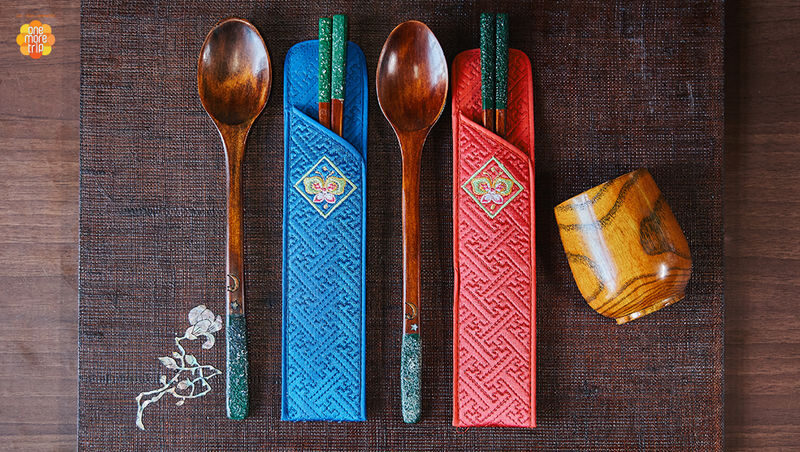
Mother-of-pearl catches the light, but the best part of this Seoul workshop is seeing how much patient work goes into a simple spoon. You move through several stages of lacquer craft, guided by an instructor who demonstrates each task and explains the process.
I like two things in particular: you get to try the different stages yourself, and the instructor’s patient, hands-on teaching makes the craft approachable even if you speak little Korean. You also leave with a spoon and chopsticks, a useful keepsake rather than a souvenir that will sit in a drawer.
The trade-off is worth knowing before you book: you do not make one set from start to finish. Lacquer needs days to dry, so you work on pieces begun by other participants and take home a set that has passed through several hands. The workshop is also inside a large industrial complex that can be tricky to navigate.
- What to know before you book
- The appeal of lacquer work, not just a souvenir
- Inside the Gocheok workshop
- How the workshop unfolds
- What you take home
- The instructor and the teaching style
- Timing, price, and value
- Who will enjoy this most
- Should you book the mother-of-pearl spoon class?
- FAQ
- Where is the workshop?
- What are the opening hours?
- Is there an age limit?
- What language is the instruction in?
- What will I make?
- Can I take home the exact spoon I work on?
- How long does the class take?
- How much does the class cost?
- How do I show my booking?
- Can I change or cancel my booking?
- The Best Of Seoul!
- More Tours in Seoul
- More Tour Reviews in Seoul
- Not for you? Here's more nearby things to do in Seoul we have reviewed
What to know before you book
- The craft unfolds over several days: You try stages of the process in one session, but drying takes much longer.
- Your take-home set is a shared effort: You help finish a spoon and chopsticks that someone else started, and leave your work for the next participant.
- The instructor teaches by showing: English may be limited, but demonstrations and written explanations help you follow along.
- It is a practical cultural keepsake: The finished set gives you something to use at home, along with a better sense of the craft behind it.
- Finding the studio takes extra time: Look for the upstairs shop marked with the word spoon inside Gocheok Industrial Supplies Complex.
- It suits a quiet, hands-on outing: The activity is designed for craft lovers and anyone curious about traditional Korean techniques.
👉 See our pick of the 25 Best Guided Tours In Seoul
The appeal of lacquer work, not just a souvenir
Mother-of-pearl lacquerware is closely tied to Korean craft traditions, and this workshop offers a practical way to encounter that art. Instead of only looking at finished objects, you see how a lacquered spoon and chopsticks develop through repeated work and drying.
The session is compact, but it introduces a process that would normally take much longer. The instructor explains the sequence, demonstrates the techniques, then has you try them. The result is less like an open-ended art class and more like a guided introduction to a traditional craft.
That distinction matters. If you want a blank object and complete freedom to invent your own design, this may not be the right class. The design choices are limited, and the focus is on learning the method and carrying out each stage carefully. If you value learning how an object is made, the structured format is part of the appeal.
You can also read our reviews of more tours and experiences in Seoul.



Inside the Gocheok workshop
The workshop is at Gocheok Industrial Supplies Complex, Unit 262, Building A, Ba-yeol, Ga-dong, at 103-4 Gocheok-dong in Seoul’s Guro-gu district. This is not a polished craft studio on a tourist street. It sits in a large commercial complex with many businesses and storage spaces, which gives the visit a more everyday, working-studio feel.
Getting to the complex is only part of the job. The entrance and unit can be hard to spot, so leave a buffer before your booked time. The studio is upstairs, and the word spoon is marked outside the storefront. Some directions point to a second gate and stairs near the toilets. Follow the map and photos supplied with your booking if available, and use a navigation app that accepts the full Korean address.
The location is a genuine drawback if you are short on time or staying far from Guro-gu. One account describes the trip from Itaewon as taking about 50 minutes, though your own journey will depend on traffic and transport. Another found the studio about a 10-minute walk from the nearest station. The complex is not hard to reach in principle, but the final search inside it can add stress. Aim to arrive early rather than cutting it close.
How the workshop unfolds
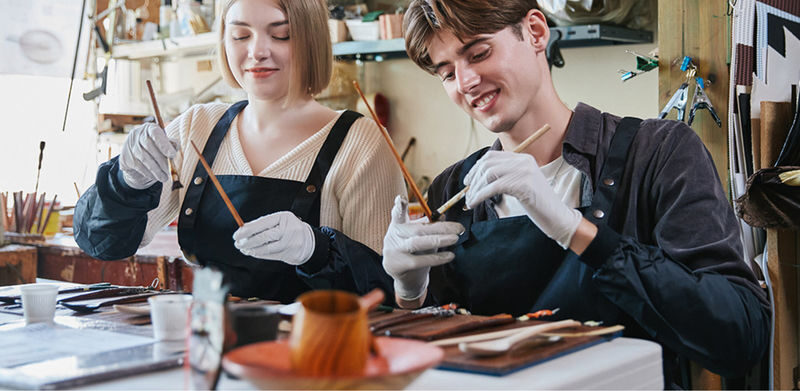
The instructor begins by explaining the craft and its materials, then shows you what happens at each stage. The process is presented in a clear order, with the reasoning behind the steps. Written English explanations may also be available in the room, which can help if spoken English is limited.
You then take part in several stages yourself. This is not a carving class: the work centers on applying lacquer and finishing the surfaces. The instructor demonstrates, watches your technique, and steps in with corrections when needed. The pace is relaxed, and the hands-on guidance makes it suitable even if you have never tried a craft workshop.
Here is the unusual part: the work takes days to dry, and a single class cannot take a piece through the entire process. You move between items at different points in the sequence. You might apply one stage to a set that will be continued by the next participant, then work on a set that someone else prepared earlier.
This shared production line is a clever way to make a long craft process fit into a short visit. It also means you should not expect to walk away with the exact spoon you decorated at the beginning. Instead, you complete later steps on a piece already in progress and take home a spoon and chopsticks that have been worked on by several people. The finished set may need more time to dry fully, so handle it with care and follow the instructor’s advice.
What you take home
The take-home set is one of the class’s strongest practical features. You leave with a spoon and chopsticks, often described as a lacquered set, rather than a paper certificate or a small demonstration sample. Some participants also receive a small handmade gift, such as a zodiac charm, but treat that as a possible extra, not a promised inclusion.
The shared-work arrangement can be a surprise if you assume you will take home a piece made entirely by your own hands. Set expectations accordingly: you participate in the process, learn what each stage does, and bring home a piece shaped by the workshop’s sequence. For many people, that is a fair trade for getting to experience all the steps in one visit.
The set is also a useful reminder of the class. You will know more about the labor behind its finish than you would from simply buying a craft item in a shop. If the idea of a collaborative object bothers you, choose a class where each person completes a project from beginning to end. If you like the idea of joining a continuing craft process, this format makes sense.
The instructor and the teaching style
The most consistent strength of the experience is the instructor’s patience. He takes time to demonstrate, checks your work, and explains why each step matters. Some participants have found his English limited, while others found the directions easy to follow. The safest expectation is that you will get clear demonstrations, with spoken English varying by session.
A few attendees identify the instructor as Chon. He is described as warm and generous, and some people have received a small handmade parting gift. The central point is not the extra: it is the careful, personal instruction. This is a small workshop, not a large class where you are left to figure out the tools alone.
The activity works well for families and for people attending solo. It has no stated age limit, and families with children from age seven upward have taken part. Younger participants may need close attention during the hands-on steps, but the format is patient and demonstration-based. Couples and small groups can also expect a quieter outing than a busy city tour, though the exact group size is not guaranteed.






Timing, price, and value
The class is listed from about US$24.80, with the experience also advertised from around $27.29. The amount can vary by booking option or checkout, so check the final price before you pay. At that cost, the value rests on more than the object you take home: you get instruction, materials, time with a craftsperson, and an introduction to a process that takes days in its full form.
Sessions have been described as taking about 45 minutes. That makes this a manageable half-day addition rather than a full-day commitment, but travel to the complex can take longer than the class itself. If you have a packed Seoul itinerary, factor in the journey and the time needed to find the upstairs studio.
Opening hours are Monday through Thursday, 11:00 a.m. to 5:00 p.m. The voucher is for the date and time specified, and you present it on your phone. Booking changes are generally allowed up to 48 hours before the activity, with exceptions for some passes, promotions, and bookings where a voucher has not been issued. A full refund is available for cancellations at least 48 hours before the activity date, subject to the stated terms.
Who will enjoy this most
Book this if you like making things, want to encounter Korean craft through direct participation, or prefer a calm activity with an instructor close at hand. It is especially appealing if you want a functional souvenir and are comfortable with the idea that your own work will continue through the hands of other participants.
It is less suitable if you expect a fully self-directed design project, insist on taking home the exact item you started, or have little time to get across Seoul and locate the studio. The industrial complex is part of the experience, but it is not a convenient central-city stop for everyone.
Should you book the mother-of-pearl spoon class?
I would book it for the craft lesson, the patient guidance, and the chance to handle each stage of a traditional process. The spoon and chopsticks are a welcome bonus, especially because you leave with something practical. Just understand the shared-work system before you arrive, and give yourself extra time to find the workshop.
If you want an authentic, low-key activity rather than another sightseeing stop, this is a good use of an hour. If your priority is a personal design made entirely from scratch, choose a different class.
MakingExperienceTraditional Mother-of-pearl Lacquered Spoon in Seoul
“The absolute best experience I bought in Seoul! The instructor is super cool, has a true artisan vibe, and is so kind that it's really touching. Th…”
FAQ
Where is the workshop?
It is in Gocheok Industrial Supplies Complex, Unit 262, Building A, Ba-yeol, Ga-dong, at 103-4 Gocheok-dong, Guro-gu, Seoul. The studio is upstairs and marked with the word spoon.
What are the opening hours?
The listed hours are Monday through Thursday, 11:00 a.m. to 5:00 p.m.
Is there an age limit?
No age limit is stated for this activity.
What language is the instruction in?
The activity includes an English- and Korean-speaking guide. Spoken English may be limited in some sessions, but the instructor demonstrates the steps, and written English explanations may be available.
What will I make?
You take part in stages of making traditional mother-of-pearl lacquered spoons and chopsticks.
Can I take home the exact spoon I work on?
Not necessarily. The process requires days of drying, so you work on pieces at different stages and take home a set started by other participants.
How long does the class take?
One account describes the workshop as taking about 45 minutes. Allow extra time for getting to the complex and finding the studio.
How much does the class cost?
The class is advertised from about US$24.80, and another stated starting price is $27.29. Check your booking for the final price.
How do I show my booking?
Present your mobile voucher. It is valid only for the specified date and time, if a time is included.
Can I change or cancel my booking?
Changes are generally allowed up to 48 hours before the activity, though exceptions apply to some passes, promotions, and bookings without an issued voucher. A full refund is available for cancellations at least 48 hours before the activity date, subject to the booking terms.